Follow Us:
Follow Us:


Defense Feeds – London. The Challenger 3 Tank Completes Key NATO Battlefield Trials milestone marks a significant step forward in the British Army’s armored modernization program as the United Kingdom prepares its next-generation main battle tank for future alliance operations.
The latest round of battlefield mission trials tested the Challenger 3 under realistic combat conditions designed to evaluate mobility, firepower, survivability and operational effectiveness. The assessments form part of a broader effort to ensure the upgraded tank is ready to meet the demands of modern warfare, particularly within NATO’s evolving defense posture across Europe.
As military planners continue studying lessons from the war in Ukraine, armored forces remain a critical component of deterrence and high-intensity warfare. The Challenger 3 is expected to become the backbone of Britain’s future armored fleet, replacing aging capabilities while introducing advanced technologies intended to improve battlefield performance against increasingly sophisticated threats.
The successful completion of mission-focused testing represents another major milestone before the platform enters wider service with frontline British Army units.
The Challenger 3 program is one of the British Army’s most important modernization initiatives, aimed at transforming existing Challenger 2 tanks into a significantly more capable combat platform.
Developed through a partnership led by Rheinmetall BAE Systems Land, the upgraded tank incorporates major improvements in firepower, protection and battlefield awareness. One of the most significant changes is the adoption of a new smoothbore main gun, bringing the British Army into closer alignment with NATO ammunition standards.
Military officials believe the modernization effort will greatly improve interoperability with allied armored forces while enhancing combat effectiveness during joint operations.
The recent trials reportedly assessed how the tank performs during complex battlefield missions involving maneuver operations, target engagement and coordination with other military assets. Such testing is critical for identifying potential issues before large-scale deployment begins.
Defense analysts note that modern tanks must now operate in increasingly challenging environments shaped by drones, precision-guided weapons and advanced surveillance systems. As a result, battlefield awareness and survivability have become just as important as traditional armor protection and firepower.
The Challenger 3 is expected to feature upgraded sensors, digital battlefield systems and improved defensive technologies designed to help crews operate effectively in highly contested combat zones.
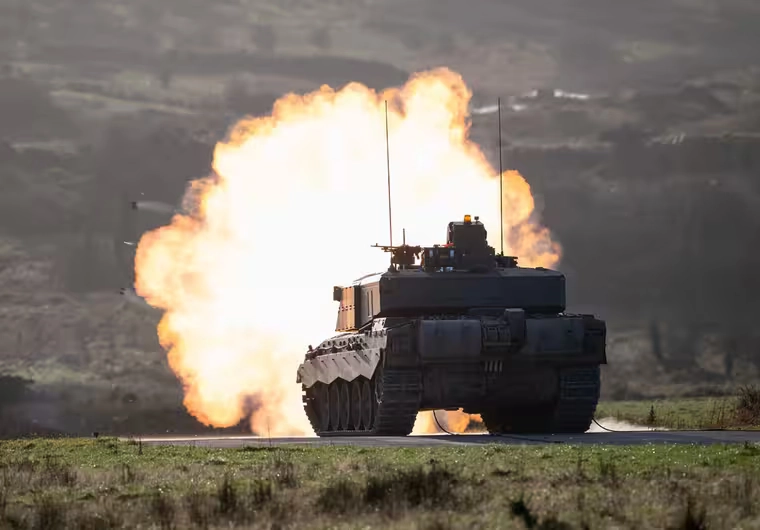
The successful completion of the trials comes as NATO members continue investing heavily in armored warfare capabilities following Russia’s invasion of Ukraine.
Although some observers initially questioned the future relevance of tanks due to the rise of drones and anti-tank missiles, the conflict has instead highlighted the continued importance of armored vehicles when properly integrated into combined-arms operations.
Military commanders across Europe increasingly view modern main battle tanks as essential for offensive maneuver, defensive operations and battlefield deterrence. However, survivability now depends on integrating armor with air defense systems, electronic warfare capabilities and drone support networks.
Britain’s Challenger 3 program reflects this broader shift toward more technologically advanced armored formations. The tank is being developed not only as a powerful combat vehicle but also as part of a wider digital battlefield ecosystem capable of sharing information with allied forces in real time.
The British Army’s modernization plans coincide with increased NATO readiness efforts along the alliance’s eastern flank. As tensions with Russia continue shaping European security policy, member states are placing renewed emphasis on heavy armored forces capable of responding rapidly to potential threats.
The Challenger 3 is expected to play an important role within those future force structures once operational deployment begins.
The evolution of armored warfare is driving major changes in how military planners approach tank development.
Modern battlefields are increasingly dominated by drones, precision-guided munitions, electronic warfare systems and persistent surveillance networks. Tanks can no longer rely solely on heavy armor for protection. Instead, future survivability depends on combining mobility, advanced sensors and integrated defensive technologies.
The Challenger 3 was developed with those realities in mind. By incorporating improved digital systems and enhanced combat capabilities, the platform aims to remain effective in an era where threats can emerge from the air, land and cyber domains simultaneously.
Defense experts believe the next generation of armored warfare will involve closer integration between tanks, drones and networked battlefield management systems. Vehicles that can rapidly process information and coordinate with supporting assets will hold a significant advantage during high-intensity operations.
For the British Army, the completion of battlefield mission trials represents more than a technical achievement. It demonstrates progress toward fielding a modern armored force capable of supporting NATO operations across a rapidly changing security landscape.
As Europe continues adapting to new military challenges, the Challenger 3 is poised to become one of the alliance’s most advanced main battle tanks, strengthening Britain’s contribution to collective defense and future battlefield readiness.