Follow Us:
Follow Us:


Defense Feeds – Ukraine to Deploy AI-Powered Missiles and Drone Defenses in 2026 as European manufacturer Destinus teams up with US-based Shield AI to integrate advanced artificial intelligence into long-range cruise missiles and anti-drone systems.
This robust collaboration uses Shield AI’s Hivemind system in Destinus’ Ruta missiles and Hornet anti-drone rocket platforms, enhancing Ukraine’s autonomous strike ability and strengthening its air defense tech.
The joint announcement on November 20 emphasized how Shield AI’s proven autonomy software will be embedded within next-generation Destinus weapons for Ukraine.
This strategic move represents a major milestone for Europe’s defense sector by pushing forward fast delivery of smart unmanned warfighting systems to Ukrainian forces.
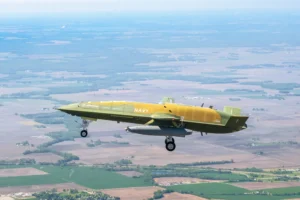
Hivemind, Shield AI’s proprietary combat AI core, is already used in the V-Bat reconnaissance drone and the new X-Bat jet-powered vertical takeoff drone.
The software enables unmanned assets to operate independently, interpret battlefield data, and share intelligence in real time without the need for constant communication links.
When paired with the Ruta “missile-drone,” this capability is expected to let individual missiles coordinate mid-flight, adapt their routes to evade air defenses, and perform cooperative targeting.
Ukrainian military experts suggest swarming technologies will allow clusters of missiles to function as an integrated, coordinated unit, offering a tactical edge against fortified Russian defenses and moving air defense systems.
The combined Ruta missile and Hivemind AI system is set to undergo testing in 2026, following initial stages of integration already in progress.
Defense Express reports that initial flight trials of the Ruta miniature cruise missile were successfully completed by the end of 2024, marking the beginning of limited deliveries to Ukrainian units.
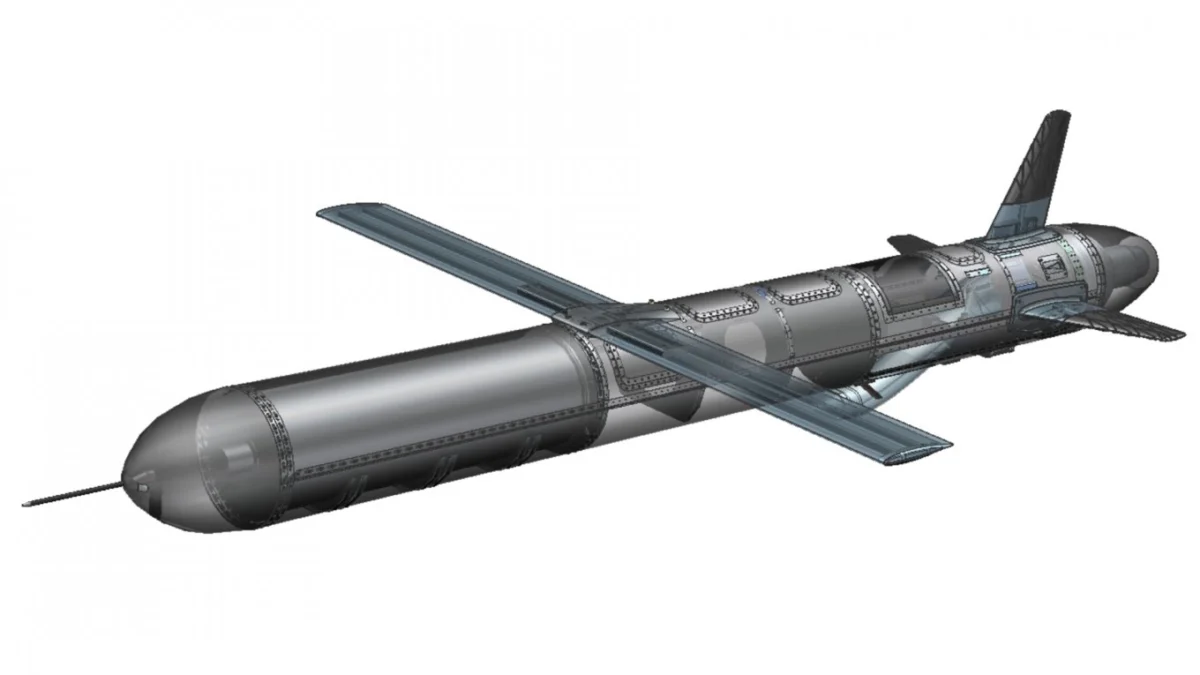
The Ruta long-range missile is described as a compact, high-precision weapon with a flight range of roughly 300 kilometers.
While its exact payload weight remains undisclosed, analysts suggest it is smaller than typical cruise missile warheads, possibly in the tens of kilograms range, optimized for tactical precision strikes rather than large-scale destruction.
Meanwhile, the Hornet platform focuses on tackling the growing threat of enemy drones.
Demonstration exercises in Spain are underway for the Hornet system, which specializes in identifying and intercepting unmanned aerial vehicles, a critical defense need for Ukraine’s frontlines.
When paired with the Hivemind algorithms, these anti-drone systems could automatically filter out false targets, allocate threats dynamically, and improve response time under battlefield pressure.
The introduction of artificial intelligence into Ukraine’s missile and drone ecosystem underlines a broader transformation in modern warfare across Europe.
Shield AI, which recently opened a Kyiv office to support local unmanned operations, has already supplied V-Bat drones to Ukrainian forces for reconnaissance and strike coordination missions.
These systems, often used in classified operations, have demonstrated the value of AI-driven autonomy against increasingly complex battlefield environments.
Military experts consider the Destinus and Shield AI collaboration a key example of how defense companies are merging platforms, data systems, and autonomous algorithms to build smart, networked combat solutions.
Such hybrid integration could redefine how Ukraine conducts precision strikes, electronic warfare, and air defense tasks in the near future.
The joint effort not only strengthens Ukraine’s operational resilience but also boosts Europe’s technological independence in developing and producing next-generation AI-enabled weapon systems.
As global security shifts amid ongoing conflict, programs like Ruta and Hornet highlight how artificial intelligence is evolving beyond a mere support tool to become the core command engine of modern military operations.