Follow Us:
Follow Us:


Defense Feeds – Taiwan unveils first Barracuda-based missile built with US Cooperation as part of its expanding defense partnership with Washington.
The island officially showcased its first locally produced missile created in collaboration with a US arms partner, marking a significant step in military-industrial ties.
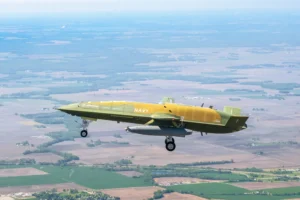
The system, based on Anduril’s Barracuda-500 cruise missile, was co-developed with Taiwan’s state-run National Chung-Shan Institute of Science and Technology (NCSIST).
Presented this week in Taipei, the new land-mobile missile is expected to become a cornerstone of Taiwan’s growing arsenal.
While NCSIST did not disclose the weapon’s range, officials confirmed the design allows strikes against both land and maritime targets.
Each unit is estimated to cost around $216,000, making it one of the more affordable precision-guided strike options available compared to similar long-range systems.
NCSIST President Li Shih-chiang emphasized during the unveiling that focusing on local production ensures resilience in wartime.
“The entire supply chain of the missile will be in Taiwan,” he explained, highlighting the reduction of risks from blockades or external disruptions.
He added that future industrial links with American and Canadian defense contractors are under discussion, though the majority of components will remain domestically sourced.
Military observers believe Taiwan’s decision to prioritize cost-effective and scalable production reflects lessons drawn from Ukraine’s conflict.
Experts note that mass production of affordable missiles strengthens deterrence while ensuring sustainability during prolonged hostilities.
The unveiling of the Barracuda-based weapon is only part of a broader modernization initiative that has accelerated since 2024.
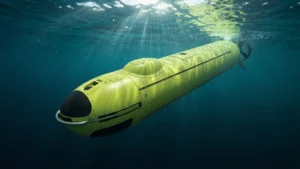
Alongside the missile, NCSIST presented two other unmanned systems developed in cooperation with Anduril: an underwater drone designed for surveillance and reconnaissance, and an autonomous underwater mine capable of operating with limited human oversight.
These developments highlight Taiwan’s focus on asymmetric warfare—military strategies that aim to counterbalance China’s overwhelming numerical advantage by fielding low-cost, smart, and easily deployable platforms.
Taiwan’s latest missile program mirrors this concept, offering an affordable strike option that could overwhelm adversary defenses if produced in meaningful quantities.
The government recently announced plans to gradually lift defense spending, setting a target of 5 percent of GDP by 2030, compared to 3.3 percent projected for next year.
Funding priorities highlight missiles, drones, naval strike vessels, and modernized command-and-control assets—capabilities regarded as essential should a blockade or full-scale invasion occur.
Li emphasized that unlike Ukraine, Taiwan cannot rely on overland resupply in a time of war. “All our resilience must be built upon this island,” he stated, underlining the need for indigenous systems that can be sustained without external logistics.
This year marks a particularly significant acceleration of procurement. Taiwan’s Ministry of Defense revealed plans for a new $20–30 billion special budget for 2026, its fourth extraordinary allocation in less than a decade.
According to Taipei, the funds will be directed primarily toward missile production, loitering munitions, and uncrewed naval platforms, all of which will be integrated into a multi-domain defense network.
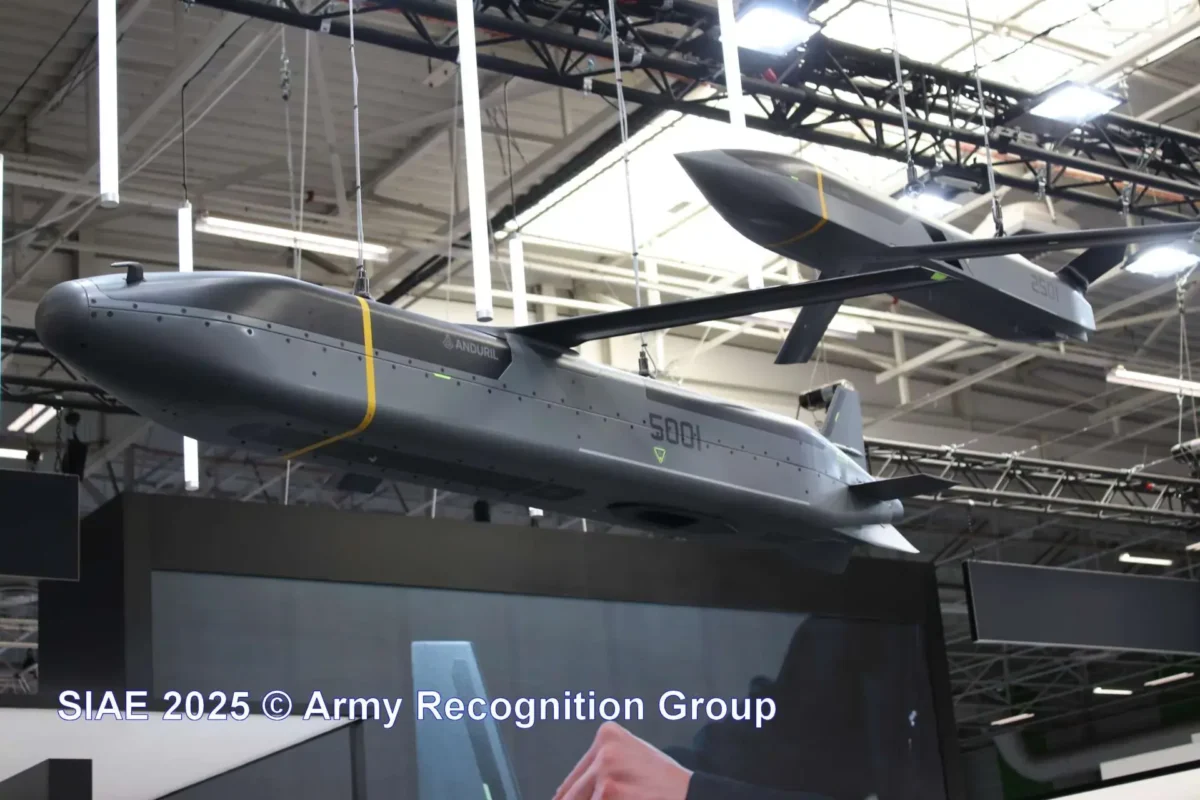
Taiwan’s missile milestone follows several key acquisitions and defense industrial agreements with Anduril in recent months.
In August, the US company delivered the island’s first shipment of Altius loitering munitions, part of a Foreign Military Sales package approved in 2024.
These drones, capable of circling above battlefields before striking, are expected to augment Taiwan’s layered defense against amphibious assaults.
At the same time, NCSIST signed a contract for Anduril’s command-and-control technology, which incorporates AI-enhanced software designed to seamlessly coordinate drones, missiles, and other unmanned systems.
This investment is intended to improve data fusion and shorten response times during early-warning scenarios, particularly in the event of Chinese missile launches or naval incursions.
Taiwan’s naval modernization is also gathering momentum. The military has committed to building 1,320 Kuai Chi attack uncrewed surface vessels over the next five years.
These small, fast attack craft will be distributed across the navy, marine corps, and army’s special operations units, offering another asymmetric strike capability at sea.
Another important shift is the Ministry of Defense’s decision to reclassify small drones as “consumables” rather than core equipment.
By reducing procurement barriers, Taiwan can acquire, field, and rapidly replace thousands of low-cost quadcopters for both reconnaissance and combat roles.
To prepare troops for this transition, drone instruction has been integrated into an intensive eight-week course at nine military academies.
Taken together, these initiatives represent a comprehensive effort to recalibrate Taiwan’s defense posture in the face of mounting pressure from Beijing.
While China continues to expand its military capabilities, including the launch of a third aircraft carrier in 2025, Taipei’s emphasis on affordable smart strike weapons, naval swarming platforms, and AI-enabled coordination underscores its strategy to deny Beijing’s ability to achieve dominance swiftly.
The rollout of the Barracuda-based missile symbolizes more than just a technological achievement.
It illustrates Taiwan’s determination to build a resilient and sustainable supply chain for defense while deepening industrial ties with its most important security partner, the United States.
As Li Shih-chiang made clear, Taiwan’s survival depends on forging innovation into independence—a principle that is now visibly shaping every aspect of its defense planning.