Follow Us:
Follow Us:

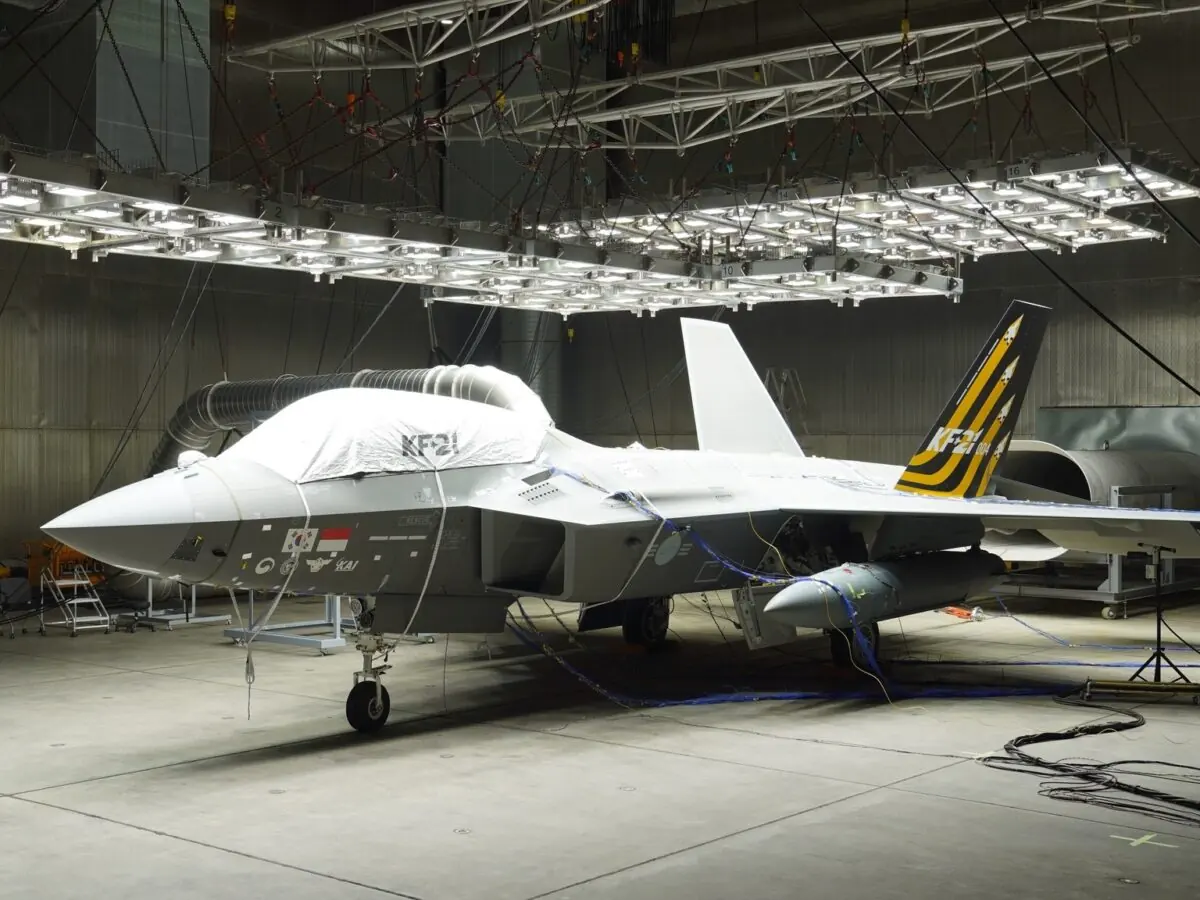
Defense Feeds – South Korea advances KF-21 Boramae development with bold steps to transform the fighter into a true fifth-generation stealth aircraft, demonstrating a strong commitment to domestic aerospace innovation and cutting-edge military technology.
The Korea Aerospace Industries (KAI) is leading ambitious upgrades focused on Block III, including stealth-focused design changes like internal weapons bays, radar-evading materials, and a fully indigenous jet engine.
South Korea advances KF-21 upgrades by moving beyond the aircraft’s original design with limited stealth features to a fully stealth-optimized configuration.
The upcoming Block III version will internalize weapon storage—housing missiles and precision bombs inside the fuselage—much like advanced fighters such as the U.S. F-35.
This internal bay capability will suppress radar cross-section, drastically improving the fighter’s survivability in high-threat environments.
KAI’s redesign includes embedded electronic warfare suites and an internal electro-optical targeting system to replace protruding external pods that increase radar detectability.
These changes, combined with advancements in radar-absorbent materials and shaping developed since Block I, progressively reduce the aircraft’s signature, bringing it closer to established fifth-generation stealth standards.
The KF-21EX concept unveiled recently emphasizes features like a stealthy canopy profile and a low-RCS radome, further enhancing its low-observable characteristics.
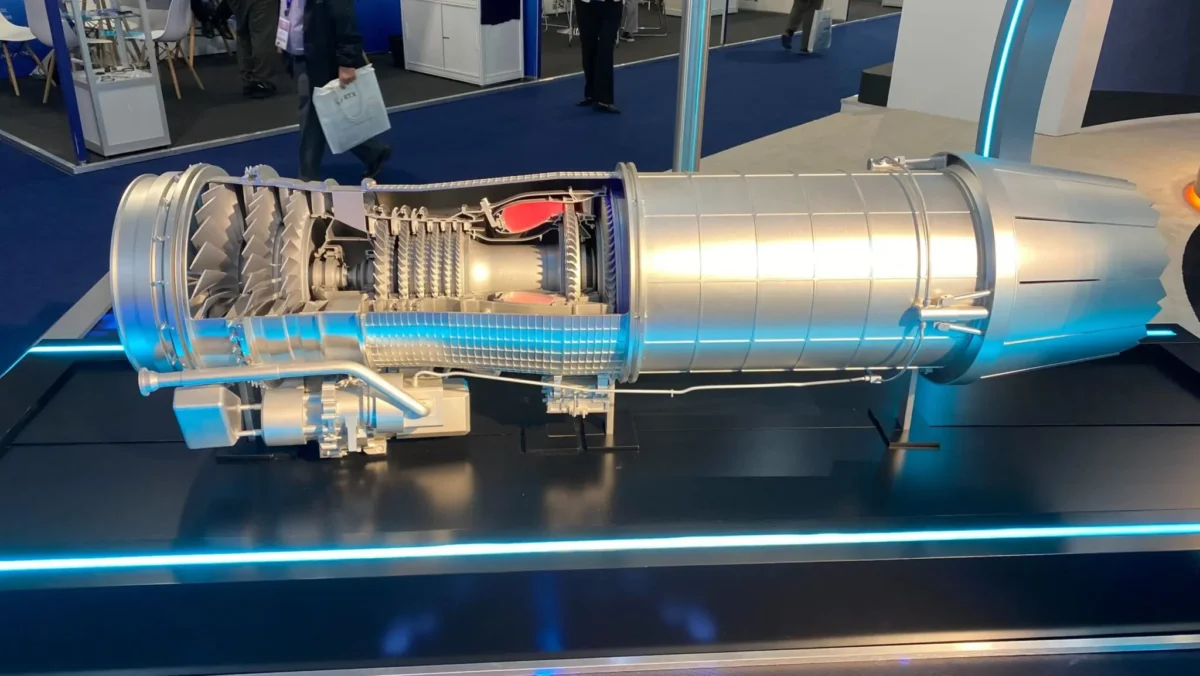
The effort to advance the KF-21 is tightly linked to South Korea’s push to develop a domestic fighter engine.
Currently powered by the U.S.-supplied General Electric F414-GE-400K turbofan, the KF-21 aims to become fully self-reliant through an engine developed by Hanwha Aerospace and Doosan Enerbility.
The government has allocated substantial funding—about ₩86 billion (around $62 million) in the 2026 defense budget—to accelerate this critical project.
This new turbofan engine program targets a thrust class near 16,000 pounds, with ongoing development work including scaled demonstrators expected to enter testing by the end of 2025.
Successfully integrating a Korean-made engine will ease future supply chain risks while enhancing the fighter’s performance and export appeal.
Although creating a modern, stealth-compatible jet engine involves complex technical challenges that may take years to refine, South Korea’s growing aerospace capabilities and strategic alliances support the program’s progress.
South Korea advances KF-21 block upgrades that also target expanding the aircraft’s combat effectiveness.
The Block II configuration is fast-tracking ground-attack capabilities with early weapons testing moved to mid-2027—over a year ahead of earlier plans.
This includes integrating advanced air-to-ground munitions and continued deployment of long-range air-to-air missiles like the Meteor, currently carried externally but destined to move inside internal bays for stealth in Block III.
Significantly, the Republic of Korea aims to enhance the KF-21’s role in network-centric warfare through manned-unmanned teaming.
The jet will serve as a command node coordinating swarms of autonomous drones capable of electronic warfare, reconnaissance, or direct strike missions.
This collaboration enables the KF-21 to operate from safer distances while drones engage enemy defenses, a key capability for future contested battlespaces.
Additionally, the Korean Ministry of National Defense is investing heavily in a next-generation long-range air-to-air missile powered by a ducted ramjet engine, expected to outperform existing technologies like the U.S. AIM-120 AMRAAM.
This missile program is projected to receive about ₩7.5 trillion ($5.4 billion) through 2033, aligning with KF-21 mission upgrades.