Follow Us:
Follow Us:


Defense Feeds – Seoul Arms KF-21 Fighter with a groundbreaking air-launched hypersonic ballistic missile, marking a major leap in South Korea’s military capabilities.
This new weapon system is poised to dramatically enhance the strategic value of the KF-21 Boramae by enabling it to strike distant and heavily fortified targets quickly while evading advanced air defense systems.
On August 12, 2025, South Korean defense sources confirmed the completion of the air-launched hypersonic ballistic missile’s development, based on the Korean Tactical Surface-to-Surface Missile (KTSSM) family.
Designed to be integrated primarily on the KF-21 and potentially on the FA-50, the missile allows the fighter to carry two weapons simultaneously, enhancing its offensive reach considerably.
The missile can travel distances estimated between 400 and 1,000 kilometers while reaching speeds that vary from Mach 5 up to Mach 10.
Its flight path follows a quasi-ballistic trajectory, making it much harder to intercept compared to conventional missiles.
This capability is critical for rapid strike against strategic targets while reducing the fighter’s exposure to enemy defenses.
The weapon is a significant leap from earlier missile systems deployed for quickly neutralizing targets like artillery, missile sites, and hardened bunkers, particularly in the context of deterring threats from North Korea.
Its payload is approximately 600 kg, comparable to the Israeli Air LORA missile’s warhead but with significantly extended range.
Development efforts target further enhancements in warhead power with the KTSSM-II Block-II variant and supplementary missile options like the CTM-290, which carries a 220 kg warhead for more tactical operations.
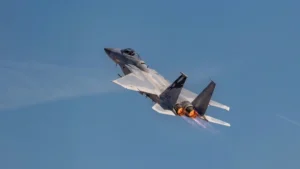
South Korea, working jointly with Indonesia under the KF-X program, has developed its newest multirole fighter jet, the KF-21 Boramae.
It already supports a variety of air-to-air missiles such as the short-range IRIS-T and AIM-9X, medium-range AIM-120 AMRAAM, and long-range Meteor missiles.
Integrating hypersonic ballistic missiles into its arsenal marks a strategic milestone, enabling the KF-21 to undertake high-speed, long-range strikes against well-defended targets.
South Korea committed an estimated budget of $200 to $218 million (around 290 billion KRW) to the modernization of the KTSSM-II series, including missile integration on the KF-21 airframe.
Hanwha Aerospace’s contract to supply 40 engines for the aircraft underlines the extensive domestic industrial involvement in bringing these advancements to fruition.
This new missile system positions South Korea between existing systems like Israel’s Air LORA and the U.S. Mako missile in performance and mission profile.
The South Korean missile combines a powerful warhead with a longer standoff range, optimized for domestic platforms, and represents a significant boost in the country’s autonomy in long-range precision strike capabilities.
South Korea’s move to develop and deploy hypersonic missile technology comes amid a regional arms race involving major powers such as Russia, China, and the United States.
These countries have all been investing heavily in hypersonic weapons that offer speed and maneuverability advantages critical for penetrating advanced missile defense systems.
By fielding its own air-launched hypersonic missile, South Korea aims to enhance its deterrence posture against North Korea’s growing missile threats and solidify its position among the select group of Countries possessing the ability to incorporate advanced missile systems into their fighter aircraft platforms.
The initiative not only strengthens national defense but also reinforces South Korea’s status as an emerging leader in advanced military technology.
In modern air combat, arming the KF-21 with hypersonic missiles allows for swift, pinpoint strikes that cut enemy response time and enhance pilot and aircraft safety.
As regional military balances shift, this capability could be crucial in maintaining stability and security on the Korean Peninsula and throughout East Asia.
South Korea’s development reflects a broader trend where nations invest in versatile, long-range, and highly survivable strike weapons.
The hypersonic missile program is a clear signal of Seoul’s intent to maintain technological edge and strategic flexibility in response to complex security challenges.
This development follows continuous efforts to upgrade the KF-21 platform itself, including plans for stealthier, heavier variants such as the KF-21EX, which focus on internal weapons bays and enhanced survivability against sophisticated air defense networks.
Combined with new missile systems, the KF-21 series represents a generational leap in South Korean air combat capabilities.
Overall, South Korea’s entry into the hypersonic weapons arena is a significant milestone that underscores its ambitions to advance indigenous defense technologies and adapt to shifting regional security dynamics with innovative and robust military solutions.