Follow Us:
Follow Us:


Defense Feeds – PAC-3 missile seeker production grows as aerospace leader Boeing has won multiyear contracts valued at around $2.7 billion to produce over 3,000 Patriot Advanced Capability-3 (PAC-3) missile seekers through 2030.
These seekers, integral to Lockheed Martin’s PAC-3 interceptors, are critical for identifying, tracking, and neutralizing fast-moving aerial threats.
The U.S. Army is working closely with both Boeing and Lockheed Martin to increase production capacity to meet rising global demand.
Jim Bryan, Boeing’s Executive Director of Integrated Air & Missile Defense, emphasized the company’s readiness to support national defense needs.
He stated that the multiyear contract awards reflect significant progress and will enable Boeing to meet the accelerated requirements for the PAC-3 seeker system worldwide.
This ramp-up is set to ensure that the PAC-3 missile defense remains effective against emerging threats, including hypersonic missiles.
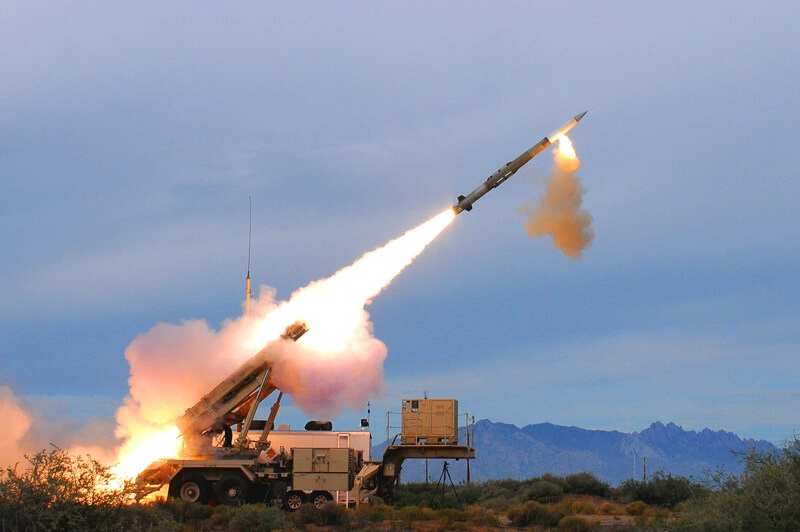
Boeing intends to raise annual PAC-3 seeker production to as many as 750 units by channeling investments into state-of-the-art manufacturing processes and a strengthened supplier network.
Management projects a new program record by delivering between 650 and 700 seekers before year-end 2025, signaling the highest monthly and annual shipment levels achieved since the program’s inception.
The production line operates out of Boeing’s Huntsville, Alabama facility, which recently benefited from a 35,000-square-foot expansion.
This upgrade is designed to bolster throughput and efficiency, enabling faster fabrication cycles and improved quality control across the manufacturing flow.
Since the program began in 2000, Boeing has produced and delivered more than 6,000 PAC-3 seekers to the U.S. Army and allied nations, highlighting the enduring strategic importance of this missile defense technology.
The PAC-3 interceptor, equipped with Boeing’s highly advanced seekers, is specifically engineered to counter an extensive variety of aerial threats.
These include ballistic missiles that travel at extremely high altitudes and speeds, cruise missiles designed for low-altitude flight, hostile aircraft, and the newer challenge of hypersonic weapons that maneuver unpredictably and travel faster than five times the speed of sound.
This capability places the PAC-3 system at the forefront of modern missile defense technology.
Its strategic importance extends beyond battlefield scenarios; PAC-3 interceptors are essential in safeguarding critical military bases, vital infrastructure such as power plants and communication hubs, and civilian populations in vulnerable regions.
The system’s deployment is especially critical today as geopolitics drive increased tensions in hotspots like Ukraine and the Middle East, alongside a growing emphasis on enhancing defense readiness in the Indo-Pacific theater.
Functioning as the upper-tier protective layer of the broader Patriot missile defense system, PAC-3 interceptors deliver precision targeting and terminal-phase interception.
This terminal-phase capability is crucial, intercepting threats in their final moments when they approach protected assets.
Such layered defense ensures multiple opportunities to neutralize incoming threats, vastly improving overall air and missile defense efficacy.
Today, 17 nations, including the United States and key allied countries across Europe, Asia, and the Middle East, rely on PAC-3 systems, underscoring their global trustworthiness and strategic value.
Boeing’s announcement emphasizes the enduring collaboration with Lockheed Martin and the U.S. Army in delivering cutting-edge missile defense solutions.
This partnership is a cornerstone of continued technological progress, ensuring that the defense industrial base remains resilient and responsive to evolving threats.
The expanded production contract significantly strengthens this foundation by scaling up availability of PAC-3 seekers to meet both domestic and allied requirements.
Boeing credits its global supply chain and highly skilled workforce as driving forces behind meeting the rising demand and operational needs.
The rapid technological advancements in missile threats, such as maneuverability and speed, mean fewer defense systems can effectively engage them during the critical terminal phase.
PAC-3 remains a leader in this domain, capable of defeating complex and emerging threats that challenge conventional interceptors.
As the U.S. Department of Defense intensifies efforts to implement layered air defense across multiple conflict domains, the PAC-3 seeker program’s growth directly supports these plans.
By increasing production capacity, Boeing aims to improve not only the system’s accessibility but also its readiness and operational responsiveness.
The expanded output will enable quicker deployments and upgrades worldwide, maintaining a critical edge for U.S. forces and allies alike as aerial threats grow increasingly sophisticated in both frequency and complexity.