Follow Us:
Follow Us:

Defense Feeds – North Korea Debuts Hwasong-11Ma, revealing what defence analysts believe to be a newly engineered hypersonic glide variant of its Hwasong-11 short-range ballistic missile during the “Defense Development-2025” exhibition in Pyongyang.
According to images released by the Korean Central News Agency (KCNA) and relayed by South Korean media, the missile carries a maneuverable hypersonic glide vehicle (HGV), a design intended to sustain aerodynamic lift and execute unpredictable lateral manoeuvres at extreme speeds exceeding Mach 5.
Part of the KN-23 tactical missile family, the Hwasong-11Ma replaces its conventional blunt cone with a faceted, wedge-shaped glide body.
This shape, consistent with hypersonic lift-generating designs, enables the weapon to travel at lower altitudes while maintaining high velocity.
By flying shallow and manoeuvring laterally, the missile significantly reduces detection time, compressing engagement windows for defensive systems such as the U.S. Patriot PAC-3 and THAAD batteries deployed in South Korea, Japan and aboard allied naval assets.
Military experts note that while the hypersonic label denotes speed above Mach 5, the strategic benefit here lies more in the combination of low trajectory, sustained energy management, and manoeuvre capability—characteristics that degrade missile defence predictability and reduce interception success rates.
This evolution signals North Korea’s continued push to develop precision strike capabilities capable of bypassing or saturating advanced defence networks.
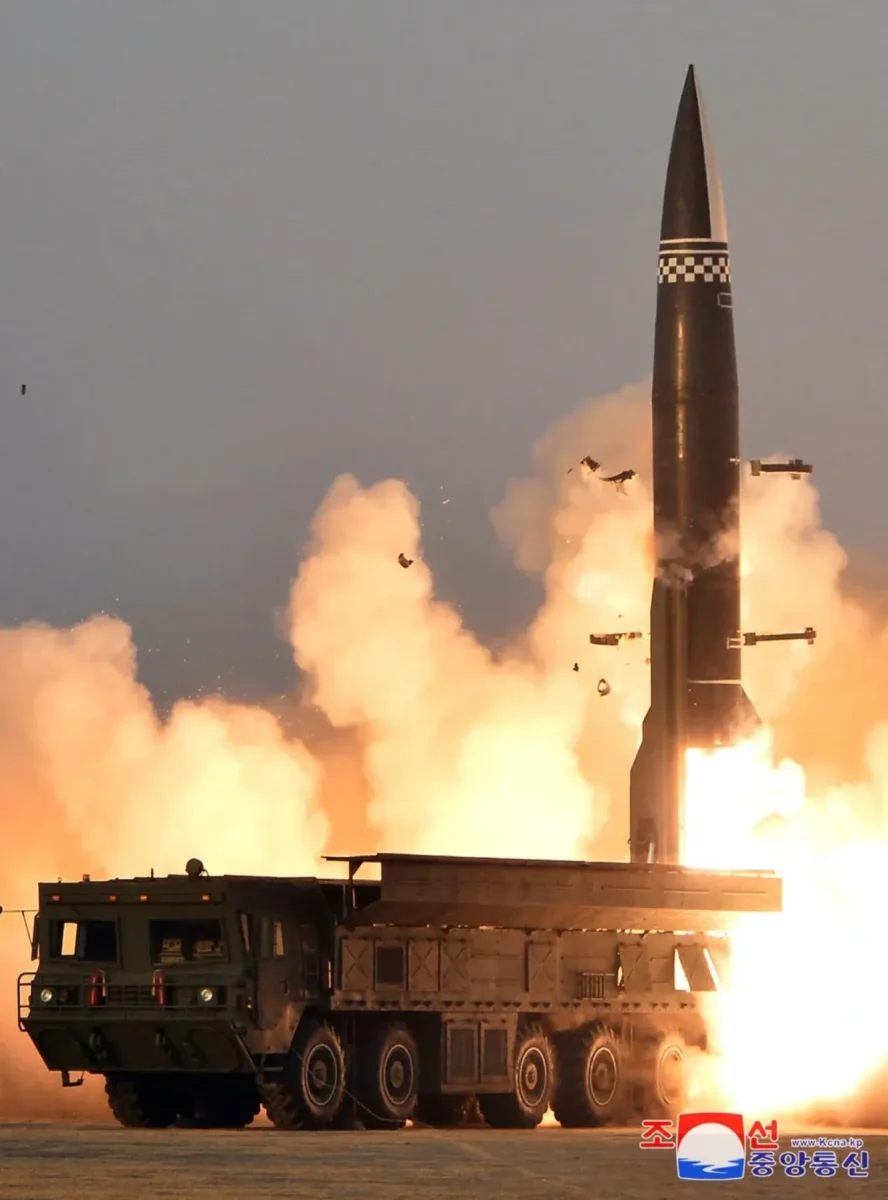
Despite the new warhead configuration, the Hwasong-11Ma retains the solid-fuel propulsion system from the earlier KN-23 models.
This fuel type is valued for quick readiness and minimal pre-launch signatures, allowing missiles to be fired with limited warning.
North Korean engineers appear to have preserved the missile’s existing airframe and propulsion architecture, modifying primarily the front-end section.
This approach enables rapid integration while avoiding costly and complex redesigns.
The missile’s estimated operational range—between 600 and 800 kilometres—places both U.S. bases in South Korea and Japan within striking distance.
Carrying a warhead weighing roughly 500 kilograms and boasting a circular error probable (CEP) of 5 to 30 metres, the Hwasong-11Ma can hit high-value targets including airfields, radar installations, and command nodes with precision.
Its transporter-erector-launcher (TEL), a robust 8×8 wheeled heavy vehicle, can carry two launch canisters and operate across varied terrain.
With a road speed of approximately 70 km/h and an operational range near 1,000 km, the system has both strategic mobility and survivability.
Such mobility supports North Korea’s shoot-and-scoot doctrine, enabling rapid relocation to avoid counter-battery strikes after launch.
From a technical standpoint, the HGV allows midcourse separation during the boost phase, transitioning into a flattened flight path at lower altitude.
In denser atmospheric layers, this increases radar clutter and reduces tracking efficiency.
Gentle S-turns and altitude shifts further degrade interceptor cueing, making systems like Patriot and THAAD less effective within their optimal engagement envelopes.
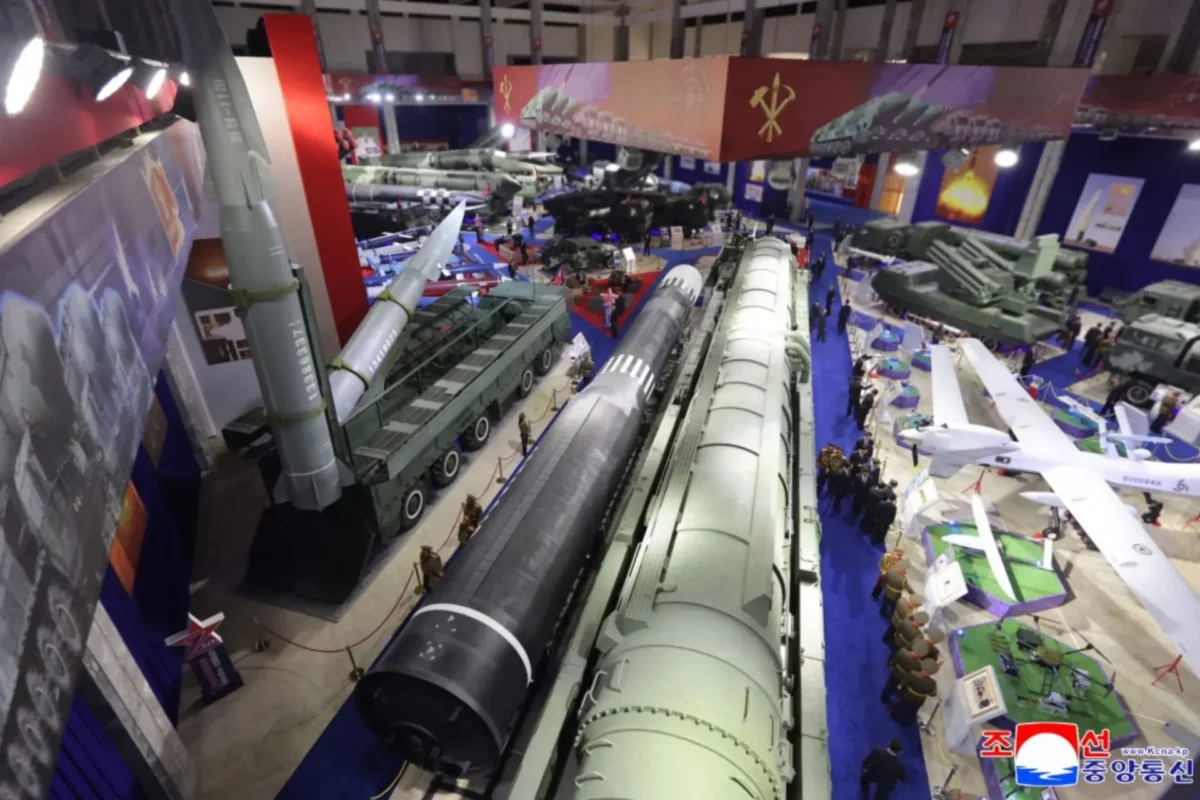
The Hwasong-11Ma represents a significant jump in North Korea’s tactical missile arsenal, especially in terms of defence evasion tactics.
Regional missile defences rely on layered protection, combining Patriot PAC-3 point defence, Aegis ballistic missile defence ships, and THAAD high-altitude interceptors. Each system is designed for specific altitude and trajectory profiles.
By introducing a low-flying, manoeuvring glider, North Korea could bypass these parameters, forcing defenders to engage under tighter constraints and potentially exhausting interceptor stockpiles faster.
Although it is unclear whether the Hwasong-11Ma is currently deployed in operational units, its public showcase reflects Pyongyang’s military signalling strategy—illustrating capability development to deter adversaries and reassure domestic audiences.
The display also aligns with broader missile modernization efforts, which include larger payload variants such as the Hwasong-11Da and submarine-launched derivatives like the Hwasong-11S.
For U.S. and allied planners, this new capability challenges established defence doctrines.
Reaction times may need to be recalculated, early-warning radar positioning reconsidered, and interceptor sequencing revised to address the reduced engagement window.
The missile’s quasi-ballistic launch followed by hypersonic glide represents a hybrid threat model, blurring the lines between conventional SRBM trajectories and true hypersonic strike weapons.
Ultimately, as North Korea refines the Hwasong-11Ma and potentially integrates advanced guidance or seeker systems, the regional security balance will demand harder choices.
Allies will need to enhance detection coverage, disperse critical assets, and improve integrated fire control across land, sea, and air platforms to maintain effective defence against rapidly evolving missile threats.