Follow Us:
Follow Us:


New Chinese Stealth Jet test flights have captured wide attention, signaling a major step forward in the country’s next-generation airpower.
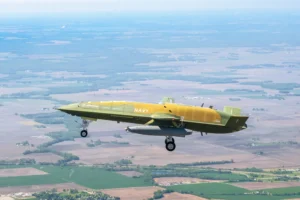
Recent photographs circulating across Chinese social media platforms reveal an innovative delta-wing design with a pronounced, extended nose and seamlessly blended wing-body structure—hallmarks of advanced stealth technology and optimized for long-range strike missions.
Unlike earlier Chinese stealth jets such as the J-36 and J-50 fighters, the new Chinese stealth jet features a distinct profile that has sparked extensive analysis among military experts.
It remains unclear whether this cutting-edge platform is intended as a new crewed fighter or as a large unmanned combat aerial vehicle (UCAV).
Defense specialists widely speculate that it is part of China’s larger strategy to strengthen its airpower with highly flexible and technologically advanced systems.
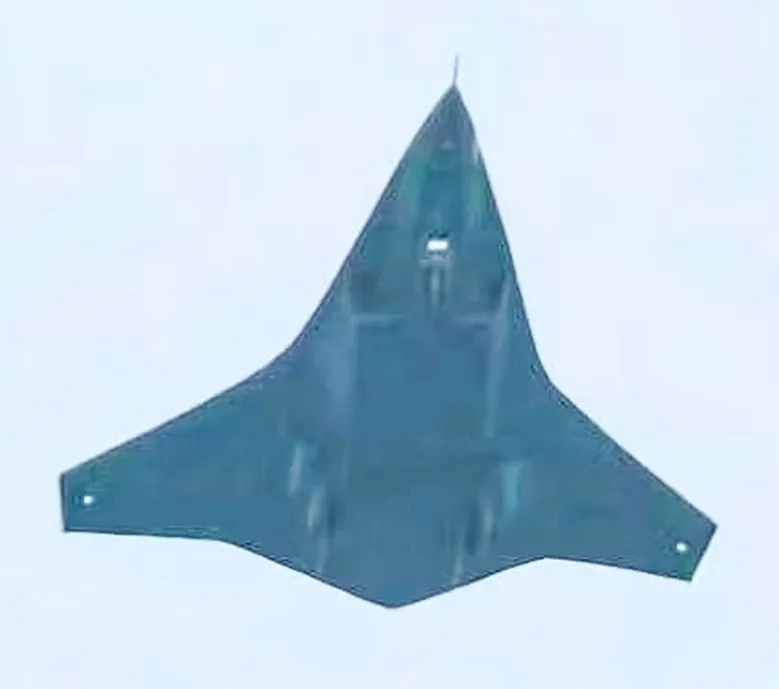
The images show an angular, sleek aircraft lacking the usual vertical tail fins found on many fighters, with sharply swept wings that reduce radar detection.
The nose of the jet is elongated, indicating a design geared toward both aerodynamic efficiency and internal storage for weaponry or sensors.
This kind of design is typical of aircraft that need to stay hidden from enemy radar while striking targets at long ranges.
Notably, this aircraft appears different from China’s previously spotted stealth jets like the J-36 or the J-50, hinting at a separate research and development track.
Andreas Rupprecht, a renowned military aviation expert who closely follows Chinese aerospace, identified the latest images and suggested the new platform might be an unmanned system or even an optionally piloted aircraft, reflecting a broader move toward automation in combat aviation.
The combination of stealth, advanced aerodynamics, and potential unmanned operation aligns with China’s ambitions to field aircraft that earn the “next-gen” label by showcasing superior technology, endurance, and precision strike abilities beyond current fighters.
While China has not officially named or described this aircraft, defense observers speculate that it fits within an expansive program by the People’s Liberation Army Air Force (PLAAF) aimed at modernizing and diversifying its fleet.
The speculation centers on the idea that China is developing a family of optional or fully unmanned strike aircraft designed to extend reach and strike capacity without risking pilot lives.
This new aircraft could augment the capabilities of existing stealth fighters like the J-50, acting as an escort for manned jets or conducting independent missions in high-risk airspaces where stealth and long endurance are critical.
The absence of vertical stabilizers and features typical of stealth drones supports the possibility of unmanned or optionally manned configurations.
These developments come amid an ongoing expansion of Chinese aerospace innovation, as earlier sightings have revealed tailless fighter prototypes and various drone concepts.
If this platform is confirmed to be a UCAV, it would represent a significant step forward in China’s efforts to push the boundaries of unmanned combat technology, enhancing its long-range strike and reconnaissance roles.
The introduction of this new stealth aircraft, especially if it is unmanned, signals a shift in the balance of airpower in the Indo-Pacific region and potentially beyond.
By expanding its portfolio of advanced aerial platforms, China positions itself to challenge both regional rivals and Western powers with cutting-edge technology focused on stealth, range, and precision.
The test flights, occurring unofficially but spotted multiple times since early 2025, reflect rapid technological progress in the Chinese defense industry.
This pace surprises many international observers, highlighting China’s commitment to expanding its air combat capabilities aggressively.
For nations monitoring global military advancements, this aircraft exemplifies the growing emphasis on unmanned and optionally manned systems in future combat scenarios.
The stealth features and long-range strike potential suggest it could play a pivotal role in China’s strategic doctrine, potentially redefining how air dominance and power projection are exercised in contested environments.
In summary, the emergence of this unique stealth aircraft design during recent flight tests illustrates China’s advancing aerospace ambitions.
Whether as a crewed stealth fighter or a large unmanned strike drone, the platform promises to boost China’s long-range precision strike capabilities and reduce pilot risks during complex missions.
This development underscores a broader trend of innovation and modernization in the PLAAF’s quest to rival leading global air forces with next-generation technology.
This new stealth aircraft will be closely watched by military analysts and strategic planners as it moves closer to operational readiness, potentially impacting regional security calculations and global defense technology trends for years to come.