Follow Us:
Follow Us:


Defense Feeds – Kyiv Unveils New Drone Strike capability as Ukraine’s defense industry continues to expand its reach deep inside Russian territory.
When a Ukrainian long-range drone hit a Russian ammunition depot last September, the attack highlighted not only Kyiv’s growing determination to strike far beyond the front lines but also the meteoric rise of Ukraine’s domestic weapons innovation.
The strike, orchestrated by Fire Point — a fast-growing Ukrainian defense startup — forced Moscow to scale back destructive glide bomb assaults on Kharkiv.
At the center of this transformation is Iryna Terekh, Fire Point’s production chief.
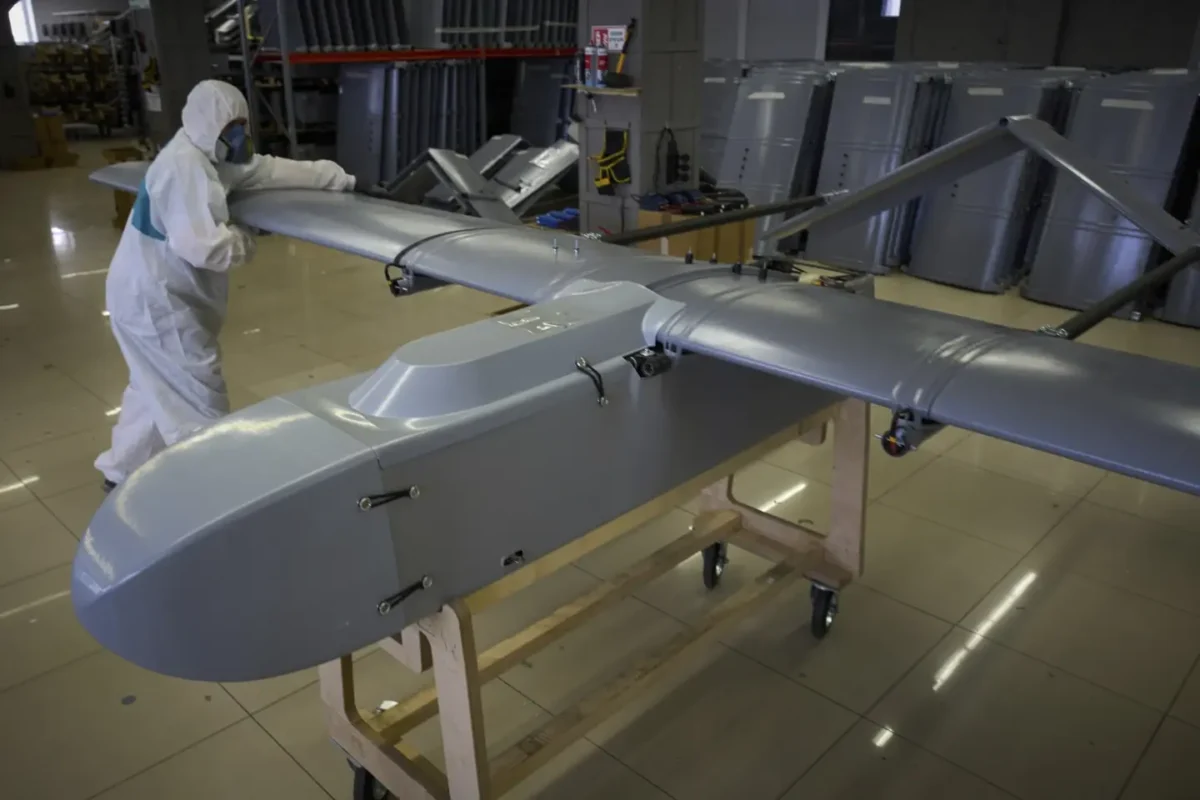
Inside one of the company’s secret factories, she oversees rows of newly built drones designed to target Russian oil refineries, ammunition stockpiles and critical infrastructure.
For Ukrainian forces, these unmanned weapons provide a vital asymmetric advantage.
“Our edge today lies in the air. We don’t match Russia in manpower or resources, but our drone systems are shifting the balance,” Terekh noted.
Fire Point’s trajectory reflects Ukraine’s broader transformation into a global hub for defense technology since Russia launched its full-scale invasion in 2022.
Cut off from Western permission to use long-range missiles supplied by allies, Ukrainian engineers and entrepreneurs turned necessity into opportunity.
The startup emerged from a small group of friends whose expertise came from fields like construction, game design and architecture rather than weapons manufacturing.
They sought to build a low-cost alternative to Russia’s Iranian-supplied Shahed drones, and their answer became the FP-1, a long-range strike drone capable of flying up to 1,600 kilometers.
Unlike many conventional models, it can launch without relying on a fixed airfield, making it harder to target.
Initially expected to produce just 30 drones a month, Fire Point now manufactures about 100 FP-1s every day, each costing roughly $55,000.
Though its stripped-down design resembles a student project more than a polished aerospace product, the drone has delivered remarkable results on the battlefield.
With a 60-kilogram explosive payload, the FP-1 is credited with conducting 60 percent of Ukraine’s deep-strike drone missions inside Russia, significantly degrading Moscow’s supply chain and slowing its artillery fire along the front.
“Ukrainian-made drones are among the best in the world right now,” noted Claude Chenuil, a former officer in the French military who now collaborates with European defense firms.
“When the war ends, Kyiv’s drone industry will become a serious competitor internationally.”
Fire Point is just one of hundreds of Ukrainian defense startups that emerged almost overnight after the Russian invasion.
The government encouraged the sector by lifting regulations, simplifying contracts and allowing units on the battlefield to work directly with manufacturers.
The result has been a surge of wartime innovation and rapid adaptation to Russian tactics that has attracted global attention.
“Ukraine is turning into the Silicon Valley for defense technology,” said Yaroslav Azhnyuk, a well-known tech entrepreneur now focused on military applications.
“What sets us apart is that we are innovating in real-time through active combat conditions.”
Indeed, Fire Point originally purchased navigation systems from Western suppliers, but when Russian electronic warfare rendered them ineffective, its engineers quickly developed their own software to counter jamming attempts.
This drive for self-sufficiency is now a national priority.
Ukraine currently spends about $10 billion annually on domestically produced weaponry.
Officials believe the industry could support triple that amount through foreign sales, particularly to European allies increasingly concerned about their own defense vulnerabilities.
However, the sector’s rapid growth comes with risks. Defense factories are prime targets for Russian strikes and are often hidden underground or embedded within civilian areas, an approach that has inadvertently put nearby populations in danger.
For Kyiv, though, the alternative — operating openly and risking devastating attacks on production hubs — is deemed too great a threat to sustaining the war effort.
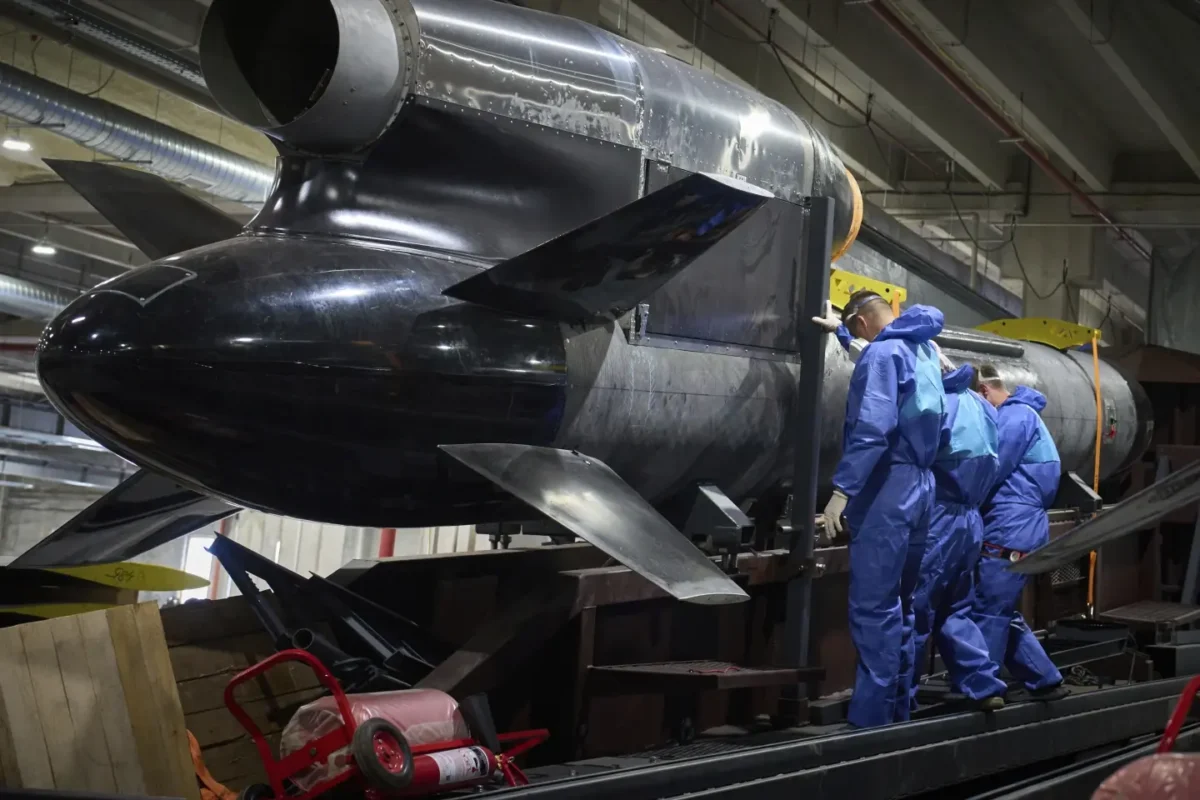
While drones remain the centerpiece of Ukraine’s asymmetric warfare strategy, Fire Point is already preparing for the next evolution: long-range cruise missiles.
This year the company completed testing of the FP-5 “Flamingo,” a missile capable of striking targets up to 3,000 kilometers away with a margin of error of just 14 meters.
It can deliver a massive 1,150-kilogram warhead, making it one of the more powerful weapons of its kind anywhere in the world.
The nickname “Flamingo” stuck after early production models mistakenly came out painted pink, but behind the lighthearted moniker is a weapon Ukraine’s leadership sees as vital for future deterrence.
Currently, Fire Point is producing about one cruise missile per day, with plans to increase capacity to seven daily by the end of the year.
Ukraine’s leader Volodymyr Zelenskyy has urged for large-scale production of the missile, arguing that building a domestic long-range arsenal may serve as Kyiv’s own safeguard.
That approach contrasts with U.S. President Donald Trump’s ongoing efforts to press for a settlement to the war.
“We can’t just depend on promises from others.
Our best insurance is the ability to defend ourselves,” said Arsen Zhumadilov, who leads Ukraine’s arms procurement agency.
For now, Fire Point drones and missiles are sent to the front almost as quickly as they come off the assembly lines.
Factory workers say that everything produced is typically shipped out within 72 hours, hidden inside ordinary cargo trucks.
Despite negotiations and talk of peace, Terekh remains skeptical that Russia will accept meaningful terms.
“We have to prepare for a larger, more dangerous conflict,” she warned — a stark reminder that for Ukraine, the war is not just about survival today but about preparing for the wars of tomorrow.