Follow Us:
Follow Us:


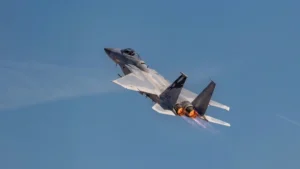
Defense Feeds – Germany strengthens Eurofighter jets by approving a major modernization step for its Typhoon fleet through the acquisition of 90 Rafael Litening 5 advanced targeting pods.
This €350 million deal, announced on August 26, 2025, by Israel’s Rafael Advanced Defense Systems, marks a pivotal upgrade to the Luftwaffe’s precision strike capabilities and significantly reinforces NATO’s collective defense posture across Europe.
The procurement resulted from a direct government-to-government agreement between Berlin and Jerusalem, symbolizing not only a technical leap for Germany’s frontline fighter aircraft but also a clear indication of Berlin’s enhanced commitment to European and alliance defense responsibilities.
The procurement was made possible after the Bundestag Budget Committee approved the funding package in June 2025, enabling Germany’s defense procurement authority BAAINBw to move forward with an accelerated, non-competitive contract.
Officials cited Rafael’s proven combat record as the reason for bypassing a traditional tender process.
The Litening pod has already been integrated across more than 28 international air forces on diverse combat platforms, including the F-16, F/A-18, Saab Gripen, Dassault Rafale, A-10 Thunderbolt II, and Israel’s advanced F-15 and F-35 fleets.
Critics of the accelerated process believe Germany could have considered a European-made system, but defense planners emphasized the need for immediate operability and minimal integration risks.
For the Luftwaffe, timeliness is crucial. The Eurofighter Typhoon, while highly capable in air superiority missions, has long been criticized for lacking modern targeting systems that hinder tactical strike operations.
Unlike the British and Italian variants of the platform that already employ advanced pods, German jets were dependent on allied partners for precision designation in multinational campaigns. With the Litening 5 integration, this long-standing gap is finally resolved.
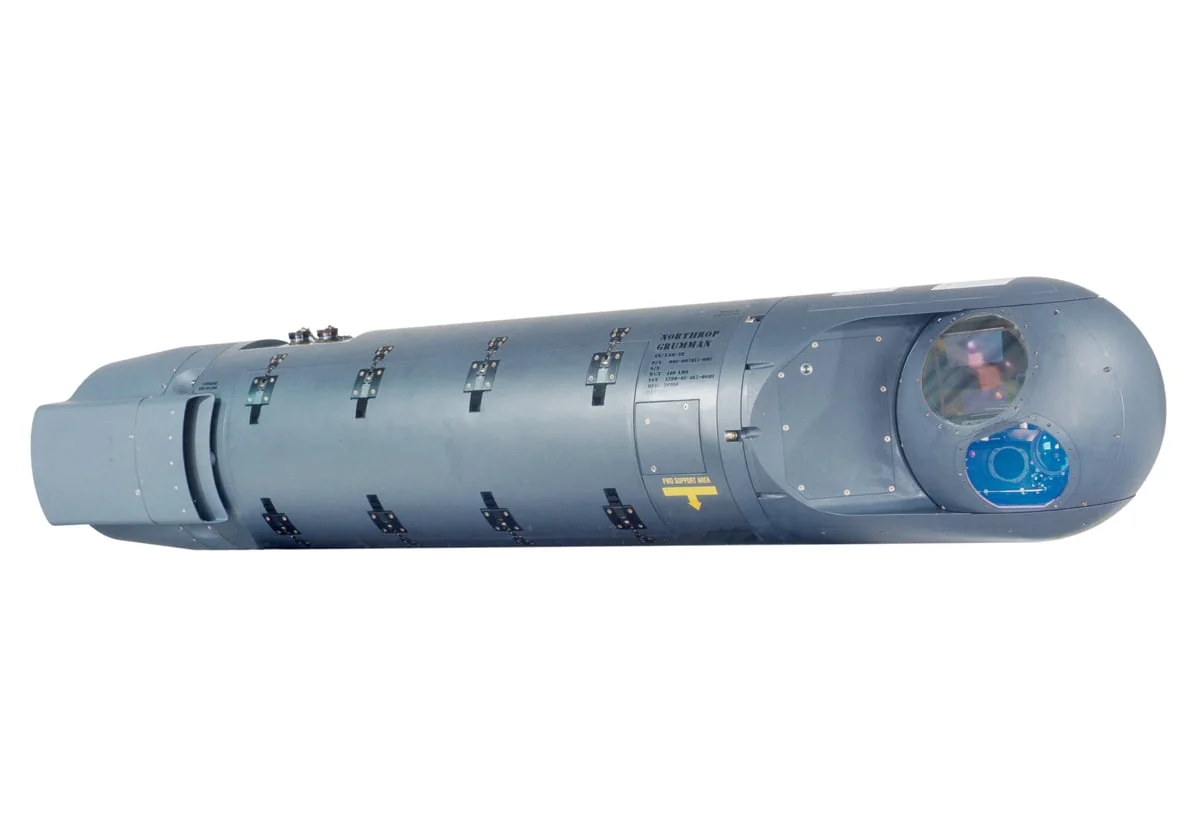
The Rafael Litening 5 pod is widely respected for its multi-sensor fusion and combat versatility.
The system integrates high-resolution day cameras, forward-looking infrared sensors, dual laser designators, and optional synthetic aperture radar (SAR).
Together, these features give Typhoon pilots an advanced ability to locate, classify, and track airborne or ground targets in real time, regardless of terrain or weather conditions.
Significantly speeding up the sensor-to-shooter cycle is a major strength of the pod.
By providing ultra-clear imagery and immediate targeting data, pilots can prosecute time-sensitive threats far faster than before.
This is critical in today’s modern battlefield, where drones, mobile missile launchers, and irregular forces can rapidly shift locations.
Armed with Litening 5, German Eurofighters will be capable of guiding a wide range of precision weapons including GBU-54 Laser JDAMs, Paveway IV bombs, and the Taurus KEPD 350 standoff cruise missile already in Luftwaffe service.
Importantly, the pod also enhances air-to-air engagement performance by enabling identification of low-signature aerial objects, a growing challenge with the proliferation of small unmanned aerial systems.
Operationally, the impact is far-reaching. Pilots can now carry out independent strike operations without relying on allied aircraft for target designation, support close air support missions with ground units, and contribute intelligence-gathering in joint operations.
NATO had repeatedly flagged this gap in its annual readiness assessments, noting Germany’s limitations despite owning one of Europe’s largest Eurofighter fleets.
This acquisition is not a standalone decision but part of Germany’s broader €100 billion armed forces modernization program launched in 2022.
Other high-profile defense programs funded from this extraordinary budget include the procurement of Boeing CH-47F Chinook heavy-lift helicopters, the purchase of Israel’s Arrow 3 missile defense system, and the digital upgrade of Puma infantry fighting vehicles.
Within the airpower domain, Berlin has also committed to integrating the new CAPTOR-E AESA radar for Eurofighters, along with cutting-edge electronic warfare systems and next-generation long-range standoff weapons.
Collectively, these projects aim to bridge capability gaps and ensure the Luftwaffe retains parity with frontline NATO air forces such as those of Britain, Italy, and France.
From a geopolitical perspective, the Litening 5 program aligns with the European Union’s “ReArm Europe/Readiness 2030” strategy that seeks to reduce reliance on American assets by cultivating stronger indigenous European defense capabilities.
For Germany, this move is a declaration of readiness to play a leadership role in joint EU and NATO missions, while enhancing Europe’s ability to operate independently in crisis scenarios.
The pods also extend their utility beyond traditional warfare. As hybrid threats become more common, including the use of drones by non-state actors, the ability to reliably detect small, fast-flying aerial targets at long ranges becomes indispensable.
The addition of SAR capability further bolsters reconnaissance in poor weather, giving German fighters a dual-role utility in both strike and defensive counter-drone operations.
Looking ahead, the arrival of the Litening 5 pods will act as a transitional upgrade for Germany’s Eurofighter jets, preparing the way for the multinational Future Combat Air System (FCAS) — a collaborative sixth-generation fighter program developed by France, Germany, and Spain.
By fielding a battle-proven sensor suite on its current fleet, Berlin ensures seamless operational continuity until next-generation platforms reach maturity.