Follow Us:
Follow Us:


Defense Feeds – The Super Hornet Upgrade Program is set to relocate from Boeing’s St. Louis facilities to other sites by 2027 as part of a wider industrial realignment.
Boeing confirmed the transition will shift its F/A-18 Service Life Modification (SLM) work to expand capacity in Missouri for new aircraft production lines while ensuring continued support for the U.S. Navy’s operational fighter fleet.
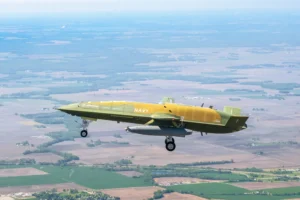
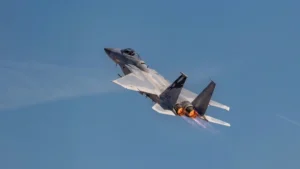
According to company officials, the adjustment forms a critical element of Boeing’s long-term strategy to balance ongoing modernization of legacy aircraft with the development of next-generation platforms such as the F-15EX Eagle II, the T-7A Red Hawk trainer, and the MQ-25 Stingray carrier-based tanker.
The announcement, made on September 24, marks a significant step in Boeing’s broader site realignment strategy.
Company executives explained that the relocation of the Super Hornet SLM program will free up vital space in St. Louis for expanding fighter and munitions production.
Ongoing and upcoming projects at the facility include work on the F-15EX Eagle II, the T-7A Red Hawk advanced trainer, the MQ-25 Stingray unmanned aerial tanker, and several precision weapons programs.
Dan Gillian, Boeing vice president and general manager for Air Dominance, described the transition as a logical step in positioning St. Louis for the next generation of combat platforms.
“Our expansion plans across the site required execution of a strategic long-term vision. Since we are successfully performing Service Life Modifications at other locations, the move allows us to sustain customer needs while securing capacity for future programs,” he said.
For Boeing, the SLM program has been a cornerstone of its support for the U.S. Navy’s aviation needs.
The initiative aims to ensure the Super Hornet fleet remains combat ready well into the 2030s, particularly as naval aviation undergoes a gradual transition toward newer platforms.
Relocating the program prevents production bottlenecks in St. Louis and aligns with U.S. defense modernization priorities.
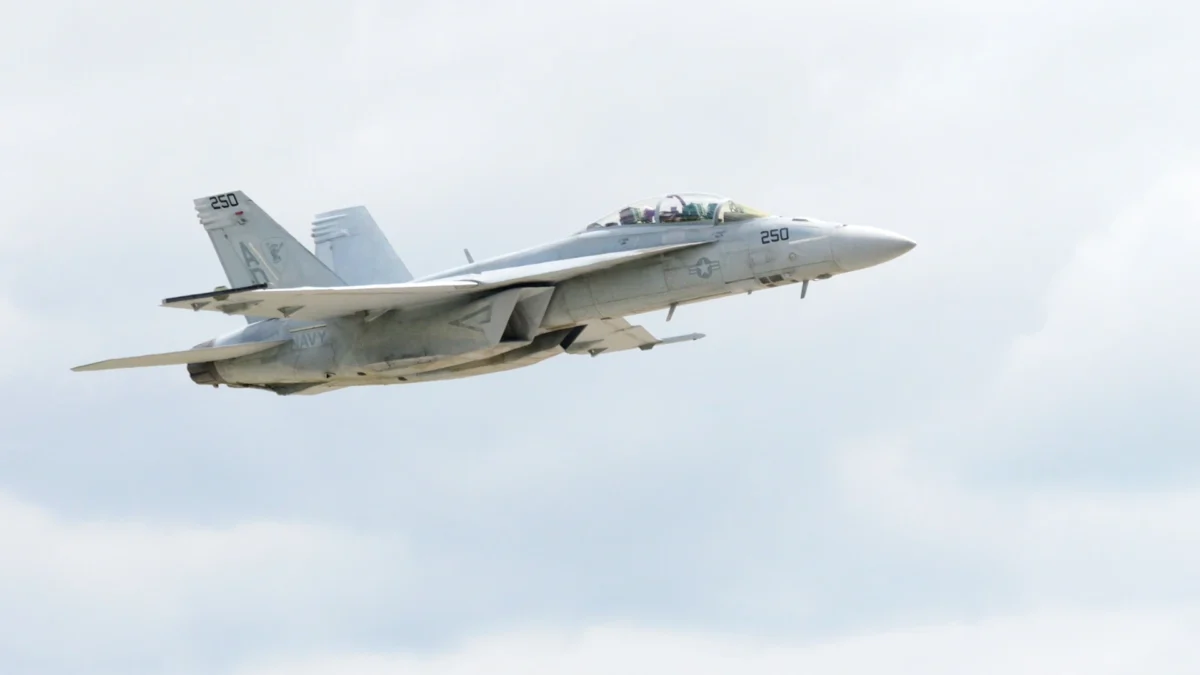
Boeing is currently reviewing multiple locations to absorb the SLM workload. Its maintenance and modification facility in San Antonio, Texas, is already performing Super Hornet upgrades and is seen as a leading candidate.
Jacksonville, Florida, is also in consideration, as modification efforts are already underway there.
Additional work has been managed through the Navy’s Fleet Readiness Center Southwest (FRC Southwest) in San Diego.
By distributing SLM operations across several sites, Boeing intends to maintain speed and quality while broadening industrial resilience.
The company has steadily increased throughput since the start of the program, ensuring upgraded aircraft return to carrier air wings faster with reduced downtime.
The Service Life Modification extends each F/A-18 by around 4,000 additional flight hours.
More importantly, jets are modernized to the Block III configuration, which introduces advanced avionics, improved data networking, and limited stealth enhancements through radar cross-section reduction.
All Block II models currently serving with the Navy are eligible for these upgrades, making the program critical to sustaining combat effectiveness.
Mark Sears, Boeing’s vice president of Fighters, underscored the commitment to continuity. “We have worked with the Navy for years to evolve SLM while building capacity in San Antonio and at FRC Southwest.
Delivering modernized fighters from multiple facilities is at the core of how we sustain these fleets, and we will continue to do so for the life of the Super Hornet,” he said.
The Super Hornet has formed the backbone of U.S. Navy carrier air power since its introduction in the early 2000s.
More than two decades later, the fighter remains essential to naval operations, bridging the gap until future carrier-based aircraft enter service.
Through the SLM upgrades, the jets are kept relevant against evolving threats by enhancing survivability, connectivity, and overall combat capability.
However, the Boeing announcement also reflects a larger industrial transition. Earlier in 2025, the U.S. Air Force selected Boeing to design and build its new sixth-generation F-47 fighter under the Next Generation Air Dominance (NGAD) initiative.
The project is expected to become one of the largest combat aircraft programs in decades, requiring significant industrial focus.
Personnel currently assigned to Super Hornet upgrades in St. Louis are expected to shift to these advanced projects as existing SLM work transitions elsewhere.
By creating room in St. Louis for F-47 production alongside the F-15EX, T-7A, and MQ-25 lines, Boeing is aligning its sites with long-term Pentagon procurement strategies.
Defense analysts view the move as a pragmatic decision that balances near-term fleet maintenance with preparations for future combat systems.
For the Navy, the continuation of the Super Hornet modernization program is critical. Carrier air wings remain heavily reliant on the aircraft for strike, air superiority, and fleet defense missions.
Sustaining them through the next decade offers breathing space until newer designs, potentially including navalized sixth-generation platforms, enter the fleet.
With the SLM capacity expanding across San Antonio, Jacksonville, and San Diego, the Navy will continue receiving Block III-standard fighters to ensure operational tempo is maintained through the 2030s.
The distributed system also provides flexibility and resilience should industrial or supply chain disruptions occur.
The phased relocation underscores how the defense industry adapts to balance modernization with sustaining proven platforms.
For Boeing, it reflects the dual challenge of meeting today’s operational needs while positioning for tomorrow’s air dominance requirements.