Follow Us:
Follow Us:

When people talk about modern artillery, the PzH 2000 Howitzer often comes up as an example of how traditional firepower can still matter in a high-tech war. This has become especially clear in Ukraine.
Germany and the Netherlands first sent several of these self-propelled howitzers to Kyiv in mid-2022, not long after Russia’s full-scale invasion began. At the time, Ukraine was struggling against relentless Russian artillery, so longer-range firepower was high on the wish list.
Reports suggest the PzH 2000s were quickly put to work in the Donbas region, where battles around places like Sievierodonetsk and later Bakhmut were decided in large part by heavy artillery. Ukrainian crews used the system to hit Russian supply lines, troop concentrations, and command posts from ranges where older Soviet-era guns simply could not reach.
In some cases, the German howitzer is said to have fired with impressive accuracy at more than 40 kilometers, which helped Ukraine slow down Russian advances.
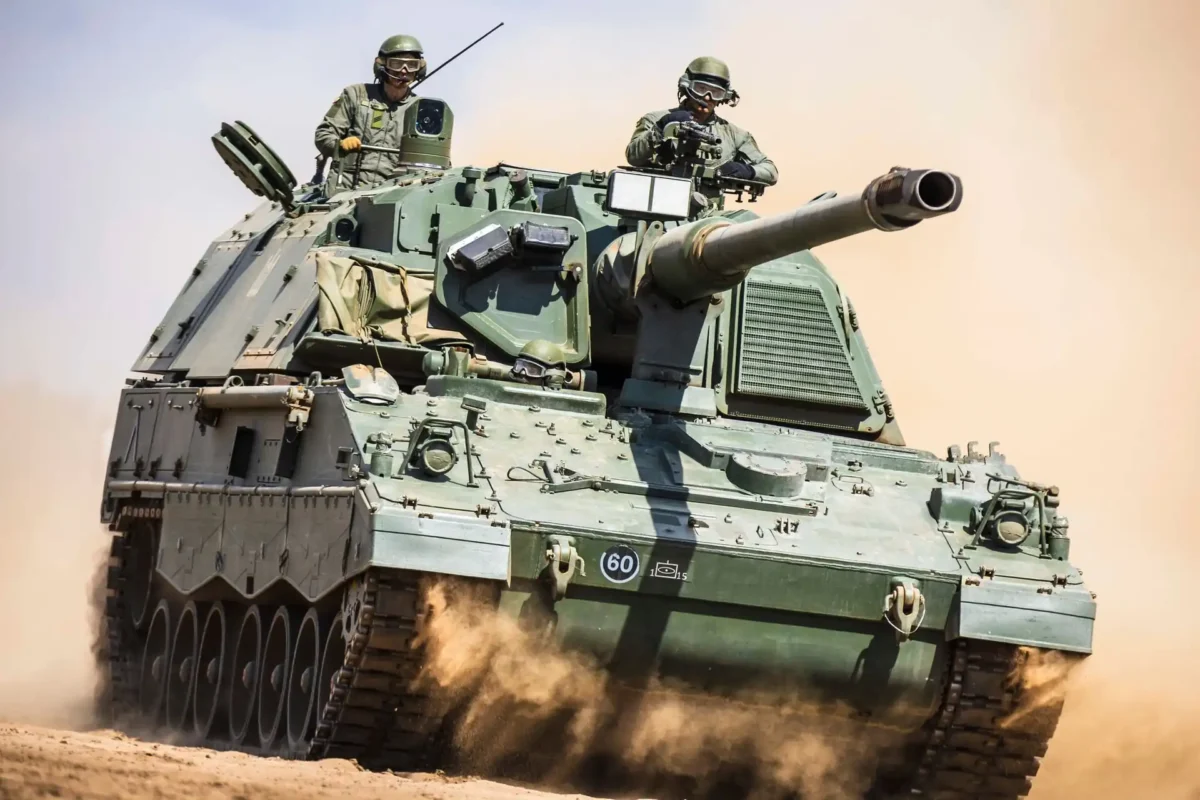
Interestingly, despite being developed back in the 1990s, the German-made howitzer is often described as one of the most advanced of its kind anywhere in the world. That might come as a surprise. Military tech usually feels outdated after a decade or two, but this one keeps showing up in the conversation.
The question, then, is why it still gets so much attention, and even a bit of fear, on today’s battlefields?. Is it really the most effective artillery piece in service today, or has its reputation grown larger than reality?
The PzH 2000 is a 155mm self-propelled howitzer, designed to give armies both reach and speed of fire. On most days, the PzH 2000 reaches about 30 to 40 kilometers with standard shells.
Some reports suggest that, with certain shells, like base-bleed or rocket-assisted types, it can push out to around 60 or maybe even 67 kilometers. How often that happens in real battles is another question, and it’s probably not something crews can count on every time.
The gun’s rate of fire is another part that stands out. It can put out up to ten rounds in a single minute, which is far quicker than most artillery pieces. In the field, though, crews don’t usually keep that tempo going for long. Firing that fast risks overheating the barrel or wearing it down sooner than expected. Because of this, soldiers often slow the pace to balance firepower with keeping the system working.
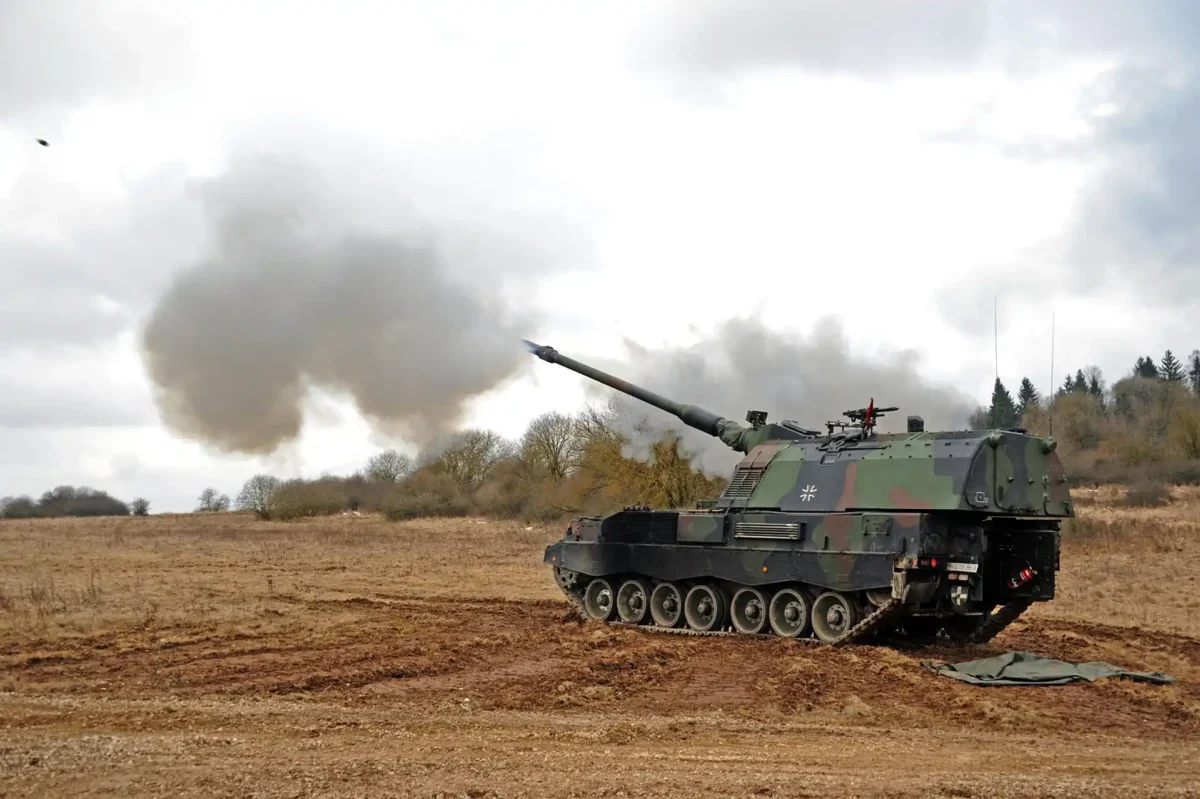
Because it is mounted on a heavily armored tracked vehicle, the PzH 2000 is also mobile. It can reposition quickly after firing, which is vital in modern “counter-battery” battles where staying in one place too long often means being targeted. The crew usually consists of five soldiers, although in emergencies it can be operated by fewer.
One detail that often gets overlooked is its top speed. On paved roads, the system can reportedly reach around 60 kilometers per hour, which is fairly quick for a 55-ton tracked vehicle. Of course, in rough terrain the speed is much lower, but the point is that it can keep pace with armored units rather than lagging behind like towed artillery pieces.
| Feature | Details (approx.) |
| Caliber | 155mm NATO standard |
| Maximum Range | 30–40 km (standard); up to ~67 km with special rounds |
| Rate of Fire | Up to 10 rounds/min (short bursts) |
| Crew | Typically 5 (can operate with fewer if needed) |
| Mobility | Tracked, self-propelled, armored |
| Weight | ~55 tons |
| Engine Power | ~1,000 hp diesel |
| Top Speed | ~60 km/h (on road) |
| Reload System | Automatic loader, 60 rounds onboard |
The PzH 2000 is a heavy machine, about 55 tons all up, which is closer to the weight of a tank than most artillery. Being that heavy comes with both good and bad points. On the good side, the crew isn’t sitting in a thin metal box. The armor gives decent protection against things like rifle fire or flying fragments from nearby blasts.
On the downside, the system is harder to transport, especially by air. Moving it long distances often requires heavy equipment transporters, which can limit flexibility for some armies.
Read also: RCH 155 Howitzer: Germany’s Advanced Wheeled Artillery System
The PzH 2000 runs on a 1,000-horsepower MTU diesel engine. That’s enough to keep up with armored units and shift position quickly after firing, even if it’s not as agile as a tank. The downside is its bulk, at around 55 tons, long-distance moves usually need heavy transporters, which can limit flexibility.
One difference with the PzH 2000 is how it eases the crew’s workload. In older Soviet guns, soldiers had to haul every shell by hand, and each one weighed close to 45 kilos. Do that a few times in a row, and you can imagine how quickly people get tired. And when fatigue sets in, the gun’s output drops.
The PzH 2000 solves this with its automatic loading system. It has a mechanical arm that helps move and load ammunition. This means the crew can fire several shells in a very short time, sometimes as many as 6 to 8 rounds in under a minute, without collapsing from fatigue.

One thing that really sets the PzH 2000 apart is accuracy. Older Soviet-era artillery, still common in both Russian and Ukrainian units, often struggled at long range, sometimes shells can land hundreds of meters off target. The German system was designed to fix that weakness. Its modern fire-control computer and GPS-based aiming give crews a much better chance of putting shells right where they want them.
Range is the second part of the equation. With regular shells, the PzH 2000 can strike about 30 to 40 kilometers out. Under the right conditions, and with special rounds, it may even stretch toward 60 to 67 kilometers, though that kind of performance isn’t always practical in day-to-day combat.
A feature that often gets people’s attention with the PzH 2000 is something called MRSI, short for multi-round simultaneous impact.
The idea is fairly simple, even if it sounds high-tech. The crew fires a few shells in quick order, but changes the angle and the charge each time. The rounds take different paths through the air, yet, if done right, they all come down on the same spot at almost the same moment.
When MRSI works as intended, it can put defenders in a difficult spot. Rather than hearing one or two impacts and having a chance to scatter, they may suddenly face several blasts nearly at once. This limits the warning time and makes moving equipment or casualties much harder, at least in theory.
In training exercises, NATO crews have demonstrated this by firing three to five shells in quick succession, all slamming into a target area together. But when it comes to actual war, the story is a bit more complicated.
For example, in Ukraine, there have been reports that the PzH 2000 has been used for fast, concentrated strikes against Russian positions, though it’s not always clear whether full MRSI was carried out or just rapid salvos. Some Ukrainian gunners have mentioned that the system’s advanced fire control does make coordinated strikes easier compared to older Soviet guns, but setting up perfect MRSI in a live combat zone may not always be practical.
One thing that makes the PzH 2000 different is the way it uses digital fire controls. With older guns, crews often had to pull out maps and do the math by hand, sometimes even scribbling on paper to get the angles right.
That approach worked, but it could feel painfully slow under pressure. By the time the numbers were ready, there was always the risk that the enemy had shifted or the moment had passed.
With the PzH 2000, the process is quicker. Crews can get target data sent straight from drones, radar, or a command post. Once the data is entered, the fire control computer automatically calculates the best angle, charge, and direction for the gun.
In good conditions, the gun can be ready to fire in well under a minute, sometimes closer to 30 seconds.
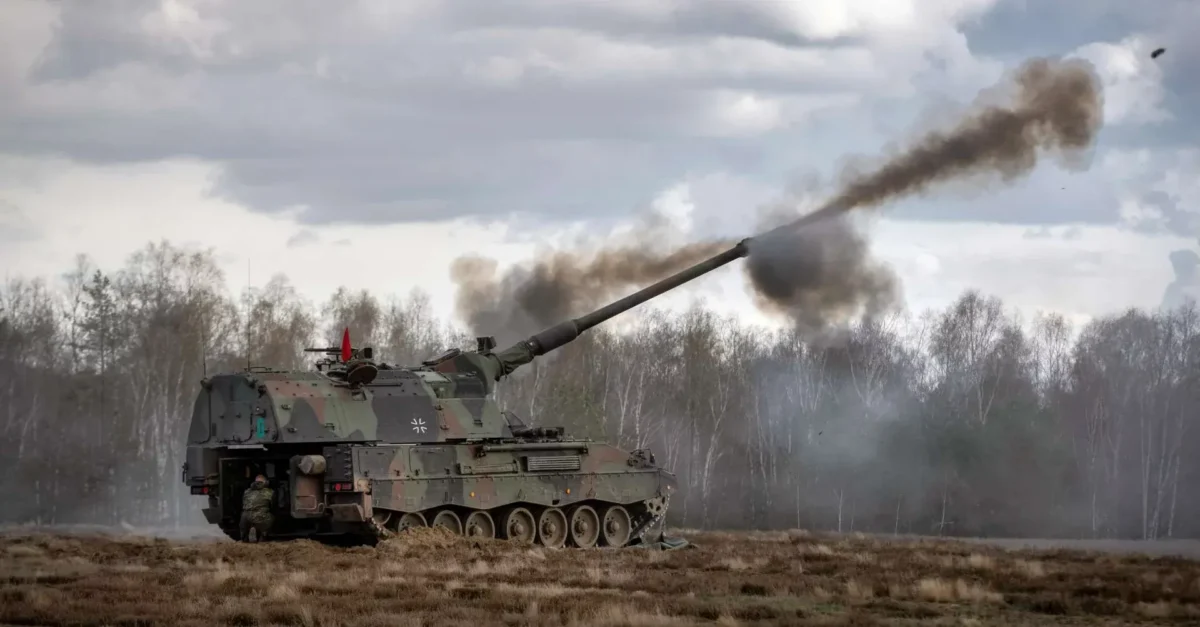
The digital setup also makes it easier for guns to work together. A few PzH 2000s can be tied into the same network, so when one crew gets the fire order, the others see it too. That way, they can hit the same target at almost the same moment. How smoothly that works in practice may depend on the quality of communications, but when it does, it allows units spread over many kilometers to act like a single battery.
When people first read about the PzH 2000, it’s easy to get caught up in the raw stats. But the real question is what those numbers meant once the gun actually went into battle.
Its first serious test came in Afghanistan. Around 2006, German and Dutch forces brought it in at a time when NATO was having trouble with Taliban units firing from a distance and then melting away into the landscape. The howitzer’s long range, able to strike targets 30 kilometers or more away, gave troops a way to strike back at enemies who thought they were out of range.
One story that’s often mentioned is the fighting near Chora in 2007. Dutch PzH 2000s reportedly fired dozens of shells in support of troops who were under heavy attack. Some soldiers later commented that without that artillery, their positions might have been overrun. The system’s ability to keep firing accurately for long stretches seemed to give NATO a lifeline in a very tough fight.
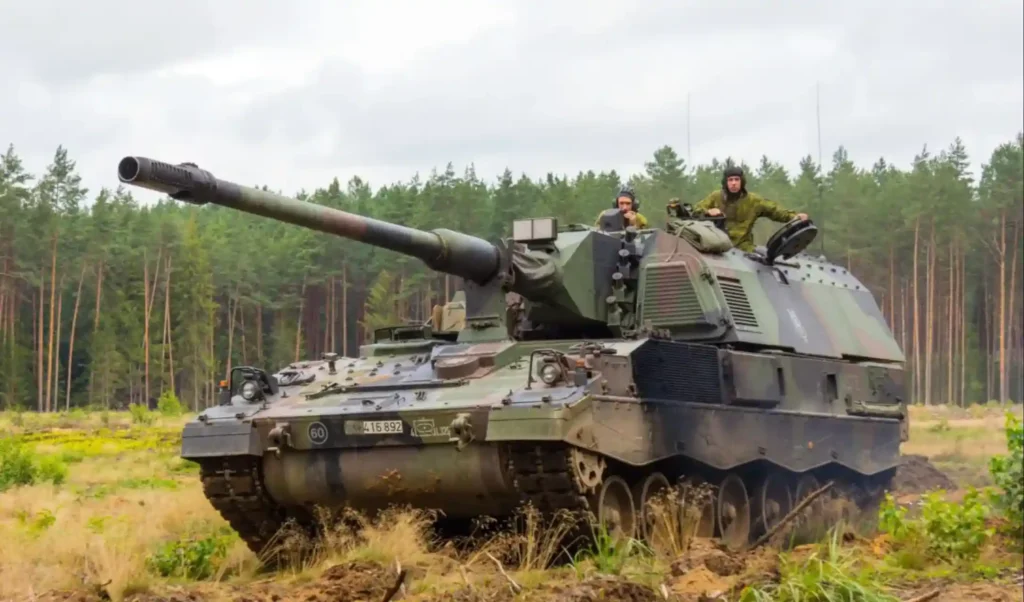
For many, the real trial by fire for the PzH 2000 has been Ukraine. Germany and the Netherlands began sending the guns over in mid-2022, and they didn’t sit idle for long. Very quickly, the system was put to use in the Donbas region. where the fighting was at its heaviest.
From what’s been reported, the howitzers were used to go after Russian supply depots, command posts, and Russian artillery batteries. In battles like Sievierodonetsk and later around Bakhmut, Ukrainian units apparently relied on the PzH 2000 to reach targets that older Soviet-era guns simply couldn’t hit.
Some accounts even credit the system with slowing Russian pushes by knocking out ammo dumps or hitting troop build-ups before they could move forward.
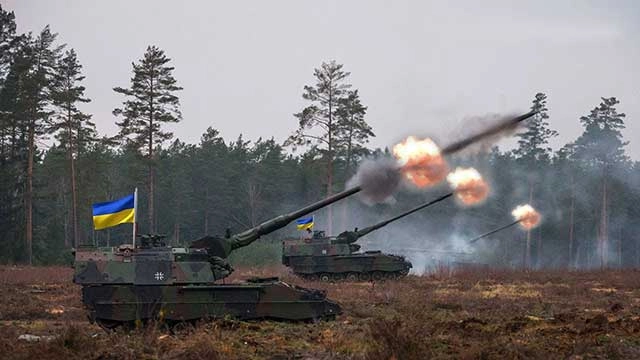
Of course, the fighting in Ukraine and Afghanistan didn’t just show off what the PzH 2000 could do. It also revealed where it struggled. In Afghanistan, mobility seems to be the problem.
The PzH 2000 is a 55-ton machine built with Central Europe in mind, not narrow mountain roads or dusty Afghan valleys. Crews sometimes struggled to get it where it was needed, and in certain operations the firepower felt like overkill compared to the hit-and-run style of insurgent attacks.
In Ukraine, crews have said that during the heaviest battles, some guns were pushed hard, firing hundreds of shells in a single day. That kind of pace took a toll. Barrels wore out faster than expected. After just a few weeks of nonstop firing, some PzH 2000s had to be pulled off the line for repairs.
In this sense, yes, the PzH 2000 gave Ukraine a powerful tool, but it’s not indestructible. Running something this advanced takes spare parts, know-how, and steady logistics.
| Feature | PzH 2000 (Germany) | 2S19 Msta-S (Russia) | M109 Paladin (US) |
| Caliber | 155mm NATO standard | 152mm Soviet standard | 155mm NATO standard |
| Range (standard ammo) | ~30–40 km | ~25–30 km | ~22–30 km |
| Range (extended ammo) | Up to ~67 km | Up to ~36–40 km | Up to ~40 km (with special rounds) |
| Rate of Fire | Up to 10 rounds/min (short bursts) | 6–8 rounds/min (short bursts) | 4 rounds/min (manual loading) |
| Automation | Advanced auto-loader | Semi-automatic | Mostly manual (improved in newer versions) |
| Crew | 5 (can operate with fewer) | 5 | 4–6 |
| Weight | ~55 tons | ~42 tons | ~28 tons |
| Engine Power | ~1,000 hp diesel | ~840 hp diesel | ~600 hp diesel |
| Top Speed (road) | ~60 km/h | ~60 km/h | ~55 km/h |
| Key Strength | Accuracy, firepower, and advanced systems | Large numbers, steady supply | Reliable, widely available, strong logistics |
| Key Weakness | Heavy, complex, high maintenance | Less precise, shorter range | Lower firepower, older design |
The 2S19 Msta has been Russia’s main self-propelled howitzer since the late 1980s. On paper, it has a similar caliber, and a range of about 25–30 kilometers with standard shells. With modern ammunition, it can go a bit further, but it generally falls short of the PzH 2000’s maximum reach.
One of its main advantages is sheer numbers. Russia has produced hundreds of Msta-S units, and they remain widely used in Ukraine. In this context, replacing or fixing a Msta-S is usually quicker than keeping a PzH 2000 going. That part is hard to deny.
But in terms of hitting power and precision, the PzH 2000 appears to hold the upper hand. At least in some accounts, Ukrainian gunners say they managed to reach out farther than Russian batteries and silence them before any shells came back their way.
Read also: Archer Artillery System: How Sweden Redefined Modern Firepower
The M109 Paladin has been around for even longer, since the 1960s, in fact. and instead of being replaced, it’s been updated again and again. The newest version, the M109A7, comes with digital fire controls and stronger armor. In terms of range, crews can usually expect 22 to 30 kilometers, though special ammunition can take it a bit beyond that.
When you put it next to the PzH 2000, the Paladin doesn’t really look as modern. Its rate of fire is slower, and since loading is mostly manual, crews can’t put out the same kind of rapid bursts the German gun is famous for. But the Paladin makes up for it in a different way. The U.S. has built thousands of them over the years, so parts, training, and upgrades are everywhere. In a long war, that kind of support network can matter as much as raw performance.
So, which system is “better”? The answer depends on what you value. The PzH 2000 is probably the most advanced in terms of firepower, accuracy, and modern features. It can hit harder, faster, and at longer ranges than either the Msta-S or most versions of the M109. But that comes at a cost—it is heavy, complex, and needs careful maintenance, something Ukraine’s experience has made clear.
The Msta-S might not be as advanced, but Russia has huge numbers of them and no shortage of shells. Sometimes sheer volume makes up for the lack of fancy features. The M109 Paladin, sits somewhere in the middle. It doesn’t have the speed or automation of the PzH 2000, but it’s easier to maintain and supported by a massive U.S. supply network.
In the end, “better” is not just about specifications. The PzH 2000 is impressive, no doubt, but one weapon on its own doesn’t win a war. What really matters is how it’s used, how many are in the field, and whether they can be kept running day after day. By itself it’s not a magic solution, but in the right situation it can give a real edge.