Follow Us:
Follow Us:

In early September 2023, news broke that a Challenger 2 tank had been destroyed in Ukraine, marking the first confirmed loss of this British-designed machine in combat. For many, this was surprising.
After all, the Challenger 2 had a reputation for being almost indestructible. Its record in Iraq and other deployments suggested a vehicle that could take punishment and keep moving.
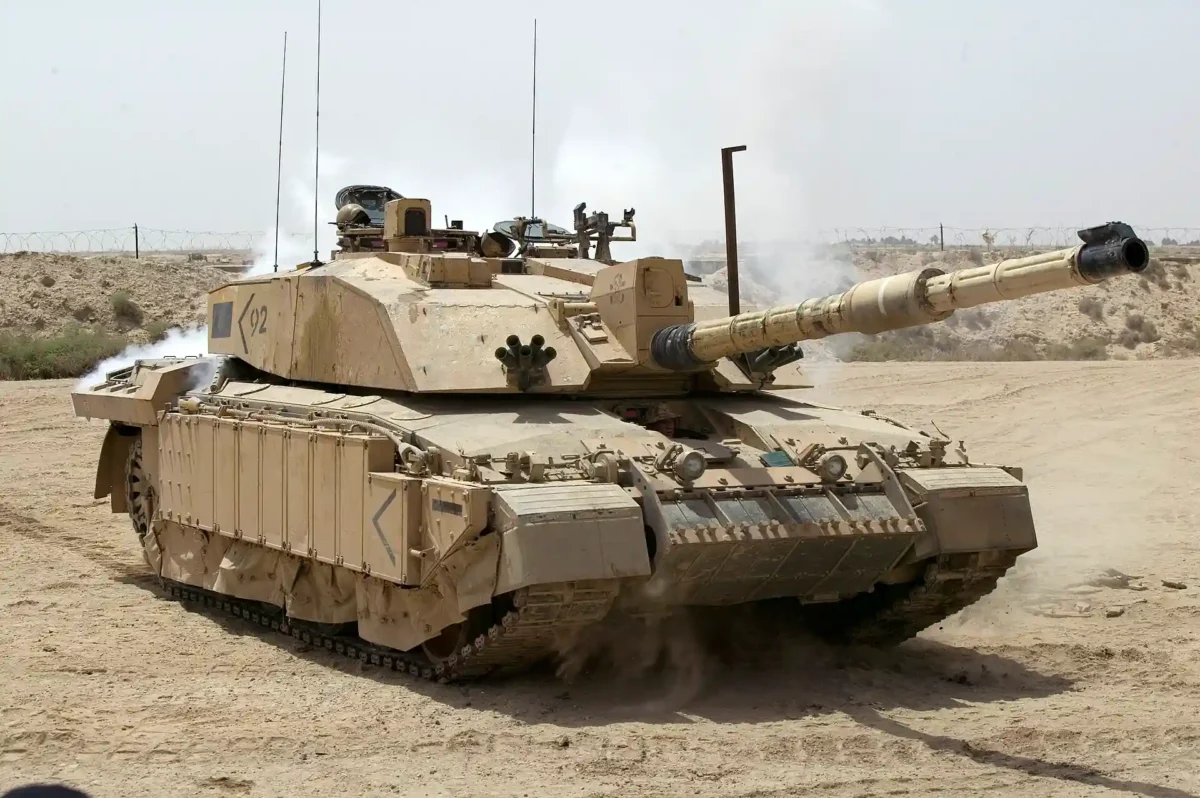
The image of one burning on a Ukrainian battlefield raised questions not only about the tank itself, but also about how modern warfare is changing. Was this just bad luck, or does it suggest limits to what even the most heavily armored Western main battle tanks can do against evolving threats like drones and advanced anti-tank weapons?
| Feature | Details (approximate / reported) |
| Service Entry | 1998 (British Army) |
| Crew | 4 (commander, gunner, loader, driver) |
| Weight | ~62.5 tonnes (varies with upgrades) |
| Dimensions | Length: ~13.5 m (with gun forward); Width: ~3.5 m; Height: ~2.5 m |
| Armor & Protection | Dorchester (Chobham-derived) composite armor; Explosive Reactive Armor (ERA) options; Nuclear, Biological, Chemical (NBC) protection; defensive aids system |
| Main Armament | 120 mm L30A1 rifled gun, manually loaded |
| Secondary Armament | 7.62 mm coaxial machine gun; 7.62 mm loader’s MG on turret |
| Ammunition Types | APFSDS (armor-piercing), HESH (high-explosive squash head), smoke rounds |
| Fire Control & Sighting | Thermal imaging, laser rangefinder, computerized fire control, hunter-killer capability |
| Engine | Perkins CV12-6A V12 diesel, ~1,200 hp |
| Speed | ~59 km/h on roads; ~40 km/h off-road (depending on terrain) |
| Range | ~400–450 km on-road; less off-road |
| Unit Cost | Often cited around £4–5 million per tank (varies with upgrades and contracts) |
If you ask what makes this tank incredible, I’d probably start with the armor. The Challenger 2 tank has Dorchester composite armor, and while the details are kept secret, it’s often described as some of the toughest in the world.
Some analysts even suggest that in Iraq, no Challenger 2 was lost to enemy fire. Crews who’ve used it in Iraq often said the tank could take a hit and just keep going. That’s part of why it earned a reputation for keeping its crew alive, even in rough situations. But that doesn’t mean it is completely untouchable.
In Ukraine, for example, new threats like precision drones and advanced anti-tank missiles may test even the toughest armor.

Its main gun is another interesting point. It’s a 120 mm rifled cannon, which is a bit unusual since most modern NATO tanks went with smoothbore guns. Some might see that as old-fashioned, but the Challenger 2’s gun can fire HESH rounds, which are really effective against bunkers and buildings.
Some argue this gives it excellent accuracy with certain types of rounds, but some also criticize that it limits ammunition compatibility with allies.
Then there’s the optics and the fire control system. Crews can spot and hit things at long distances, even at night or in bad weather. The “hunter-killer” setup means the commander can already be finding the next threat while the gunner is finishing the last one.
The mobility factor is a little more complicated. It isn’t the fastest MBT out there, but soldiers often talk about how reliable it is. It may feel a bit heavier compared to some peers, which can matter in long campaigns where quick redeployment is essential. It might not sprint like some of its peers, but when you’re in combat, a vehicle that you know won’t quit on you is something that feels incredible on its own.
If you look at the Challenger 2 in its original form, it was already considered one of the most protected tanks of its time. But the design is now more than two decades old, and in modern warfare, that can start to show. That’s where the Challenger 3 upgrade program comes in.
Read also: Challenger 3 Tank: Britain’s Next-Generation Main Battle Tank
The idea isn’t to replace the tank completely, but to bring it up to a standard that can match newer threats on the battlefield.
One of the biggest changes is the gun. The Challenger 2 uses a rifled 120 mm cannon, but the Challenger 3 is set to carry a smoothbore gun, more in line with what most NATO tanks use today.
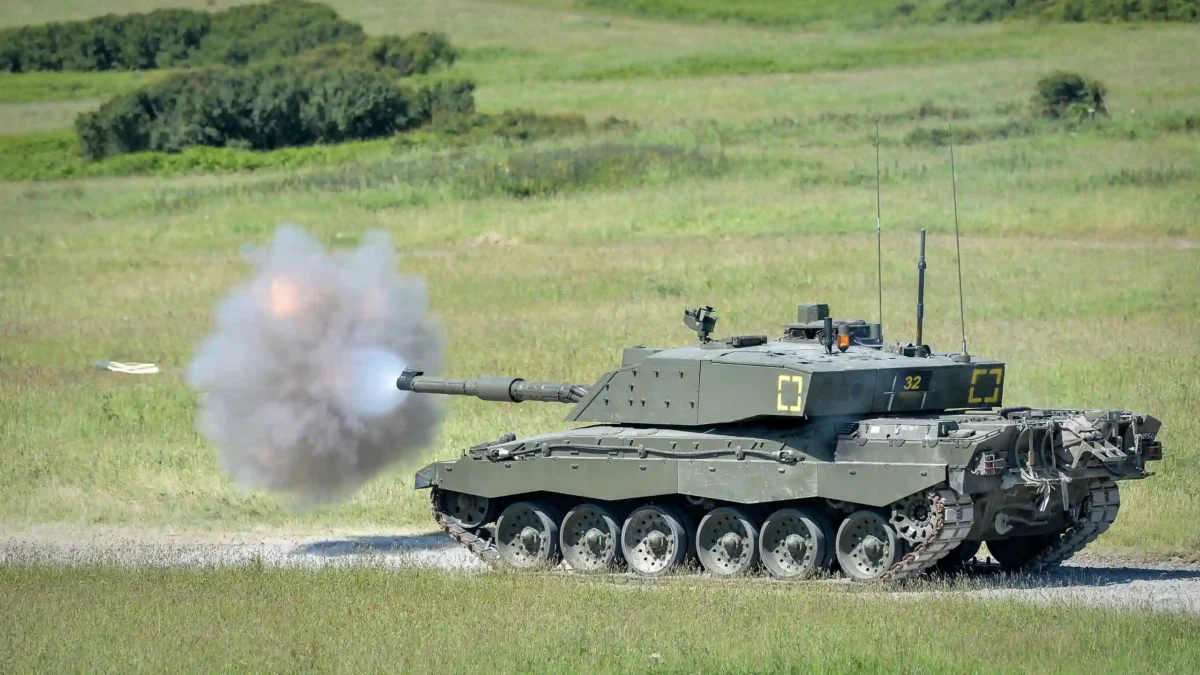
The reason is simple: ammunition compatibility. With the rifled gun, Britain had to rely on its own unique shells, but with the smoothbore, it can share the same rounds as tanks like the Leopard 2 or Abrams. That makes logistics easier and may also mean access to more advanced ammunition types.
Then there are the electronics and digital systems. The original Challenger 2 had capable optics and fire control, but technology has moved forward fast. The upgrade brings in a fully digital architecture, new sights, and advanced targeting tools.
Some reports suggest it should allow the crew to detect and engage threats faster, even in environments where drones, sensors, and electronic warfare are all in play. It’s the kind of leap that might feel less obvious on paper, but in practice it could make a big difference.
When it comes to armor and survivability, the Challenger 2 already had a reputation for being extremely hard to kill. With Challenger 3, the goal is to keep that edge while adapting to new threats. We’re talking about add-on protection against top-attack weapons, better defensive aids, and possibly active protection systems that can intercept incoming missiles.
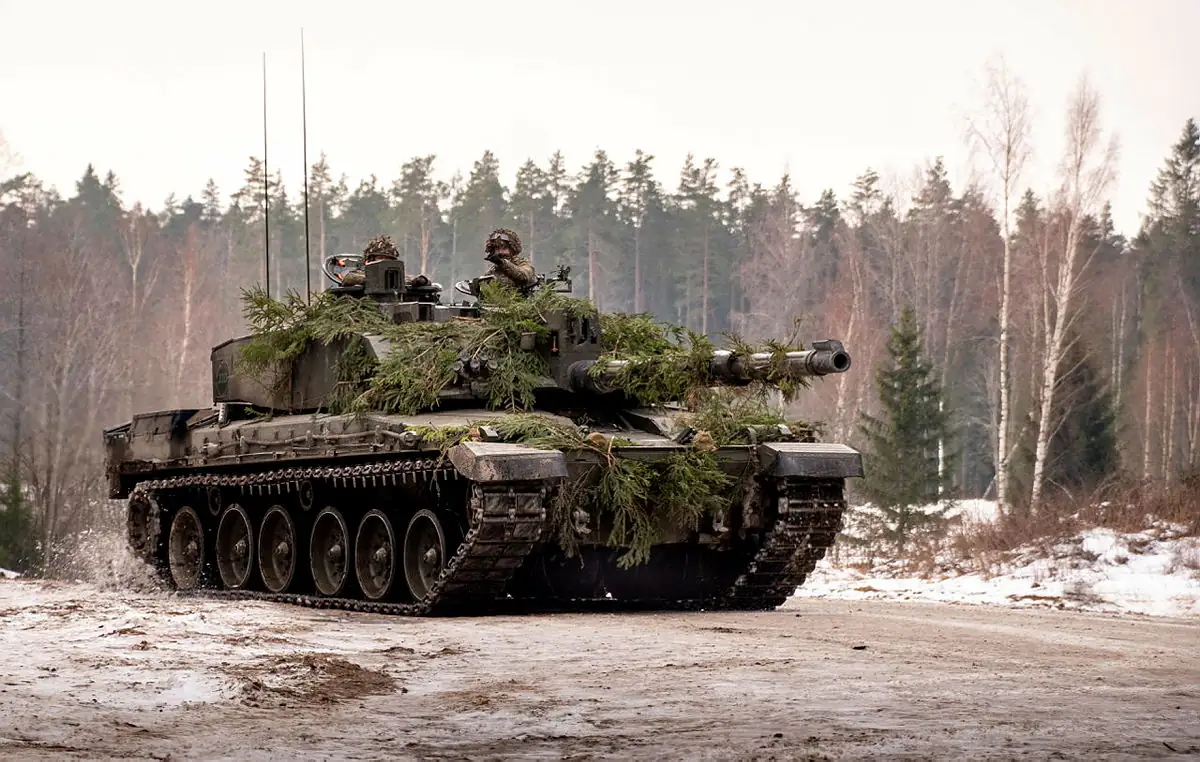
The details aren’t always public, but the trend seems clear: tanks can’t just rely on thick armor anymore; they need layers of protection, including sensors and active defenses.
So, if the older Challenger 2 was known as a reliable fortress, the Challenger 3 looks like an attempt to keep that fortress relevant in a world where threats are more varied, faster, and harder to predict.
The Leopard 2A7 looks more modern. Its smoothbore gun is NATO-standard, which means easier resupply and access to advanced rounds. The Challenger 2, with its rifled gun, can be extremely accurate but might be limited in what ammo it can use.
In terms of mobility, the Leopard has the advantage with more horsepower, which could make a difference in fast-moving operations. On the other hand, the Challenger 2’s armor is legendary, and some would argue it has a slightly better reputation for crew survivability.
| Feature | Challenger 2 | Leopard 2A7 |
| Main Gun | 120 mm L30A1 rifled | 120 mm L55 smoothbore |
| Armor | Dorchester composite, very strong but older design | Advanced modular armor, designed for modern threats |
| Crew | 4 (commander, gunner, loader, driver) | 4 (same setup) |
| Engine Power | ~1,200 hp | ~1,500 hp |
| Top Speed | ~59 km/h (road) | ~68–70 km/h (road) |
| Electronics/Systems | Capable optics, thermal sights, computerized fire control | Fully digital systems, advanced sensors, better networking |
| Weight | ~62.5 tonnes | ~64–66 tonnes |
| Ammunition | Unique British shells (rifled gun) | NATO-standard smoothbore rounds |
The Challenger 2 has shown its toughness in places like Basra, Iraq in 2003, where one unit reportedly withstood over a dozen RPG hits and still drove back to base. That kind of battlefield record is part of why it’s often seen as the more survivable of the two.
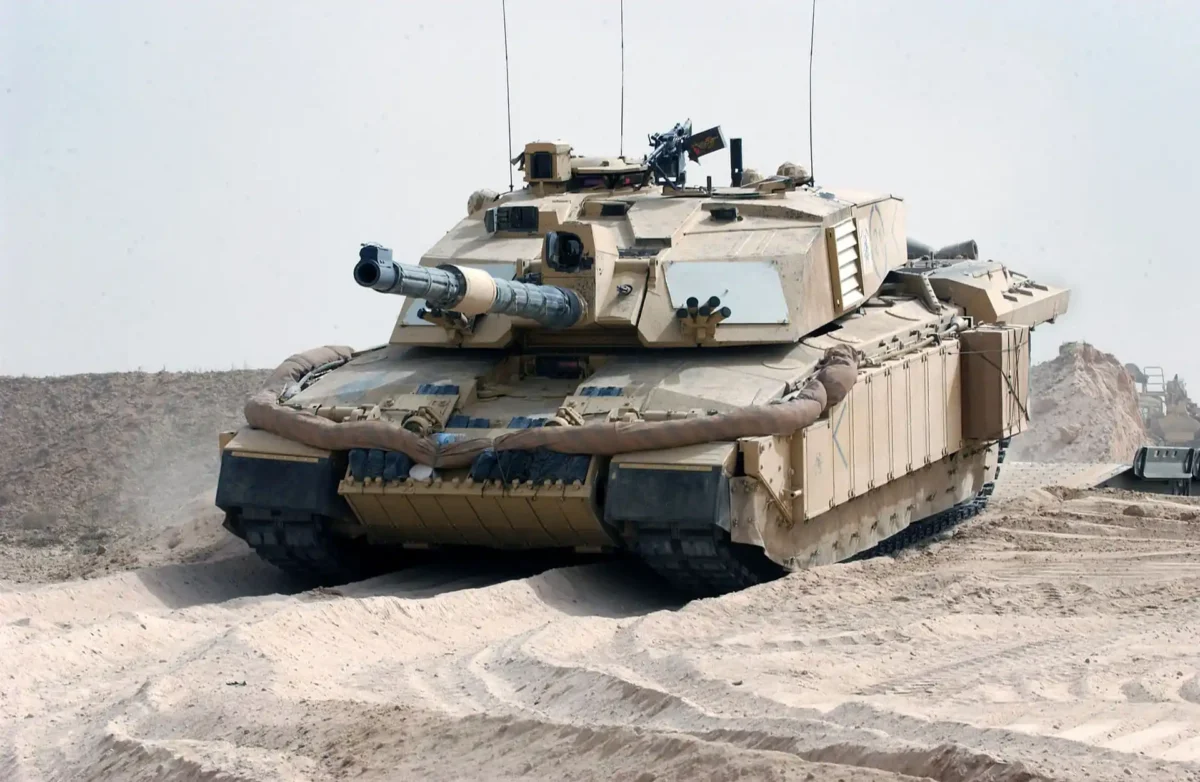
The Leopard 2A7, on the other hand, hasn’t seen quite as much combat, though earlier Leopard 2 variants did serve in Afghanistan with German and Canadian forces. There, crews praised its firepower and mobility, but there were also reports of mines causing serious damage.
In a hypothetical NATO operation, you might see the Leopard 2A7 being used to spearhead a rapid advance, thanks to its stronger engine and digital networking that links it better with drones and infantry.
Meanwhile, Challenger 2s might be placed in heavier defensive positions, where their proven armor and long-range rifled gun could play to their strengths. Both tanks would likely complement each other, but they’d be filling slightly different battlefield roles.
| Feature | Challenger 2 | T-90M (Proryv) |
| Main Gun | 120 mm L30A1 rifled | 125 mm smoothbore |
| Armor | Dorchester composite; optional ERA | Relikt ERA + composite armor, some active protection |
| Crew | 4 (commander, gunner, loader, driver) | 3 (autoloader replaces loader) |
| Engine Power | ~1,200 hp | ~1,130 hp (reported) |
| Top Speed | ~59 km/h | ~60 km/h |
| Weight | ~62.5 tonnes | ~48 tonnes |
| Fire Control & Electronics | Advanced optics, thermal imaging (older but capable) | Modern Russian optics, networking upgrades, thermal sights |
| Combat Record | Iraq, Ukraine | Syria, Ukraine, various exports |
The Russian T-90M is lighter and smaller, which makes it more agile in some conditions. It also uses an autoloader, meaning it has one less crew member than the Challenger 2. Some argue this reduces crew workload, but others point out it can be less safe. Autoloaders in Russian tanks have a history of being vulnerable if the ammo inside is hit.
The Challenger 2’s armor is generally believed to be thicker and more survivable, though it is heavier as a result. The T-90M, with its newer Relikt ERA and defensive aids, is meant to keep pace with Western tanks, but real battlefield reports suggest it may still be more vulnerable than the Challenger in a direct hit scenario.
In a hypothetical scenario, if these two met in open terrain, the Challenger 2 might rely on its armor to withstand the first strikes and fire back with accuracy. But in a fast-moving urban fight, the T-90M could use its smaller size and maneuverability to slip into firing positions more quickly.
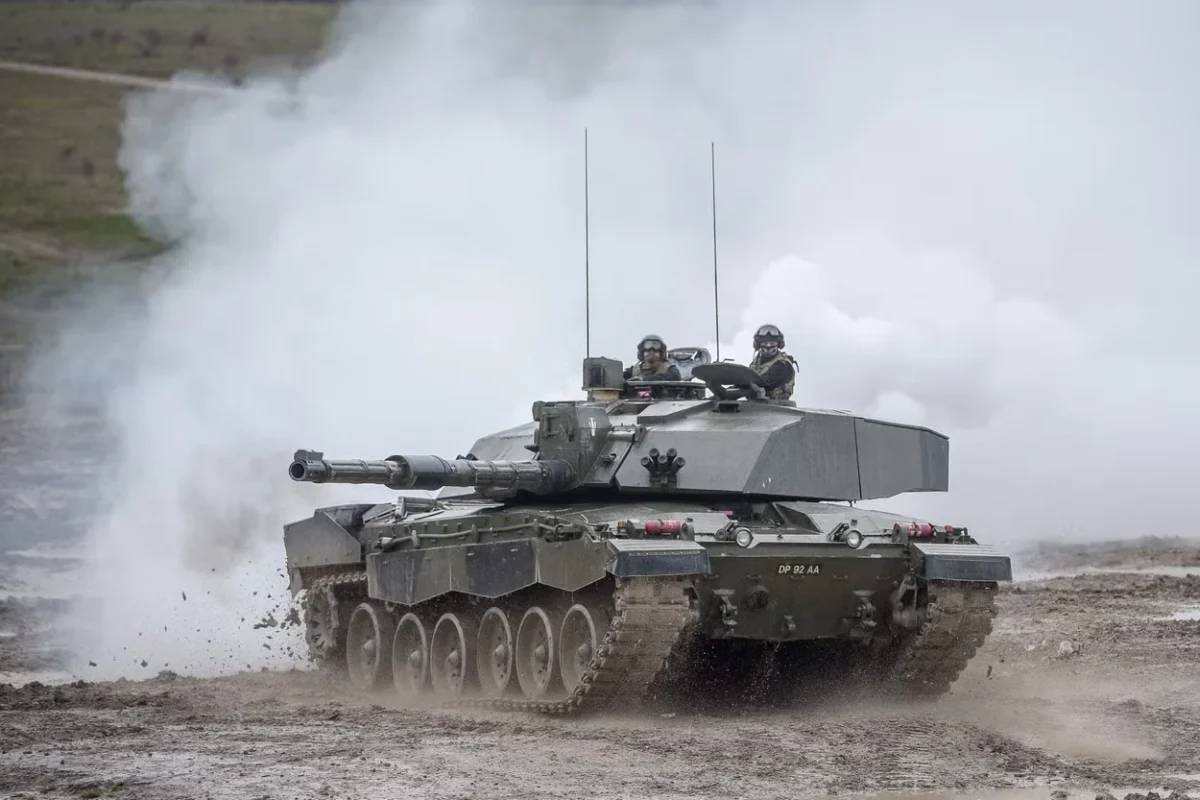
If the fight turned into a prolonged exchange, the Challenger 2’s survivability could give it an edge, but in dense terrain or urban areas, the T-90M’s smaller size might let it slip into firing positions where the larger British tank would struggle.
In 2025, the Challenger 2 is still viewed by NATO and Western militaries as a very capable main battle tank. But its relevance is being tested in new types of warfare. The UK has already committed to modernizing its fleet under the Challenger 3 program.
By mid-2025, prototypes of the Challenger 3 had gone through some live-fire and factory trials. The plan is to convert about 148 Challenger 2s into this newer standard, making them more digitally connected, using a smoothbore 120mm gun to match NATO ammo commonality, beefing up modular armor, and improving sensors to handle threats from above (like drones) or threats that hit weak spots (top attack, etc.).
So within NATO, Challenger 2 remains relevant because:
When Britain first announced that it would send Challenger 2 tanks to Ukraine, the decision was seen as a major political and military signal. Only 14 vehicles were transferred, but they were assigned to one of Ukraine’s best units, the 82nd Air Assault Brigade, in early 2023.
These tanks quickly became symbols of Western support. By the summer of 2024, they were being used not just in defensive operations but also in Ukraine’s cross-border offensive into Russia’s Kursk region.
The Challenger 2’s reputation for protection largely held up. Crews reported that the armor gave them a sense of security, and there were cases where tanks were hit but the soldiers inside walked away unharmed. That matches earlier battlefield stories from Iraq in 2003, where Challenger 2s were known for taking serious punishment and surviving.
Still, the war in Ukraine introduced new threats. Cheap FPV drones and loitering munitions became a constant hazard, and even the most heavily protected tanks could be damaged if they were struck in vulnerable spots like the mantlet or top armor.
The first confirmed loss of a Challenger 2 came in September 2023 near Robotyne in Zaporizhzhia. A Russian Kornet anti-tank missile destroyed the vehicle, though the entire crew survived. This is something that reinforced the idea that British design puts crew survivability above all else. Since then, several others have been lost or damaged, usually from precision strikes rather than tank-on-tank duels.
By early 2025, at least four of the 14 had been destroyed. The small number sent to Ukraine meant that even limited losses had a noticeable impact, and keeping the surviving fleet operational has been a challenge. Spare parts are specialized, and the rifled 120 mm gun requires ammunition that isn’t standard among NATO allies.
Ukrainian soldiers have spoken positively about the Challenger 2’s optics and fire-control systems. One crew claimed they were able to engage effectively at more than five kilometers, which is unusually long for tank combat.
If you ask crews what it’s really like to fight in a Challenger 2 in Ukraine, they’ll often start by praising its protection. But after that, the conversation usually shifts to the things that make their job harder. The first complaint is often about weight.
At over 70 tonnes when kitted out for war, the tank feels almost too heavy for Ukraine’s fields and villages. Spring mud or soft ground can turn into a nightmare, with tanks bogged down and recovery vehicles needed to drag them free.
Mobility is another point of friction. On paper the engine is powerful, but in practice, many crews say it sometimes feels underpowered for such a massive machine.
The result is that the Challenger 2 doesn’t always keep pace with lighter NATO tanks or armored vehicles. If a fight demands quick repositioning, darting around flanks, charging over weak bridges, or climbing rough hills, the British tank isn’t always the fastest to respond.
Then there’s the matter of ammunition. Unlike the German Leopard or the American Abrams, which use smoothbore guns and standardized NATO shells, the Challenger 2’s rifled gun is unique. That makes it very accurate, and some Ukrainian crews even claim they’ve managed shots out past five kilometers.
But it also means they need special rounds that aren’t widely available. In a long war, with constant firing, that creates a headache. There are also whispers that the rifled barrels wear out faster if the tank is used like artillery, lobbing shells day after day.