Follow Us:
Follow Us:

You might think that tanks feel like relics from a bygone era, but surprising recent developments suggest otherwise. It turns out the Leopard 2A7, Germany’s flagship main battle tank, is quietly poking its way back into the headlines.
Just this spring, a prominent German defense analyst named Isaac Seitz boldly singled out the Leopard 2A7 as possibly the most powerful tank in the world, citing its 120 mm L/55 main gun, state-of-the-art fire control systems, and robust 1,500 HP diesel engine that propels it at around 72 km/h with a 450 km range.
That combination of firepower, mobility, and cutting-edge electronics apparently still leaves many rivals in the dust, Abrams included.
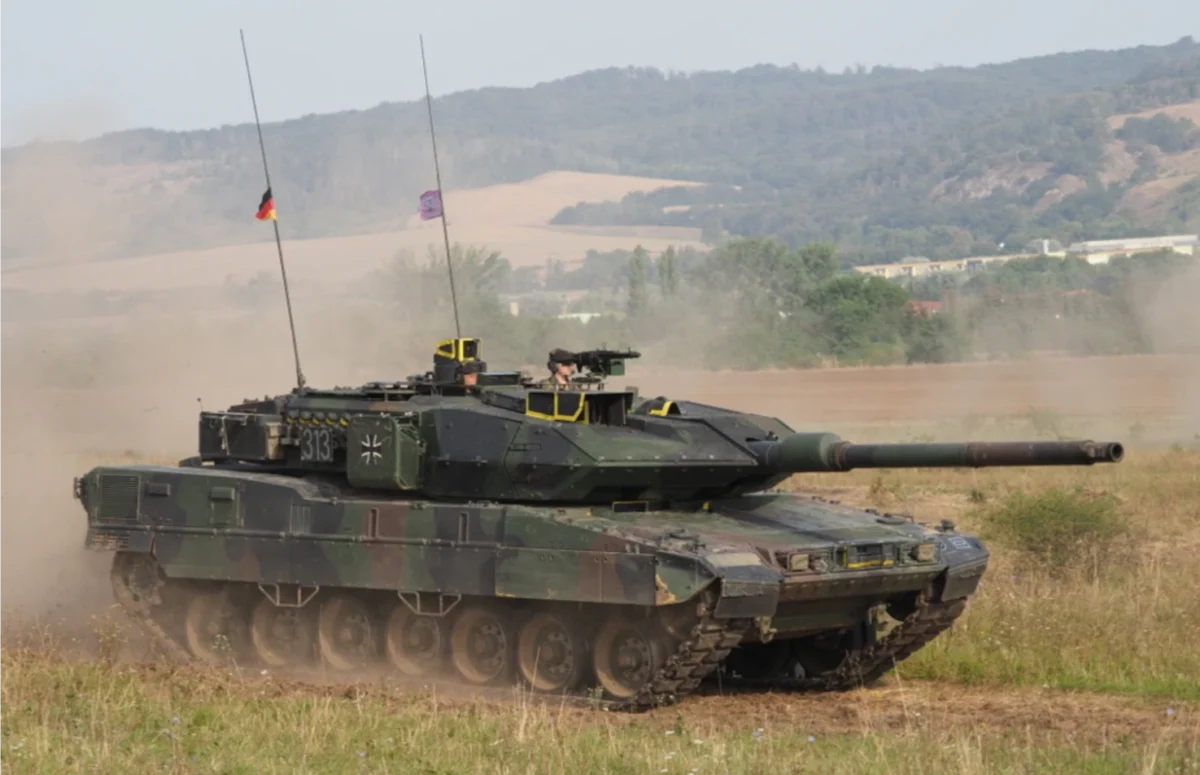
Now, Europe is steadily lining up behind the next-generation Leopard 2A8, a direct descendant of the Leopard 2A7 series. Spain is eyeing the 2A8 to replace aging A4s, while Sweden’s already greenlit a major order to boost its armored strength.
So why does this matter? If a few years ago one could’ve said the days of tank warfare were fading, now the German Leopard 2A7 and its future variants are proving otherwise, almost as if armored platforms have reasserted themselves as lynchpins of modern land power.
The Leopard story actually began well before the Leopard 2. In the years after World War II, West Germany’s armored units were equipped mostly with American M47s and M48s. They worked well enough for a while, but by the early 1960s it was clear they were becoming outdated.
At the same time, the Bundeswehr wanted a tank that was designed with Europe’s own battlefields in mind. Out of that search came the Leopard project. By 1965, the first version, the Leopard 1, was in service.
When the first Leopard was on the drawing board, German engineers didn’t try to turn it into an indestructible fortress on tracks, because by then it was clear that modern anti-tank weapons could pierce almost anything. Instead, they leaned into an idea of giving the crew speed, making the machine reliable, and arm it with a strong 105 mm gun.

For a time, that approach worked well enough. Of course, things didn’t stay the same for long. By the end of the 1970s, the Soviets were already putting new machines onto the field—the T-64 and the T-72. They had thicker protection and heavier firepower.
Against those, the Leopard 1’s thin protection no longer looked sufficient. Out of that pressure came the Leopard 2, a design that took the spirit of the Leopard 1 and reshaped it for a much tougher battlefield.
Read also: K2 Black Panther: What Makes It One of the Best Tanks in the World
The Leopard 2 came out bigger, heavier, and better protected. Armed with a new 120 mm gun that gave it an edge over most opponents, but still kept mobility at the center of its design. It was built to reassure NATO allies that West Germany could hold the line if the Warsaw Pact ever advanced westward.
Over time, the Leopard 2 proved so capable that it became one of Europe’s most successful tank exports. It was widely adopted across Europe and beyond.
By the time passed, the threats it was built to face began to fade. Instead of tank columns pushing through open fields, German crews increasingly found themselves on very different missions, like peacekeeping, counterinsurgency, and patrols in urban environments. Tanks built to smash through Soviet lines suddenly had to patrol Afghan towns or support infantry in complex terrain. The battlefield had shifted, and so the tank itself had to evolve.
At this point, the Leopard 2A7 entered the picture. The Leopard 2A7 can be seen as Germany’s attempt to straddle two worlds. Rather than abandon a proven machine, Germany chose to reshape it for the world it faced after the Cold War.
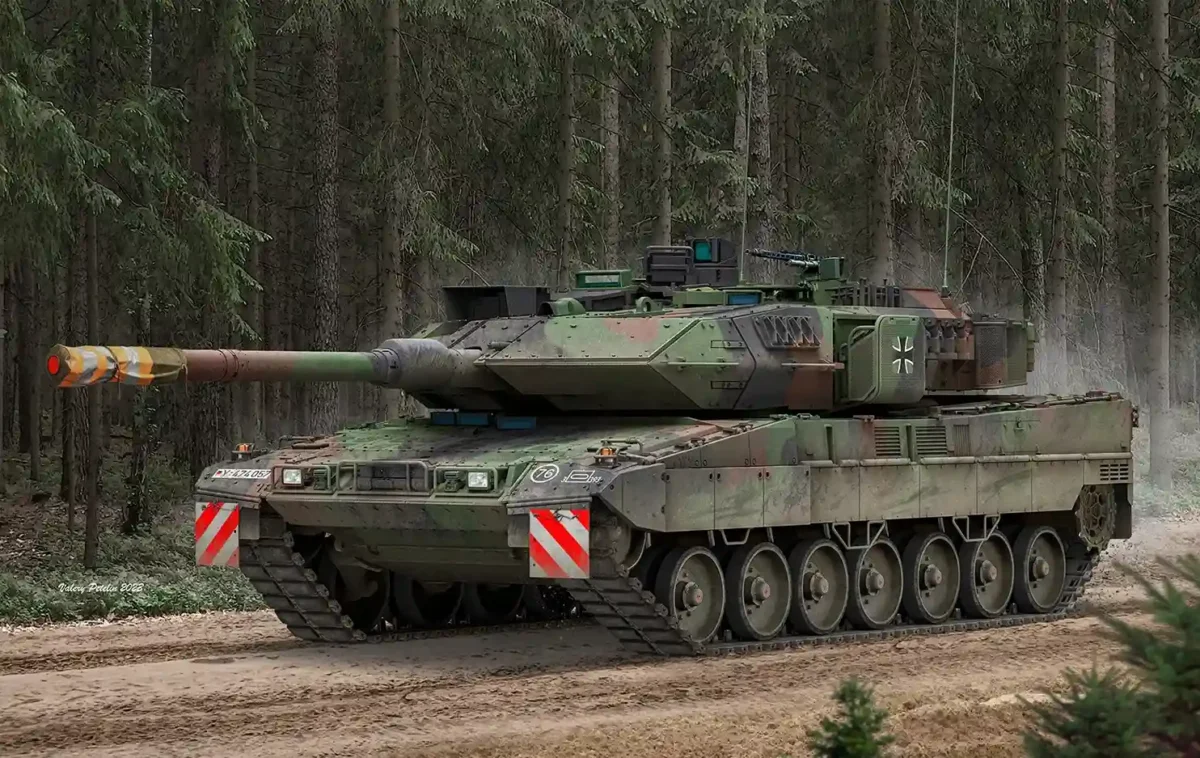
The 2A7 can be seen less as a clean break and more as an accumulation of lessons. Its armor and firepower were strengthened to face high-end opponents, while new electronics reflected the realities of peacekeeping and urban deployments. In many ways, the tank tells a story of forty years of adjustment rather than one bold redesign.
| Category | Details |
| Main Gun & Firepower | 120 mm Rheinmetall L/55 smoothbore cannon; compatible with APFSDS, HE, and programmable airburst rounds. Secondary armament includes coaxial 7.62 mm MG and roof-mounted MG. |
| Armor & Protection | Modular composite and spaced armor; optional add-on kits for urban combat (side skirts, roof protection); designed against modern kinetic and shaped-charge threats; some versions fitted with active protection systems. |
| Mobility & Engine | MTU MB 873 Ka-501 diesel engine; 1,500 hp;T op speed ~70 km/h on road; Operational range around 400–450 km; Good cross-country performance for a ~67–70 ton vehicle. |
| Digital Systems | Thermal imaging sights, advanced fire-control system, hunter-killer target acquisition; integrated battlefield management system; improved situational awareness for day/night and all-weather fighting. |
When people talk about the Leopard 2A7, the first thing that usually comes up is its gun. The Leopard 2A7 still uses Rheinmetall’s 120 mm smoothbore gun, only in the longer L/55 version, which many observers note gives it a bit more reach compared to the earlier L/44.
Crews can load different types of ammunition depending on the situation—armor-piercing rounds when facing other tanks, or programmable high-explosive shells that can be set to burst above a target. Alongside that, it carries the usual secondary weapons: a coaxial 7.62 mm machine gun and another mounted on the turret roof, generally for the commander’s use.
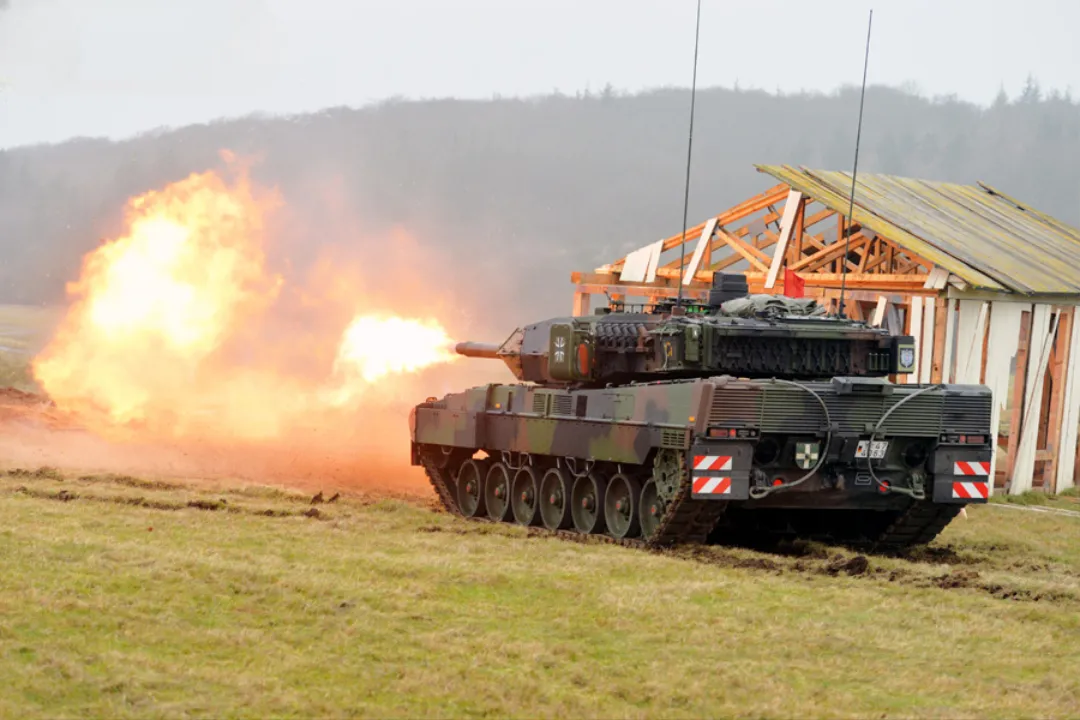
Protection has been another major focus. The Leopard 2A7 makes use of modular composite armor, which can be adjusted depending on the mission. Against high-end threats it carries thick frontal protection, but for urban operations additional side armor and roof plates can be fitted.
Reports also suggest that the design anticipates threats from modern shaped charges and kinetic penetrators, though, as with all armor claims, the true measure would only come in combat. Some vehicles have also been equipped with active protection systems, though this seems to vary among operators.
Considering it tips the scales at nearly seventy tons, the Leopard 2A7 moves better than people might expect. It relies on the same 1,500-horsepower MTU diesel engine used in earlier Leopards, which is usually enough to push it into the low 70s on paved roads.
Nobody would call it the fastest thing in service, but crews often remark that it picks up speed quickly for its weight and doesn’t struggle too much when the ground gets rough. Some even argue that the diesel setup makes it a bit more economical than turbine-powered tanks like the American Abrams. though, it’s fair to say that no heavy tracked vehicle can really be called fuel-friendly once it’s out in the field for long stretches.
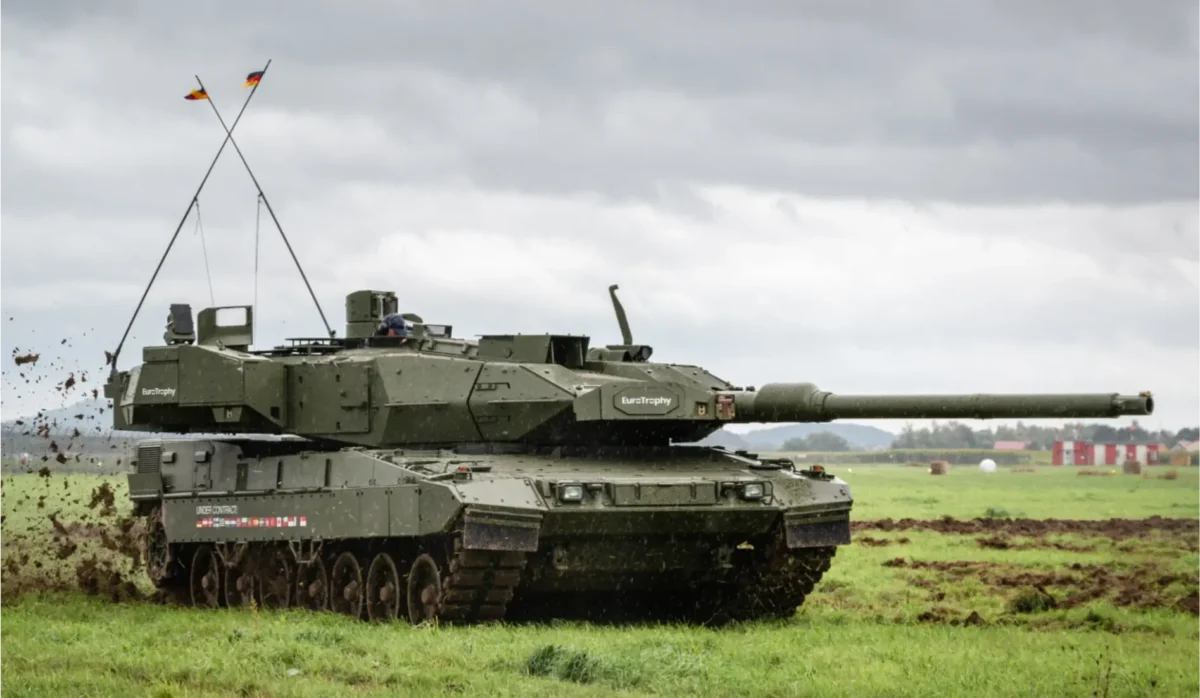
Perhaps less visible to the outside observer, but just as important, are the digital systems inside. The tank is fitted with updated thermal sights and what’s often called a “hunter-killer” system, which basically lets the commander and gunner track different targets at the same time.
On top of that, a digital battle management setup ties the crew into the wider picture, so information can be passed around more quickly. In practice, that means the tank is not only harder to surprise but can also coordinate better with infantry and other armored units.
Table comparison of Leopard 2A7 and the earlier 2A6.
| Feature | Leopard 2A6 | Leopard 2A7 |
| Main Gun | 120 mm L/55 smoothbore | Same gun, but paired with new programmable ammo |
| Armor & Protection | Strong frontal armor, less optimized for urban threats | Additional side and roof protection, mine resistance |
| Electronics | Thermal sights, older fire-control aids | Upgraded thermal imagers, digital battlefield management |
| Crew Comfort | Limited upgrades over earlier models | Improved climate control, redesigned interior for long missions |
What stands out is that the 2A7 isn’t trying to reinvent the Leopard but to make it more survivable and livable in modern conditions. Crews benefit not only from stronger protection and better fire-control systems but also from touches that matter on long deployments, like improved climate control and a reworked interior.
The bigger question is whether these refinements are enough. Does incremental improvement keep a design at the top, or is there a point where small steps no longer close the gap against entirely new tank families?
Read also: KNDS Reveals Leopard 2A-RC 3.0 With Unmanned Turret
In today’s Europe, the Leopard 2A7 plays a very different role than its ancestors. Instead of being just one part of NATO’s “wall” against the Warsaw Pact, it’s now a symbol of collective defense for countries facing uncertain threats on their eastern borders.
Take, for example, Germany’s decision to steadily modernize its own fleet rather than replace it outright. The logic behind the choice is fairly down-to-earth. Most European armies don’t want to gamble on an unproven design when they can rely on something already trusted in service. They also need tanks that fit smoothly into NATO systems and can be sent out on short notice if required.
That’s why a number of countries, like Denmark, Hungary, and Norway, have gone with the Leopard 2A7. In some cases they’ve bought new machines, while in others they’ve simply upgraded older Leopards to the 2A7V level.
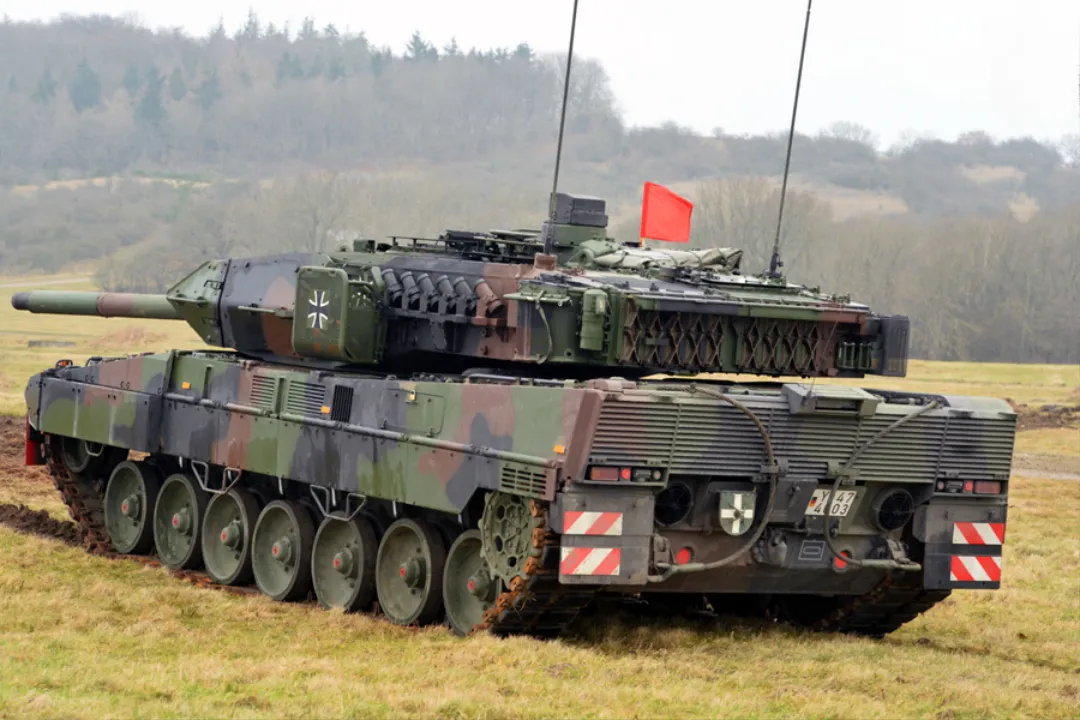
Actual combat deployments have been limited, since European heavy armor hasn’t been thrown into a major conventional war in recent years. However, experiences in Afghanistan were key. When German Leopard 2s were sent to Afghanistan, their performance gave mixed lessons. Crews often spoke highly of the tank’s protection and the way it handled difficult terrain.
At the same time, operating in towns and cities exposed certain gaps, like the need for better side armor and sharper situational awareness tools. Those kinds of experiences didn’t go unnoticed and would later shape the thinking behind the 2A7’s upgrades.
Can the Leopard 2A7 really claim to be better than the Abrams? It depends on what “better” means. In size, role, and firepower, they’re close, but the contrasts lie in the details and in the different philosophies that shaped them.
One thing that often comes up in the Leopard–Abrams debate is the engine. People who’ve worked with the Abrams often talk about how smooth the turbine feels, almost like you’re driving something smaller. Then they’ll just as quickly complain about the fuel bills, which has always been the tank’s weak spot from the very first time it entered service.
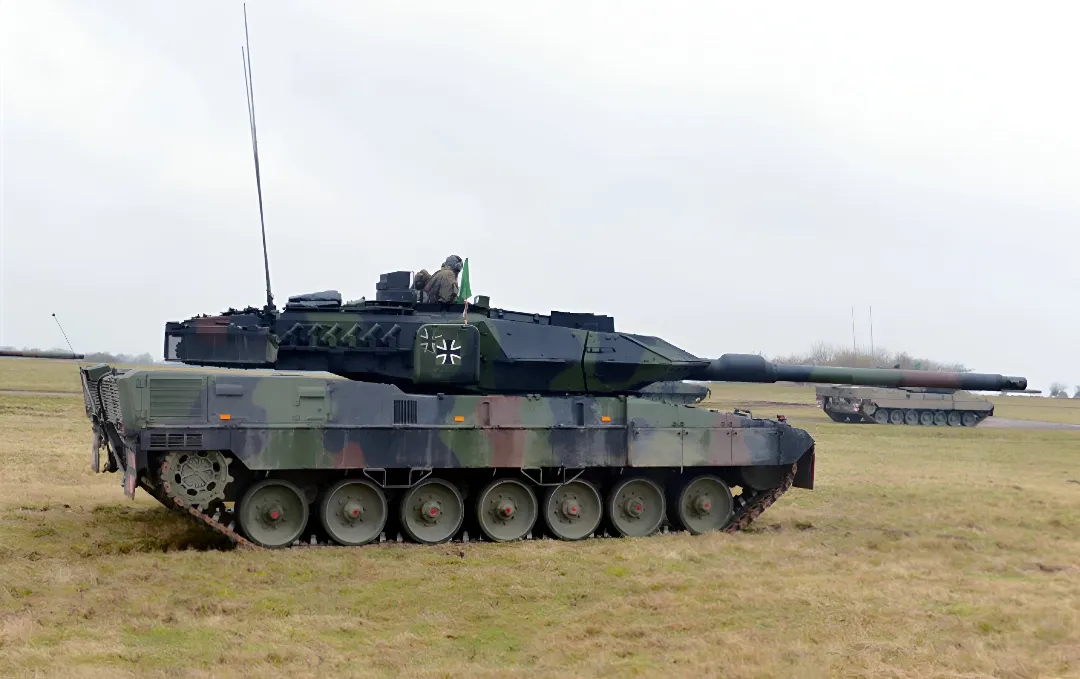
The Leopard 2A7 goes another way with a diesel. It doesn’t jump off the page the way a turbine does, but it keeps running without too much drama. Maybe that’s boring, but in the middle of a long campaign, that practicality might tip the balance.
Armor tells a similar story. The Abrams is believed to have cutting-edge composite and depleted uranium layers in its latest versions, giving it exceptional frontal protection.
The Leopard, meanwhile, has put more visible emphasis on modular add-ons, including extra side and roof defenses designed with urban threats in mind. Which approach is “better” may depend less on the tank itself and more on where it’s fighting.
To put this into a scenario: imagine a NATO deployment on the eastern flank, where both types are operating side by side. In open terrain, both would be formidable, their long-barreled guns able to strike at distance.
But if the fight shifted into towns and villages, the Leopard’s extra protection against mines and side attacks might give it an edge. Conversely, in a situation where absolute frontal armor was all that stood between a crew and destruction, the Abrams could prove tougher.
So the question isn’t really “which tank is superior?” but “superior for what situation?” That uncertainty is what keeps the debate alive, and perhaps what explains why NATO values having both in its lineup.
Read also: Germany Moves Forward with Leopard 3 Tank Concept Development
Some defense writers call the Leopard 2A7 Europe’s strongest tank, but whether that’s true probably depends on what standard you use. In terms of balance, though, it does tick the boxes that most armies keep coming back to. The gun has been stretched and improved over the years and is still able to handle most of the modern threats it might meet.
The armor has also been worked on, shaped by lessons from deployments like Afghanistan, where crews noticed gaps that needed fixing. And even though it’s pushing seventy tons, soldiers often remark that it moves better than they expected.
On their own, none of these things is revolutionary. But taken together, they make a machine that’s hard to ignore. Maybe that’s why, when NATO countries look for a tank they can field right now rather than just plan on for the future, the 2A7 keeps coming up in the conversation.
When it comes to being ready for combat, there are a few recent examples. Germany has not only been modernizing its older Leopards to the 2A7V standard but also cycling them into active units. At the same time, smaller NATO members such as Denmark and Hungary have begun putting their own fleets through training drills.
These aren’t full-scale wars, of course, but they do offer a window into how the tank performs in real units rather than on brochures. Some observers might argue that this kind of visibility. Seeing the 2A7 moving around in exercises and appearing in front-line inventories, matters almost as much as the technical details.