Follow Us:
Follow Us:

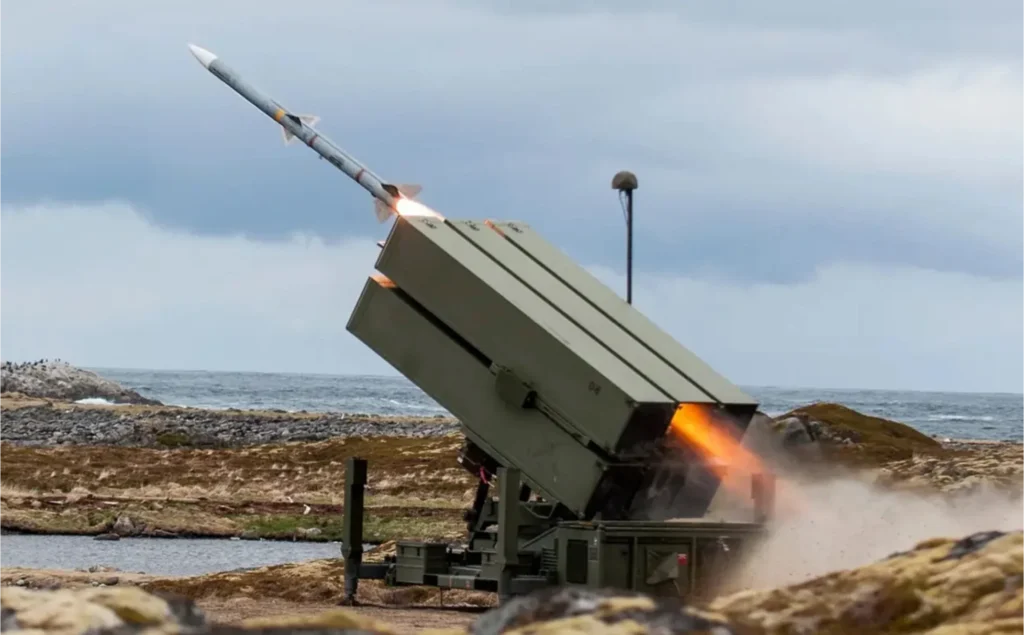
In an era where drones, cruise missiles, and low-flying aircraft are reshaping the battlefield, the NASAMS air defense system has become a vital shield for nations worldwide. Officially known as the National Advanced Surface-to-Air Missile System, NASAMS is a highly flexible and mobile platform designed by Norway’s Kongsberg Defence & Aerospace and the U.S. defense contractor Raytheon. Unlike long-range giants like the Patriot or S-400, NASAMS offers a more affordable, scalable solution suitable for defending cities, military bases, and strategic locations from a variety of threats.
What makes NASAMS stand out is its network-centric, modular design. Each NASAMS battery can be customized with a mix of radars, launchers, and command centers spread over large areas for superior survivability. The system is compatible with multiple missile types, such as the AIM-120 AMRAAM and the extended-range AMRAAM-ER, which means its missile range, engagement envelope, and versatility can match the mission’s needs.
For militaries watching their budgets, NASAMS offers a rare balance between cost and capability. While the exact NASAMS missile cost depend on configuration and country-specific deals, the use of off-the-shelf AMRAAM missiles keeps both the system price and long-term operational costs lower than other air defense systems. This makes NASAMS an attractive choice not just for major powers but also for smaller nations looking for reliable, modern air defense without breaking the bank.
The strength of the NASAMS air defense system lies in its flexibility and modern design, which allows it to counter a wide range of aerial threats with remarkable efficiency. At its core, NASAMS is a network-centric system, meaning all its components—from the NASAMS radar and Fire Distribution Center to the NASAMS launchers and missile batteries—are digitally connected and capable of sharing real-time data.
This enables NASAMS to detect, track, and engage multiple targets simultaneously, a critical advantage against today’s fast and unpredictable air threats such as drones, low-flying cruise missiles, helicopters, and fighter aircraft.
One of the defining characteristics of NASAMS is its modular and mobile structure. Each NASAMS battery can be tailored to fit the mission profile, whether protecting critical infrastructure, large cities, or military installations.
The NASAMS launchers are truck-mounted and can carry a variety of missiles depending on operational needs. The most common missiles are the AIM-120 AMRAAM and the newer AMRAAM-ER, both of which provide excellent versatility in terms of NASAMS missile range and engagement options.
The addition of the AIM-9X Sidewinder further broadens its arsenal, allowing the system to handle close-range threats effectively. Importantly, the NASAMS 3 range has been extended significantly with AMRAAM-ER missiles, pushing the envelope to about 50–60 kilometers, compared to the older NASAMS 2 configurations.
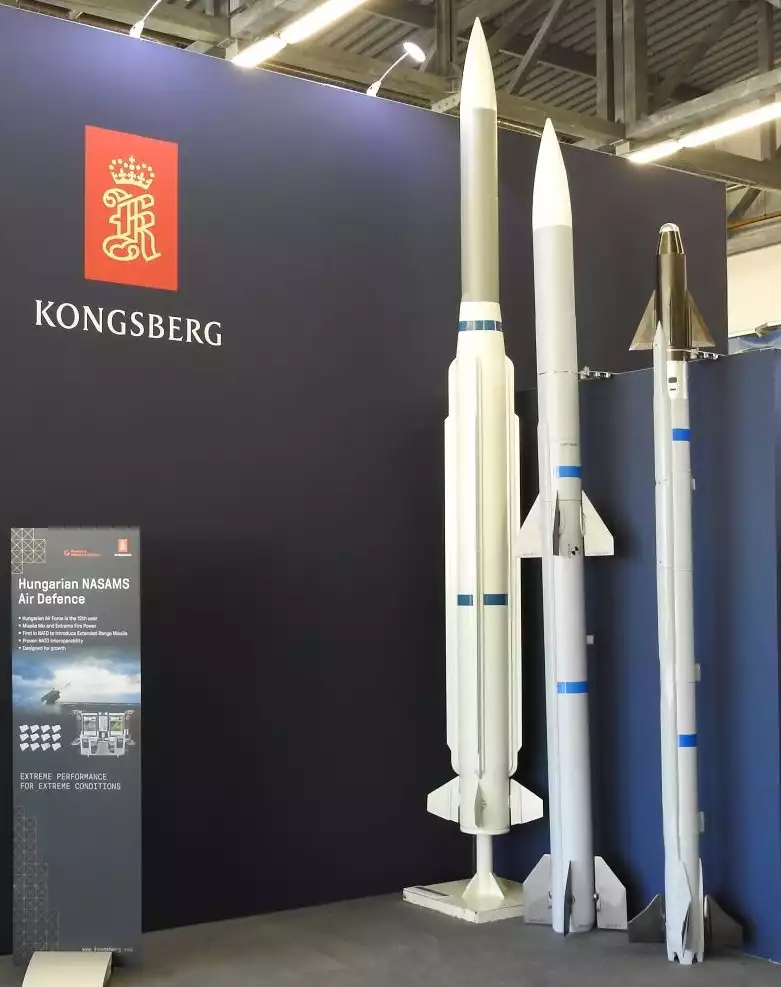
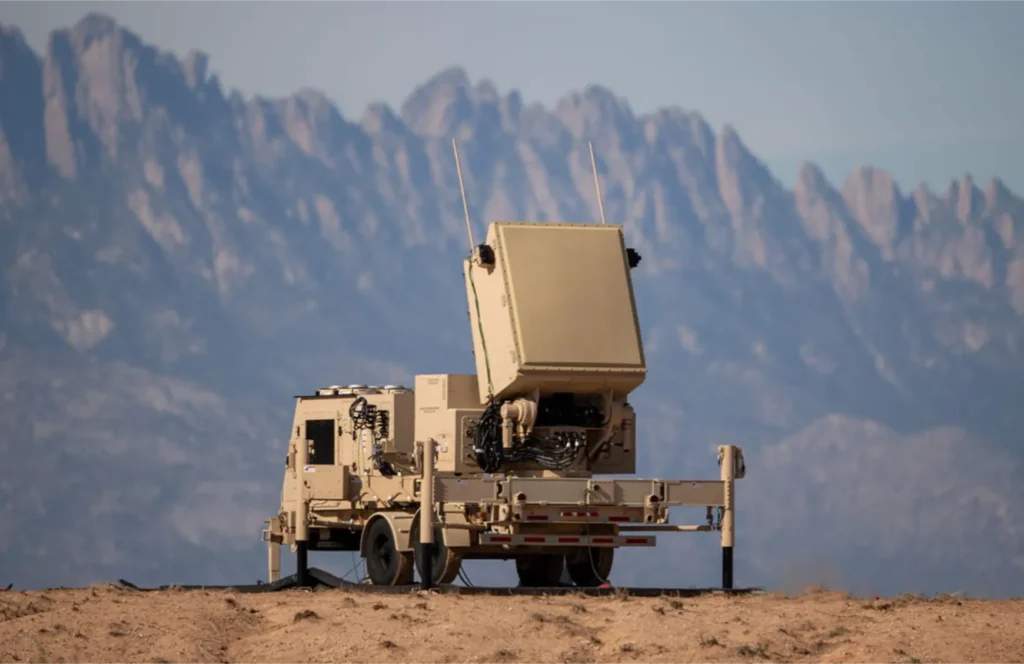
The radar component of the NASAMS air defense system is another standout feature. Utilizing the AN/MPQ-64 Sentinel radar along with options for passive electro-optical and infrared sensors, the system maintains continuous 360-degree coverage.
In newer configurations like NASAMS-3, the system can incorporate the advanced GhostEye MR radar, which improves detection range and target discrimination. This ensures that NASAMS is capable not only of detecting stealthier and faster targets but also of maintaining effective engagement control in cluttered environments.
Overall, the NASAMS air defense system stands out for its mix of affordability, modularity, and real battlefield reliability—a combination that has made it one of the most sought-after surface-to-air missile systems in the world today.
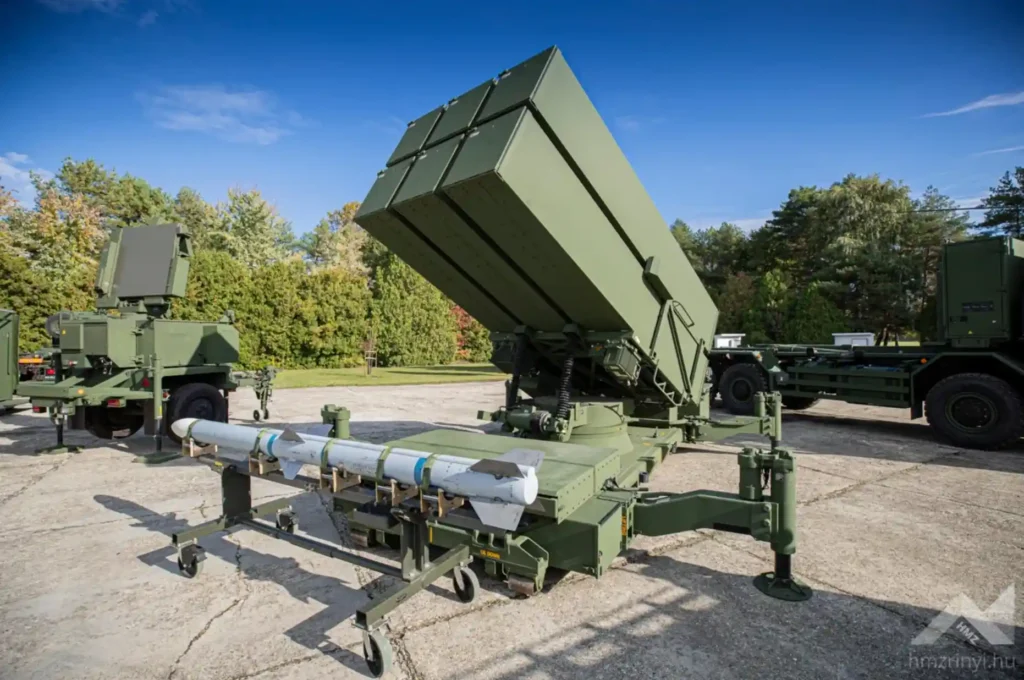
The evolution of the NASAMS air defense system is a story of continuous improvement shaped by real-world needs and changing aerial threats. The original National Advanced Surface-to-Air Missile System was conceived in the early 1990s as a collaboration between Kongsberg Defence & Aerospace of Norway and Raytheon of the United States.
Its first operational deployment occurred in 1998, making Norway the first nation to field the system. At this stage, NASAMS provided a significant leap forward for medium-range air defense, offering coverage that neither short-range MANPADS nor heavy strategic systems like Patriot could efficiently fill.
By the mid-2000s, advancements in networking and radar prompted the development of NASAMS 2, which introduced enhanced data links and interoperability features. The inclusion of Link 16—a secure NATO-standard communication protocol—allowed the system to integrate with allied air defense networks, providing a richer, shared picture of the battlespace.
NASAMS 2 systems also featured improved fire control centers and better radar performance, giving operators more flexibility and faster response times. This version became widely exported, forming the backbone of air defense in countries such as Spain, the Netherlands, and Finland.
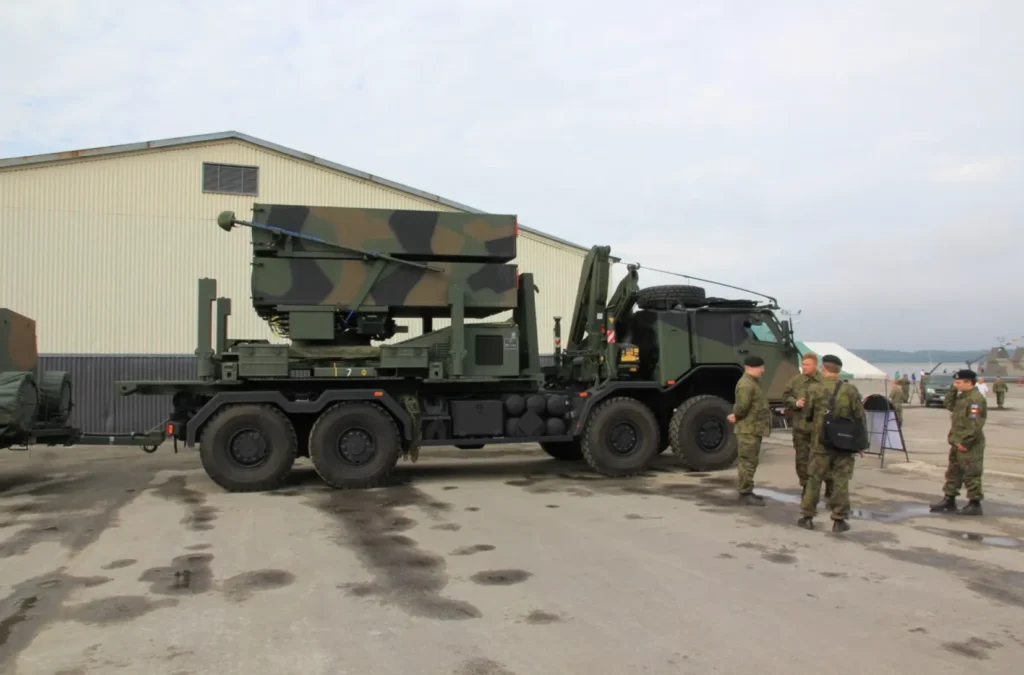
The most recent and significant upgrade to the system is NASAMS 3, which began entering service around 2019. This version represents a major technological leap, designed to meet modern threat environments where unmanned aerial vehicles, loitering munitions, and advanced cruise missiles are prevalent.
NASAMS-3 systems come equipped with enhanced launcher units capable of deploying the AIM-9X and the extended-range AMRAAM-ER missile, boosting the NASAMS 3 range to nearly 60 kilometers—double that of some earlier configurations. Additionally, the incorporation of the new GhostEye MR radar allows superior tracking of smaller, faster, and stealthier targets.

Through each upgrade cycle, the NASAMS air defense system has not only improved its missile range and system integration but has also kept its cost competitive, allowing more nations to adopt this surface-to-air missile system as part of their layered defense strategy. Its constant evolution is proof that NASAMS is not a static platform but a living, growing defense solution engineered for the battlefield realities of both today and tomorrow.
The architecture of the NASAMS air defense system is designed for flexibility, scalability, and survivability, making it one of the most adaptable surface-to-air missile systems on the market today. Each NASAMS battery is made up of several key components that work in harmony to create a highly responsive and effective shield against a wide range of aerial threats.
At the heart of the system is the Fire Distribution Center (FDC), which serves as the brain of the NASAMS system. This mobile command unit collects and processes data from various sensors, especially the NASAMS radar.
Typically, the system uses the AN/MPQ-64 Sentinel radar, but newer versions such as NASAMS 3 can be fitted with advanced sensors like the GhostEye MR radar, which extends detection ranges and improves the ability to identify smaller, faster targets. The radar network feeds crucial tracking and target information to the FDC, allowing operators to make rapid, informed decisions even in complex, high-pressure combat environments.
The firing power of NASAMS comes from its mobile NASAMS launchers, which can be distributed widely across the battlefield to avoid being neutralized by a single enemy strike. Each launcher can carry up to six missiles, typically the AIM-120 AMRAAM, but newer configurations allow for the longer-reaching AMRAAM-ER or the AIM-9X Sidewinder.
The modular launcher design gives commanders the flexibility to mix and match missiles according to the mission’s needs, balancing NASAMS missile range, engagement altitude, and warhead type. This makes NASAMS suitable for everything from intercepting low-flying cruise missiles to engaging fast-moving fighter jets at medium distances.
The NASAMS air defense system has proven itself as one of the most reliable and versatile surface-to-air missile systems available to modern militaries. Its operational flexibility is a key selling point, enabling deployment in various environments ranging from urban areas and airbases to mobile combat zones.
Unlike some fixed-position air defense platforms, NASAMS is designed to be highly mobile, allowing rapid redeployment based on evolving threat patterns. This makes it ideal for countries needing to protect strategic assets such as capitals, industrial zones, or critical infrastructure.
A critical factor in NASAMS’ battlefield success is its ability to engage a broad spectrum of aerial targets simultaneously. The system’s multi-missile capability allows operators to load AIM-120 AMRAAM, AMRAAM-ER, and AIM-9X Sidewinder missiles on different NASAMS launchers, providing layered defense based on the type and distance of the threat.
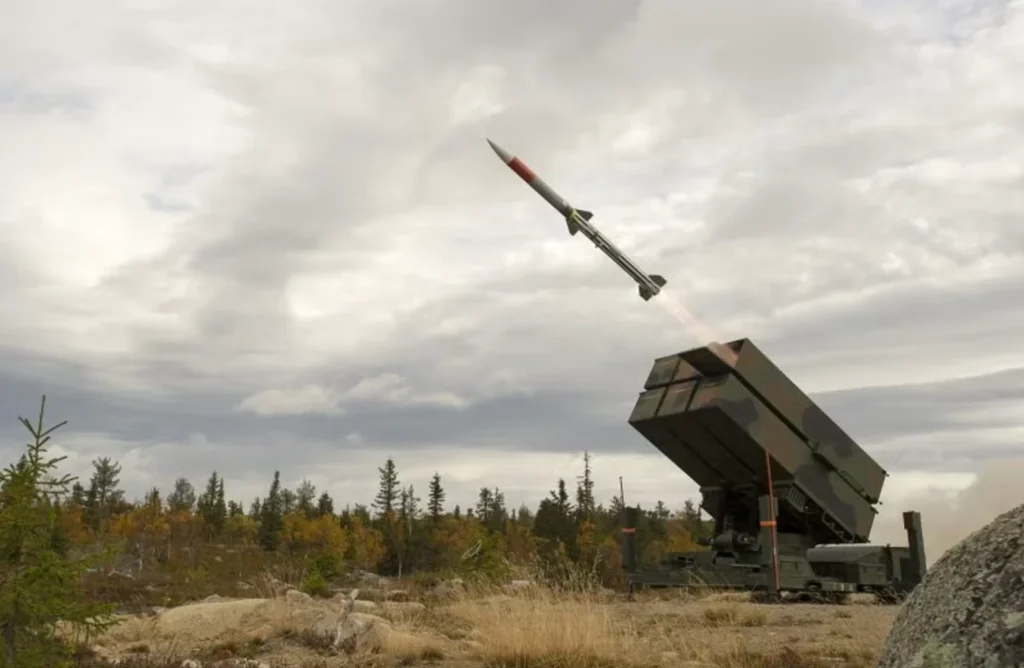
For example, the NASAMS 3 range, when using AMRAAM-ER missiles, stretches out to 50–60 kilometers—enough to intercept aircraft or cruise missiles well before they reach their intended targets. Shorter-range targets like drones or loitering munitions can be neutralized with AIM-9X missiles. This versatile loadout capability enhances overall system effectiveness without dramatically raising the cost.
Performance in real-world scenarios has cemented NASAMS’ reputation. One of the most public demonstrations of its operational success came during its deployment to Ukraine in 2022, where it successfully intercepted Russian cruise missiles aimed at civilian and military infrastructure. This performance drew global attention to the system’s reliability and effectiveness..
One of the standout advantages of the NASAMS air defense system is its affordability when compared to other medium- and long-range air defense systems. While the exact NASAMS system price varies depending on the configuration and the customer’s requirements, estimates generally place the total cost of a full NASAMS battery—including launchers, radars, and fire control units—between $65 million and $100 million.
This makes it significantly more accessible than high-end platforms like the Patriot PAC-3, which can cost several hundred million dollars per battery. The system’s reliance on widely used missiles, such as the AIM-120 AMRAAM, also contributes to lowering the NASAMS missile cost, especially for NATO-aligned countries that already operate these air-to-air munitions on their fighter jets.
Beyond acquisition costs, NASAMS offers savings in operational expenditure as well. The system uses commercial off-the-shelf components where feasible and requires a smaller crew for deployment and maintenance compared to larger, more complex systems. Countries benefit from the ease of integrating NASAMS into existing air defense networks, especially those built around NATO standards.
The open architecture and modular design reduce lifecycle costs, since nations can upgrade specific components—like adding new radars or extending the NASAMS missile range—without needing to overhaul the entire platform. These factors contribute to a favorable total cost of ownership that appeals to both large militaries and those with constrained defense budgets.
The NASAMS air defense system has firmly established itself as one of the most adaptable and reliable surface-to-air missile systems in today’s defense market. Its modular structure, ability to integrate various missile types, and interoperability with allied command networks make it an invaluable component of modern air defense strategies.
A significant appeal of NASAMS lies in its balance between performance and affordability. Compared to other medium- and long-range systems, the NASAMS system price is relatively cost-effective, making it accessible to a wider range of military budgets.
The use of common missile types like the AIM-120 AMRAAM also helps contain the NASAMS missile cost, while its open system architecture ensures that upgrades can extend the platform’s relevance well into the future without the need for complete system replacement. This practical approach allows operators to adapt to emerging threats and technologies while keeping the overall NASAMS cost predictable and manageable.