Follow Us:
Follow Us:

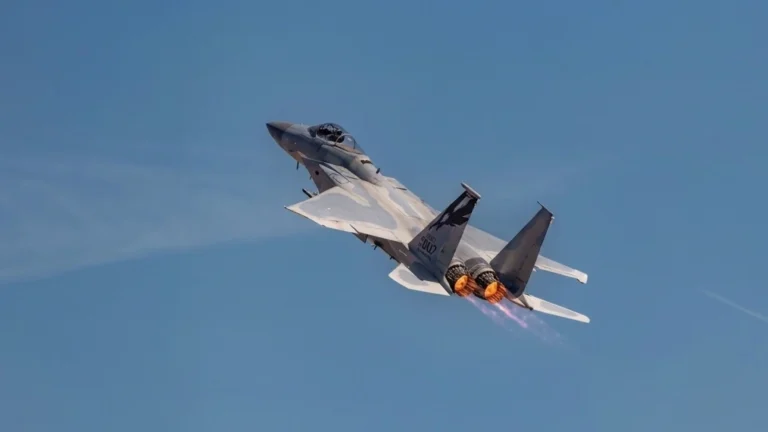
Picture this: you’re in a fighter jet screaming across the sky, pulling high-G turns, every second shaving the margin between survival and a fiery end. At that moment, the difference between living and being another footnote in air combat history might come down to a single missile—the AIM-9 Sidewinder.
This little piece of hardware isn’t just another entry in the endless alphabet soup of military acronyms. It’s the most widely produced air-to-air missile in the Western world, with more than 110,000 built since the 1950s and still rolling off production lines today. Think about that for a second.
In a defense industry where weapons come and go like fashion trends, the Sidewinder has not only stayed relevant but has evolved through wars, revolutions in technology, and countless upgrades. It’s the denim jeans of air combat—practical, reliable, constantly reinvented.
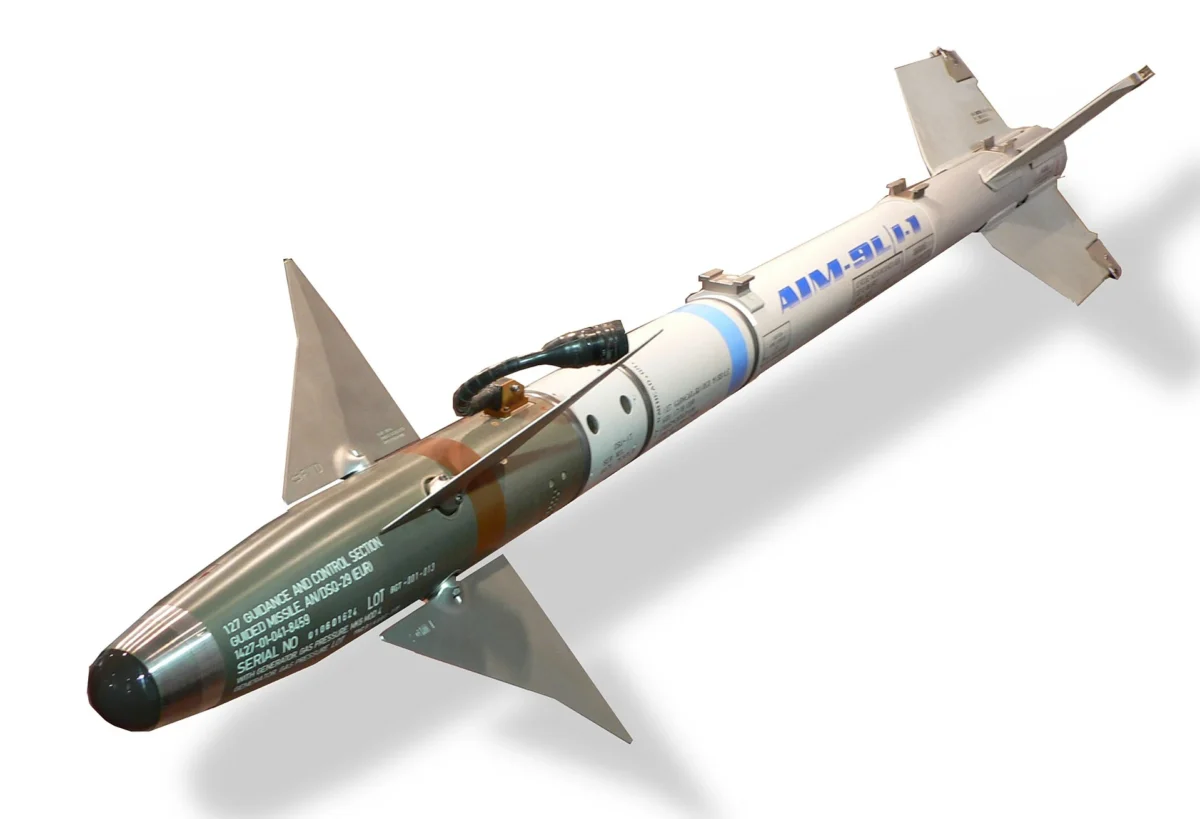
The Sidewinder missile first proved itself during the Cold War, where it quickly earned a reputation as the go-to weapon for dogfighting. Lightweight, heat-seeking, and brutally simple to use—pilots called it a “point-and-shoot” weapon. If an enemy jet’s engine was hot enough to stand out against the cold sky, the Sidewinder would find it. And when it did, the results were usually decisive.
But here’s the twist most people miss: the AIM-9 isn’t just a relic of jet battles gone by. Today’s AIM-9X variant is a completely different beast. With a high-tech imaging infrared seeker, off-boresight capability, and helmet-mounted cueing, it can lock onto a target even when it’s nowhere near your nose. That means a pilot can look sideways—literally just look—and fire.
If you strip away the jargon, the AIM-9 Sidewinder is, at its core, a heat-seeking, short-range air-to-air missile designed for one purpose: give fighter pilots a fast, simple, and deadly tool in a dogfight. It’s small enough to hang on the wingtip of an F-16 or F/A-18, yet powerful enough to bring down anything from a MiG-21 to a modern fighter jet.
The beauty of the Sidewinder has always been its simplicity. Early models were often described as “fire-and-forget”—once launched, the missile’s infrared seeker locked onto the hot exhaust of an enemy aircraft, guiding it to impact without the pilot having to babysit it. In a chaotic close-range fight, that kind of independence is priceless.
But don’t mistake “simple” for outdated. Over the decades, the missile has undergone an almost chameleon-like evolution. The original AIM-9B, introduced in the mid-1950s, had to be fired from behind an enemy jet, chasing its hot tailpipe.
Fast forward to today’s AIM-9X Block II+, and you’re looking at a weapon that can hit targets from extreme off-angles, even when launched from a turning aircraft at the edge of its envelope. It’s like comparing a black-and-white television to a modern OLED display—same idea, completely different world.
Here’s a quick look at the general specifications most often associated with the Sidewinder family (note: exact numbers shift by variant):
| Specification | Details |
| Length | ~9 ft (2.87 m) |
| Diameter | 5 in (127 mm) |
| Weight | 188–200 lb (85–91 kg) |
| Speed | Mach 2.5+ |
| Typical Range | ~18–35 km (varies by model) |
| Warhead | Annular blast-fragmentation |
| Guidance | Infrared homing (Imaging IR on AIM-9X) |
| Platforms | F-15, F-16, F/A-18, F-35, many others |
Think of it this way: the Sidewinder is the “Swiss Army knife” of Western dogfighting missiles. Compact, lethal, and adaptable—it’s been flying for nearly seventy years and shows no signs of retirement.
One of the most fascinating things about the AIM-9 Sidewinder is how it has reinvented itself across generations. What started as a fairly crude tail-chaser in the 1950s has become a high-tech, helmet-cueing, thrust-vectoring weapon that can win fights even before the enemy knows it’s been launched.
The original AIM-9B was revolutionary in its day—simple, cheap, and deadly enough to terrify enemy pilots. But it had limits. It could only lock on from directly behind, relying on the heat of an enemy’s exhaust plume. Later versions like the 9D and 9E added better seekers and motors, giving pilots more confidence, though they were still firmly “rear-aspect only.”
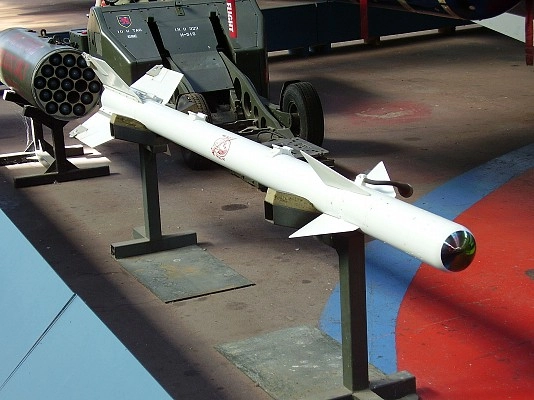
The game-changer came with the AIM-9L “Lima” in the late 1970s. For the first time, pilots could fire head-on, as the seeker could detect heat from an aircraft’s skin, not just its engines. This leap paid off dramatically during the Falklands War (1982), where British Harriers armed with the 9L scored a string of kills against Argentine aircraft. The follow-on AIM-9M improved reliability, introduced smokeless motors, and better counter-countermeasures—harder to decoy with flares.
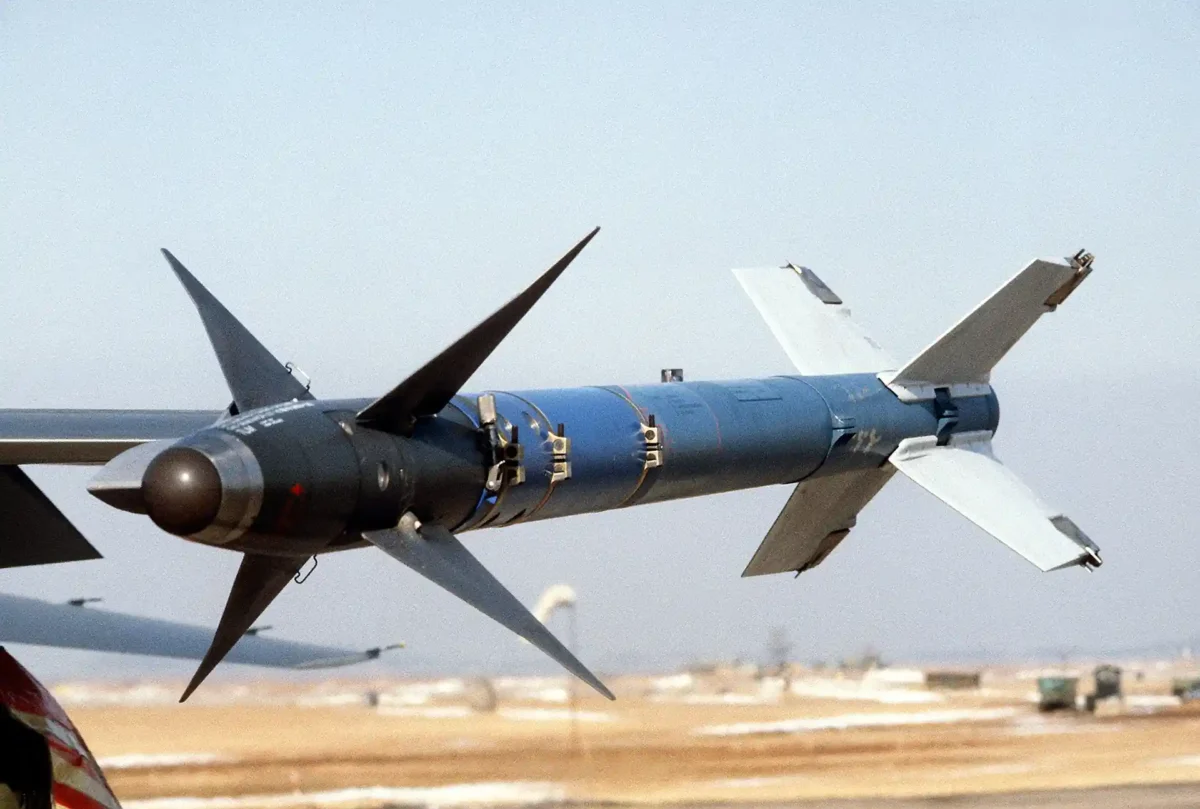
Fast forward to today and we’re in AIM-9X territory. The 9X is essentially a new missile wearing the old name. With its imaging infrared (IIR) seeker, high off-boresight capability, and thrust-vectoring control, it can chase targets at crazy angles—pilots can literally “look and shoot” using a helmet-mounted display. Later upgrades (Block II and II+) added datalink for in-flight updates, giving it a surprising reach and flexibility, even in networked battles.
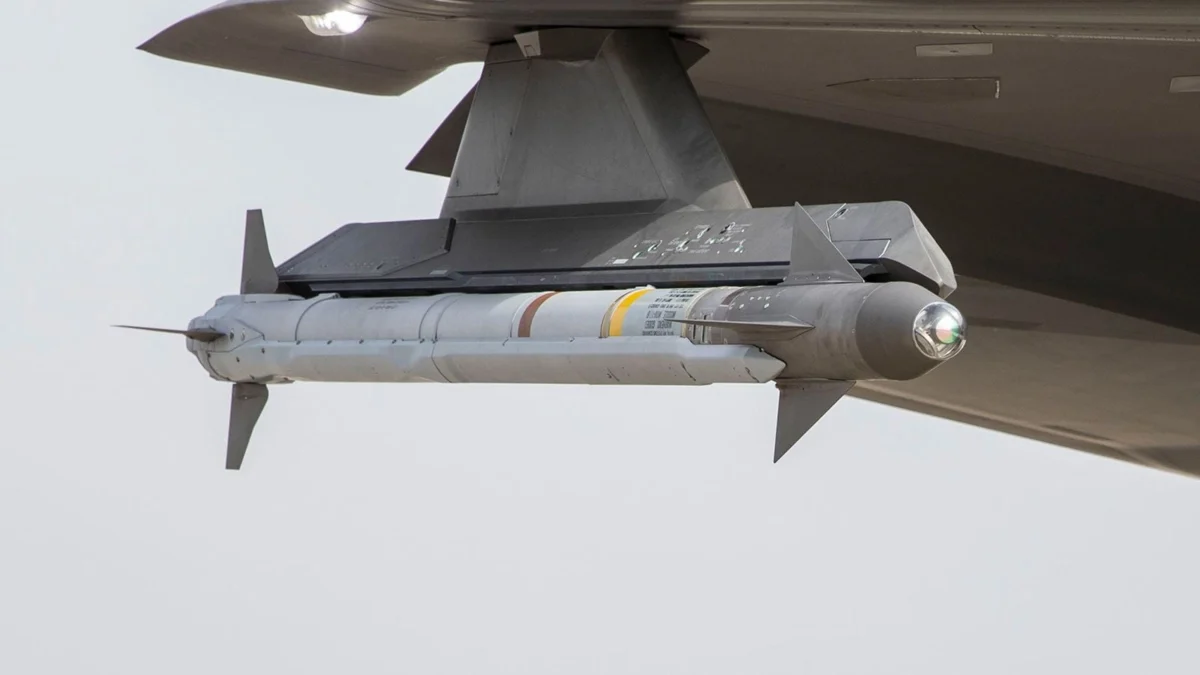
Seventy years, dozens of models—and one constant: the Sidewinder has never stopped evolving.
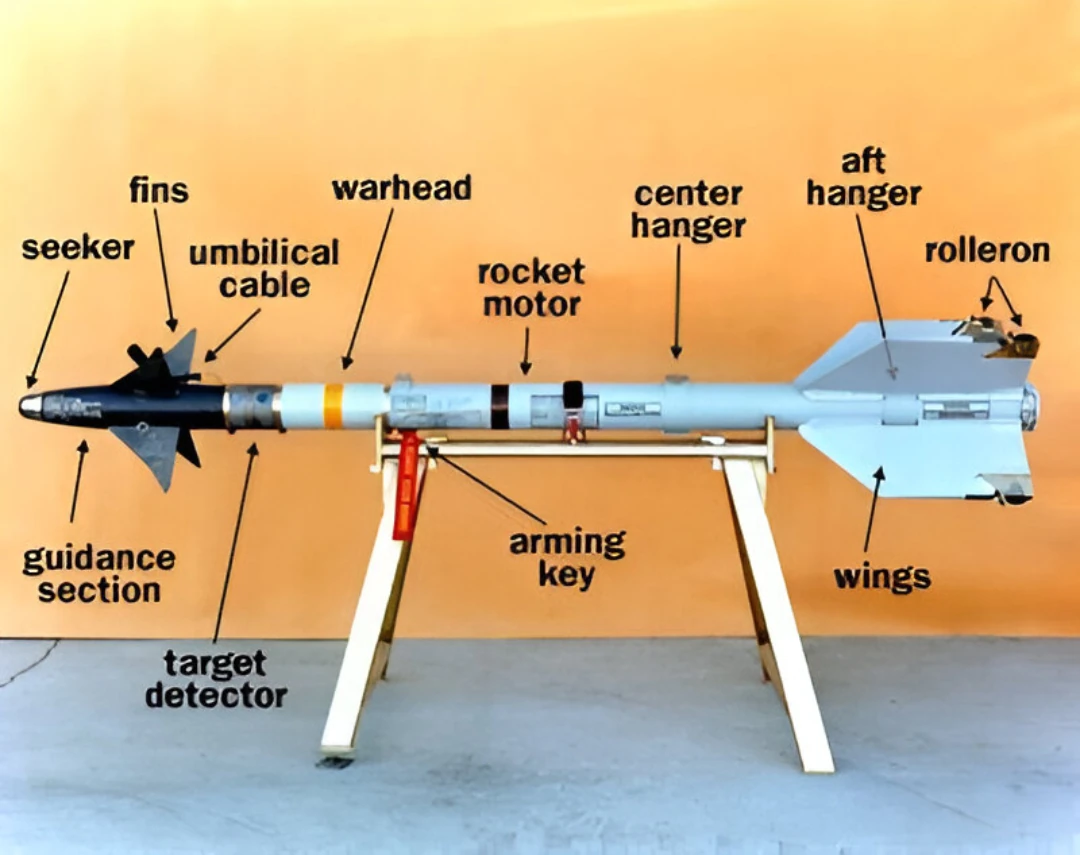
At first glance, the AIM-9 Sidewinder looks like nothing more than a sleek white tube with fins. But inside that tube lives a surprisingly elegant piece of engineering that has kept it at the top of its game for decades. What makes the Sidewinder tick is a mix of physics, clever design tricks, and just enough brute force.
Every Sidewinder begins with its seeker—the “eye” in the missile’s nose. Early models used a spinning reticle to detect heat, basically scanning for the infrared glow of an enemy jet’s exhaust. Modern versions like the AIM-9X have an imaging infrared (IIR) seeker, which is more like a thermal camera. Instead of just chasing a blob of heat, it can see the entire shape of an aircraft, making it much harder to fool with simple flares.
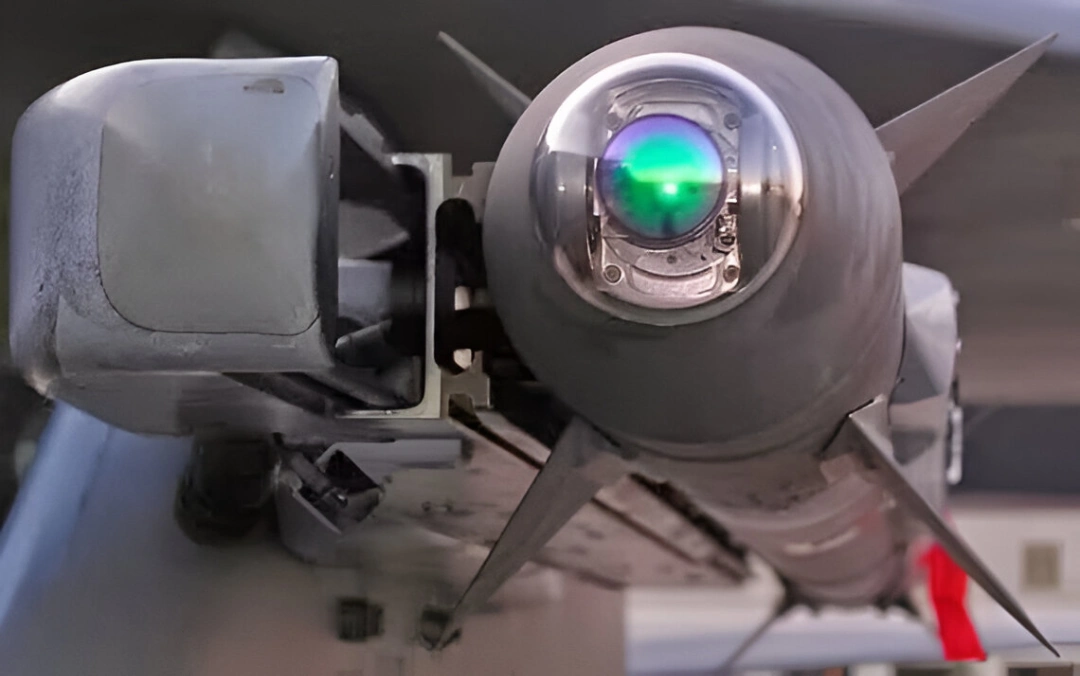
One of the Sidewinder’s quirkiest but most brilliant features is the rolleron—little spinning discs on the tail fins that act like gyroscopes. When the missile is launched at supersonic speeds, the rollerons spin and stabilize the missile without heavy electronics or complex mechanisms. It’s low-tech magic that has worked for 70 years.
Once locked, the Sidewinder constantly adjusts its fins (and in the AIM-9X, uses thrust-vectoring) to stay on the target’s heat signature. When it closes in, a proximity fuze detonates its annular blast-fragmentation warhead, shredding the target with a lethal cloud of metal. Direct hits aren’t even necessary—the explosion simply needs to get close enough to ruin a jet’s day.
The Sidewinder is famous for being “fire-and-forget.” But modern 9X versions push that idea further, adding datalink capability so the missile can receive mid-course updates even after launch. That means it’s not just a simple heat-chaser anymore—it’s a guided predator that can adapt mid-flight.
The result? A weapon that’s both brutally straightforward and quietly sophisticated.
If you really want to measure the worth of a missile, you don’t look at its glossy brochure—you look at its kill record. And the AIM-9 Sidewinder has one of the most battle-tested résumés in modern air combat.
The Sidewinder first drew blood during the Vietnam War. Pilots quickly discovered its strengths and flaws. On paper, the AIM-9B should’ve been deadly; in practice, early seekers often lost lock, especially in the humid skies of Southeast Asia. Even so, U.S. aircraft scored dozens of kills with the missile, and lessons learned from these fights fed directly into improved variants.
The true coming-of-age moment came in the Falklands War (1982). British Harriers, armed with the new AIM-9L, achieved stunning success—scoring at least 20 kills against Argentine aircraft. For the first time, the missile could be fired head-on, a feature that caught opponents off guard. Argentine pilots later admitted that once a Sidewinder was on their tail, escape was almost impossible.
In 1982, during clashes over Lebanon, Israeli pilots used Sidewinders (alongside other weapons) to devastating effect against Syrian aircraft. Combined with superior training and tactics, the Sidewinder became part of a broader story of air dominance.
By the time of Operation Desert Storm (1991), the AIM-9M was standard. U.S. fighters shot down Iraqi MiGs and Mirages with Sidewinders, often in fast, close-range engagements. Even as radar-guided AIM-7 Sparrows and AIM-120 AMRAAMs took center stage, the Sidewinder remained the close-in brawler’s weapon of choice.
From Vietnam to Iraq, and from Harrier dogfights to F-15s flying in the Gulf, the Sidewinder’s track record proves it isn’t just a missile—it’s a survivor. In nearly every major Western air campaign of the last sixty years, the Sidewinder has been there, shaping outcomes one fiery impact at a time.
Talk to any fighter pilot and they’ll tell you: missiles aren’t all created equal. The AIM-9 Sidewinder and the AIM-120 AMRAAM often get mentioned in the same breath, but they’re designed for very different jobs—more like a scalpel and a sniper rifle than two versions of the same blade.
The AIM-120 AMRAAM is a beyond-visual-range (BVR) missile. It’s bulkier, radar-guided, and meant to kill at long distances—sometimes before the pilot even sees the target. Think of it as the “reach out and touch someone” weapon.
The Sidewinder, by contrast, is the close-in knife fighter. When two jets merge in a swirling dogfight, the AIM-9 is what gets pulled from the holster. Its infrared seeker is passive, which means the enemy doesn’t even know it’s been targeted until the missile is already streaking their way.
In truth, comparing AIM-9 and AIM-120 isn’t about which one is “better.” Pilots carry both because modern air combat demands flexibility. The AMRAAM might score the first kill at 40 miles out, but when the fight collapses into a turning duel at a mile and a half, it’s the Sidewinder’s moment to shine.
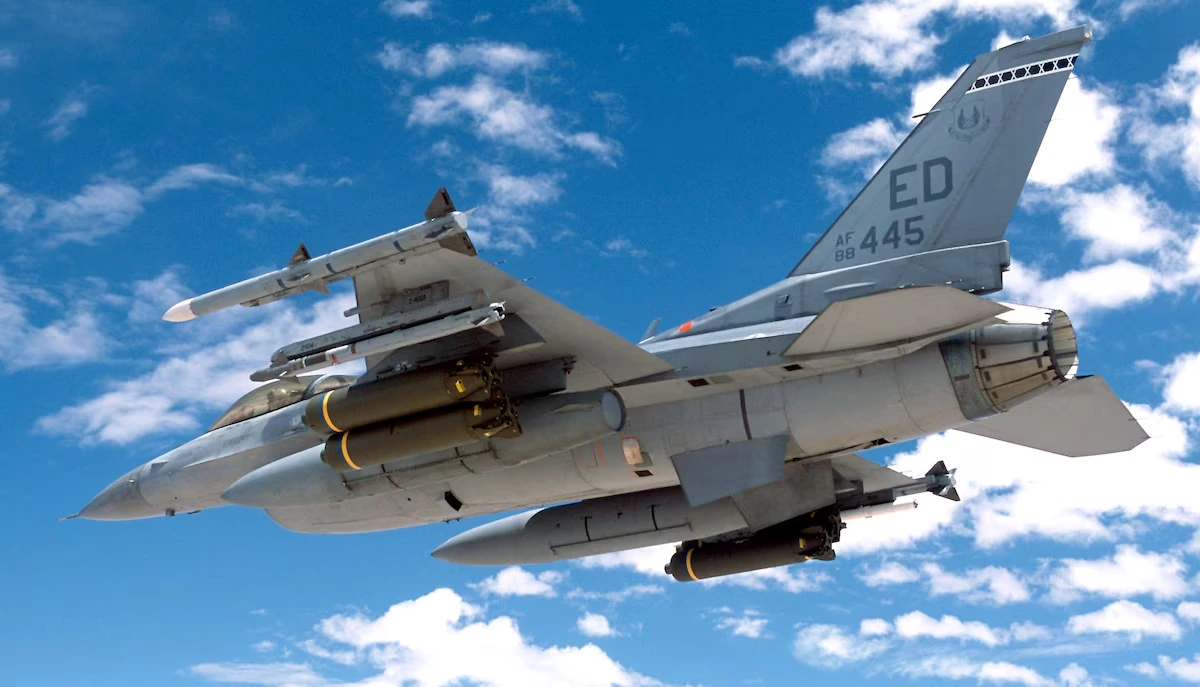
Think of it like a chess game: the queen (AMRAAM) controls the long board, but sometimes you need the knight (Sidewinder)—fast, surprising, and devastating up close.
One of the Sidewinder’s most impressive traits isn’t just its speed or accuracy—it’s its uncanny adaptability. From the earliest F-86 Sabres to today’s F-35 Lightning II, this missile has fit almost every Western fighter like it was custom-built for the platform.
Pilots flying F-15s, F-16s, and F/A-18s rely on it as a standard close-range weapon, while Harriers and older jets have also proven that even legacy aircraft can make it deadly. With the AIM-9X, modern fighters gain access to high off-boresight targeting and helmet-mounted cueing, letting a pilot lock onto a target almost anywhere in their field of view.
The Sidewinder isn’t limited to planes, either. Carrier pilots love it for its ruggedness: it survives catapult launches, exposure to salt spray, and cramped hangar storage while remaining consistently lethal. Its small size, relatively light weight, and proven guidance systems make it easy to integrate across different airframes without extensive modifications, which is why it remains a favorite even decades after its introduction.

Interestingly, engineers have experimented with ground and shipboard launches too. Variants adapted for the MIM-72 Chaparral system allowed short-range air defense units to field it from the ground, and NASAMS testing explored its potential in surface-based roles. These adaptations showcase the missile’s versatility, turning a weapon originally designed for dogfighting into a flexible tool across multiple mission types.
What makes the Sidewinder truly remarkable is how effortlessly it adapts to new technology and new platforms. Decades of incremental upgrades—from improved seekers to thrust vectoring—mean it can ride, fly, and hit with deadly precision, whether launched from a fighter, a naval deck, or even a ground battery. It’s a testament to smart engineering and thoughtful evolution: a missile that refuses to be limited by its original design.
The AIM-9 Sidewinder is more than just a missile; it’s a story of innovation, adaptability, and enduring relevance. From its humble beginnings as a simple heat-seeker in the 1950s to the sophisticated AIM-9X of today, it has continuously evolved to meet the changing demands of air combat. Its widespread adoption across dozens of platforms and countries demonstrates not just technical brilliance, but strategic versatility.
What makes the Sidewinder truly remarkable is how it balances simplicity with sophistication. It’s compact yet powerful, straightforward yet capable of integrating cutting-edge guidance and off-boresight targeting. Its combat record—spanning Vietnam, the Falklands, Desert Storm, and modern exercises—speaks volumes about its reliability and effectiveness.
In an era of advanced radar-guided missiles and electronic warfare, the Sidewinder still holds its place as the ultimate close-range weapon. For pilots and defense planners alike, it’s a testament to smart engineering, continuous innovation, and a design philosophy that refuses to be outclassed.