Follow Us:
Follow Us:

If you’ve ever watched two world-class athletes warming up, one built like a sprinter, the other like a decathlete, you’ve already felt the tension behind the F-35 Lightning II vs F-22 Raptor debate.
Both jets belong to the same stealth-fighter “family,” but they were born with such different instincts that putting them in the same ring feels a bit like comparing a Swiss Army knife to a straight-edge razor. Sharp tools, both of them—just sharpened for different fights.
Most people think this comparison is simple: the F-22 is “stronger,” the F-35 is “smarter,” and that’s the end of it. But that idea is about as shallow as judging a chess match by only the opening move.

Dig a little deeper, and you’ll find two aircraft shaped by changing geopolitics, supply-chain drama, inter-service rivalry, budgets that sometimes ballooned like parade inflatables, and the evolving question of what a modern fighter jet should be.
So my goal here isn’t to repeat the usual checklist of “speed, stealth, thrust, next slide please.” You’ve seen that a thousand times. Instead, I want to give you a perspective you rarely hear—how each jet behaves not just on paper but in realistic mission environments, the kind pilots actually worry about.
To set the stage, here’s a quick snapshot that’ll help orient your thinking before we dive deeper:
| Fighter Jet | Core Identity | Strength Profile | Design Philosophy |
| F-22 Raptor | Pure air-superiority | Speed, stealth shaping, supercruise, maneuvering dominance | “Win the sky before anything else happens.” |
| F-35 Lightning II | Multirole, data-fused battlespace hub | Sensor reach, network warfare, strike versatility | “Fight as part of a connected ecosystem.” |
By the time you finish this series of sections, you’ll see why comparing these jets head-to-head is fascinating, but also a little unfair. They were never meant to be rivals. They’re complementary characters in the same story of modern aerial power.
All right, step a little closer. This is the part where the F-35 Lightning II vs F-22 Raptor matchup starts to feel like opening two very different toolboxes.
At first glance, you might assume both aircraft share the same blueprint: angular stealth shaping, big intakes, canted tails. But the deeper you go, the more their personalities begin to show through the metal.
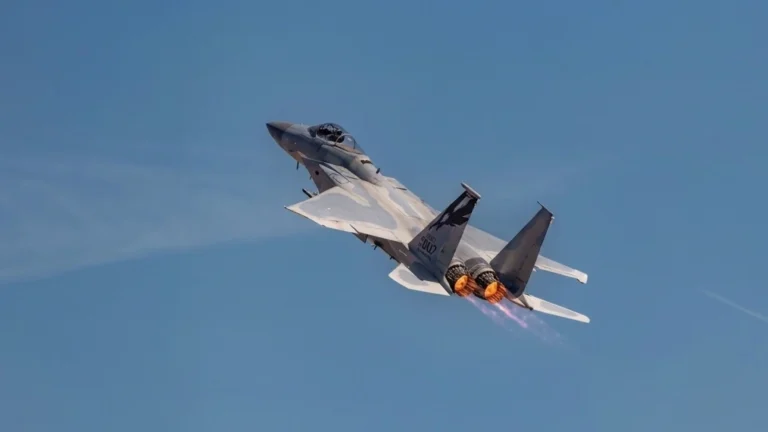
Think of the F-22 Raptor as the fighter jet equivalent of a sprinter engineered to explode off the starting blocks. Twin Pratt & Whitney F119 engines give it a kind of effortless, chest-hollowing thrust that lets it supercruise, no afterburner, past speeds that would make older jets wheeze.
Pilots sometimes describe the feeling as “flying a jet that wants to run faster than you do,” which is either comforting or mildly alarming depending on your appetite for G-forces.
The F-35, on the other hand, takes a different path. It’s powered by a single F135 engine, yes, just one, but calling it “one engine” almost undersells it.
This thing is a small power plant masquerading as a propulsion system. It’s less about raw speed and more about reliability, efficiency, and giving the aircraft room for massive internal computing architecture. The F-35 is like a long-distance athlete who stores power instead of burning it all in one sprint.
Here’s a clean way to visualize the differences:
| Specification | F-22 Raptor | F-35 Lightning II |
| Engines | Twin F119-PW-100 | Single F135-PW-100 |
| Max Speed | ~Mach 2.25 | ~Mach 1.6 |
| Supercruise | Yes | Not true supercruise |
| Combat Radius | ~460 miles on certain profiles | ~670 miles (variant dependent) |
| Airframe Focus | High agility & air dominance | Multirole mission endurance |
The funny thing? Neither aircraft is “better” here—it just depends what you’d rather have in your corner: the athlete who punches first, or the one who sees the whole fight before it begins.
Picture this: You’re standing in a dimly lit room, and two people walk in. One slips through the darkness so quietly you almost don’t register they’re there. The other doesn’t just move silently—they seem to rearrange the shadows around them.
That’s the difference between the F-22 Raptor and the F-35 Lightning II when it comes to stealth and situational awareness. Both are invisible in their own ways, but one hides itself, and the other hides everything else.
Let’s start with the F-22, the classic stealth purist. Its entire design screams “don’t see me”—from the razor-edged angles to the internal weapons bays that let it fight without ever flashing metal under a wing. It’s sculpted like someone spent years sanding away anything that could bounce a radar ping.
Pilots sometimes joke that radar waves “give up” before they reach it, which is obviously not true but feels emotionally accurate. The Raptor’s stealth is raw, physical, and aggressive—built for slipping past air defenses and killing whatever flies before it ever sees the threat.
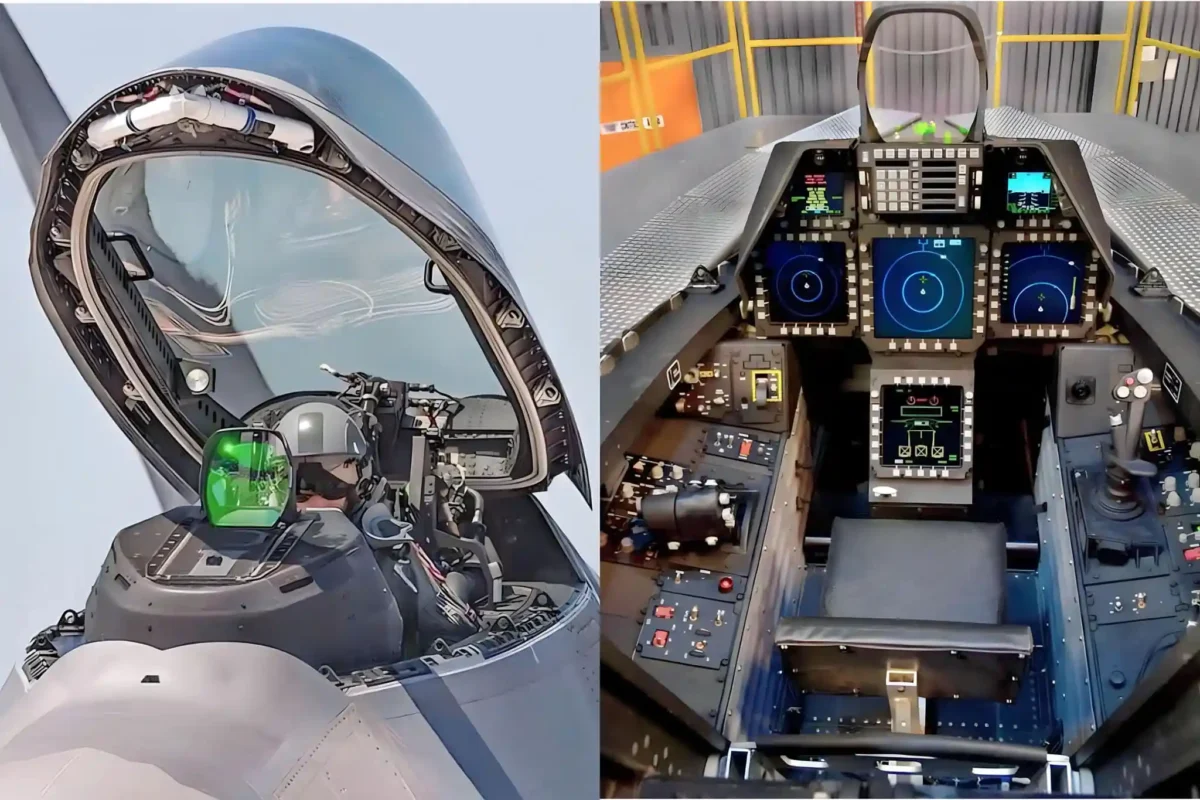
The F-35, though, plays a different stealth game. Sure, its radar cross-section is tiny, comparable in some aspects to the Raptor’s frontal signature—but its real trick is the way it turns the entire battlespace into something more predictable, almost like dimming the lights to read a secret message.
Its Distributed Aperture System, Electro-Optical Targeting System, and advanced AESA radar work together so seamlessly that F-35 pilots sometimes describe the cockpit as “flying inside a Google Maps layer for war.” Every threat, every aircraft, every emitter—mapped, tagged, streamed, shared.
And that’s the quiet revolution: the F-22 hides itself; the F-35 hides the world from the enemy.
Here’s a quick comparison to anchor it:
| Feature | F-22 Raptor | F-35 Lightning II |
| Stealth Focus | Air-superiority stealth optimized for front-aspect | All-aspect stealth designed for multirole missions |
| Sensor Fusion | Strong but less integrated | Industry-leading, full fusion across platforms |
| Radar | AN/APG-77 AESA (high power) | AN/APG-81 AESA (high resolution + mapping) |
| Unique Capability | Extreme low observability at speed | 360° persistent sensing + data networking |
If stealth were a talent show, the F-22 would win “best pure performance,” while the F-35 would walk away with “most innovative act.”
If you really want to understand how the F-35 Lightning II vs F-22 Raptor comparison plays out in a real fight, forget the glamour shots and look at what each jet can carry.
Weapons tell you how an aircraft intends to solve problems—quietly, loudly, or somewhere in between. And in this case, the contrast is almost philosophical.
The F-22 Raptor approaches combat like a fencer who refuses to bring anything but the sharpest blade. Its internal bays are tailored for air-to-air dominance: AIM-120 AMRAAMs for long-range kills, AIM-9X Sidewinders for the close-in scrambles, and a 20 mm M61A2 cannon tucked neatly inside the frame for those rare, intimate moments when two jets end up breathing the same air.
Everything about this loadout screams clarity of purpose—find the threat, erase the threat, move on before anyone even knows you were there.
It’s worth mentioning that the Raptor can carry air-to-ground weapons, but only in a limited and carefully curated way. It’s like the jet occasionally agrees to run an errand that isn’t really its job.
The F-35, meanwhile, walks onto the battlefield with the flexibility of someone who knows today’s mission might be surveillance, or strike, or escort, or jamming, or close support—sometimes all of those in a single run.
Yes, it carries AIM-120s and AIM-9Xs like the Raptor, but the real magic is in its smart bombs, stand-off missiles, and precision-guided toys. JDAMs, SDBs, JSOWs—you name it. And if stealth isn’t required? The F-35 grows metaphorical bat wings, loading external pylons that turn it into a compact bomber with serious punch.
Here’s a quick look at how the loadouts compare on paper:
| Loadout Area | F-22 Raptor | F-35 Lightning II |
| Air-to-Air | AMRAAM, Sidewinder, 20 mm canon | Same core arsenal |
| Air-to-Ground | Limited precision bombs | Extensive multirole strike suite |
| Max Internal Weapons | ~6 AIM-120 + 2 AIM-9 | Varies by variant; emphasis on mixed payload |
| External Stores | Rare (breaks stealth) | Optional; greatly expands strike capability |
Think of it this way: the F-22 is the scalpel, sleek, lethal, controlled. The F-35 is the multi-tool—adaptable, modern, and just as dangerous, especially when the situation gets messy.
Here’s where the F-35 Lightning II vs F-22 Raptor comparison stops being theoretical and starts becoming something you can almost picture on a real-world mission board.
Because the truth is, these jets aren’t just built differently, they behave differently once they’re out in the wild. Think of them as two specialists who occasionally cross paths but rarely fight the same battles in the same way.
Let’s start with the F-22 Raptor, the purebred air-superiority machine. If you were planning to kick down the front door of hostile airspace, this is the jet you’d send first. It’s the one that clears the sky, pushes enemy fighters back onto their heels, and quietly ensures everyone else gets to do their job without interruption.
In training scenarios, the Raptor sometimes racks up kill ratios that look almost unfair, like a gamer who memorized every cheat code. And yet, despite its unmatched aerial dominance, the F-22 rarely gets tasked with the flashier “strike this, destroy that” missions. It’s more like a silent guardian who makes sure nobody else gets shot out of the sky.
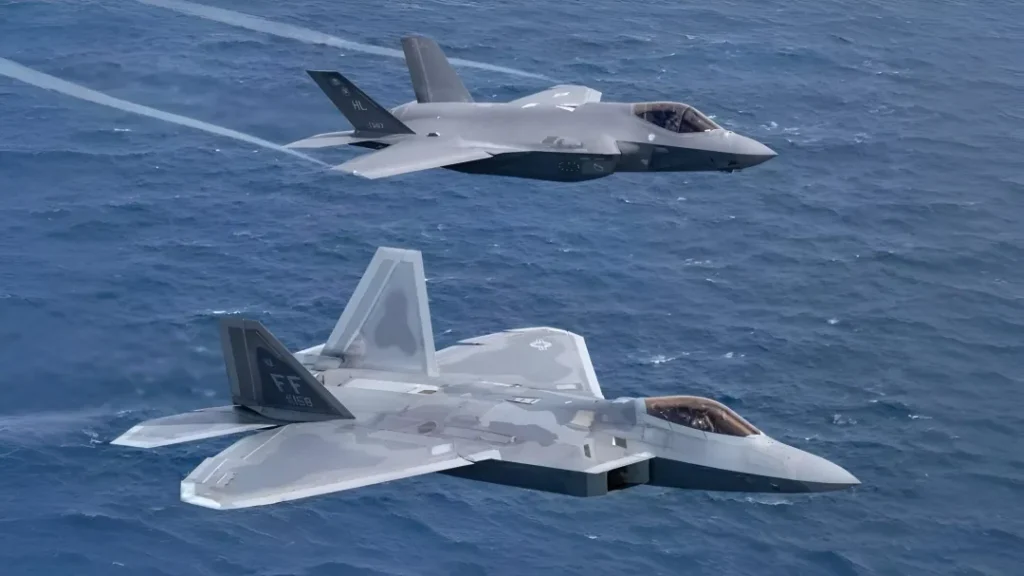
The F-35, though, plays an entirely different role—one that didn’t even exist when the Raptor was being designed. The F-35 is a network node, a sensor hub, a flying intelligence center disguised as a fighter.
Commanders don’t just send an F-35 into a mission; they plug it into the entire architecture of the operation. It can peer deep into contested airspace, detect and label threats, and quietly share that data with anything—from another jet to a ship to artillery on the ground. In that sense, the F-35 isn’t merely “in the fight.” It choreographs it.
This is why you’ll often see the F-35 doing everything from close air support to electronic warfare to precision strikes, sometimes within the same sortie. It’s flexible in a way the Raptor never needed to be. And because allies across the world fly it—Italy, Japan, the UK, Australia, South Korea, and a growing list of others—the F-35 has become the backbone of coalition warfare.
Here’s a quick feel for how their mission philosophies split:
| Mission Type | F-22 Raptor | F-35 Lightning II |
| Air Superiority | Primary role—dominant | Secondary but capable |
| Strike Missions | Limited | Core strength |
| Electronic Warfare | Minimal | Robust, built-in |
| ISR (Intelligence, Surveillance, Recon) | Moderate | Exceptional, near-unmatched |
| Coalition / Joint Ops | U.S. only | Global backbone |
The best analogy I’ve ever heard came from a pilot who said:
“The F-22 is who you send to win the fight.
The F-35 is who you send to win the war.”
Money may not be glamorous, but in the world of fifth-generation jets, it decides which dreams get built and which ones stay in the concept art folder.
And the story of the F-35 Lightning II vs F-22 Raptor becomes surprisingly emotional once you factor in budgets, canceled lines, export bans, and the geopolitical ripple effects that followed. These jets aren’t just machines; they’re economic and political statements stamped in titanium.
Let’s rewind to the F-22 Raptor, a jet born during a very specific moment in history—when the U.S. expected to face massive numbers of advanced enemy fighters in Cold War–style waves.
The Raptor was engineered with almost no financial restrictions. “Build the best air-superiority fighter possible,” Congress essentially said, “and we’ll deal with the receipts later.” Well… the receipts arrived. Each F-22 ended up costing well over $150 million to produce, sometimes more depending on how you slice the accounting. Support costs pushed the lifetime price tag into eyebrow-raising territory, and by the late 2000s, the political appetite to keep producing them evaporated.
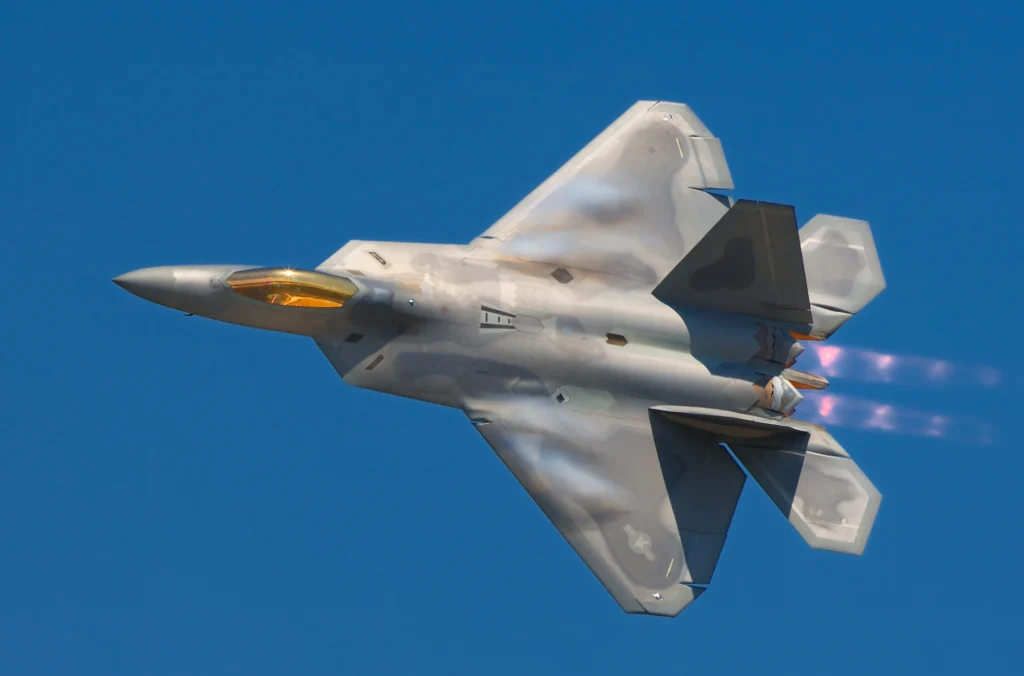
Production ended at just 187 operational aircraft. That’s it. No exports. No restart. A single generation of Raptors frozen in time—still magnificent, still unmatched in some areas, but forever limited in number. It’s like having the world’s best racehorse but refusing to breed it.
Then along comes the F-35 Lightning II: cheaper per unit (if you consider ~$80M–$100M “cheap”), more maintainable, far more flexible, and—crucially—exportable.
That last part changed everything. Once allies from Europe to Asia joined the F-35 program, economies of scale kicked in. Production smoothed out. Costs dipped. Suppliers multiplied. Today, the F-35 isn’t just a U.S. fighter; it’s a global franchise with the kind of distribution network sneaker brands dream about.
Read also: Why Does the US Export the F-35 But Not the F-22?
And that global presence matters. A country operating F-35s gains not just the aircraft, but access to a shared network of maintenance hubs, software updates, intelligence pipelines, and training ecosystems. It’s fighter aviation as a multinational tech platform—something the F-22 never had the chance to become.
Here’s a snapshot of how their production and deployment realities differ:
| Category | F-22 Raptor | F-35 Lightning II |
| Production Status | Ended (2009) | Active, ongoing |
| Units Built | ~187 operational | 1,000+ and growing |
| Export Status | Not exportable | Widely exported |
| Per-Unit Cost (approx.) | $150M+ | $80M–$100M (variant dependent) |
| Global Footprint | U.S. only | 15+ nations and expanding |
The irony? The F-22 was arguably too good for its own era—its perfection priced it out of a world that didn’t think it needed that kind of fighter anymore. The F-35, meanwhile, became the fighter everyone actually needed, whether for deterrence, precision strike, or simply keeping pace with evolving threats.
Here’s the moment everyone quietly waits for in any F-35 Lightning II vs F-22 Raptor breakdown—the part where we stop admiring each jet in isolation and start talking honestly about where each one actually shines. Not the marketing version, not the fan-forum fantasy matchups, but the nuanced, real-world kind of “better” that pilots and commanders actually discuss behind closed doors.
Because the truth is: there is no single winner.
There are situations, and each jet dominates its preferred environment like it was born there.
If the sky turned hostile tomorrow and you needed total control in hours, not days—the Raptor is your first phone call. Its strengths aren’t conceptual; they’re brutally tangible.
It accelerates like an animal.
It maneuvers in ways that make even seasoned pilots swallow hard.
It holds a stealth profile that becomes downright eerie when combined with supercruise.
One Raptor pilot once described dogfighting in it as “like cheating with permission.” Not because the jet is magical, but because its design simply takes fewer compromises. No extra bulk, no multirole baggage. Just air dominance baked into every weld. There’s a reason the F-22 remains the jet adversaries train against, not with.
But the cost of that purity? It’s less adaptable. In modern battle scenarios, agility can mean “switching roles mid-mission,” not just “turning tighter.”
Now flip the script.
Imagine you’re planning a mission where threats are mixed—surface radar, drones, potential enemy fighters, SAM sites that may or may not be mobile. You don’t just need a fighter. You need a detective, translator, coordinator, and precision surgeon.
That’s the F-35.
Its ability to collect, merge, interpret and share data turns a chaotic battlespace into something legible—not just for itself, but for everything around it. A destroyer miles offshore can fire a missile at a target the F-35 identifies. Ground troops can receive real-time threat mapping piped directly from its sensors. Another F-35 in a different country can plug into the same picture if the networks line up.
This isn’t a fighter jet. It’s a flying command presence.
Its “strength” isn’t about pulling 9Gs—it’s about fighting a 21st-century war as if someone handed you the entire playbook instead of a single page.
Here’s a simple way to decode the differences:
| Category | F-22 Raptor (Strength) | F-22 Trade-Off | F-35 Lightning II (Strength) | F-35 Trade-Off |
| Air Combat | Unmatched dogfight & intercept | Limited ISR, fewer roles | Strong BVR + sensor dominance | Less maneuverable |
| Stealth | Exceptional front-aspect | High operating cost | All-aspect + sensor-enhanced | Not as low-profile as F-22 |
| Flexibility | N/A (single-role specialist) | Not versatile | Multirole, multi-domain | Must balance many roles |
| Network Warfare | Good but isolated | No export, no global mesh | Best on earth | Dependent on software ecosystem |
As one Air Force analyst once told me over coffee—half joking, half serious:
“If a Raptor is in the neighborhood, you’re not getting air superiority back.
But if the F-35 shows up, your whole operation might unravel.”
Two different kings. Two different kingdoms.