Follow Us:
Follow Us:

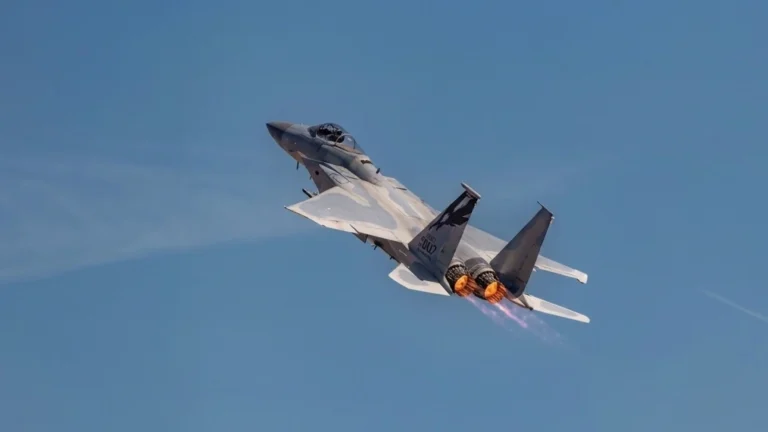
At first glance, it seems like a contradiction: the United States freely exports its cutting-edge F-35 Lightning II to allies around the world—but keeps the F-22 Raptor locked behind closed doors. Why is one of the world’s most advanced stealth fighters available for international sale, while the other is treated like a closely guarded secret?
What makes it more surprising is that the F-22 was the world’s first fifth-generation fighter, built with unmatched air dominance in mind—yet it was retired from production after just 187 units.
Meanwhile, the F-35, often seen as less stealthy and less agile, has become the most widely exported fifth-generation jet in history, with over a dozen international partners and thousands of units planned.
So, why is the F-22 “too good to export”—and the F-35 “good enough to share”?
To really understand why the U.S. exports the F-35 but not the F-22, we need to look at how different these two stealth fighters truly are—not just in appearance or performance, but in their intended roles, technological design, cost, and export strategy.
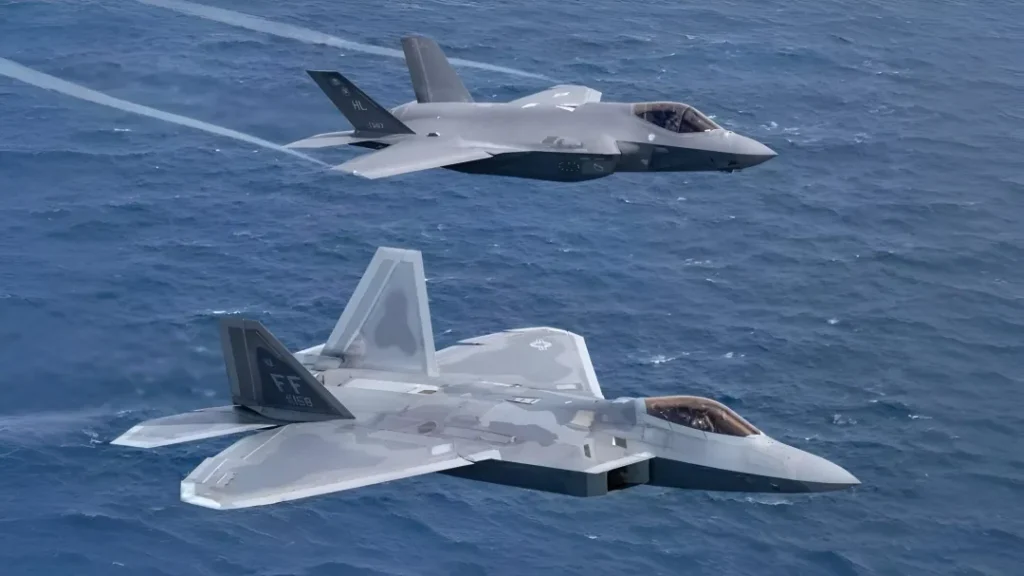
First, there’s the matter of mission. The F-22 Raptor was built with one purpose in mind: absolute air superiority. It was designed during the Cold War era to dominate the skies, outmaneuver any potential adversary, and strike enemy aircraft before they even appeared on radar.
Everything about the F-22—from its thrust-vectoring engines to its razor-sharp stealth profile—was tailored for high-end dogfighting and air-to-air dominance.
In contrast, the F-35 Lightning II is a multirole fighter—meaning it can perform a wide range of missions: air-to-air combat, ground strikes, intelligence, surveillance, and electronic warfare. It’s not as fast or maneuverable as the F-22, but it’s far more flexible, making it ideal for joint operations and coalition warfare. Its mission flexibility is exactly why it was developed in partnership with U.S. allies and why it’s become the centerpiece of modern joint operations.
Read also: F-35 Lightning II vs F-22 Raptor: Side-by-Side Capabilities
Then there’s technology. While both aircraft are fifth-generation fighters, the F-22’s stealth design is more focused on radar evasion in air-to-air combat scenarios. Its radar cross-section is smaller, and its stealth shaping is more aggressive.
But the F-35 was developed later and benefits from a more mature digital architecture. It has more advanced sensor fusion, better electronic warfare capabilities, and is designed to serve as a battlefield “quarterback”—sharing data with allied forces and enhancing situational awareness across the board.
In many ways, the F-35 represents a leap in battlefield integration, even if it’s not quite as stealthy or fast as the F-22 in a traditional dogfight.

Cost and production are perhaps the most significant differences. The F-22 program was incredibly expensive. At the time of cancellation, each aircraft cost over $200 million when factoring in research and development.
Only 187 combat-ready units were ever built, and Congress placed a strict ban on exports to prevent its advanced technology from falling into foreign hands. This F-22 Raptor export ban was tied not just to cost, but to national security fears and ITAR restrictions—essentially locking the Raptor away as a U.S.-only asset.
The F-35, by contrast, was designed from the ground up with international partners in mind. Its development was a multinational effort, with countries like the UK, Italy, and Japan investing early on.
Thanks to mass production and economies of scale, the F-35’s price has steadily dropped to around $80–$100 million per jet. Its export policy was deliberately crafted to allow wider international sales, without compromising critical U.S. military secrets.
If you’re wondering why the U.S. is so willing to export the F-35, while it treats the F-22 like a national treasure that can’t leave the country, the answer starts with how the F-35 was designed from the beginning.
One of the biggest reasons the F-35 has been so widely exported is that it was built from the start as a collaborative project. The program’s foundation lies in deep international partnerships—not just arms sales.
Countries like the United Kingdom, Italy, the Netherlands, Australia, Canada, Norway, and Denmark were part of the development team. They contributed funding, shared research, and helped shape the aircraft’s design from the ground up.
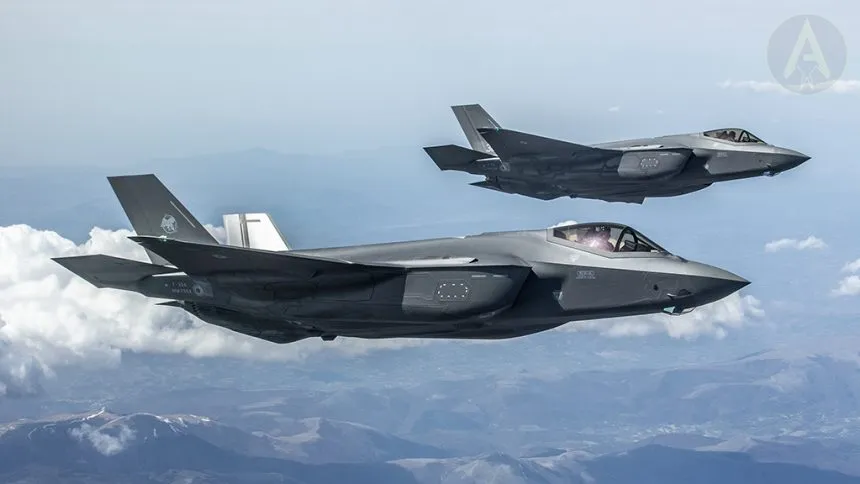
As the program matured, more nations joined in—not as developers, but as strategic partners. Countries like Japan, South Korea, Israel, and Poland became key customers, attracted by the F-35’s advanced capabilities and the political and military ties that came with it. Together, this group of F-35 international partners has turned the jet into a unifying platform across allied air forces.
That shared platform is what gives the F-35 its real strategic power. When your allies fly the same jet you do, everything runs more smoothly—training, communications, maintenance, and even combat coordination.
The F-35 was built to plug directly into U.S. command-and-control systems, making joint missions far more efficient. For many countries, especially NATO allies, that kind of interoperability is a necessity.
And in an age of rising threats from adversaries like China and Russia, that level of coordination can be a game-changer. Think about it: dozens of allied nations flying the same aircraft, speaking the same tactical language, and operating within the same digital framework. So, it’s about building a tightly integrated force capable of responding quickly and effectively anywhere in the world.
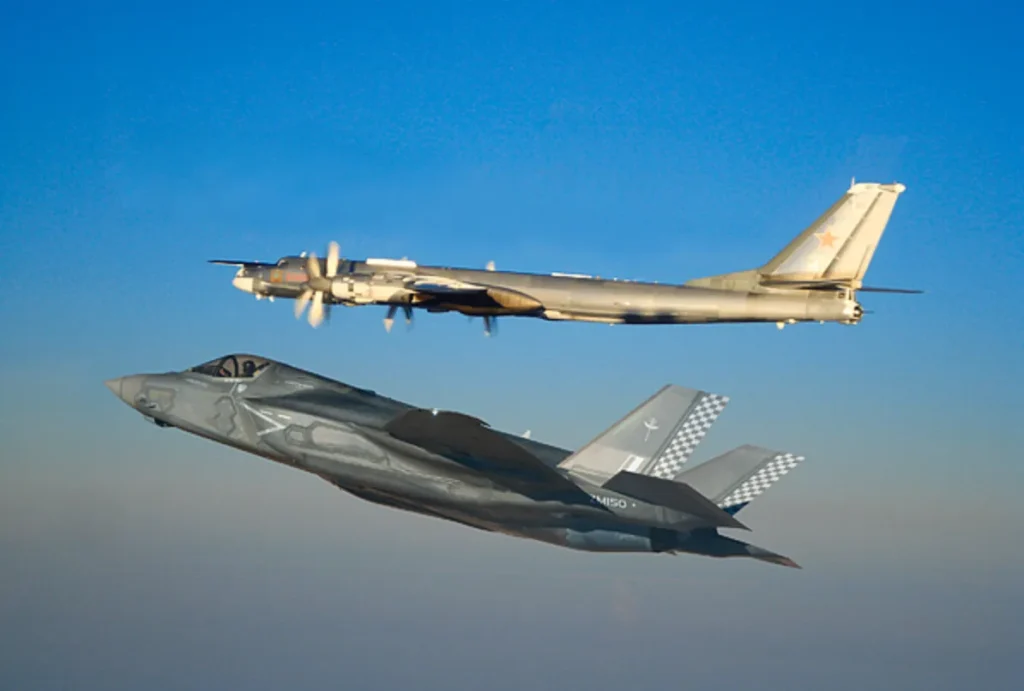
Another factor that makes the F-35 so export-friendly is Lockheed Martin’s global supply chain. Unlike the F-22, which was built entirely in the U.S., the F-35 program deliberately involves manufacturers and contractors from partner nations.
Components of the aircraft are made in countries like the UK, Italy, and Turkey (although Turkey was later removed from the program), giving these partners a stake in the jet’s success. This globalized production model helped secure political and financial backing from foreign governments while also spreading the economic benefits of the program.
The decision to keep the F-22 Raptor off the export market can be traced back to 2006, when the U.S. Congress passed the F-22 Raptor Export Control Act. This legislation effectively banned the sale of the aircraft to any foreign country, regardless of alliance.
At the time, the F-22 was widely regarded as the most advanced air superiority fighter in existence. With its combination of stealth, speed, advanced sensors, and maneuverability, it offered capabilities that no other aircraft could match. Allowing that level of technology to circulate outside U.S. control was seen as too risky.
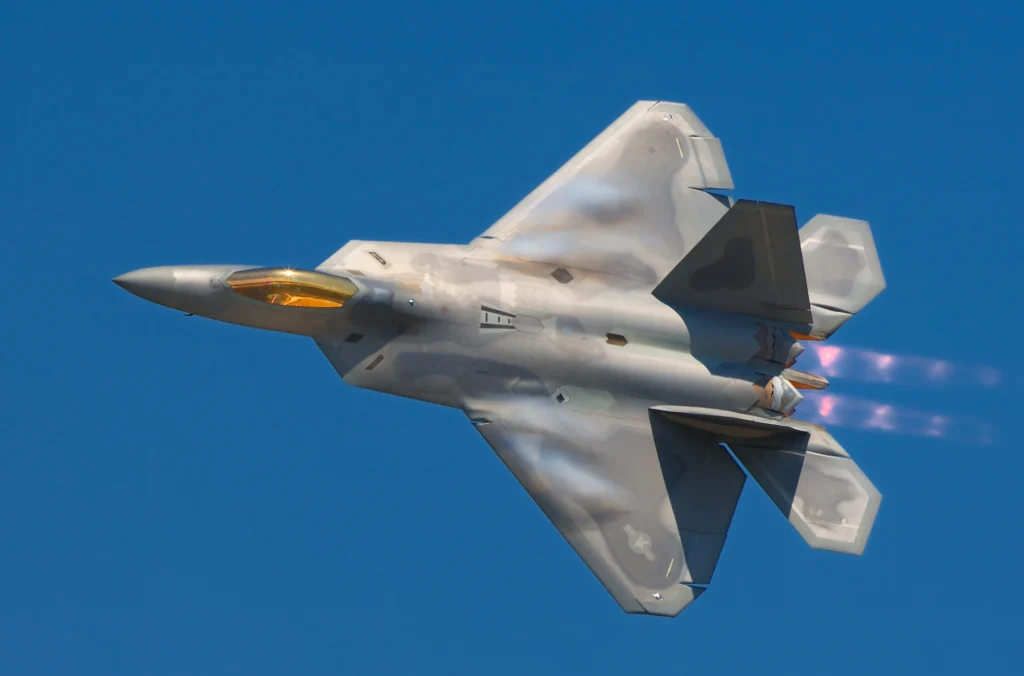
One of the core concerns behind this policy appears to have been the potential for technology leakage. The F-22 included highly classified systems—such as radar-absorbing materials, advanced avionics, and thrust-vectoring engines—that U.S. officials may have worried could be reverse-engineered or exposed through foreign maintenance environments.
Even among close allies, there was concern that sensitive components might eventually find their way into the hands of rival states through espionage or cyber intrusions. Given the increasing technological ambitions of countries like China and Russia at the time, this kind of risk likely felt very real to U.S. defense planners.
Read more about the F-22 export study here.
Another possible reason for keeping the Raptor in-house was strategic. The U.S. Air Force had long viewed the F-22 as its top-tier air dominance platform—an aircraft built to seize control of the skies in high-end conflicts. It wasn’t designed to carry out a wide variety of roles like the F-35; instead, it focused on air-to-air superiority.
By restricting the aircraft to U.S. use, military leaders may have believed they were preserving a decisive advantage—one that could shape the outcome of future conflicts where air control is critical.

Then, in 2011, the story of the F-22 took another turn. The U.S. halted production after just 187 operational jets were built—far fewer than originally planned. Budget constraints, changing military priorities, and the rising cost of the war in Afghanistan all played a role.
Once production lines were shut down and specialized tooling was retired, restarting the program became almost impossible without a massive financial investment. That reality made any idea of exporting the Raptor even more unlikely. Even if the export ban were lifted, there were no jets to sell, and no plan to build more.
Beyond the legal and technical reasons, there were deeper strategic and geopolitical concerns that helped shape the U.S. decision to keep the F-22 Raptor off the export market. At the heart of this was the priority to protect U.S. air superiority in any future high-end conflict.
The F-22 was specifically designed to dominate the skies—especially in environments where advanced enemy aircraft or sophisticated air defenses might be present. For Pentagon planners, maintaining that edge was a core part of national defense strategy.
This becomes clearer when you consider the timing. The F-22 entered service in 2005, at a point when the U.S. was preparing for the possibility of facing peer or near-peer adversaries. China was rapidly modernizing its military. Russia still fielded capable fighter platforms and long-range missile systems.
In that context, the U.S. military wanted a fighter that could outmatch anything those nations could put in the air—and they wanted to keep that advantage to themselves. Exporting the F-22, even to close partners, could have narrowed that margin, either through technology exposure or by leveling the playing field more than U.S. policymakers were comfortable with.
Another important factor was trust—not just in terms of alliances, but in the ability of other nations to safeguard the F-22’s sensitive systems. Even with strong diplomatic ties, there are limits to what the U.S. is willing to share. When it comes to fifth-generation aircraft, small mistakes in maintenance procedures, software handling, or data security can create opportunities for adversaries to learn valuable information.
Some allies may have excellent defense protocols, but the U.S. defense establishment appeared cautious, especially with such a sensitive platform. This level of protection reflects broader concerns within U.S. fighter jet export policy, particularly when it involves cutting-edge technology that could shift the balance of air power.
At this point, it’s fair to ask: Could the F-22 Raptor ever be exported in the future? The question still comes up from time to time—especially among defense watchers in countries like Japan or Israel—but realistically, the answer seems highly unlikely, at least under current conditions.
There has been occasional speculation over the years. Japan, for example, showed serious interest in acquiring the F-22 in the late 2000s, even reportedly offering to pay to help restart production. But despite the enthusiasm, U.S. law—specifically the F-22 Raptor Export Control Act of 2006—made such a sale impossible.
Since then, there haven’t been any meaningful signs that Congress intends to reverse that policy. There might be room for discussion in theory, but policy and precedent both suggest that Washington remains unwilling to loosen those restrictions.
Even if that legal hurdle were removed, restarting F-22 production would face serious practical challenges. The original production line was shut down in 2011, and key manufacturing tools were dismantled or repurposed. Many components—especially avionics and radar systems—have since become outdated by modern standards.
Lockheed Martin has acknowledged that bringing the F-22 back would require a full redesign of its electronics, supply chain, and production process. Some analysts estimate that doing so could cost tens of billions of dollars just to produce a limited number of aircraft. Given those costs, it’s difficult to imagine the U.S. funding such an effort solely for export purposes—especially when more modern options are emerging.
This leads to a larger point: the relevance of the F-22 is gradually being overtaken by sixth-generation fighter development. The U.S. Air Force is already deep into its Next Generation Air Dominance (NGAD) program, which is expected to produce a more advanced replacement for the F-22 sometime in the 2030s.