Follow Us:
Follow Us:

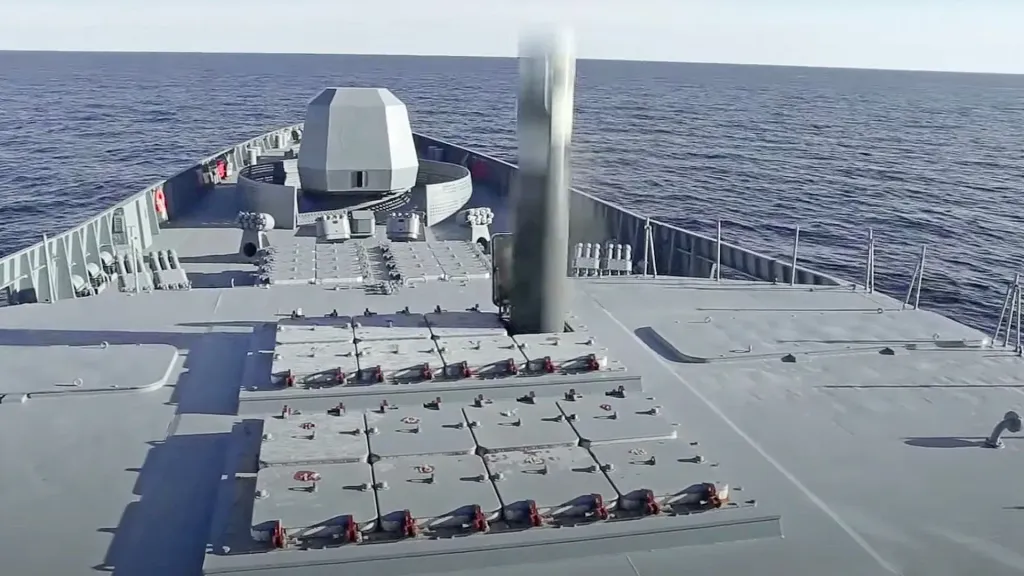
Just a few weeks back, in mid-September 2025, Russia released video footage of the 3M22 Zircon missile being fired from the frigate Admiral Golovko into the cold waters of the Barents Sea. The target was reported destroyed in a “direct hit,” as part of the Zapad 2025 military exercises with Belarus.
What’s striking, though, is that the test leaves people with more questions than answers. How far can it really fly? How steady is that much-talked-about Mach 9 speed? And maybe more importantly, what does it mean for the way big powers rub up against each other at sea?
The Zircon (sometimes called Tsirkon) is claimed to cover close to 1,000 kilometers in a shot, which—if true—would place it well into hypersonic territory and that’s “not good news” for some countries.
Despite all the show of power, many technical details (its payload, exact operational range, cost) remain shrouded in uncertainty. Some sources say its warhead is roughly 300-400 kg. Others hint at newer versions pushing boundaries further.
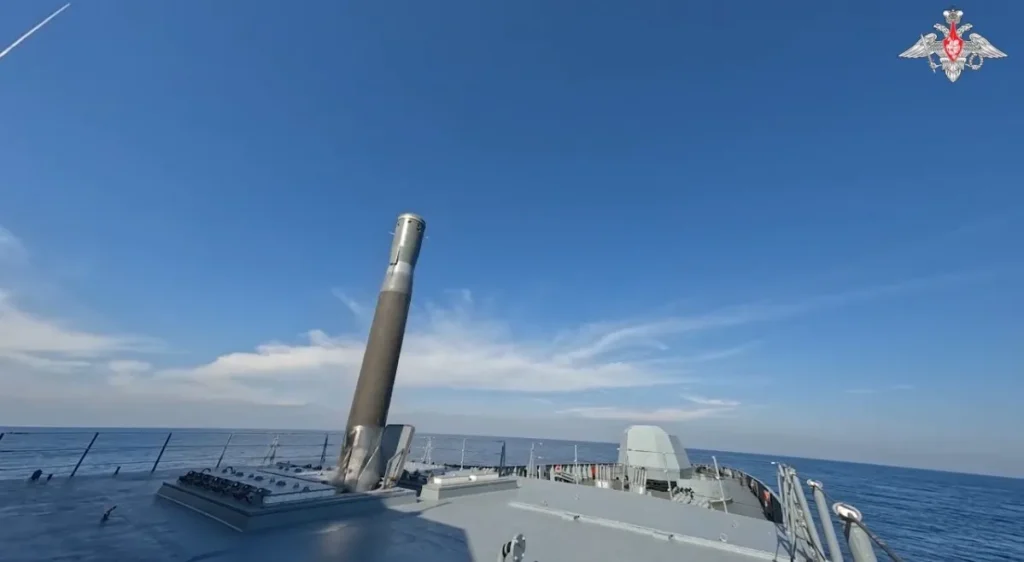
So, how lethal is the Zircon missile, really? Could it evade modern air defense systems? What might be its real operational limits versus what is claimed?
The Zircon missile (also called Tsirkon) is one of those projects that keep coming up in Moscow’s military speeches. It’s described as a hypersonic cruise missile, with claimed speeds pushing Mach 8 or even 9.
Development seems to have started in the early 2000s, but hardly anyone outside defense circles noticed at the time. In 2016, Russian officials confirmed a test launch that made it into the headlines. Since then, there have been more reports of trials, and by 2021 state media was saying the missile had been fired from both surface ships and submarines.
Hypersonic missiles are not a brand-new idea. Militaries have been chasing weapons fast enough to beat missile defenses for decades.
Zircon missile draws attention because it seems to combine that speed with the ability to hit either land targets or ships at sea. Even a modest warhead, if it strikes at those kinds of speeds, could cause severe damage, more from raw force than explosives. For navies that depend on large vessels, that possibility is troubling.
Read also: How Do Hypersonic Missiles Work?
What also keeps Zircon in the spotlight is how few countries are working on similar weapons. Outside of Russia, only China and perhaps the United States are seriously pushing the technology.
Each new test from Russia sparks fresh interest, especially in NATO capitals, since the missile’s reported range of about 1,000 kilometers would place many European sites within reach. Some analysts believe this is more about signaling than actual combat readiness.
Table: Reported Specifications of the Zircon Missile
| Feature | Reported Figures (approx.) | Notes / Context |
| Speed | Up to Mach 8–9 (~9,800–11,000 km/h) | Claimed by Russian sources; independent confirmation limited |
| Range | ~500–1,000 km (varies by source) | Could threaten targets deep inland or at sea |
| Payload | ~300–400 kg warhead | Likely conventional; nuclear option has been suggested |
| Launch platforms | Surface ships, submarines, possibly coastal batteries | Tested from frigates and subs |
| Guidance / Accuracy | Exact CEP not disclosed | Some suggest advanced seeker for ship-hunting and land strikes |
On paper, the Zircon missile carries a set of features that make it stand out among modern weapons. Russian officials have repeatedly claimed that it can reach speeds of Mach 8 or even higher (or translates to around 9,800–11,000 kilometers per hour).
To put that into perspective, that’s several times faster than most cruise missiles in service today. At those speeds, Zircon could cover the distance across the English Channel in under a minute.
For any navy relying on layered defenses, such velocity means reaction time shrinks to only a handful of seconds. While it’s hard to know whether the missile can consistently reach and sustain such performance in combat conditions, the very idea of it forces militaries to rethink how they would defend against a weapon that leaves so little room for response.
Range is another factor that explains why Zircon is watched so closely. Some suggest closer to 500 kilometers and others claiming it could stretch to nearly 1,000. Even the lower estimate would still let a Russian frigate in the Barents Sea strike well into northern Europe while staying inside home waters.

At sea, that same envelope puts aircraft carriers in a bind, since they would need to keep greater distance from contested zones to avoid being exposed. Exact figures remain uncertain, but the possibility itself is enough to shape naval planning. Commanders have to plan for the threat, even if its full capability has not been proven.
The missile’s supposed precision strike capability adds another layer of concern. Some Russian reports claim Zircon missile can twist and turn at hypersonic speed, almost zig-zagging as it closes in. If that holds true, it would leave missile defenses with only seconds to react to sudden changes in course.
Added to that, guidance systems are said to let it track moving targets such as carriers or destroyers, which makes the picture even more daunting.
Critics, though, question whether a weapon moving that fast could really pull off sharp maneuvers without losing accuracy or stressing its frame. Yet even here, the uncertainty works in Zircon’s favor, because adversaries have to plan as though the capability is real.
What sets the Zircon missile apart, and why many call it a potential game-changer, comes down to how hard it might be to stop.
Modern missile defense systems, like the U.S. Aegis system or land-based Patriot batteries, are mostly built with two kinds of threats in mind: slow-moving cruise missiles and ballistic warheads that travel on clear, predictable paths.
Zircon missile doesn’t really fit either category. Reports say it travels at hypersonic speed, which means the time to spot, track, and respond could shrink to just seconds or far less time for tracking or countermeasures.
By comparison, older weapons like the Tomahawk give defenders minutes to react, and even faster supersonic missiles still leave at least a sliver of time for countermeasures. With Zircon, that margin could shrink to almost nothing, which is why analysts often question how well today’s defenses could cope with it.
Read also: Tomahawk Missile: U.S. Navy’s Long-Range Precision Strike Weapon
The anti-ship angle is what gives Zircon its edge in many discussions. Carriers are often described as floating cities, guarded by layers of ships and aircraft meant to stop anything coming their way. That shield works well against most known threats.
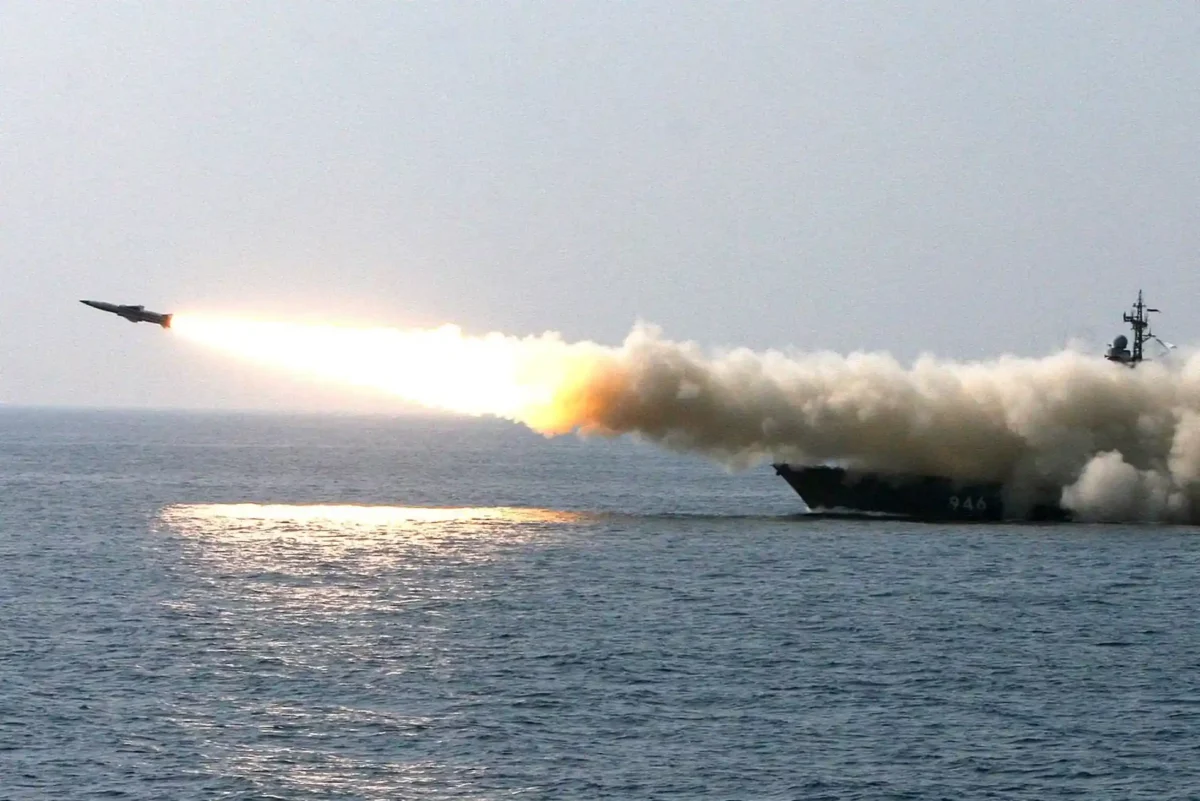
Zircon is worrying because it doesn’t play by the same rules. At speeds said to reach Mach 8, with the ability to shift course just before impact, even a single missile could slip past defenses.
A warhead in the 300–400 kilogram range might not sink a carrier, but damaging the deck or vital electronics could take it out of the fight. The picture becomes darker when imagining several launches at once from different directions, leaving defenders stretched thin.
What makes Zircon important isn’t only the talk about speed or range. The bigger point is how it changes the way navies and governments think. A missile that might travel at hypersonic pace and hit from hundreds of kilometers forces fleets to spread out and rethink old habits.
Russia’s decision to show it off during the Zapad 2025 drills, firing from the frigate Admiral Golovko, was not just about proving it works. The timing sent a signal as well, aimed at NATO, that Russian ships could soon carry weapons meant to slip through existing shields.
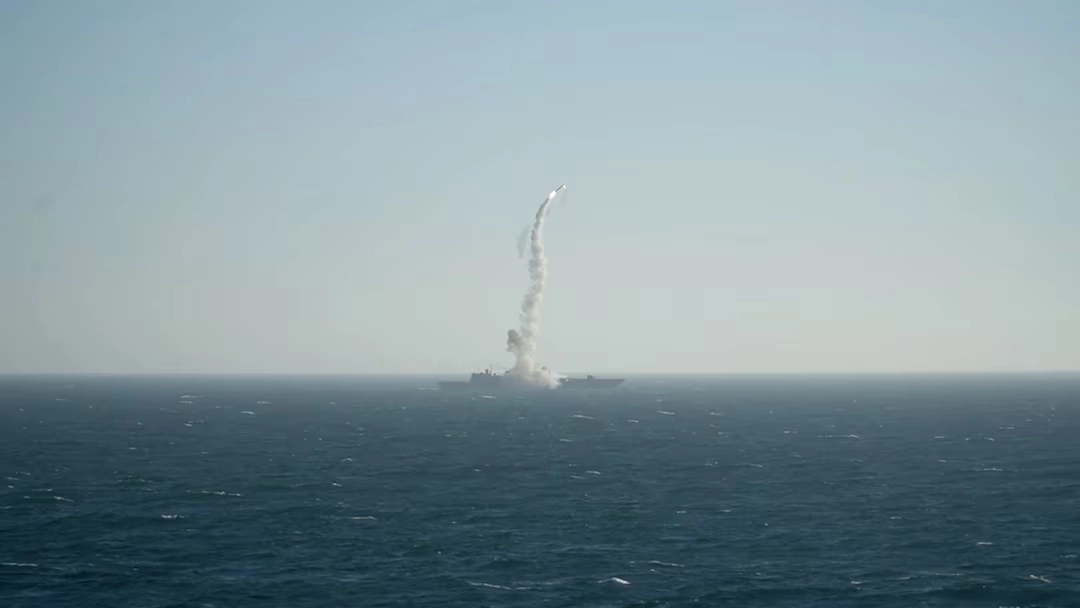
The main worry for NATO is Zircon’s role against ships at sea. U.S. carrier groups are usually seen as the core of allied naval power, and they sail with many layers of defense (escorting ships with interceptors, aircraft overhead, and electronic tools to block threats). Those layers work best against older missiles that move slowly or along clear paths. Zircon is different because of its speed.
A Tomahawk, flying subsonic at about 880 kilometers per hour, would need close to forty minutes to cross 600 kilometers. At hypersonic pace, Zircon could cover the same stretch in just over three minutes. That means a carrier group commander would have seconds rather than minutes to detect, assess, and respond to a threat. This is a difference that makes the entire defensive playbook far harder to execute.
Read also: Russia Launches Nuclear Submarine With Hypersonic Zircon Missiles
Russia’s relative edge in hypersonic systems also factors into this. Russia has put more than one hypersonic weapon into service. Along with Zircon, there is the Kinzhal missile and the Avangard glide vehicle, all shown off in tests over the past few years.
How well these systems would work in real combat is still argued over in the West, but the many launches and public displays have already built an image that Moscow is ahead in this field. That image matters on its own. Even if the real ability is smaller than claimed, NATO and the United States still have to prepare as though the threat is real, which means more money and effort going into new defenses.
That feeds into a wider global dynamic. When a new type of weapon emerges that threatens to undermine existing defenses, other powers usually respond by developing their own versions or by pouring money into counters.
The story of Zircon helps explain why the U.S., China, India, and several other states have accelerated programs in hypersonic strike systems, as well as in space-based detection networks and missile defense upgrades. The result is a familiar arms-race pattern, one side pushes ahead with a capability, rivals scramble to catch up or neutralize it, and overall military spending and risks climb higher.
Read also: BrahMos Cruise Missile: The Ultimate Weapon in India’s Arsenal
The strategic meaning of Zircon, then, is less about whether it can truly hit every target at hypersonic speeds and more about how it changes the psychology of defense planning. For Russia, it strengthens the image of being ahead in at least one critical area of military technology.
For NATO, it forces investments in new sensors, radars, and missile-defense systems that are expensive and still unproven. And globally, it accelerates the race toward hypersonic capabilities, making future conflicts more unpredictable.
Even with all the headlines, Zircon still faces limits that make its real effectiveness unclear. One major question is how ready it is for action. It is not clear how many Zircon missiles are actually in service or how many ships can launch them.
Russia has shown tests from both frigates and submarines, but some reports suggest only a few vessels are equipped and trained to use the missile. which would mean the total impact is smaller than the official statements suggest.
Flying at Mach 8 or 9 is one thing on paper. Making a missile do that over long distances, at different heights, and while turning is much harder. The Zircon missile has to handle intense heat and pressure, and its guidance system must stay accurate through all that.
Russian officials say Zircon can manage all this, but there is no independent proof. Without independent verification, it is hard to know how consistent the missile’s performance really is. Even if it works in tests, the missile might not perform the same way in combat, especially if electronic jamming or other defenses are used.
Cost is a real issue with Zircon. Making hypersonic weapons takes a lot of money and advanced technology. Even if Russia finds ways to cut costs, the total number that can be built may be limited. The real question is how many ships could carry it. Will there be enough to matter in a real fight, or will it mostly be a symbol, used in small numbers to show strength?
Beyond these points, there are other limitations. Different sources give different numbers for its range. It is not certain it can really reach 1,000 kilometers in a real fight. The missile can supposedly turn and dodge at very high speed.
That may help it avoid defenses, but it could also make hitting the target harder or shorten how far it can go. Even if the missile works as designed, it also depends on Russia being able to find and track targets far away. That requires satellites, aircraft, and careful coordination, which might not always be available in a real fight.
Zircon missile seems impressive, but there are still many unknowns. Reports suggest it can fly fast and powerful enough to damage even the most protected ships, and it shows Russia’s hypersonic capabilities.
At the same time, it is unclear how many are operational. Its performance in actual combat is not proven. And it is uncertain if Russia can build enough to make a real impact.
So, is Zircon a genuine game-changer? Possibly, though perhaps not in the simple way people imagine. Its effect might be mostly strategic. It pushes NATO and other militaries to spend more, plan differently, and take threats that are hard to track seriously.
The missile also has an influence beyond its explosive power. The Zircon missile is already doing its job, not just as a missile, but as a tool of influence and pressure. In some cases, creating uncertainty and pressure can be just as important as actually firing a weapon.