Follow Us:
Follow Us:

It’s strange, really, that in 2025 we’re still talking about the A-10C Thunderbolt II (better known by its nickname, the Warthog). The jet was first introduced in the 1970s, built for the Cold War battlefield, and yet here it is: still flying, still terrifying to anyone on the wrong end of its gun. In fact, just earlier this year, news broke that the Air Force had once again delayed plans to fully retire it.
Part of the fascination lies in contradiction. By modern standards, the A-10C Warthog looks almost clunky, even primitive, next to sleek stealth aircraft like the F-35. But then you see the thing up close or worse, hear the infamous growl of its GAU-8 Avenger cannon, and you realize why soldiers on the ground don’t want it gone. It doesn’t just attack targets. It chews through them.
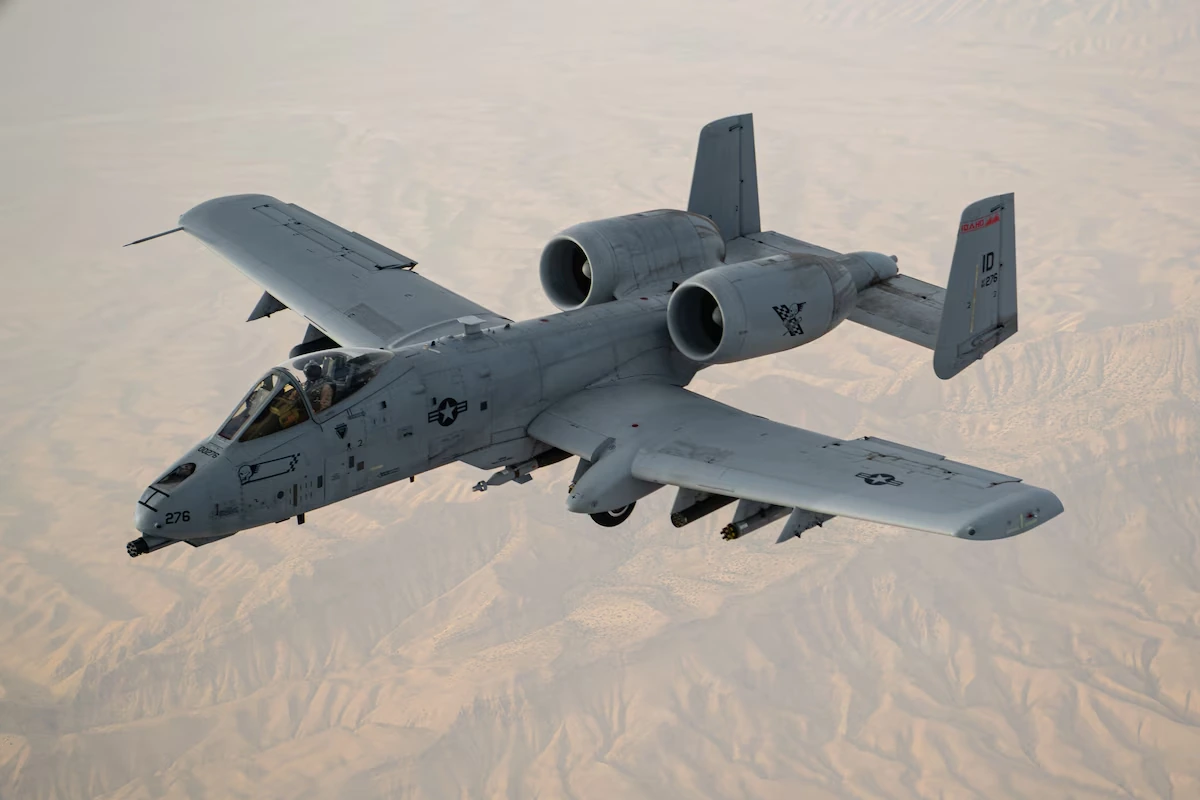
There’s also the cultural side about it, the Warthog has become more than an aircraft. Videos of it diving low over battlefields, unleashing that stuttering “BRRRT” of gunfire, have gone viral more times than anyone can count. You could argue it’s one of the rare military machines that crossed over into mainstream awareness.
If you stopped someone on the street and asked them to name a U.S. attack jet, odds are they’d shrug, unless they’ve heard of the A-10. We live in an age of drones, stealth bombers, and missiles that can thread a needle from miles away. “Should an aircraft designed in the 1970s really still be this relevant?” On paper, the A-10C ought to feel like a relic. And yet, somehow it keeps finding a role, and maybe that contradiction is the real story.
The A-10’s story really starts during the time of the Cold War. Back in the late 1960s, U.S. planners were staring at Soviet tank armies that, if war ever broke out in Europe, could come rolling west in terrifying numbers.
The Air Force had sleek fighters and bombers, sure, but what they didn’t have was a plane built to loiter low, slow, and smash armored columns before they reached NATO lines. Out of that anxiety came the idea for a rugged, purpose-built ground attack aircraft.
The result was the A-10 Thunderbolt II. It wasn’t pretty—at least not in the way jets usually are—but that was the point. Its designers at Fairchild Republic gave it huge straight wings, twin engines mounted high to shrug off ground fire, and most famously, built the whole airframe around a weapon: the GAU-8 Avenger cannon. You could argue that the gun came first and the plane was just wrapped around it, which isn’t far from the truth.

Over time, though, the Warthog needed to change. Desert Storm in 1991 showed what it could do, but also revealed its limits. Its navigation and targeting systems were dated, and precision strike wasn’t its strong suit. That’s what eventually pushed the Air Force to upgrade the fleet into the A-10C standard.
Around the mid-2000s, the Air Force finally gave the Warthog a facelift; new avionics, digital cockpit displays, and the ability to sling smart bombs instead of relying only on the old unguided stuff.
However, despite those updates, it was the same machine it had always been. It still flies low, still hangs around longer than most jets would dare, and that cannon hasn’t lost its bite.
The A-10C feels more polished, sure, but it’s basically the same beast, just wired for a battlefield that expects smarter weapons and cleaner coordination.
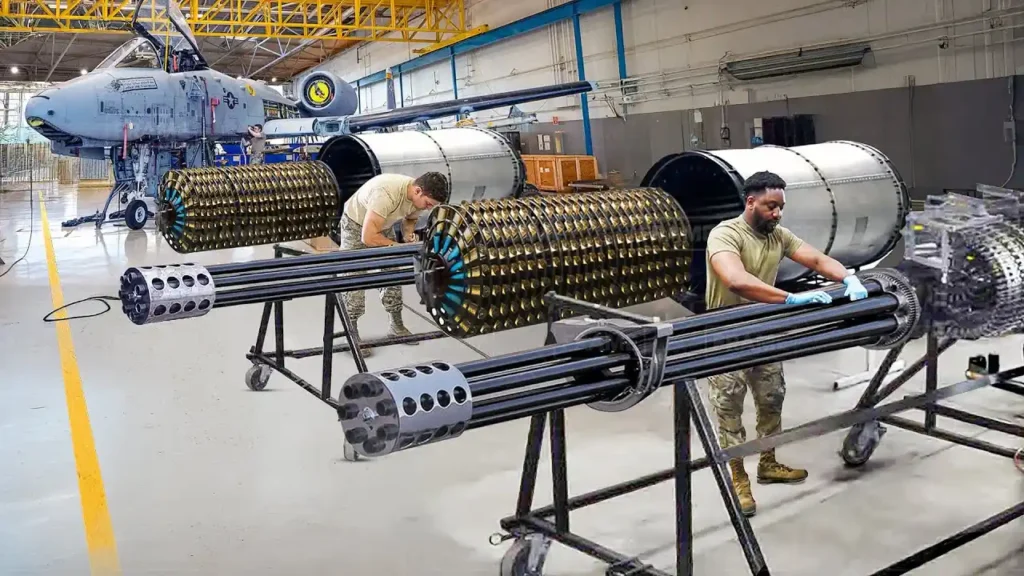
If there’s one thing people remember about the A-10C, it’s the gun. The GAU-8/A Avenger cannon is absurdly oversized for an aircraft, even by Cold War standards. Seven barrels, 30mm rounds the size of soda bottles, and a fire rate that can spit nearly 70 rounds a second. When it was designed, the math was simple; Soviet tanks needed to be shredded before they reached NATO lines. The Avenger could punch through their armor, and it still can.
When the trigger is pulled, the gun unloads like a strom. On paper it’s rated at nearly 3,900 rounds a minute, though no pilot in their right mind would hold it that long. In practice, they tap the trigger for a second or two at most, and even that tiny burst is enough to send a cascade of shells tumbling downrange.
In Desert Storm for example, Warthogs destroyed hundreds of Iraqi tanks, often with that gun alone. The cannon’s “BRRRT” sound has become infamous. Soldiers on the ground often say that hearing it overhead feels like the battlefield suddenly tilts in their favor.
Read also: Sukhoi Su-25 Frogfoot – What Makes It a Close Air Support Beast
A weapon that powerful doesn’t mean much if the jet can’t take a beating. And thus, survivability was baked into the Warthog’s DNA from the very beginning. The A-10C Thunderbolt II was built like a flying tank. The cockpit sits inside a titanium “bathtub” that can shrug off heavy machine-gun fire. Critical systems are reinforced, hydraulic lines are duplicated, and in some cases backed up with manual controls.
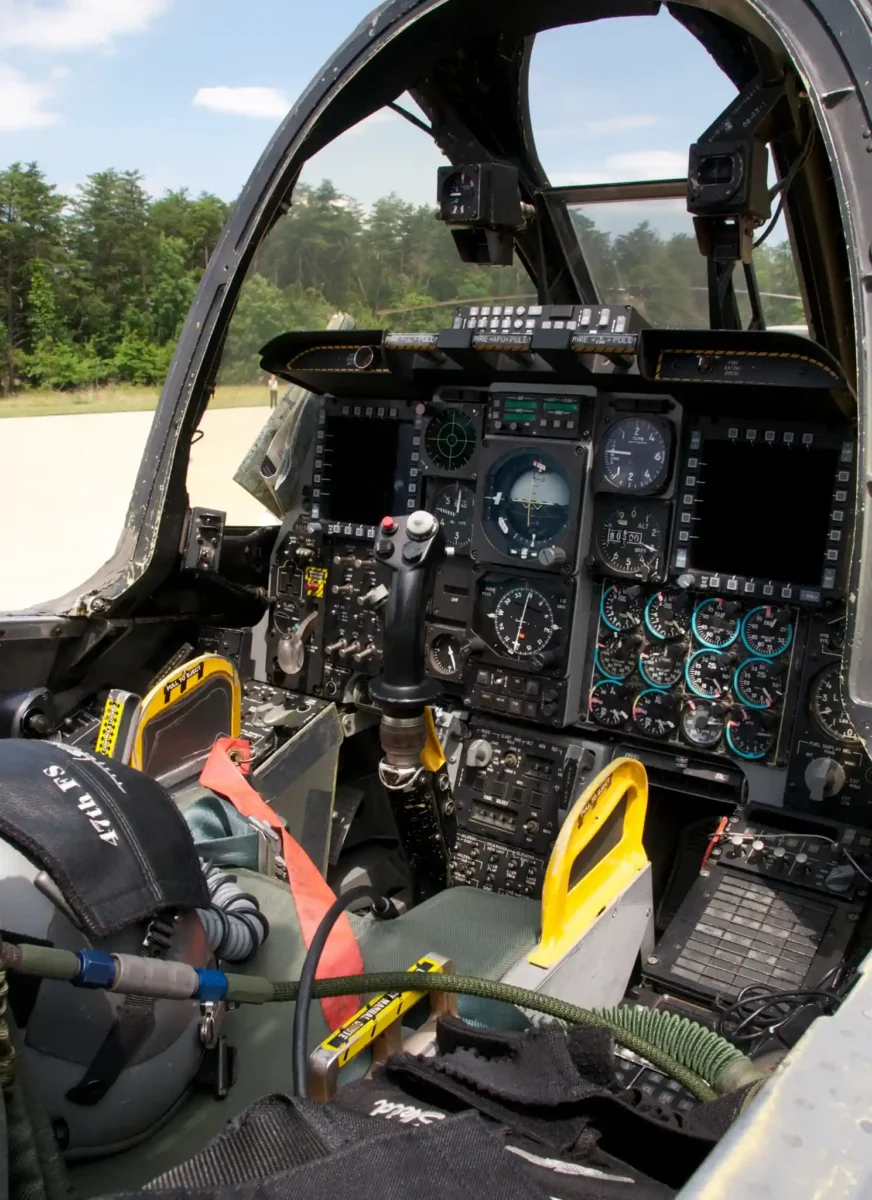
There are countless stories of A-10s limping back to base after missions that should have destroyed them. One in particular stands out: during the Gulf War, an A-10 returned with a massive hole in its wing, its landing gear damaged, and one engine out. Most jets wouldn’t have made it halfway home.
That kind of toughness matters because it can be a difference between a pilot making it back or not. And troops on the ground notice. When a jet can take hits, shrug off damage, and still swing back around for another run, it earns their confidence in a way statistics can’t.
Speed was never the Warthog’s selling point, and that’s by design. The A-10’s strength lies in what most jets avoid “flying low and slow”. It can skim the terrain, stay steady, and circle a fight for as long as needed. Wide wings and oversized controls give it the stability to maneuver at speeds where other aircraft would struggle. That agility means a pilot can keep eyes on the target, swing back for repeated runs, and adjust quickly when the ground situation shifts.
The engines add another layer of stubbornness. Perched high on the tail, they’re tucked away from most ground fire, and spaced far enough apart that losing one doesn’t automatically write off the aircraft. The A-10C can keep flying and fighting with just a single engine. This redundancy may feel old-school, but it’s one of the reasons the Warthog has such a high survival record in combat.
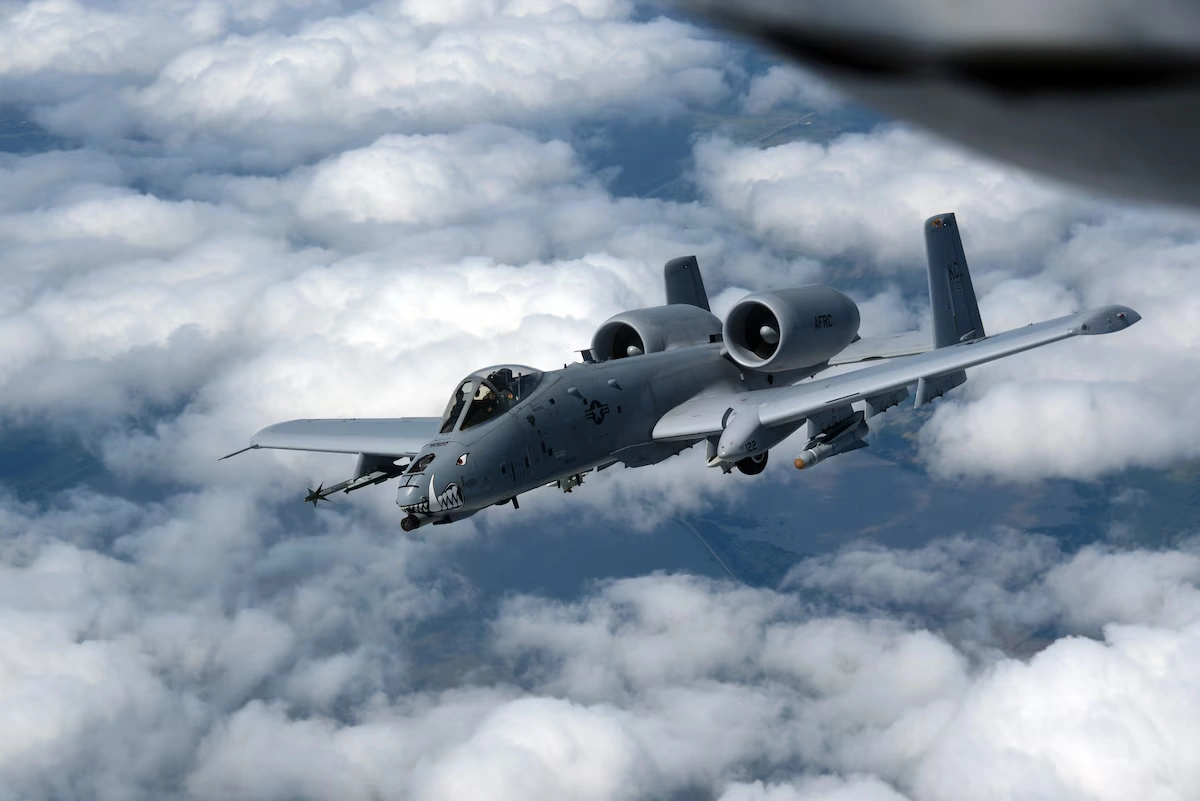
The Warthog’s body hasn’t changed much since the ’70s, but the cockpit is a different story. The Precision Engagement upgrades dropped in modern avionics and targeting pods—the Sniper XR being the big one. That gear turned it from a “point and shoot” brawler into something much sharper.
Suddenly, it wasn’t locked into old unguided bombs or endless cannon runs. Pilots could pick out a target and hit it with guided weapons instead of just hoping for the best.
In Afghanistan, that translated into long, patient orbits overhead. Pilots can loiter for hours, waiting for a call from troops pinned down below. When the coordinates came through, the strike could be narrowed to a single truck, a fortified room, or whatever the threat happened to be, without flattening the block around it.
The pods also meant pilots could spot danger from farther away. Higher altitude, better optics, less exposure to small-arms fire.
The Gulf War of 1991 marked the A-10C Thunderbolt II’s first real trial in a full-scale shooting war. For years, many defense planners had written it off as outdated, slow, and too exposed to modern air defenses. When the shooting began, the Warthog quickly disproved its doubters.
The Air Force sent 132 of them into the Gulf, and they flew more than 8,000 missions in just a few weeks. Crews later recalled that the jets were almost always ready to go, with a mission-capable rate hovering around 96 percent. This is remarkably high for aircraft flying so hard, so often.
By war’s end, the Warthog’s record spoke for itself. Reports credited them with nearly a thousand tanks destroyed, along with more than a thousand trucks and countless artillery pieces. Much of that damage came courtesy of the Maverick missile, most of which were fired from Warthogs.
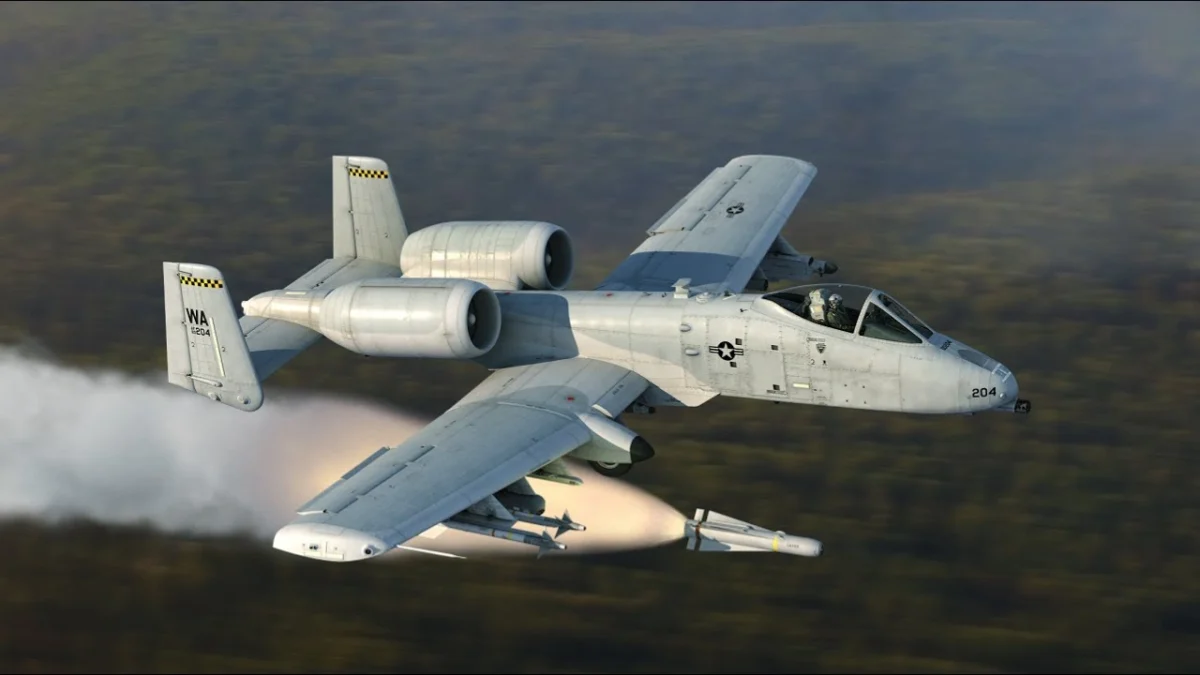
The Balkan wars of the 1990s gave the A-10 a new kind of battlefield. In Bosnia, the aircraft roamed valleys and back roads looking for Serb armor and artillery, at times forcing heavy weapons to be returned to UN depots after strikes or shows of force. By the time the Kosovo air campaign began a few years later, the Warthog’s job description had expanded.
In Kosovo, the A-10 was still smashing tanks and artillery, but it also showed a different side of its usefulness. During the rescue of F-117 pilot Lt. Col. Dale Zelko in March 1999, A-10s orbited above while helicopters moved in, deterring Serbian forces from approaching.
Pilots later described the mission as one of the clearest demonstrations of the Hog’s versatility. “You knew if the Warthog was overhead, you had time,” one search-and-rescue crewman told Air Force Magazine. Instead of just being a tank buster, the A-10 became a visible protector, buying space and confidence for the teams working below.
The wars after 9/11 only strengthened its reputation. In both Afghanistan and Iraq, soldiers and Marines came to see the Warthog as a lifeline. During the 2003 invasion of Iraq, around 60 Hogs flew close support missions over Baghdad, Basra, and key supply routes.
In the early months alone, they fired over 300,000 rounds from their massive GAU-8/A Avenger cannon and dropped precision-guided bombs in support of troops under fire.
For the heads up; Afghanistan posed a very different challenge (high mountains, scattered insurgents, and shifting firefights). Pilots sometimes joked that the Warthog wasn’t fast enough to leave the fight even if it wanted to. That slow pace turned out to be its biggest strength.
Over Iraq and Afghanistan, one squadron alone spent more than 12,000 hours in combat, unloading countless bursts from the big 30mm gun and dropping guided bombs when needed. Troops who fought under its cover rarely forgot it; some would later say the jet’s shadow was the thin line between survival and being overrun.
Perhaps nothing illustrates the aircraft’s toughness better than the story of Colonel Kim “K.C.” Campbell. In April 2003, while flying over Baghdad, her A-10 was hit by heavy fire that shredded the fuselage, tore holes in the tail, and knocked out all hydraulics. Many aircraft would have been lost instantly.
Instead, Campbell switched to the Hog’s manual reversion system and wrestled the crippled jet for more than an hour before bringing it home safely. Photographs of A-10s returning from missions, patched with holes and scarred by shrapnel, became a shorthand for what the jet could endure.
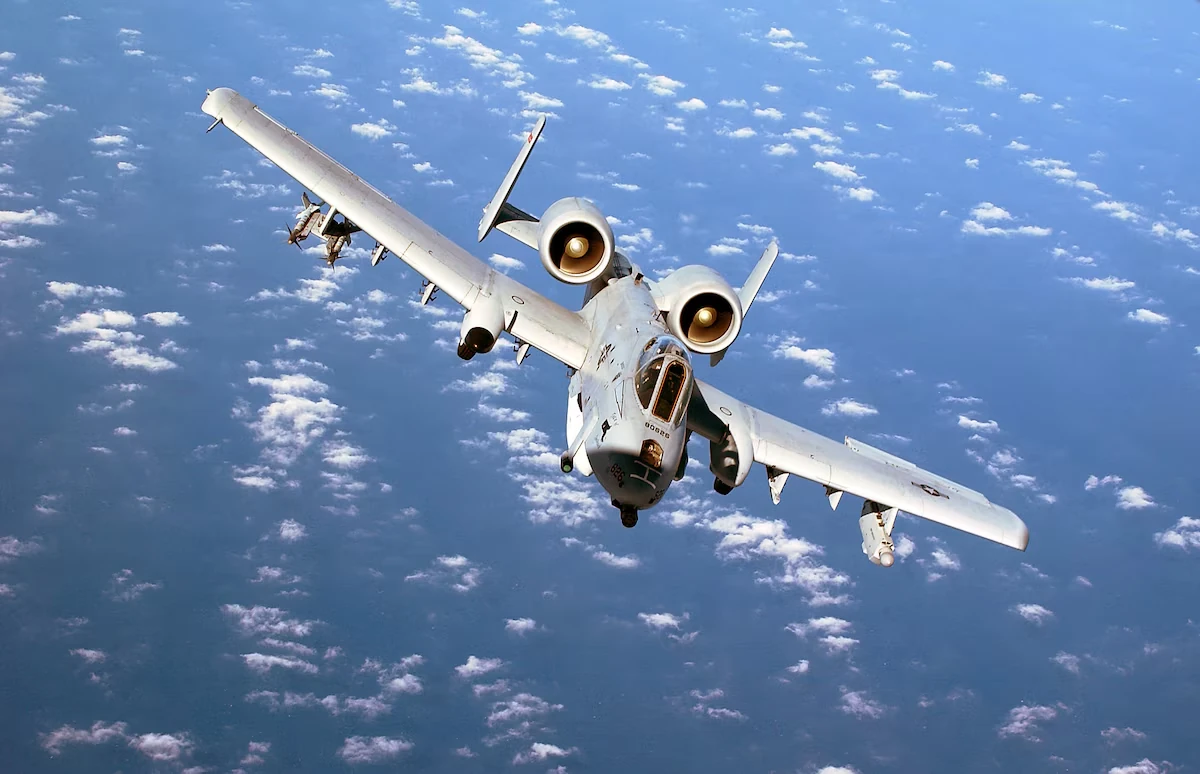
By the book, the Warthog’s numbers speak for themselves; decades of combat, thousands upon thousands of sorties. Most were flown low and slow in support of ground troops. But the statistics don’t really capture what made it matter. The real measure of success lies in the effect it had on soldiers and Marines who knew it was watching over them.
They know the Hog can circle low, take hits, and come back again and again until the fight is finished. That sense of assurance became as important as the damage it inflicted on enemy armor. While no weapon is perfect, the aircraft has been involved in friendly-fire and civilian casualty incidents, as with all CAS platforms, the scale and consistency of its support have made the A-10 synonymous with close air support itself.
So, if people ask why ground forces fear the A-10C, the answer comes down to a mix of psychology and battlefield performance. Few aircraft inspire the same dread among enemy troops as the Warthog.
The A-10 announces itself before it’s even visible. Troops in Iraq and Afghanistan often recalled the low growl of its engines and, seconds later, the ripping thunder of the GAU-8 cannon. To those on the receiving end, that sound meant armor and cover could vanish in an instant.
Accounts from the field describe enemy fighters scattering or abandoning vehicles as soon as they realized Warthogs were circling overhead. It was the sense that the jet could loiter unseen, strike without warning, and keep coming back until the job was finished.
The A-10C’s design explains why it could play that role so well. The cockpit sits inside a tub of armor, the controls are backed up by redundant systems, and crews have flown them home peppered with holes that would have destroyed other aircraft.
Unlike faster jets that streak past their targets and leave, the Warthog can throttle back, make tight turns, and loiter low over the battlefield for hours.
That patience gives ground units something rare in combat “the immediate help when they call for it”. Over the years, upgrades like precision-guided bombs, sharper sensors, and digital communications have only added to its staying power.