Follow Us:
Follow Us:

The Sukhoi Su-25 Frogfoot is often called Russia’s answer to the American A-10 Warthog, but what’s striking is how long it has stayed in the fight.
Just this year, in 2025, there were fresh reports of Su-25s flying low and fast over Ukraine, despite the heavy risk from modern air defenses. It has earned the nickname “flying tank” for a reason. Pilots tell stories of the jet making it home with engines on fire, wings torn up, or dozens of holes in the fuselage.
Despite being designed in the late 1970s, it keeps turning up in new wars. Why is an old, rugged attack aircraft still so important when Russia has newer fighters and drones? The answer may not be as straightforward as it seems.
The story of the Sukhoi Su-25 Frogfoot begins in the 1960s, when Soviet planners realized they might need something different from their fast, high-flying jets.
Conflicts at the time were showing that sometimes speed and altitude were less useful than the ability to fly low, take a beating, and still support troops on the ground. Some accounts suggest the experience of watching American aircraft in Vietnam also played a role in shaping Soviet thinking.
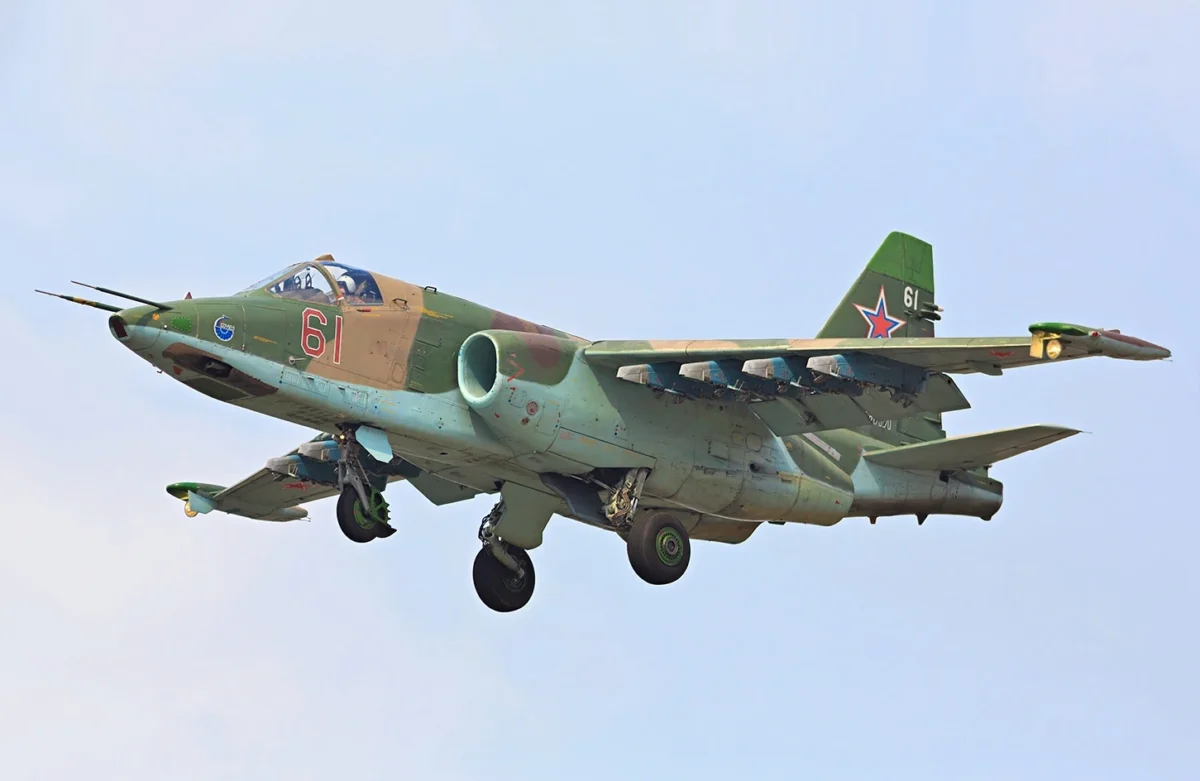
By the early 1970s, the Sukhoi design bureau was working on a dedicated close air support aircraft. Unlike sleek fighters meant to win dogfights, this new design focused on toughness and practicality. The cockpit was built like an armored shell, with thick plating around the pilot.
The engines were spaced apart so that if one was hit, the other might still keep the jet in the air. The wings were broad and strong, allowing the Sukhoi Su-25 to carry a wide mix of weapons from rockets and bombs to guided missiles.
Some officials reportedly doubted whether such a specialized aircraft was really needed. But the Soviet Union pushed ahead, and the first Su-25 prototypes took to the skies in the mid-1970s.
By the end of the decade, it was clear that the Frogfoot offered something different: a rugged machine built to fly low and slow, right where ground troops needed help the most.
| Feature | Details |
| Length | ~15.5 m (51 ft) |
| Wingspan | ~14.4 m (47 ft) |
| Height | ~4.8 m (15 ft) |
| Empty Weight | ~9,800 kg (21,600 lb) |
| Max Takeoff Weight | ~17,600 kg (38,800 lb) |
| Engines | 2 × Tumansky R-195 turbojets |
| Maximum Speed | Around 975 km/h (606 mph) at altitude |
| Range | ~750 km (470 mi) combat radius |
| Ferry Range | ~1,850 km (1,150 mi) |
| Service Ceiling | ~7,000 m (23,000 ft) |
| Armament | 30mm GSh-30-2 cannon, up to 4,400 kg of bombs, rockets, guided missiles |
One of the first things that catches the eye is the Su-25’s speed—or rather, the lack of it. It’s not especially fast. Its top speed is usually listed at just under 1,000 km/h, which is well below modern fighter jets. But that slower speed is arguably by design.
Read also: A-29 Super Tucano: Why This Light Attack Aircraft Still Matters
For close air support, speed isn’t everything. Flying too fast makes it harder for pilots to see ground targets, line up attacks, and provide accurate fire. A steadier, slower approach arguably gives troops on the ground more reliable support. So while the Su-25 would struggle in a dogfight, its relatively modest speed is actually a feature suited to its mission.
The payload capacity is another specification worth pausing on. The Sukhoi Su-25 can carry more than 4,000 kilograms of weapons, spread across ten hardpoints, which is a lot of flexibility for a jet of its size. It can haul simple unguided bombs and rockets, or it can switch to guided missiles when precision is needed.
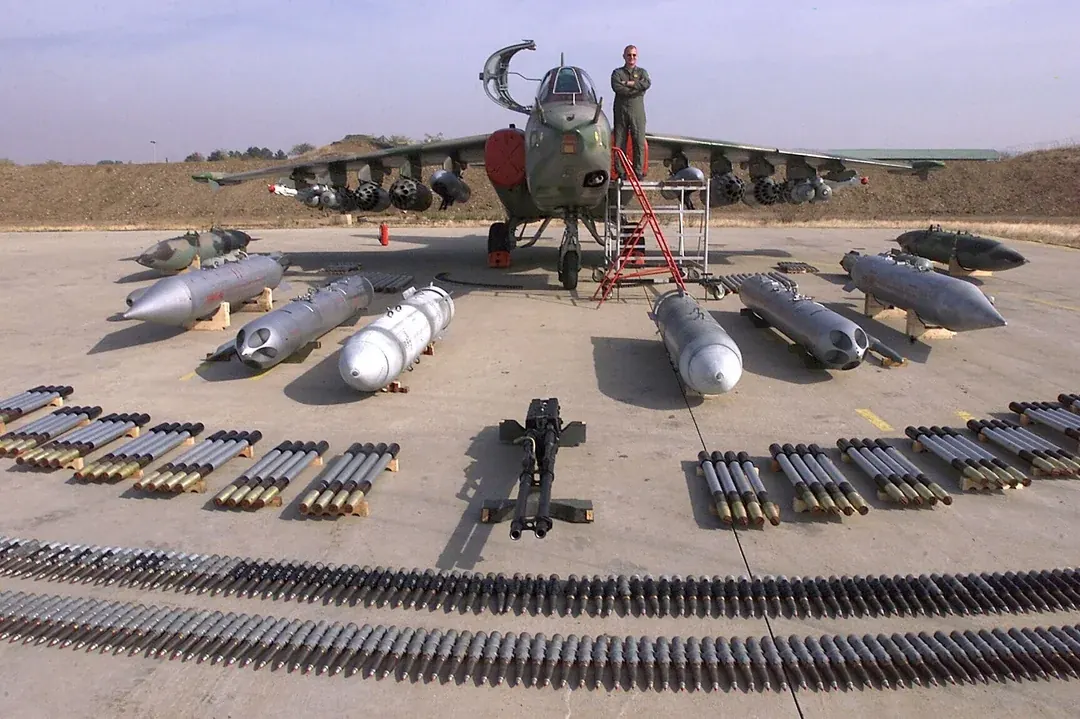
Some reports suggest that in real-world operations, Russian Su-25s often carry old-style rocket pods because they are cheap and plentiful. This might sound like a limitation, but it also shows why the aircraft is still useful: it can deliver a large volume of firepower without the need for expensive precision weapons every time.
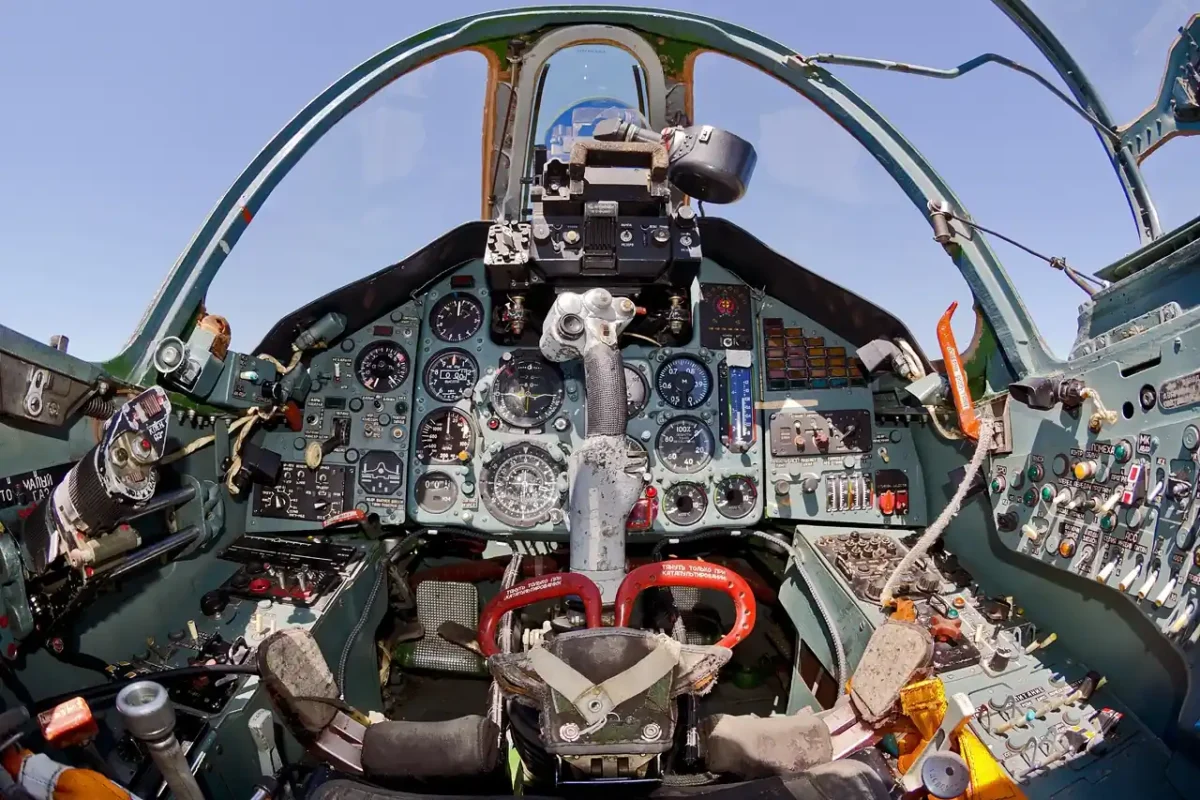
The armored cockpit and low service ceiling also tell a story. At around 7,000 meters, the Su-25 cannot climb as high as most modern multirole fighters, which often operate well above 15,000 meters. But then again, it was never meant to.
The Sukhoi Su-25 was never designed to fly high. Its place is at low altitude, directly over the battlefield, where troops need immediate support. Being closer to the ground does mean more danger from enemy fire, but that is where the design choices, like armor plating around the cockpit and separated engines, start to make sense. The jet was built to survive damage and still limp back to base.
The armament of the Su-25 is fairly straightforward. Its built-in weapon is a twin-barrel 30mm GSh-30-2 cannon, mounted under the nose. While this gun is powerful, it is not especially unusual compared to the cannons found on other attack aircraft of the era.
What makes the Sukhoi Su-25 stand out more is the variety of external weapons it can carry. Bombs, unguided rockets, and guided missiles can all be loaded depending on the mission. Some might argue this mix is nothing extraordinary by today’s standards, since many modern jets also carry a similar range.
But the key point is that the Su-25 was designed to use these weapons in large volumes at low altitude, often with less concern for precision and more for sheer impact.
The most recent version of Sukhoi Su-25 is the Su-25SM3, and it’s often described as the most capable Frogfoot yet. So what’s new about it?
First, the cockpit. Early Su-25s had very basic instruments, not much more than what you’d expect from a late Cold War aircraft.
The SM3 version adds digital screens, modern navigation, and better targeting gear. It reduces the mental load on the pilot, especially in poor weather or at night, when the original Frogfoot often struggled. In other words, it makes the job of flying and fighting less exhausting, which, in turn, could mean fewer mistakes in combat.
In theory, this lets them strike from safer distances and hit specific targets, instead of just flooding an area with rockets. That sounds like a big leap forward, although in practice, many missions still use the simpler weapons because they’re cheaper and easier to supply.
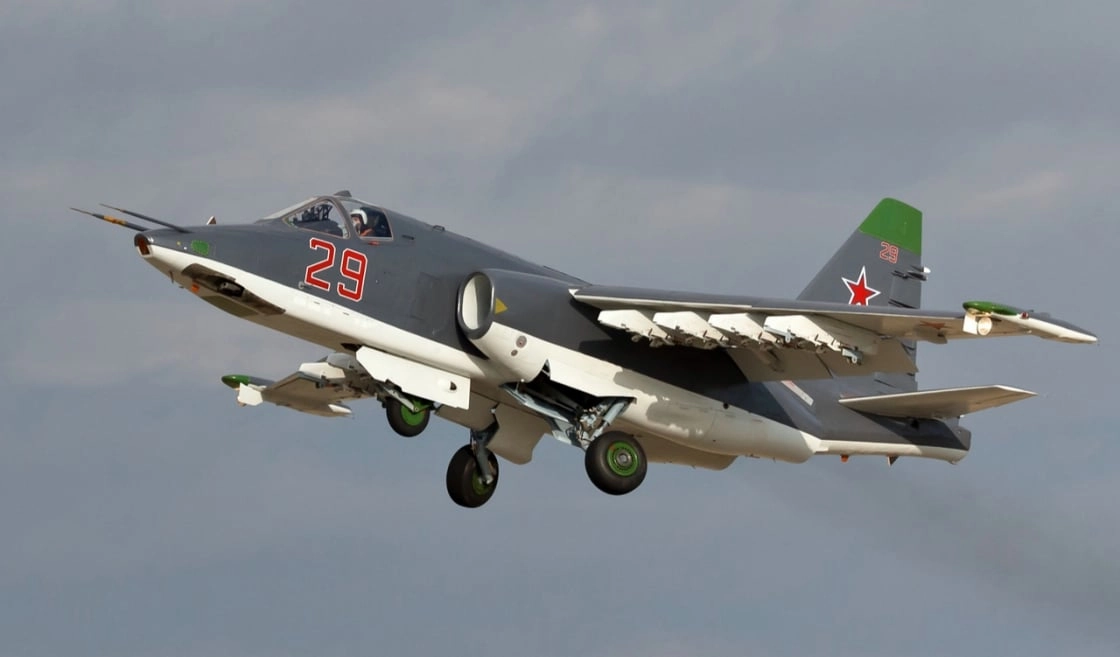
The weapons update is more complicated. Old Frogfoots relied heavily on unguided rockets—cheap and powerful, but not very accurate. The Su-25SM3 can now carry guided bombs and missiles. On paper, this allows pilots to strike from safer distances with far more accuracy.
In practice, though, Russian units are still often loading the aircraft with unguided rockets. The reason seems simple: guided weapons are expensive and not always available in large numbers. So while the SM3 can be precise, it is frequently used in the old way—flying low, unleashing a wave of rockets, and pulling away fast. In other words, the technology is there, but the battlefield habits haven’t entirely caught up.
Read also: Douglas A-4 Skyhawk: Key Facts Behind the Iconic Attack Jet
Russia has exported Su-25s to countries like Iraq and Georgia, often with slight changes for local needs. There’s also a two-seat trainer version, which looks a bit odd but is useful for preparing new pilots. Some earlier upgrades, like the Su-25SM, added smaller improvements before the full SM3 package came along.
What’s interesting is that the Su-25SM3 isn’t trying to turn the Frogfoot into a modern fighter jet, “it can’t”. Instead, the upgrades are more about survival and efficiency. Better navigation, smarter weapons, and a tougher cockpit don’t make it glamorous, but they do make it more useful.
You could say Russia is simply squeezing as much life as possible out of a design that has already proven it can take punishment and keep flying.
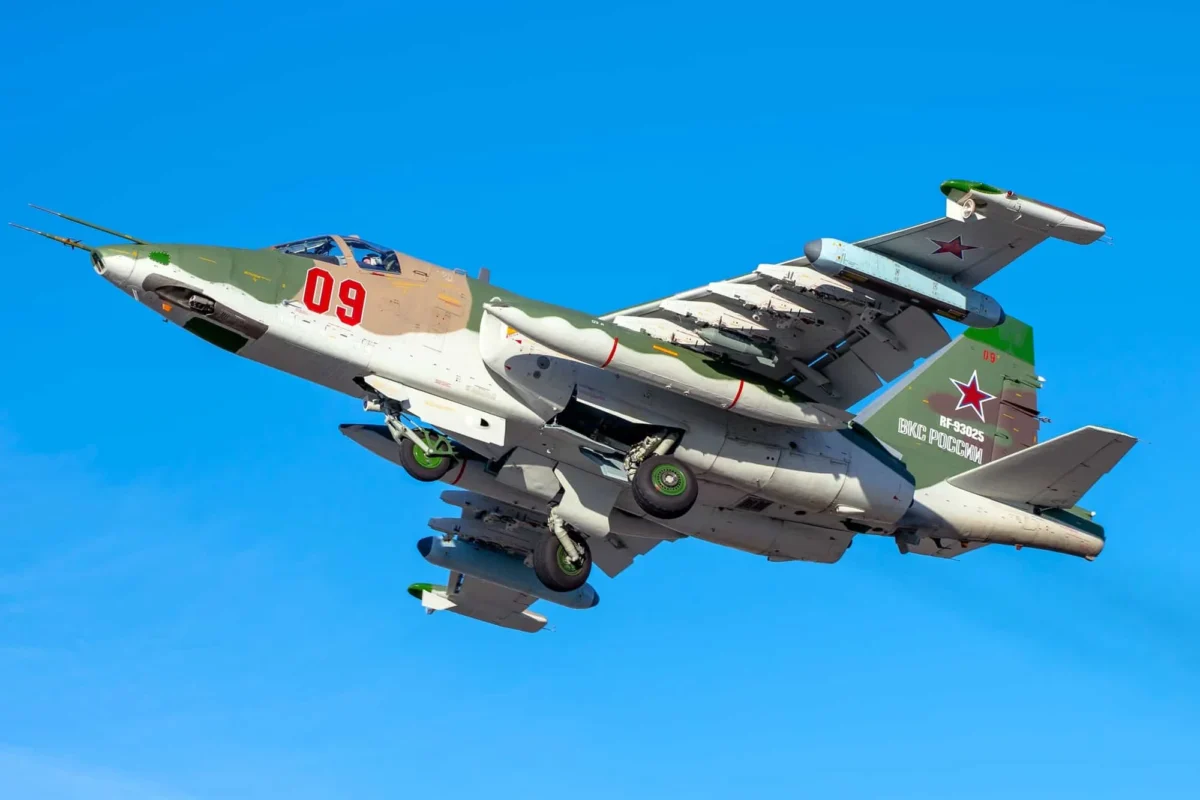
The Sukhoi Su-25 Frogfoot entered combat not long after it was introduced. Its first real test came in the 1980s during the Soviet war in Afghanistan. Pilots quickly learned what the jet could and couldn’t do.
The aircraft proved it could carry heavy loads of bombs and rockets into rough mountain valleys to give ground troops badly needed support.
At the same time, dozens of Su-25s were lost, but many also came back with shocking amounts of damage — wings riddled with holes, engines knocked out, and yet still able to land. Stories like these helped build the Frogfoot’s reputation as the “flying tank.”
After Afghanistan, the Su-25 kept appearing in conflicts, though not always in the same way. It was used in the wars in Chechnya, where its toughness was again valuable but losses were high. It showed up in Georgia in 2008, and later in Syria, where Russian forces relied on it for airstrikes against rebel groups and ISIS.
n each of these wars, the same pattern could be seen: the aircraft was useful because it was simple and rugged, but it was also exposed to modern air defenses. That contrast became a recurring theme in its history.
The real twist is that even in the 2020s, the Sukhoi Su-25 is still in frontline service. In Ukraine, both Russian and Ukrainian pilots have flown these aircraft, often at very low altitude to avoid radar. Videos have shown them streaking just above the treetops, firing salvos of rockets before pulling away.
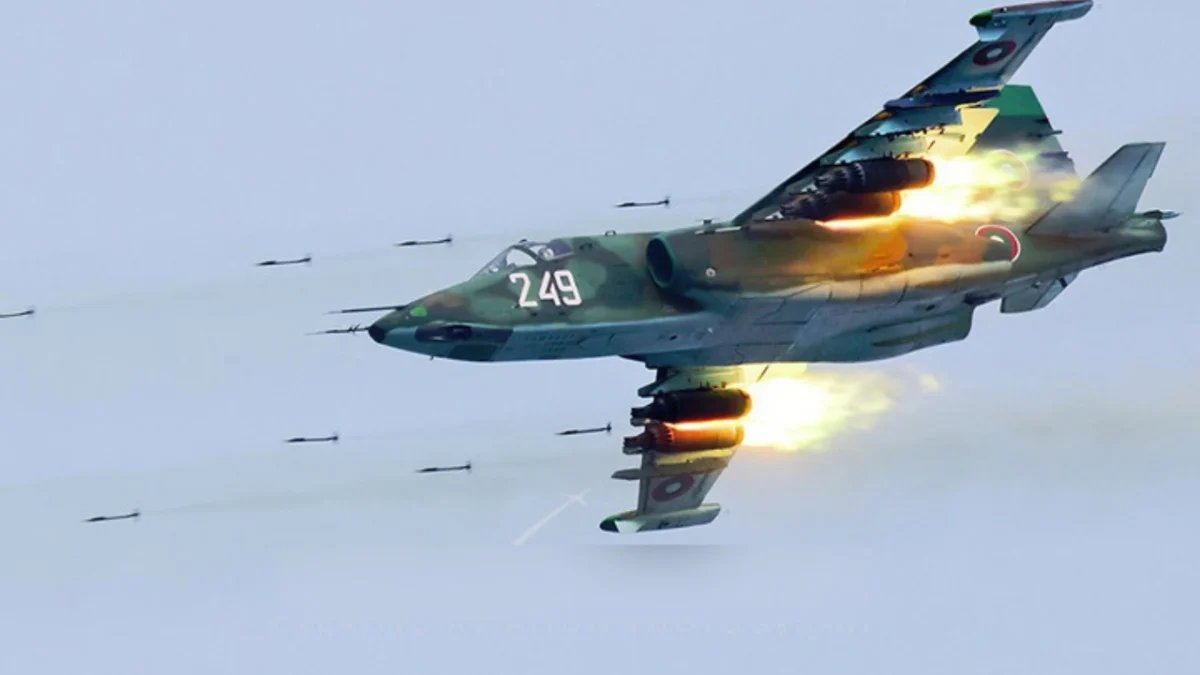
This tactic reduces exposure to missiles, but it also lowers accuracy, meaning pilots often rely on volume of fire rather than precision. For an aircraft designed in the late 1970s, it is remarkable and perhaps surprising; that it is still being used in battles filled with drones, precision weapons, and advanced air defense systems.
But the story is not one of success alone. Ukrainian forces have claimed a steady stream of shootdowns. In February 2025, for example, Ukraine’s military reported downing a Su-25 near Toretsk in Donetsk Oblast, using an Igla man-portable air defense system.
In other cases, dramatic footage has captured the jets exploding in mid-air after being struck, with pilots ejecting just moments before impact. One incident near Zaitsevo ended in a fireball as the aircraft went down, while the rescue of its pilot by helicopter reportedly faced enemy fire as well. Since the start of the full-scale invasion in 2022, independent tallies suggest Russia may have lost more than thirty Su-25s in combat.
What stands out from its long combat record is not that the Su-25 wins wars or changes the balance of power, but that it refuses to disappear. Time and again, it has shown both its value and its limits. It can hit hard, it can take punishment, and it can survive in harsh conditions. But it also suffers heavy losses whenever it faces modern defenses.
If you put the Su-25 Frogfoot next to the A-10 Warthog, you might think they came out of the same workshop. Both sit low, with chunky wings, twin engines, and cockpits wrapped in armor. Both were built for one thing above all else: getting close to the fight and helping soldiers on the ground.
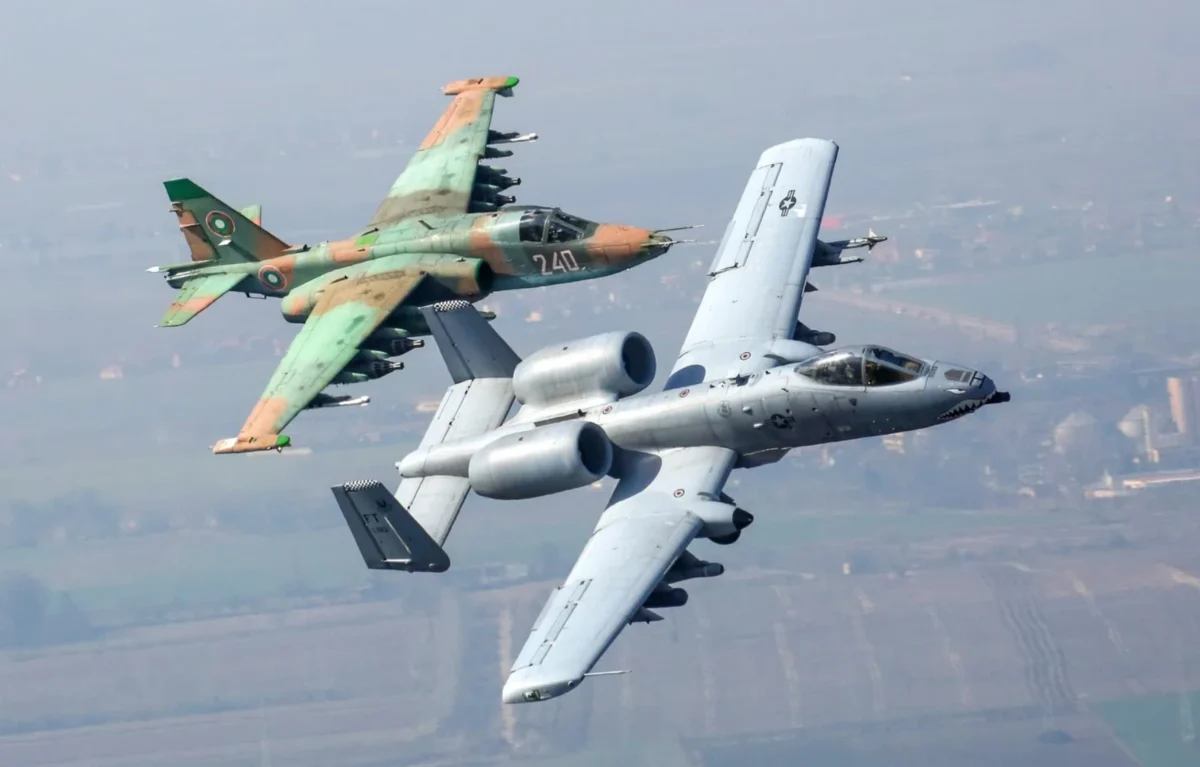
The A-10 Warthog is all about its gun. The massive GAU-8/A Avenger cannon basically defines the plane. Pilots joke that the Warthog isn’t so much an aircraft with a gun, but a gun with an aircraft attached to it. That weapon makes the A-10 a tank killer, designed to shred armor with streams of 30mm rounds.
The Sukhoi Su-25, on the other hand, has a smaller twin-barrel cannon, and it’s not the star of the show. Instead, the Frogfoot was built to carry a mix of rockets, bombs, and missiles, which makes it a more flexible plane but less specialized loadout.
About their endurance and range, the A-10’s engines are turbofans, which sip fuel compared to the Su-25’s turbojets. That gives the Warthog more time in the air, circling over battlefields and waiting for ground forces to call in strikes.
The Su-25 doesn’t linger in the same way. It usually goes in, hits hard with rockets or bombs, and gets out. Some might see that as a weakness, but in smaller conflicts or tighter battle zones, the shorter range isn’t always a problem.
When it comes to survivability, both jets earned reputations for being hard to kill. The cockpits are wrapped in titanium armor, and both have brought pilots home after heavy damage.
Still, the A-10 has a few design tricks the Frogfoot doesn’t. Its engines are spread apart, its tail is doubled, and many of its systems are built with backups. The Su-25 is tough too, but it leans more on simplicity than redundancy.
| Feature | Sukhoi Su-25 Frogfoot | A-10 Thunderbolt II (Warthog) |
| First Flight | 1975 | 1972 |
| Engine | 2 × turbojets (Soyuz/Rybinsk) | 2 × turbofans (General Electric TF34) |
| Top Speed | ~975 km/h (606 mph) | ~706 km/h (439 mph) |
| Range | ~750 km (combat load) | ~1,000 km (combat load) |
| Service Ceiling | ~7,000 m (23,000 ft) | ~13,700 m (45,000 ft) |
| Main Gun | 30mm GSh-30-2 (twin-barrel) | 30mm GAU-8/A Avenger (seven-barrel) |
| Payload | Up to 4,400 kg (9,700 lb) | Up to 7,260 kg (16,000 lb) |
| Armor Protection | Titanium “bathtub” around cockpit | Titanium “bathtub” around cockpit |
| Notable Conflicts | Afghanistan, Georgia, Syria, Ukraine | Gulf War, Iraq, Afghanistan |
So which one is better? That depends on what you expect it to do. The A-10 shines when it needs to destroy tanks and stay on station for hours. The Sukhoi Su-25 is at its best as a rugged battlefield attacker, simple to operate and versatile enough for different kinds of missions.
In a way, both reflect the militaries that built them: the U.S. poured resources into a specialized “tank buster,” while the Soviet Union wanted a straightforward jet that could survive rough conditions and be produced in numbers.