Follow Us:
Follow Us:

In a world where everyone seems obsessed with supersonic speeds and invisible stealth tech, there’s this rugged little propeller plane that just refuses to be overshadowed.
We’re talking about the A-29 Super Tucano. It’s arguably one of the most practical pieces of machinery in the sky today, even if it doesn’t look like something out of a sci-fi movie.
But what is special about the A-29 Super Tucano?
Well, it seems to occupy this perfect middle ground where efficiency meets effectiveness. It’s a super Tucano light attack aircraft that doesn’t try to be a jet, and that might actually be its greatest strength.
It’s possible that for many modern missions, like border patrol or counter-insurgency, this plane is actually more useful than a multi-billion-dollar fighter. It appears to be all about staying in the air longer, seeing more, and doing it all without breaking the bank.
When you first look at the A-29 Super Tucano, you’d be forgiven for thinking it looks like something from a mid-20th-century airfield.
However, that’s arguably part of its charm. It’s essentially a high-tech wolf in sheep’s clothing, a platform that manages to be both “old school” in its ruggedness and incredibly modern in its capabilities.
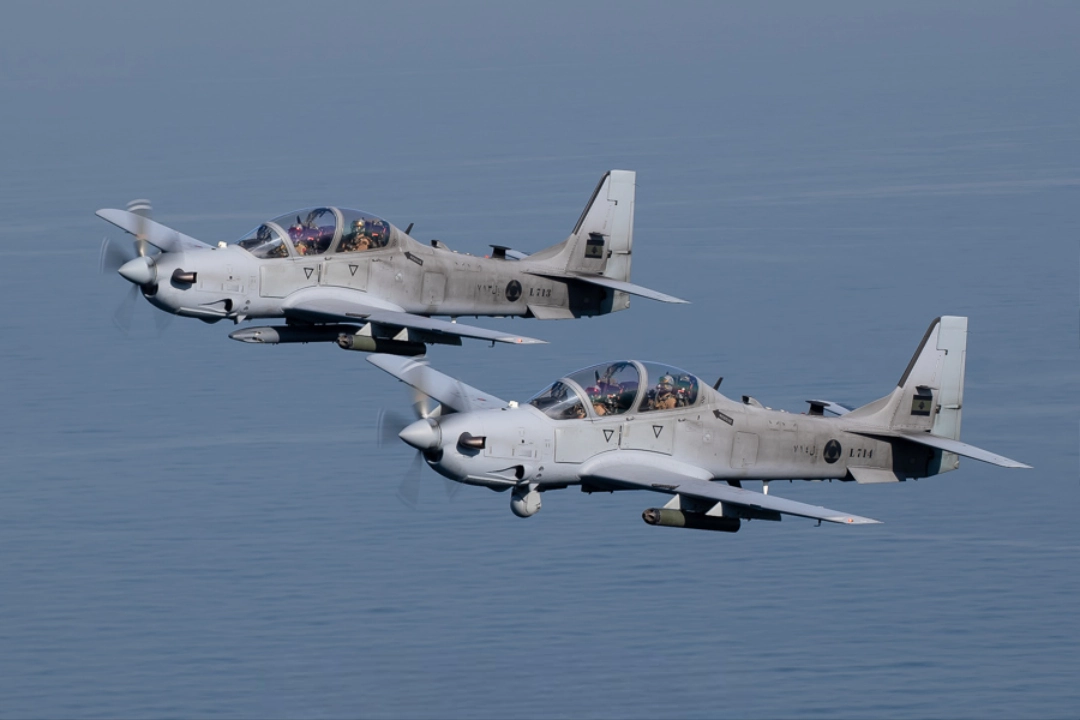
The story of the A-29 is a bit of a classic “evolution” tale. It was developed by Embraer, the Brazilian aerospace giant, as a significant upgrade to their earlier EMB 312 Tucano trainer.
It seems the development really hit its stride in the 1990s under the ALX program for the Brazilian Air Force. At the time, Brazil needed an aircraft that could handle the unique challenges of the Amazon, like dense jungle, high humidity, and a lack of proper runways.
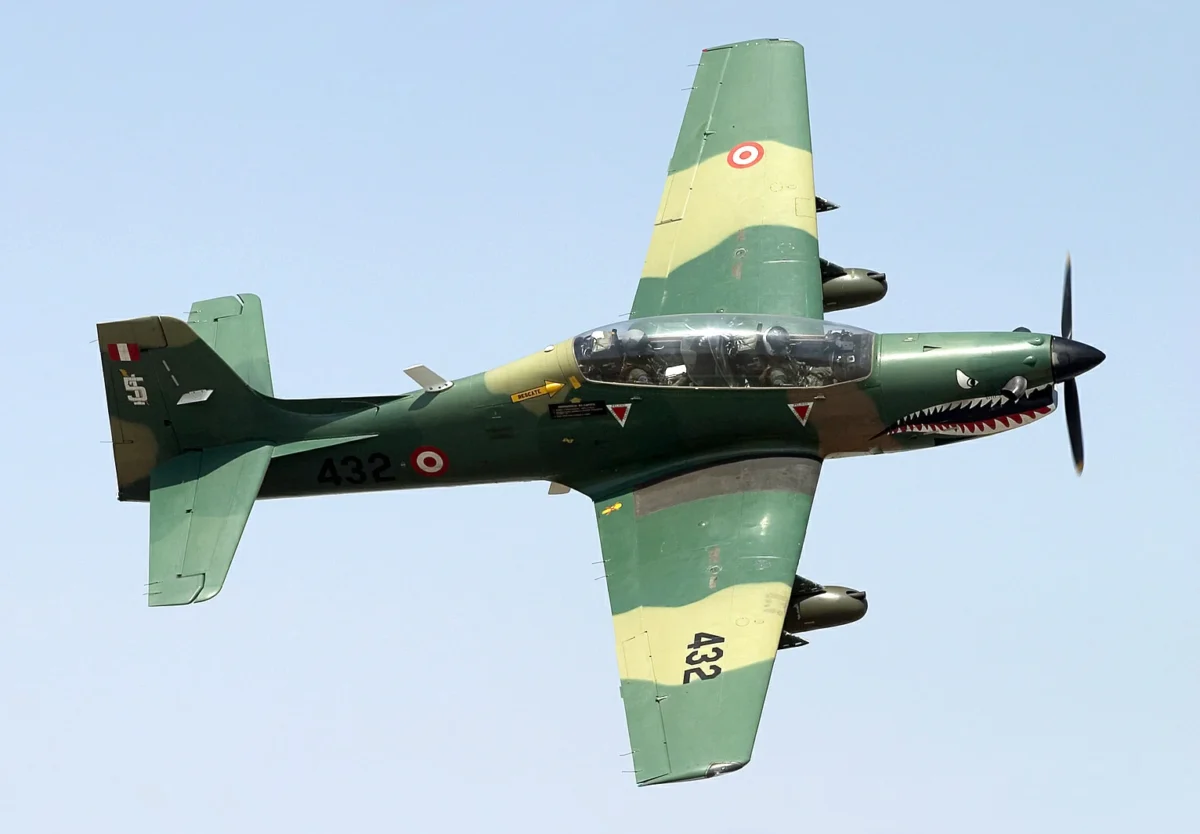
The result was the EMB 314 (the technical name for the Super Tucano), which made its first flight in 1999. It’s likely that Embraer realized early on that a trainer that could actually fight would be a game-changer for many nations.
In terms of its “job description,” the Super Tucano is officially classified as a light attack aircraft and a trainer. It fills a very specific niche that larger jets often struggle with.
It’s probably safe to say that the A-29 isn’t trying to win any air-superiority battles against an F-22.
Instead, it seems to focus on being the absolute best at the “dirty work” of modern warfare, like patrolling, watching, and striking with surgical precision when needed.
When you really dig into the design philosophy of the A-29 Super Tucano, it’s clear that the engineers were seemingly obsessed with practicality. It feels like they took a step back and asked, “What does a pilot actually need when they’re orbiting a jungle for five hours?” The answer was likely reliability and a design that could handle some serious abuse.
One of the most interesting choices is the turboprop advantage over jet aircraft. While it might seem like a step backward to use a propeller, it’s arguably one of the smartest moves for this type of mission.
A turboprop engine, like the PT6A-68C used here, is generally much more fuel-efficient at lower altitudes than a thirsty jet engine. This suggests that the Super Tucano can “loiter”, just hang out in the sky for much longer than a high-performance jet.
This persistence may be what makes it such a successful Super Tucano light attack aircraft, as it gives the pilot the luxury of time to correctly identify a target before ever pulling the trigger.
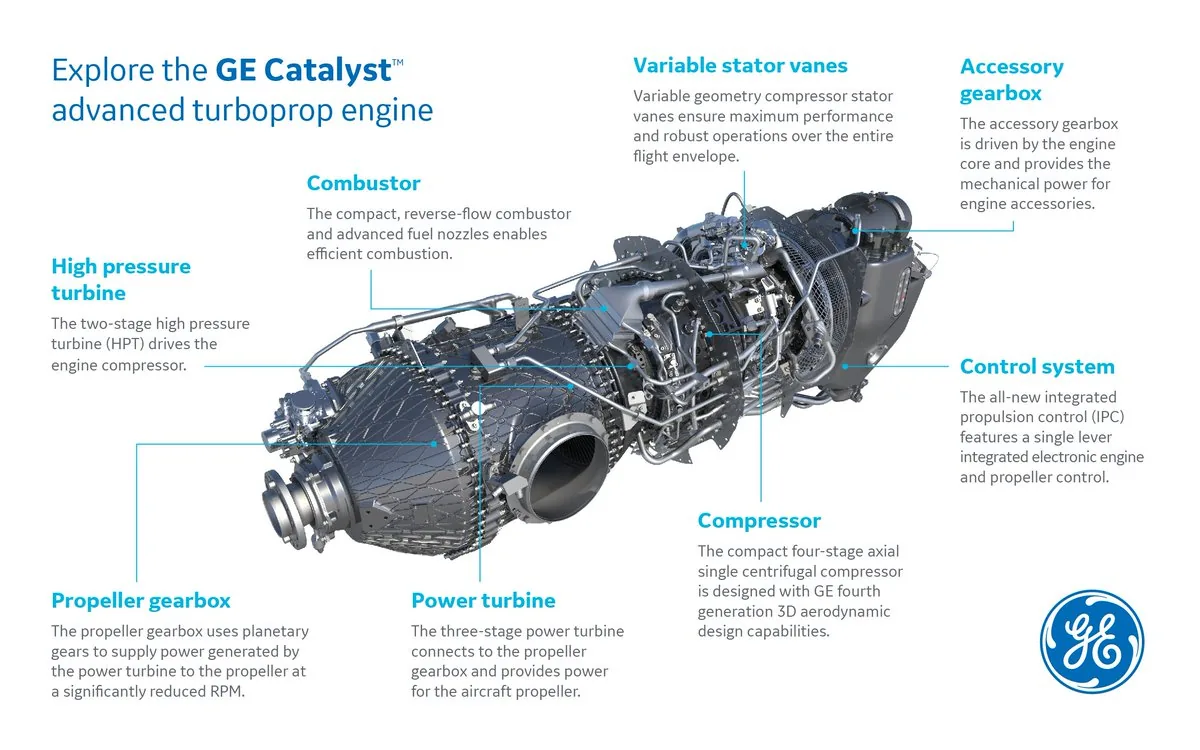
Beyond the engine, the plane is built like a tank, featuring a rugged airframe and short runway capability that’s honestly pretty impressive. Many modern fighters are a bit like “divas”. They need long, pristine, paved runways to operate safely.
The A-29, however, appears to be designed for the “real world,” where the “runway” might just be a dusty strip of dirt or a cracked piece of old asphalt in a remote area.
Because of its sturdy landing gear and the high torque of its propeller, it can seemingly get in and out of tight spots that would be completely off-limits to a traditional fighter jet. This flexibility likely makes it an invaluable tool for air forces operating in rugged terrain where infrastructure is a bit of a luxury.
Finally, you have to consider the experience from the pilot’s perspective, specifically regarding pilot visibility and cockpit ergonomics. It’s often suggested that the bubble canopy of the A-29 offers some of the best visibility in its class.
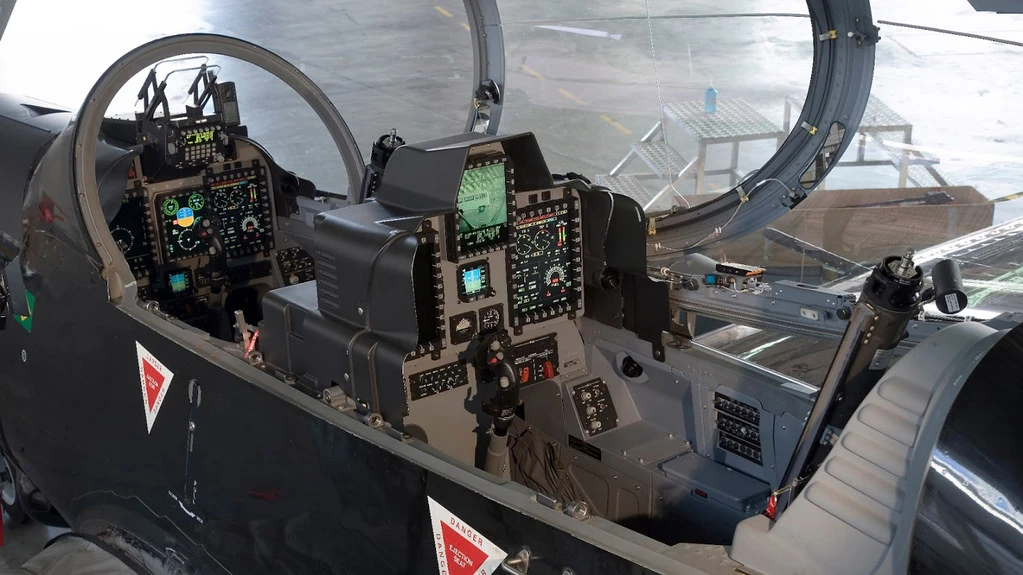
In a close air support mission, being able to actually look out the window and see what’s happening on the ground is arguably more important than any sensor screen.
Inside, the cockpit seems to be surprisingly high-tech, with “Hands on Throttle-and-Stick” (HOTAS) controls and night-vision compatibility. It appears the goal was to create a workspace that feels familiar to a modern fighter pilot, reducing their “cognitive load” so they can focus on the mission rather than struggling with the aircraft itself.
When you ask, “What is special about the A-29 Super Tucano?”, the answer isn’t usually found in its top speed or its stealth profile. Instead, it seems to be about its ability to be exactly what you need in a messy, low-intensity conflict.
One of the most impressive things about the A-29 Super Tucano is how much it can actually carry.
Despite being a prop plane, it features five external hardpoints that can handle a payload of over 3,400 lbs (1,550 kg). It’s often suggested that its most “special” feature is the pair of .50-caliber machine guns built directly into the wings.
Because these are internal, it frees up all the underwing spots for a massive variety of A-29 Super Tucano weapons, ranging from rocket pods to heavy bombs.
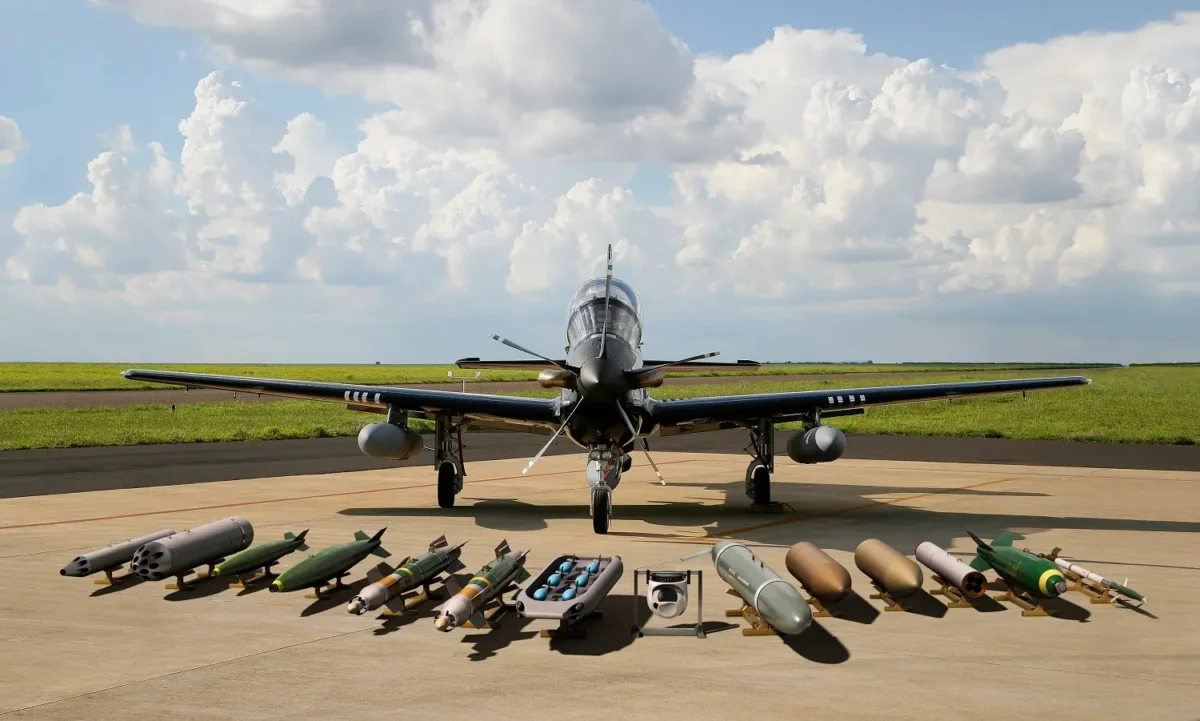
What really separates the A-29 from older ground-attack planes is its “eyes.” It’s generally equipped with an EO/IR (Electro-Optical/Infrared) turret under the nose, which essentially gives the pilot a high-definition, thermal-vision view of the battlefield.
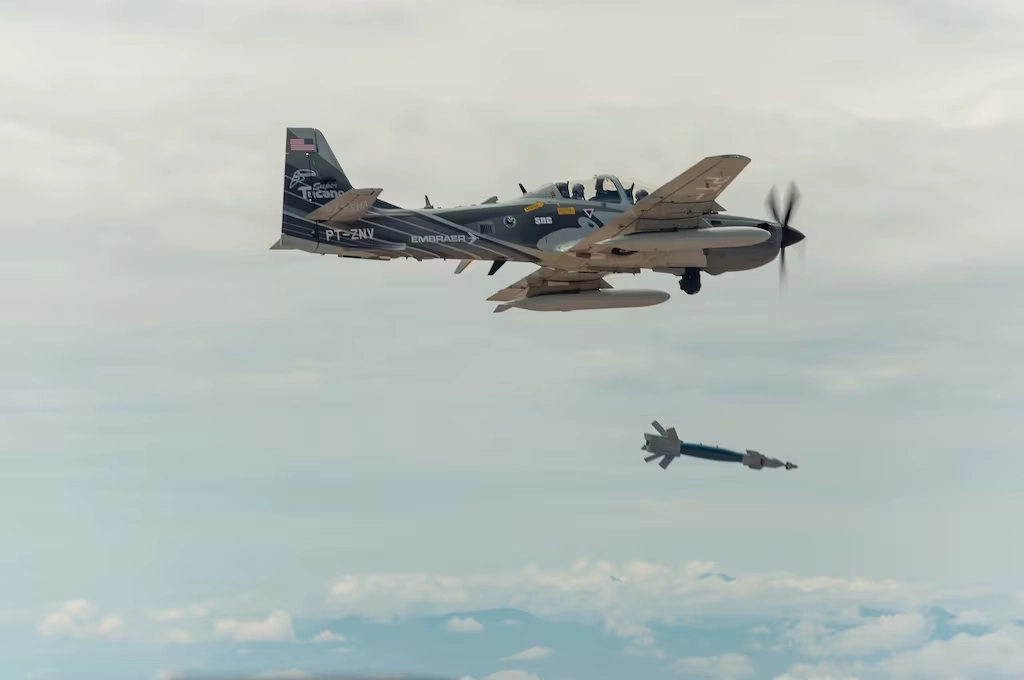
In the world of Close Air Support (CAS) and counterinsurgency (COIN), being fast can actually be a disadvantage. If you’re zooming by at Mach 2, it’s arguably very difficult to tell the difference between an insurgent truck and a civilian one.
Read also: Sukhoi Su-25 Frogfoot – What Makes It a Close Air Support Beast
The A-29 seems to thrive here because it can fly “low and slow.” This likely gives the pilot the time they need to accurately identify targets and coordinate with a JTAC (Joint Terminal Attack Controller) on the ground.
It appears to be designed specifically for “permissive environments,” places where you don’t have to worry about high-end surface-to-air missiles, but you do need someone in the air who can stay on station for half a day to protect a convoy.
When you look under the hood, it’s arguably more accurate to think of it as a flying computer that happens to have a propeller. The way it integrates its sensors with its A-29 Super Tucano weapons is likely why it’s often compared to fourth-generation fighters like the F-16 in terms of its digital “brain.”
At the center of it all is a mission computer that acts like the plane’s brain, or the central mission computer that acts as a conductor for everything else. It seems to use a MIL-STD-1553B data bus, which is essentially a high-speed nervous system to link the pilot’s cockpit displays, the targeting sensors, and the weapons themselves.
This integration allows for “sensor fusion,” where the data from the EO/IR (Electro-Optical/Infrared) turret under the nose is fed directly into the pilot’s Head-Up Display (HUD). It’s possible that this makes finding and hitting a target feel almost seamless; the pilot can reportedly just look through the HUD, and the system helps “cue” the sensors to exactly what needs to be hit.
Then, the Stores Management System (SMS) is another piece of the puzzle that seems quite sophisticated. It apparently manages the five external hardpoints and the internal .50 caliber machine guns, calculating complex ballistics in real-time. This suggests that whether a pilot is dropping a “dumb” bomb or firing a laser-guided rocket, the computer is doing most of the heavy lifting to ensure accuracy.
It’s also worth noting that recent upgrades have reportedly added specialized datalinks, allowing the Super Tucano to receive target coordinates from ground troops or drones. This likely transforms the aircraft into a critical node in a larger network, making it a very modern A-29 Super Tucano attack aircraft that’s ready for the high-tech battlefields of 2025.
Perhaps the biggest reason the A-29 still matters is the sheer logic of the math. It’s often suggested that using a $100 million stealth jet to patrol a border or track a small group of insurgents is like using a luxury yacht to go fishing in a pond; it works, but the cost is staggering.
The A-29 Super Tucano cost per flight hour is reportedly around $1,500, whereas a high-end jet can easily soar past $30,000. This massive gap likely allows air forces to stay in the air longer and more often, which is arguably what matters most in a long-term campaign.
The A-29 seems built specifically for “asymmetric” fights, conflicts where the enemy doesn’t have a massive air force but uses hit-and-run tactics. Because it can fly “low and slow,” it reportedly gives pilots a much better chance of spotting targets on the ground than a pilot screaming past at Mach 1.
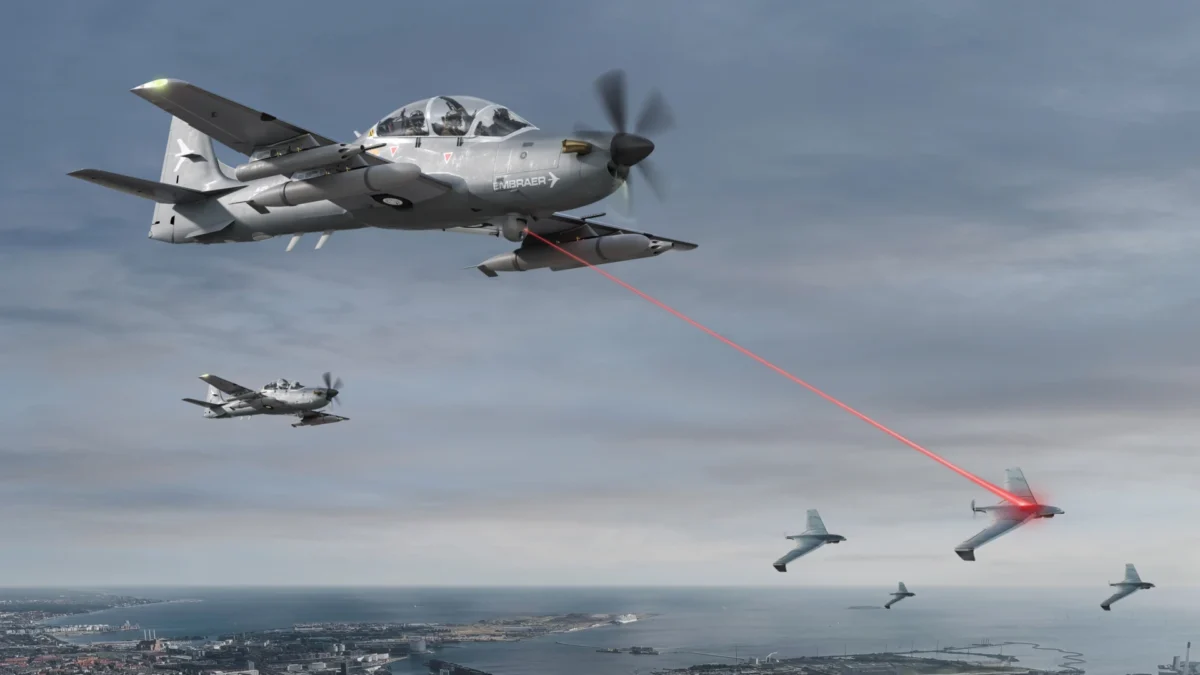
More recently, it appears the Super Tucano is finding a second life as a counter-drone (C-UAS) platform.
Just this past month (November 2025), Embraer announced a new “drone hunter” configuration. It’s possible that using the A-29’s .50-caliber guns and laser-guided rockets is one of the few ways to take down hostile drones effectively without spending millions of dollars on high-end missiles for every shot.
Unlike delicate jets that need climate-controlled hangars and miles of pristine pavement, the A-29 seems designed to live in the dirt. It can reportedly operate from short, unpaved runways in the middle of nowhere with very little ground support.
Because it’s a turboprop, its engine is generally much simpler and more durable than a complex jet turbine. It’s reportedly designed for “on-condition” maintenance, meaning you fix things as they need it rather than following an incredibly rigid (and expensive) schedule.
This likely results in reduced maintenance requirements and higher “availability.” For a lot of countries, having an aircraft that is “always ready” is arguably much better than having a high-tech one that spends half its life in the repair shop.
| Aircraft Model | Engine Type | Est. Unit Cost | Est. Cost Per Flight Hour | Key Advantage |
| A-29 Super Tucano | Turboprop | $10M – $18M | ~$1,500 | Ruggedness; Built-in .50 cal guns. |
| AT-6 Wolverine | Turboprop | $12M – $16M | ~$1,500 – $2,200 | High compatibility with US/NATO systems. |
| Air Tractor AT-802U | Turboprop | $8M – $12M | ~$1,000 | Massive payload; agricultural roots. |