Follow Us:
Follow Us:

It’s easy to forget that even in an age of stealth jets and hypersonic weapons, dogfights still matter. Short-range air-to-air missiles, the kind fired in those last seconds when two aircraft finally cross paths, remain a deciding factor in who walks away.
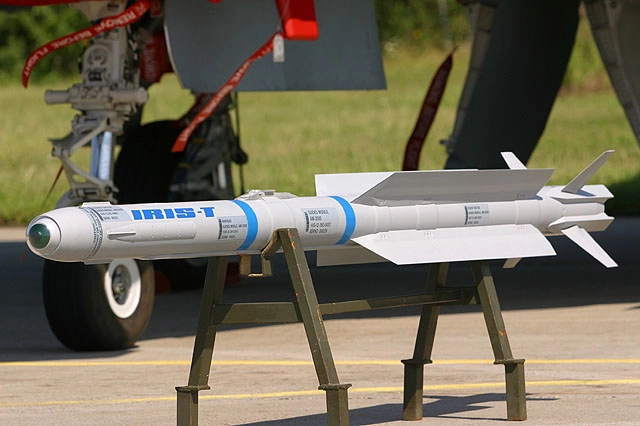
One of the most interesting examples here is the IRIS-T missile, a German-led project that came about when Europe decided it didn’t want to rely too heavily on American systems.
At first glance, the IRIS-T looks like just another short-range weapon, meant to replace older Sidewinders. But once you look closer, the design philosophy is different. The missile was built with the idea that threats were no longer only head-on duels in open skies.
What happens if an enemy fighter slips behind you? What if modern flares and countermeasures confuse the seeker? These were the kinds of questions that shaped its development.
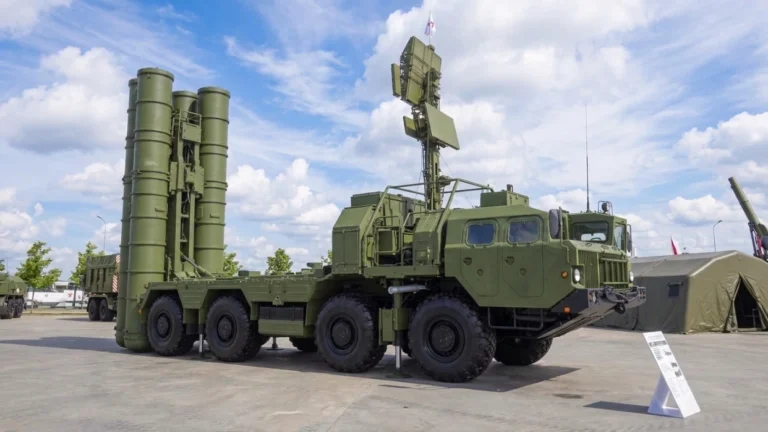
Recently, Ukraine soared into global news for anti-air defenses. They’ve reported seven Russian cruise missiles shot down in a single volley using the IRIS-T system. At the same time, orders for the IRIS-T have picked up in Europe, not only for air defense but ground defense too.
Slovenia also inked deals for multiple IRIS-T SLM medium-range surface-to-air units, complete with radars and mobile launchers, slated for delivery by 2027 and beyond. Switzerland followed suit in July, planning to fill a critical defense gap with its own IRIS-T SLM batteries in the ESSI framework. And let’s not forget Germany signing a roughly $900 million deal to supply Sweden with IRIS-T SLM systems. What is so special about it?
The IRIS-T, often described as an advanced short-range missile, was born out of Europe’s doubts about relying too heavily on American designs. It is often introduced as Europe’s answer to the old Sidewinder, but the story behind it is not as clean as it might look on paper.
In the late Cold War years, NATO air forces were still leaning heavily on the AIM-9 Sidewinder, a missile that had worked well in past conflicts but was starting to show limits. The U.S. had already begun shaping the AIM-9X as the “next step.” While that program promised improvements, not everyone in Europe was convinced it was the right path. Was it wise to let Washington decide the future of every key weapon? Or would that leave European air forces permanently dependent on U.S. design choices?
Germany, especially, pushed back. Instead of just accepting the new American missile, it argued for building a homegrown system. That hesitation sparked what later became the IRIS-T program, and some other NATO allies joined in, partly out of shared concerns and partly because of the costs. Developing a new missile from scratch is expensive, and pooling resources made it easier to justify.
Still, cooperation didn’t erase the political tensions. Some critics have argued that Europe was duplicating efforts by trying to make a “European Sidewinder,” while others insist the point was independence, not efficiency.
The declared purpose of IRIS-T was straightforward: replace the AIM-9 Sidewinder in European service. But if we take a closer look, the goal went beyond just swapping one missile for another. The design team wanted something that could respond to new problems, that’s the rise of highly agile fighters, advanced countermeasures, and the possibility that future combat might not always be in clean, one-on-one duels.
Whether Europe succeeded in building something truly better than the AIM-9X is still debated, but the IRIS-T project marked an important moment: NATO allies saying they wanted more say in the weapons they field.
When people look at the IRIS-T, the numbers tend to stand out first. The missile is usually reported to reach about 25 kilometers in range, with a speed above Mach 3. On paper, that sounds impressive for a short-range weapon.
But then again, does a few extra kilometers really change the outcome of a dogfight, where seconds and angles often matter more than raw distance? Some analysts argue that once you’re close enough to fire, both the IRIS-T and its American rival, the AIM-9X, can already do the job.
In terms of design, the missile is just under three meters long and fairly slim, which makes it easy to fit on most NATO aircraft. That part seems practical enough, though some would argue that Europe was not necessarily chasing bold innovation here, but rather making sure the missile could slot into existing launch rails without too much trouble.
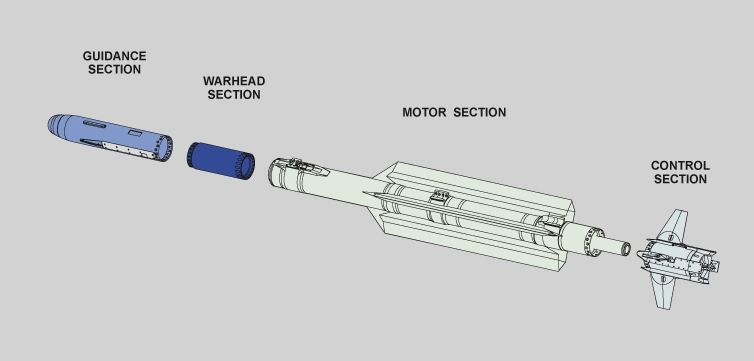
Where the IRIS-T does look different is in how it steers. Instead of relying only on fins, it uses thrust-vectoring—tiny jets that can push the missile in sharp angles right after launch. In theory, this allows it to chase a maneuvering fighter more aggressively, even one trying to dodge with flares. Yet critics might wonder whether such features actually get tested in enough real-world scenarios, or whether much of this remains a sales pitch supported by simulations.
The infrared seeker is often called “imaging infrared,” which sounds like a leap forward compared to older heat-seekers. Supposedly, it can pick out the heat shape of an aircraft rather than just following a hot spot. Yet claiming that this makes it immune to decoys would be misleading. Countermeasure technology evolves just as quickly, so every time the missile gains a new seeker, adversaries are already working on ways to fool it.
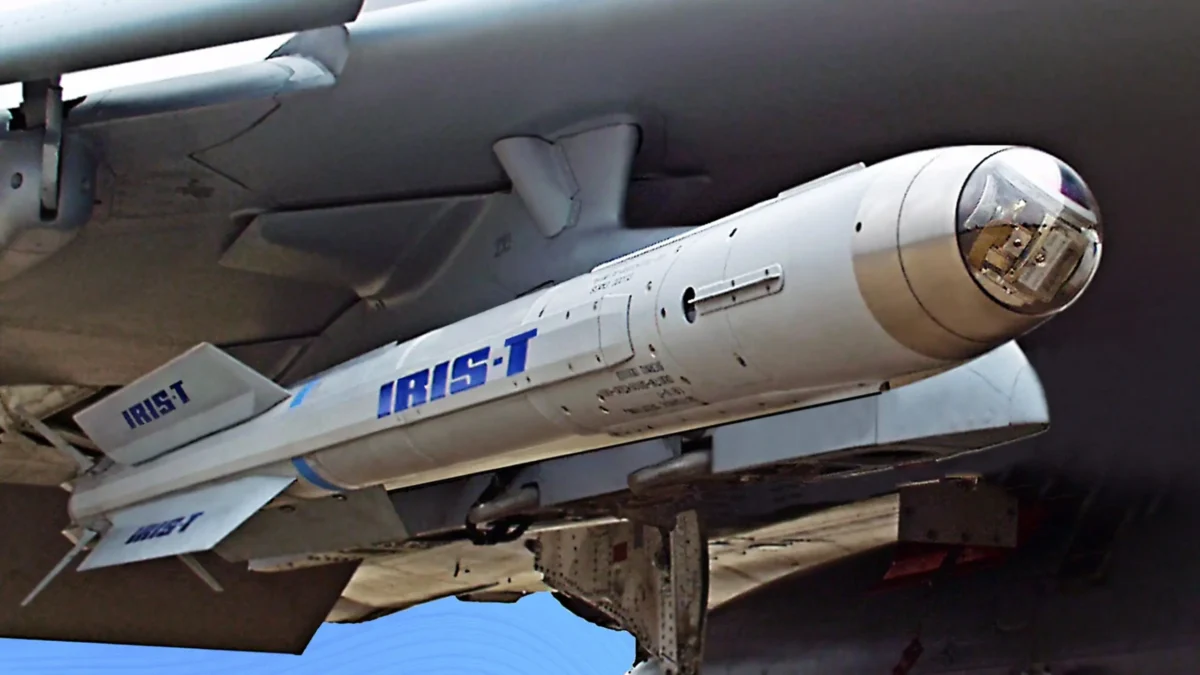
One feature often highlighted is lock-on after launch (LOAL). In theory, this feature means a pilot can launch the missile first and allow it to lock onto the target while already in flight. On paper, that sounds like an advantage, especially if the opponent is approaching from behind or partly hidden by cloud cover. Still, the idea of firing without a firm lock raises doubts.
In real combat, pilots usually want certainty before committing a shot, and relying too heavily on mid-flight lock-ons might create as much risk as opportunity. It highlights a broader issue with many advanced systems: “what looks impressive in demonstrations may not always translate cleanly to the chaos of real operations.”
When set side by side with the AIM-9X, the IRIS-T doesn’t look like a radical break but more like a different interpretation of the same idea. Both use thrust-vectoring to twist sharply in flight, both rely on imaging infrared seekers, and both claim they can take shots well outside the traditional head-on view. That makes them sound almost interchangeable. Still, the details matter.
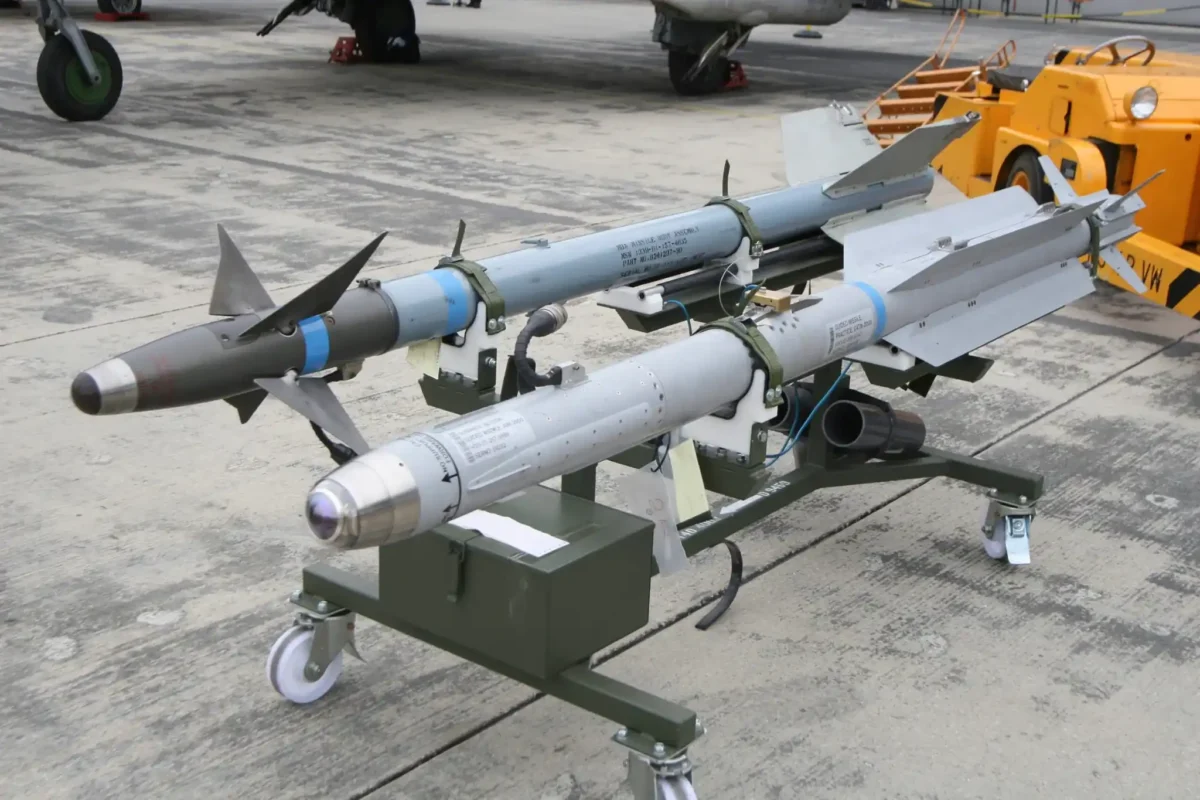
The IRIS-T is sometimes said to reach a little farther, but the AIM-9X carries the weight of being proven in U.S. service, where reliability often matters more than an extra kilometer or two on a spec sheet. In practice, those “small” differences can shape trust. Pilots and planners might ask themselves: do they want the missile that looks slightly stronger on paper, or the one that has already seen years of combat use?
| Feature | IRIS-T Missile | AIM-9X Missile |
| Origin | German-led European project (with NATO partners) | United States (Raytheon) |
| Length | ~2.94 m | ~3.0 m |
| Diameter | 127 mm | 127 mm |
| Weight | ~87 kg | ~85.5 kg |
| Speed | Around Mach 3 | Around Mach 2.5+ |
| Range | Claimed up to 25 km (some sources suggest more in certain profiles) | Usually listed around 20+ km |
| Guidance | Imaging Infrared seeker (IIR), high resistance to countermeasures | Imaging Infrared seeker (IIR), advanced flare rejection |
| Maneuverability | Extreme agility with thrust-vectoring (up to ~60g turns) | High agility with thrust-vectoring (up to ~50g turns) |
| Lock-on Capabilities | Lock-on Before Launch (LOBL) & Lock-on After Launch (LOAL) | Lock-on Before Launch (LOBL) & Lock-on After Launch (LOAL) |
| Platform Compatibility | Designed to fit NATO aircraft (Eurofighter, Gripen, Tornado, F-16, etc.) | Compatible with U.S. and allied aircraft (F-15, F-16, F/A-18, F-22, F-35) |
| Estimated Cost | Roughly $400,000–$430,000 per unit | Roughly $450,000+ per unit |
Some reports highlight the IRIS-T’s high agility, pointing to its use of thrust-vectoring to help it turn tighter than older short-range missiles.In theory, this means a pilot doesn’t have to line up perfectly to score a hit. A fast jet pulling tight turns should, on paper, still be within reach.
The catch is that agility in controlled tests is not the same as agility in the chaos of combat. Smoke trails, turbulence, and countermeasures can all disrupt the neat turning arcs shown in demonstrations. Some analysts even ask whether extreme agility matters much if the enemy never lets you get close enough in the first place.
Another feature often highlighted is its ability to take shots from extreme angles, sometimes even behind the launching aircraft. In theory, this means a pilot doesn’t need to line up perfectly before firing. Helmet-mounted sights make this possible by letting the pilot simply “look” at a target and then launch. In theory, this reduces the need for tight maneuvers to get the right firing position.
In reality, those extreme-angle shots might not come up very often. A pilot caught in a fast, stressful dogfight usually has only a blink to react, and in that moment the safer choice may still be to wait for a cleaner angle rather than gamble on a missile’s promises. The feature looks good in brochures, but it is fair to ask whether it changes the outcome of real combat or just adds another layer of complexity.
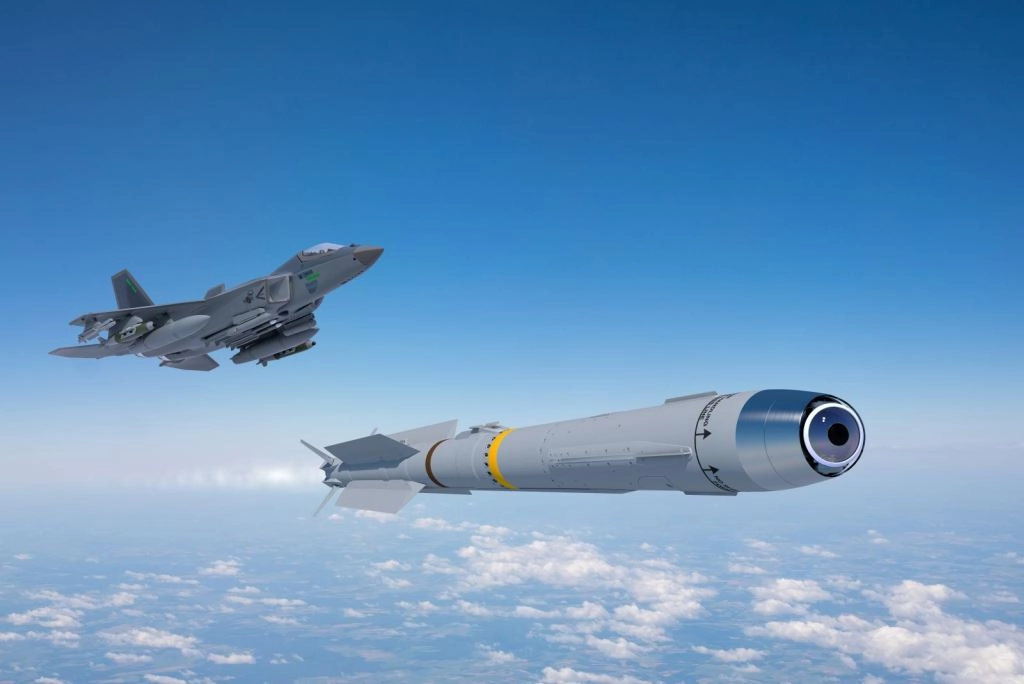
The missile is also promoted as being effective against modern fighters, including those with stealth shaping. This gives the IRIS-T an advantage when facing fighters designed to slip past radar detection.
However, that claim is harder to measure. Infrared seekers might not care about radar stealth, but stealth aircraft are rarely flying around with their engines glowing at full power. Designers pay close attention to engine placement, exhaust cooling, and even fuel management to reduce infrared visibility.
Add to this the fact that modern jets often carry advanced flares and electronic countermeasures, and it becomes less clear whether the missile’s seeker can deliver on its promises every time. In the lower-power settings or at longer ranges, spotting them with heat alone may be more challenging than the sales pitch suggests.
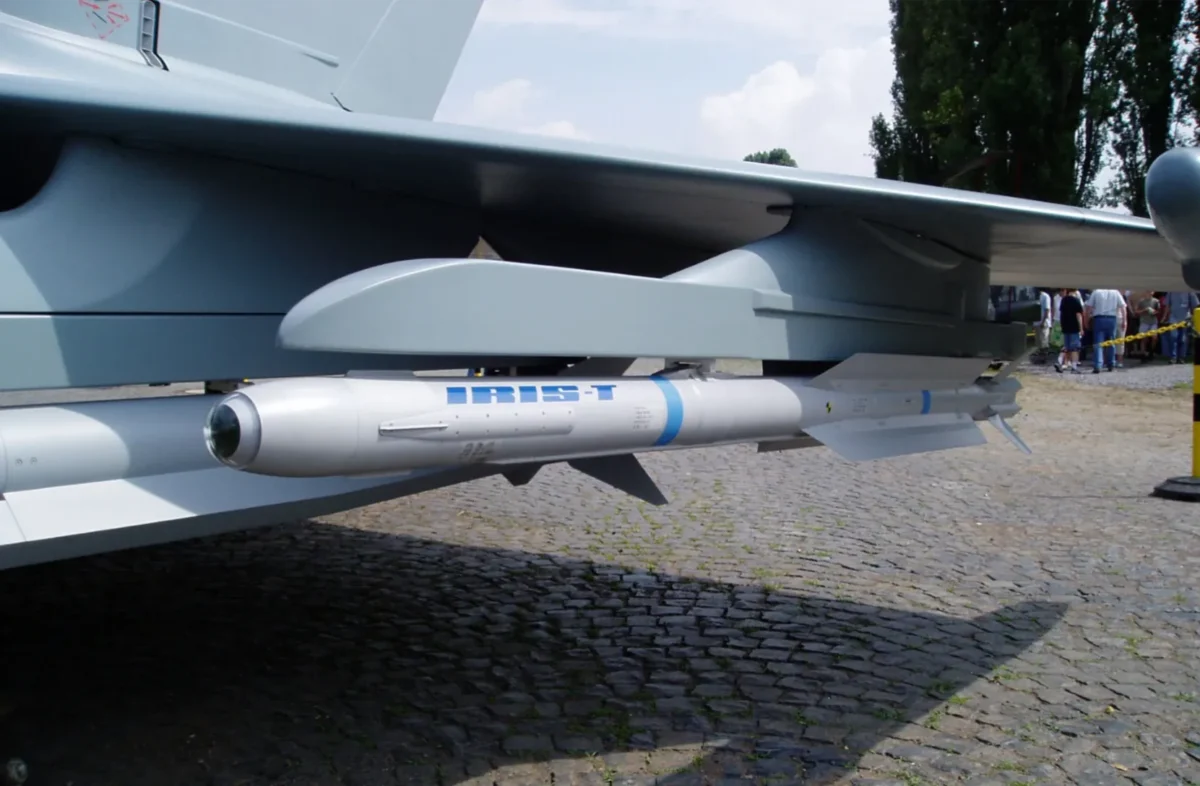
A commonly mentioned advantage of the IRIS-T is that it can be adapted for several NATO aircraft, including the Eurofighter Typhoon, Saab Gripen, and F-16. This gives the impression of seamless integration. In reality, fitting a missile onto different planes is rarely straightforward.
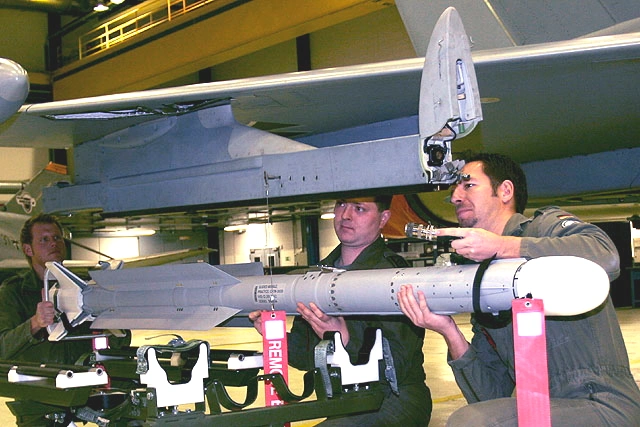
Each aircraft still needs its own testing and adjustments before the missile can be used with confidence. Pilots need hours of simulator training to become comfortable with new firing modes. Software updates are also required for each aircraft type, and flight testing has to be done to ensure the missile does not disrupt performance.
For smaller air forces, these steps can take a lot of time and money. Even if the missile promises a lot on paper, it’s not always clear whether the benefits fully justify the effort and cost of adopting it across different fleets. So, it seems that the claim mostly highlights Europe’s effort to make the missile widely usable rather than proving it is inherently superior.
The IRIS-T missile has shown up in a few NATO exercises, but it’s hard to say how it would really perform in combat. Back in 2024, NATO held some air defense drills at the Missile Firing Installation in Crete to mark 60 years of integrated training.
The IRIS-T was included along with other short-range missiles, and pilots spent time practicing how to follow fast jets and respond when targets tried to dodge them. Observers noted that it seemed to handle the exercises pretty well.
Still, exercises aren’t the same as real fights. In an actual engagement, smoke, weather, and split-second choices can throw off even the best equipment, and it’s not obvious that the missile would work exactly the same way outside of a controlled test.
In NATO and European air defense, the IRIS-T is part of what they call a layered system, meant to work alongside longer-range missiles and ground-based radars. You could see this in Exercise Ramstein Legacy 24 back in May 2024, where allied pilots tested air and missile defense with the IRIS-T included. From what could be seen in the drills, the missile appeared to handle different situations fairly well.
How it would actually perform in a real fight is another question entirely. A lot seems to come down to the pilots themselves, how well the teams coordinate, and whether the systems are set up correctly. Even a missile that looks strong on paper can’t really fix mistakes or gaps in training.
The IRIS-T is built for close-range fights, with high agility and the ability to lock onto targets from odd angles. On paper, this should let pilots hit opponents even during sudden maneuvers. But in modern air combat, how often do pilots actually get into those tight dogfights? Most engagements happen beyond visual range these days. So even if the missile has an advantage in rare short-range situations, it’s not clear how much that matters in practice