Follow Us:
Follow Us:

For decades, the U.S. Tomahawk cruise missile has been the go-to precision strike weapon for American forces—used in conflicts from the Gulf War to Syria, often launched from hundreds of miles away with pinpoint accuracy. But in recent years, Russia’s Kalibr missile has emerged as a serious rival.
In fact, in 2015, the world watched with surprise as Russian warships in the Caspian Sea launched Kalibr missiles over 1,500 kilometers into Syria—across Iran and Iraq—in one of the first public demonstrations of their long-range precision capabilities. It was a clear signal: the monopoly on long-range cruise strikes no longer belonged solely to the United States.
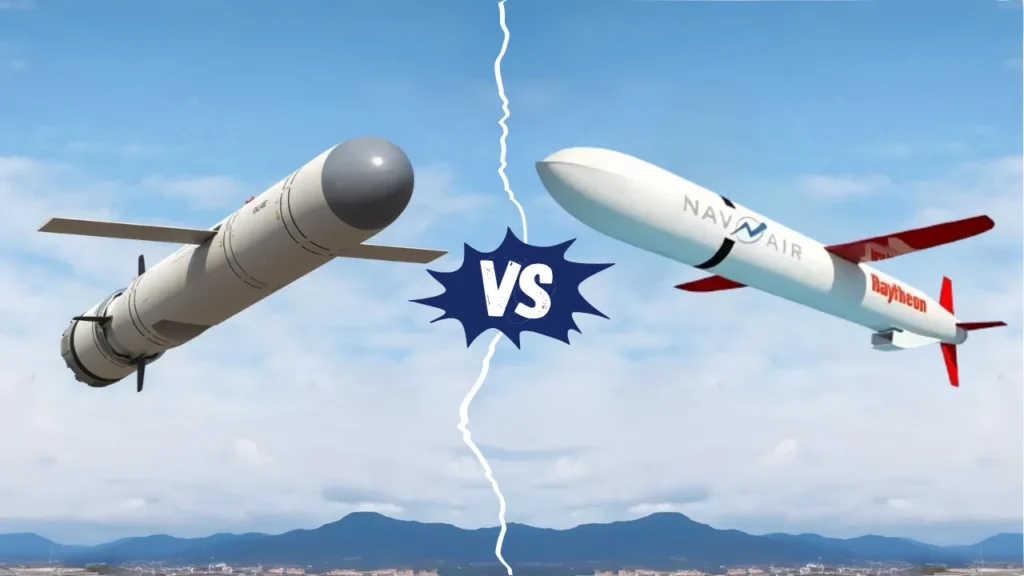
So how do they really stack up—Kalibr vs Tomahawk? Is one clearly superior, or do their strengths and limitations reflect broader differences in U.S. and Russian military thinking? To answer that, we’ll dive deep into their range, payload, speed, accuracy, cost, and combat record to understand which cruise missile truly dominates the modern battlefield.
To understand how the Kalibr missile became a centerpiece of Russia’s long-range strike capability, it helps to look back at the post-Soviet era. In the 1990s, as the Russian military struggled with economic instability and outdated equipment, it became increasingly clear that modern warfare was shifting toward precision strikes and networked operations—areas where Russia was falling behind.
In response, Russia likely saw a strategic need to develop a cruise missile that could counterbalance U.S. systems like the Tomahawk missile, which had already proven its effectiveness in the Gulf War and beyond.
The Kalibr cruise missile, also known by its Russian designation 3M-14 (and NATO reporting name: SS-N-30A), began as a modernization of older Soviet-era concepts but evolved into a flexible, multi-role weapon system.
Designed by the Novator Design Bureau and primarily deployed by the Russian Navy, the missile became part of a broader push to project power far beyond Russian borders. What’s particularly notable is that Kalibr missiles can be launched from a variety of platforms, including surface ships, submarines, and possibly even land-based mobile launchers.
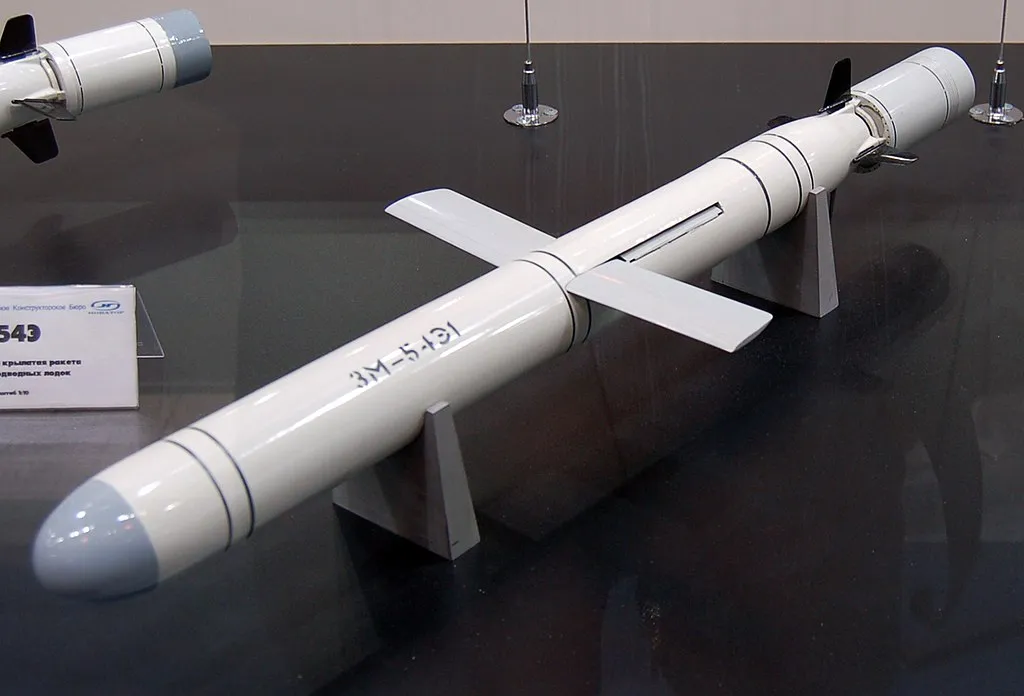
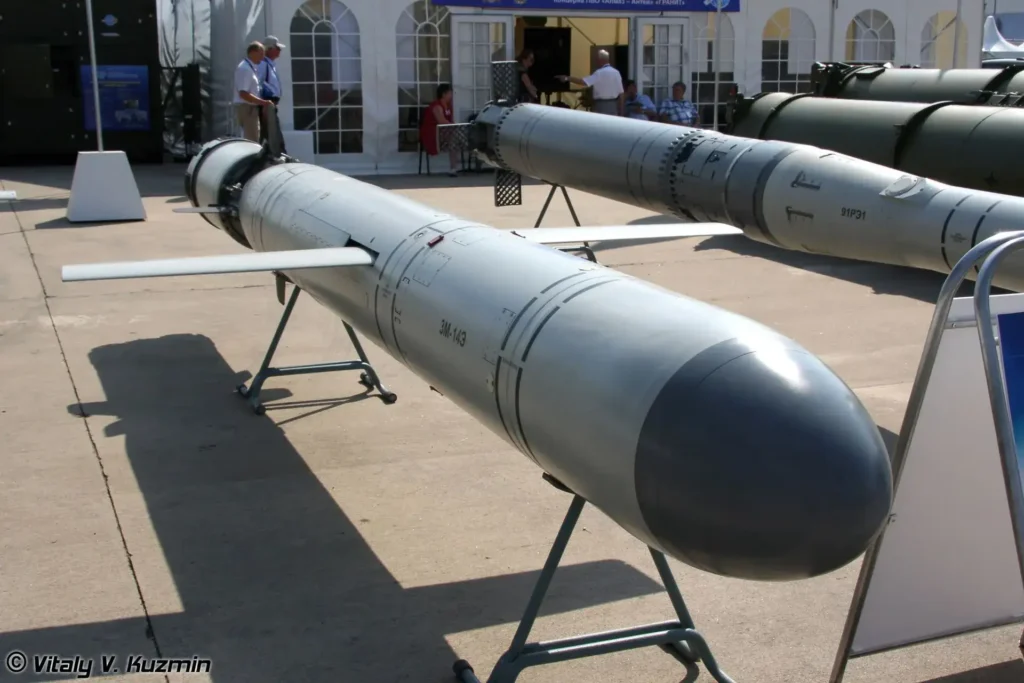
There are multiple variants of the Kalibr system. The most well-known is the 3M-14 land-attack missile, which is subsonic for most of its flight but may use a supersonic terminal stage in some versions. Another variant, the 3M-54 anti-ship missile, includes a high-speed supersonic final approach, designed to evade naval defenses. There are also versions for anti-submarine warfare, although these are less frequently discussed in Western analyses.
The Kalibr missile range varies depending on the variant and launch platform; while official figures often cite ranges of 1,500 to 2,500 kilometers, some analysts believe the true capabilities could be greater, especially for submarine-launched versions.
The Kalibr’s payload typically includes a conventional high-explosive warhead, though it’s believed to be nuclear-capable—a fact that adds another layer to its strategic value. Its guidance systems reportedly include satellite navigation (likely GLONASS-based), inertial systems, and terrain contour matching, although the level of real-time targeting precision may vary depending on the variant and operational conditions.
Its Deployment history?
The missile first grabbed international headlines in October 2015, when Russian warships in the Caspian Sea launched Kalibr missiles into Syria, striking targets over 1,500 kilometers away. This event was not only militarily significant, but also symbolic—it marked Russia’s entry into the long-range precision strike club and sent a clear message to NATO and regional powers. Since then, Kalibr missiles have been used repeatedly in the Syrian conflict, striking rebel and terrorist infrastructure, though independent assessments of effectiveness have been mixed.
More recently, Kalibr missiles have played a prominent role in Russia’s invasion of Ukraine, beginning in February 2022. They have been used to target Ukrainian military infrastructure, airfields, and even energy grids.
However, some reports suggest that Ukraine’s improving air defense systems have increasingly intercepted these missiles, raising questions about their effectiveness in contested environments. Still, their use illustrates how the Russian Kalibr missile has become a staple of modern Russian military doctrine—one that emphasizes stand-off strikes, strategic messaging, and flexible deployment.
To truly understand the long-standing dominance of the US Tomahawk cruise missile, it helps to go back to the Cold War era—when the U.S. military recognized a growing need for a weapon that could strike heavily defended targets from a long distance, with precision, and without risking pilots.
In the late 1970s and early 1980s, as the Soviet Union’s integrated air defense systems became increasingly sophisticated, the Pentagon sought a solution that could penetrate enemy airspace at low altitude and deliver a lethal blow with minimal warning. That answer came in the form of the Tomahawk missile, developed by General Dynamics and later refined by Raytheon.
Initially designed for nuclear delivery, the Tomahawk missile eventually evolved into a highly capable conventional land-attack weapon. Its key strength was its ability to fly low and slow—just under the radar—using a combination of inertial guidance, terrain contour matching, and later GPS to hit targets with surprising accuracy. This made the Tomahawk cruise missile ideal for hitting enemy radar sites, command centers, and fortified bunkers early in a conflict, often before manned aircraft were sent in.

Over the years, the Tomahawk has gone through multiple upgrades—or “Blocks”—each one reflecting changes in both technology and combat doctrine. The Block II and III versions introduced in the 1990s improved range, reduced weight, and added satellite navigation.
But it’s the more recent Block IV that has significantly enhanced the missile’s flexibility. Introduced in the early 2000s, Block IV features in-flight retargeting, loitering capability, and real-time video transmission, allowing commanders to make changes mid-flight based on updated battlefield conditions.
The latest upgrade, Block V, is said to further improve navigation accuracy and hard-target penetration, and possibly include anti-ship capabilities, hinting at a return to a more versatile role—similar in spirit to Russia’s Kalibr missile family.
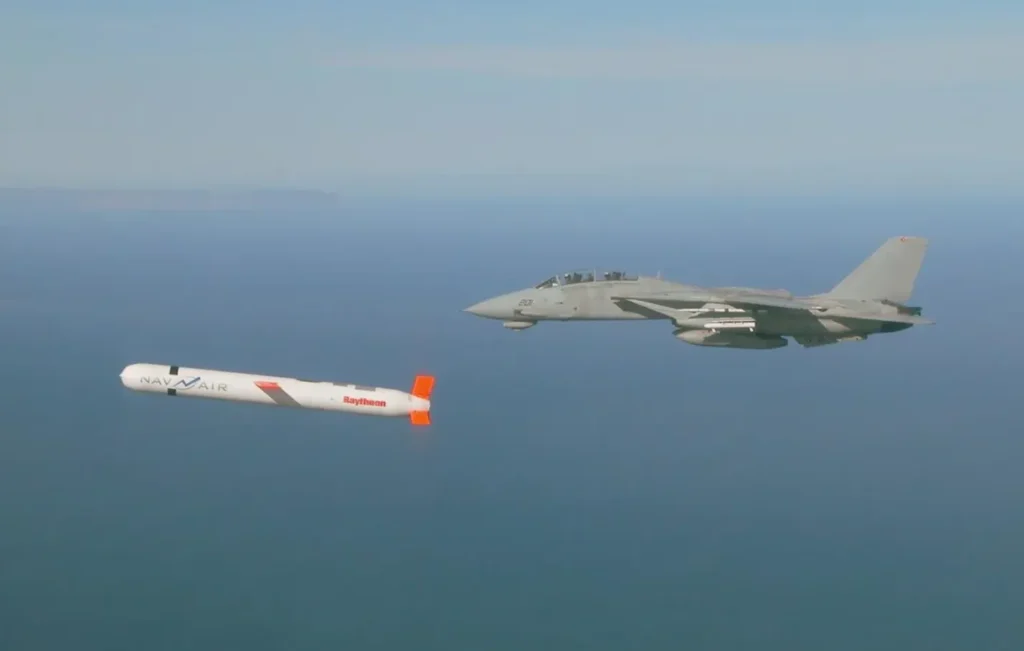
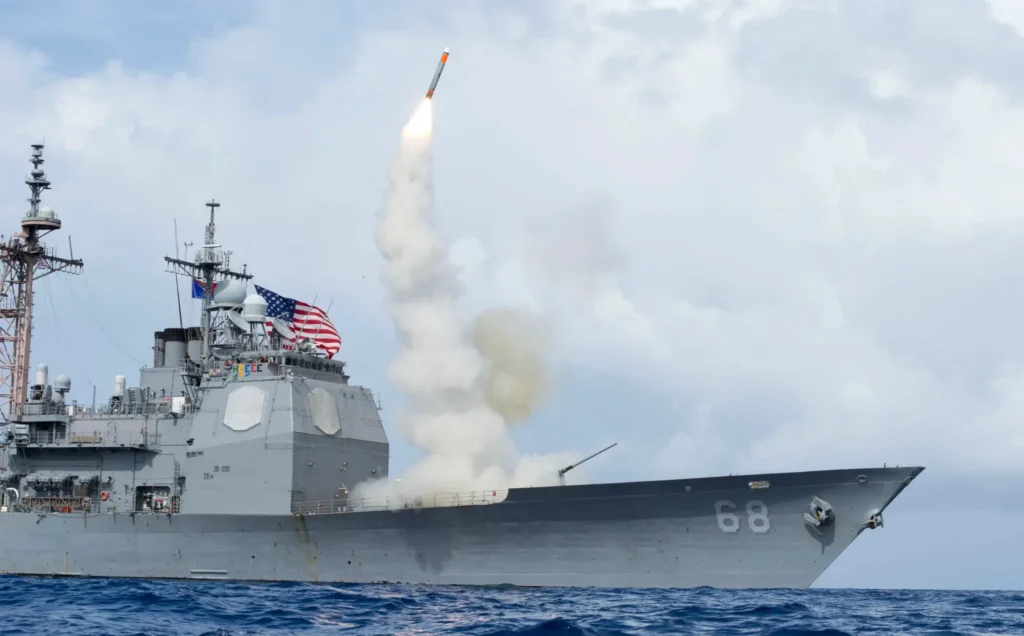
The Tomahawk’s combat record is arguably one of the most extensive of any cruise missile. It was first used in combat during Operation Desert Storm in 1991, when U.S. Navy ships launched hundreds of them against Iraqi military infrastructure.
Since then, it has been a staple in nearly every major U.S. military operation—from Kosovo and Afghanistan, to Iraq, Libya, and Syria. In 2017, for instance, the U.S. launched 59 Tomahawk missiles at a Syrian airbase in retaliation for a chemical weapons attack—underscoring the weapon’s ongoing strategic value even after more than three decades in service.
What’s also worth noting is the missile’s wide global deployment. While the Tomahawk cruise missile remains under strict US export control, a few key allies such as the United Kingdom have been allowed to purchase and operate it—most notably deploying it from Royal Navy submarines. Some have speculated that additional sales could be considered in the future, but so far, the missile remains tightly held, especially compared to how widely the F-35 has been exported.
When comparing the Tomahawk and Kalibr cruise missiles, it becomes clear that while both systems aim to fulfill similar strategic roles—long-range precision strikes from stand-off distances—their design choices reflect different doctrines, capabilities, and operational priorities.
On paper, the Tomahawk missile has long been known for its extended reach. The latest Block IV and V versions are typically cited with a range of around 1,600 to 1,700 kilometers, although some sources suggest that under certain launch conditions, this figure might be slightly higher. It was this reach that enabled the U.S. to launch Tomahawks from the Red Sea into Syria in 2017, striking a Syrian airbase from nearly 1,000 km away.
The Russian Kalibr missile, particularly the 3M-14 land-attack variant, is believed to have a comparable—or in some cases even longer—range, possibly reaching up to 2,500 kilometers for submarine-launched versions.
However, public data on the Kalibr’s full performance is limited, and there’s still debate among analysts as to whether the longer-range claims apply across all variants or are specific to certain configurations. Despite the debate, its range has been demonstrated in operations. For instance, during the Syrian conflict, Russia launched Kalibr missiles from warships in the Caspian Sea, striking targets in Syria over 1,400 km away.

In terms of accuracy, both missiles are believed to be highly precise. The Tomahawk benefits from decades of refinement, and its use of GPS guidance, inertial navigation, and terrain contour matching (TERCOM) provides an estimated circular error probable (CEP) of just a few meters.
The Kalibr missile reportedly uses a similar combination—GLONASS, inertial systems, and terrain-matching—but its real-world accuracy could vary based on conditions such as jamming, target type, and terrain. Some Western analysts suggest that Kalibr’s CEP might be slightly higher than Tomahawk’s, though exact numbers are difficult to confirm independently.
What really sets the Tomahawk apart is its real-time control. Since the Block IV, the missile can be reprogrammed in-flight, even while loitering near a target area. This was crucial during the Iraq and Afghanistan wars, where targets could change rapidly on the ground. A Tomahawk could be launched, then redirected mid-course if a higher-value target emerged—something that gave commanders tremendous flexibility in fluid combat environments.
The Kalibr, as far as publicly available data suggests, may lack that same level of dynamic control. It is believed to follow pre-programmed flight paths, possibly with some waypoint-based adjustments. While this still allows for complex mission planning, it may not offer the same “adaptive” precision the U.S. relies on for time-sensitive strikes. That said, Kalibr’s design appears to favor simplicity and range, perhaps reflecting Russia’s emphasis on hitting strategic targets at long distances in the opening phase of a conflict.
Both systems are designed to carry either conventional or nuclear warheads, depending on the mission. The standard Tomahawk payload typically consists of a 450 kg high-explosive unitary warhead, though it has in the past been configured to deliver submunitions or specialized warheads. Nuclear variants of the Tomahawk existed but were reportedly retired from U.S. service by the mid-2000s.
The Kalibr missile payload is believed to be similar in size, ranging around 400–500 kg, and likely includes both high-explosive and possibly thermobaric options, depending on the operational need. It’s also widely believed that certain Kalibr variants are nuclear-capable, which would allow Russia to use the same missile in both conventional and strategic scenarios. That dual-capability factor may give Kalibr an added layer of geopolitical weight, particularly in regional conflicts where ambiguity is part of deterrence strategy.
This is where the Kalibr missile might hold a real edge in versatility. While the Tomahawk is launched from U.S. Navy destroyers, cruisers, and submarines, Russia has demonstrated a more flexible approach.
Kalibrs have been fired from submarines in the Black Sea, small corvettes, and even containerized platforms like the Club-K system—a system disguised inside a standard cargo container that can theoretically be deployed on trucks or merchant vessels. While it’s unclear how widely deployed or tested this “hidden” version really is, the concept challenges traditional notions of where a cruise missile threat can come from.
The Tomahawk, on the other hand, has not been deployed from land or air platforms, partly due to past arms control treaties like the INF Treaty (which the U.S. withdrew from in 2019). However, recent shifts in U.S. doctrine and treaty policy may open the door to land-based Tomahawk batteries, as has already been signaled in the Indo-Pacific region to counter Chinese A2/AD strategies.
So how do these cruise missiles really perform when the safety of theory meets the chaos of the battlefield? It’s one thing to look at specs and charts—but what happens when you actually launch them in combat?
The Kalibr cruise missile first unveiled to the world in dramatic fashion in October 2015. Russia launched a volley of 26 Kalibr missiles from ships in the Caspian Sea, targeting ISIS positions in Syria, nearly 1,500 kilometers away. The strike made headlines not only for its distance, but for the element of surprise—it marked one of the first times Russia had used long-range precision weapons in combat.
However, U.S. officials later suggested that a few of those missiles may have fallen short or malfunctioned, though Russia claimed full success. The symbolic impact, however, was clear: Russia had entered the precision-strike game in earnest.
Since then, Kalibr missiles have been used multiple times during Russia’s involvement in Ukraine, particularly during 2022 and 2023, targeting military infrastructure, energy grids, and command centers. Some assessments suggest that Kalibr has had mixed effectiveness—capable of bypassing some defenses, but increasingly vulnerable to modern air defenses like Patriot and NASAMS. Moreover, there are occasional reports of missile degradation in storage or manufacturing inconsistencies that may affect their reliability over time.
In contrast, the Tomahawk cruise missile has a much longer combat résumé. Since its first use in 1991 during Operation Desert Storm, the Tomahawk has reportedly been launched more than 2,300 times—arguably making it the most combat-tested cruise missile in history. Notable operations include the 1998 strikes on Sudan and Afghanistan, the opening salvos of the 2003 Iraq War, and the 2011 Libya intervention.
One prominent example came in April 2017, when the U.S. Navy launched 59 Tomahawks at Syria’s Shayrat Airbase in response to a chemical attack. U.S. military sources stated that a majority of the missiles hit their intended targets with high precision, though independent observers have occasionally questioned the extent of damage caused.
In terms of success rate, the Tomahawk has generally been cited as having a strike accuracy of over 85%, depending on the variant and context. The Block IV version—introduced in the early 2000s—is credited with improved GPS guidance, loitering capability, and the ability to retarget mid-flight. This has made it highly effective in dynamic environments like Afghanistan and Iraq, where the battlefield can change rapidly.
Kalibr’s success rate is harder to pin down. Russian sources often claim near-perfect performance, but independent data is limited and sometimes contradictory. Western defense analysts suggest that Kalibr missiles have experienced some targeting inconsistencies, especially when used against hardened or mobile targets in Ukraine. Ukrainian air defense forces have reported shooting down dozens of Kalibrs during coordinated strikes—though it’s worth noting that no missile system is 100% survivable, especially in dense air defense zones.
Also worth mentioning is that both missiles face limitations. Tomahawks, for instance, rely on GPS and pre-programmed routes, which could be vulnerable to jamming or spoofing in highly contested electronic warfare environments. Kalibr, while versatile in launch platforms, may face longer pre-launch setup times and questions about targeting precision—especially in fast-moving operational scenarios.