Follow Us:
Follow Us:

In the early hours of April 14, 2025, sirens wailed across Tel Aviv, Jerusalem, and Haifa. Within moments, streaks of light arced across the night sky, interceptor missiles racing toward dozens of incoming threats. Iran had just launched its largest-ever coordinated missile and drone barrage against Israel, targeting military bases, communication hubs, and even urban centers.
In response, Israeli defense systems reportedly intercepted a large portion of the incoming threats, including ballistic missiles, cruise missiles, and UAVs. Incidents like these have once again drawn global attention to the capabilities, and limits, of Israel’s missile defense systems, what many analysts refer to as a multi-layered air defense network.
But how exactly does this multi-layered air defense network work? What threats is it designed to counter? And how strong is Israel’s missile shield really?
Broadly speaking, Israel’s missile defense systems are designed to counter a wide spectrum of incoming threats, ranging from relatively low-tech, unguided rockets to far more advanced ballistic missiles potentially launched from long distances, including from Iran.
The systems also aim to intercept cruise missiles and unmanned aerial vehicles (UAVs), threats that are increasingly being used in both state and non-state attacks.
To deal with this variety, Israel has built what many experts describe as a multi-layered air defense architecture. For example:
Of course, no missile defense is perfect. These systems are generally seen as a way to reduce damage and save lives, rather than eliminate all threats.
The concept behind Israel’s missile defense approach is often described as multi-layered, meaning that it doesn’t rely on a single system to intercept all threats.
Instead, it’s a network of different platforms, each designed to deal with specific types of attacks based on their speed, altitude, and range, working in coordination to create overlapping zones of protection.
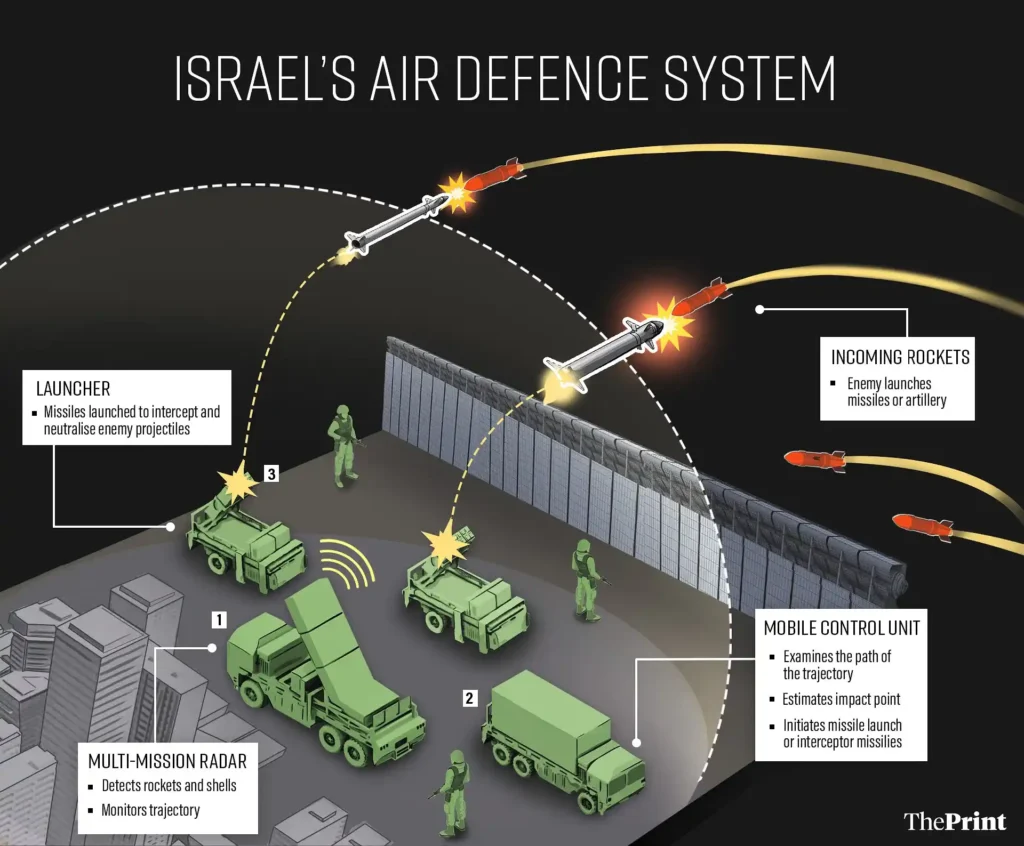
When a missile or UAV is launched toward Israeli airspace, whether from Gaza, Lebanon, Syria, or potentially Iran, the process typically begins with detection.
Ground-based and airborne radar systems, often linked through Israel’s broader command and control network, attempt to identify the type of projectile, its trajectory, and estimated impact point within seconds. This initial classification is crucial: it determines not only whether the threat is real, but also which defense system should respond.

If the incoming object is a short-range rocket, perhaps fired from Gaza or southern Lebanon, and is headed toward a populated area or critical infrastructure, the Iron Dome system is likely the first to engage. Its radar tracks the projectile, while its command software calculates whether interception is necessary. If so, an interceptor is fired, typically destroying the rocket mid-air, sometimes just seconds before impact.
But if the threat is more advanced, say a cruise missile or longer-range rocket, possibly originating from Syria or fired by Hezbollah, then a different layer comes into play. This is where David’s Sling may be activated. It’s designed to handle faster, more maneuverable targets that fly at lower altitudes than traditional ballistic missiles but pose a greater challenge than unguided rockets.
Meanwhile, for threats traveling at high altitudes and speeds, like ballistic missiles launched from Iran—the Arrow missile defense system is considered the last line of strategic defense.
The Arrow 2 is capable of intercepting missiles within the atmosphere, while Arrow 3 is reportedly able to strike them outside the Earth’s atmosphere during their mid-course phase, long before they re-enter.

What’s particularly notable is how these systems are designed to interact rather than operate in isolation. For instance, if one system fails to intercept a threat, another, if in range and capable, may serve as a backup.
There’s also a degree of centralized coordination, where decision-making about which system should engage is automated and based on data fusion across radar, satellite, and command networks. This interconnectedness is key to managing complex, multi-directional missile attacks, such as those involving simultaneous launches from different fronts.
The goal of this structure isn’t to achieve a perfect seal over Israeli airspace, which most experts agree is not practically possible, but to maximize the likelihood of interception where it matters most: over cities, strategic facilities, and military assets.
And while the system has reportedly shown a high success rate in recent conflicts, it continues to be tested as adversaries evolve their tactics, using larger barrages, decoys, and increasingly sophisticated drones or missiles.
If there’s one system that has become almost synonymous with Israel’s air defense, it’s the Iron Dome. Images of its white smoke trails intercepting rockets midair have been widely shared during periods of conflict, especially in the south of Israel.
The idea for Iron Dome reportedly gained traction in the early 2000s, during and after the 2006 Lebanon War. At the time, Hezbollah launched thousands of short- and medium-range rockets into northern Israel, exposing a serious gap in Israel’s ability to protect its civilian population.
A few years earlier, in the early 2000s, Hamas had already begun using Qassam rockets from Gaza to target southern towns like Sderot, putting civilians under frequent threat.
By 2007, after significant internal debate and public pressure, Israel officially selected Rafael Advanced Defense Systems to develop a solution. The result was Iron Dome, which became operational by 2011, a relatively fast turnaround, considering the scale of the challenge.
The system was designed specifically to counter short-range threats, such as unguided rockets, mortars, and artillery shells, especially those with flight times of less than a minute.
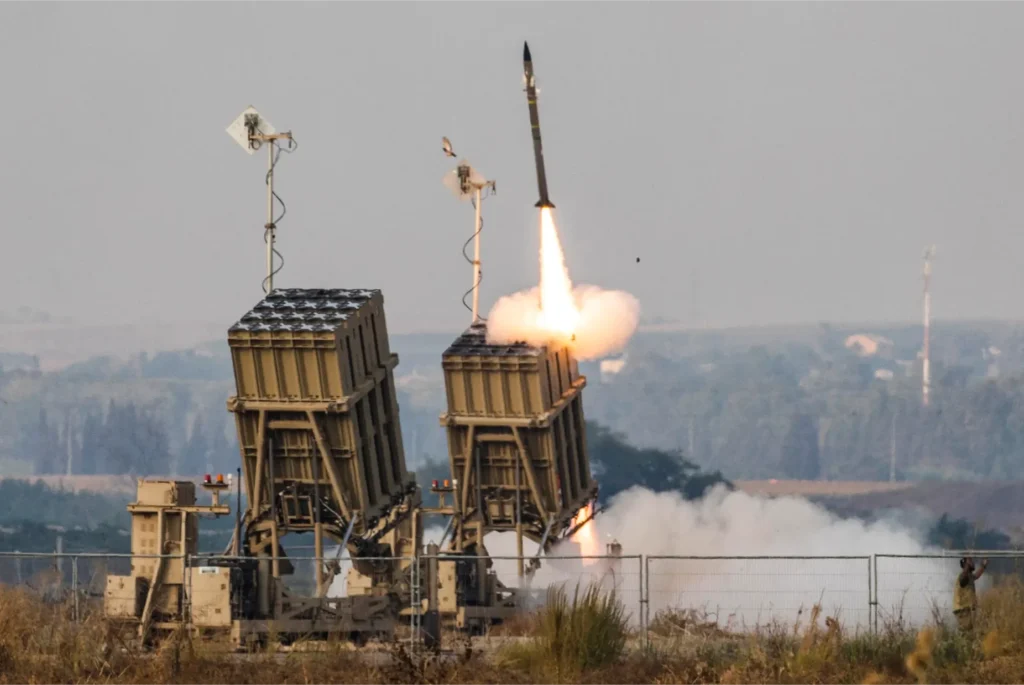
Iron Dome is built around three core components: a detection and tracking radar, a battle management and weapon control unit, and the Tamir interceptor missile. When a rocket is launched, the radar detects it almost instantly.
The system’s software then calculates its trajectory to assess whether the rocket poses a threat, say, to a populated area. If not, Iron Dome conserves resources and doesn’t engage. If it is a threat, an interceptor is launched to destroy the rocket midair, usually outside urban zones.
According to Israeli sources and some independent analysts, Iron Dome has achieved high interception rates, often cited as 85% to 90%, particularly during conflicts like Operation Pillar of Defense (2012), Operation Protective Edge (2014), and more recently during flare-ups in 2021, 2023, and 2024–2025. During those escalations, Hamas and Islamic Jihad reportedly fired thousands of rockets toward cities like Ashdod, Beersheba, and Tel Aviv.
In those cases, Iron Dome appeared to dramatically reduce the number of casualties and infrastructure damage, especially when compared to earlier conflicts.
For example, during a particularly intense three-day escalation in 2023, over 1,000 rockets were launched from Gaza, and the system reportedly intercepted hundreds of them, with many of the rest falling harmlessly in open areas.
However, it’s worth noting that the system isn’t foolproof. It has operational limits, especially when faced with mass salvos designed to overwhelm it. While it prioritizes rockets that threaten populated zones, some projectiles may still get through, particularly if the rate of fire is very high or if decoys are used to confuse the radar.
Recognizing these challenges, Israel has reportedly upgraded Iron Dome’s software and interception logic multiple times. Some versions are now believed to be more capable of handling UAVs (drones) and small cruise missiles, expanding the system’s role beyond just traditional rockets.
The system has also been integrated into Israel’s broader missile defense network, allowing it to communicate with David’s Sling and Arrow systems for improved coordination.
While much attention has gone to the Iron Dome for intercepting short-range rockets, David’s Sling was developed to address a very different kind of threat, cruise missiles and large-caliber rockets that can travel farther, strike harder, and potentially carry heavier payloads.
In Israel’s broader multi-layered air defense strategy, David’s Sling plays a crucial role in bridging the gap between the low-altitude Iron Dome and the high-altitude Arrow missile system.
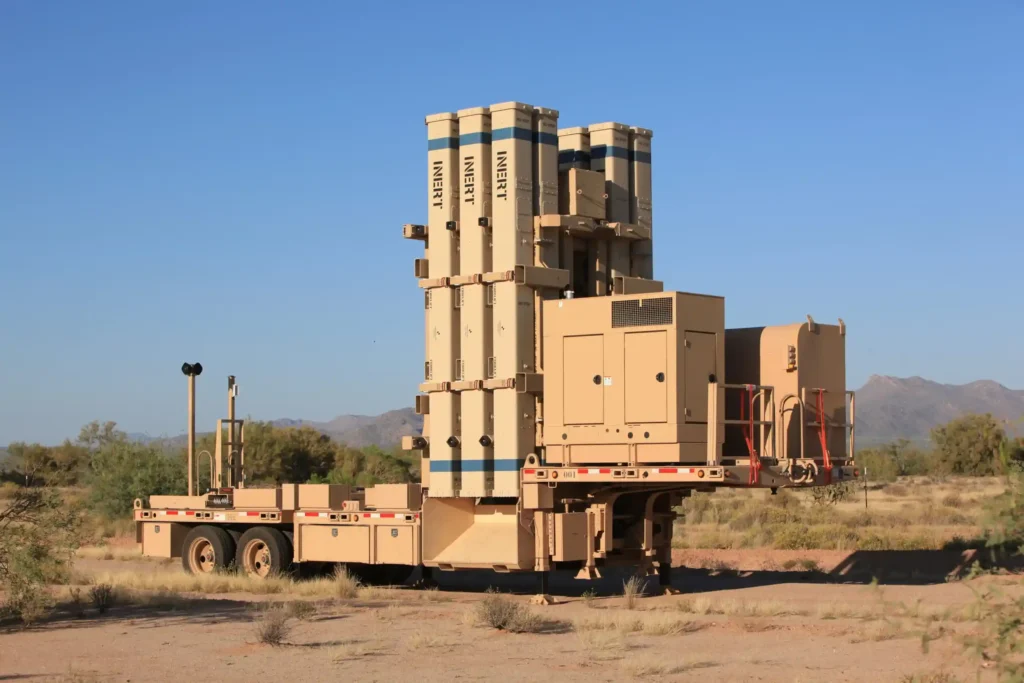
The idea for David’s Sling reportedly emerged in the mid-to-late 2000s, as Israeli defense planners began to realize that they needed a dedicated response to medium- to long-range threats, the kind that could come from Iranian proxy militias like Hezbollah in Lebanon or even further afield.
After the 2006 Lebanon War, in which Hezbollah reportedly launched long-range Zelzal and Fajr rockets, there was growing concern that existing systems couldn’t reliably intercept such weapons.
In response, Israel partnered with the United States to co-develop a new system. Work officially began around 2006–2008, with the system jointly developed by Rafael Advanced Defense Systems (Israel) and Raytheon Technologies (U.S.). After years of testing and refinement, David’s Sling became operational in 2017.
David’s Sling is not intended for short-range, improvised rockets, those are already handled by the Iron Dome. Instead, it’s specifically designed to intercept cruise missiles, heavy artillery rockets, and quasi-ballistic missiles that fly at medium to long ranges.
These weapons, which can be launched from several hundred kilometers away, may be more accurate and carry more destructive potential. The system reportedly also aims to engage air-breathing threats, such as some types of UAVs, which are increasingly used by non-state actors and state-backed militias in the region.
David’s Sling uses an interceptor missile known as the Stunner, which employs an advanced seeker to home in on its target. Unlike some traditional missiles, the Stunner does not use an explosive warhead but rather relies on a hit-to-kill mechanism, essentially destroying the threat through direct collision at high speed.
David’s Sling sits between Iron Dome and Arrow in Israel’s multi-layered air defense. The idea is that each system doesn’t operate in isolation but instead contributes to a comprehensive missile shield, what some describe as a “dome within a dome” setup. Radar, control centers, and interceptor batteries are all interconnected, allowing real-time decision-making on which system should engage which threat.
At the highest tier of Israel’s multilayered missile defense system sit two highly specialized platforms: Arrow 2 and Arrow 3. These are not designed for short-range rockets or cruise missiles but are instead intended to counter one of the most serious, and potentially catastrophic, types of threats Israel faces: long-range ballistic missiles, particularly those potentially carrying unconventional warheads.

The Arrow missile system dates back to the 1991 Gulf War, when Iraqi Scud missiles targeted Israel. Although the U.S. deployed Patriot systems at the time, the experience reportedly exposed gaps in interception capabilities against high-velocity, long-range threats.
In response, Israel, again in close partnership with the United States—initiated the development of a domestic system that could provide early, high-altitude interception of ballistic threats.
The result was the Arrow 2, which became operational in the early 2000s. It was specifically engineered to intercept ballistic missiles in their terminal phase, just before they re-enter the atmosphere and strike.
The system reportedly focuses on threats such as Iran’s Shahab-3, a medium-range ballistic missile that, according to various sources, could potentially carry both conventional and non-conventional payloads.
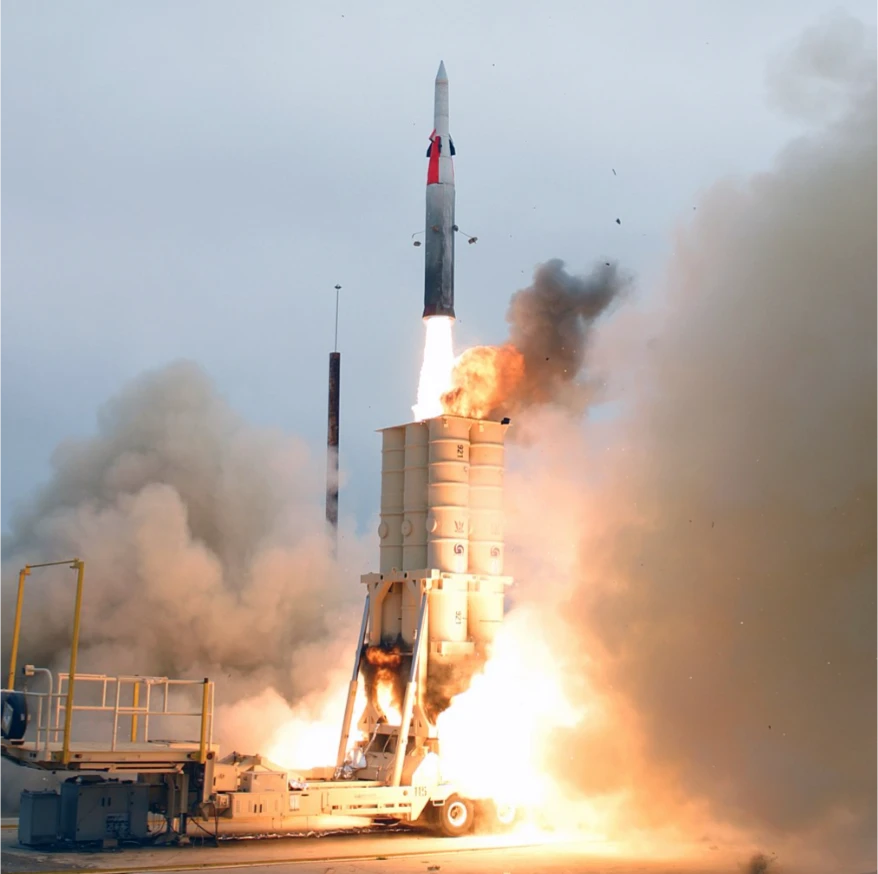
As the regional missile threat landscape evolved, particularly with Iran’s expanding missile arsenal, the need for a higher-altitude interception layer led to the development of Arrow 3.
Unlike Arrow 2, which intercepts targets within the atmosphere, Arrow 3 is designed to operate in space—what experts call exo-atmospheric interception. This means it attempts to destroy incoming ballistic missiles outside of Earth’s atmosphere, during their midcourse phase, before they descend toward their targets.
The advantage here is strategic: by intercepting a missile early, before it separates into potential submunitions or before a possible nuclear, biological, or chemical warhead reenters, the system aims to neutralize the threat at a safer distance, well away from populated areas.
This makes Arrow 3 particularly relevant when discussing the Iran missile threat to Israel. Iran has reportedly developed and tested a range of long-range systems, some of which could theoretically reach deep into Israeli territory.
Systems like the Shahab-3, Khorramshahr, or other variants are often cited in open-source intelligence as possible drivers behind Arrow 3’s continued evolution.
As with any advanced missile defense platform, details about real-world performance are limited, and testing under combat conditions has been relatively rare.
However, both Arrow 2 and Arrow 3 have undergone numerous live-fire tests, including intercept trials over the Mediterranean and joint U.S.-Israeli tests. Some reports suggest successful interceptions of target missiles simulating real-world threats.
In November 2023, Arrow 3 was reportedly used for the first time in an operational context when a long-range missile fired from Yemen, allegedly of Iranian origin, was intercepted outside Israeli airspace. While official details remain scarce, this marked what many analysts saw as a validation of Arrow 3’s exo-atmospheric capabilities.
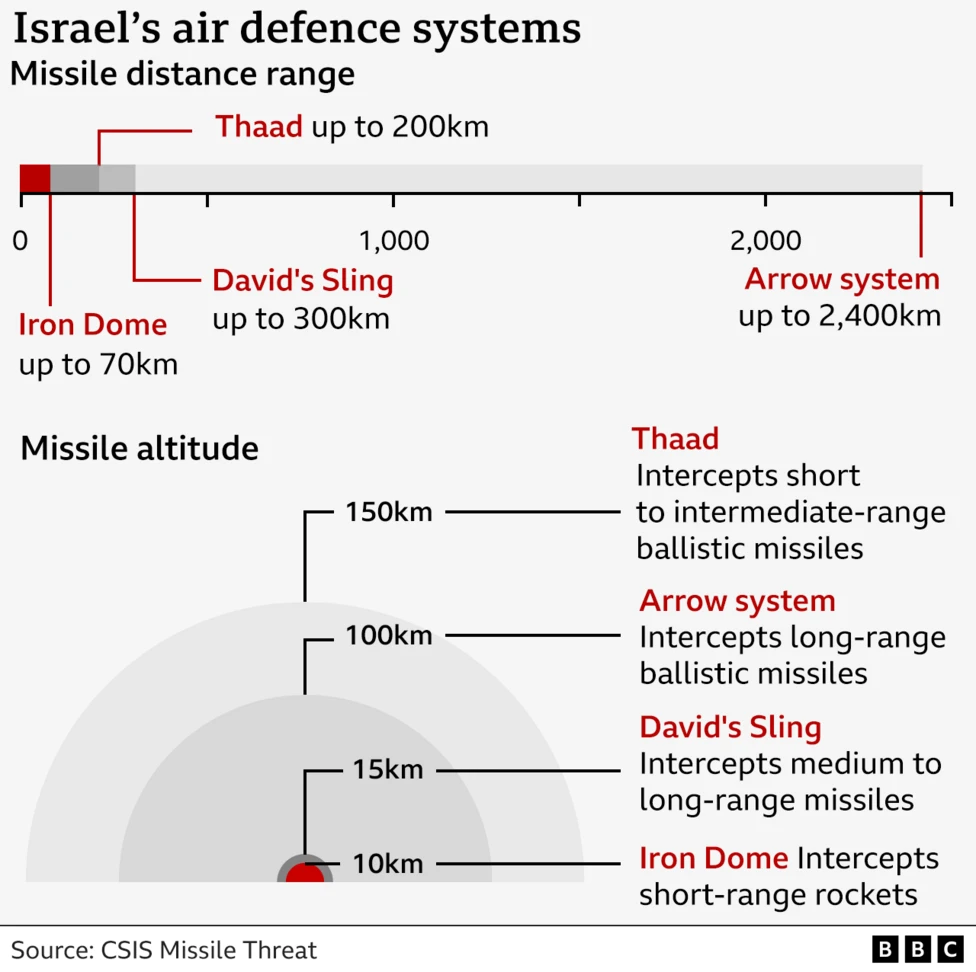
Beyond its well-known layered systems like Iron Dome, David’s Sling, and the Arrow missile system, Israel has also developed, or acquired, additional missile defense capabilities that could play increasingly important roles in future conflicts.
One of the most talked-about developments in recent years is the Iron Beam, a laser-based missile defense system that Israel has been working on for over a decade.
Still considered experimental by some standards, Iron Beam is designed to intercept short-range rockets, mortars, and drones using a directed-energy laser instead of a kinetic missile.
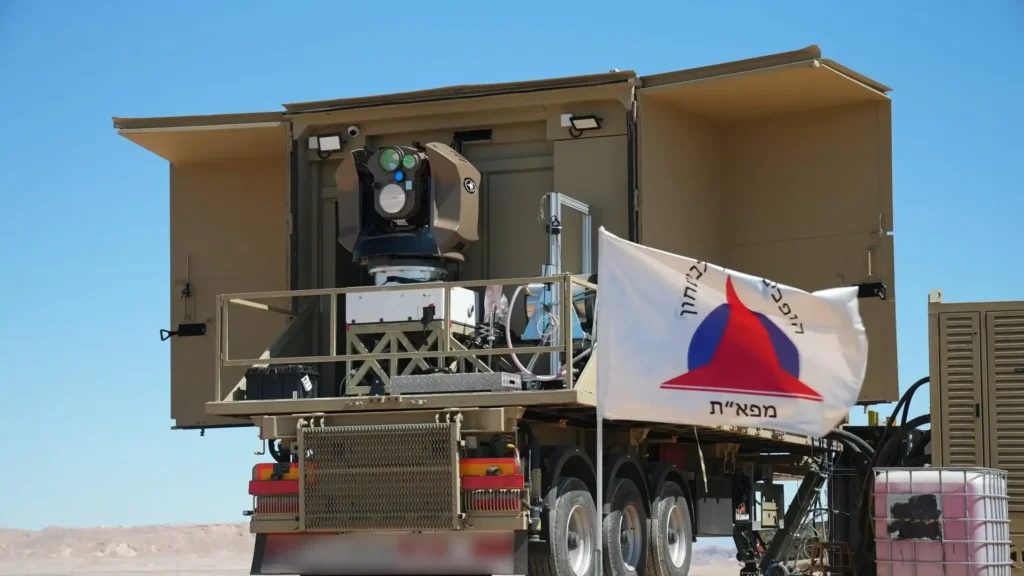
The core idea is that lasers, once operationally viable, could provide a cost-effective solution to saturating rocket barrages, which have posed serious challenges in recent years. While kinetic interceptors like Iron Dome cost tens of thousands of dollars per shot, Iron Beam could, in theory, fire at a fraction of that cost.
Reports from early 2022 and onward suggested that Israel had conducted successful ground-based trials of the Iron Beam system.
And although it has not yet been fully deployed, there are indications that it may soon be integrated into Israel’s broader multi-layered air defense architecture, possibly as an adjunct to Iron Dome to handle high-volume attacks from militant groups using inexpensive, homemade rockets.
Another system that fits into this broader defensive network is the Barak missile family, developed by Israel Aerospace Industries (IAI).
Originally designed for naval use, the Barak-8 in particular has evolved into a medium-range surface-to-air missile system that is now deployed on both Israeli ships and land-based launchers.
The Barak system reportedly offers flexibility in intercepting aerial threats, including cruise missiles and aircraft, and may serve as a useful supplement to David’s Sling in certain operational contexts.
Israel’s missile defense also continues to benefit from its long-standing partnership with the United States, particularly through the deployment of Patriot missile defense batteries.
While these systems are considered older and were originally designed to intercept aircraft, the Patriot has since been upgraded to counter ballistic and cruise missiles as well.
Patriot batteries are not always active in Israel, but they are sometimes deployed during periods of heightened tension, including in past operations where Iran missile threats were deemed credible.