Follow Us:

Follow Us:


Defense Feeds, London – The UK ground-launched strike weapon program is emerging as one of Europe’s most ambitious efforts to provide Ukraine with an indigenous long-range precision strike capability.
According to reports, British industry is developing a new ground-launched weapon capable of reaching targets at distances of up to 500 kilometers while deliberately avoiding the use of U.S.-origin components that could trigger export restrictions or approval requirements.
The initiative reflects a growing trend among European nations seeking greater autonomy in defense production while continuing to support Ukraine’s long-term military requirements. It also highlights the increasing importance of deep-strike capabilities in modern warfare, where the ability to engage targets far behind front lines has become a decisive operational advantage.
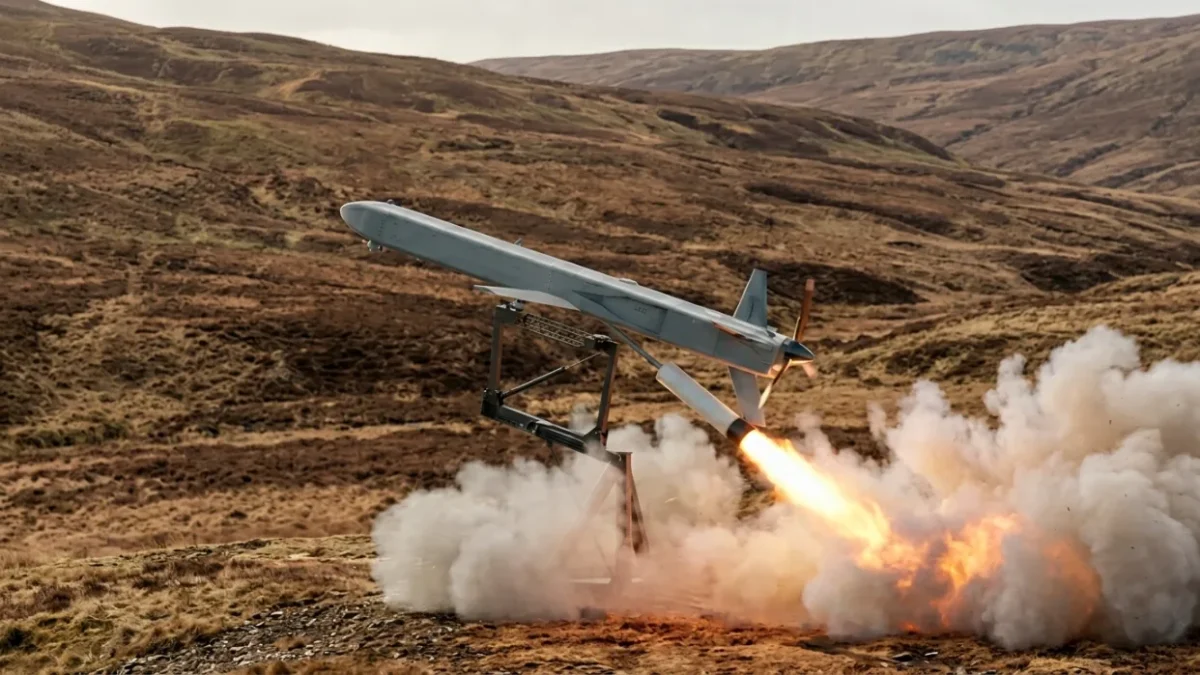
The development of the UK ground launched strike weapon comes as European defense industries accelerate efforts to expand missile production and reduce dependency on external supply chains. By excluding U.S.-made components, British developers aim to simplify export procedures and ensure greater flexibility regarding future deliveries.
This approach has gained attention because many advanced weapons systems contain components subject to U.S. International Traffic in Arms Regulations (ITAR), which can require additional approvals before export or transfer to third parties. Designing a weapon free from those restrictions provides greater freedom for future procurement and deployment decisions.
The proposed system is intended to give Ukraine a long-range strike capability capable of engaging military infrastructure, logistics hubs and command facilities well beyond the immediate battlefield. Such weapons have become increasingly important as both sides in the conflict seek to disrupt supply networks and operational planning centers.
The project also demonstrates how the conflict in Ukraine continues to influence defense priorities across Europe, driving demand for systems that combine range, precision and rapid production potential.

One of the most significant aspects of the program is the reported range of approximately 500 kilometers. This would place the system among the longer-range ground-launched strike weapons currently being developed in Europe and provide military planners with greater operational flexibility.
Long-range strike systems have become increasingly valuable because they allow forces to engage targets without exposing aircraft or frontline units to elevated risk. Precision-guided weapons capable of reaching strategic locations can disrupt logistics networks, command structures and military support facilities that sustain combat operations.
The weapon is expected to employ modern guidance technologies designed to improve accuracy while maintaining effectiveness over extended distances. Such capabilities have become a priority for militaries seeking to maximize operational impact while minimizing ammunition expenditure.
The focus on indigenous development also reflects broader European efforts to strengthen domestic defense industrial capacity. Governments across the continent are investing heavily in missile production, ammunition manufacturing and advanced weapons programs to ensure long-term security and resilience.
For Ukraine, access to additional long-range precision strike capabilities could provide new options for targeting military assets beyond the front line while reducing reliance on a limited number of existing systems.
The UK ground launched strike weapon initiative highlights a broader transformation in European defense policy. The war in Ukraine has exposed gaps in missile inventories and production capacity, prompting governments to accelerate investment in domestic defense industries and long-range strike technologies.
Britain’s decision to pursue a system free from U.S. components reflects a growing desire among some European nations to retain greater control over defense exports and military assistance programs. This approach could become increasingly common as countries seek to streamline procurement and delivery processes.
From a military perspective, long-range strike systems are becoming a core element of modern deterrence strategies. The ability to threaten critical infrastructure and operational support networks at significant distances can influence adversary planning and complicate military operations.
The program also underscores the continued evolution of support for Ukraine. Rather than focusing solely on immediate battlefield requirements, allied nations are increasingly investing in capabilities designed to provide long-term operational advantages.
If successfully developed and fielded, the new weapon could strengthen Ukraine’s deep-strike capacity while reinforcing Europe’s growing role in advanced missile development. Beyond its immediate military significance, the project illustrates how defense industrial independence, strategic autonomy and long-range precision strike capabilities are becoming increasingly interconnected elements of European security planning.