Follow Us:
Follow Us:


Defense Feeds – B-21 Raider Bomber is set to propel the U.S. Air Force into a new era of long-range strike capability.
This advanced stealth bomber combines cutting-edge technology with the promise of transformative combat advantages.
However, Air Force leaders stress that the real game-changer will be deploying a large fleet of B-21 Raider Bombers over the coming years.
This approach contrasts sharply with the existing bomber fleet, which has long relied on a limited number of aging platforms like the B-2 Spirit.
Maj. Gen. Jason Armagost, commander of the Eighth Air Force—which oversees the U.S. bomber fleet, including the B-2, B-1, and B-52—has expressed particular enthusiasm about the B-21’s potential, rooted in sheer numbers.
The Air Force plans to acquire at least 100 Raiders, although discussions among senior officials indicate an ideal fleet size could be closer to 145 to better support sustained operations and diverse mission requirements.
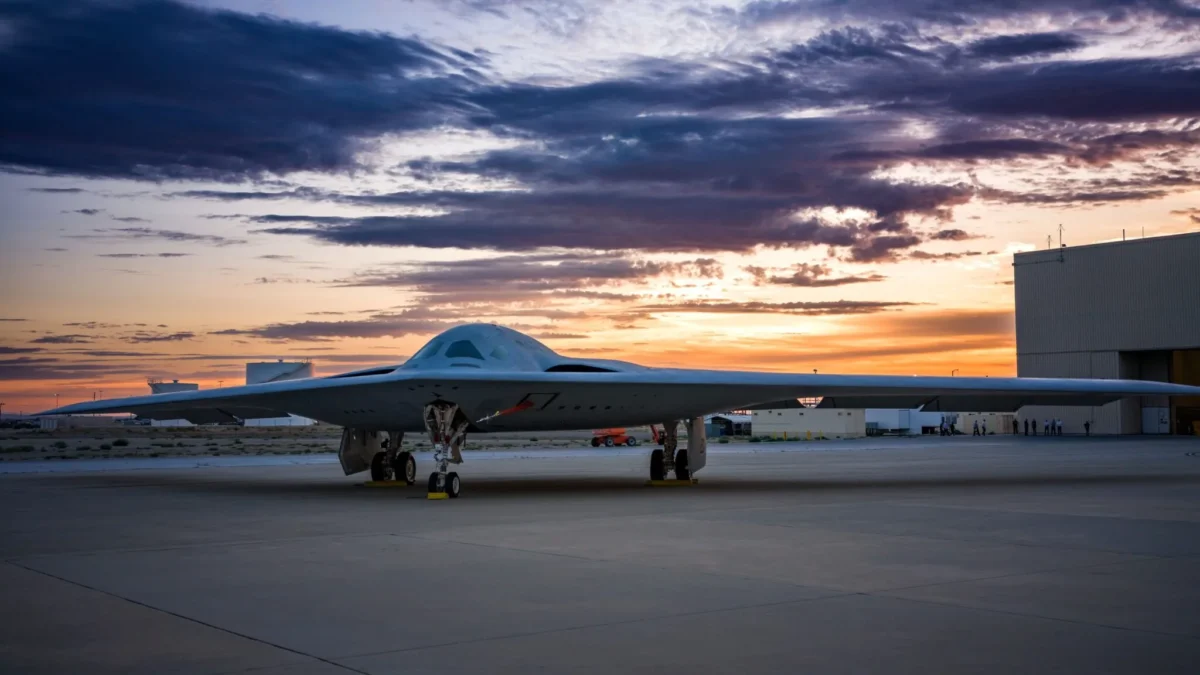
Currently, only one pre-production B-21 is in flight testing, with a second expected soon. At least four more are in production, alongside several non-flying test airframes supporting trials and system development.
The Raider will eventually replace the 19 remaining B-2 stealth bombers and over 40 B-1 bombers that make up the aging backbone of the strategic bomber force.
The Raider is designed not only as a stealth bomber but as a multifunctional platform equipped with intelligence, surveillance, reconnaissance (ISR), electronic warfare, and networking capabilities.
It is smaller than the B-2 and will carry fewer weapons per sortie, but its advanced technology, longer unrefueled range, and lower maintenance requirements signal a promising shift toward higher operational tempos and greater mission flexibility.
Armagost highlighted the importance of the B-21’s ability to be produced and deployed in large numbers when discussing lessons learned from recent air operations.
Operation Midnight Hammer, the coordinated strikes on Iran’s nuclear facilities, showcased the vital role of the B-2 but also the risks posed by having so few stealth bombers available.
Seven B-2 bombers, representing more than a third of the total fleet, performed extensive global missions along with 14 aviators during this operation.
Yet the entire strike package involved 125 aircraft, demonstrating how much strain is placed on a limited force. Watch the B-21 in action:
The small B-2 fleet size not only raises concerns about sustainability under high operational demands but challenges the Air Force’s ability to conduct multiple, simultaneous missions or maintain persistent forward presence.
The B-21 fleet’s larger size and planned enhanced reliability will provide much-needed operational flexibility and unpredictability—key attributes in contested environments, especially in deterrence scenarios involving nuclear strikes or high-end conflicts with near-peer adversaries like China.
Armagost also stressed the necessity of “organic kill chains”—a capability for bombers to operate independently without relying on vulnerable external networks.
This resilience is critical for nuclear-capable aircraft tasked with penetrating denied airspace during worst-case scenarios involving adversary attacks on communications, GPS, or space-based assets.
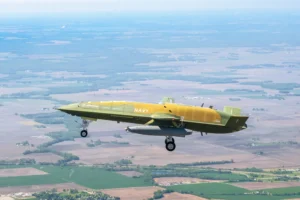
The B-21 Raider is part of a broader Long-Range Strike (LRS) ecosystem that includes classified programs such as the forthcoming F-47 sixth-generation stealth fighter and the Long Range Stand Off (LRSO) nuclear-armed cruise missile. T
ogether, they represent a new campaign force built to penetrate contested environments through a mix of stealth, range, advanced sensors, electronic warfare, and collaborative unmanned assets.
For the U.S. Air Force, the Raider not only extends the reach and lethality of America’s strategic bomber fleets but also ensures a more agile response capability across multiple theaters worldwide.
Armagost’s vision is clear: building out the B-21 force will allow for a sustained campaign tempo that offers multiple options to confront evolving threats, hold multiple adversaries at risk, and maintain global power projection.
Ellsworth Air Force Base in South Dakota has been designated as the first operational home for the B-21.
This base currently hosts B-1 bombers, which the Raiders will gradually replace.
Initial operational B-21 crews will likely include aviators who have trained on the pre-production test fleet, ensuring a seamless transition to frontline service.
In summary, while the B-21 Raider boasts game-changing stealth, range, and multi-role capabilities, it is the Air Force’s investment in growing a sizable, sustainable bomber fleet that will solidify America’s strategic edge in the decades ahead.
The coming years will see the Raider not just as an aircraft but the cornerstone of a new generation of long-range strike power, ready to meet complex global challenges with unprecedented flexibility and firepower.