Follow Us:
Follow Us:

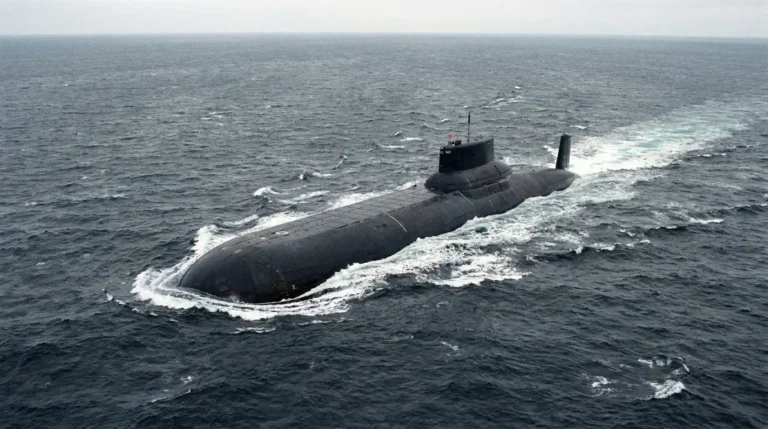
If you’ve ever been curious about what could be the ultimate underwater leviathan, the typhoon-class submarine is one of those machines that almost sounds like sci-fi until you dig into the real history.
Picture a vessel so massive that when it was laid down in the late 1970s, it set records for submarine size and length, yet also carried loads of strategic firepower.
Built by the Soviet Union and later operated by Russia, the Russian Typhoon-class submarine became famous not just for being the biggest ballistic missile sub ever commissioned, but for its oddball features (think of spaces inside a Typhoon-class submarine that resembled a small floating city more than a cramped war machine).

Even today, the idea of what the typhoon-class submarine interior looked like fuels all kinds of fascination and speculation.
There aren’t regular headlines about Typhoons anymore; the last of the line, Dmitry Donskoy, was officially retired a couple of years ago after decades in service, and Russia is talking about turning her into a museum piece in Saint Petersburg.
Meanwhile, fresh tensions in naval affairs, like recent Black Sea underwater drone strikes on submarines and expanding undersea fleets, keep submarines in general firmly on the global security radar.
To really understand what makes the Typhoon-class submarine such a legend, you kind of have to look at the sheer desperation of the late 1970s arms race. It was the Soviet Union’s answer to a very Cold War question: how do we make sure our nuclear deterrent survives no matter what?
Back in the late 1970s and early 1980s, the USSR was deeply worried that its ballistic-missile submarines might be tracked or destroyed before they could do their job.
So instead of going smaller or stealthier first, Soviet designers went… bigger. Much bigger. The result was what many people still describe as the largest submarine ever put to sea.
Officially known in Russia as Project 941 Akula (which actually means “Shark”), the West gave it the “Typhoon” nickname, reportedly after a speech where Leonid Brezhnev hinted at a new, terrifying weapon.
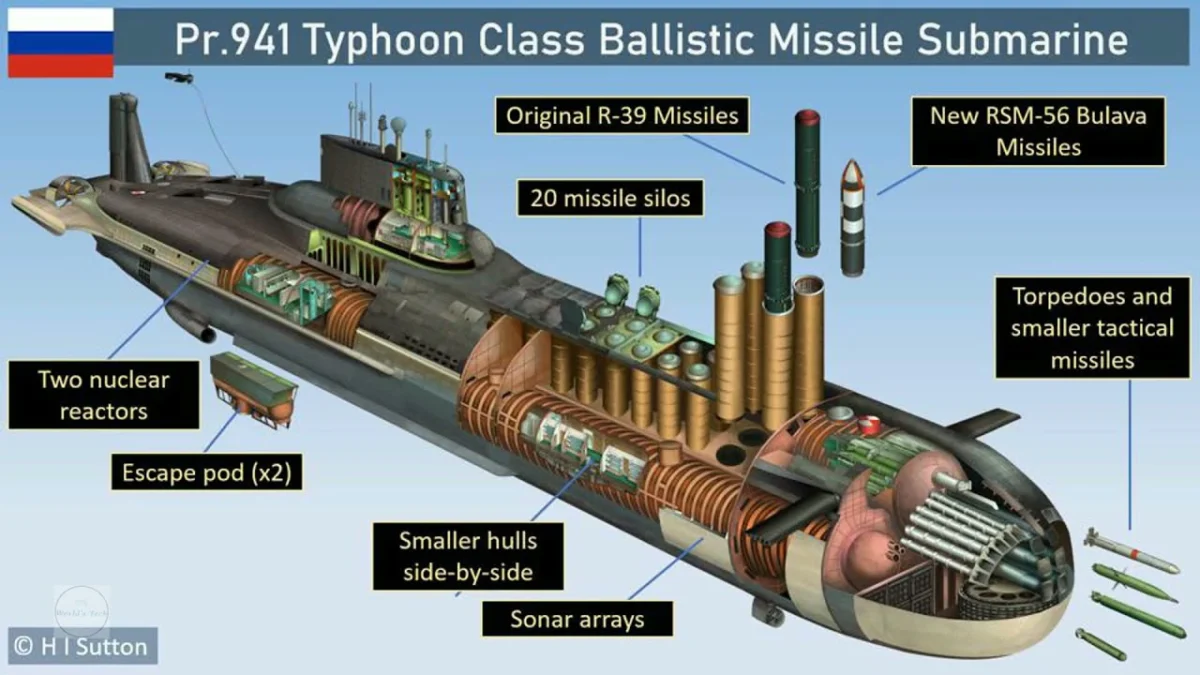
The Russian Typhoon-class submarine’s massive size and unusual multi-hull design were meant to keep it operational under Arctic ice, far from enemy fleets. From a deterrence point of view, that mattered a lot: if a submarine could hide under ice caps and still launch missiles, it became extremely hard to neutralize. That uncertainty alone was part of the strategy.
Read also: Top 5 Biggest Submarines in the World Ever Built
In practical terms, the Typhoon sat at the heart of Soviet second-strike doctrine. If the worst ever happened, these boats were designed to survive long enough to respond.
That’s why everything about them feels overbuilt, from the typhoon-class submarine length to the internal layout inside a Typhoon-class submarine, which famously included more space and redundancy than Western subs of the era. Comfort wasn’t the goal, exactly, but keeping a large crew functional for long patrols absolutely was.
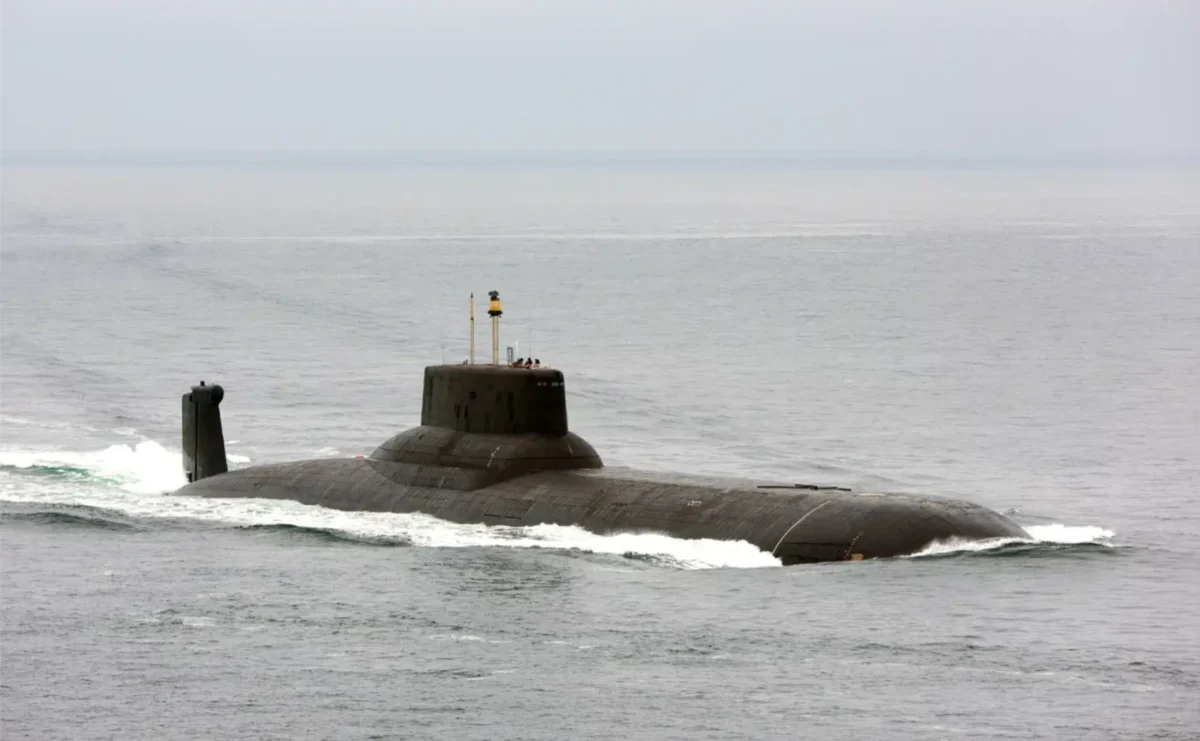
So when people ask what a Typhoon-class submarine really was, the short answer is “maybe” it was a floating piece of Cold War logic, shaped by fear, deterrence math, and a belief that sheer scale could help guarantee survival in a nuclear standoff.
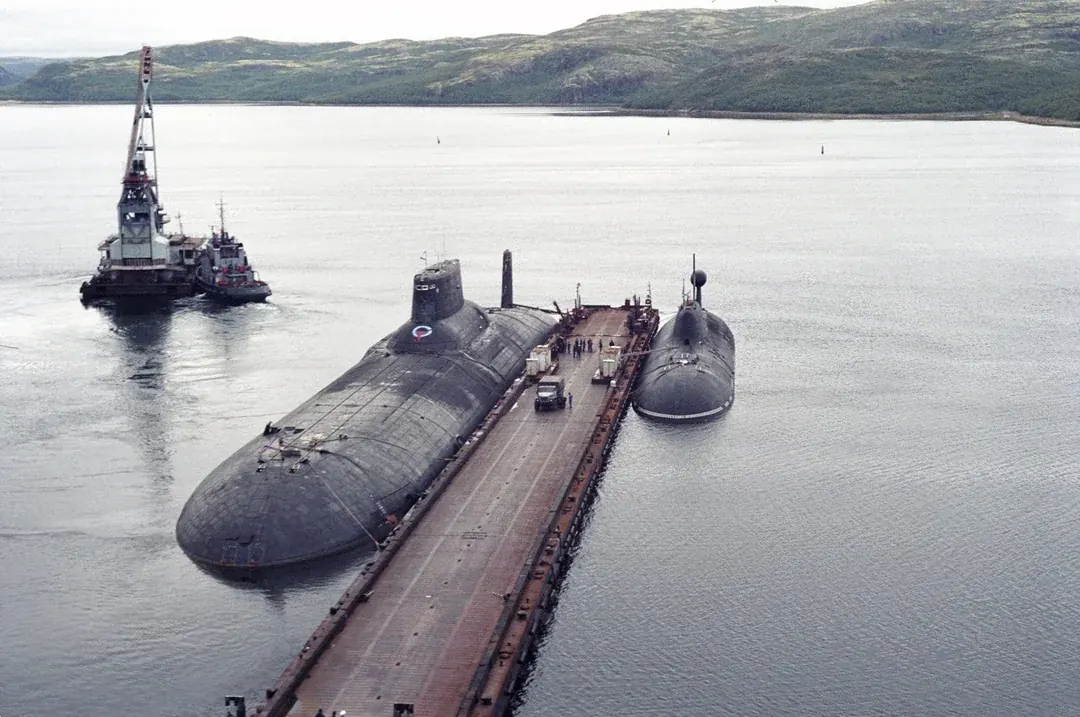
When people hear about the Typhoon-class submarine size, this is usually the moment it really clicks why these boats became legendary. In simple terms, they were huge, even by submarine standards.
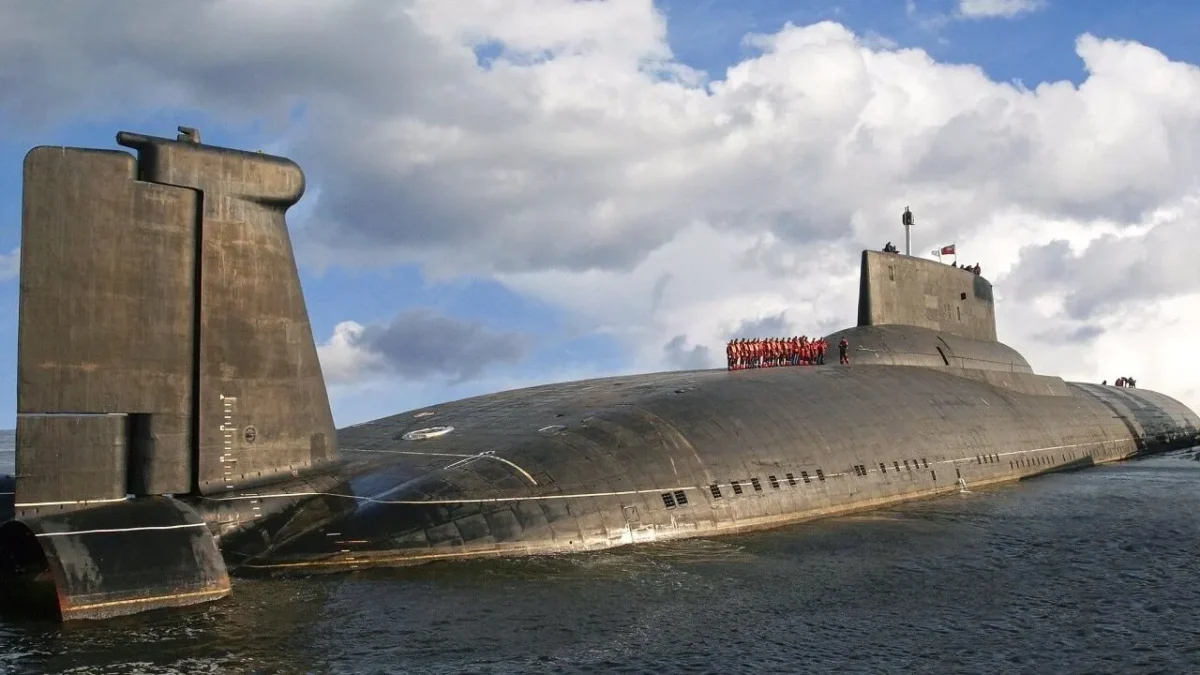
The Typhoon-class submarine length came in at roughly 175 meters, with a beam of about 23 meters, which is unusually wide for a sub. Fully submerged, displacement pushed past 48,000 tons, making it heavier than many surface warships. For comparison, most modern ballistic-missile submarines are noticeably slimmer and lighter.
So why go that big? A lot of it came down to strategy and geography.
The Soviet Navy wanted a submarine that could operate under Arctic ice, carry extremely large ballistic missiles, and stay hidden for long periods. Those missiles alone drove much of the design, and once you account for launch tubes, reactors, ice-breaking capability, and crew support systems, the size sort of snowballed.
In other words, the Typhoon got that way because the mission kept demanding more space, more redundancy, and more survivability. The result just happened to be a submarine that still holds the size record decades later.
Stepping inside a Typhoon-class submarine, at least conceptually, this is where things start to feel very different from most submarines people imagine.
Instead of a single long pressure hull, the Typhoon used multiple pressure hulls, essentially several reinforced tubes bundled together inside one massive outer hull. That layout is a big reason the boat ended up so wide and heavy.
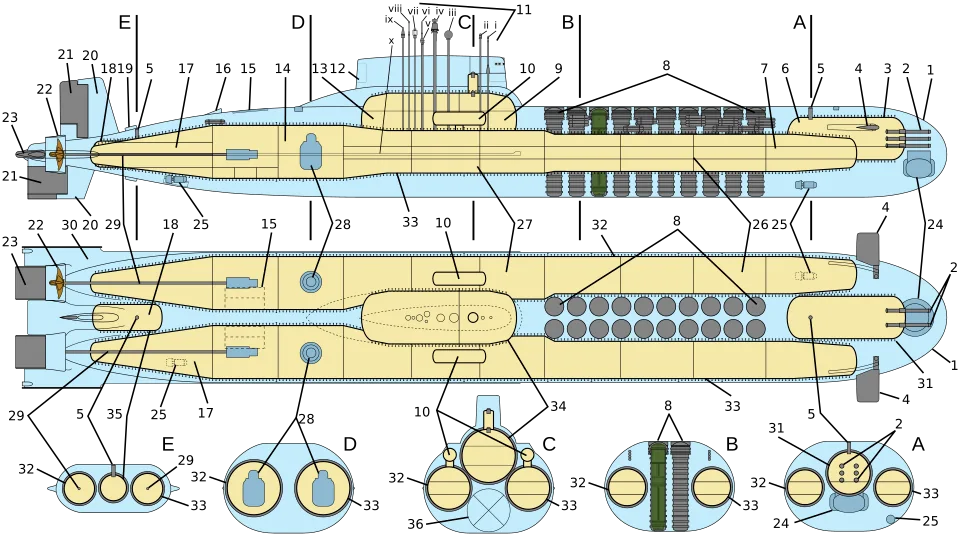
Those hulls were divided by function. Missile tubes sat in their own dedicated section between the main hulls, while separate compartments handled navigation, engineering, reactors, and crew spaces.
The idea was redundancy and survivability: if one section took damage, others could remain operational. It also meant the typhoon-class submarine interior felt less like one long hallway and more like a series of connected zones, which probably helped with organization during long patrols.
Life inside a Typhoon-class submarine wasn’t exactly comfortable, but it was arguably more humane than on many other Cold War subs. Because of the sheer internal volume, the crew had access to things that sound almost unbelievable for a military submarine: a small gym, a sauna, and even relatively spacious mess halls.
These weren’t luxuries in the casual sense. They were morale tools. When you’re submerged for weeks or months at a time, especially under Arctic ice, mental health becomes part of combat readiness.
The extra space also meant bunks weren’t quite as cramped, and shared areas felt less oppressive than on smaller boats. It was still loud, mechanical, and tightly controlled, but it wasn’t nonstop claustrophobia either.
All of that space supported a fairly large crew. A typical Typhoon carried around 160 sailors, sometimes a bit more depending on the mission and era.
That number reflects the complexity of the boat; multiple reactors, massive missile systems, and redundant control spaces all required people to run and maintain them.
So when people ask what made life aboard a Typhoon different, it really comes down to this: the submarine was built around endurance.
The layout, the living spaces, and even the crew size were all designed to keep the boat hidden, functional, and psychologically stable for long stretches of time in one of the harshest environments on Earth.
When it comes to performance, the Typhoon-class wasn’t about breaking speed records; it was more about a steady, unstoppable presence. Still, for something of its size, the Typhoon-class submarine’s speed was genuinely impressive.
On the surface, these boats could reach roughly 12 knots (about 22 km/h or 14 mph), which is already respectable for a vessel this massive. Submerged, though, is where they really came alive, pushing close to 25 knots (around 46 km/h or 29 mph). That’s fast enough to reposition quietly and, if needed, slip away from trouble.
That said, speed was never the main selling point. The real strength was consistency. The Typhoon didn’t need to sprint often; it just needed to be able to move confidently while staying hidden, especially under Arctic ice where detection was harder, and escape routes were limited.
Powering all of this were two nuclear reactors, giving the Typhoon-class essentially unlimited range in practical terms. As long as the reactors were running and supplies held out, the submarine could keep going. There was no need to surface for fuel, which is a huge deal for strategic deterrence.
In theory, a Typhoon could remain submerged for months at a time, with patrol length limited more by food, maintenance cycles, and crew endurance than by propulsion.
This long-endurance capability was exactly what the Soviet Navy wanted: a submarine that could disappear under the ice, stay quiet, and remain ready without constantly exposing itself.
This is usually the point where people stop thinking of the Typhoon as just a really big submarine and start realizing what it was actually built to do.
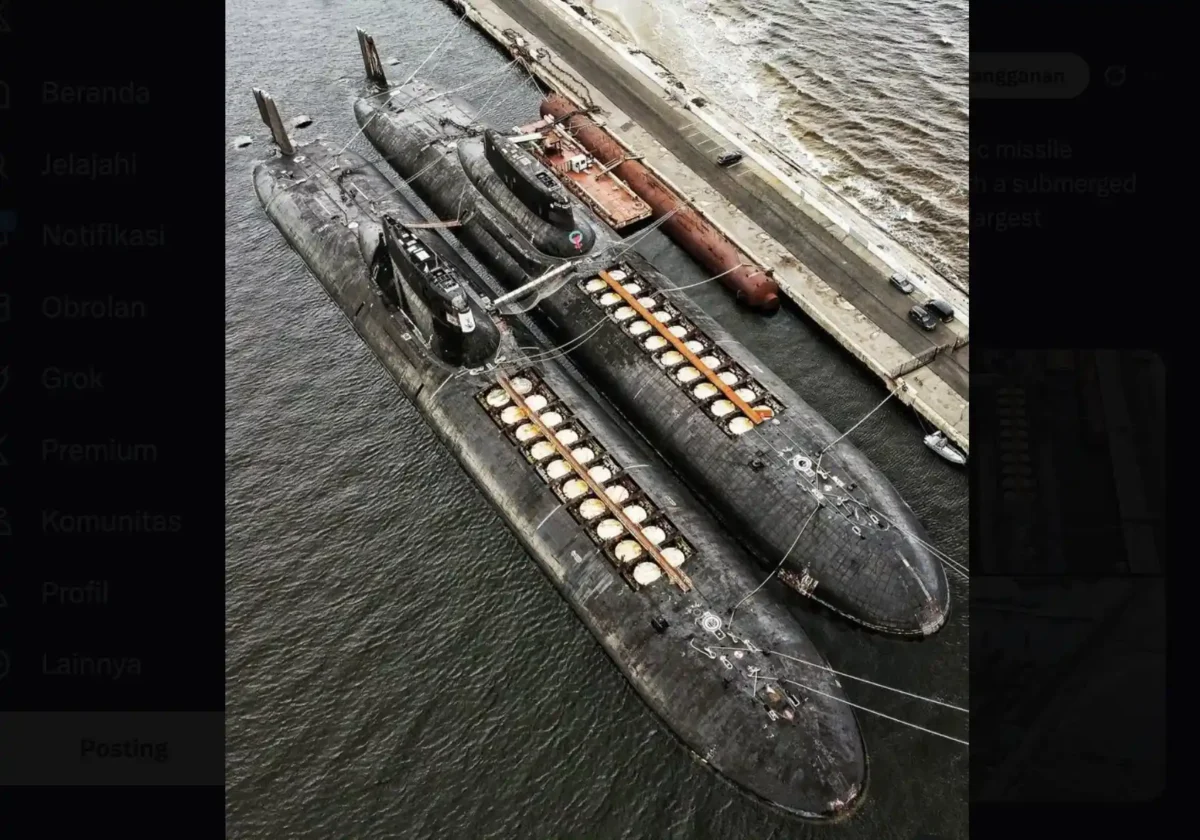
At full strategic loadout, a Typhoon-class submarine could carry 20 submarine-launched ballistic missiles (SLBMs). Each of those missiles was enormous, which goes a long way toward explaining the boat’s massive size and unique internal layout.
Early on, those launch tubes were designed for the R-39 missile, a weapon so large and heavy that Western navies never really built anything comparable.
Each missile could carry multiple nuclear warheads, meaning a single Typhoon represented a staggering amount of firepower, arguably more than some entire Cold War–era air forces. From a deterrence standpoint, the math was simple and chilling.
The Typhoon wasn’t only about ballistic missiles, though.
For self-defense and limited offensive roles, it also carried torpedoes, typically 533 mm (21-inch) tubes, along with larger 650 mm (25.6-inch) tubes depending on the configuration. These could fire heavyweight torpedoes and, in some cases, specialized anti-submarine or anti-ship weapons.
Defensively, the submarine relied heavily on stealth, depth, and its ability to operate under ice, but it also used countermeasures like decoys and electronic warfare systems to confuse enemy sonar. All of this was supported by the submarine’s complex internal zoning inside a Typhoon-class submarine.
The short answer is that the world changed, and the Typhoon changed with it, or, more accurately, couldn’t justify staying around. Once the Cold War wound down, the logic that had produced something as massive as the Typhoon-class submarine started to fade.
Strategic Arms Reduction Treaties (like START) put real limits on how many nuclear warheads and delivery systems each side could field, and suddenly operating the largest ballistic-missile submarine ever built looked less essential than it once had.
At the same time, age began to catch up with the class. These boats were engineering marvels, but they were also incredibly complex. Keeping them seaworthy meant constant maintenance, specialized infrastructure, and highly trained crews.
The typhoon-class submarine cost, both to operate and to maintain, was enormous, especially for post-Soviet Russia, which was dealing with budget constraints and shifting priorities. Even routine upkeep became a logistical challenge, and overhauls only got more expensive as parts and expertise became harder to source.
There was also the simple reality that newer submarines could do the same job more efficiently. Russia began investing in smaller, quieter, and more modern SSBNs, like the Borei-class, which offered updated missile systems and lower operating costs without the massive footprint.
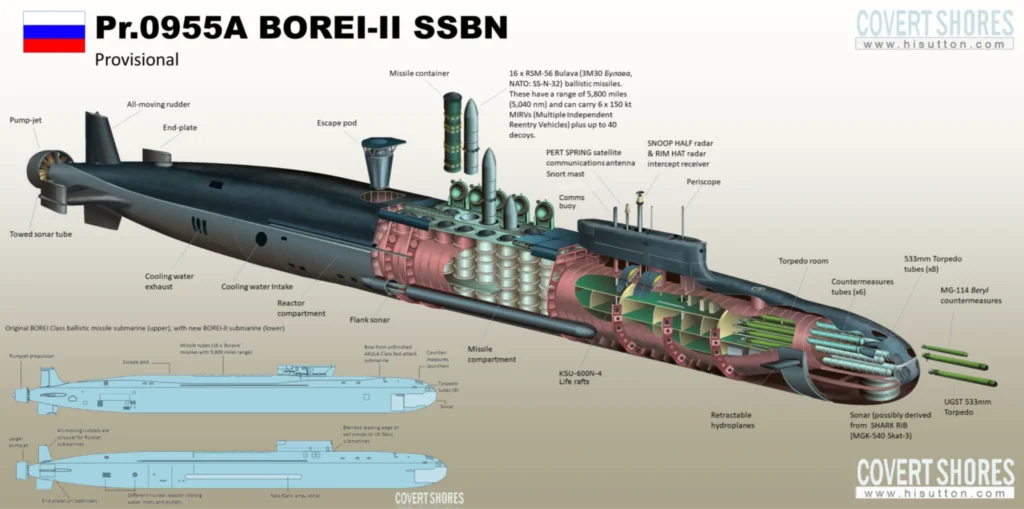
Compared to these newer designs, the Typhoon-class started to look like a Cold War heavyweight in a world that now favored precision, stealth, and sustainability.
The cost of a Typhoon-class submarine is usually estimated at around $1.5–2 billion USD per boat in 1980s dollars, depending on how construction and weapons are counted. Adjusted for inflation, that would likely land in the $4–6 billion USD range today.
Beyond build cost, the real expense came from operation, huge crews, specialized bases, nuclear maintenance, and constant upkeep, all of which made the typhoon-class submarine cost hard to justify once the Cold War ended.