Follow Us:
Follow Us:

Back in the late 1980s, Soviet engineers rolled out a weapon meant to flood the battlefield with rockets: the BM-30 Smerch. Many thought it would be a relic by now, but the system keeps finding its way into today’s conflicts.
In mid-2025, reports from Donetsk said a Ukrainian drone strike destroyed a Russian Smerch launcher, even as Moscow was promoting upgrades to improve the system’s range and accuracy. That contrast, losses in battle alongside new upgrades, shows why this Cold War weapon still matters.
What sets the Smerch apart may be less about age and more about its ability to adapt. The launcher is capable of firing 300 mm rockets fitted with cluster warheads, thermobaric loads, or guided rounds, depending on the mission.
That kind of variety is unusual for a weapon introduced in the late Cold War, let alone playing a role in current wars. It also leaves room for debate; “Have newer systems such as HIMARS really surpassed it in every way, or what does the Smerch still offer some advantages that keep it relevant?
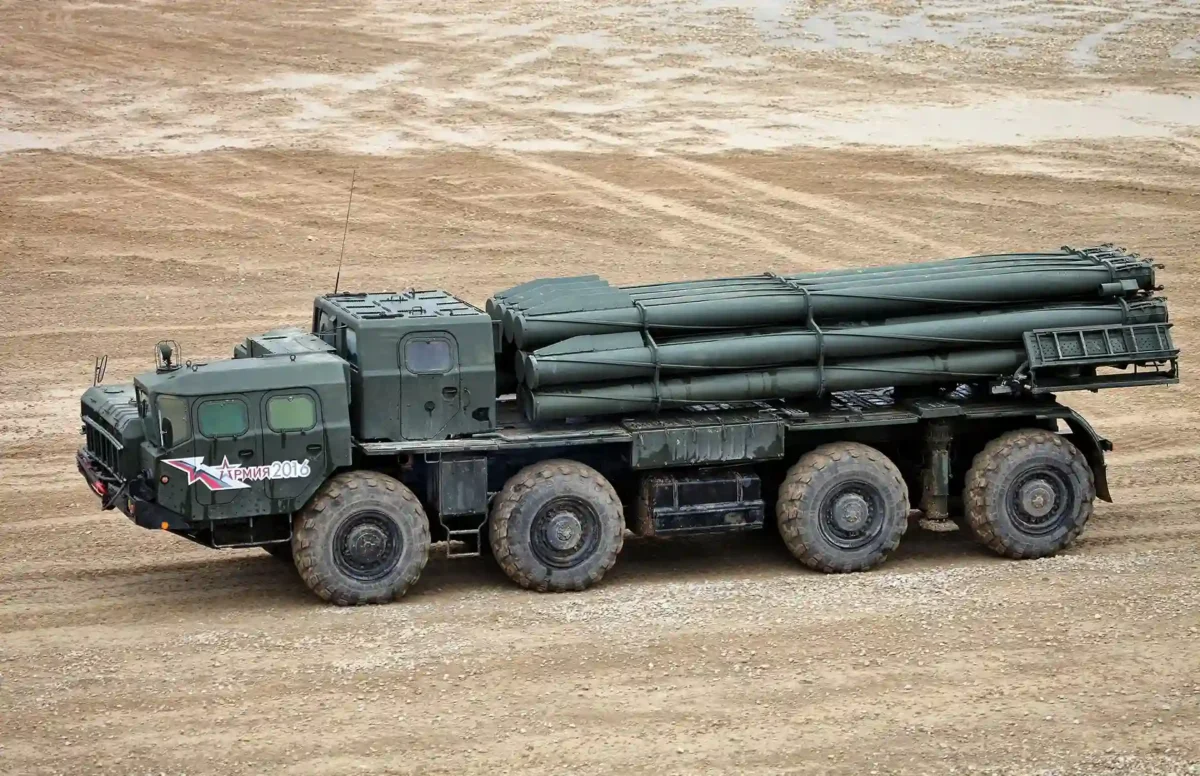
What kind of weapon could the Soviet Union build that would make NATO think twice about massing tanks or troops near the front lines? And why did the answer turn out to be one of the heaviest rocket systems ever put on wheels?
Back in the 1980s, the Soviets were watching NATO’s firepower grow and worrying that standard artillery might not cut it anymore. It seemed too limited; short-ranged, slow to reload, and increasingly vulnerable to counterattacks. What their planners appeared to want instead was something that could deliver a sudden storm of rockets, saturating wide areas before enemy forces had a chance to react.
This was the environment that gave rise to the BM-30 Smerch. Some sources suggest it was intended as a direct answer to Western rocket artillery, while others see it more as part of the broader Soviet habit of building “bigger and heavier” weapons. Either way, the logic was fairly clear: if a single battery could unleash dozens of 300 mm rockets in a matter of seconds, that might offset disadvantages elsewhere on the battlefield.
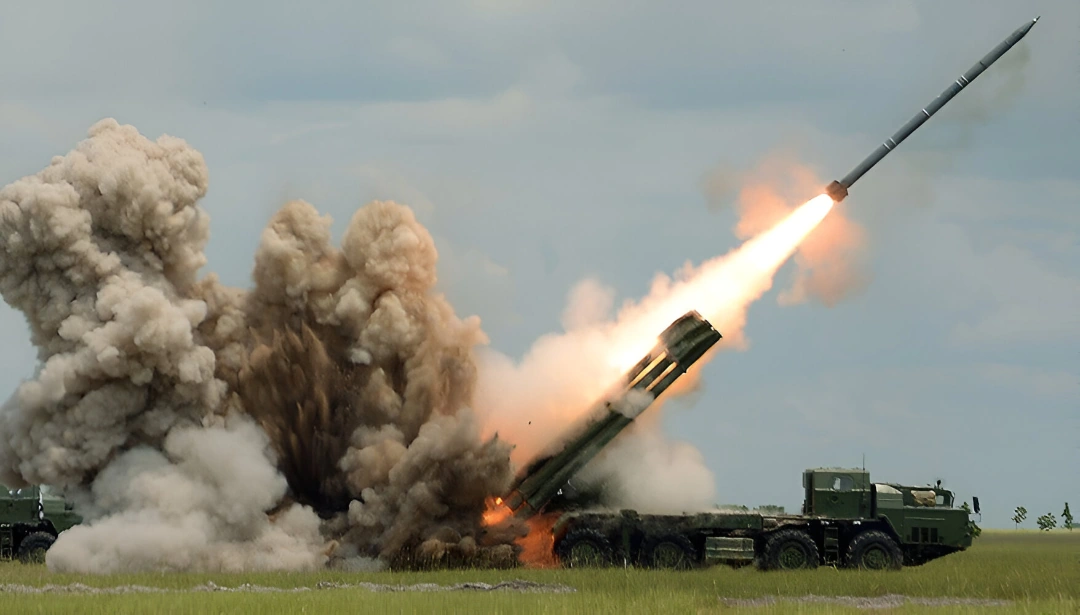
It wasn’t just about raw destruction, though. Back in the 1980s, one of the big worries was how to stop tanks and armored columns if they moved too fast. The Smerch was seen as one possible answer: hit them hard before they got near the front. It also spoke to the pace of the arms race, when both sides kept rolling out weapons, sometimes faster than their long-term role could be figured out.
| Item | Detailed figures |
| Caliber | 300 mm (rocket diameter) |
| Rocket lengths | Typical rocket length ~7.5–8.9 m depending on variant and motor. |
| Rocket weight (each) | ~800–1,400 kg depending on warhead and motor. |
| Warhead types | High-explosive fragmentation; cluster submunitions (various submunitions types); thermobaric; fuel-air; specialized unitary HE; some guided/precision unitary warheads. |
| Warhead weight | Varies widely; roughly ~150–750 kg of payload depending on configuration and submunition loadout. |
| Guidance | Mostly unguided; upgraded/modernized rockets may include inertial/GPS-assisted guidance or terminal seekers in some variants. |
| Maximum range | Commonly quoted up to ~70–90 km for standard rockets; extended-range or modernized rounds may be reported beyond this in some sources. |
| Accuracy (CEP) | Unguided variants: relatively large dispersion (hundreds of meters); guided/assisted variants: CEP can be reduced significantly (tens of meters) depending on guidance. |
| Salvo size (launcher) | Launcher typically carries 12 tubes; a full-vehicle salvo = 12 rockets. Batteries combine multiple vehicles for larger salvos. |
| Rate of fire | Can launch a full 12-rocket salvo in ~38–45 seconds depending on crew and variant. |
| Reload time | Reloading a launcher from dedicated resupply can take several minutes to >30 minutes depending on whether pre-loaded pods are used and level of exposure. |
| Vehicle/platform | Heavy wheeled truck chassis (typically 8×8) with large loader/resupply vehicles in the battery. Modernized variants may use different chassis. |
| Crew (launcher vehicle) | Usually 3–5 personnel on the launcher; full battery includes additional command, maintenance, and resupply crews. |
| Mobility | Road-capable with decent cross-country ability for its weight class; movement speed limited by size and logistics. |
| Powerplant (vehicle) | Heavy truck diesel engine; power varies by chassis, typically several hundred hp to move the loaded vehicle. |
| Road speed (loaded) | Typical road speed ~60–80 km/h on good roads; lower cross-country. |
| Typical tactical use | Area saturation, counter-battery suppression, deep strikes against concentrations, interdiction of logistics/airfields; best used against area targets rather than single point targets. |
What does this number really mean?
Those short lines and numbers can look tidy, but they hide a few caveats worth keeping in mind.
Caliber and rocket types: “300 mm” just names the rocket diameter, it doesn’t tell the whole story. What matters more is the warhead and guidance.
A 300 mm rocket with a simple high-explosive warhead behaves very differently from one carrying submunitions or a thermobaric charge.
Some newer rockets add basic guidance, which can cut down how much area needs to be saturated to achieve an effect. So the same launcher can be used for very different missions, depending on which rockets are loaded.
Range and firepower: “Up to about 90 km” is a useful headline, but it’s conditional. Range depends on the rocket model, the payload weight, and even weather.
Lighter warheads or rocket boosters can push a rocket farther, while heavier or more complex warheads reduce range. Also, claiming a maximum range doesn’t mean accurate strikes at that distance.
Accuracy often drops at the limits, unless a guided variant is used. And “firepower” isn’t just blast strength; it’s also area coverage. A salvo is meant to suppress or deny a broad zone, not necessarily hit single tiny targets precisely.
Mobility and crew: Calling the Smerch “mobile” is true, but it’s relative. These launchers are road-capable and can move between positions, yet they’re large and need fuel, maintenance, and supply trucks for reloads.
The crew on the launcher itself is small, but keeping the system operational requires a support chain — ammo vehicles, command vehicles, and often engineers.
Reloading dozens of large rockets isn’t instant; it can take minutes to tens of minutes depending on whether pre-loaded pods are available and how exposed the crew is to threats. In short: mobile, yes, but logistically demanding.
Was the Smerch as effective as its reputation suggests? The answer to this seems less clear-cut. Launching a dozen large rockets in under a minute can certainly cause chaos, but battlefield results have rarely been that simple.
Much depended on how commanders used it, the support behind it, and the kind of warheads chosen. When used against concentrations of vehicles or supply areas, the Smerch could be bluntly, painfully effective. Against small, well-hidden targets, its blunt nature made it less reliable unless guided rounds were available.
There are also practical limits that tend to get glossed over. Rockets at long range can land far from their aimpoint unless they’re guided, and the system needs a support chain; ammo trucks, protection while reloading, and good planning to avoid counter-battery fire.
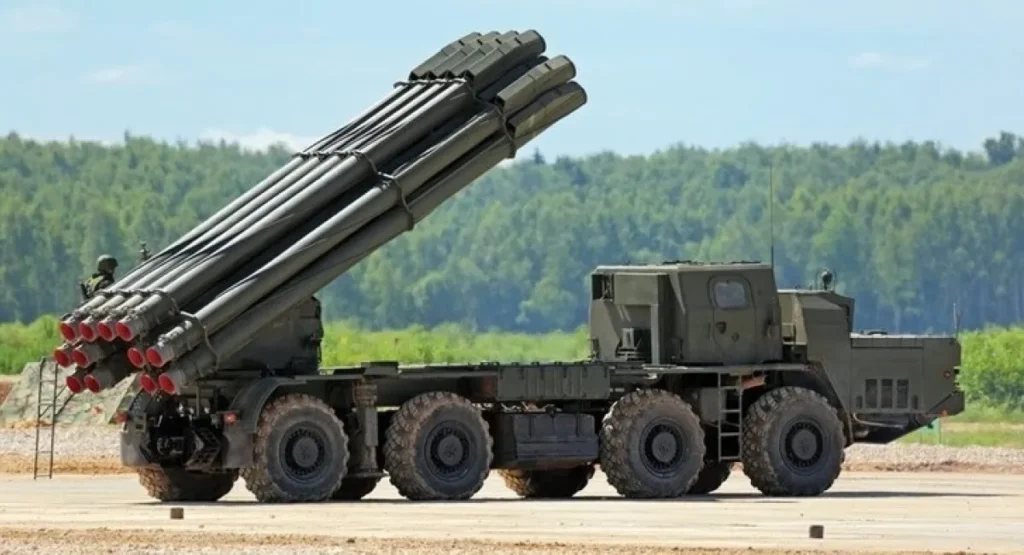
Put simply, a Smerch battery can make a big hole in an enemy’s day, but it’s not always the best tool for precision work or long, risky missions without cover.
A clear example came in Ukraine, where both sides have reported Smerch strikes. In one case, rockets hit the town of Rodynske in Donetsk, injuring civilians and damaging homes. Military targets have also been struck, including supply hubs and defensive positions.
These episodes show the system’s mixed record: when it lands on a concentration of forces, the damage can be heavy, but when used near towns, the result often includes unintended civilian harm.
Then there’s the darker side: cluster munitions. A lot of early Smerch warheads carried submunitions that spread over wide areas. That made them effective at denying ground and damaging soft targets, but it also left unexploded ordnance that can remain dangerous for years. Reports and human-rights groups have tied their use to civilian harm in several conflicts.
Because of that, the system is also considered politically and morally charged. Some users shifted to unitary warheads or tried guided options to reduce these problems, but the legacy of cluster rounds still shapes how people talk about the Smerch.
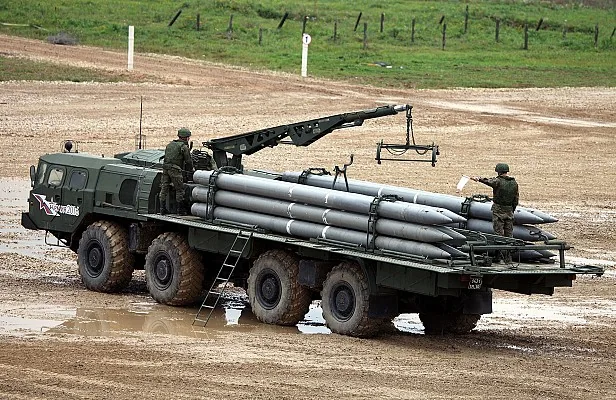
So was it worth the hype? In many tactical scenarios, yes, especially where area effects were the goal. But the practical picture is messier: effectiveness depended on tactics, ammo choice, and logistics, while controversies over submunitions have left a lasting stain on its reputation
It might seem strange that a rocket system designed at the end of the Cold War is still talked about today, yet the BM-30 Smerch keeps showing up in modern conflicts. Part of the reason is upgrades.
The Tornado-S program, for example, has given the old launcher new life, adding longer-range rockets, better guidance, and a digital fire-control system. Some reports even suggest it can fire precision-guided rounds, which makes it far more flexible than the original version.
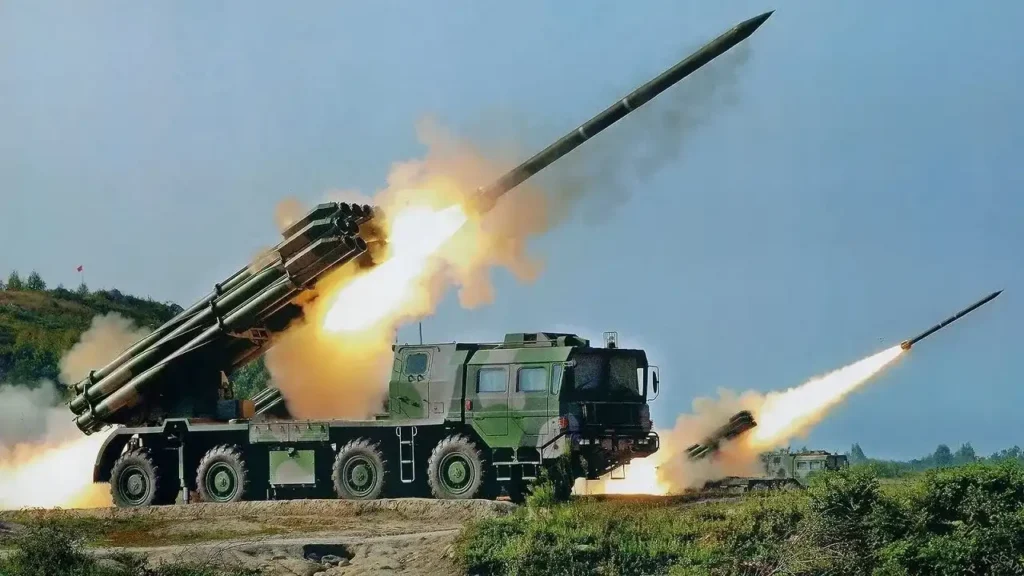
Another reason the Smerch remains in the spotlight is comparison. American HIMARS launchers are often praised for accuracy. It can land guided rockets right on target, even from far away. That makes it perfect for situations where precision matters most.
Read also: M-142 HIMARS: The Ultimate Precision Rocket Artillery System
The Smerch, though, wasn’t made for that job. Its strength lies in flooding a whole zone with firepower. So rather than being direct competitors, the two reflect different military approaches.
So why does the Smerch still hold an edge in some situations?
Its size and volume is part of the answer. Each launcher carries twelve rockets (weighing almost a ton), and when fired in a short burst they can drench a wide area.
Few systems can match that level of saturation so quickly. Even without the same accuracy as GPS-guided weapons as HIMARS, the impact of so many big warheads arriving together can break momentum, push troops apart, or close off a piece of terrain.
Range is another factor. Standard rockets reach out to around 70–90 kilometers, and newer Tornado-S rounds reportedly go further. That means a battery can stay well behind the front line and still threaten logistics hubs, assembly points, or even airfields. Against lightly defended areas, that long reach can be enough to tip the balance.
And then there’s destructive power. Some rockets for the Smerch are meant to shower an area with submunitions; others are designed to produce a sustained blast that can collapse bunkers. Those choices offer flexibility, though they’ve drawn heavy criticism because of the danger to civilians.
Western launchers such as HIMARS favor smaller, precision munitions, devastating on a single target, but not intended to blanket a large area in one salvo.
Today, the BM-30 still finds a place in Russian doctrine and in other forces that value massed fires. It’s typically used to reach behind the front lines, hitting supplies, command posts, or staging areas. Even if accuracy is sometimes questioned, the threat of such strikes can change how forces deploy.
Other operators see value in the system for different reasons. India and Ukraine are examples of countries that keep Smerch in their arsenals for insurance-like reasons.
In a major conflict it can deliver a sudden, heavy strike without relying on air support or costly precision munitions. Sometimes it also works as a deterrent; commanders think twice about massing forces where a Smerch could reach them.
The Smerch shows an older approach to artillery that still matters: using sheer weight of fire to change how battles unfold. Systems like HIMARS highlight what precision can do, but in large wars there is also room for weapons that strike wide areas. In that way, the Smerch reminds us that control can come not only from hitting one spot but from making whole zones too dangerous to stay in.
The war in Ukraine has kept the Smerch in the spotlight. Russian units have been firing both the older launchers and the Tornado-S along the eastern front, mainly around Donetsk. Some of the rockets have landed in towns like Rodynske; local reports said civilians were hurt and buildings damaged.
Other salvos were aimed deeper at supply depots and defensive lines. Videos that have surfaced also point the Tornado-S firing guided rockets that appear to show Tornado-S firing guided rounds, which may mean Russia is testing upgrades directly in combat.