Follow Us:
Follow Us:

In July 2025, the venerable U-2 spy plane, also known more familiarly as the Lockheed U-2 Dragon Lady, made headlines once again.
A special two-seat variant flew more than 6,000 miles over all 48 contiguous U.S. states in a single mission, breaking its own endurance records. It’s surprising: a Cold War-era aircraft, still pushing limits in an age of drones and satellites.
That recent feat raises a question: why is the U-2 still relevant today? After all, it first took to the skies in the 1950s. Over the decades, this high-altitude surveillance plane has earned a legend. It can climb above 70,000 feet and carry cameras and sensors built for long surveillance runs. Many other planes would not last at that height.

Yet, this is also a story of risk and intrigue. In 1960, a U-2 on a reconnaissance flight was shot down over the Soviet Union, creating one of the Cold War’s most dramatic spy incidents. That single episode still echoes in intelligence lore. Even now, there are debates about when—or if—the U-2 should be retired, and what will replace it.
The story of the U-2 spy plane really begins in the tense atmosphere of the early Cold War. By the mid-1950s, the United States was increasingly worried about what the Soviet Union might be building behind the Iron Curtain.
Satellite technology wasn’t yet reliable, and regular aircraft couldn’t risk flying deep into Soviet airspace without being spotted or shot down. So, there was a clear gap; Washington needed a way to “see” over the fence without sparking a direct confrontation.
Read also: SR-71 Blackbird: Unveiling the World’s Fastest Spy Plane
This is where the idea of a radical new aircraft emerged. Some accounts suggest it was a mix of urgency and daring that pushed the project forward. Lockheed’s famous “Skunk Works” team, led by Clarence “Kelly” Johnson, got the task.
They didn’t have the luxury of years of trial and error; instead, they had to deliver something quickly, and it had to work. The solution was to build a plane that could fly higher than anything else in the sky, so high, in fact, that it might be out of reach of enemy defenses.
Design-wise, the U-2 was unusual, almost awkward-looking. It had a sailplane-like design with incredibly long, thin wings, which gave it the lift it needed to reach altitudes of around 70,000 feet or more. At that height, the earth itself looks curved, and the sky turns dark.
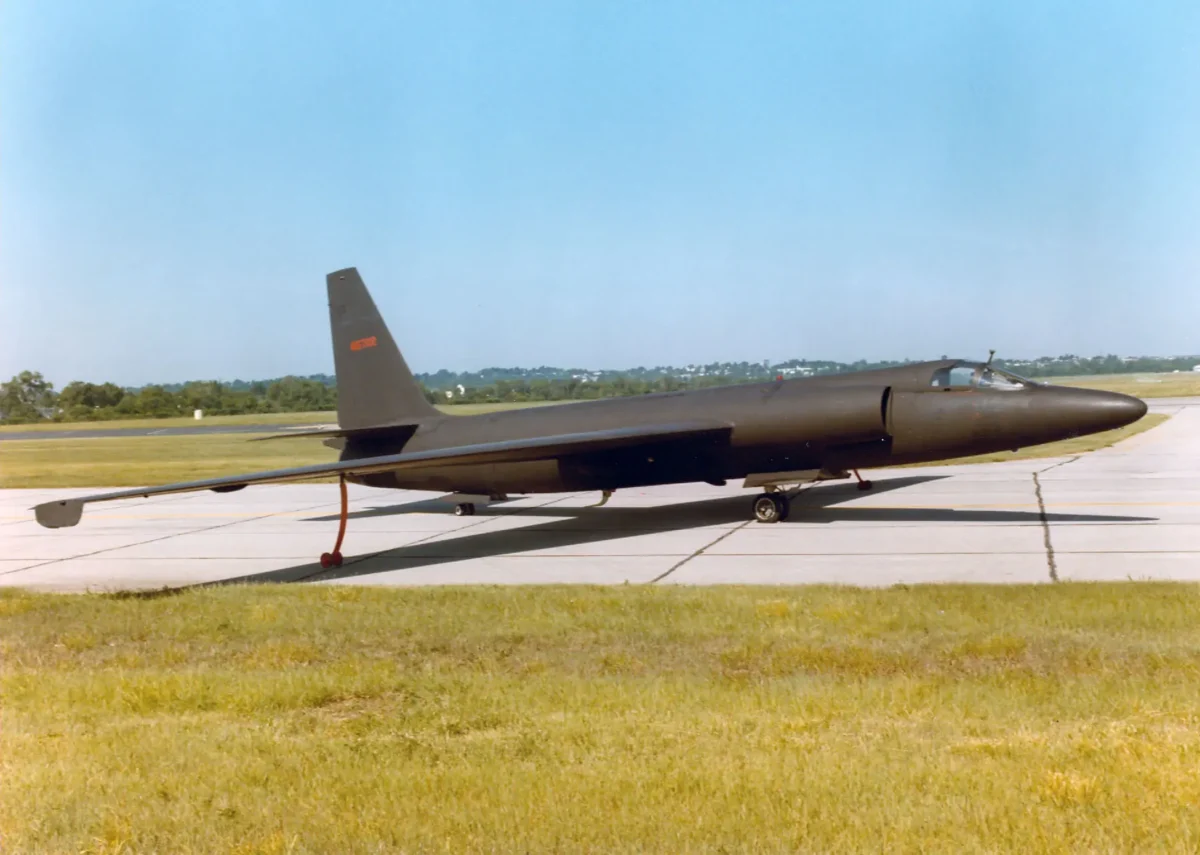
Pilots often described it as both breathtaking and lonely, like being halfway to space. Of course, this came with drawbacks too: the aircraft was notoriously difficult to land, often called a “dragon” to tame, which is part of why it earned the nickname Dragon Lady.
What made the U-2 special wasn’t speed; it was never the fastest jet in the air. Instead, it was all about altitude and endurance. The U-2 was designed to slip above the range of Soviet defenses, at least most of the time.
From that height it carried cameras strong enough to record missile launchers, bases, even lines of vehicles on the move. Some historians argue that this view from above gave U.S. leaders the confidence to act with more restraint, instead of making decisions in the dark.
| Feature | Details | Why It Mattered |
| High-Altitude Capability | Could fly above 70,000 feet (some accounts suggest even higher under ideal conditions). | Put the U-2 out of reach of most Soviet fighters and early missile systems, giving the U.S. a “look but don’t touch” advantage, at least initially. |
| Lightweight Airframe | Built with a glider-like design: long, thin wings (over 100 feet across), light fuselage. | Allowed the aircraft to generate enough lift at extreme altitudes where the air is thin, but made handling and landings notoriously difficult. |
| Long Endurance | Missions could last more than 8–10 hours, depending on configuration. | Enabled deep-penetration reconnaissance flights, covering vast Soviet or Chinese territories without refueling. |
| Sensors & Cameras | Early models carried large-format film cameras; later upgrades added infrared sensors, signals intelligence (SIGINT) gear, and eventually digital systems. | Provided detailed images of missile sites, airfields, and industrial complexes (was critical for Cold War intelligence). |
| Minimal Defensive Systems | No heavy weapons, very limited self-protection. | Relied almost entirely on altitude as its defense, underscoring its single-purpose design. |
| Cockpit & Pilot Gear | Pilots wore full-pressure suits (similar to astronauts). | Necessary because at 70,000 feet, the air pressure is so low that human survival without protection would be impossible. |
When you look closely at these design choices, the U-2 spy plane feels less like a fighter jet and more like a machine built with one obsessive goal to reach where nothing else could.
The ability to soar above 70,000 feet was about survival. In the 1950s, Soviet radar and air defenses were improving, but not fast enough to catch something that high.
At least, that was the thinking. Flying at the edge of space gave the U-2 a temporary “invisible cloak,” allowing it to gather intelligence without sparking an open confrontation.
Because the U-2 spent its missions in very thin air, it needed unusual wings; long and narrow and a light frame. That choice made sense, but it also created problems.
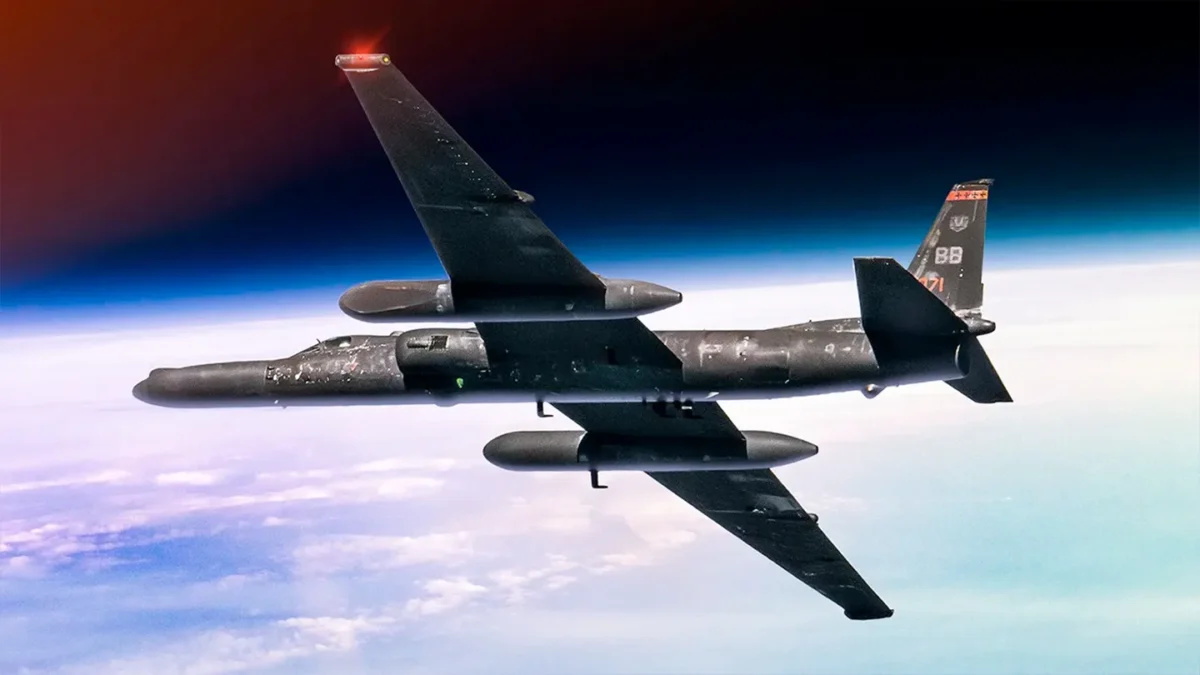
The aircraft was sensitive, sometimes unstable, and landings became a challenge. Stories spread of pilots joking that the mission only grew risky once the flight was nearly over. That difficulty, though, was the price for reaching heights no other plane could.
Read also: Lockheed Martin SR-72: The Future of Hypersonic Aircraft
The earlier design of U-2 was never meant to fight. Its job was to collect information and the design followed that aim. It was not armed, but the U-2 carried cameras that could photograph objects on the ground in remarkable detail. As technology moved on, the U-2 picked up new tools. It could intercept radio traffic, follow radar signals, and track other forms of electronic activity.
Flying the U-2 meant dealing with a plane that was both brilliant and dangerous. Its long wings and light frame pushed the edge of what was possible.
But the payoff was intelligence that, some argue, gave U.S. leaders a steadier picture of events. In the Cold War, when so much was uncertain, that picture may have mattered more than the risks.
On May 1, 1960, a U-2 flown by pilot Francis Gary Powers was shot down deep inside Soviet territory. Powers had taken off from Pakistan on what was supposed to be a routine reconnaissance flight, but Soviet air defenses had improved by then. Accounts suggest that a surface-to-air missile, possibly one of the newly deployed SA-2 Guideline systems, managed to reach the U-2 at altitude.
This was a turning point. For years, U.S. officials believed the U-2’s height advantage would keep it safe. Suddenly, that assumption collapsed. Not only did the Soviets bring the plane down, but they also captured Powers alive and displayed wreckage of the aircraft.
Officials in Washington called it a weather mission at first, maybe hoping the story would pass. But Moscow later revealed clear proof against that, which left the U.S. in a difficult and somewhat embarrassing position.
The U-2 accident showed how fragile diplomacy could be. A mission designed to bring clarity ended up bringing more mistrust, and the timing couldn’t have been worse. Leaders who had planned to meet never made it to the table (a planned summit between President Eisenhower and Soviet Premier Khrushchev fell apart, and tensions spiked).
Just two years later, the U-2 came up with a very different story. It’s striking that the same plane that had once embarrassed Washington soon provided the intelligence that may have kept a war from starting (arguably helped prevent nuclear war).
In October 1962, a U-2’s cameras showed Soviet medium-range ballistic missile sites under construction. The evidence landed in Washington at exactly the right moment. And those images gave President Kennedy the evidence he needed to confront Moscow directly.
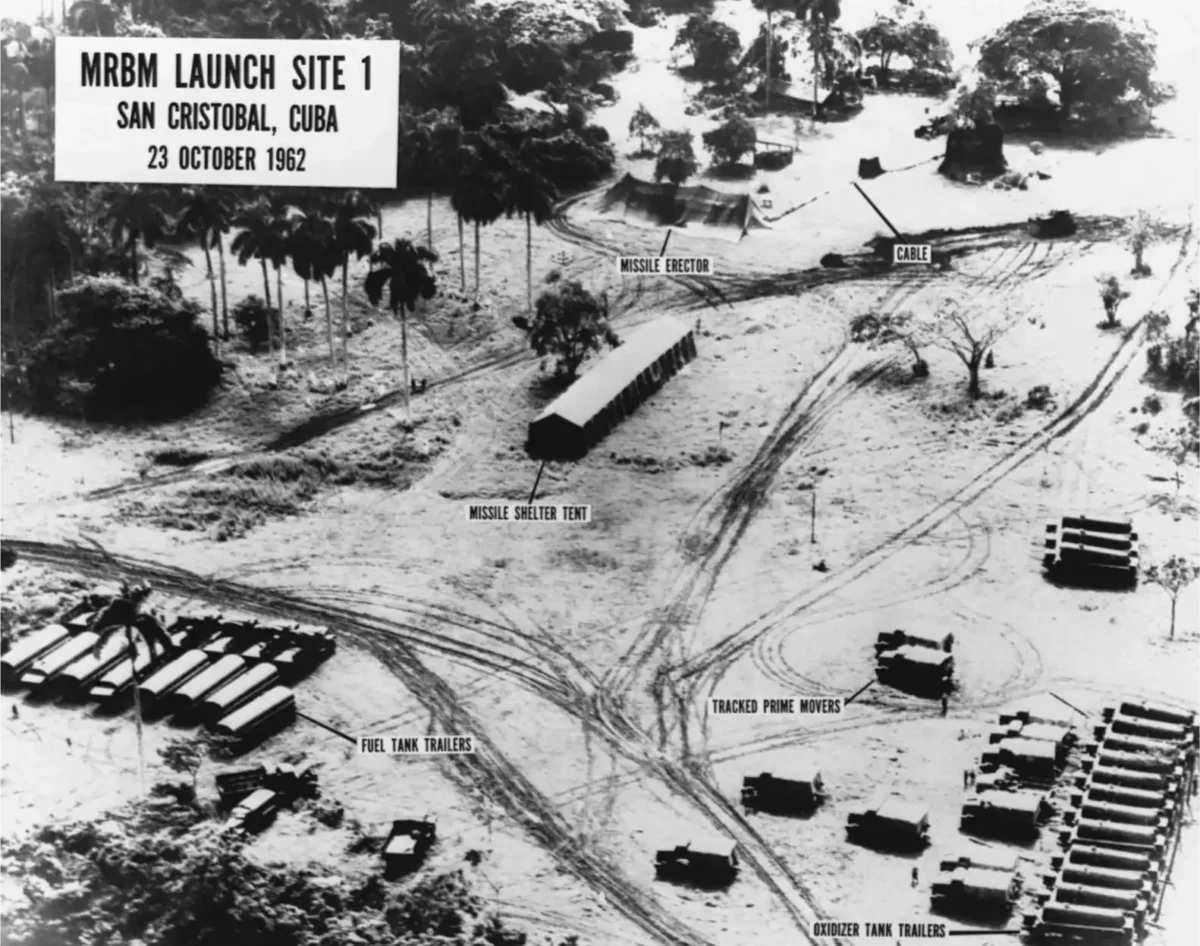
Hypothetically, without that clarity, U.S. leaders might have stumbled; maybe waiting too long, or maybe acting too quickly. Instead, the photos gave them a middle path: a blockade, not a full-scale attack. Some believe that difference helped avoid nuclear war. This whole tense standoff is known as the Cuban Missile Crisis.
Even with those photographs in hand, the crisis was anything but stable. Not long after, another U-2 was hit by a Soviet-supplied surface-to-air missile while flying over Cuba, killing pilot Rudolf Anderson.
For a brief moment, it looked as if Washington and Moscow might tip into open conflict. Some later argued that if Kennedy had answered that loss with an immediate strike, the crisis could have spun out of control.
| Feature | Original Cold War Era | Modern Upgrade |
| Avionics & Cockpit | Analog gauges, limited automation | Glass cockpit, digital flight displays, improved navigation |
| Cameras & Sensors | Large-format film cameras, basic infrared | Advanced digital imaging, synthetic aperture radar (SAR), and multispectral sensors |
| Signals Intelligence (SIGINT) | Rudimentary radio interception | Wideband receivers, electronic eavesdropping, cyber-related collection |
| Data Transmission | The film had to be recovered and developed after landing | Secure digital uplinks, near real-time transmission to ground stations |
| Survivability | Relied mostly on altitude | Enhanced defensive systems, integration with modern threat warning |
The cockpit of the early U-2 was famously cramped, filled with analog dials and little in the way of comfort. Today, pilots sit in a modernized workspace with digital displays and avionics more in line with 21st-century aircraft. This matters because U-2 missions can last over 10 hours, and fatigue at extreme altitudes is no small risk.
Equally important are the sensors. Early U-2s carried cameras that relied on film, which meant intelligence wasn’t available until the aircraft returned and the film was developed.
Now, advanced electro-optical sensors, synthetic aperture radar, and multispectral imaging allow the U-2 to collect far more information, and in some cases, beam it down in near real-time.
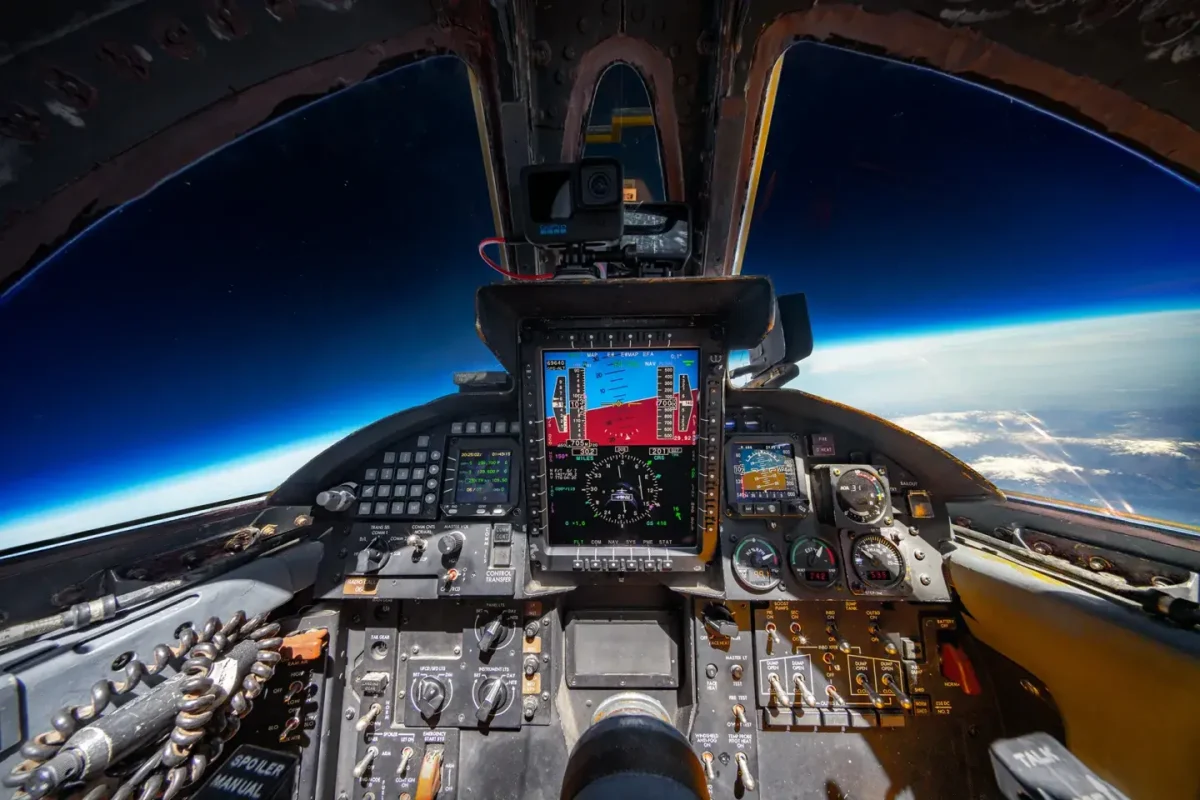
One of the most significant upgrades lies in signals intelligence (SIGINT). Where once the U-2 was primarily about pictures, it can now also intercept and analyze electronic signals; from radar emissions to communications. That makes the aircraft a dual-threat intelligence platform, capable of both imagery intelligence (IMINT) and electronic surveillance.
Part of the U-2’s value seems to come from its flexibility. Unlike a satellite locked into its path, the U-2 can change what it’s doing while it flies. It might start with cameras, then switch to signals work, or mix both together. That kind of versatility is rare and makes it useful even today.
Some might ask: if satellites and drones do the job, why hang on to an aircraft from the 1950s? The truth seems more complicated.
Satellites are great at wide coverage and can’t be shot down, but they’re predictable. Adversaries often know their schedules and can plan around them. Drones, like the Global Hawk, avoid risking a pilot, yet they often can’t match the U-2’s ability to carry heavy or advanced equipment.
So, what this tells us is that the plane was never built to outrun fighters or vanish from radar, and it still isn’t. Its value lies in the kind of intelligence it can bring back. Satellites are predictable, and drones can be limited in what they haul. The U-2 slips into the middle ground, covering what those newer tools sometimes miss.
It may seem strange that a reconnaissance aircraft designed in the 1950s is still flying in 2025. But part of its staying power comes from the simple fact that, even after all these years, it does things that modern systems still struggle with.
Take drones, for example. They can stay airborne longer than a U-2 and they don’t put a pilot at risk. Still, they come with limits. A Global Hawk, for instance, relies on strong data links, and if those links are jammed, the drone can’t adjust on its own.
A U-2 with a pilot on board is different. The person flying can change course, climb higher, or circle back if something looks odd on the ground. That kind of quick judgment is still hard to match with an unmanned system.
Another enduring advantage is the presence of a human being in the loop. Machines are excellent at processing data, but they can miss context. A pilot monitoring sensor feeds in real time may pick up subtle signs (e.g.,a convoy moving oddly, a radar signal that doesn’t quite fit expectations), that a purely automated system might ignore.
In intelligence work, those small details can matter just as much as the high-tech imagery. The U-2 is, in that sense, a bridge between the precision of machines and the judgment of human experience.
The aircraft’s ability to carry advanced and often heavy payloads is another reason it remains relevant. Drones are good at many things, but they usually can’t handle the really bulky test gear. The U-2 does. Because of its size, it’s often turned into a flying lab, trying out new imaging kits or radio systems, some of which later become standard on other planes.
Take a hypothetical scenario. Let’s say tension grows near a contested border. Troops on the ground know exactly when satellites are overhead, so they move tanks and missile launchers out of sight. Drones go up, but their signals get jammed and the feed cuts in and out.
At that point, a U-2 could climb higher than the jamming range, collecting both pictures and electronic signals in one run. With a pilot making real-time calls, the mission can adapt on the spot.
So, if you ask why the U-2 Dragon Lady still matters today, it’s partly because it keeps that human element alive. It has the endurance and technology of a machine, but it also gives room for quick thinking in the cockpit. That combination is rare, and it’s why the aircraft hasn’t yet been made obsolete.