Follow Us:
Follow Us:

The first thing people notice about the CH-47 Chinook helicopter isn’t how it looks, it’s the sound. That heavy, thunder-like rotor beat rolls over the hills before the helicopter even comes into view. It’s a sound soldiers have heard in every major conflict since Vietnam.
This helicopter has been hauling troops, gear, and hope into tough places for over sixty years. Mountains, deserts, flood zones, you name it, the Chinook’s been there. It’s still improving after all this time.
Boeing keeps finding ways to make it stronger, faster, and more capable, even when it supposedly had already reached its limit. It’s like Boeing refuses to let it retire. And honestly, why should they? No other helicopter in its class can carry that much weight, that far, that fast.
Maybe it’s old-school. But it’s the kind of old-school that still shows up and outperforms the shiny new stuff.
The Chinook helicopter is one that’s managed to stay relevant for more than sixty years. Boeing Vertol started building it in the early ’60s because the Army needed something that could haul serious weight and still fly in brutal conditions.
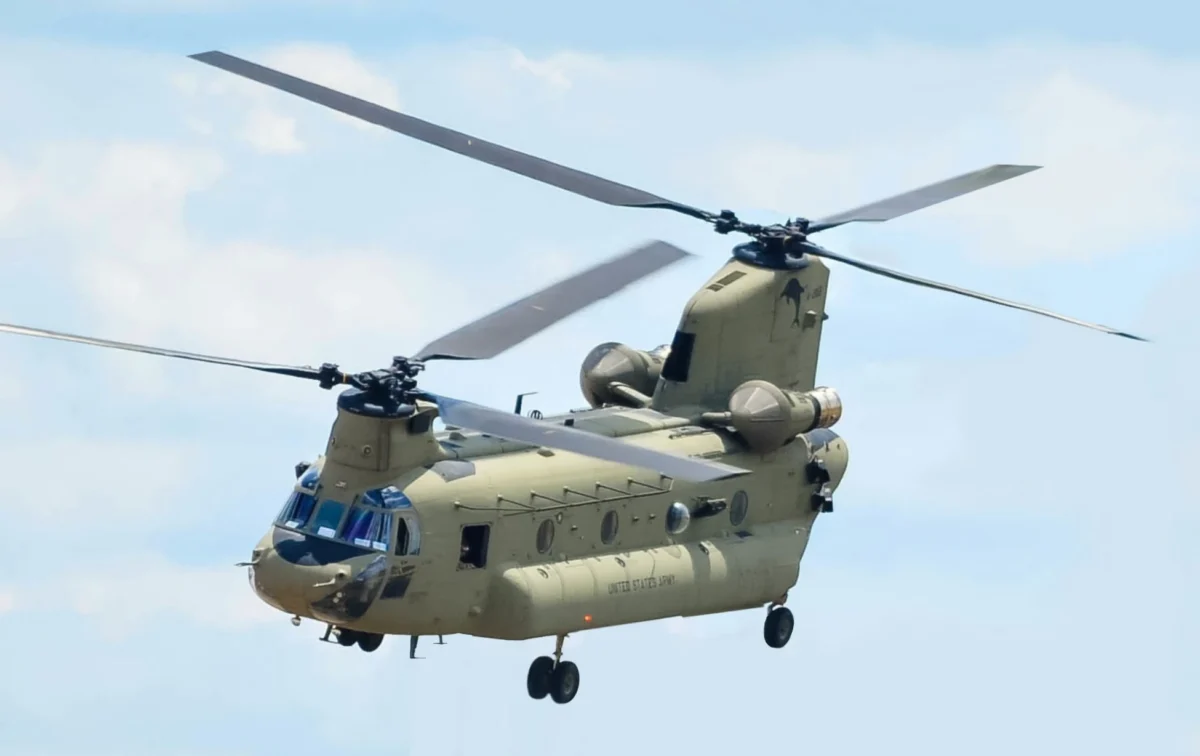
Instead of sticking with the usual single-rotor setup, engineers went bold with a twin-rotor design. That gave the Chinook its trademark stability and lift, and honestly, that’s what made it stand out. It quickly replaced older workhorses like the CH-37 Mojave and became a mainstay in Army aviation.
Since then, it’s been through constant upgrades, moving from the original CH-47A all the way to today’s CH-47F. Each new version got smarter electronics, more powerful engines, and systems built for a faster, more digital kind of warfare. That steady evolution is probably why the Chinook is still out there doing what it does best, carrying heavy loads and proving that good design never really ages.
The Chinook has carried more than just cargo over the years. It’s the backbone of how armies move heavy stuff. Troops, artillery, supplies, vehicles, even other helicopters if needed, the Chinook hauls it all.
Back in the Vietnam War, it earned its place doing just about everything: dropping off soldiers, rescuing the wounded, and hauling gear through thick jungle. Decades later, in Afghanistan and Iraq, it was still out there doing the same kind of hard work, flying through thin air at high altitudes and landing in mountain valleys where regular planes couldn’t go.
It turned into a symbol of reliability. When something needs to get in or out fast, it’s often the Chinook that shows up first and leaves last. You’ll see it in war zones, but also after disasters, carrying food, water, and rescue teams. After more than sixty years in service, that reputation hasn’t faded. If anything, it’s what makes the Chinook stand out, not just as a machine, but as a constant presence wherever things get tough.
The CH-47 Chinook looks a bit unusual compared to most helicopters, and that’s the point. Instead of one big rotor and a small one on the tail, it’s got two huge rotors, one in front, one in back, spinning in opposite directions. That setup, known as a tandem rotor system, is what gives it all that lifting muscle.
Most helicopters rely on one main rotor and a smaller tail rotor to keep them steady. The Chinook skips the tail rotor completely. Instead, both of its main rotors are driven by the same engines but spin in opposite directions. That cancels out the twisting force or torque that normally makes a helicopter want to spin around. With no energy wasted on stabilization, all of the engine’s power goes straight into lifting and moving forward.
It’s what gives the Chinook its incredible strength, hauling vehicles, artillery, or full loads of supplies like it’s nothing. The pilot can even tweak the lift from each rotor to keep things balanced when the weight isn’t even.
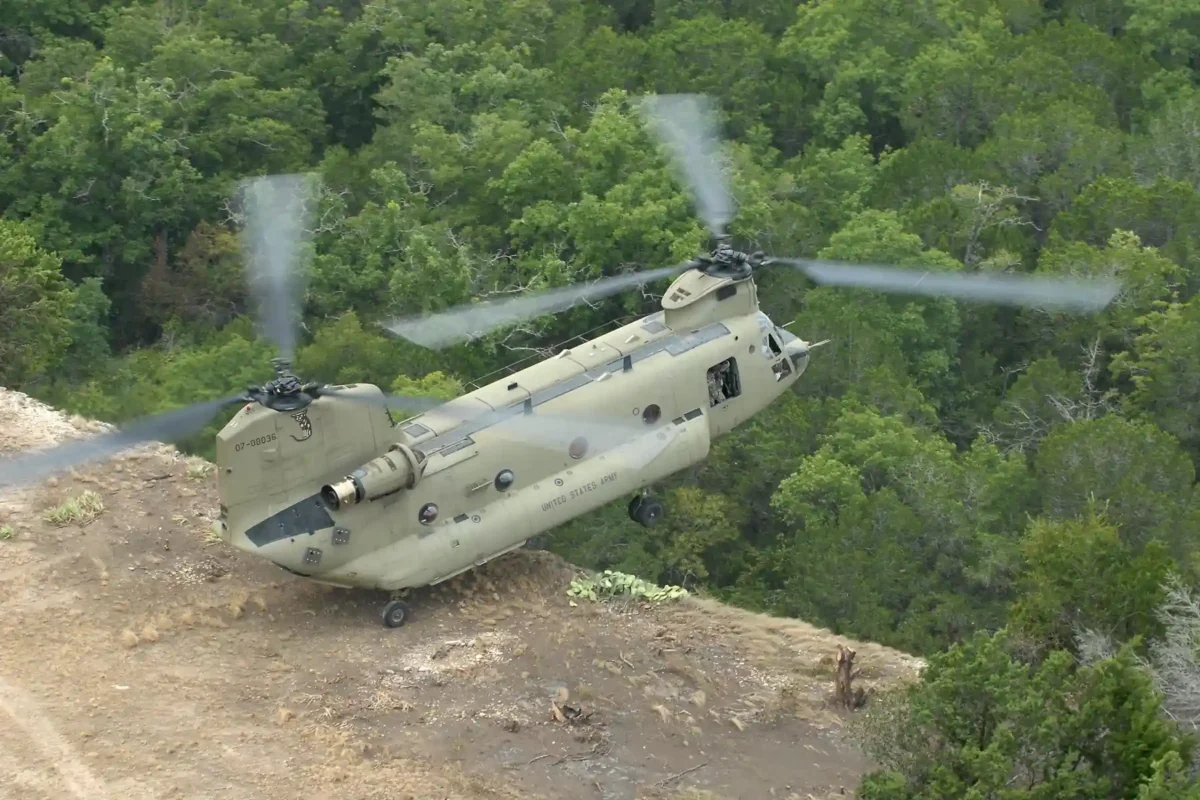
One of the best things about the Chinook’s twin-rotor setup is how stable it makes the helicopter, even in tough flying conditions. Up in the mountains or deep in a desert valley, places with thin air, gusty winds, and uneven terrain, that design really shows its value. If one end starts to drop, the pilot can quickly fix it by tweaking the pitch on either rotor. That kind of control keeps the Chinook steady when hovering or lowering cargo into tight spots, like small outposts or rescue zones.
It’s also built with practicality in mind. Without a tail rotor getting in the way, there’s space for a big rear ramp. Troops and vehicles can drive right in or out, which saves a ton of time during missions. When you put it all together, the power, the balance, and how easy it is to load, it’s no surprise the CH-47 Chinook has stayed a favorite for more than sixty years.
For something its size, the CH-47 Chinook moves with surprising speed and confidence. It’s one of the fastest heavy-lift helicopters out there, cruising at around 175 miles per hour (282 km/h). It’s not bad for a machine that can carry trucks and troops at the same time.
On a full tank, it can go roughly 400 miles (640 km) , and with extra fuel tanks, even farther. The Chinook can reach altitudes above 20,000 feet, though it usually flies lower where it can get people and supplies where they need to go.
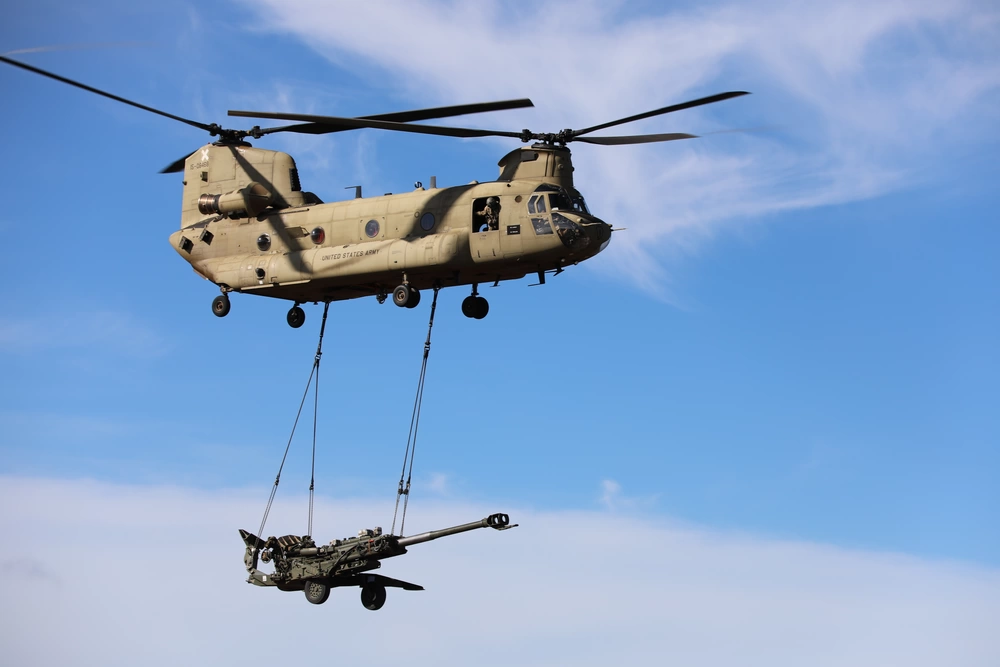
What really earns the Chinook its reputation is how much it can carry. Inside, it can fit anywhere from about thirty to fifty troops, depending on how the seats and gear are set up. Switch it to cargo mode, and it can haul up to around 24,000 pounds (10,800 kg) or about the same as a fully loaded pickup truck or a small armored vehicle.
If the mission calls for it, crews can hook the load underneath instead of putting it inside. It’s a neat trick that makes supply drops or vehicle lifts in rough terrain a lot easier. The big ramp at the back is another smart touch, wide enough for troops or vehicles to roll right in or out without wasting time.
Then there’s its endurance in extreme climates, one of the Chinook’s most underrated qualities. The Chinook is built for extremes. It’s flown in Himalayan cold, Middle Eastern heat, and just about everything in between. Its twin engines and sturdy frame help it handle thin air, sand, and moisture, the stuff that usually causes trouble for other aircraft. Crews like to call it a “flying truck,” but that doesn’t quite capture it. It’s tough, yes, but also reliable in the kind of places where breaking down isn’t an option.
The CH-47 Chinook is valuable because it can adapt to almost anything. It’s built to lift, move, and rescue, and in the real world, that’s exactly what it does, whether it’s carrying soldiers into combat or flying food and supplies into flood zones.
In military operations, its record speaks for itself. From Vietnam to Afghanistan, the Chinook has been the workhorse for getting troops, artillery, and gear into hard-to-reach areas.
In Afghanistan, especially, it proved how valuable that design is; flying through thin air at high altitude to deliver special forces to mountain bases where planes couldn’t land. Their ability to hover steadily and operate in thin air made them indispensable for missions in the Hindu Kush mountains.
For all its strength, the Chinook’s story also carries the weight of the risks it takes. Its size makes it a bigger target, and there have been some hard moments like the 2011 crash in Wardak that claimed 38 soldiers.
People tend to picture Chinooks in war zones, but they’ve saved just as many lives off the battlefield. After the tsunami in 2004 and the Nepal earthquake in 2015, crews used them to fly deep into isolated areas with food, medicine, and generators. Their size and twin rotors make landings in rugged terrain possible, even where there’s barely a flat patch of ground.
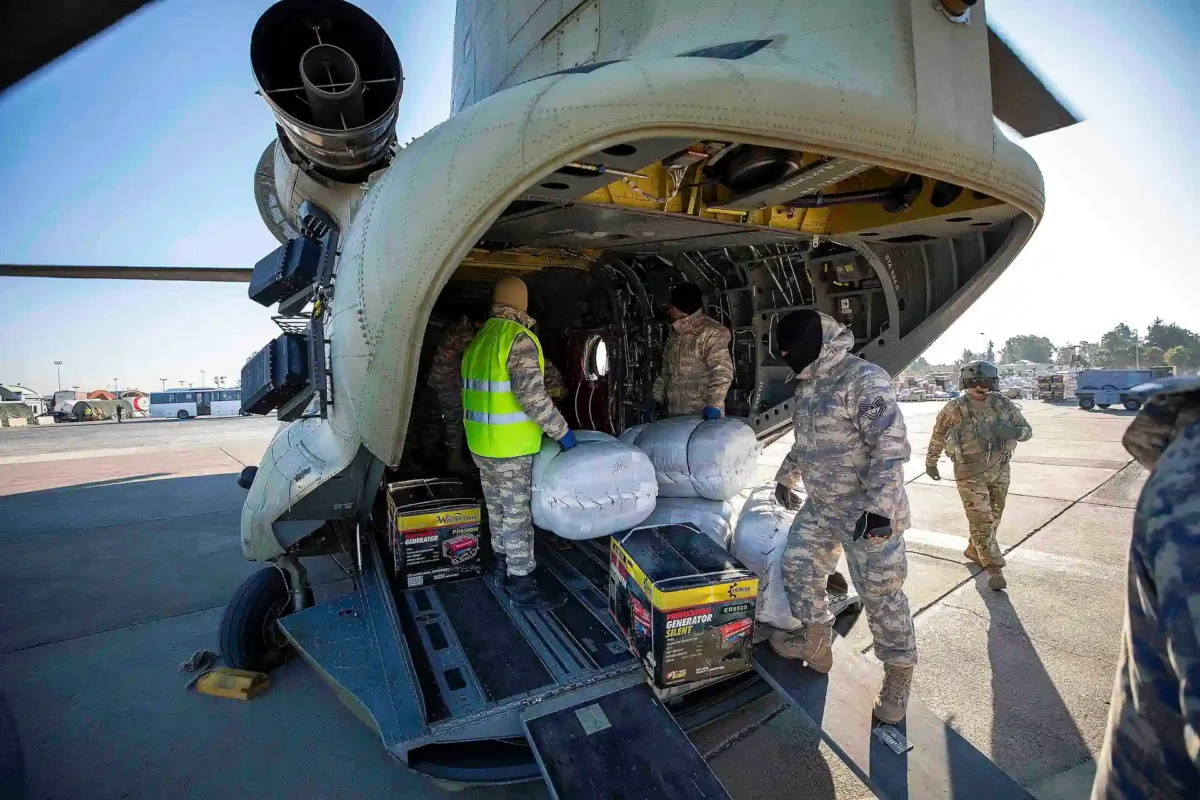
What’s interesting is how a machine built for war keeps proving its worth in peace. The same lift capacity that moves artillery in combat becomes a lifeline when delivering aid. Of course, nothing about running a Chinook is simple. It needs lots of maintenance, fuel, and crew support, so they can’t just be scrambled at a moment’s notice the way lighter choppers can.
Search and rescue or SAR operations is another area where the Chinook really shows what it can do. Not every helicopter can handle rescue work the way the Chinook does. Its speed and endurance make it ideal for large, complex operations, the kind where smaller choppers would struggle to carry enough people or gear. It’s been used in all sorts of emergencies: rescuing people from floods in Britain, from fires in California, and even during U.S. hurricane evacuations.
That said, it’s not perfect for every rescue. Because it’s big and pushes out heavy airflow, it’s tricky to use around buildings or power lines. And the powerful airflow it generates can be dangerous near obstacles.
Read also: Boeing Rolls Out CxR Drone Concept for Apache, Chinook Support
If there’s one thing the Chinook proves, it’s that smart upgrades can keep an old design young. The basic shape hasn’t changed much since the Vietnam war; two rotors, one big body, but everything else has. Boeing and the Army have kept upgrading it, bit by bit, turning it into something far smarter and stronger than the original.
Take the cockpit, for example. The newest version, the CH-47F, runs on a fully digital system called CAAS. It ties together communication, navigation, and control systems through a handful of large digital screens. That setup helps pilots fly more confidently in bad weather or over rough terrain, cutting down on the kind of mistakes that used to happen when everything was manual. Modern radar and terrain-following sensors also help cut down the workload, letting crews focus more on the mission and less on fighting the aircraft itself.
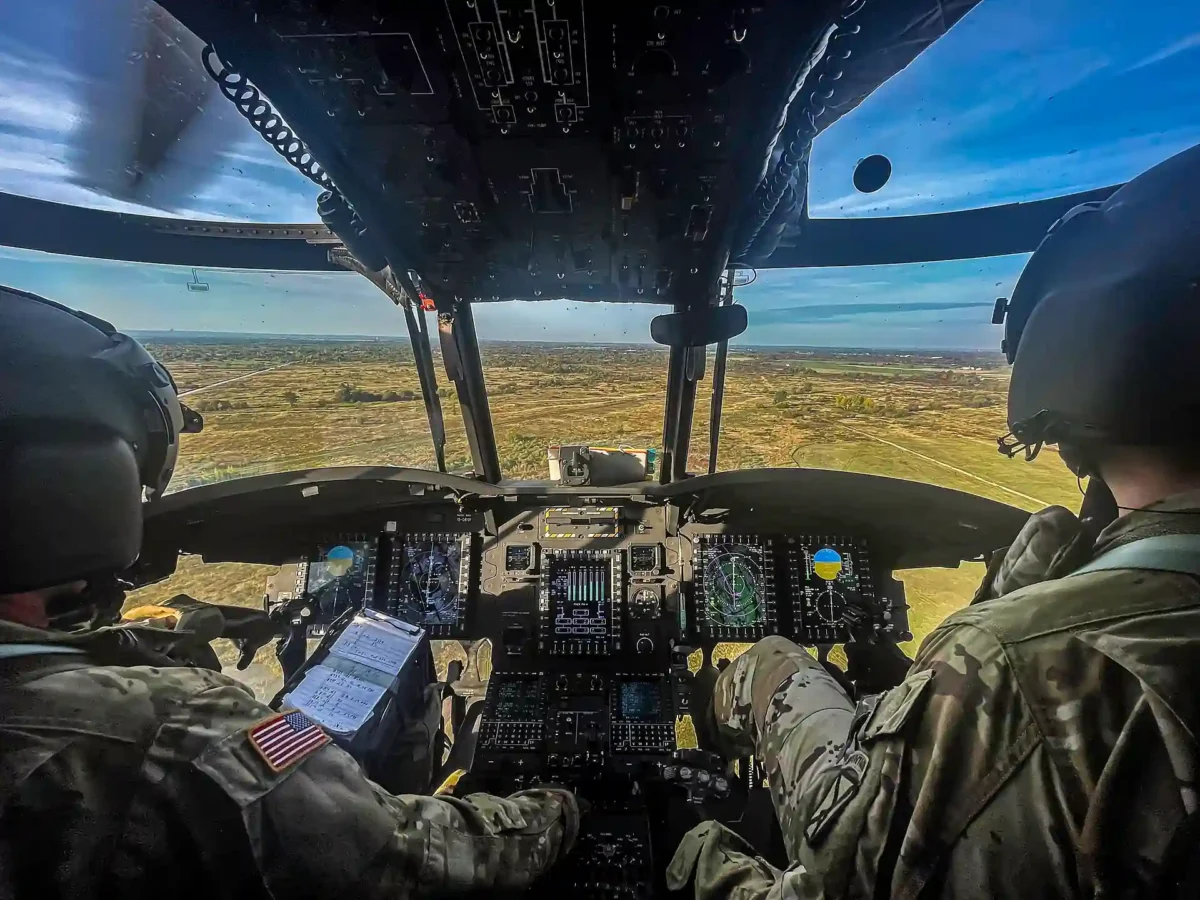
The Chinook’s engines have gone through quite an evolution over the years. What started with the old T55s has turned into a much more capable setup. The current Honeywell upgrades deliver far more horsepower with better fuel economy, which’s rare win-win in aviation.
The extra horsepower really shows when flying in “hot and high” conditions, where thinner air can sap a helicopter’s lift. Now, a fully loaded Chinook can take off from places that once would’ve been near its limits. Crews also appreciate that the newer engines are tougher and easier to maintain, which makes a big difference when you’re working out of sandy deserts or freezing mountains for weeks on end.
Survivability has improved too. Modern Chinooks come fitted with infrared dampers, armor panels, and electronic defenses that jam or mislead incoming missiles. Some variants even add radar warning gear and flares for an extra layer of safety. It’s not perfect protection, but in combat zones, every extra second of warning can make all the difference.
If anything, these upgrades show how adaptable the Chinook’s core design really is. Its airframe remains largely the same because it works, but everything around it has evolved.
The CH-47 Chinook has a track record few aircraft can match. But even icons eventually face the same question: how long can they keep up? With new rotorcraft like the Bell V-280 Valor and the Defiant X setting the bar for speed and range, some in the defense world are questioning whether the Chinook can stay competitive. It’s still dependable, no doubt, but technology in this space moves fast.
Boeing’s answer is steady evolution. The CH-47F and the newer Block II bring stronger engines, refined digital controls, and reworked fuel tanks for longer missions. Those changes don’t reinvent the Chinook; they reinforce what already works. The company expects these upgrades to stretch its service life well into the 2060s, which says a lot about how adaptable the platform still is.
It’s fair to ask how long an airframe designed in the 1960s can keep evolving. The Chinook still does its heavy-lift job better than almost anything else, but it’s never going to win a race.
Tiltrotor aircraft such as the V-22 Osprey or the newer V-280 can cruise at near-airplane speeds, and that kind of pace changes what’s possible in modern logistics and rapid-response operations. The Chinook’s endurance and reliability remain huge strengths, but its conventional design may start to feel out of step with the faster, more automated systems shaping the next era of air warfare.
Cost is another piece of the puzzle. A machine this large and complex takes real money to keep in the air, and as funding shifts toward unmanned systems and high-speed designs, the Chinook’s share of the pie could shrink.
Some planners already see a future where heavy-lift helicopters aren’t as common, replaced by more flexible transport options. Even so, it feels too soon to write off a helicopter with this kind of record. Few machines have been this dependable for this long. For missions that demand raw power and a proven design, the Chinook still has a job to do.