Follow Us:
Follow Us:

Not many aircraft have shaped the early 21st century quite like the MQ-1 Predator. Odd to think, really, considering it was never fast, never sleek, and certainly never built to win dogfights.
Yet this slow-moving drone, sometimes mocked as a “flying lawnmower”, ended up redefining how wars are fought. Back in the late 1990s it was just a reconnaissance tool; by the mid-2000s, it had quietly become the face of America’s “war on terror.”
What’s curious is how recently its story closed. The U.S. Air Force finally retired the MQ-1 Predator in 2018, after more than two decades of service. Hard to believe, considering how quickly military tech usually gets outdated.
And yet, if you squint at today’s UAVs, the MQ-9 Reaper in particular, you can still see the Predator’s fingerprints all over the design.
News outlets occasionally revisit the drone’s legacy, usually when another country unveils its own Predator-inspired system, like China’s Wing Loong, Turkey’s Bayraktar, and even Iran’s Shahed series.
In that sense, the Predator hasn’t really gone away; it just keeps showing up under different names.
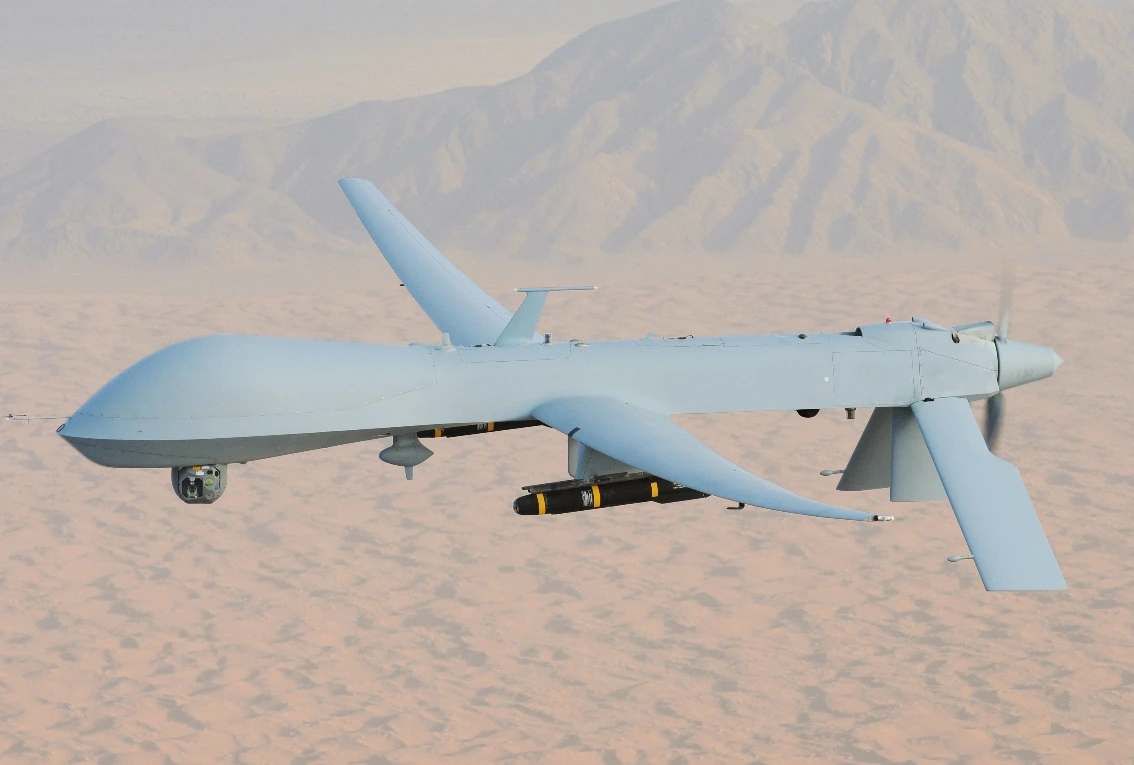
Not many people know that the MQ-1 was never supposed to carry weapons. It became armed almost by accident, the result of Pentagon improvisation in the late 1990s when someone asked the obvious question “why can’t we just strap a Hellfire missile under it?” That experiment worked a little too well, and the rest, as they say, is history.
The MQ-1 Predator’s story starts in the uneasy years right after the Cold War. In the early 1990s, the U.S. military was experimenting with ways to keep eyes on a battlefield without putting pilots at risk.
Reconnaissance satellites gave broad pictures, but not in real time, and manned aircraft were expensive and vulnerable to send loitering over hostile territory. What the Pentagon needed was something cheaper, quieter, and persistent Origins and Development.
General Atomics ended up filling that gap. They took lessons from the earlier GNAT-750 drone and stretched it into something more capable. The result was the RQ-1 Predator.
On paper, the Predator didn’t seem remarkable. Thin body, oversized wings, and a camera rig bolted beneath it.
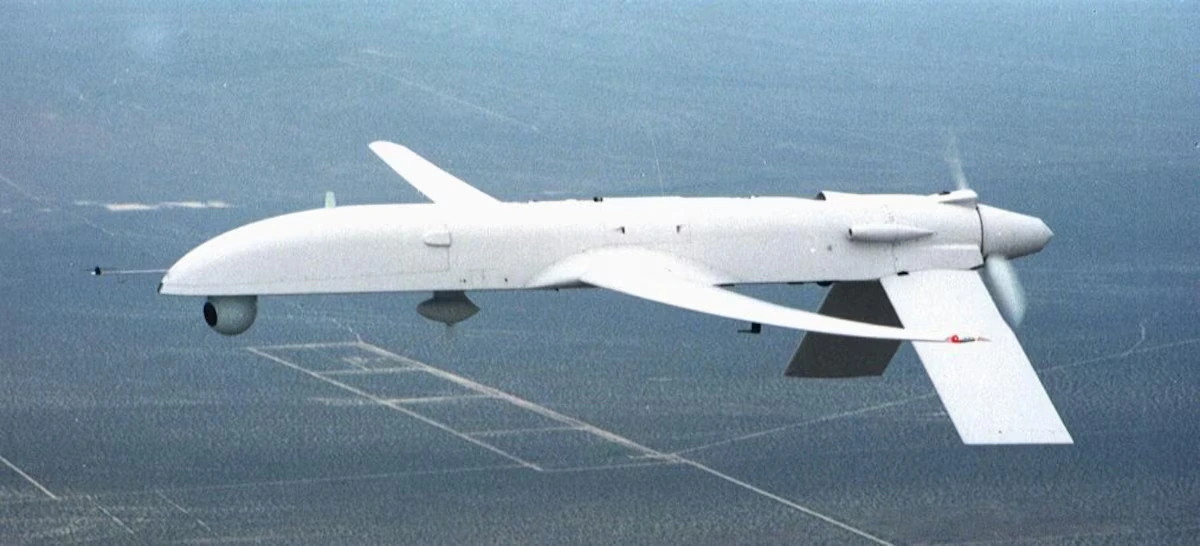
But in practice, it could do something manned aircraft couldn’t: with fuel to last more than a day, it could sit in the sky for twenty-plus hours, circling quietly while relaying live footage back home.
During NATO operations in the Balkans, that endurance proved its worth, offering an almost uninterrupted video feed of enemy positions.
Read also: MQ-20 Avenger: How It Could Redefine Combat Drone Warfare
By the late 1990s, the Predator wasn’t just a camera platform anymore.
The CIA and Air Force began tinkering with it, first by adding a laser designator so it could point targets out for strike aircraft. That was useful, but someone inevitably asked the next question, why not let the drone pull the trigger itself? A few experiments later, the Hellfire missile fit neatly under its wing, and the RQ-1 quietly turned into the MQ-1.
That change transformed the Predator’s role almost overnight. What started as a reconnaissance experiment evolved into the first truly armed UAV in U.S. service.
The Predator was never fast, and it wasn’t built tough either. What mattered was that it could hang overhead for ages, drop a missile when needed. That progression, from the clunky GNAT-750 to the RQ-1 and finally the MQ-1, more or less set the stage for how drones would be used in the decades to come.
If the Predator had one real strength, it was patience. It could circle for hours, sometimes almost a whole day, without having to land. In the 1990s, that kind of endurance was unusual, especially for something that small.
The early versions carried a sensor ball under the nose that could switch between normal video during the day and infrared at night. Later upgrades added a laser designator. The ball might not have looked impressive, but it was the key to steady pictures.
Even in turbulence, operators could zoom in on small details without the image shaking. The infrared view picked up what the eye would miss: still-warm tire tracks, people moving in shadows, or engine heat fading after sunset.
Getting the video off the aircraft was the other challenge. For takeoff and landing, crews used line-of-sight radio links. But once the drone was on station, a satellite connection carried the feed halfway around the world to operators sitting in ground stations.
The Air Force called this “remote split operations.” Units in the field could also watch through rugged laptops or handheld receivers. That meant a soldier on a rooftop could see the same live video the Predator crew was seeing, almost in real time.
One of the Predator’s biggest advantages was a loiter time. Instead of flying past for a quick look, it could stay overhead long enough to spot routines. Crews learned who left a house in the morning, which trucks showed up after dark, or how often a messenger swapped out phones.
The drone didn’t work alone, either. Signals teams could point it toward a target, and the Predator would confirm and keep eyes on it. Other times the camera picked up something unusual, and radio units dug for matching chatter.
That teamwork often turned into solid targeting. It also gave commanders a new tool: proof of what happened after a strike. Not just “the bomb hit,” but “the bomb hit, and here’s what changed over the next few hours.”
Another quiet but important job was mapping. Predator crews sketched out foot trails, counted vehicles at roadblocks, and logged which bridges were used late at night.
The Predator first proved itself in the Balkans during the mid-1990s. Long flights over Bosnia and later Kosovo gave NATO something it had never had before, an “always-on” camera in the sky. Crews learned how to pass a target from one shift to the next without losing track, which was a big step in making drones part of daily operations.
Those lessons carried into Afghanistan a few years later. By the early 2000s, the aircraft was over Afghanistan, even before the war there fully began. Predators were already sending back live video of compounds tied to high-value figures.
One of the most famous clips was a tall man walking in a courtyard, widely believed to be Osama bin Ladenn came from these flights. At the time, the drone wasn’t armed, and that limitation helped drive the push to fit it with Hellfire missiles.

In 2002, a Predator carried out its first armed strike in Yemen. The missile destroyed a car carrying a senior al-Qaeda member. What most people remember is the sudden hit, but the real work had happened earlier. The drone had been overhead for days, watching movements and tracing patterns until the moment to act was clear.
In the years that followed, Predators kept their focus on the Pakistan border areas. Here, their long endurance mattered most. Drones could watch valleys and compounds for hours, shifting between wide views and close-in tracking, waiting for patterns to appear.
They often worked alongside other platforms and with intelligence from the ground. Not every lead worked out, but enough did to make this mix of persistence and teamwork a lasting model for drone warfare.
However, the Predator wasn’t flawless. Bad weather could block the view, and strong winds sometimes shook the camera. Cities made things harder, with heat sources, rooftops, and clutter that let targets hide. And watching videos for twenty hours straight created its own problem: people missed things.
The key clue might show up after twelve hours, not in the first ten minutes. Crews tried to fix this with checklists, logs, and rotating shifts, but mistakes still happened. Even with those limits, the MQ-1 changed how reconnaissance worked.
When the MQ-1 was first designed, it wasn’t meant to carry weapons. That changed quickly once commanders realized how frustrating it was to watch a target slip away while a separate aircraft was being called in.
The solution was to fit the Predator with AGM-114 Hellfire missiles. It’s light, accurate, and small enough for the drone to carry without losing too much endurance.

This gave the aircraft the rare ability to go from surveillance to strike in a single orbit. A team could watch a compound for days, confirm a target, and then act immediately without handing the mission over to someone else.
The accuracy of the system made it especially attractive. A Predator wasn’t dropping heavy bombs; its Hellfires were designed to hit vehicles or specific rooms rather than whole buildings. That precision matched the kind of conflicts the U.S. was fighting after 9/11, where leaders wanted to remove individuals without causing large civilian casualties.
Still, pulling the trigger was never as simple as it looked. Crews on the ground might have the drone lined up, but they still needed repeated confirmation and clear signs the target was hostile. The authority to approve a strike usually rested with senior officers, not the people flying the Predator.
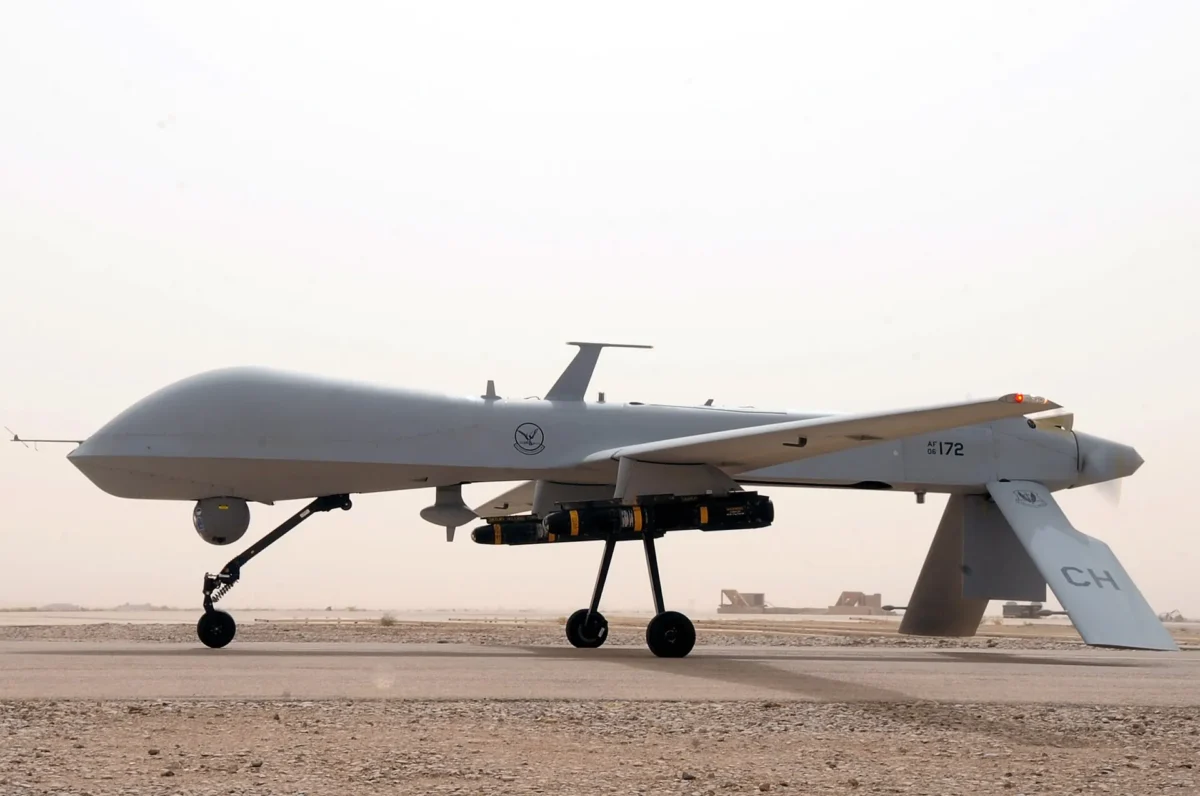
The Predator’s biggest breakthrough was how it stayed connected. Before the Predator, most drones were stuck with line-of-sight control. They could only fly as far as a nearby antenna could reach. That kept them close to the front and limited their value.
The MQ-1 broke that barrier by tapping into satellites. Suddenly, a crew sitting in Nevada could steer a drone thousands of miles away in Afghanistan. It was the first time distance stopped mattering, and it completely changed how militaries thought about unmanned flight.
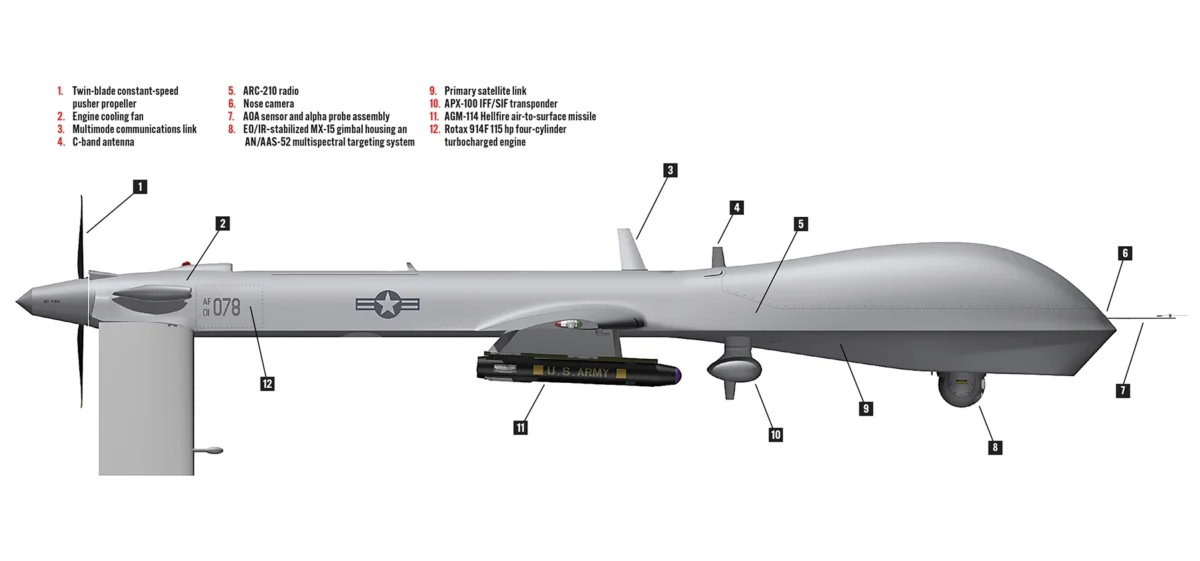
Another strength was endurance. As explained earlier, the Predator wasn’t built to be fast or tough. Its strength was patience. Instead of rushing in and out like most planes, it could linger for twenty hours or more. That gave crews the chance to see patterns—who left a building at dawn, which vehicles came back after dark. Its small frame and soft engine noise made it harder to notice, so it could do its work without much fuss.
The aircraft also carried more automation than earlier drones. Instead of pilots fighting the stick all the time, the aircraft could hold a circle on its own, adjust for wind, and follow a programmed route. That meant crews could spend their energy watching what the sensors picked up.
By comparison, the older drones from the ’80s and early ’90s were simple machines, good for quick looks but not much else. The MQ-1 changed that by being able to hang around and beam back live intelligence as things unfolded.
Final Thoughts: Just another drone or something more?!
Looking back, the Predator’s importance wasn’t tied to any single feature. Its real impact was how it reset expectations. It proved that patience could outweigh speed, that a live video feed could be as decisive as a bomb, and that a war could be shaped from a control trailer thousands of miles away.
By the time newer drones entered service, the MQ-1 had already shifted the rules. Its legacy isn’t hardware—it’s the mindset it left behind: that conflicts could be observed, influenced, and sometimes fought without being there in person.