Follow Us:
Follow Us:

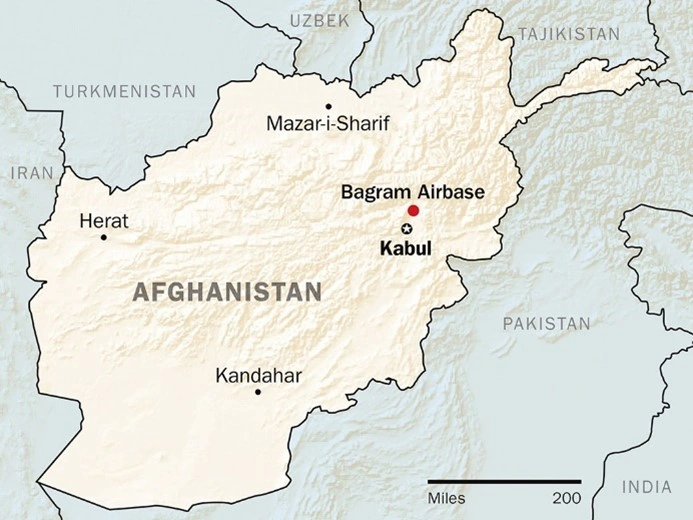
When people talk about Afghanistan these days, the name that often comes back is Bagram Air Base. Once the largest U.S. military base in the country, it was abandoned almost overnight in 2021 when American forces pulled out.
The departure was so sudden that local reports said even the Afghan security forces who were supposed to take over didn’t know the Americans had left until after the lights went out. Now, years later, Bagram is making headlines again. This time because former President Donald Trump has suggested the U.S. should retake it.
But why would Washington want to return to a base it once gave up so dramatically? And more importantly, who actually controls Bagram today?
The story of Bagram Air Base doesn’t actually begin with the United States. It goes back further, to the 1950s, when Afghanistan found itself caught between Washington and Moscow.
The Soviets later took over the airfield during their own invasion in the 1980s, expanding it into one of the biggest military installations in the country. Planes flew in and out daily, carrying bombs, fuel, and soldiers. For the Soviets, it was the center of their campaign.
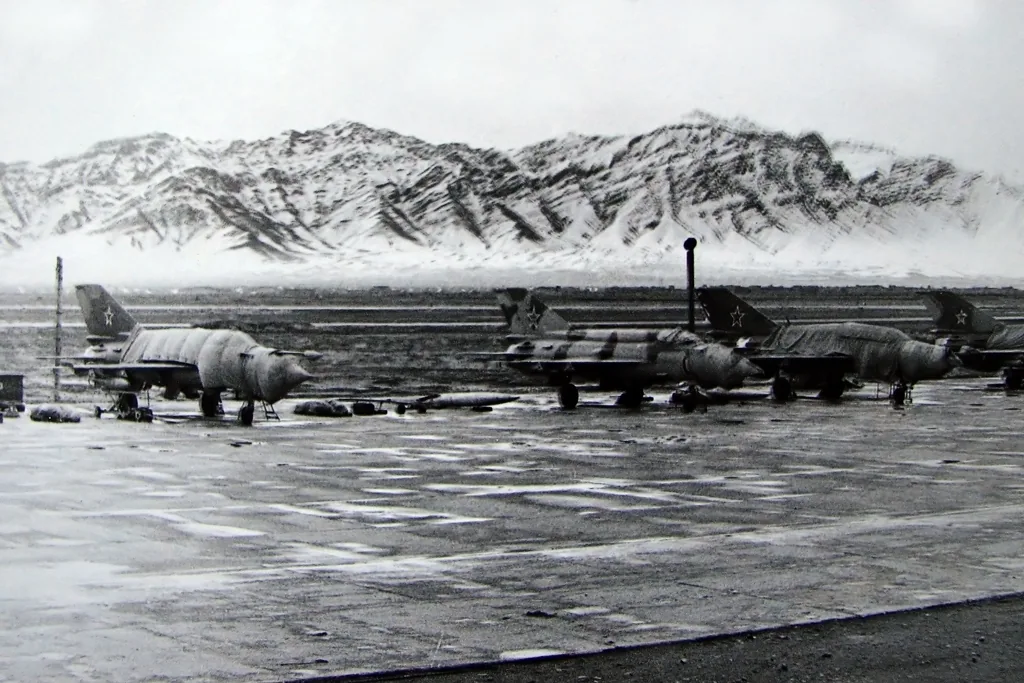
That earlier history tends to be forgotten, yet it explains much about what came later. Fast forward a couple of decades, and all of that mattered again. By the time U.S. forces arrived after the attacks of September 11, 2001, Bagram was already standing.
The runways were long, the shelters were solid, the place was built for war. Rather than build from the ground up, U.S. forces stepped into what the Soviets had left behind. That made Bagram not just another base, but the ready-made heart of the American mission.
Read also: Top 5 Biggest US Military Bases: By Size, Troops & Impact
In the early years of the war, Bagram quickly turned into the main American base. Its location mattered: close enough to Kabul for quick access, but still tucked far enough away to defend heavily. Some American officers even called it the “beating heart” of the campaign, and in a sense, that description fit.
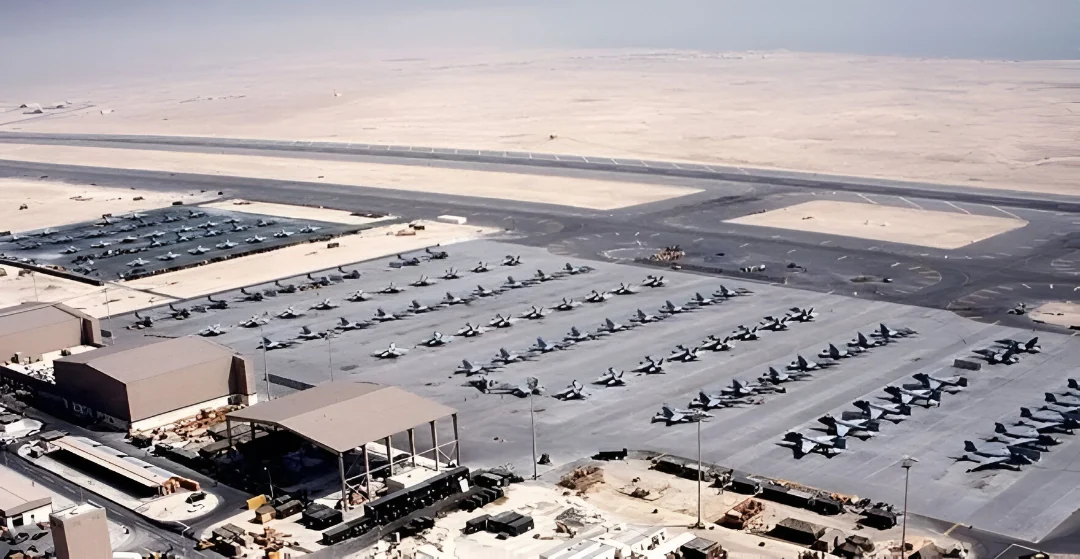
Over time, the base turned into something much bigger than just a staging ground. It grew into what looked almost like a city. There were two long runways where heavy bombers could land, hangars that held rows of fighter jets, barracks stacked with new arrivals, and even a full hospital.
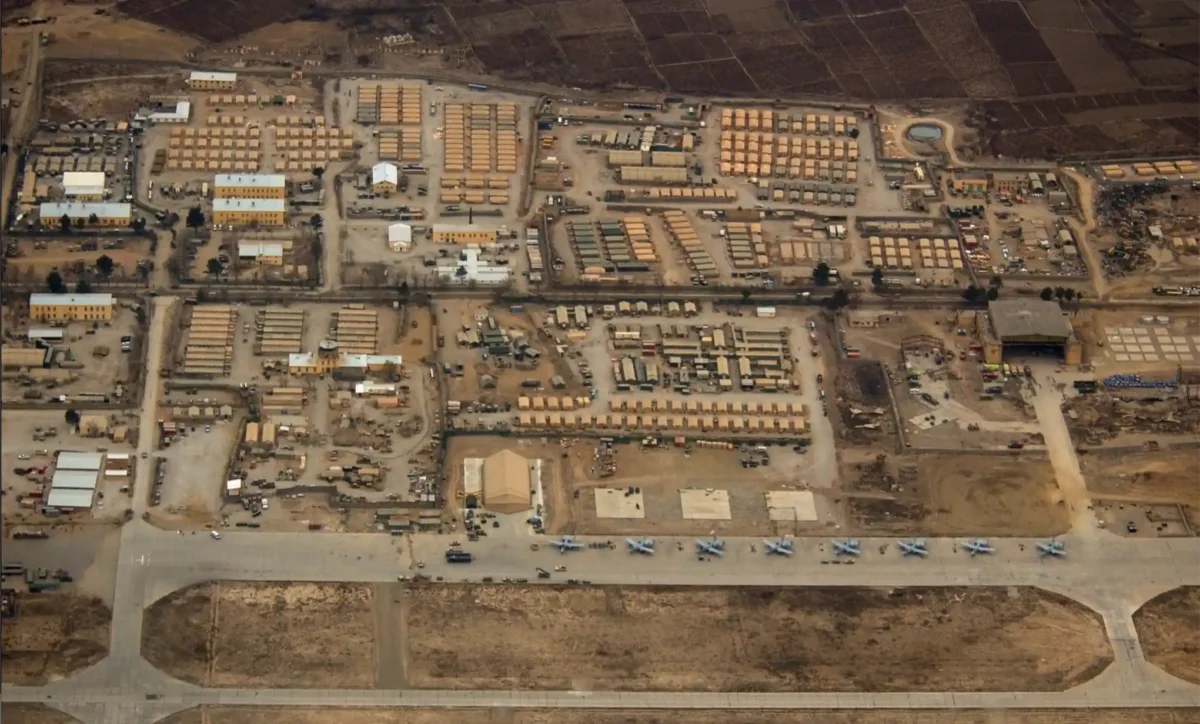
At one point, chain restaurants opened inside the perimeter, which struck some visitors as surreal, given the war outside the walls. Troops from the U.S., NATO allies, contractors, and Afghan staff all passed through. For many, Bagram was both the first place they saw when arriving and the last place they left.
Strategically, Bagram’s location gave it weight that went far beyond Kabul. From those runways, American aircraft could cover almost every corner of Afghanistan, whether that meant surveillance flights, drones, or heavy bombers.
A few commentators at the time suggested the base offered more than just Afghan coverage. Its position, they argued, also put pressure on neighbors like Iran or Pakistan, if the need ever came. In that sense, Bagram wasn’t only about the Afghan war. It was also a foothold in Central Asia. This is one reason people now wonder whether leaving it behind was a mistake.
Bagram’s name wasn’t tied only to planes and soldiers. Over time, its prison drew just as much attention, and not the good kind. The official name was the Parwan Detention Facility, though many simply referred to it as “Bagram prison.” It held large numbers of people, anywhere from a few hundred to well over a thousand. Some were suspected Taliban, al-Qaeda fighters, or sometimes just people picked up in night raids.
Reports from journalists and human rights groups over the years painted a troubling picture. Groups accused the U.S. of torture, of keeping people for years without charges, and of holding men who weren’t guilty at all. In 2002, two Afghans died in custody, and that incident stayed in the headlines. Over time, Bagram gained a label that stuck; it was often compared to Guantánamo, another symbol of the darker edge of the War on Terror.
Among locals, Bagram never meant just one thing. Some saw it as protection, a shield that kept Kabul from falling apart. Others looked at it as proof that their country was occupied, with all the resentment that comes with that. The truth was probably somewhere in between, but the memory stuck. That’s why, even now, the name Bagram still stirs anger, long after the last troops left.
Few expected Bagram to be abandoned the way it was in 2021. President Biden had announced that American troops would be leaving Afghanistan after almost two decades of war, giving the impression it would happen slowly.
The idea was that Afghan forces would take over in steps. But the way it actually happened? Pretty much overnight. Equipment gone, personnel gone, and the base left in Afghan hands faster than many expected.
There are reports that the Afghan officers set to take control didn’t get any direct handover at all. Some say they only knew the Americans had gone when power across the base suddenly went dead. That detail, whether entirely accurate or not, became a symbol of how chaotic and abrupt the withdrawal felt.. For ordinary Afghan workers at Bagram, it meant their work ended almost overnight, along with the income they had relied on for years.
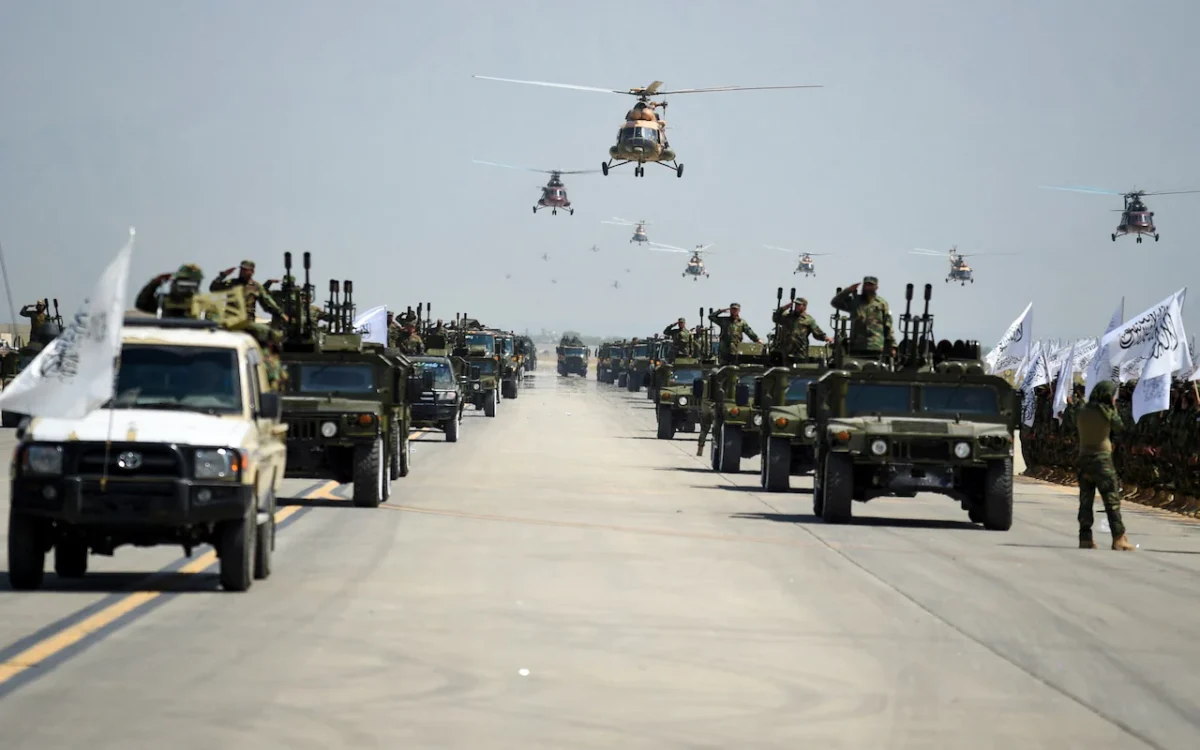
Not long after the Americans left, the Afghan government struggled holding the base. Without U.S. air support, things fell apart pretty quickly. By August 2021, the Taliban were moving fast across the country, heading toward Kabul, and Bagram was in the way. There wasn’t really a big fight. Some soldiers apparently just left their posts. Others surrendered. The Taliban walked in.
It was strange, almost anticlimactic. For years, the base had stood for U.S. power in Afghanistan. And then, almost suddenly, it was controlled by the very group the U.S. had been fighting since 2001.
People started asking hard questions. Were twenty years of war and billions of dollars really worth it? Could it have been handled differently? No one has a simple answer. But for many, Bagram came to represent the bigger story: the collapse of America’s project in Afghanistan, all in one place.
Lately, Donald Trump has been talking a lot about Bagram Air Base, and it’s stirred up the old debates about how the U.S. left Afghanistan. He keeps saying the way the base was abandoned was a mistake, one that shouldn’t have happened.
He calls it “gross incompetence” in interviews, and in one, he said the U.S. basically “gave it to them for nothing.” He added that if he were in charge, Bagram would have stayed as a foothold, even if American troops were gone. Some people see his criticism as tapping into a bigger feeling that the 2021 withdrawal was chaotic, rushed, and left a lot unresolved.
Recently, Trump has gone so far as to call for retaking Bagram, even warning of consequences if it is not returned. At a rally, he declared, “We want it back, and we want it back right away. If they don’t do it, you’re going to find out what I’m going to do.”
However, when pressed on whether that meant sending troops back in, he brushed aside specifics with, “We won’t talk about that.” These statements are deliberately vague. He doesn’t clearly detail how; military force? Negotiations? What agreements would allow it?
Another part of his argument links Bagram to China. Trump has claimed the base is “one hour away from where China makes its nuclear weapons,” suggesting that abandoning it not only weakened the U.S. position in Afghanistan but also undermined America’s strategic leverage against Beijing.
He has hinted that if the Taliban controls the base, China could benefit from it directly or indirectly. The problem, however, is that there is little public evidence to support these claims. The Taliban themselves have denied that China is using Bagram, and independent analysts have said Trump’s nuclear weapons argument may be exaggerated.
The bigger question is whether Trump’s stance is realistic. On the one hand, Bagram is undeniably a valuable military asset; its long runways, central location, and existing infrastructure give it unique advantages. Trump is right to say its loss reduced U.S. reach in the region.
On the other hand, the idea of simply “taking it back” glosses over the immense political and military challenges involved. Retaking Bagram would mean confronting the Taliban. This is potentially violating international agreements, and committing significant U.S. resources to secure and hold the base. Some argue that this could amount to a partial re-invasion, with all the risks and costs that entails.
When people argue about the future of Bagram Air Base, most likely, they’re not just talking about an old runway in Afghanistan. What makes the place so sensitive is geography. Bagram sits in a spot where, within a few hours’ flight, you can reach China, Russia, and Iran.
Read also: Diego Garcia – Why It’s Key to U.S. Power in Indian Ocean
Some analysts like to point out that if the U.S. still held Bagram, it could keep a closer watch on China’s western regions, or send a message to Moscow and Tehran that America was not pulling back from Central Asia. Of course, whether Washington would actually use the base that way is another question, but the possibility itself gives the airfield a certain weight.
There’s also the issue of counterterrorism. Even after the U.S. left in 2021, extremist groups didn’t just vanish. Some reports say ISIS-K has been trying to regroup in Afghanistan.
A base like Bagram, at least in theory, could let the U.S. and allies launch strikes or run surveillance more quickly. Without it, everything has to come from far away—planes, drones, and operations over the horizon. That makes missions slower, riskier, and more complicated. Whether keeping a base there would be worth the cost, or the political fallout, is another question. Still, it’s easy to see why planners might wish they still had Bagram.
Beyond the battlefield, there’s the question of alliances and perception. Retaking Bagram would probably reassure some allies, at least the ones worried the U.S. is retreating from global commitment. But then again, it could anger others who think America can’t let go of old wars.
For some in Europe or Asia, it might look like strength, like America is still willing to act. For others, it might seem like another endless intervention, messy and costly. And if the U.S. tried this while also dealing with Russia over Ukraine and China over Taiwan… well, it could spread things too thin. Maybe it would work, maybe not.
The base itself is more than runways and buildings; it’s a symbol, a tool, and a possible problem all at once. How the world sees a return might matter as much as what actually happens on the ground.
Whenever Trump or his supporters talk about “retaking” Bagram, the first question is: is that even realistic? On paper, it might sound easy—just send troops in, push the Taliban out, raise the U.S. flag. But in reality, it’s anything but simple. Any military effort would have to break through Taliban defenses and then keep the base secure against counterattacks.
The Taliban are now in control of most of Afghanistan, and that makes getting supplies in (e.g., fuel, food, ammo) much harder. It’s easy to underestimate how complicated that alone would be. Unless there was support from neighboring states (which seems unlikely), the U.S. would be trying to hold an island in the middle of hostile territory.
Diplomatically, the consequences could be even thornier. If the U.S. tried to storm back into Bagram, most people would probably see it as stepping on Afghan sovereignty. Taliban rule or not. Even allies might hesitate, worried it looks like a comeback or occupation.
Pakistan could be unhappy too, that seems likely, given its influence. And China and Russia? They’d probably use it as proof that America can’t let go of old conflicts. Maybe even turn it into propaganda. Bottom line? The U.S. could try to project strength but still end up kind of isolated diplomatically.
Then there’s the basic cost-versus-benefit question. Running Bagram at its peak cost billions each year, not just in dollars but in manpower and political attention. Rebuilding and defending it now would be even more expensive, since much of the equipment left behind has been stripped or looted.
For what return? Some people say retaking Bagram would give the U.S. a foothold against China and a base for counterterrorism. Maybe that’s true. Critics, though, say it’s not so clear. The U.S. has other bases nearby, and with drones, satellites, and cyber tools, maybe it doesn’t need a permanent presence on the ground. Some say trying to take Bagram back could cost way more than it’s worth.
The idea of retaking Bagram makes for a strong talking point, sure. But in reality, it’s not that simple. On the military side, it would be a tough slog. Diplomatically, it might annoy partners and provoke rivals. Financially, it could turn into a long, costly commitment. Most experts seem to doubt it’s a feasible plan, though that doesn’t mean it won’t continue to resonate in political speeches.