Follow Us:
Follow Us:

In recent months, tensions have quietly escalated along the southern edge of Syria, near the Israeli-occupied Golan Heights. Reports of clashes, targeted assassinations, and mobilized militias in the Druze heartland of Suwayda have stirred unease, not just within Syria but across its borders.
On the surface, these may seem like yet another ripple in the country’s long-running civil war. But a closer look reveals something more unexpected: growing signs of Israeli interest in the fate of Syria’s Druze minority.
This might seem counterintuitive. After all, Syria and Israel remain technically at war, and most Syrian communities view Israel with deep suspicion. Yet the Druze, a small but influential religious minority, appear to sit in a unique position—caught between their loyalty to the Syrian state, their geographic proximity to Israel, and a long history of quiet pragmatism in regional conflicts.
So, who are the Druze in Syria? And why would a country like Israel, often seen as an enemy of the Syrian regime, express concern—if not outright support—for them?
To understand who the Druze are, you have to look back nearly a thousand years—into the mountains of the eastern Mediterranean, during a time of political upheaval and religious experimentation within the Islamic world.
Around the early 11th century, during the reign of the Fatimid Caliph al-Hakim bi-Amr Allah in Cairo, a small group of Ismaili thinkers began to promote a radically different interpretation of Islam—one that emphasized the hidden, esoteric meaning of scripture and placed extraordinary spiritual authority in the figure of the Caliph himself.
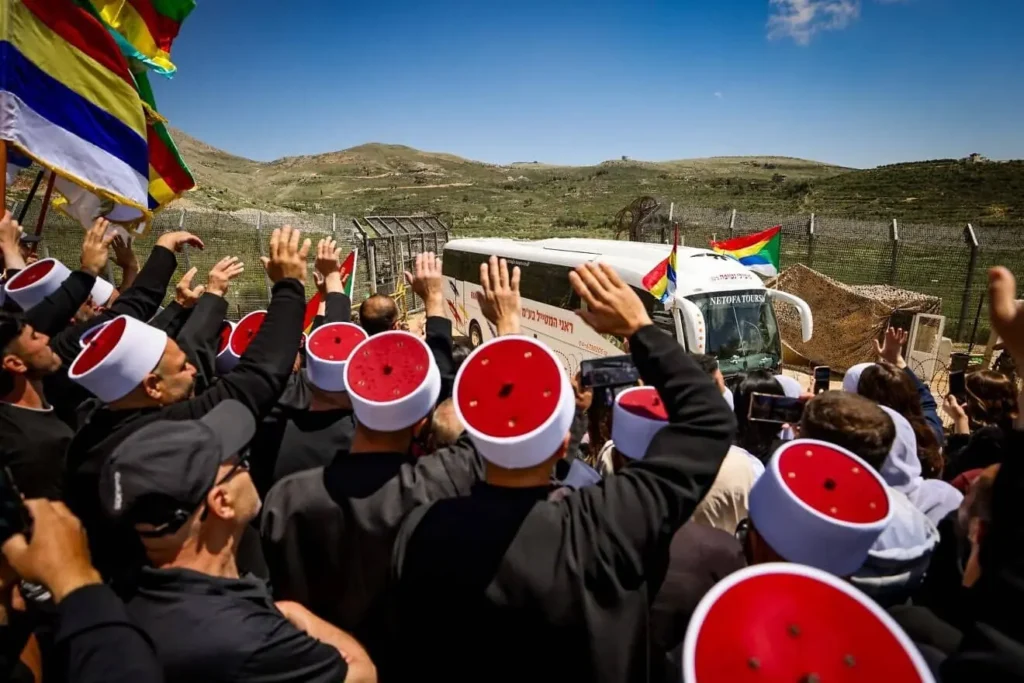
This movement eventually broke away from mainstream Ismaili Islam, forming the foundation of what we now call the Druze religion. Though it shares some historical roots with Islam, the Druze faith evolved into something entirely distinct. It’s a monotheistic belief system that blends elements of Greek philosophy, Gnosticism, and even traces of Hindu and Christian thought. However, much of it remains deliberately hidden from outsiders—even from many Druze themselves.
That secrecy is not just religious but cultural. Druze holy texts are closed to non-initiates, and religious leadership is reserved for a small, learned inner circle known as the uqqal (the “wise” or “knowledgeable”). The rest of the community, referred to as juhhal (the “ignorant”—not pejoratively, but descriptively), live ordinary lives while trusting the spiritual elite to safeguard their doctrine. This dual structure has helped preserve the religion’s integrity across centuries of persecution and displacement.
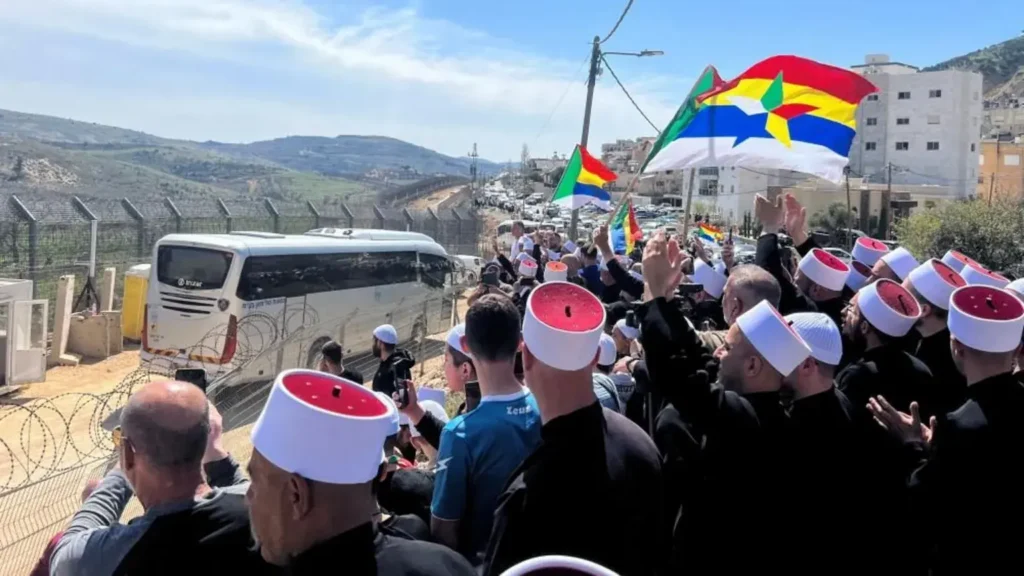
But being Druze isn’t just about belief—it’s about identity. The Druze minority in Syria, as in Lebanon and Israel, often sees itself as part of a distinct ethnoreligious group. They don’t accept converts, and intermarriage is strongly discouraged.
Loyalty to their own community is paramount, and this tight-knit social fabric has helped them survive in often-hostile environments. Over time, this has shaped a unique political stance: one marked less by ideological alliances and more by a strategic pragmatism.
In Syria, this has often meant walking a delicate line—avoiding open confrontation when possible, but fiercely defending their territories when necessary. It’s perhaps this reputation for resilience, autonomy, and discretion that makes the Druze stand out so sharply among minority groups in Syria—and why both local powers and foreign actors, including Israel, continue to watch them closely.
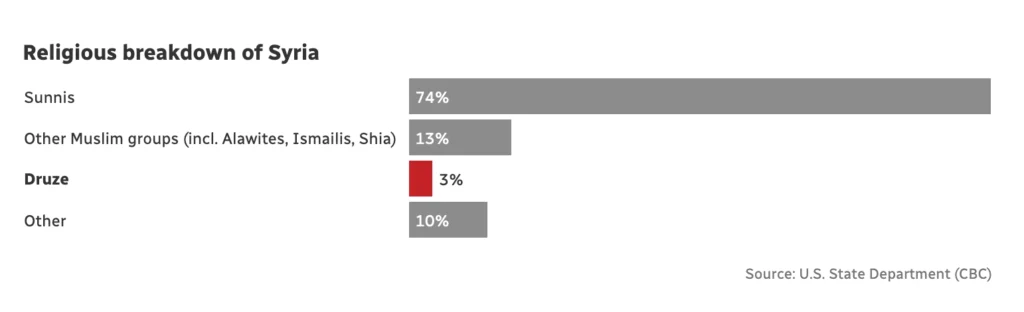
Syria’s population, as of estimates by the United Nations and the CIA World Factbook, sits at around 22 million people in 2025—a figure that reflects both post-war demographic shifts and the lingering effects of displacement after more than a decade of civil conflict.
Within this population, the Druze minority is believed to number between 600,000 and 700,000, making up roughly 3% of the national population. While that may seem like a small share, it’s important to note that the Druze hold outsized influence in several strategic regions, particularly in the south. Their demographic weight is amplified by their geographic concentration, tight social networks, and a long history of political engagement.
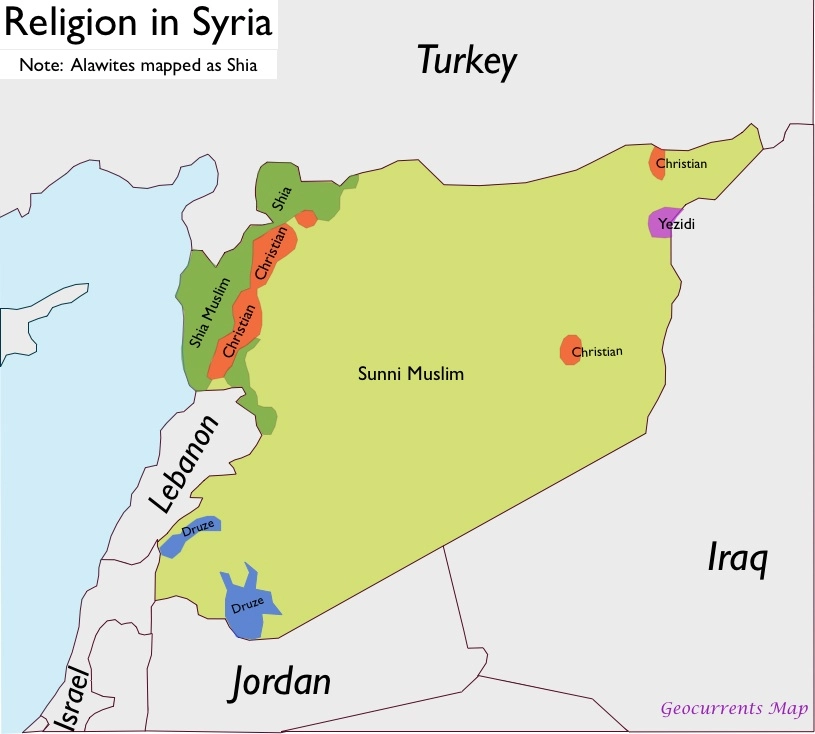
Most Druze in Syria live in and around the province of Suwayda, also known as Jabal al-Druze (“Mountain of the Druze”), near the southern border with Jordan and the Israeli-controlled Golan Heights. This mountainous terrain has historically offered both refuge and strategic depth—a combination that helped the Druze preserve their autonomy even as empires rose and fell around them.
Unlike other minority groups in Syria, who are often more dispersed, the Druze have been able to maintain a cohesive community structure, which in turn has strengthened their ability to act collectively in times of crisis.
During the French Mandate period (1920–1946), the Druze made a name for themselves on the national stage. Led by the legendary Sultan al-Atrash, a Druze commander and nationalist icon, they launched a bold rebellion against French colonial forces in 1925. Though ultimately unsuccessful, the revolt became a defining moment in Syria’s national memory and showcased the Druze as defenders of sovereignty and resistance.
Following Syria’s independence in 1946, the Druze continued to play a selective but meaningful role in politics. While they rarely dominated state institutions, they were present in the military and occasionally in parliament.
Many aligned with Arab nationalist and Ba’athist factions during the coup-prone decades of the mid-20th century, though their real strength often remained local. Suwayda functioned as a semi-autonomous stronghold, governed more by community elders and militias than by Damascus itself.
Under the rule of Hafez al-Assad, and later his son Bashar al-Assad, the Druze were largely incorporated into the state apparatus—though perhaps more symbolically than substantively. A few Druze figures held high-ranking positions, especially in the army and intelligence services, but the community as a whole tended to keep a low profile. Many Druze seemed to adopt a posture of guarded loyalty—neither openly rebellious nor entirely assimilated into the regime’s core. Their focus, it seemed, was on survival rather than power.
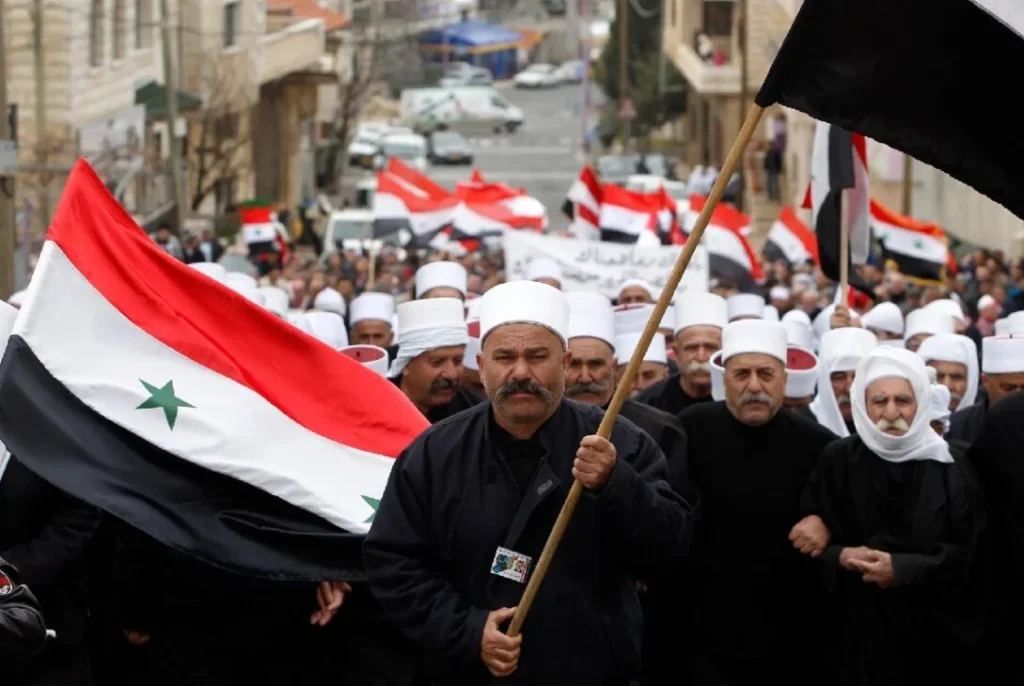
By 2011, on the eve of Syria’s civil war, the Druze minority were viewed as a stabilizing force—neither a threat to the regime nor an enthusiastic partner. Their silence, however, would soon be tested as the war engulfed the country. And while their numbers were relatively small, their geographic location near key borders gave them a kind of strategic importance that often outweighed their demographic size.
When Syria’s uprising erupted in 2011, the Druze minority faced a deeply uncomfortable dilemma. Caught between a brutal regime, a fragmented opposition, and the rise of jihadist factions, many Druze communities—especially in Suwayda—initially chose what appeared to be the safest course: neutrality. It wasn’t indifference, exactly, but rather a calculated attempt to shield their people from a war that was spiraling rapidly into sectarian chaos.
For much of the early conflict, the Druze avoided taking sides in a meaningful way. They neither joined the opposition en masse nor mounted serious resistance to the Assad regime, which still maintained a presence in Suwayda. This cautious stance may have been driven by memory as much as strategy: the Druze had historically survived by aligning with whichever power guaranteed their autonomy and security—without committing too deeply.
However, neutrality only worked for so long.
By 2013–2014, the threat of extremist groups like Jabhat al-Nusra and later ISIS began to grow in southern Syria. With jihadist forces advancing toward Druze towns and villages, and with the Syrian Arab Army increasingly overstretched, the community realized it could no longer depend solely on the state for protection. This led to the emergence of local Druze militias—loosely coordinated self-defense forces that patrolled roads, guarded villages, and even pushed back incursions by rebel or jihadist factions.
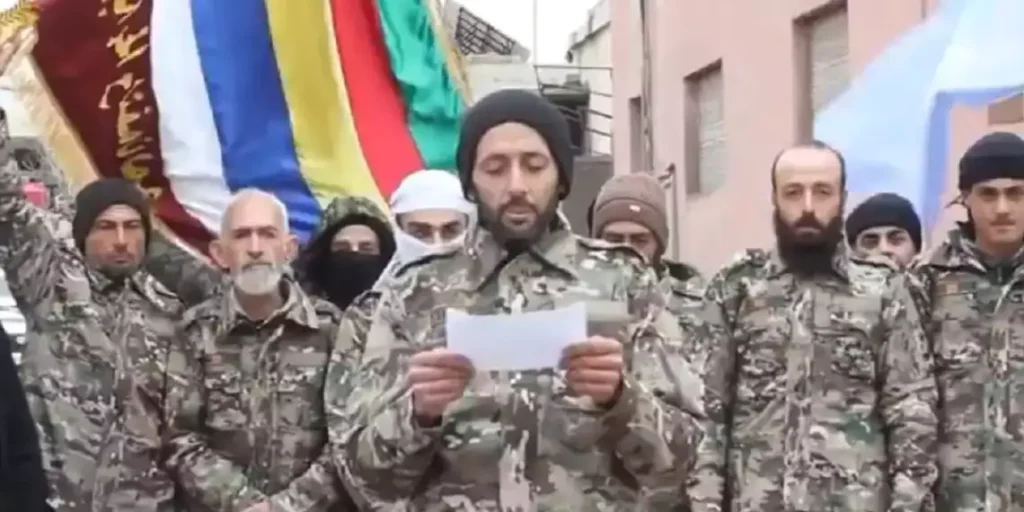
One notable example came in 2015, when a massacre occurred in the village of Qalb Lozeh in Syria’s northwest, where Druze residents were killed by an armed group reportedly linked to al-Nusra. While this area was outside Suwayda, the incident sent shockwaves through the wider Druze community. It served as a stark reminder that neutrality would not guarantee safety—particularly from extremist groups who viewed the Druze as heretics.
In the face of these growing threats, many Druze leaned—though cautiously—toward continued cooperation with the Assad regime, seeing it as the lesser of several evils. That said, the relationship was never fully warm. While some Druze men were conscripted into the Syrian army, others resisted or joined independent militias. There were even periods of open tension: in some cases, Suwayda locals refused to send their youth to fight in distant battles for the regime, leading to small-scale protests and refusals to comply with conscription.
Yet, despite these frictions, Suwayda remained one of the few parts of Syria that stayed relatively stable throughout much of the war. This was due in part to the community’s internal cohesion and Suwayda’s relative autonomy. Local leaders and clerics managed internal disputes, controlled checkpoints, and kept extremist elements out, all while maintaining a delicate, often ambiguous relationship with Damascus.
At first glance, it might seem odd that Israel—a country still technically at war with Syria—would show any concern, let alone support, for a community inside its enemy’s borders. But when it comes to the Druze in Syria, the story is far more complicated, shaped by geography, identity, and a legacy of pragmatism on both sides.
Perhaps the most obvious factor is geographic proximity. The Syrian Druze heartland in Suwayda lies just a few hours’ drive from the Israeli-occupied Golan Heights, where tens of thousands of Israeli citizens—including a significant population of Israeli Druze—live today. That closeness means instability in southern Syria poses a direct risk to Israel’s northern frontier.
And during the height of the Syrian civil war, when jihadist groups like Jabhat al-Nusra and ISIS were active near the Golan, Israel saw the Druze as a kind of strategic buffer—a local force capable of resisting extremists without drawing Israel directly into the conflict.
But there’s also a more personal connection. Roughly 140,000 Druze live in Israel, many of whom serve in the military and are integrated into national life. Though Israeli Druze do not always see eye-to-eye with the Syrian Druze politically—especially those in the Golan who reject Israeli sovereignty—there’s still a powerful sense of shared religious and cultural identity.
This connection has translated, at times, into grassroots pressure: in 2015, for example, Druze citizens in Israel demonstrated publicly and demanded that the government act to protect Druze communities in Syria following reports of killings by jihadist militias.
It’s also possible that Israel sees the Syrian Druze as a tool of political leverage in a region where alliances are fluid and often transactional. Southern Syria remains a volatile space—controlled in part by regime forces, in part by Iranian-linked militias, and still affected by residual rebel or extremist pockets. In such an environment, maintaining a line of communication—or at least a degree of goodwill—with the Druze may provide Israel with some indirect influence in the broader regional equation.
There have even been unconfirmed reports over the years suggesting that Israel has offered humanitarian aid, intelligence, or limited logistical support to Druze fighters or civilians near the border. While Israel rarely confirms such actions, it has consistently stated its “moral obligation” to protect Druze communities—both as neighbors and as kin to its own Druze citizens.
So, why does Israel support the Druze in Syria? The answer isn’t entirely straightforward. It likely stems from a mix of geographic concerns, communal ties, strategic priorities, and calculated pragmatism. With the Syrian Druze situated near the sensitive Golan Heights and sharing deep religious and familial links with Israel’s own Druze citizens, their stability has long been in Israel’s interest.
More importantly, the Druze—self-reliant, tightly organized, and generally pragmatic in a region dominated by volatile actors—may be one of the few local groups Israel quietly regards as both a reliable buffer and a natural, if unofficial, partner in securing its northern frontier.