Follow Us:
Follow Us:

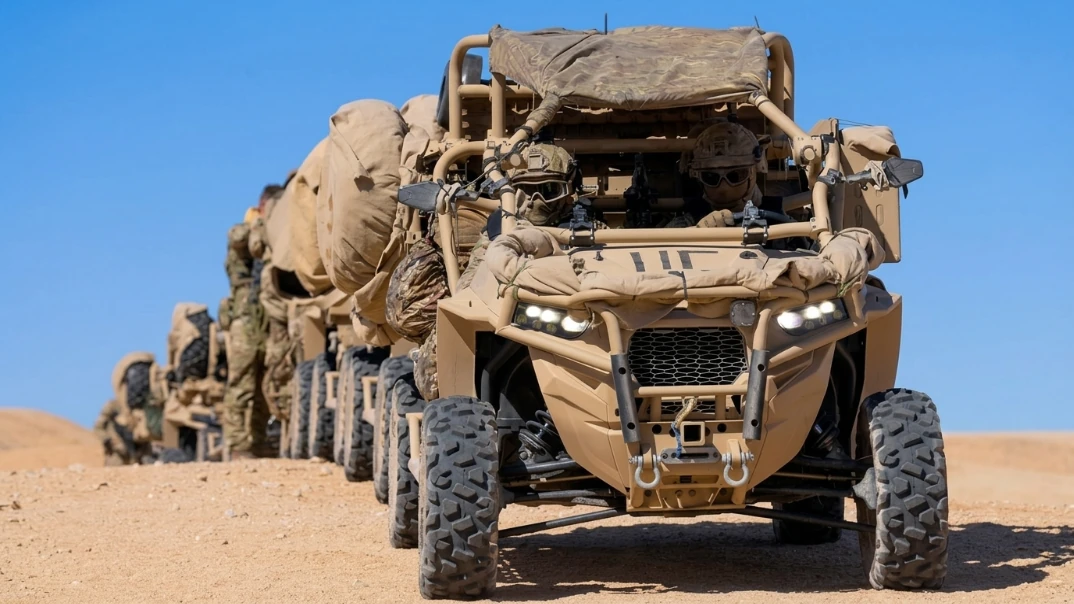
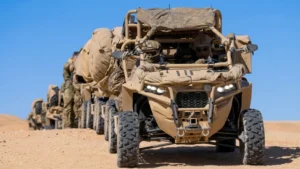
Defense Feeds, Brussels – Belgium has taken another step in modernizing its Special Operations Forces by ordering a fleet of Polaris MRZR D4 tactical vehicles, reinforcing the military’s ability to deploy rapidly across demanding terrain. Valued at approximately €10.6 million, the procurement focuses on improving mobility for elite units that often operate where conventional armored vehicles are too heavy, too large or too slow to maneuver effectively.
Although lightweight tactical vehicles rarely attract the same attention as tanks or missile systems, they remain essential for special operations. Success in these missions often depends less on heavy firepower than on speed, flexibility and the ability to move personnel and equipment quickly through challenging environments.
The Polaris MRZR D4 is designed specifically for units that require a compact, highly mobile vehicle capable of operating across rough terrain while carrying troops, equipment and mission-critical supplies. Its relatively small size allows it to travel through forests, narrow tracks and uneven ground that would restrict larger military vehicles.
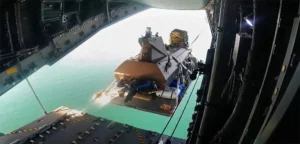
Another advantage is strategic mobility. The vehicle can be transported by helicopters and military transport aircraft, enabling rapid deployment during expeditionary operations or crisis-response missions. That flexibility is particularly valuable for Belgium’s Special Operations Regiment, whose missions often require forces to reach remote locations with minimal logistical preparation.
Rather than replacing armored platforms, the MRZR D4 fills a different operational niche. It gives special operations teams the ability to cover greater distances quickly while maintaining a lower logistical footprint, an important consideration during reconnaissance, direct action and long-range patrol missions.
The acquisition also aligns with Belgium’s wider effort to modernize equipment used by high-readiness forces that routinely participate in NATO operations and multinational deployments.
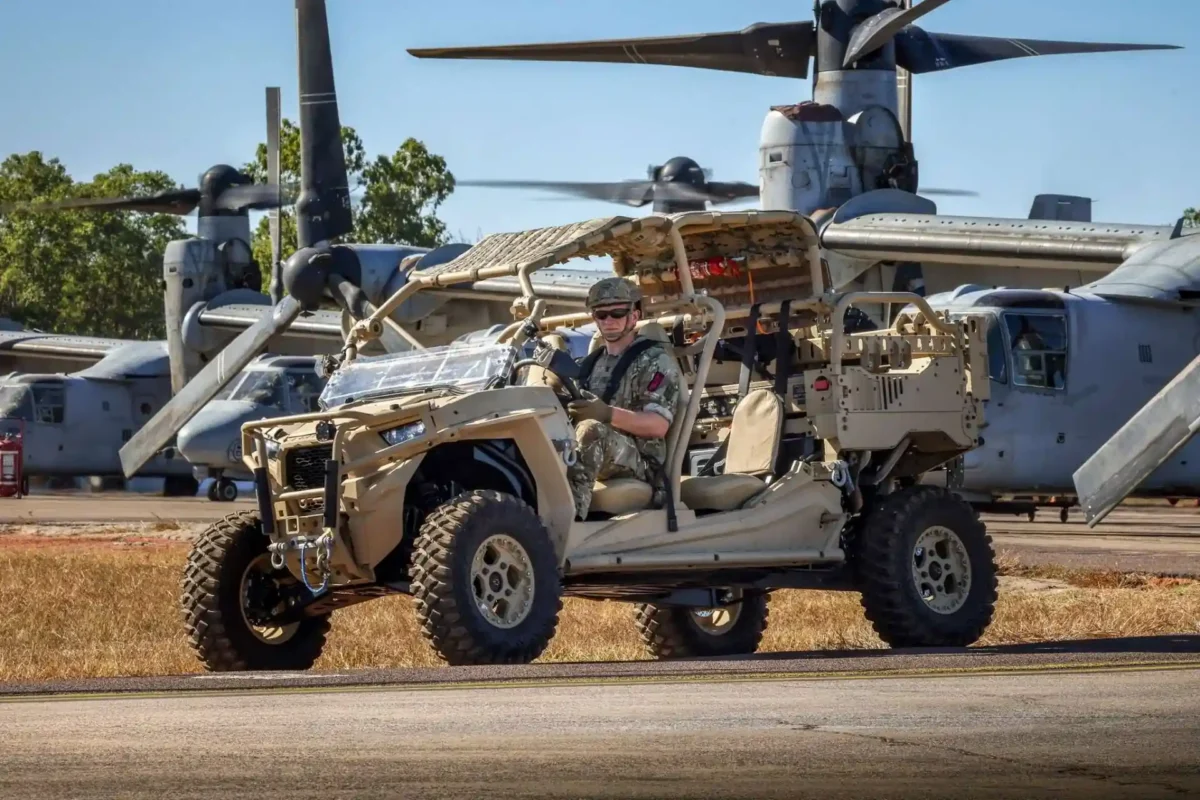
The operational importance of the Polaris MRZR D4 extends beyond its technical specifications. Recent military operations have repeatedly demonstrated that rapidly moving forces often gain a decisive advantage by reaching key positions before an opponent can react.
Light tactical vehicles enable commanders to deploy reconnaissance teams, transport anti-tank weapons, evacuate casualties and resupply forward units far more efficiently than soldiers moving on foot. In many situations, they also reduce fatigue, allowing personnel to remain operational over longer periods.
For special operations units, mobility directly supports survivability. Smaller vehicles present a lower visual signature, can use routes inaccessible to heavier platforms and enable teams to reposition quickly after completing their objectives.
The MRZR D4 also offers adaptability. Depending on mission requirements, it can be configured to transport personnel, communications equipment, surveillance systems or lightweight weapon stations, making it suitable for a broad range of military tasks without extensive modification.
The procurement of the Polaris MRZR D4 reflects a broader trend among European armed forces, many of which are placing greater emphasis on highly deployable units capable of responding rapidly to emerging security challenges.
While investments in air defense, long-range fires and armored formations remain priorities, NATO members are also strengthening the mobility and sustainability of their special operations forces.
For Belgium, improving expeditionary capability has become increasingly important as the country continues contributing to alliance missions and multinational exercises. Equipment that can be deployed quickly by air and operate effectively in varied terrain supports that objective while complementing larger mechanized formations.
The order also illustrates how military modernization is not always driven by increasingly complex technology. In many cases, practical equipment that enhances mobility, logistics and operational flexibility delivers immediate benefits on the battlefield.
As NATO continues adapting to a more demanding security environment, the ability to move forces rapidly across dispersed operating areas is becoming just as valuable as acquiring new weapons systems. The Polaris MRZR D4 acquisition reflects that reality, providing Belgium’s Special Operations Forces with a platform designed to improve responsiveness, increase operational reach and support missions where speed and maneuverability remain decisive factors.