Follow Us:
Follow Us:

Over the past few years, key Iranian figures have been killed under highly suspicious circumstances, from the 2020 assassination of nuclear scientist Mohsen Fakhrizadeh near Tehran, to repeated airstrikes in Syria that have reportedly eliminated senior IRGC commanders and Hezbollah commanders.
These operations, while rarely claimed outright, have been widely attributed to Israel by intelligence analysts and regional observers. Each incident has chipped away at the fragile status quo between the two powers.
By 2025, that quiet war has exploded into open confrontation.
It began earlier this year, when Israel launched a targeted strike on Iranian nuclear and military facilities, reportedly in response to intelligence suggesting an imminent weapons breakthrough.
The move, while not entirely unexpected, marked a serious escalation. Within days, Iran retaliated with its first direct, large-scale missile and drone attack on Israeli territory.
While many threats were intercepted by Israel’s layered missile defense systems, some breached the shield. Simultaneously, Hezbollah fired from the north, rockets fell from Gaza, and Israeli jets struck back across Lebanon, Syria, and Gaza. Tensions spread beyond land and air, too, with rising threats to Israeli Navy assets in the Red Sea and Persian Gulf.
Now, with multiple fronts active and escalation still unfolding, everyone can’t help, but ask: “just how strong is Israel’s military in 2025?”
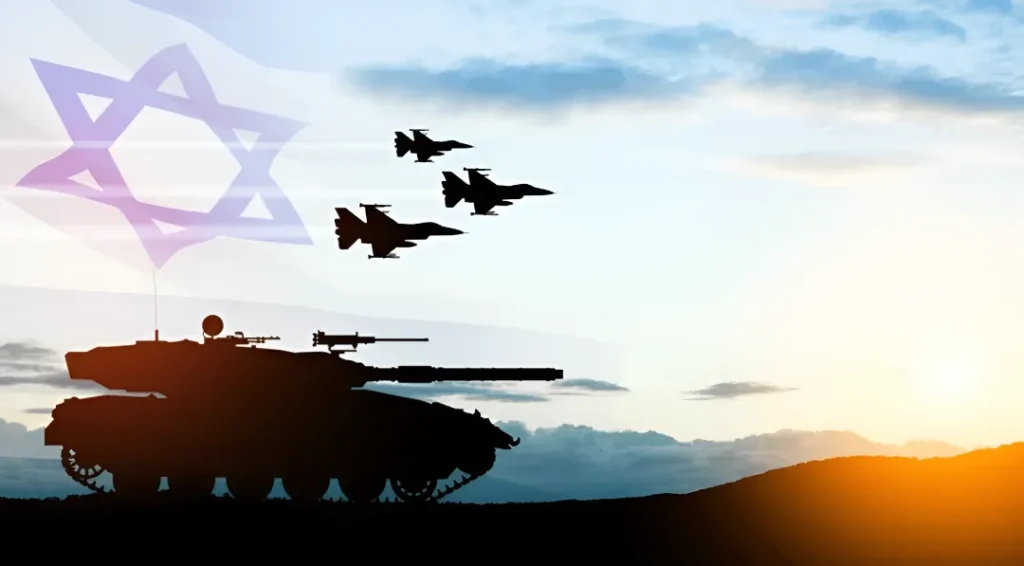
At the core of Israel’s military is the IDF, the Israel Defense Forces, a highly integrated command structure encompassing the Army, Navy, Air Force, and several intelligence and cyber units. Unlike many Western militaries, Israel operates under a unified command, allowing for tight coordination between branches during sudden escalations.
The ground forces are built around maneuverable brigades equipped with Merkava battle tanks, advanced APCs, and precision artillery.
The Israeli Air Force, arguably the most sophisticated arm, commands over 300 aircraft, including F-35I Adir stealth fighters, upgraded F-16s, and a growing fleet of drones.
Israel’s navy, while relatively small, plays a strategic role through its missile boats and Dolphin-class submarines, some of which are believed to carry second-strike capabilities, though Israel officially maintains a policy of nuclear ambiguity.
Intelligence is often considered Israel’s true battlefield edge. Agencies like Aman (military intelligence), Shin Bet (domestic security), and Mossad (foreign operations) operate alongside Unit 8200, an elite cyber and signals intelligence unit often compared to the NSA.
Together, they form a deeply integrated intelligence architecture — one that has been credited with preempting rocket attacks, foiling plots abroad, and even orchestrating covert cyber and sabotage operations inside enemy territory.
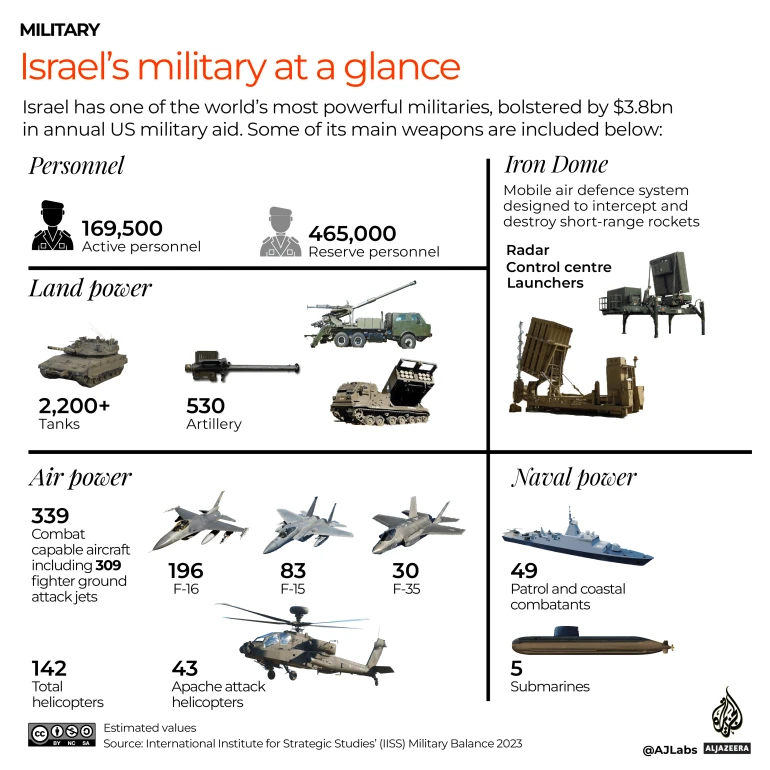
In terms of manpower, Israel maintains around 170,000 active-duty personnel. Thanks to mandatory conscription, nearly every Israeli adult has undergone basic military training, giving Israel access to some 450,000 reservists who can be mobilized within days. This model gives the IDF a uniquely scalable force, one that can rapidly surge in a crisis.
On the financial side, Israel’s defense budget in 2025 is estimated at around $24 billion, representing roughly 4.5% of its GDP, among the highest military spending ratios in the developed world.
According to the Stockholm International Peace Research Institute (SIPRI), this figure has steadily grown in recent years, particularly in response to Iran’s missile expansion, Hezbollah’s stockpiles, and the threat of a two- or even three-front conflict.
Read also: How Strong Is Iran’s Military?
So how does Israel rank globally? According to the Global Firepower Index 2025, Israel ranks 17th out of 145 countries, a position that reflects its advanced capabilities despite its small size.
Analysts often note that Israel punches far above its weight due to its tech-driven defense ecosystem, strategic alliances, and real-world combat experience.
That said, numbers alone may not tell the whole story. Israel’s military strength is as much about agility, intelligence dominance, and layered defense as it is about firepower.
To understand why Israel is often considered a regional air power, one has to look not just at its aircraft, but at how it thinks about the skies.
For Israel, air superiority is a first line of defense. Given the nation’s small size and lack of strategic depth, neutralizing threats before they cross the border has long been a cornerstone of Israeli military doctrine.
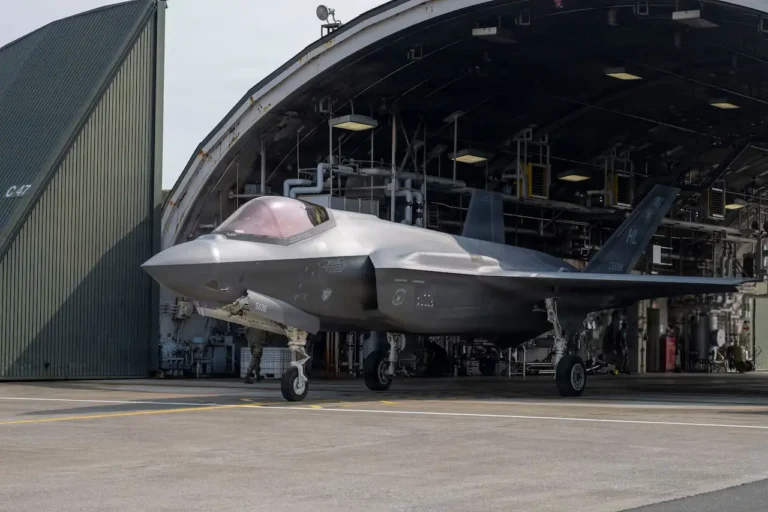
At the heart of this doctrine is the F-35I “Adir”, a customized version of the U.S. F-35 stealth fighter, tailored specifically for Israeli requirements.
Unlike the standard F-35, the Adir features homegrown avionics, EW systems, and mission software that allow the Israeli Air Force (IAF) to plug it into its broader battle network. It’s believed that the IAF now operates over 40 F-35Is, with more on the way, and these aircraft have reportedly already seen combat operations deep inside enemy territory, often undetected.
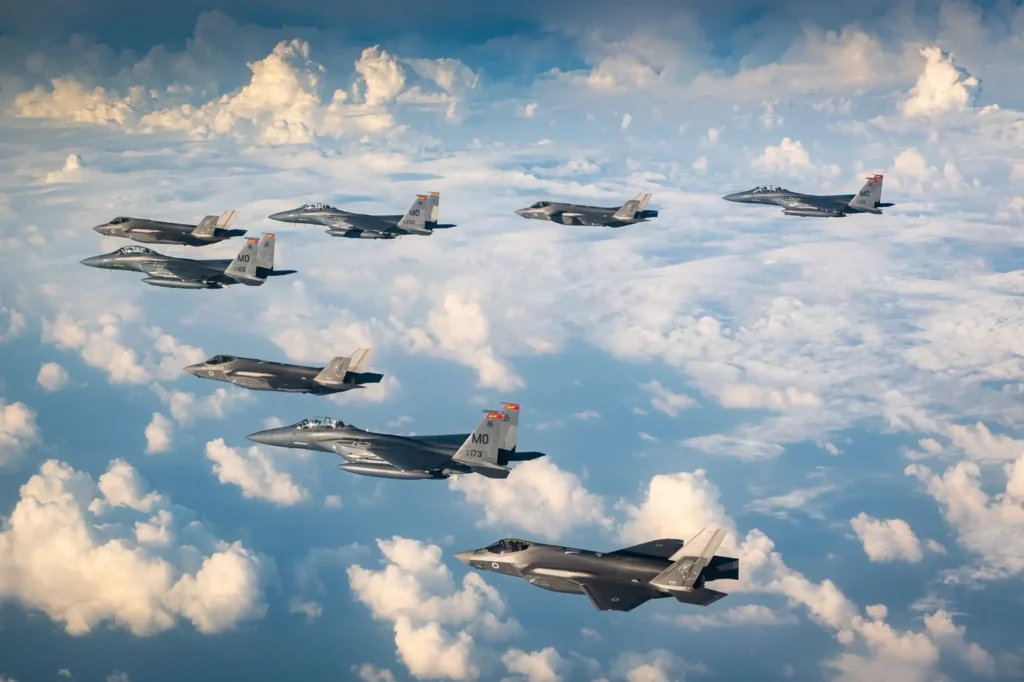
Unmanned Aerial Vehicles (UAVs), both for reconnaissance and strike, are deeply embedded into operational planning of Israel Military. Israeli drones like the Heron, Eitan, and Harop are used extensively for target identification, real-time intelligence gathering, and even precision strikes, especially in dense or contested environments.
In fact, Israel is often described as a pioneer in drone warfare, exporting UAV technology to multiple allies while constantly integrating new AI-driven capabilities into its own fleet.
This emphasis on integrated air dominance, combining stealth, drones, cyber, and electronic warfare—is what sets the IAF apart. Rather than simply outnumbering its enemies, Israel aims to blind, isolate, and destroy them before they can strike.
On the ground, Israel’s military strength lies in its ability to rapidly adapt to a wide range of environments. The Merkava battle tank, the backbone of Israel’s armored forces, is now in its Mark IV and V variants.
Unlike many Western tanks, the Merkava is designed with crew survivability and urban flexibility in mind, featuring rear access for rapid evacuation and room for carrying infantry.
These tanks are also equipped with the Trophy active protection system, which intercepts incoming anti-tank missiles. This is a critical advantage in conflicts where guerrilla groups deploy high-end guided weapons.
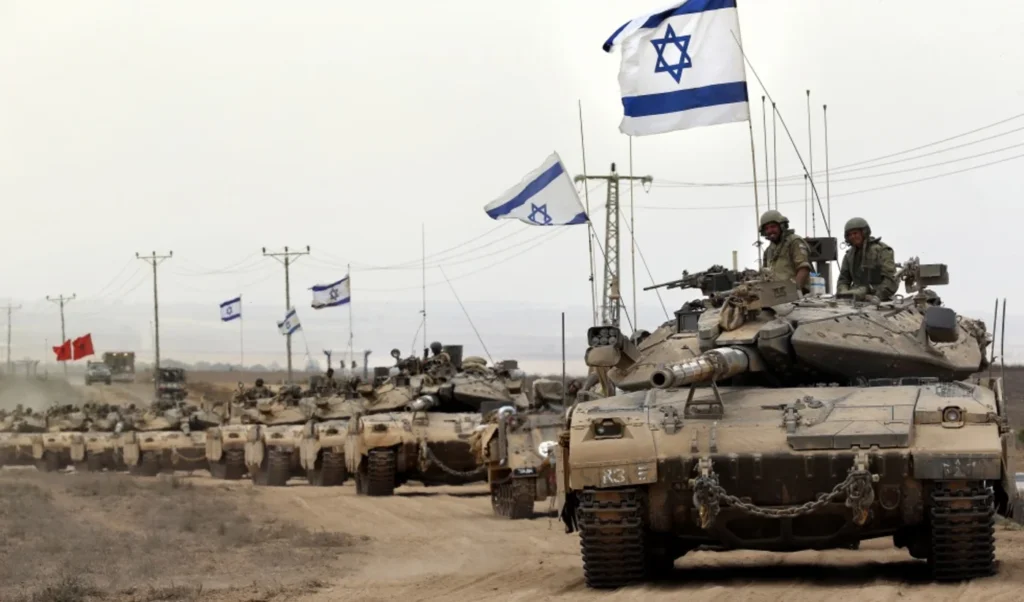
Supporting these tanks are elite infantry brigades, most famously the Golani Brigade and the Paratroopers, who specialize in rapid assault and high-mobility operations.
For deep penetration, hostage rescue, or high-value raids, units like Sayeret Matkal, Israel’s equivalent of a special forces command, are often deployed. Their operations are mostly classified, but they’ve been linked to cross-border missions, sabotage campaigns, and intelligence collection behind enemy lines.
Importantly, the IDF invests heavily in urban warfare and counterterrorism training, based on hard-earned experience in places like Jenin, Nablus, Gaza City, and southern Lebanon. This includes extensive training in mock cities, underground combat, tunnel detection, and rapid civilian evacuation protocols.
While the Israeli Navy is smaller than its air or ground forces, it plays a vital role in coastal defense, strategic deterrence, and special operations.
Israel’s missile boats, such as the Sa’ar-class corvettes, are equipped with advanced radar systems, long-range missiles, and close-in defense weapons, providing high-speed naval coverage along Israel’s Mediterranean coastline. These vessels also act as early warning platforms for potential aerial or maritime threats approaching from the west or south.
But the Navy’s most strategic asset may be its Dolphin-class submarines, built in Germany and widely believed to be capable of second-strike nuclear deterrence, though Israel maintains ambiguity on this point. These subs can operate silently in the Red Sea and beyond, conducting intelligence-gathering, surveillance, and even covert operations far from Israeli shores.
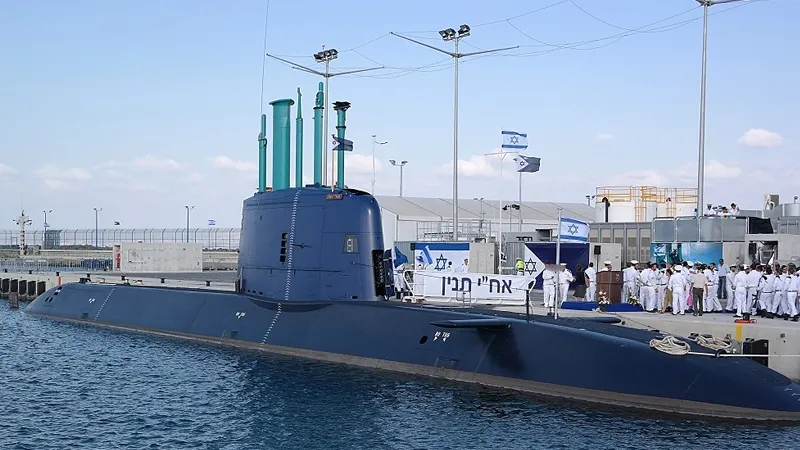
With increased threats in the Red Sea and Persian Gulf, especially amid rising tensions with Iran-backed naval militias, the Israeli Navy has taken on new importance.
Some reports suggest the Navy is preparing to expand operations eastward, in coordination with U.S. and regional allies, to secure critical maritime routes and respond to threats beyond its immediate borders.
For Israel, defense doesn’t always begin with reacting to an attack, it often starts with anticipating and neutralizing threats before they materialize.
The country’s military doctrine, shaped by decades of existential risk, is built around preemption, speed, and layered protection.
Still, when deterrence fails, or when Israel itself initiates strikes that risk retaliation, missile defense becomes the first and last line of physical protection for civilians and critical infrastructure.
That’s where Israel’s multi-layered missile shield comes in, a defensive system regarded by many analysts as one of the most advanced in the world. This network includes the Iron Dome, David’s Sling, and Arrow systems, each covering a different layer of the sky, and each tuned to intercept threats based on their range and trajectory.

Let’s start at the bottom of the shield — the Iron Dome.
Deployed since 2011 and upgraded continually, Iron Dome is designed to intercept short-range rockets, typically the kind launched by Hamas or Hezbollah in response to Israeli operations in Gaza, Lebanon, or Syria. What makes Iron Dome stand out is its smart targeting. It calculates whether a rocket is headed for a populated area, and only then does it launch an interceptor.
According to the Israeli Ministry of Defense, as well as independent analysis by the Center for Strategic and International Studies (CSIS), Iron Dome has maintained a success rate of over 90%, even during saturation attacks.
The middle tier is handled by David’s Sling, created for medium-range missiles and cruise missiles, especially the more accurate ones believed to be stockpiled by Hezbollah and Iran-backed groups.
David’s Sling was designed to counter threats Israel might provoke through deeper strikes, such as in Syria or Iranian infrastructure. First used operationally in 2018, it has since proven its value in the 2023 and 2025 escalations, where it successfully intercepted rockets over central Israel.
At the highest layer, Arrow-2 and Arrow-3 protect against long-range ballistic missiles, especially those that might be launched directly from Iran. Arrow-3, in particular, is capable of exo-atmospheric interception—essentially shooting down missiles in space.
In April 2025, after Israel’s strike on Iranian nuclear facilities, Arrow-3 intercepted multiple Shahab and Sejjil-class missiles, a feat confirmed by both Israeli officials and U.S. European Command.
Together, these three layers form a seamless net of missile defense, integrating real-time data from radars, AI command systems, and satellite feeds. Innovations are constantly being rolled out, including capabilities to deal with drone swarms, hypersonic threats, and low-signature cruise missiles.
Still, most experts caution: no missile shield is invincible. A large-scale, multi-directional, and prolonged attac, such as might come from Iran, Hezbollah, and Hamas combined, could saturate even Israel’s best systems. This is precisely why Israel leans so heavily on intelligence operations, cyber disruption, and first-strike capability, to limit the threat before the missiles ever leave the ground.
Many defense experts argue that Israel’s edge in the cyber and intelligence realm may be even more significant than its battlefield hardware.
At the core of this capability is Unit 8200, Israel’s elite cyber and signals intelligence unit. Often compared to the NSA in both scale and sophistication, Unit 8200 is responsible for intercepting communications, hacking enemy systems, disabling infrastructure, and conducting electronic warfare.
It’s believed that the unit played a major role in cyber operations against Iranian nuclear facilities, including the now-infamous Stuxnet worm, a joint U.S.-Israeli operation that set back Iran’s uranium enrichment in the early 2010s.
In recent years, Unit 8200 has reportedly been at the center of disrupting Iranian drone command networks, hacking Hezbollah communications, and even tracking militant financing routes through the dark web.
The unit is also a major feeder into Israel’s booming cybersecurity industry, as veterans often transition into private tech firms or defense startups.
Complementing this cyber power is Mossad, Israel’s legendary foreign intelligence agency. While details of its operations are typically classified, Mossad is widely credited with orchestrating sabotage operations, recruiting assets deep inside enemy states, and executing covert missions from Tehran to Beirut.
Whether it’s the assassination of Iranian nuclear scientists, the hijacking of enemy archives, or the thwarting of overseas terror plots, Mossad’s reach is long and often underestimated.
Of course, no military, not even one as agile and tech-savvy as Israel’s, operates in isolation. Much of Israel’s strategic power stems from its military alliances, most notably its deep and long-standing relationship with the United States.
The U.S.-Israel military partnership includes more than just arms sales—though those are significant. In 2025, Israel continues to receive roughly $3.8 billion annually in U.S. military aid, as part of a 10-year Memorandum of Understanding (MOU) signed during the Obama administration.
This support has helped fund the F-35I Adir program, missile defense systems like David’s Sling and Arrow, and joint development projects between American and Israeli defense companies.
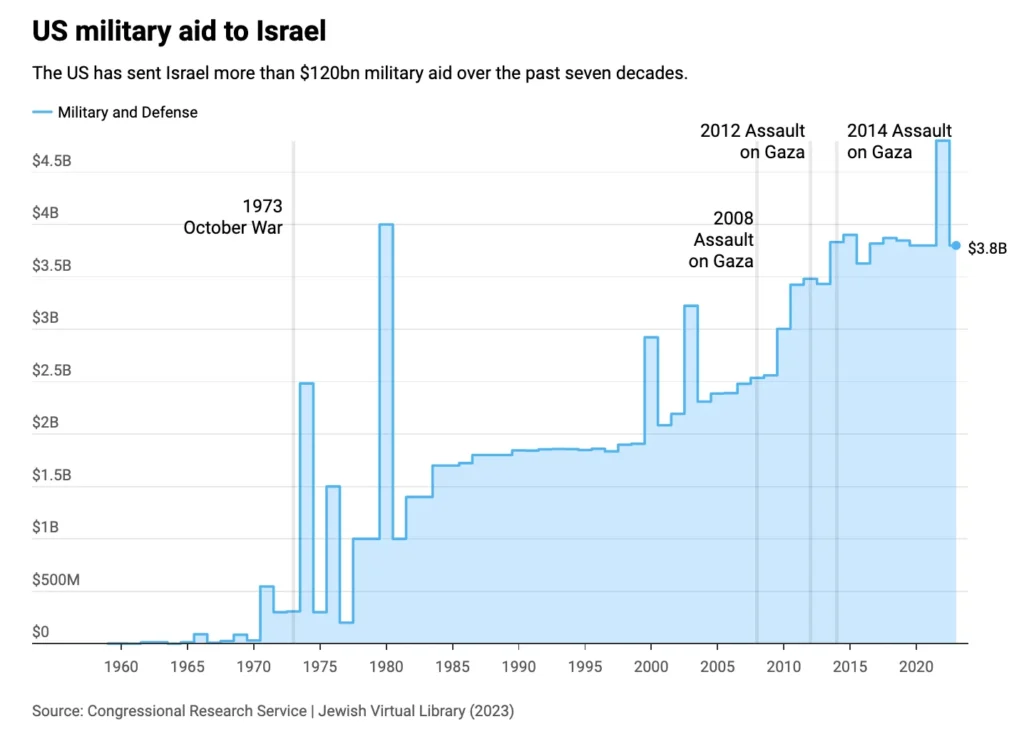
Beyond funding, the cooperation includes real-time intelligence sharing, particularly when it comes to Iran’s missile program, proxy activity, and cyber threats.
Analysts suggest that Israeli and American intelligence agencies have grown increasingly intertwined, not only through Mossad and the CIA, but also through data-fusion cells and joint SIGINT platforms operated by Unit 8200 and the NSA.
Israel also participates in joint military exercises with the U.S. and other allies, including Juniper Cobra, Blue Flag, and naval drills in the Eastern Mediterranean and Red Sea. While Israel is not a NATO member, it is considered a major non-NATO ally, and its military often trains alongside European and NATO forces, sharing expertise in urban combat, missile defense, and drone warfare.
So, How Strong Is Israel’s Military Really?
Israel’s military in 2025 is one of the most capable and adaptive in the world — but its strength is as much about precision and intelligence as it is about firepower.
On paper, Israel doesn’t have the largest army, nor the deepest stockpile of warships or tanks. Its military size is modest, about 170,000 active personnel with around 450,000 trained reservists. But what it lacks in raw numbers, it more than makes up for in technology, coordination, and battlefield experience.
Israel fields some of the most advanced systems in the world: the F-35I Adir for stealth air dominance, the Iron Dome and Arrow missile defense network that shields its cities, and the Merkava tank and elite infantry units trained for dense, urban warfare. Its Dolphin-class submarines, though few, are widely believed to offer strategic second-strike capabilities. And behind all this is a brain trust of cyber warriors in Unit 8200 and deep-field operatives from Mossad, whose influence often stretches far beyond Israel’s borders.
Equally critical is its strategic insulation through U.S. military aid, joint defense development, and deep intelligence-sharing relationships with NATO-aligned countries. When Israel acts, either with force or in silence, it often does so with shared data, global surveillance, and diplomatic backing.
However, it’s important to note that Israel’s military power is highly effective, yet it’s not invulnerable. It’s built to handle multiple fronts, asymmetric warfare, and short, high-intensity conflicts, not prolonged wars of attrition. Its missile defense systems, while remarkable, could be saturated by a full-scale, coordinated missile barrage.
And it remains heavily reliant on intelligence and first strikes, because the margin for error in such a small and surrounded country is razor-thin.