Follow Us:
Follow Us:

If Europe were to build the perfect fighter jet, what would it look like?
That question has fueled years of debate among military analysts, pilots, defense planners, and aviation enthusiasts. And more often than not, the discussion ends up in the same place: Rafale vs Typhoon.
These two aircraft sit at the very top of Europe’s combat aviation ladder.
The French-built Dassault Rafale and the multinational Eurofighter Typhoon represent decades of engineering, billions of dollars in investment, and two very different ideas about how modern air warfare should be fought. Yet despite sharing similar origins as advanced fourth-and-a-half-generation fighters, they evolved into remarkably different machines.
The Rafale was designed to be a “do-everything” aircraft. Air superiority, deep strike missions, reconnaissance, nuclear deterrence, carrier operations, it was built to handle all of them.
The Typhoon took a different route. Its designers focused heavily on air dominance, creating a fighter optimized to intercept, engage, and defeat enemy aircraft before later expanding its multirole capabilities.
That distinction matters.
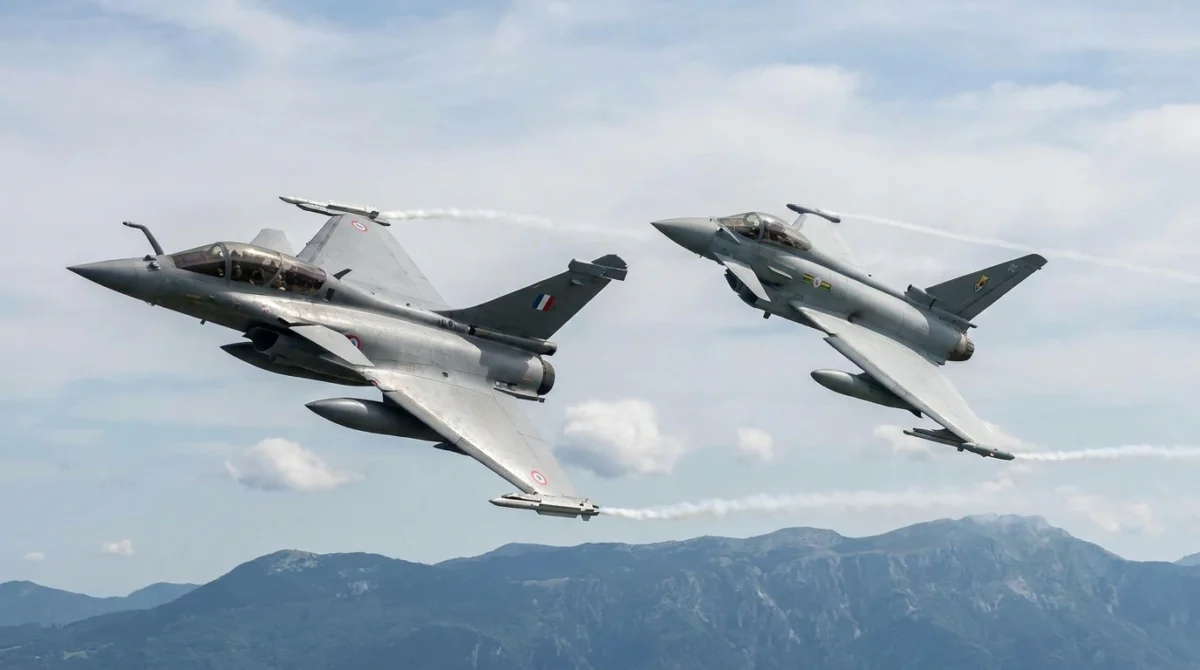
A fighter jet isn’t judged solely by its top speed or missile load. Modern air combat is a complex mix of sensors, electronic warfare, networking, pilot workload, mission flexibility, maintenance requirements, and long-term upgrade potential. In many ways, today’s battles are won by information as much as by firepower.
This comprehensive Rafale vs Eurofighter Typhoon comparison goes beyond surface-level specifications.
We’ll examine performance figures, radar systems, weapons, combat experience, operating costs, export success, and future modernization plans.
Along the way, you’ll discover why both aircraft have earned reputations as world-class fighters, and why choosing a clear winner is far more complicated than most people expect.
Before diving into radar ranges, missile capabilities, and dogfight performance, it’s worth taking a step back and understanding what these aircraft were actually built to do.
One of the biggest mistakes in the Rafale vs Typhoon debate is assuming they were designed with identical priorities. They weren’t.
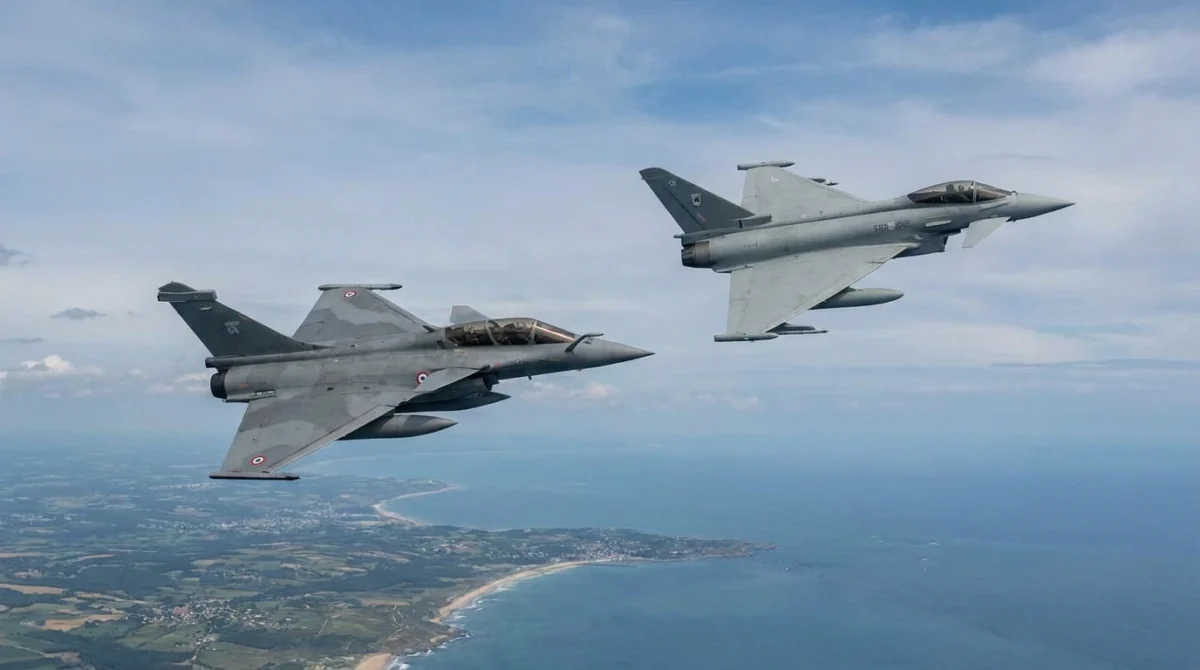
The Dassault Rafale emerged after France decided to pursue its own fighter program rather than remain part of the multinational Eurofighter project. French military planners wanted a single aircraft capable of replacing several aging platforms across the Air Force and Navy.
The result was a highly versatile fighter that could launch from aircraft carriers, conduct nuclear strike missions, perform reconnaissance, and engage enemy aircraft, all from the same airframe.
Today, Rafale variants serve in France, India, Egypt, Qatar, Greece, Croatia, the United Arab Emirates, Indonesia, and several other countries. Its growing export success has turned it into one of the most commercially successful Western fighter jets of the 21st century.
The Eurofighter Typhoon, meanwhile, was born from a partnership between the United Kingdom, Germany, Italy, and Spain.
During the Cold War, its primary mission was clear: dominate the skies against advanced Soviet aircraft. This focus shaped everything from its aerodynamic design to its powerful engines and exceptional agility.
Over time, however, the Typhoon evolved. New upgrades added precision strike capabilities, advanced sensors, and a wider range of weapons, transforming it into a genuine multirole platform rather than a pure air-superiority fighter.
| Feature | Dassault Rafale | Eurofighter Typhoon |
| Country of Origin | France | UK, Germany, Italy, Spain |
| First Flight | 1986 | 1994 |
| Primary Design Goal | Multirole Fighter | Air Superiority Fighter |
| Carrier Capable | Yes | No |
| Engines | 2 × Snecma M88 | 2 × EJ200 |
| Maximum Speed | Mach 1.8 | Mach 2.0+ |
| Current Operators | 8+ Countries | 9 Nations |
In simple terms, Rafale was designed to do almost everything exceptionally well. Typhoon was designed to win air battles first and broaden its skill set later. That difference still shapes the strengths of both aircraft today.
Numbers don’t tell the whole story in fighter aviation, but they do reveal where engineers placed their bets.
Looking purely at specifications, the Eurofighter Typhoon appears to have the advantage in several traditional fighter metrics. It flies faster, climbs more aggressively, and produces more thrust. On paper, those are the kind of figures that make aviation enthusiasts sit up and pay attention.
The Dassault Rafale, however, was never built to win a spec-sheet competition. French engineers prioritized balance. Instead of maximizing one or two performance areas, they created an aircraft capable of delivering strong results across a wide range of missions without major compromises.
Here’s how the two compare.
| Specification | Rafale | Eurofighter Typhoon |
| Length | 15.3 m | 15.96 m |
| Wingspan | 10.9 m | 10.95 m |
| Engines | 2 × M88 | 2 × EJ200 |
| Maximum Speed | Mach 1.8 | Mach 2.0+ |
| Service Ceiling | 50,000+ ft | 65,000 ft |
| Maximum Payload | ~9.5 tonnes | ~7.5 tonnes |
| Combat Radius | ~1,850 km* | ~1,390 km* |
| Hardpoints | 14 | 13 |
One of the most overlooked statistics in the Rafale vs Eurofighter Typhoon comparison is payload flexibility.
Rafale can carry an impressive mix of air-to-air missiles, guided bombs, reconnaissance pods, fuel tanks, and electronic warfare equipment simultaneously. Think of it as a Swiss Army knife that somehow flies at nearly twice the speed of sound.
The Typhoon, meanwhile, shines in raw aerodynamic performance. Its powerful EJ200 engines provide outstanding thrust-to-weight characteristics, contributing to exceptional climb rates and high-altitude performance. Pilots often praise the aircraft’s ability to gain energy quickly during aerial engagements.
Interestingly, neither aircraft completely dominates the other. The Typhoon generally wins in speed and altitude. Rafale often edges ahead in payload flexibility and operational range.
That’s why many air forces evaluating these jets focus less on headline numbers and more on how those numbers support real-world missions.
Because in modern combat, the fastest aircraft isn’t always the most effective one.
If fighter jets were chess players, radar and sensors would be their eyes, ears, and intuition all rolled into one.
In modern air combat, pilots rarely spot opponents with the naked eye. Long before two aircraft come within visual range, they’re already hunting, tracking, analyzing, and sharing information through an invisible web of sensors. That’s why the radar and sensor battle is often more important than speed or maneuverability in the Rafale vs Typhoon discussion.
The Rafale’s centerpiece is the RBE2 AESA (Active Electronically Scanned Array) radar, one of the first operational AESA systems deployed on a European fighter.
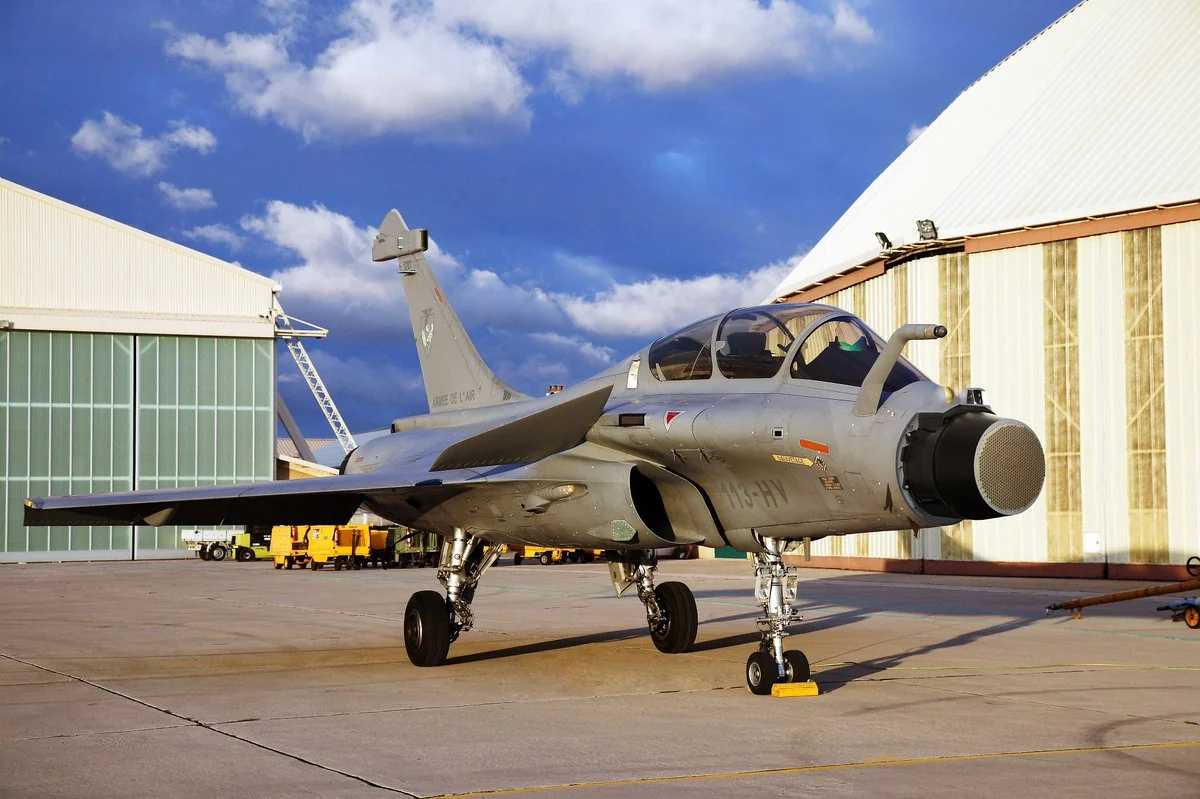
AESA technology allows the radar to track multiple targets simultaneously while remaining more resistant to jamming and electronic attack. Paired with the aircraft’s highly regarded SPECTRA electronic warfare suite, Rafale has earned a reputation for exceptional battlefield awareness and survivability.
The Eurofighter Typhoon counters with the CAPTOR-E AESA radar, a system many analysts consider among the most advanced fighter radars currently entering service. What makes it particularly interesting is its repositionable antenna, which provides a wider field of regard than many conventional AESA radars. In simple terms, the Typhoon can look farther off to the side without turning the aircraft itself.
| System | Rafale | Typhoon |
| AESA Radar | RBE2-AA | CAPTOR-E |
| IRST System | OSF | PIRATE |
| Electronic Warfare Suite | SPECTRA | Praetorian DASS |
| Sensor Fusion | Advanced | Advanced |
An often-overlooked factor is sensor fusion, the ability to combine information from radar, infrared sensors, electronic warfare systems, friendly aircraft, and ground assets into a single picture. Both fighters perform exceptionally well here, reducing pilot workload during high-pressure missions.
The real takeaway? Rafale emphasizes survivability and electronic warfare integration, while Typhoon focuses on maximizing radar performance and target detection. Neither approach is objectively superior. They’re simply different answers to the same question: how do you see the enemy before they see you?
Ask a fighter pilot from the 1970s how air combat worked, and you’d probably hear stories about turning fights, visual identification, and missiles launched within sight of the target.
Today’s reality is very different.
Most modern aerial engagements are expected to occur long before pilots can see each other. In fact, the aircraft that detects, tracks, and fires first often gains a decisive advantage. That’s why beyond-visual-range combat, commonly called BVR, is one of the most important areas in the Rafale vs Typhoon debate.
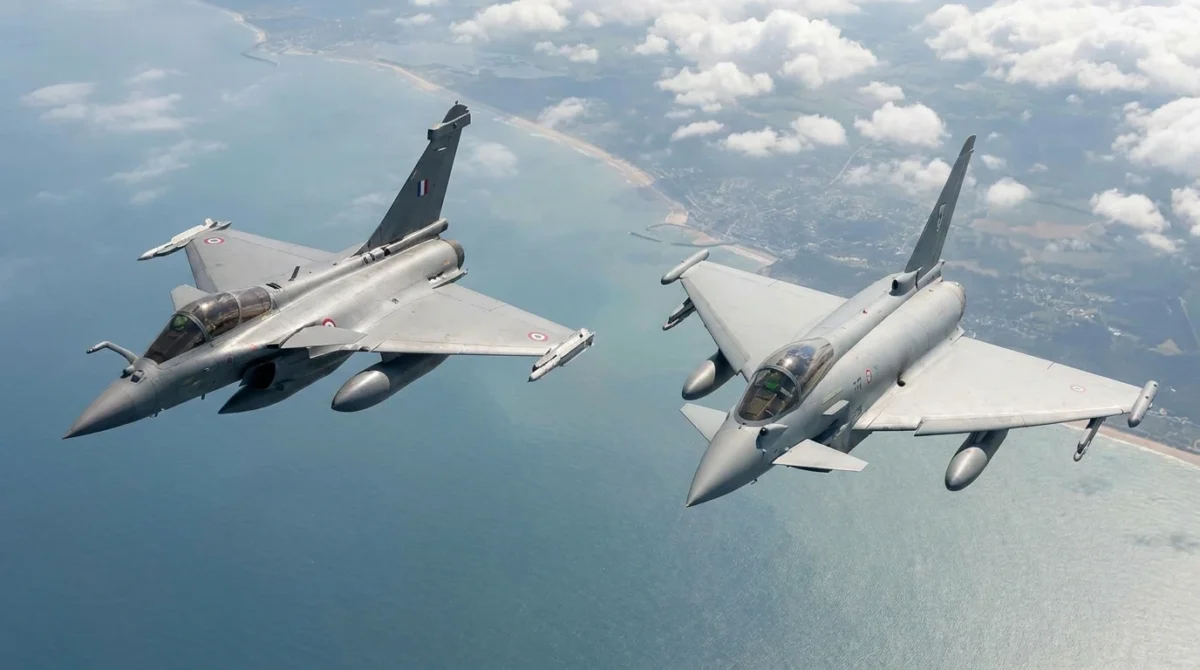
At first glance, the Typhoon appears tailor-made for this environment. Its powerful engines allow it to operate at high altitudes and speeds, giving launched missiles additional energy. Think of it like throwing a baseball from the top of a hill rather than from flat ground. The missile starts with a performance advantage.
The Typhoon’s CAPTOR-E radar also offers impressive detection capabilities, enabling pilots to identify and engage threats at considerable distances. Combined with the Meteor missile, it forms a formidable long-range interception package.
The Rafale takes a slightly different approach.
Rather than relying solely on raw detection range, the aircraft emphasizes electronic warfare, sensor fusion, and survivability. Its SPECTRA system can detect threats, identify emitters, and help reduce an opponent’s ability to achieve a clean targeting solution. In a BVR battle, confusing the enemy can be almost as valuable as spotting them first.
| Factor | Rafale | Typhoon |
| Radar Performance | Excellent | Excellent |
| Electronic Warfare | Exceptional | Very Strong |
| Meteor Integration | Yes | Yes |
| High-Altitude Performance | Strong | Outstanding |
| Sensor Fusion | Advanced | Advanced |
What makes this comparison so difficult is that both aircraft carry the same headline weapon: Meteor. That means the outcome often depends less on the missile itself and more on who creates the better firing opportunity.
In a pure long-range intercept scenario, many analysts give the Typhoon a slight edge. In a complex electronic warfare environment filled with jamming, deception, and multiple threats, Rafale’s strengths become much harder to ignore. The margin between them is razor-thin.
For all the talk about stealth, data links, and long-range missiles, people still love one question:
Which fighter would win in a dogfight?
It’s easy to understand why. The image of two jets twisting through the sky at the edge of physics captures the imagination in a way that radar screens and electronic warfare diagrams never will. Yet when comparing Rafale vs Typhoon in close-range combat, the answer is surprisingly nuanced.
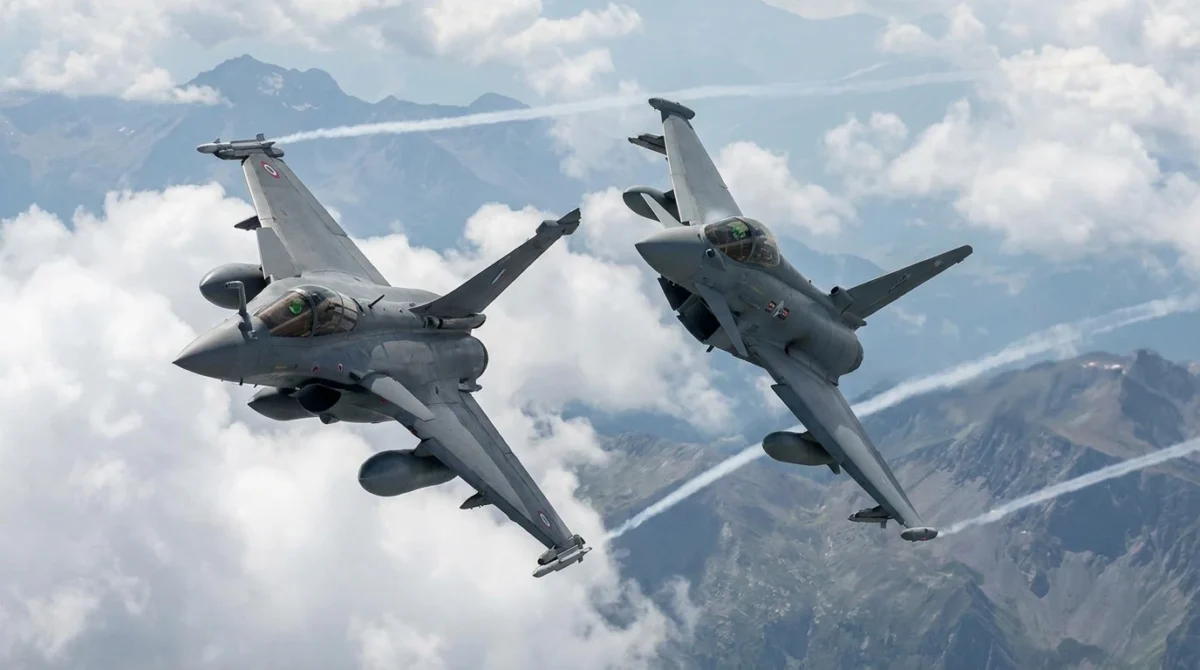
The Eurofighter Typhoon was engineered with air combat as a top priority. Its powerful EJ200 engines generate exceptional thrust, allowing the aircraft to accelerate rapidly and regain lost energy during aggressive maneuvers. Pilots often describe the Typhoon as incredibly responsive, capable of climbing and turning with remarkable authority.
The Rafale approaches maneuverability differently. Rather than relying primarily on brute engine power, it combines aerodynamic efficiency, sophisticated flight controls, and a balanced design philosophy. The aircraft can sustain demanding maneuvers while maintaining stability and weapon employment options.
| Capability | Rafale | Typhoon |
| Thrust-to-Weight Ratio | Very High | Extremely High |
| Instantaneous Turn Rate | Excellent | Excellent |
| Sustained Energy Retention | Strong | Outstanding |
| Low-Speed Handling | Excellent | Very Good |
| High-Alpha Performance | Excellent | Excellent |
| Helmet-Mounted Targeting | Yes | Yes |
One interesting aspect rarely discussed is pilot workload. In close combat, fractions of a second matter. Both aircraft use advanced flight control systems that allow pilots to focus on the fight rather than constantly managing the aircraft.
It’s a bit like the difference between driving a race car with and without traction control, both are fast, but one gives the driver more mental bandwidth.
If the engagement becomes a classic energy fight involving speed, altitude, and repeated vertical maneuvers, the Typhoon’s engine performance may provide a slight advantage. If the fight turns into a chaotic, rapidly changing engagement where adaptability matters, Rafale remains exceptionally dangerous.
The truth? Between two equally skilled pilots, the outcome would likely depend more on tactics, situational awareness, and luck than on any dramatic difference between the aircraft themselves.
No air force buys fighter jets based solely on performance.
At some point, every procurement discussion comes down to a question that defense ministers, finance officials, and taxpayers all understand: How much will it cost?
This is where the Rafale vs Typhoon comparison becomes particularly complex. The purchase price is only the beginning.
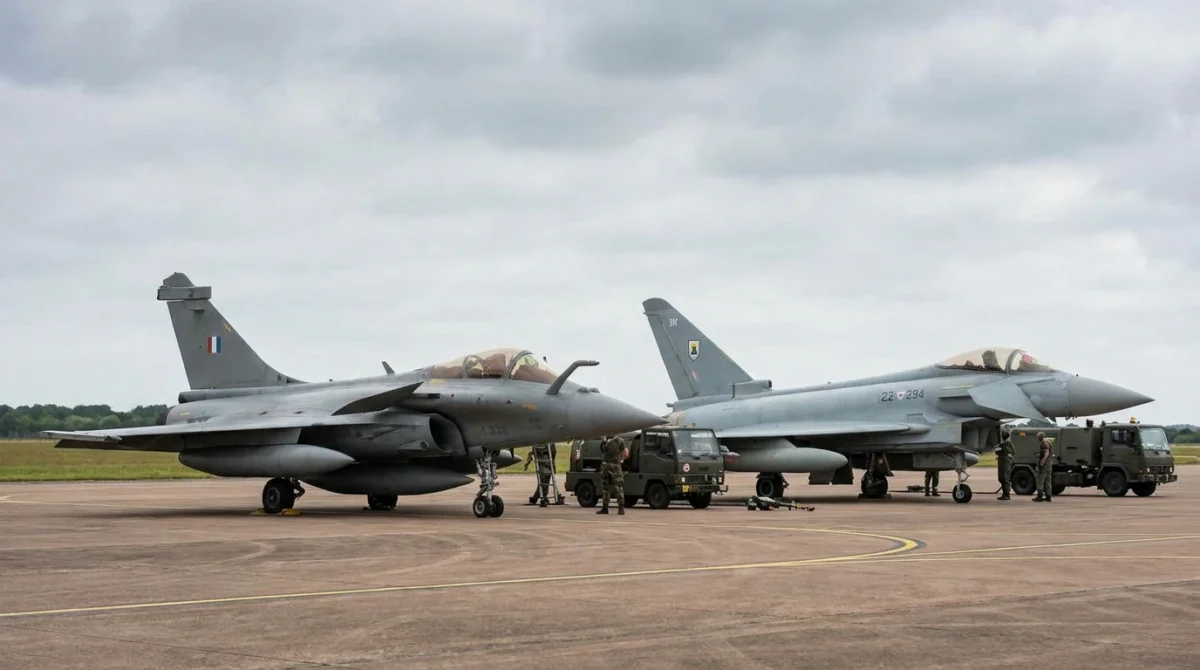
A modern fighter’s true cost includes maintenance, training, spare parts, infrastructure, software upgrades, fuel consumption, and decades of operational support. In many cases, lifecycle expenses can exceed the original acquisition cost several times over.
The Rafale has developed a reputation for offering a relatively balanced ownership model. While it is certainly not inexpensive, France designed the aircraft with a strong emphasis on mission flexibility.
The idea was straightforward: one aircraft performing multiple roles can potentially reduce the need for separate specialized fleets.
The Typhoon, meanwhile, represents one of Europe’s most ambitious multinational defense programs. Its sophisticated systems and multinational supply chain have contributed to high capability levels, but they can also introduce additional complexity into maintenance and long-term support arrangements.
| Cost Factor | Rafale | Typhoon |
| Unit Cost (Approx.) | $100–120 Million | $110–140 Million |
| Engines | 2 | 2 |
| Multirole Capability | Very High | High |
| Maintenance Complexity | Moderate | Moderate to High |
| Upgrade Potential | Excellent | Excellent |
Figures vary significantly by contract, configuration, weapons package, and support agreements.
An interesting reality often missed in public discussions is that the cheapest aircraft isn’t always the most economical choice. If a fighter can perform more mission types, deploy more frequently, or require fewer supporting platforms, it may generate better value over its service life despite a higher purchase price.
This helps explain why both aircraft continue to attract export customers. Some nations prioritize maximum flexibility and operational independence, making Rafale attractive. Others value Typhoon’s air-superiority pedigree and integration within larger European defense ecosystems.
In the end, the “better value” depends less on the sticker price and more on what an air force expects the aircraft to do over the next thirty years.
So, after all the comparisons, tables, statistics, and technical analysis, we’re back to the question everyone asks:
Which is better, Rafale or Typhoon?
The honest answer is that there isn’t a universal winner.
If your air force’s primary mission revolves around gaining and maintaining air superiority, the Eurofighter Typhoon arguably holds a slight advantage. Its powerful EJ200 engines, excellent climb rate, high-altitude performance, and air-combat-focused design make it one of the most capable non-stealth fighters ever built. In a classic interceptor role, few aircraft can match its combination of speed and agility.
If, however, your priority is versatility, the Dassault Rafale becomes incredibly difficult to overlook. It was designed from the beginning as a true multirole platform, capable of switching between air combat, precision strike, reconnaissance, maritime attack, nuclear deterrence, and carrier operations with minimal compromise.
| Category | Winner |
| Air Superiority | Typhoon |
| Multirole Operations | Rafale |
| Carrier Operations | Rafale |
| Combat Experience | Rafale |
| Top Speed | Typhoon |
| Climb Performance | Typhoon |
| Electronic Warfare | Rafale |
| Mission Flexibility | Rafale |
| NATO Integration | Typhoon |
| Export Momentum | Rafale |
What’s perhaps most remarkable is how close the competition remains.
Unlike many fighter comparisons where one aircraft clearly outclasses the other, Rafale and Typhoon represent two highly successful interpretations of modern air power.
Both have secured major export contracts. Both continue receiving significant upgrades. Both remain among the most capable fourth-and-a-half-generation fighters flying today.
In the end, the better aircraft depends on the mission, the operator, and the strategic environment.
But if there’s one conclusion that stands above all others, it’s this: the real winner in the Rafale vs Typhoon debate is European aerospace engineering. Few regions have produced two fighter aircraft so capable, so competitive, and so evenly matched for such a long period of time.