Follow Us:
Follow Us:

A bomber disappears from radar screens, flies thousands of miles into hostile territory, drops precision weapons, and returns home without escort fighters. It sounds like something from a Hollywood script.
Yet for decades, that capability has been very real thanks to the B-2 Spirit. Now, a new aircraft, the B-21 Raider, is preparing to take over that role, raising one of the most discussed questions in military aviation today: B-2 vs B-21, what’s actually changed?
At first glance, the two bombers look almost identical. Both use the iconic flying-wing design. Both are built around stealth. Both can carry conventional and nuclear weapons. To a casual observer, the B-21 might seem like a slightly updated B-2. The reality is far more interesting.
The B-2 was developed during the final years of the Cold War and entered service in 1997. Only 21 aircraft were built, making it one of the rarest and most expensive military aircraft programs ever created.
The B-21 Raider, by contrast, was designed for a completely different era, one defined by advanced air-defense networks, cyber warfare, and rapidly evolving battlefield technology.
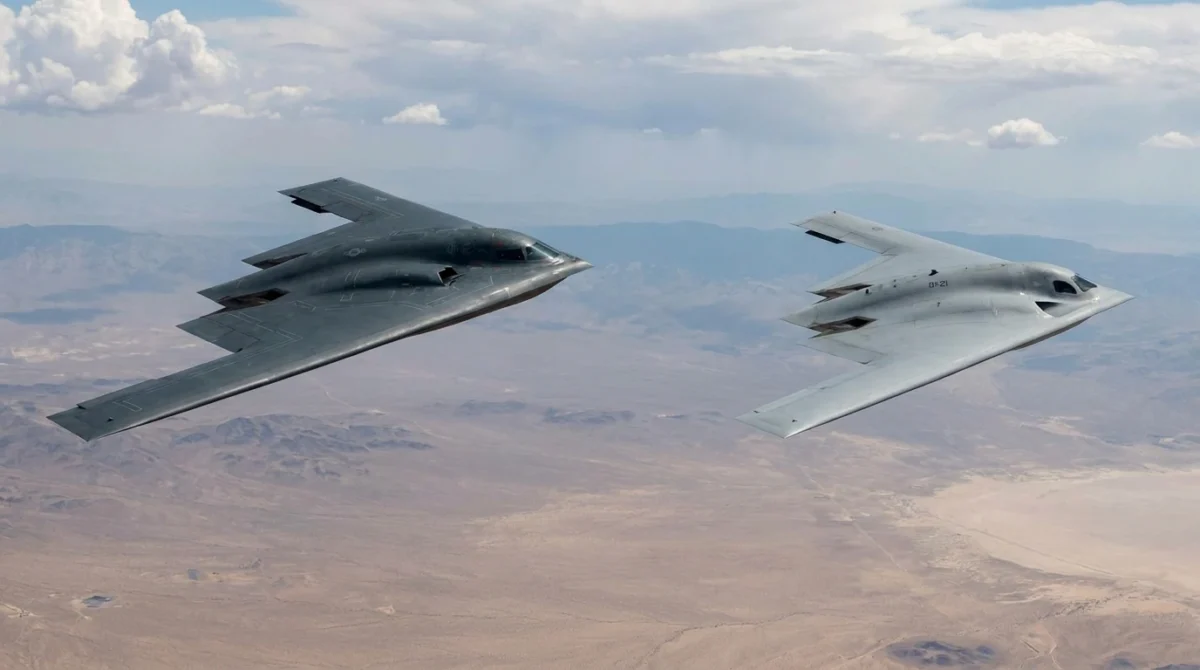
What makes this comparison especially fascinating is that the B-21 isn’t simply replacing the B-2 because the older bomber is worn out. Instead, the Raider represents a shift in military strategy.
The U.S. Air Force wants a bomber that is easier to maintain, more adaptable to future technologies, and affordable enough to be produced in significantly larger numbers.
In this comprehensive B-2 vs B-21 comparison, you’ll discover how these stealth bombers differ in design, technology, cost, payload, survivability, and long-term strategic value, and why those differences could shape air warfare for decades to come.
If you’re in a hurry and just want the headline, here it is: the B-2 Spirit and B-21 Raider share the same mission but were built for different generations of warfare.
The B-2 proved that stealth bombers could strike almost anywhere on Earth. The B-21 aims to do the same job, but against far tougher defenses and at a lower operating cost.
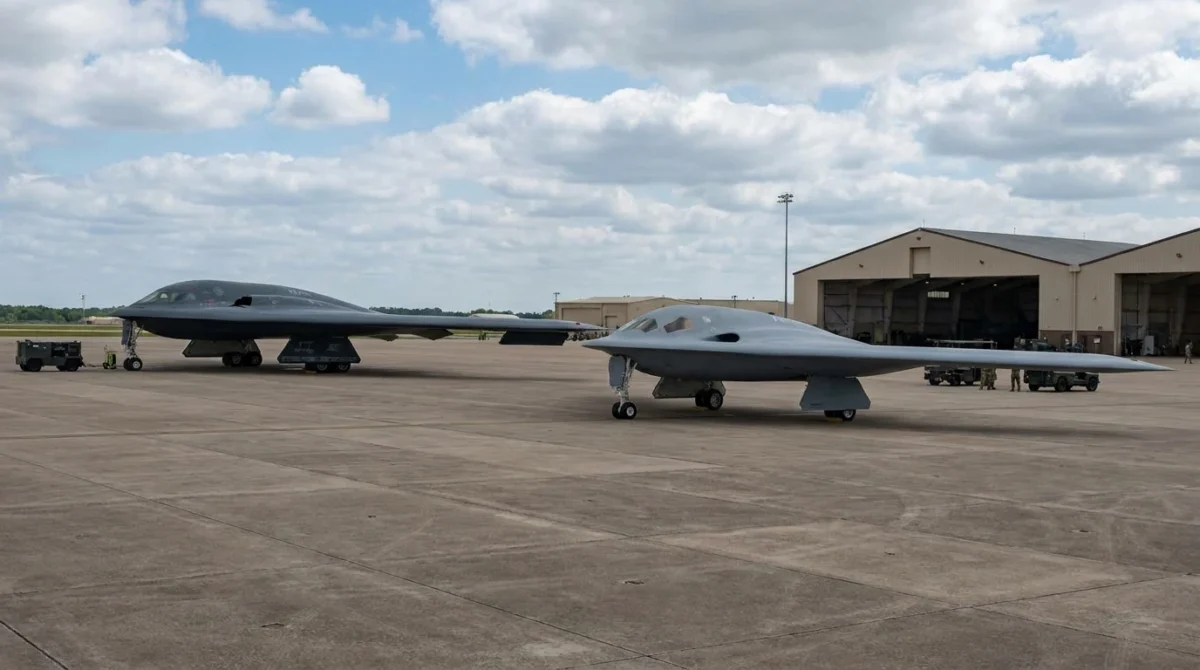
One of the biggest misconceptions in the B-21 vs B-2 debate is that the Raider is simply a newer version of the Spirit. It’s more accurate to think of the B-21 as a redesign based on three decades of lessons learned.
Engineers studied what made the B-2 extraordinary, but also what made it expensive and difficult to maintain, then built those insights into the new aircraft.
Here’s a side-by-side look at the two bombers using publicly available information.
| Feature | B-2 Spirit | B-21 Raider |
| First Flight | 1989 | 2023 |
| Entered Service | 1997 | Expected mid-2020s |
| Manufacturer | Northrop Grumman | Northrop Grumman |
| Crew | 2 | 2 |
| Primary Mission | Strategic strike | Strategic strike |
| Nuclear Capable | Yes | Yes |
| Conventional Weapons | Yes | Yes |
| Stealth Design | Advanced | Next-generation |
| Planned Fleet | 21 built | 100+ planned |
| Estimated Unit Cost | About $2.1 billion | Around $700 million (target) |
The numbers tell an interesting story. The B-2 was designed as a highly specialized strategic asset, while the B-21 is intended to become the backbone of America’s future bomber fleet. A larger production run means more flexibility for global operations and lower costs per aircraft.
As we dig deeper into the B-2 vs B-21 comparison, you’ll see that the biggest differences aren’t always visible from the outside. In fact, some of the Raider’s most important improvements are hidden beneath its smooth, stealthy skin.
One of the first things people notice in the B-2 vs B-21 comparison is that the two bombers look strikingly similar. Both have the signature flying-wing shape with smooth, sweeping lines and no vertical tail. But appearances can be deceiving.
The B-21 Raider is widely believed to be smaller and more compact than the legendary B-2 Spirit.
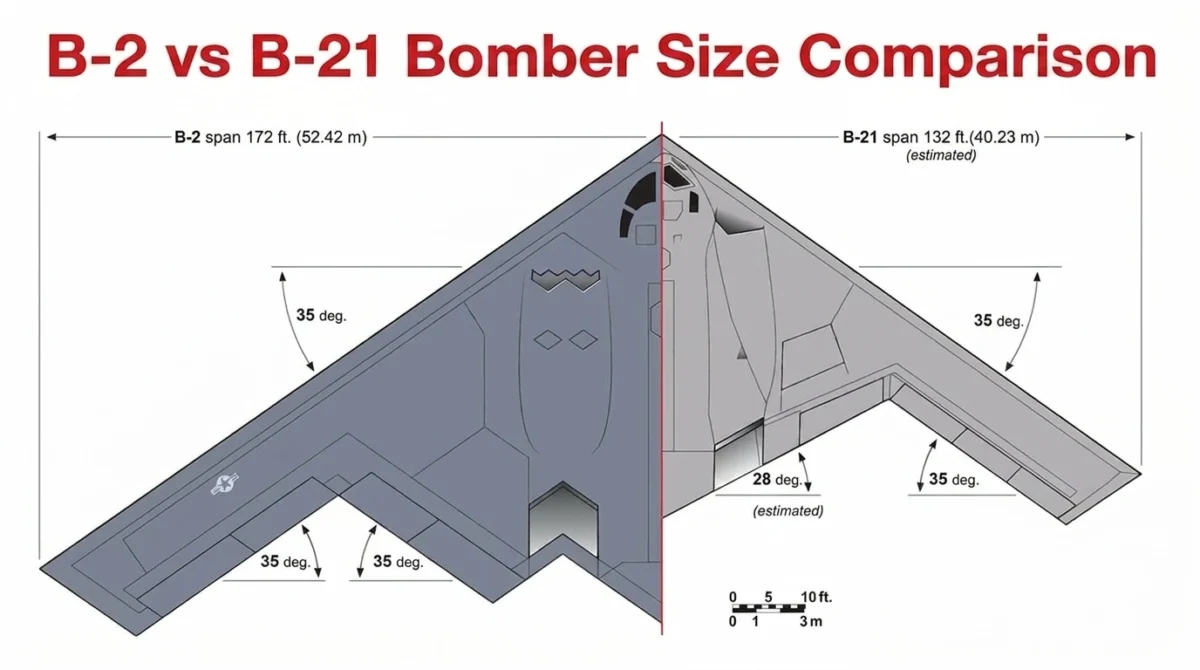
The B-2 is a massive aircraft by any standard. It has a wingspan of approximately 172 feet (52.4 meters), making it wider than many commercial airliners. With a maximum takeoff weight of around 336,500 pounds, the Spirit was designed to carry heavy payloads across intercontinental distances without sacrificing its stealth profile.
The U.S. Air Force has not released the exact dimensions of the B-21, and that’s no accident. Keeping those details classified helps preserve the aircraft’s tactical advantages.
However, aviation analysts estimate that the Raider has a noticeably shorter wingspan and a lighter overall design than the B-2.
| Specification | B-2 Spirit | B-21 Raider* |
| Wingspan | 172 ft | Estimated smaller |
| Crew | 2 | 2 |
| Maximum Takeoff Weight | 336,500 lbs | Classified |
| Flying-Wing Design | Yes | Yes |
Why make the B-21 smaller?
The answer isn’t simply to save weight. A more compact airframe can reduce maintenance costs, improve fuel efficiency, and make the aircraft easier to operate from a wider range of airbases. Advances in precision weapons also mean a bomber doesn’t always need to carry enormous payloads to achieve strategic effects.
Interestingly, smaller doesn’t necessarily mean less capable. Modern avionics, smarter weapons, and improved stealth engineering allow the Raider to accomplish missions that once required larger platforms.
In the B-2 vs B-21 debate, the Raider’s size reflects a changing philosophy: efficiency and adaptability can be just as valuable as sheer scale.
Ask aviation enthusiasts what makes these bombers special, and you’ll probably get the same answer: stealth. But in the B-2 vs B-21 debate, stealth isn’t just about being invisible to radar. It’s a constant game of cat and mouse, where engineers invent new ways to hide while detection systems grow smarter every year.
When the B-2 Spirit was developed, it represented a technological leap. Its smooth flying-wing shape, carefully angled surfaces, and radar-absorbing materials allowed it to penetrate heavily defended airspace with a radar signature reportedly comparable to that of a much smaller object.
During combat operations, the aircraft demonstrated that stealth could fundamentally change the way strategic bombing missions were conducted.
The challenge is that radar technology didn’t stand still. Modern air-defense networks combine multiple sensors, infrared tracking systems, and digital data sharing to detect aircraft that older systems might miss. That’s exactly the environment the B-21 Raider was built for.
Although many of the Raider’s capabilities remain classified, defense analysts believe it incorporates next-generation stealth materials, improved engine integration, and a cleaner overall design to reduce its visibility across multiple detection methods, not just traditional radar.
Equally important, the aircraft was designed to receive upgrades over time, allowing its stealth features to evolve as new threats emerge.
| Stealth Feature | B-2 Spirit | B-21 Raider |
| Flying-Wing Design | Yes | Yes |
| Radar-Absorbing Materials | Advanced | Next-generation |
| Low Observable Technology | Yes | Enhanced |
| Upgradeable Stealth Systems | Limited | Designed for continuous updates |
Ironically, the Raider’s greatest strength may not be that it’s stealthier than the B-2 today. It may be that it can stay stealthy tomorrow.
In the B-21 vs B-2 comparison, adaptability could prove just as important as the original breakthrough that made the Spirit a legend.
Stealth bombers aren’t built to win air races. In fact, if speed were the only goal, the U.S. Air Force would have chosen a very different design decades ago.
In the B-2 vs B-21 comparison, performance is measured less by top speed and more by endurance, efficiency, and the ability to complete missions that can span entire continents.
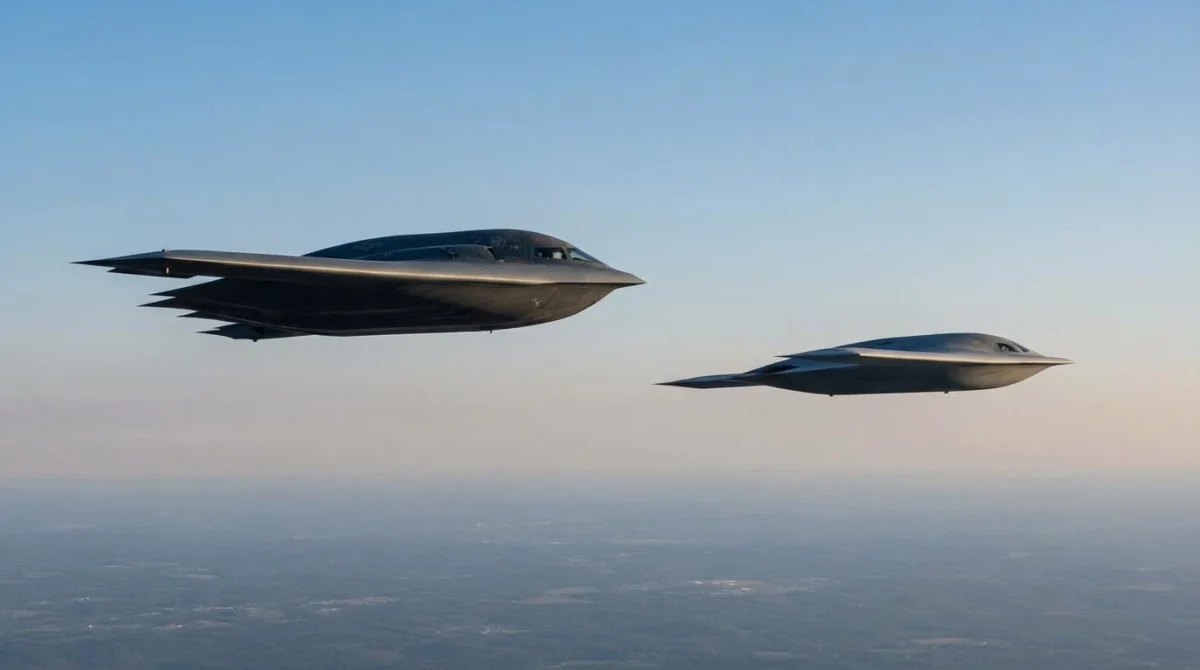
The B-2 Spirit is powered by four General Electric F118 turbofan engines, each carefully buried within the aircraft’s wing to reduce heat and radar signatures.
The bomber cruises at high subsonic speeds and, with aerial refueling, can travel virtually anywhere in the world. Some of its longest combat missions have lasted more than 40 hours, requiring crews to manage fatigue almost as carefully as fuel consumption.
The B-21 Raider takes a different approach. While the U.S. Air Force has not disclosed its engine specifications, experts believe the aircraft uses a more efficient propulsion system designed to lower maintenance demands and operating costs.
The engine inlets and exhaust systems appear to be integrated even more smoothly into the airframe, helping reduce both radar and infrared signatures.
| Performance Feature | B-2 Spirit | B-21 Raider |
| Engines | 4 | Classified |
| Speed | High subsonic | High subsonic (expected) |
| Aerial Refueling | Yes | Yes |
| Global Strike Capability | Yes | Yes |
| Focus | Long-range stealth | Long-range stealth with efficiency |
Interestingly, the biggest performance upgrade may not involve speed at all.
Modern bombers rely heavily on precision-guided weapons, advanced sensors, and real-time data sharing, reducing the need for extreme flight characteristics. The B-21 was designed to operate as part of a connected combat network rather than as a standalone aircraft.
In the B-2 vs B-21 debate, the winner isn’t the bomber that flies faster. It’s the one that can travel farther, stay hidden longer, cost less to operate, and remain effective against future threats. By that measure, the Raider appears to be the next logical step in the evolution of strategic air power.
When people hear the word “bomber,” they often picture an aircraft carrying an enormous amount of firepower. That’s certainly true for both aircraft in the B-2 vs B-21 comparison, but raw payload isn’t the whole story.
Modern strategic bombers are expected to carry smarter weapons, adapt to different missions, and strike targets with incredible precision.
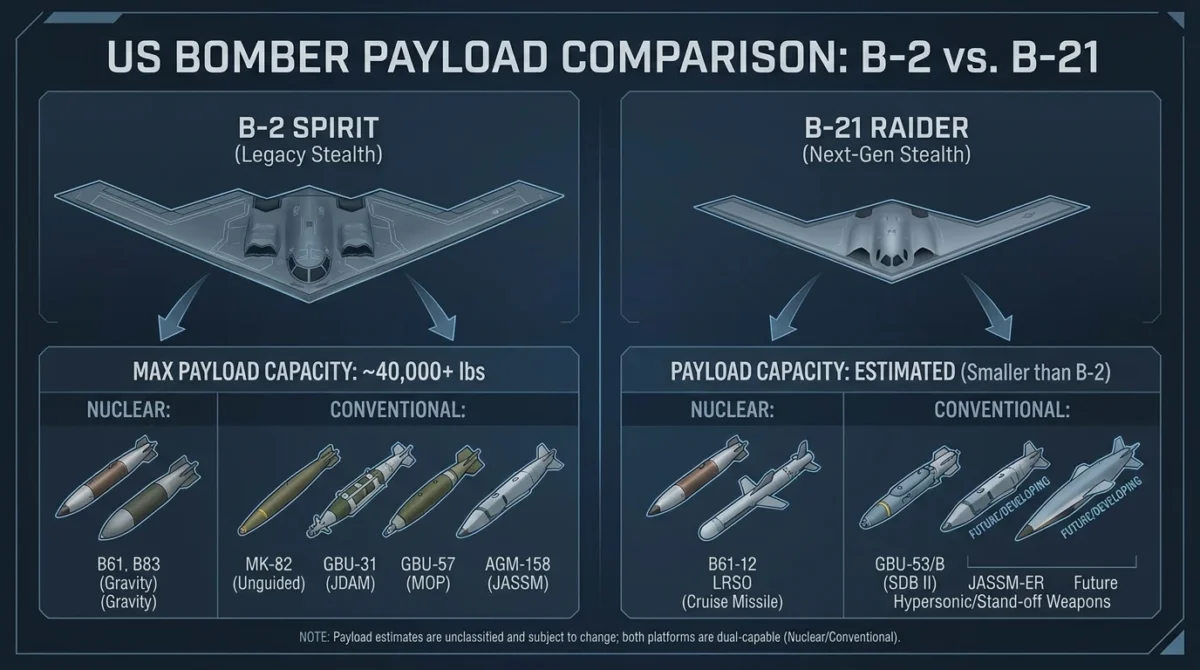
The B-2 Spirit was designed to be a versatile weapons platform from the start. It can deliver both conventional and nuclear payloads, including precision-guided bombs, joint direct attack munitions (JDAMs), cruise missiles, and gravity nuclear weapons.
Publicly available data suggests the B-2 can carry up to 40,000 pounds (18,100 kilograms) of ordnance in its two internal weapon bays.
The B-21 Raider will also perform both conventional and nuclear missions, but the exact details of its payload capacity remain classified.
Military analysts expect it to carry a wide range of existing and future weapons, including long-range stand-off missiles and next-generation precision munitions. Rather than focusing solely on carrying bigger bombs, the Raider was designed to integrate new weapons systems as they are developed.
| Payload Feature | B-2 Spirit | B-21 Raider |
| Conventional Weapons | Yes | Yes |
| Nuclear Capability | Yes | Yes |
| Internal Weapon Bays | 2 | Classified |
| Maximum Payload | ~40,000 lbs | ~20,000 lbs |
| Future Weapon Integration | Limited upgrades | Designed for expansion |
Here’s an interesting shift in military thinking. During the Cold War, carrying the largest possible payload was a major advantage.
Today, accuracy often matters more than quantity. A single precision-guided weapon can achieve what once required dozens of unguided bombs.
In the B-21 vs B-2 debate, the Spirit may still hold the edge in publicly known payload capacity.
The Raider, however, was built for flexibility. Its ability to carry evolving weapon systems could make it more adaptable to future conflicts, where precision, connectivity, and mission versatility are just as important as the number of bombs on board.
Distance has always been one of America’s greatest military advantages. Oceans separate the United States from many potential conflict zones, which means strategic bombers must be able to travel extraordinary distances without relying on nearby bases. In the B-2 vs B-21 comparison, range and endurance are just as important as stealth or payload.
The B-2 Spirit was built with global reach in mind. It has an unrefueled range of roughly 6,000 nautical miles and can fly much farther with aerial refueling. In practice, that means the bomber can launch from the continental United States, strike targets on another continent, and return home.
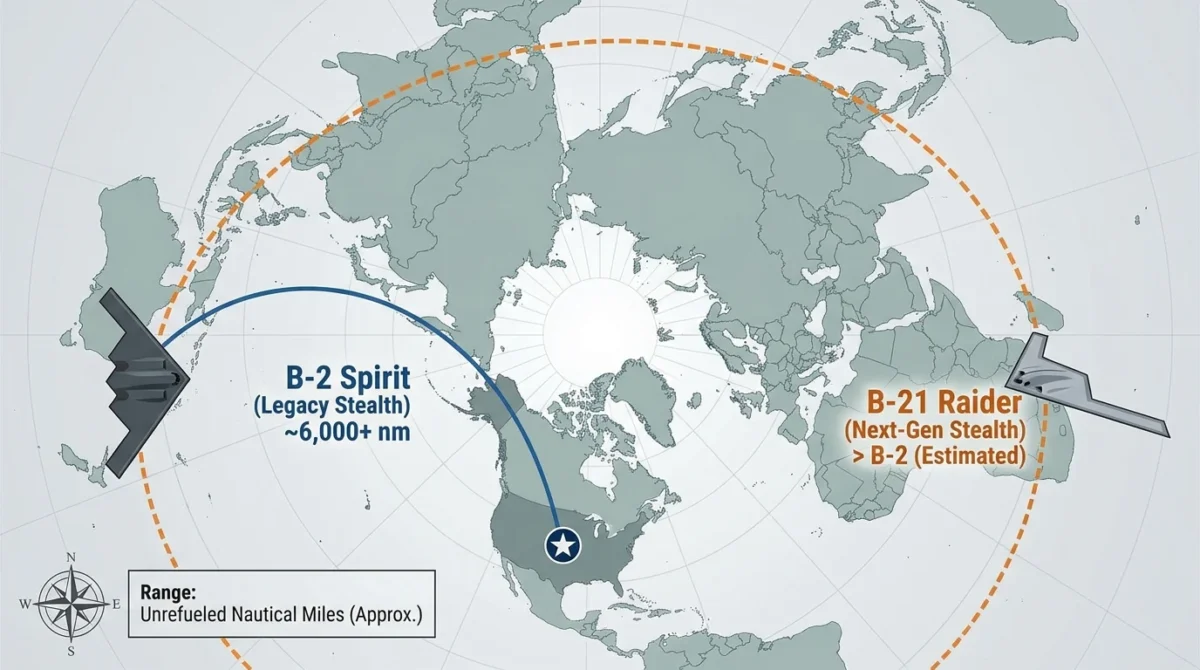
During operations in Afghanistan and Iraq, B-2 crews completed some of the longest combat missions in aviation history, with flights lasting more than 40 hours.
The B-21 Raider is expected to match or exceed those long-range capabilities, although exact performance figures remain classified.
The U.S. Air Force has consistently emphasized that the Raider will provide global strike options, allowing commanders to reach heavily defended targets almost anywhere in the world.
But range isn’t simply about fuel tanks. Endurance depends on maintenance, reliability, and crew workload. An aircraft that requires less servicing and can be turned around more quickly may ultimately deliver greater operational reach than one with slightly longer flight characteristics.
There’s also a strategic advantage to unpredictability. A stealth bomber capable of launching from distant bases forces potential adversaries to defend a much larger area, stretching their resources and complicating planning.
In the B-2 vs B-21 debate, both bombers were designed to project power across the globe.
The B-2 has already proven its ability through decades of real-world operations, while the B-21 promises to combine similar reach with improved efficiency and readiness for the challenges of modern warfare.
When discussing the B-2 vs B-21, performance and stealth often steal the spotlight. But there’s another factor that quietly shapes military strategy: cost. After all, an aircraft can be incredibly advanced, but if it’s too expensive to build and maintain, it limits how many can actually serve in the fleet.
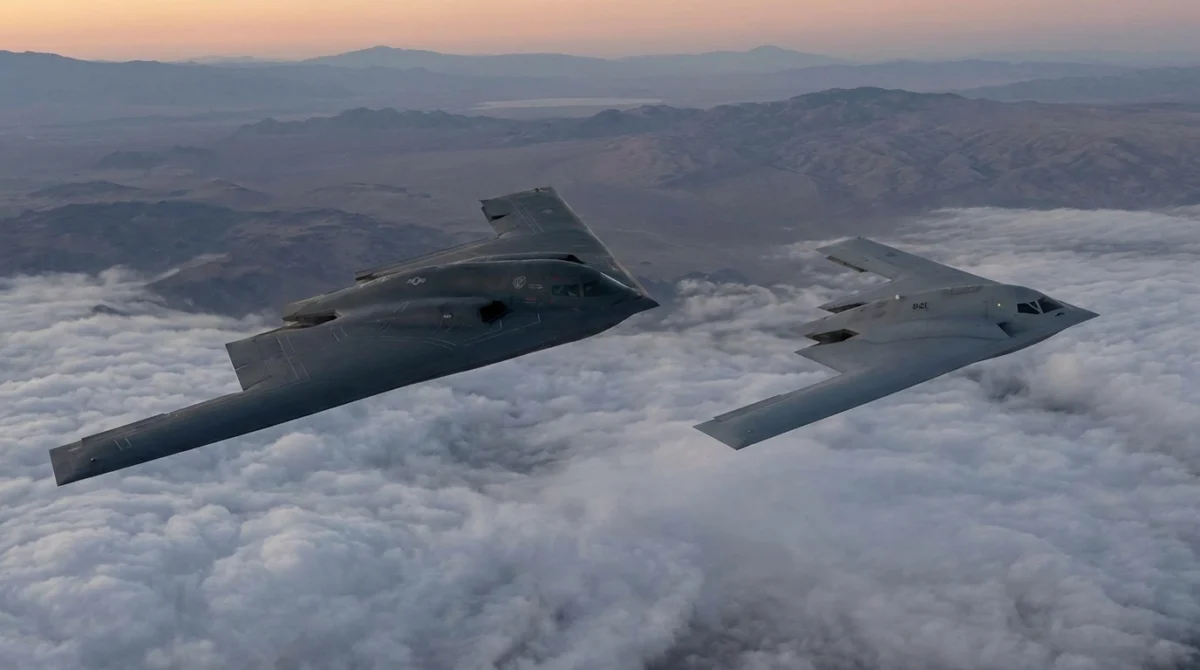
The B-2 Spirit is a perfect example. Developed during the Cold War, it pushed the boundaries of technology, but at a significant price. Only 21 aircraft were built, and after one was lost in an accident, the operational fleet became even smaller.
Estimates place the B-2’s procurement cost at roughly $2.1 billion per aircraft, while the total program cost exceeded $40 billion when research and development expenses are included.
The B-21 Raider was created with a different philosophy. Instead of producing a small number of highly specialized bombers, the U.S. Air Force wants a larger and more affordable fleet.
Current estimates target an average procurement cost of around $700 million per aircraft in base-year dollars, although future inflation and upgrades could affect the final figure.
| Cost Factor | B-2 Spirit | B-21 Raider |
| Aircraft Built | 21 | 100+ planned |
| Estimated Unit Cost | ~$2.1 billion | ~$700 million target |
| Program Strategy | Small fleet | Large production |
| Maintenance Costs | High | Designed to be lower |
Maintenance also plays a major role. The B-2’s complex stealth coating and specialized support requirements contribute to high operating expenses. The B-21 was engineered to simplify maintenance and reduce downtime, potentially lowering its lifetime cost.
The interesting part of the B-21 vs B-2 comparison isn’t that the Raider is cheaper. It’s that military planners deliberately traded extreme exclusivity for scalability.
A larger fleet of advanced stealth bombers provides greater flexibility, stronger global coverage, and the ability to sustain operations over long periods, a strategic advantage that could prove just as valuable as any single technological breakthrough.
After comparing their size, stealth technology, payload, range, performance, and cost, we’re left with the question that started this entire discussion: B-2 vs B-21, which stealth bomber is better? The honest answer depends on what you’re measuring.
If the contest were based on history and proven performance, the B-2 Spirit would have a compelling case. It revolutionized strategic bombing and demonstrated its capabilities in real-world combat operations across multiple conflicts.
Few military aircraft have matched its ability to fly thousands of miles, evade sophisticated defenses, and strike targets with precision. The B-2 didn’t just meet expectations, it changed military doctrine.
The B-21 Raider, however, wasn’t designed to compete with the B-2’s legacy. It was built to solve problems the Spirit couldn’t fully address.
Modern air-defense systems are more advanced, maintenance costs matter more than ever, and military planners need a bomber fleet large enough to respond to multiple global crises at the same time.
| Category | Winner |
| Combat Experience | B-2 Spirit |
| Proven Reliability | B-2 Spirit |
| Future Technology | B-21 Raider |
| Upgrade Potential | B-21 Raider |
| Cost Efficiency | B-21 Raider |
| Fleet Size Strategy | B-21 Raider |
| Historical Impact | B-2 Spirit |
There’s another way to think about it. The B-2 is like a pioneering spacecraft, the first of its kind that proved an ambitious concept could work.
The B-21 is the next generation, benefiting from decades of experience while incorporating new technology and more practical design choices.
So, who wins the B-21 vs B-2 debate? If the goal is to celebrate one of the greatest engineering achievements in military aviation, the B-2 remains an icon. If the goal is preparing for the future of strategic warfare, the B-21 appears to have the advantage.
In reality, the two bombers aren’t rivals. They’re chapters in the same story, with the Raider building on a foundation that the Spirit laid decades ago.