Follow Us:
Follow Us:

The funny thing about the AK-47 Kalashnikov is that it shows up everywhere; news clips, documentaries, old photos, even on T-shirts in tourist markets. You don’t need to be a military buff to recognize it. At some point it just became part of the background of global conflict, almost the way a familiar soundtrack fades into countless movies.
Why it became that iconic is harder to pin down. Some people swear it’s because the rifle is simple and tough. Others talk about how it ended up in so many different hands, in so many different corners of the world, that it basically became unavoidable.
And the more you look at its history, the more it becomes clear that the AK-47’s influence wasn’t just about clever engineering. It spread because of Cold War politics, cheap production, and the way unstable regions tend to latch onto whatever equipment survives the longest.
So the real story isn’t clean or heroic. It’s messy, layered, and tied to moments in history where things were already falling apart.
Whenever the AK-47 Kalashnikov comes up, people usually mean more than the gun itself. It’s tied to a whole mix of history; early Cold War tension, Soviet politics, and the push to build a weapon that ordinary soldiers could actually handle.
The story goes back to the late 1940s, when the Soviet Union was still trying to pull itself together after World War II and was racing to modernize anything connected to its military.
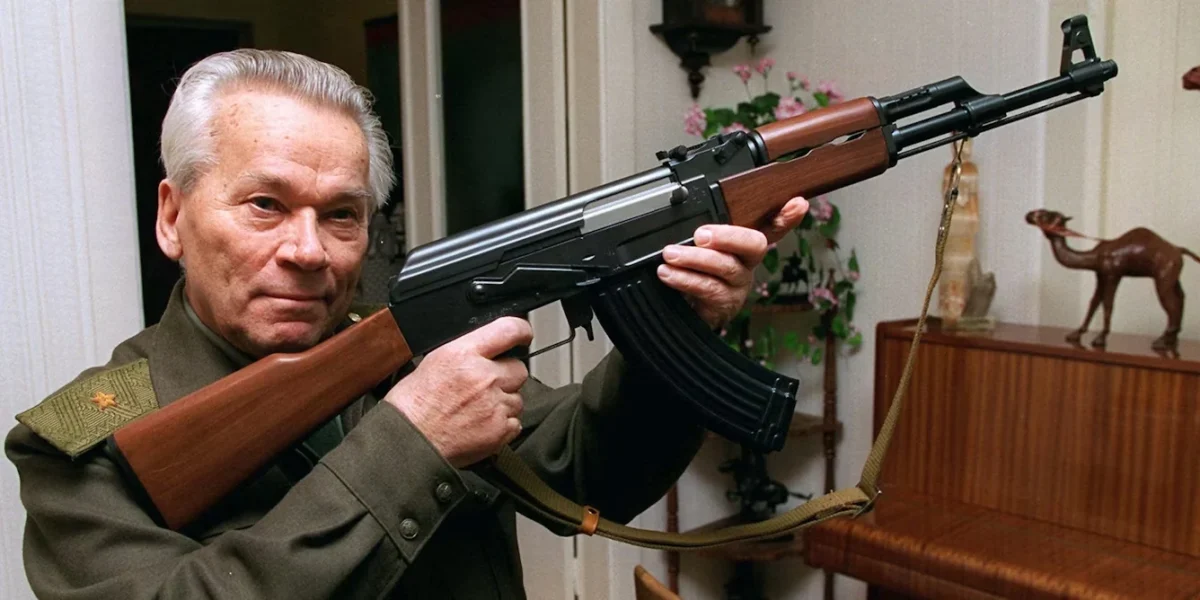
The man behind the design, Mikhail Kalashnikov, wasn’t a famous engineer or a weapons expert. He was a young tank mechanic who’d been injured in the war. Most accounts say he started thinking about better rifle ideas while he was stuck in a hospital bed, bored and frustrated.
He’d seen how badly equipment could fail under real combat conditions, so it makes sense that he was aiming for something simple, sturdy, and easy for regular soldiers to use. Considering what he’d just lived through on the Eastern Front, it wouldn’t be surprising if “make it work in chaos” was the first thing on his mind.
When the Soviet Army began looking for a new standard rifle, Kalashnikov’s design caught their eye for a pretty relatable reason “it just worked”. It didn’t have a ton of tiny, delicate parts, and its loose tolerances meant it could shrug off mud, sand, and freezing weather in a way many rifles at the time couldn’t. From what I can tell, the whole point wasn’t to create a precision instrument for elite marksmen, but to build something that everyday soldiers could handle, even with minimal training.
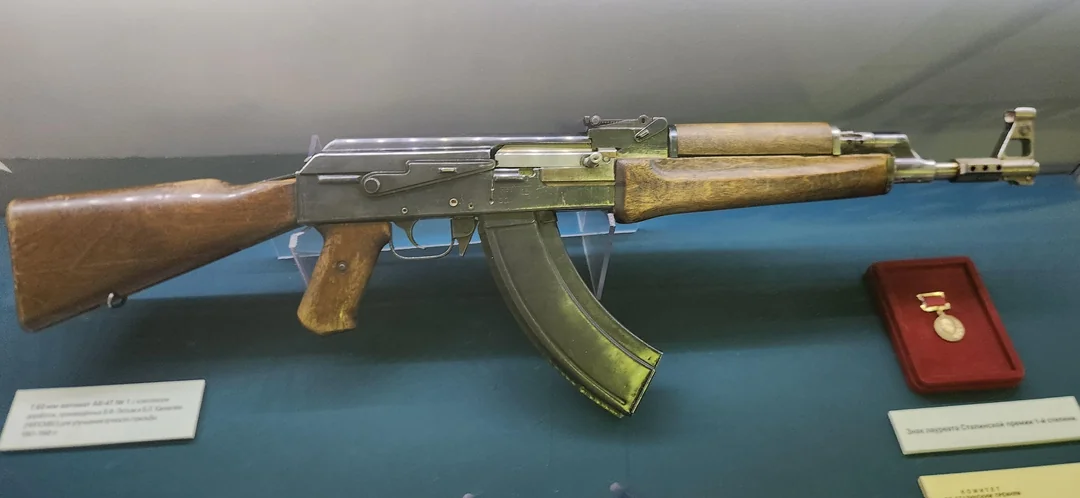
Once the Soviet military officially adopted it in 1949, the AK-47 didn’t stay a Soviet-only tool for long. It spread through Warsaw Pact countries and then, gradually, found its way into conflicts almost everywhere. Some of that might have been political influence, some simple availability, and some because people realized it was a rifle that didn’t give up easily, even in rough conditions.
Some historians say the Soviet decision to license the design widely, often for free, accelerated its global presence. Others argue that its ruggedness simply made it the logical choice for countries that needed a dependable weapon without a lot of maintenance demands.
Trying to understand how the AK-47 Kalashnikov works can feel intimidating at first, but the core idea is surprisingly straightforward. In simple terms, the rifle uses the energy from each fired round to cycle the next one, almost like a self-resetting machine. That’s a rough way to put it, but it’s probably enough for someone just getting familiar with firearms.
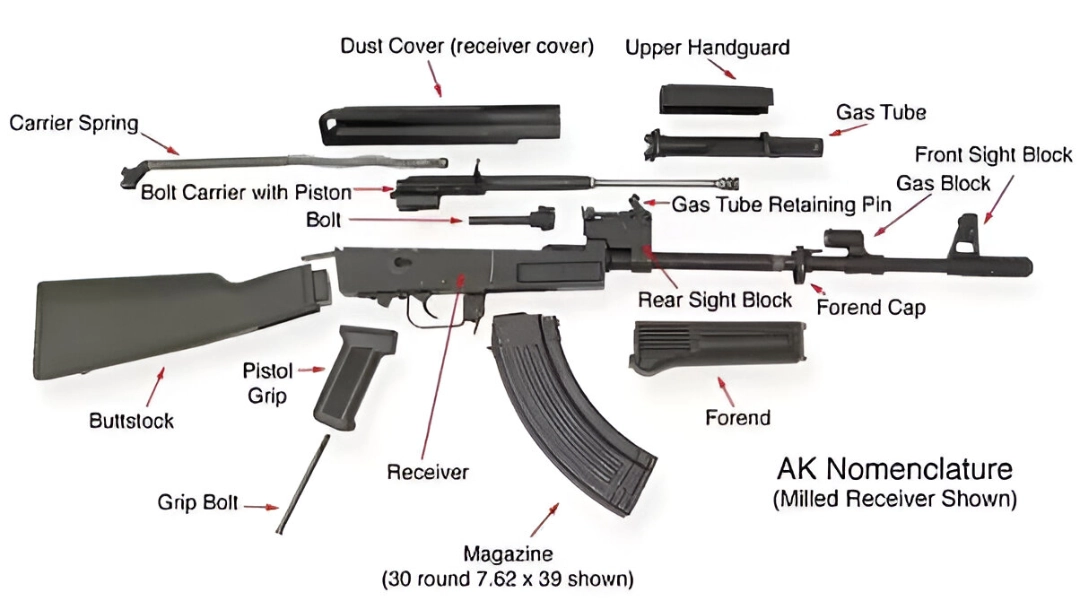
Inside the gun, there’s this piston-and-gas setup that keeps everything moving. When a round goes off, a little bit of the gas that pushes the bullet forward gets redirected through a small hole in the barrel. That quick burst of pressure shoves a metal rod and the bolt carrier backward.
On the way back, they knock out the empty casing and reset the firing parts. Then a spring pushes everything forward again so the next round slides into place. Some people describe it as a kind of “push-pull rhythm,” and that feels pretty close to how the mechanism behaves in practice.
Why does that matter? Well, this long-stroke gas system is one of the reasons the AK-47 Kalashnikov tends to run reliably even when it’s dirty or neglected.
The moving parts have fairly loose tolerances, which means the rifle isn’t as picky about sand, mud, or carbon buildup. I’d guess that’s a big part of why the AK earned its reputation for “working no matter what,” though it’s definitely not invincible, just more forgiving compared to some Western designs.
When people talk about how an AK-47 fires, the whole “semi-auto vs. full-auto” thing usually comes up. The early military versions could do both. Semi-auto just means one shot per trigger pull, and full-auto means the gun keeps firing as long as you hold the trigger down. Most of the civilian versions around today only do semi-auto, but the older military rifles had that extra setting.
What’s interesting is that full-auto sounds dramatic until you actually think about what it feels like to use. The recoil stacks up fast, and the muzzle starts climbing, so it’s not as easy to control as movies make it look.
From what a lot of people say, short bursts or even just sticking to semi-auto tend to make more sense if you’re trying to stay on target. It’s one of those things that seems straightforward on paper but gets a bit more complicated once you’re behind the rifle yourself.
When people say the AK-47 is “dangerous,” they’re usually reacting to how it behaves in the real world rather than pointing to one technical detail. The round it fires, that 7.62×39mm cartridge, has a bit of weight behind it. It’s not some massive sniper round, but it hits hard enough that you definitely feel the difference at the ranges where the AK gets used most often.
Read also: AK-47 vs AK-74: Key Differences You Must Know
Some shooters describe the bullet as doing odd things after impact, like wobbling or changing direction, but even that gets argued about a lot. Some claim it’s exaggerated, others swear they’ve seen it happen. Either way, the round has enough punch and enough momentum that it doesn’t take much imagination to see why people talk about the rifle the way they do.
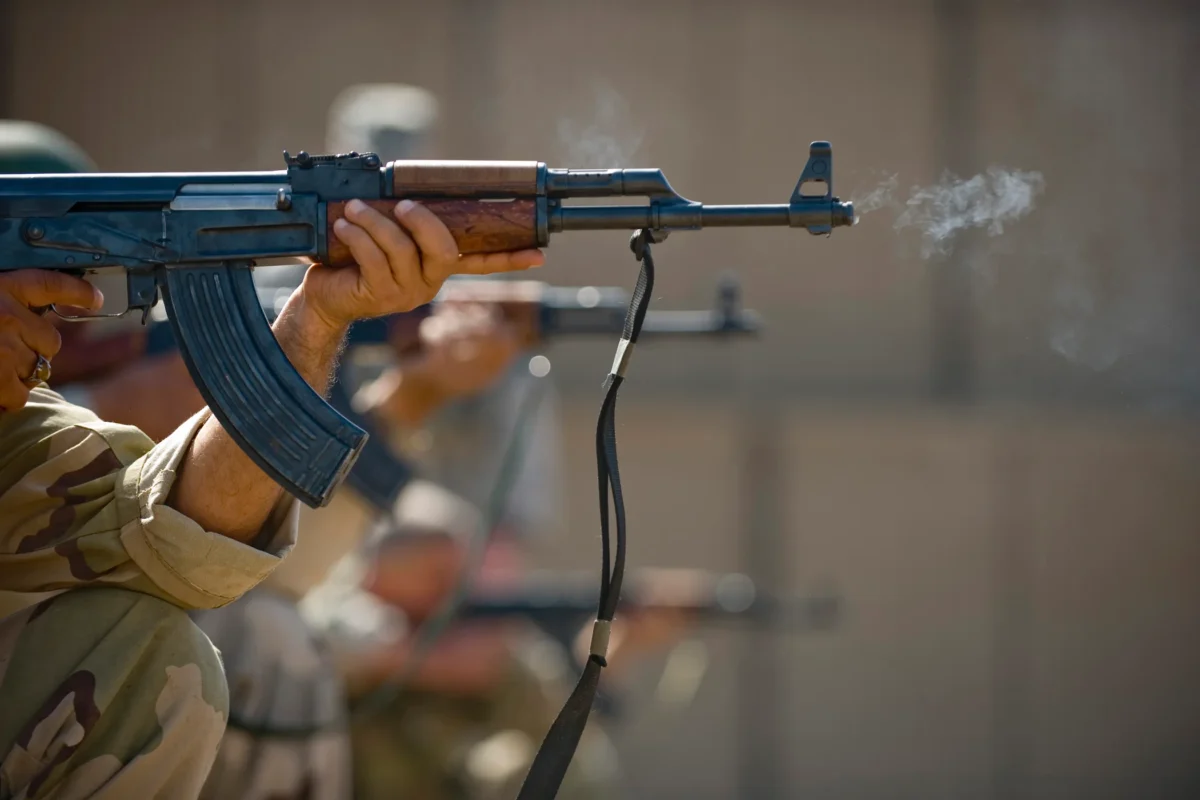
The rifle’s rate of fire also plays into its reputation. On full-auto, an AK-47 can cycle roughly 600 rounds per minute.
Nobody fires it like a garden hose, of course, but the ability to put multiple rounds downrange quickly can turn chaotic situations even more chaotic. I’d guess that in the hands of someone untrained, that speed can make the weapon less controlled, which is its own kind of danger.
Read also: M4 Carbine Explained: Specs, Performance, and Field Insights
Penetration is part of the story too. That 7.62×39mm round usually has no trouble getting through light barriers; things like thin walls, car doors, cheap plywood, or whatever someone is using as makeshift cover. It’s not the only rifle round that can do that, of course, but in places where buildings are put together with lighter materials or where people are ducking behind whatever they can find, it becomes a real issue.
On paper, the AK-47 Kalashnikov is often given an effective range of a few hundred meters, but most people treat it as a close-to-mid-range gun. People sometimes call it “inaccurate,” but that feels a little too tidy. The design just leans more toward durability than tight grouping. Inside 100–200 meters, a decent rifle with a halfway skilled shooter can land shots just fine.
Put those pieces together, a round that hits hard, punches through a lot of common materials, cycles quickly, and stays reasonably accurate at the distances where most fights actually happen and the picture becomes clearer. It’s dangerous because everything it does well lines up with the messy, unpredictable environments where it’s been used for decades.
People talk about the AK-47’s reliability so much that it can start to sound like a tall tale, but there’s a pretty down-to-earth explanation for it. One of the biggest reasons is how loosely the parts fit together.
Compared to rifles that are built with tight, almost surgical precision, the AK leaves a bit more wiggle room. On a workbench, that might look like sloppy machining. Out in the field, it means mud, grit, and sand have somewhere to go instead of shutting the whole thing down.
If you ever handle an AK right after handling a Western rifle, the contrast jumps out. The AK doesn’t have that smooth, sliding feel; the bolt carrier kind of clacks its way along the rails. It’s the firearm equivalent of an old truck that rattles a little but refuses to die. That extra space and that “rough” movement actually help when the gun gets dragged through dirt or blasted with fine dust.
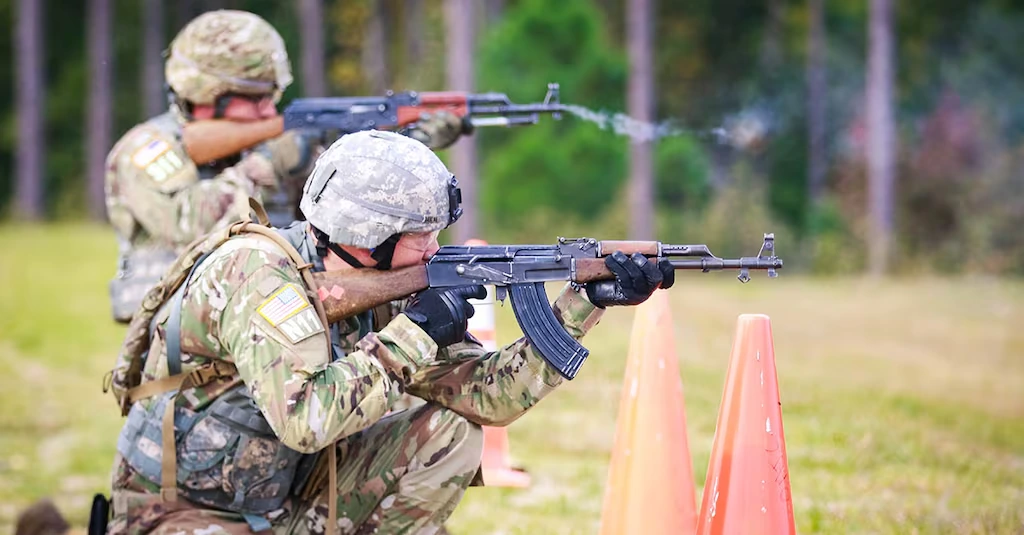
Soldiers have shared stories of AKs being buried, frozen, or soaked, and still firing after a quick shake-out. Some of those accounts are probably exaggerated, but the general pattern seems consistent: it’s a weapon built to keep going even when everything else is falling apart.
In extreme climates, the contrast becomes even more obvious. The M16 and rifles like it prefer cleaner, more controlled conditions. They’re accurate and refined, but they can be finicky if maintenance slips. The AK doesn’t care nearly as much. In jungles, deserts, and places where soldiers might not have cleaning kits or even training, the simplicity pays off.
Read also: Why the Magazine of an AK-47 Has a Curved Shape
That reliability is part of what makes the AK-47 Kalashnikov more dangerous in unstable regions. When a rifle can be stored poorly, handled roughly, or used by someone with minimal experience and still function, it becomes an easy tool for militias, insurgent groups, or anyone who just needs a weapon that “works enough.” There are conflict zones where an AK that’s decades old is still firing because the design forgives neglect.
Critics sometimes argue that the rifle’s reliability comes at the cost of fine accuracy and that’s fair. But in many real-world fights, especially at short ranges and in chaotic environments, reliability tends to matter more than pinpoint precision.
The AK-47 didn’t take over the world because it was the “best” rifle on paper. It spread because it was easy to make, easy to move, and arrived at a moment in history when a lot of countries were desperate for affordable weapons.
One of the biggest reasons for its global reach was simple volume. After the Soviets introduced the AK-47, they didn’t keep tight control over it. They licensed it to allies, shared the design freely, and encouraged other countries to build their own versions.
Before long, factories from China to Romania were producing their own AK copies. Some were high quality, others were pretty rough, but all of them worked well enough. By the time the Cold War was in full swing, millions of AK-style rifles were already circulating. At that scale, they were basically everywhere.
Cost made the spread even faster. The AK was cheap to build and didn’t require precision machining. That meant governments with small budgets or groups fighting with whatever resources they had, could afford it.
In some conflict zones, an AK-47 Kalashnikov has reportedly sold for the price of a bicycle or a secondhand phone. When a weapon becomes that accessible, it naturally slips into the hands of whoever needs one, whether that’s a national army or a local militia.
Politics also played a huge role. During the Cold War, the Soviet Union used weapons the way other countries use foreign aid. If a government leaned toward Moscow, it often got rifles, ammunition, and instructors as part of the package. China did the same with its own variations, which multiplied the effect. Over time, those political choices created long-term stockpiles that kept circulating long after the original alliances faded.
| Feature | AK-47 | M16 |
| Cartridge | 7.62×39mm (heavier, slower) | 5.56×45mm NATO (lighter, faster) |
| Recoil | Noticeably stronger | Lighter and easier to control |
| Accuracy | Fair at close–mid range | Generally more precise at longer range |
| Reliability | Very high, even when dirty | High if well-maintained |
| Weight | Heavier overall | Lighter and easier to carry |
| Effective Range | ~300–400 m (practical use often shorter) | ~500–600 m |
| Maintenance Needs | Minimal | Requires regular cleaning |
| Build Style | Rugged, loose tolerances | Precise, tight tolerances |
Comparing the AK-47 vs M16 isn’t just about specs, the rifles feel like they were built for different worlds. The AK leans toward raw durability: thicker parts, looser tolerances, and a heavier round that hits hard but drops faster. The M16 feels more refined, almost like a tool engineered for soldiers who have the training and time to maintain it properly.
Read also: M16 Rifle Breakdown: Specs, Performance, and Reliability
In terms of firepower versus accuracy, the trade-off shows up quickly. The AK’s 7.62×39mm round has solid stopping power, especially within the first 200 meters, but the recoil and the rifle’s general build can make tight groupings harder to achieve.
The M16’s lighter 5.56 round flies straighter and faster, which helps with accuracy and makes follow-up shots easier. Some people argue the M16 hits “too lightly,” while others point out that accuracy and shot placement matter more. The truth probably sits somewhere between those extremes.
The answer depends heavily on the environment. In places with sand, mud, humidity, or limited access to cleaning kits, the AK-47’s durability wins almost by default. There are plenty of stories, some likely exaggerated about AKs firing after being abused, buried, or left uncleaned for months. The M16 can handle rough weather too, but only if it’s maintained; neglect it, and problems tend to show up faster.
In a professional, well-supplied military force, precision often matters more. Soldiers who are trained to maintain their rifles and operate at longer ranges will usually get better results from an M16-type platform. But in conflicts where fighters are poorly trained, constantly on the move, or relying on whatever equipment they can get, the AK’s ruggedness becomes far more valuable.
So the “better rifle” question doesn’t really have a universal answer. The AK-47 survives almost anything. The M16 rewards discipline and training. Which one matters more depends entirely on the battlefield you’re imagining.