Follow Us:
Follow Us:

If you’ve ever fallen down the rabbit hole of comparing rifles, you already know the AK-47 vs AK-74 debate isn’t just about two guns, it’s about two philosophies of how a weapon should behave in the hands of a real human being.
And strangely enough, most articles treat the comparison like a spreadsheet exercise, numbers in one column, numbers in another, and a shrug in between.
But that misses the human side of the story, the way these rifles feel, the way they move, the quirks they reveal only after hundreds of rounds, the odd moments when a detail suddenly matters more than the spec sheet ever predicted.
So let’s start somewhere different.
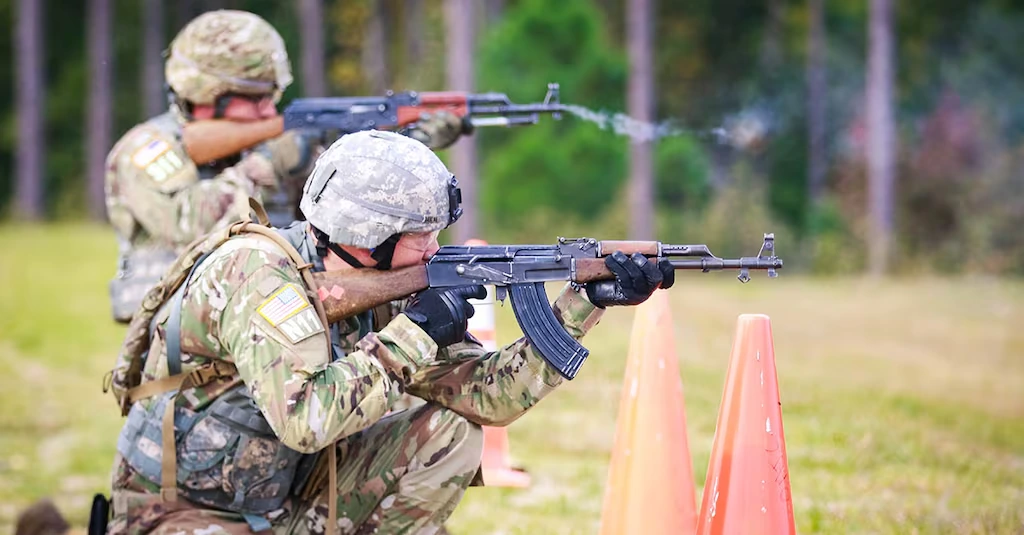
Picture two soldiers, same training, same conditions, running the same course. One fires the heavier 7.62×39-mm thump of the AK-47, the other the zippy 5.45×39-mm snap of the AK-74. After a few minutes, the divergence becomes obvious.
Read more about the AK-47 Khalashikov.
The AK-47 shooter digs the rifle’s weight into his shoulder like he’s arguing with gravity. The AK-74 shooter, by contrast, moves with a certain lightness—almost like the rifle is encouraging him forward instead of holding him back. Same lineage, completely different conversations between weapon and user.
That’s why people keep asking which one is “better,” even decades later. Not because they expect a single answer, but because each rifle solves the same problem with its own personality.
In this post, we’re going to peel back the layers, history, ballistics, quirks, strengths, and surprising weaknesses, and look at how these two iconic designs ended up taking such different paths.
The funny thing about the AK-47 vs AK-74 story is that it didn’t start with a grand redesign meeting or some dramatic battlefield revelation.
It started with a slow, almost reluctant realization inside the Soviet military: the world had changed, and their beloved AK-47, rugged, stubborn, almost mule-like in its reliability, was starting to show its age in ways that weren’t obvious on parade grounds.
By the late 1960s, NATO forces had been fielding smaller, faster rounds for years. Lighter ammo meant soldiers could carry more of it. Higher velocity meant flatter trajectories, which translated to more predictable hits under stress. And while the Soviets didn’t like to admit they were impressed, they quietly took notes. A lot of notes.
Enter the AK-74, but not with the fanfare you might expect. It wasn’t introduced as a flashy successor. It arrived more like a cautious upgrade, the kind of thing a practical engineer suggests with a gentle “maybe we should try this.”
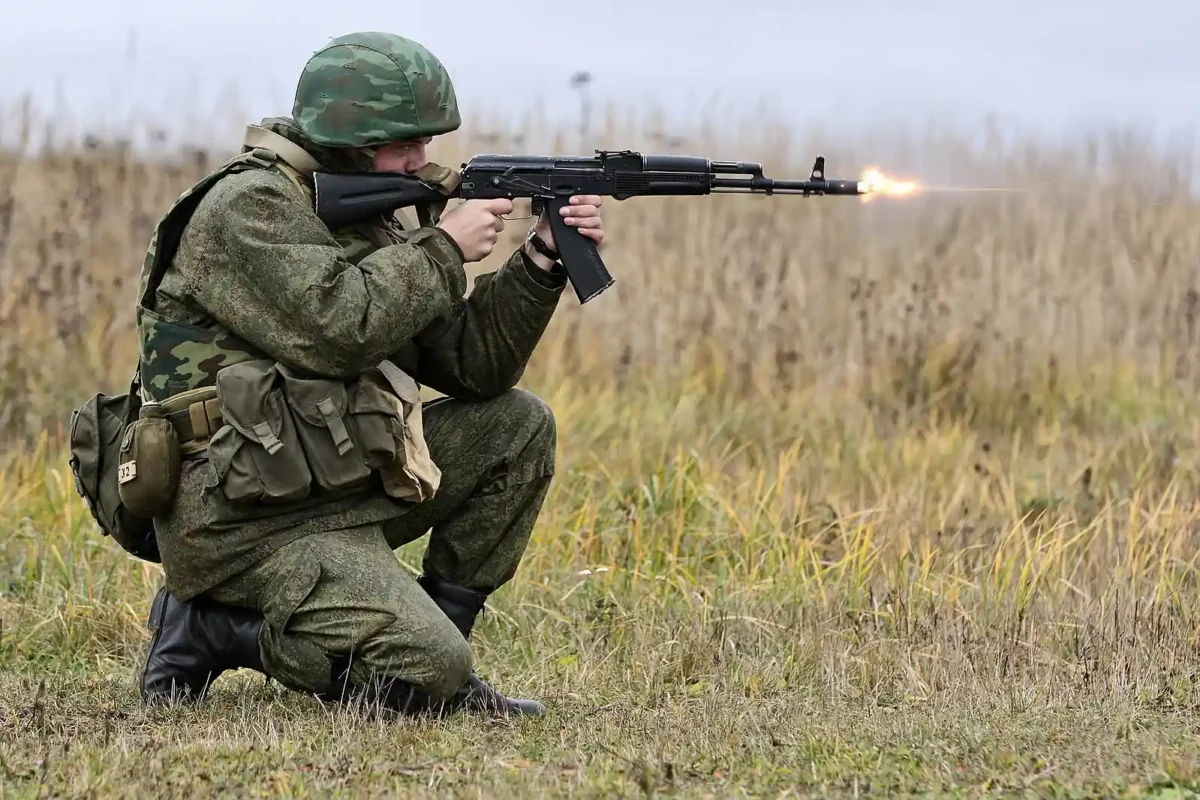
Designers kept the soul of the original rifle- same operating system, same silhouette that could be recognized in a sandstorm, but rethought the heart of the system: the cartridge.
Switching to the 5.45×39-mm round didn’t happen overnight. There were heated debates about stopping power, logistics, and whether soldiers would trust a rifle that felt “too easy” to control.
But eventually, the evidence won out: improved accuracy, reduced recoil, and a weapon that felt more at home in the fast-paced, mobile style of warfare the Soviets saw coming.
So the AK-74 wasn’t a replacement so much as a response, a thoughtful evolution rather than a revolution.
And that’s why comparing the AK-47 and AK-74 today feels less like picking between siblings and more like examining two chapters of the same long, stubbornly fascinating story.
When people bring up AK-47 vs AK-74, they usually jump straight to caliber—7.62×39 vs 5.45×39—like that alone explains everything.
And sure, it’s the headline difference, but the real story lives underneath the numbers, in the way those cartridges behave once they leave the barrel. Two very different personalities, two different attitudes toward physics.

The 7.62×39 round is a bit of a bruiser.
Think of it like an old-school diesel truck: heavy, loud, a little stubborn, but absolutely capable of pushing through thick brush, improvised cover, or whatever else a chaotic battlefield throws in its way. It hits with a deep, authoritative thump you feel in your teeth more than your ears.
That weight gives it penetration, but also a tendency to arc through space with a kind of lazy confidence—you aim high, you accept its quirks, and it rewards you with raw force.
The 5.45×39 round, by contrast, feels like it was designed by someone obsessed with efficiency. Faster, flatter, lighter.
Some shooters describe it as “twitchy,” in a good way—like it leaps out of the barrel eager to get somewhere. That lighter recoil doesn’t just make the rifle comfortable; it shapes the entire rhythm of firing. Follow-up shots come quicker.
Muzzle rise is gentler. And on paper targets, the difference becomes almost comically obvious: groupings tighten, especially in rapid strings.
Here’s a simple snapshot to make the contrast clearer:
| Feature | AK-47 (7.62×39) | AK-74 (5.45×39) |
| Bullet Weight | ~123 gr | ~53–60 gr |
| Typical Velocity | ~715 m/s | ~900 m/s |
| Recoil Impulse | Heavy, punchy | Noticeably lighter |
| Trajectory | More curved | Flatter, more predictable |
| Behavioral “Feel” | Force-first | Speed-first |
If the AK-47 and AK-74 were people, you could spot the generational gap the moment they walked into a room. The AK-47 has that “built during an era when everything was overengineered on purpose” vibe—thick steel, dense wood furniture, and a sort of industrial stubbornness baked into every rivet.
Pick one up, and it feels like it’s daring you to mistreat it. And frankly, many soldiers did. Mud, freezing rain, sandstorms, you name it, and the rifle just kept shrugging it off like an old mechanic wiping grease from his hands.
The AK-74, on the other hand, feels more…considered. Not fragile, not soft, just thoughtfully trimmed.
Materials shifted, weight dropped, and the lines of the rifle sharpened a bit. Even the handguards took on a different personality, often vented or polymer-based, giving off a practical “let’s get moving” energy.
One of the most underrated upgrades is the muzzle brake. It’s that multi-chambered, oddly angular device at the end of the barrel that looks like a designer finally snuck into the project. But it works. It tames muzzle rise so effectively that first-time AK-74 shooters often raise their eyebrows and mutter some version of, “Huh… that’s it?”

Inside, though, the story is less dramatic: both rifles operate on the same long-stroke gas piston system. It’s the mechanical equivalent of a folk recipe passed down unchanged because nobody could improve on it without ruining the charm.
That familiarity made it easy for troops to transition between generations—they didn’t need to relearn the soul of the weapon, just the feel of it.
The result? Two rifles that share DNA but not posture—one muscling its way through problems, the other navigating them with lighter steps.
Talking about performance in the AK-47 vs AK-74 debate feels a bit like discussing two musicians who play the same instrument but produce wildly different vibes. Same platform, same silhouette, but once the shooting starts, their personalities couldn’t be more different.
The AK-47 has a rhythm that’s unmistakable: a rolling, thudding recoil that pushes back with a kind of old-world insistence. It’s not unmanageable, far from it, but it demands respect.
Shooters often describe it as a “shoulder conversation,” meaning the rifle constantly lets you know it’s there, shaping how fast you can recover between shots. Put it on full-auto and the muzzle climb becomes a kind of vertical negotiation you’re not always winning.
The AK-74 flips that script completely. The combination of the lighter 5.45×39 round and its famously aggressive muzzle brake makes the recoil so mild it almost feels like the rifle is apologizing for firing.
The first time you run a rapid-fire string, the sight picture barely budges; you track the target instead of fighting to reel the rifle back in. It’s the kind of control that, once experienced, spoils you for anything heavier.
Accuracy follows the same theme. The AK-74’s flatter trajectory gives beginners a feeling of competence almost immediately.
Shots land where intuition expects them to—no mental math, no arcing guesswork. Meanwhile, the AK-47 rewards experience. Learn its arc, its drop, its unique cadence, and it delivers hits with surprising consistency, especially at mid-range.
Range performance paints a similar picture: both rifles can reach out farther than most shooters ever will, but the AK-74 tends to do so with more predictability, while the AK-47 brings authority at the cost of subtlety.
In other words, shooting these rifles isn’t just about numbers, it’s about how they move with you, or sometimes drag you along for the ride.
Trying to pick a winner in the AK-47 vs AK-74 conversation is like asking whether a pickup truck is “better” than a motorcycle. Sure, you can compare torque, mileage, weight, and all that—but the truth is each machine shines only when it’s being used for what it was actually built for. Same story here.
Let’s start with the AK-47. Its pros feel almost carved in stone: dependable, forgiving, and powerful in that slow-and-steady way only a 7.62×39 platform can deliver.
If you’ve ever shot through dense underbrush or tried to punch rounds through improvised cover, you immediately understand why so many forces stuck with it long after “modern” alternatives appeared. Its recoil may be punchy, but that punch translates into authority.
The downside? That same force can slow down your rhythm, especially in rapid engagements, and the heavier ammunition adds up quickly if you’re carrying a full load on foot.

The AK-74 takes those rough edges and rounds them off. Its biggest pro—recoil control—changes everything from how fast you can transition between targets to how long you can sustain accurate fire before fatigue sets in. And because 5.45×39 ammo is significantly lighter, soldiers can carry more of it without feeling like a pack mule.
On the flip side, that lighter round can underwhelm in situations where barrier penetration or sheer stopping power matter more than precision. Think cars, brick, heavy timber—situations where momentum speaks louder than velocity.
If the AK-47 is a hammer built for stubborn problems, the AK-74 is a scalpel meant for efficiency. The trick is knowing which job you’re walking into.
Deciding between the AK-47 and AK-74 isn’t a quiz with a single correct answer; it’s more like choosing between two tools that solve overlapping problems in very different ways.
And the funny thing is, most comparisons skip over the practical criteria—the stuff real shooters, soldiers, or even prepared civilians actually think about when selecting a rifle.
Start with mission type.
If you’re dealing with environments where obstacles are the norm, dense forest, thick walls, and improvised cover, the heavier 7.62×39 round often wins out simply because momentum does things velocity can’t.
That’s why countless groups across regions far from the original designers still cling to the AK-47 platform. Its no-nonsense punch works, even when conditions don’t. This preference holds especially in areas where ammo supply chains are unpredictable, and availability trumps optimization.
But if mobility and sustained accuracy matter more than raw punch? The AK-74 shines. Its lightweight ammunition lets a soldier carry significantly more rounds without turning into a pack animal, a factor modern militaries, including those influenced by doctrines from the former Soviet Union and its successor states, take seriously.
Paired with lower recoil, the rifle becomes an extension of the shooter rather than a tool they must constantly wrestle with. It’s no coincidence that the flatter-shooting 5.45×39 round aligns well with fast-moving infantry strategies inspired partly by observing Western forces like NATO during the Cold War era.
Another overlooked factor? Shooter personality. Some folks just prefer a rifle with presence—a thump, a weight, a sense of mechanical gravity. Others gravitate toward the crisp, almost eager behavior of the AK-74.
In the end, the “better” rifle is simply the one that fits the job, the terrain, the ammo you can actually get, and the rhythm you shoot with. Real choice lives in that intersection—not in a spec sheet.