Follow Us:
Follow Us:

On June 21, 2025, a British F-35B Lightning II was forced to make an emergency landing at Thiruvananthapuram Airport in southern India due to a hydraulic system malfunction. What was supposed to be a routine ferry flight turned into an unusually prolonged layover, the $115 million 5th generation fighter remained grounded in Kerala for over a month.
What might have been just another maintenance hiccup instead became a minor global spectacle: memes flooding social media, jokes about the jet enjoying Kerala’s rain, and a fair share of criticism from observers wondering how such an advanced F‑35B STOVL platform could be so vulnerable to a single technical fault.
This strange episode, however, might be more than just a footnote in the jet’s service history. If anything, it subtly reveals the complexity behind operating vertical takeoff jets like the USMC F‑35B, especially when deployed far from their typical carrier-based environments.
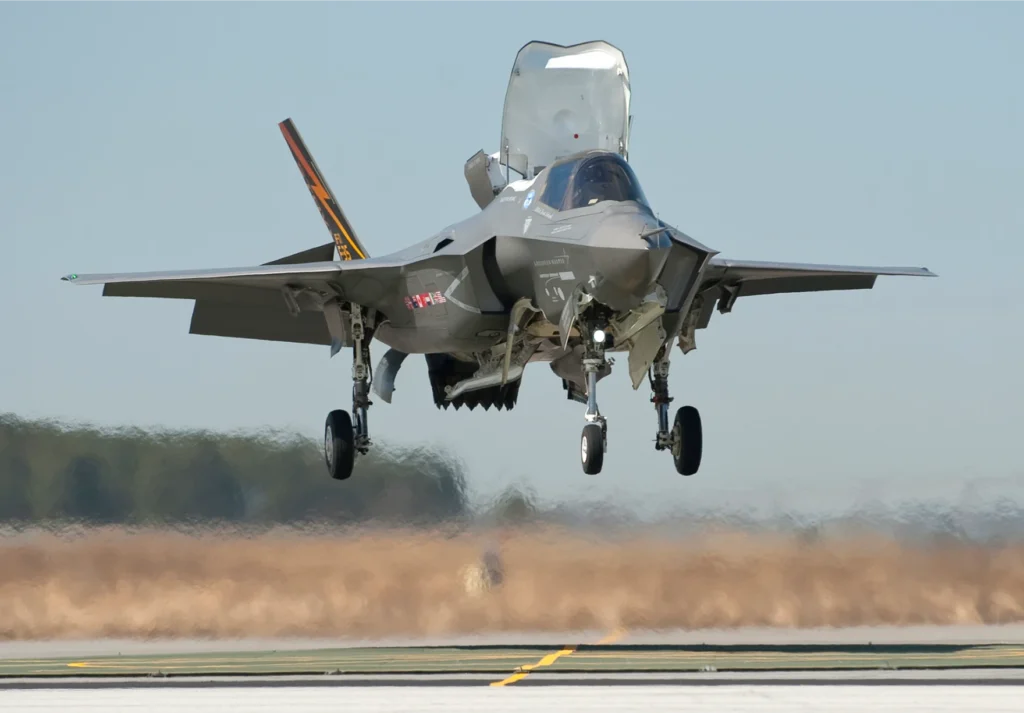
At the same time, it also points to the resilience of the global logistics and support networks surrounding the Lockheed Martin F‑35B, with a specialized RAF team eventually flying in to conduct repairs on-site.
Ironically, while that jet sat idle on a runway in Kerala, just a week earlier Lockheed recently announced the successful integration of long‑range anti‑ship missiles, including LRASM and JASSM, onto the F‑35B platform. Paired with upcoming upgrades like Block 4 and Technology Refresh 3, this may push the F‑35B’s operational relevance even further into the future.
Surprising as it may seem, these two contrasting stories, one of a stranded vertical takeoff jet, the other of its expanding combat envelope, might actually highlight why the F‑35B stealth fighter continues to redefine fifth‑generation fighter operations.
In the late 1990s and early 2000s, the U.S. Department of Defense launched the Joint Strike Fighter (JSF) program, which sought to create a versatile, multi-role 5th-generation fighter that could meet the distinct needs of the U.S. Air Force, Navy, and Marine Corps.
What made this endeavor especially challenging was the requirement for a single baseline aircraft to serve all three branches—with minimal compromise.
Among these service-specific demands, arguably the most technically challenging was the one posed by the United States Marine Corps (USMC): a stealth fighter that could perform short takeoffs and vertical landings (STOVL) without sacrificing the advanced avionics, low observability, and multi-mission capabilities expected from a next-generation platform.
For the Marines, it reflected a doctrinal shift toward dispersed operations and the ability to launch combat aircraft from austere environments, such as forward operating bases or amphibious assault ships.
Traditional carrier-based aircraft like the F/A-18 Hornet required large, well-defended runways or full-sized carriers, both of which may be increasingly vulnerable in a high-end fight.
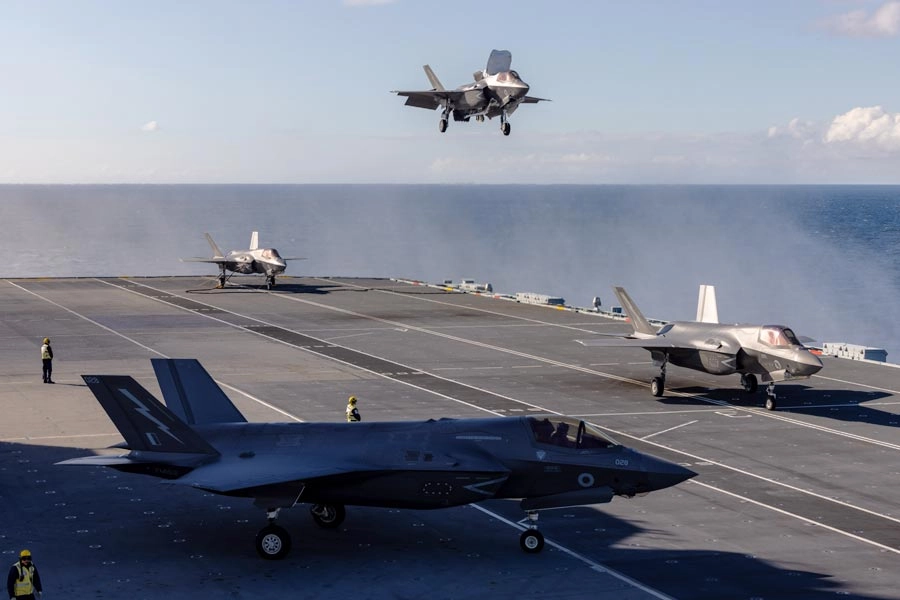
In this context, the emergence of the F-35B STOVL variant was less a technological curiosity and more a strategic necessity.
Analysts have pointed out that the STOVL design essentially enabled fifth-generation capabilities to reach areas that might otherwise be inaccessible in a peer-conflict scenario, particularly across the Indo-Pacific, where U.S. forces anticipate the need for agile deployments across dispersed island chains.
The integration of a shaft-driven lift fan, developed in collaboration with Rolls-Royce, was arguably the breakthrough that made this vision possible.
While it introduced weight and space penalties compared to the conventional F-35A, it allowed the F-35B to operate from short decks or confined runways without compromising its stealth profile or mission systems.
Of course, this design trade-off did not come without criticism. The F-35B cost remains a contentious point, as the STOVL system adds significant complexity in terms of maintenance, logistics, and procurement.
Moreover, some experts have raised questions about the variant’s kinematic performance and weapons load compared to its A and C counterparts.
Still, the benefits, particularly in terms of operational flexibility, have proven compelling to a growing list of international partners.
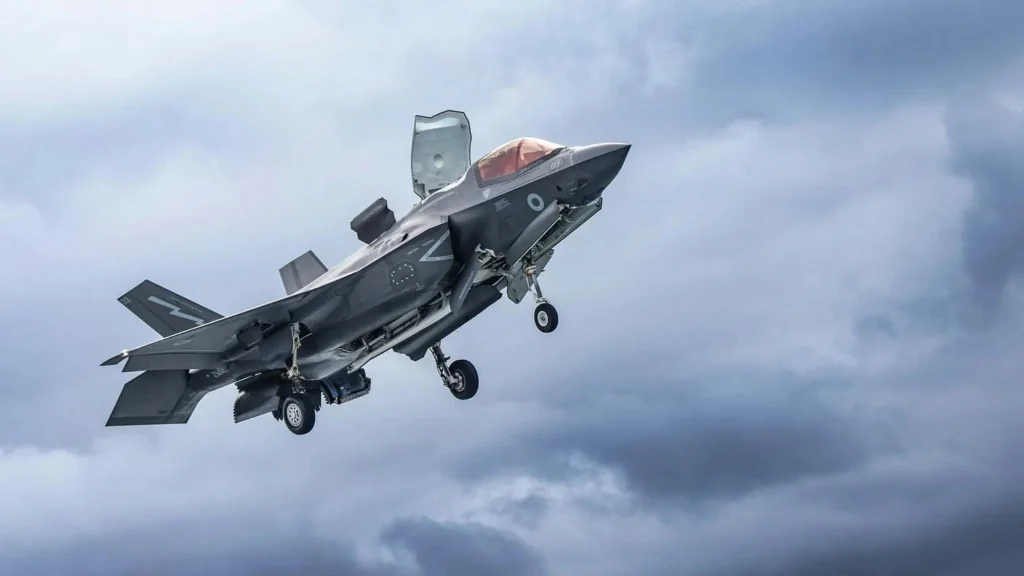
The STOVL (Short Takeoff and Vertical Landing) system is perhaps the most defining feature of the F‑35B fighter jet. Enabled by a shaft-driven lift fan and a 3-bearing swivel nozzle, this system allows the aircraft to operate from smaller vessels like amphibious assault ships, as well as remote, rugged airstrips that lack conventional infrastructure.
In theory, this dramatically expands the jet’s deployment options, allowing airpower to be projected from locations that would otherwise be inaccessible to traditional fighters.
However, the STOVL mechanism adds mechanical complexity, internal space constraints, and extra weight, which slightly reduces internal fuel capacity and payload compared to the F‑35A.
Still, for the USMC F‑35B and its allies, the strategic flexibility gained, especially in distributed or maritime operations, might outweigh those compromises.
As a 5th-generation fighter, the F‑35B stealth fighter is built around low observability. Its angular fuselage, radar-absorbing materials, and internal weapons bays all contribute to a reduced radar cross-section.
While it’s difficult to quantify stealthiness without classified data, most open-source assessments suggest that the F‑35B offers significant survivability advantages over legacy platforms like the Harrier or F/A-18.
Read also: AV-8B Harrier II: The Legendary Marine Corps Jump Jet
That said, some analysts argue that the STOVL configuration may slightly impact the aircraft’s stealth profile, particularly from certain rear angles, due to changes in nozzle shape and fuselage design.
Even so, the aircraft’s advanced electronic warfare suite and sensor fusion likely help it remain survivable in high-threat environments, especially when combined with cooperative tactics across a fleet.
Another standout feature of the Lockheed Martin F‑35B is its integrated sensor and avionics suite. The Distributed Aperture System (DAS), Electro-Optical Targeting System (EOTS), and Active Electronically Scanned Array (AESA) radar all feed into a single, unified display, providing pilots with an unparalleled level of situational awareness.
This fusion of data doesn’t just benefit the pilot, it also enhances network-centric warfare, allowing the F‑35B Lightning II to act as a battlefield node, passing real-time data to ships, ground forces, and other aircraft.
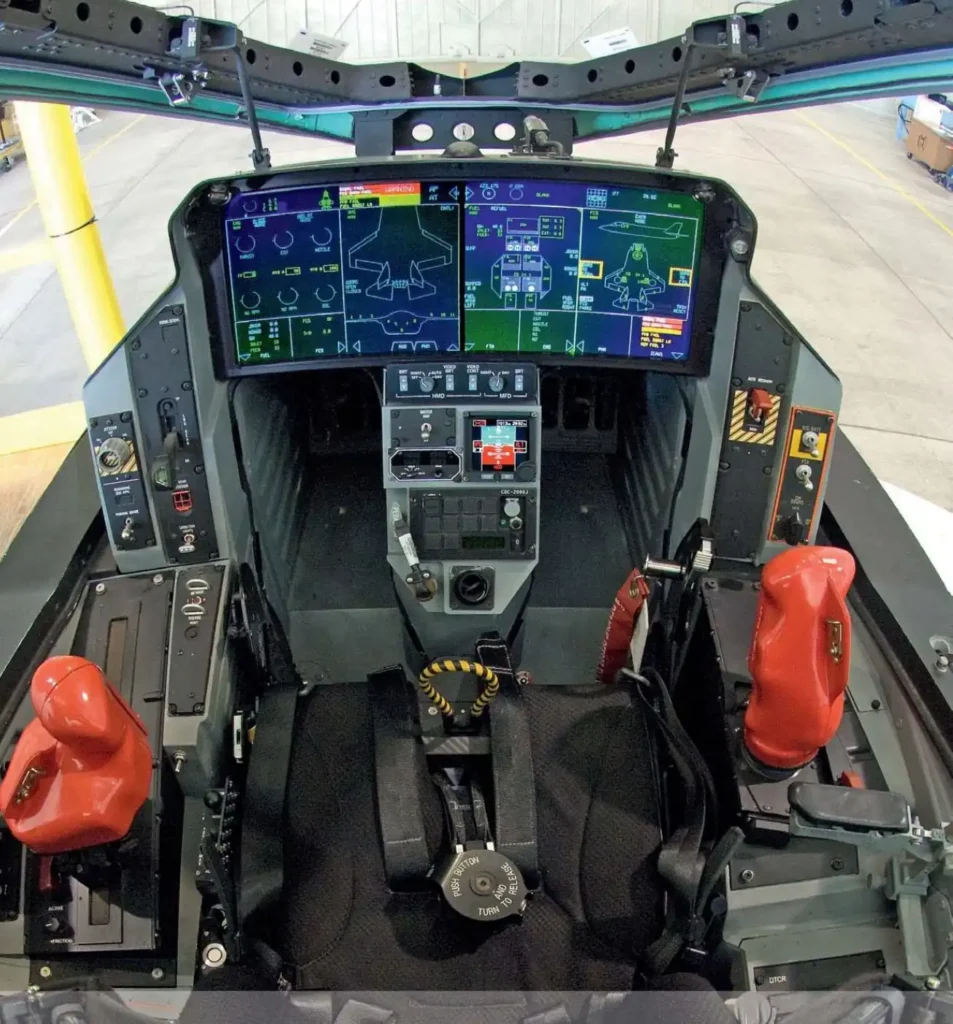
In terms of armament, the F‑35B typically carries a mix of air-to-air and air-to-ground weapons, including AIM-120 AMRAAMs, JDAMs, and potentially longer-range systems like JASSM as part of future Block 4 upgrades. While it carries fewer internal weapons than the F‑35A due to space limitations, its ability to operate in stealth mode (clean configuration) or in a “beast mode” with external stores offers tactical versatility depending on the mission profile.
The F‑35B is powered by the Pratt & Whitney F135 engine, one of the most powerful fighter jet engines in the world, producing around 40,000 pounds of thrust.
Despite the weight and structural adjustments required for STOVL, the aircraft still maintains a top speed of approximately Mach 1.6, which, while not as fast as some fourth-generation fighters, is generally considered sufficient for its strike and multi-role functions.
In terms of range, the F‑35B’s combat radius is around 450–500 nautical miles, depending on payload and mission conditions. While this is slightly lower than the F‑35A and C variants, it is still a significant leap forward compared to older STOVL jets like the AV-8B Harrier.
This range, combined with aerial refueling and future compatibility with ship-launched drones, may allow the F‑35B STOVL to strike targets farther inland without compromising safety or stealth.
While much of the attention around the F‑35B Lightning II has focused on its design and cost, perhaps its real value becomes clearer when we look at how it’s actually being used.
Though still relatively new in service terms, the F‑35B fighter jet has already been deployed in a variety of missions, exercises, and forward-operating roles that suggest it may be quietly reshaping how nations think about carrier-based aircraft and vertical takeoff jets.
One of the first major demonstrations of the F‑35B’s operational credibility came in 2018, when the USMC F-35B conducted its first combat mission in Afghanistan. Launched from the USS Essex, an amphibious assault ship, the strike targeted Taliban insurgents.
This marked the first time a stealth fighter had launched from a ship other than a full-sized aircraft carrier to carry out a precision strike. While the mission itself was relatively limited, it sent a strategic message that the F-35B STOVL had matured enough to serve as a front-line combat platform in real-world conditions.
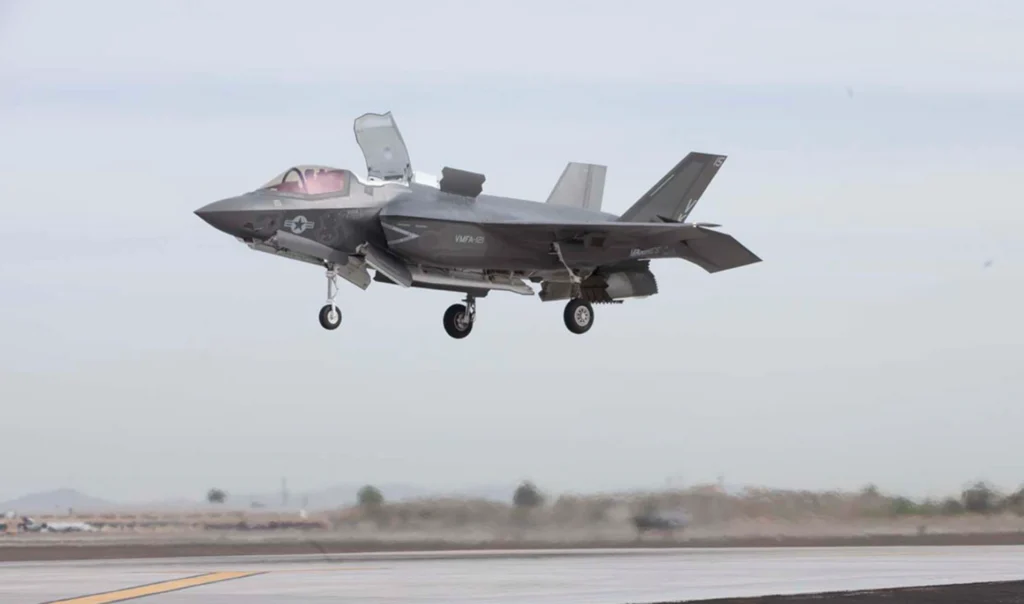
Since then, the F-35B has participated in a wide range of multinational training exercises. For instance, during Exercise Pacific Fury and Talisman Sabre, F‑35Bs from both the US Marine Corps and allied forces operated alongside destroyers, carriers, and amphibious units.
These deployments seem to illustrate how the F‑35B Lightning II can serve as a flexible forward asset, particularly in complex maritime environments like the Indo-Pacific.
One of the most distinctive features of the F‑35B is its compatibility with amphibious assault ships, which typically lack the catapults and arrestor systems used by traditional aircraft carriers. This is where the STOVL technology becomes a strategic enabler.
Ships like the USS America and USS Tripoli have been described by some analysts as “lightning carriers” when loaded with up to two dozen F-35Bs. This configuration, while still experimental, may provide a form of distributed naval airpower that’s harder to target and more adaptable to near-shore operations.
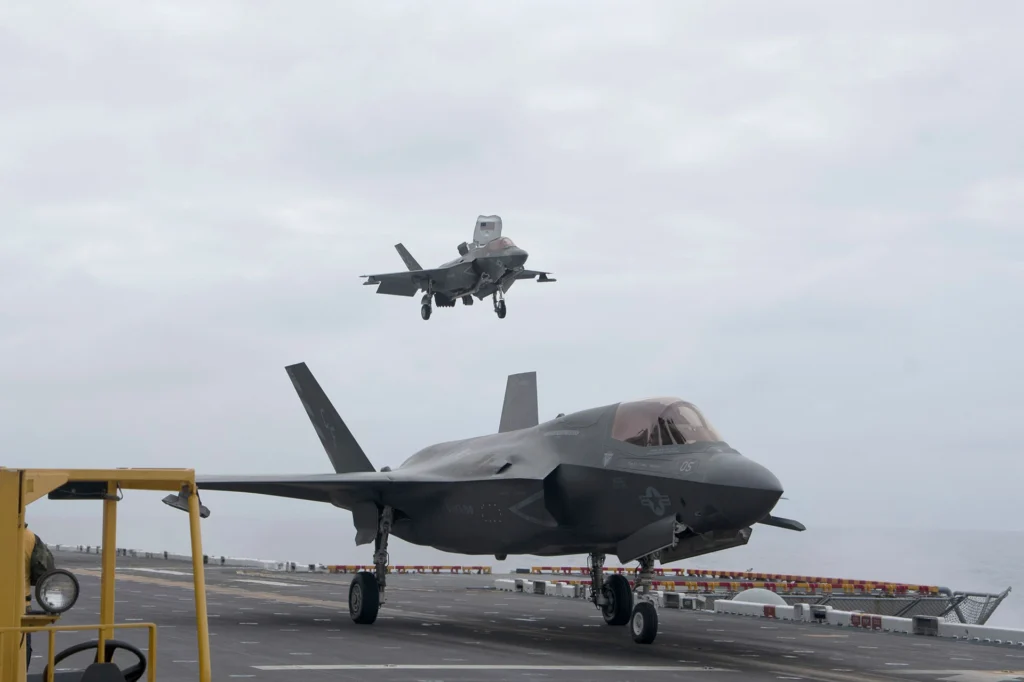
This approach might not replace conventional carrier air wings, but it does offer a new layer of operational flexibility. In high-threat areas where traditional supercarriers could be at greater risk, the ability to launch stealth fighters from smaller, more mobile platforms could help maintain persistent strike capability without putting larger assets in immediate jeopardy.
The F‑35B Lightning II, for all its cutting-edge capabilities and operational flexibility, remains one of the most expensive fighter jets ever fielded, especially when viewed through the lens of procurement and long-term sustainment.
Depending on configuration, production lot, and buyer-specific modifications, the F‑35B cost per unit is often estimated at around $115 to $120 million, higher than both the F-35A and F-35C variants.
Some sources suggest the price has come down incrementally in recent years as production matures, but the STOVL technology unique to the F‑35B STOVL variant continues to add substantial cost due to its mechanical complexity and specialized support requirements.
Despite the steep price tag, the aircraft has attracted a growing list of buyers. The United States Marine Corps (USMC) remains the largest operator and original driver of the program, fielding the F-35B fighter jet as a core element of its forward-deployed air combat strategy.
Beyond the USMC, major international partners include the United Kingdom, which operates the jet under both the Royal Navy and Royal Air Force, using it aboard Queen Elizabeth-class carriers.
Meanwhile, Japan’s Maritime Self-Defense Force is retrofitting its Izumo-class helicopter destroyers to accommodate the F‑35B. While framed officially as a defensive posture, this move may allow Japan to project power more flexibly across its many island chains. It’s something that aligns closely with the rationale for fielding STOVL fighters in the first place.
Italy, too, is fielding the Lockheed Martin F‑35B, and there are indications that other countries, including South Korea and Singapore, may see value in acquiring the jet for its ability to operate from short runways or smaller decks.
Read also: Why Does US Export the F-35 But Not the F-22?
Yet even among partner nations, the program has not been without controversy. Cost overruns, software delays, and shifting upgrade timelines have repeatedly drawn scrutiny.
The promised Block 4 upgrades, which include expanded weapons compatibility, better sensor fusion, and updated electronic warfare tools, have seen delays and budget increases, leading to concern that early adopters are flying aircraft that might not reach full capability for years.
These issues are particularly sensitive given that the F‑35B stealth fighter requires not only up-front investment, but also significant ongoing funding for maintenance, software integration, and logistical support. Some critics argue that these long-term costs may strain smaller defense budgets or divert resources from other modernization efforts.
There have also been political challenges tied to export. While the Lockheed Martin F‑35B is available to close U.S. allies, Washington maintains tight controls over who can buy it and how it can be used. Debates around technology sharing, industrial offsets, and intellectual property have occasionally caused friction within the F‑35 consortium.
Moreover, certain partner countries have faced domestic pushback over the decision to procure the jet, with critics questioning whether its high cost is justified by the operational flexibility it offers.
Nonetheless, for many governments, the value of owning a 5th generation fighter that can operate from short runways, island bases, or amphibious assault ships may outweigh the political and financial challenges.
The F‑35B Lightning II arguably represents a strategic signal of alignment with U.S. defense architecture and access to its broader intelligence and logistical networks. That, in itself, may be part of what makes it appealing to allied nations navigating uncertain regional security environments.
So, why is the F‑35B Lightning II a game-changer in STOVL combat?
Because it does more than simply land vertically or operate from short runways, it redefines what a 5th generation fighter can be. The F‑35B brings together stealth, advanced sensors, and multi-domain connectivity in a way that allows it to operate from places most fighters can’t even consider.
The fact that this vertical takeoff jet can operate from amphibious assault ships, remote island bases, or smaller carriers gives it a kind of reach that traditional fighters simply don’t have.
Sure, it’s expensive and complicated to maintain, and it’s had its share of controversy, but even with those challenges, the F‑35B STOVL opens up tactical options that didn’t really exist before.