Follow Us:
Follow Us:

It’s not stealthy, but it doesn’t need to be. When the Tupolev Tu-160 takes off, the world pays attention.
Nicknamed the “Blackjack bomber” by NATO, the Tu-160 is the fastest and largest strategic bomber still flying today. With a sleek white fuselage, variable-sweep wings, and four roaring turbofan engines, it cuts an unmistakable profile—one designed not just to fly, but to dominate.
Originally built during the Cold War, the Tupolev Tu-160 remains a critical part of Russia’s long-range nuclear strike force. Capable of flying more than 12,000 kilometers without refueling and carrying up to 40 tons of weapons, its mission is simple: launch devastating missile attacks from standoff distances before ever being seen.
While many bombers from its era have been retired, Russia has doubled down on the Tu-160 platform. The latest version, the Tu-160M, features modern avionics, improved radar, and more efficient NK-32 engines, boosting both range and combat capability.
In February 2024, Russian President Vladimir Putin made headlines when he personally flew aboard a Tu-160M, signaling the aircraft’s political and military significance. More than a symbol of Cold War engineering, it now represents Russia’s 21st-century strategic ambitions.
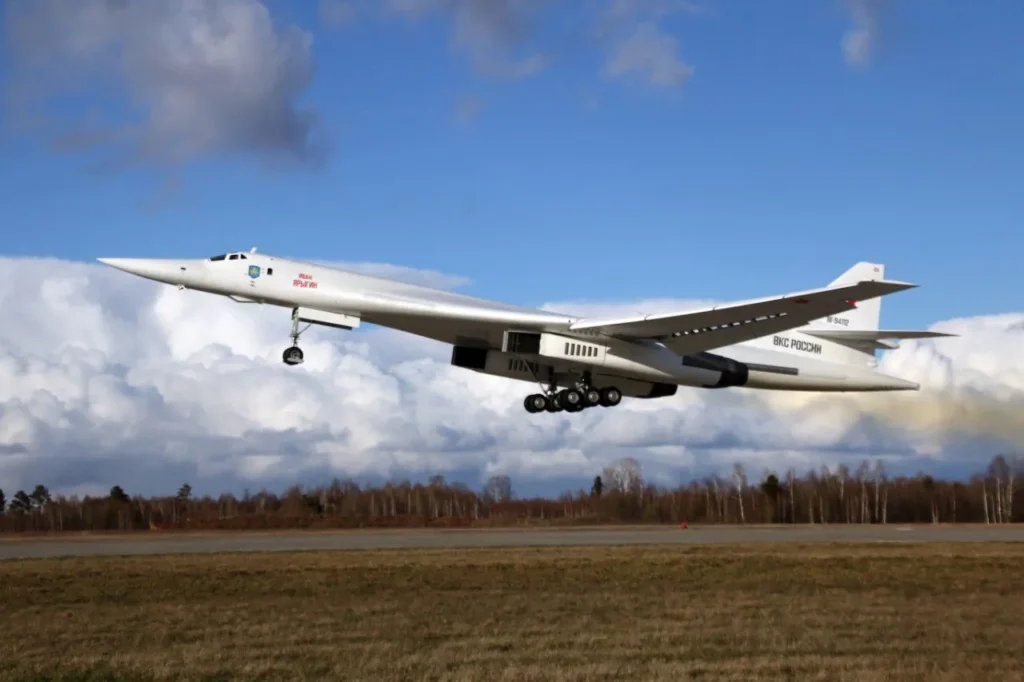
The Tu-160 bomber isn’t just a relic. It’s been used in recent years to fire cruise missiles in Syria and Ukraine, proving its effectiveness in live combat scenarios. Whether launching Kh-101 long-range missiles or serving as a nuclear deterrent, the Tu-160 continues to evolve.
This post breaks down everything you need to know—from its top speed and payload to the cost of production and what the Tu-160 cockpit looks like. We’ll also explore its ongoing modernization and how it compares to U.S. bombers like the B-1B Lancer.
The story of the Tupolev Tu-160 begins in the late 1960s, as the Soviet Union raced to counter the U.S. Air Force’s strategic edge. The Americans had the B-52 Stratofortress and were already developing the B-1 Lancer, which combined speed with long-range nuclear strike capabilities. In response, Soviet engineers launched the “K” project—an ambitious effort to create a bomber that could fly faster, farther, and carry more weapons than anything seen before.
Read also: Tu-160 vs B1 lancer: Which Supersonic Bomber Reigns Supreme?
By 1975, the Tupolev Design Bureau, known for its long line of strategic bombers, had won the contract. After years of testing and design revisions, the first prototype of the Tu-160 bomber flew on December 18, 1981. What emerged was a massive aircraft with a variable-geometry wing, powerful afterburning engines, and a swept-back fuselage optimized for supersonic speeds. The bomber officially entered service with the Soviet Air Force in 1987.

Production of the Tu-160 Blackjack was limited by the collapse of the Soviet Union in 1991. Of the original 36 aircraft built, many ended up in Ukraine after the USSR dissolved. In the early 2000s, Russia bought back several airframes and parts, while some were scrapped under arms reduction agreements.
In 2015, amid rising tensions with NATO and ongoing conflict in Ukraine, Russia revived full-scale production of the bomber. The decision wasn’t just about nostalgia—it was a practical move to maintain strategic bombing capability while delays plagued Russia’s next-generation PAK-DA stealth bomber program. The result was the Tu-160M, a deeply modernized version of the original design.
Today, Russia plans to upgrade its existing fleet and build at least 50 new Tu-160M bombers. Despite its Cold War origins, this supersonic aircraft continues to adapt. With new engines, digital flight systems, and advanced missile compatibility, the Tu-160 is no museum piece—it’s a central player in Russia’s long-range air strategy.
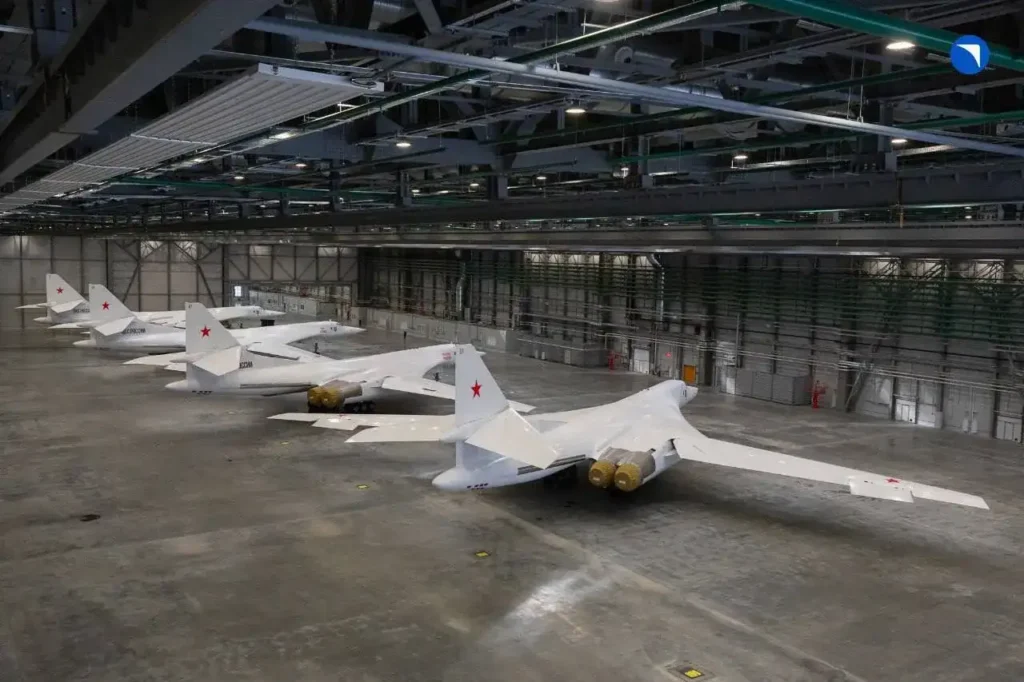
The Tu-160 Blackjack is not just large—it’s the largest and heaviest combat aircraft ever built. From a design perspective, it’s a marvel of Soviet engineering, optimized for high-speed, long-range nuclear and conventional strike missions. The bomber’s layout reflects a distinct philosophy: rather than prioritize stealth like its American counterpart, the B-2, the Tu-160 emphasizes speed, altitude, and brute force.
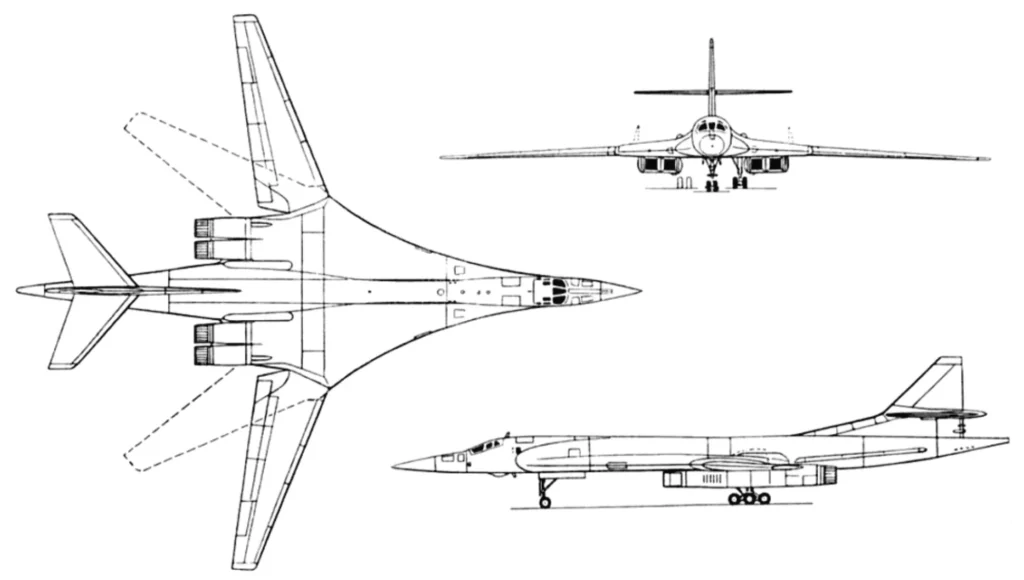
One of the Tu-160’s most recognizable features is its variable-sweep wing, which allows the aircraft to change its wing configuration mid-flight. The wings can be swept between 20° and 65°, balancing aerodynamic efficiency for subsonic cruising with enhanced stability during high-speed dash profiles. This gives the Tu-160 incredible versatility during long missions.
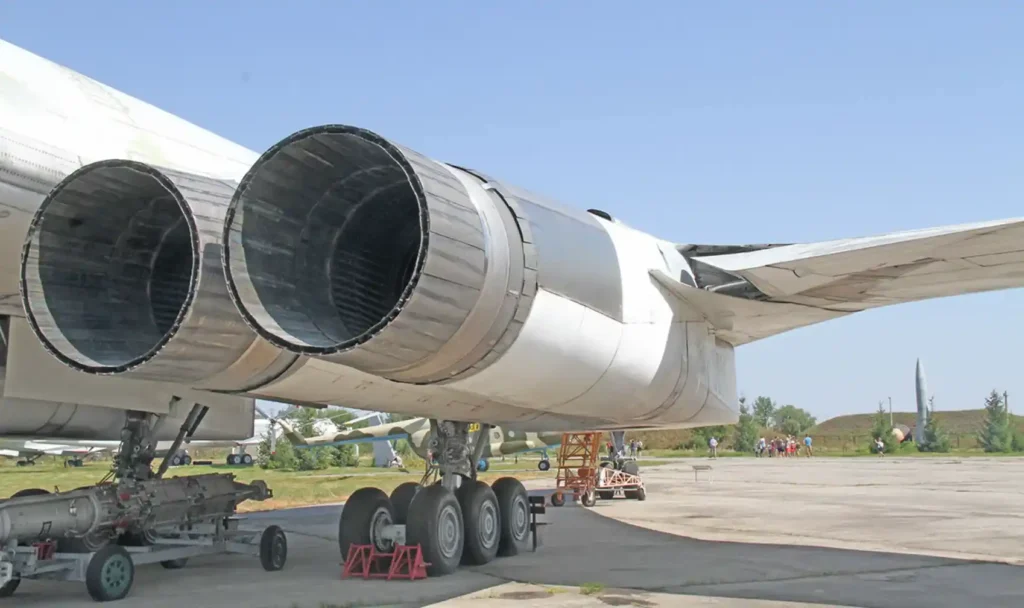
The bomber is powered by four NK-32 afterburning turbofan engines, each delivering 55,000 pounds of thrust. These are the most powerful engines ever fitted to a combat aircraft. With afterburners engaged, the Tu-160 can reach a top speed of Mach 2.05 (about 2,220 km/h). The Tu-160’s speed enables it to outrun interceptors and evade potential threats during launch operations.
Read also: Tupolev Tu-22M Backfire: Russia’s Long-Range Strategic Bomber
In terms of range, the Tu-160 range exceeds 12,000 kilometers without refueling, and it can be extended further with aerial refueling. This allows the bomber to strike targets anywhere in Europe, Asia, or North America without ever entering enemy airspace.
As for the Tu-160 payload, it can carry up to 40,000 kilograms (88,000 pounds) of ordnance—more than any other bomber in the world. Internally, it features two massive weapons bays that house long-range cruise missiles like the Kh-101 and Kh-55, capable of carrying both nuclear and conventional warheads. Unlike American bombers, the Tu-160 does not carry bombs externally, maintaining its clean aerodynamic profile.
The Tu-160 size is another standout feature. It measures 54.1 meters long, with a maximum wingspan of 55.7 meters in its extended position. Despite its bulk, the aircraft is surprisingly agile, thanks in part to its advanced flight control systems and fly-by-wire capabilities.
Read also: Tupolev Pak Da Stealth Bomber: What You Need to Know Today
The Tu-160 cockpit is designed for a crew of four—pilot, co-pilot, navigator, and systems operator. Older models featured mostly analog instrumentation, but modern Tu-160M variants include digital avionics, touchscreen displays, and improved ergonomics for long-duration missions.

From its speed and payload to its size and agility, the Tu-160 bomber remains one of the most formidable aircraft ever deployed. Whether flying at high subsonic speeds or sprinting to evade interceptors, this supersonic giant remains unmatched in its category.
At its core, the Tu-160 Blackjack is a missile carrier. Unlike tactical bombers designed to drop free-fall munitions, the Tu-160 bomber is built for strategic missions—launching long-range cruise missiles while remaining outside the reach of enemy air defenses. Its massive payload capacity and advanced electronic systems make it a potent threat in both nuclear and conventional scenarios.
The bomber features two internal weapons bays, each capable of holding a rotary launcher. These launchers can be equipped with up to 12 Kh-55 or Kh-101 cruise missiles, each with a range of more than 2,500 kilometers. The Kh-55 was originally developed to carry nuclear warheads, while the Kh-101, a more modern variant, can be fitted with either nuclear or high-explosive conventional warheads.
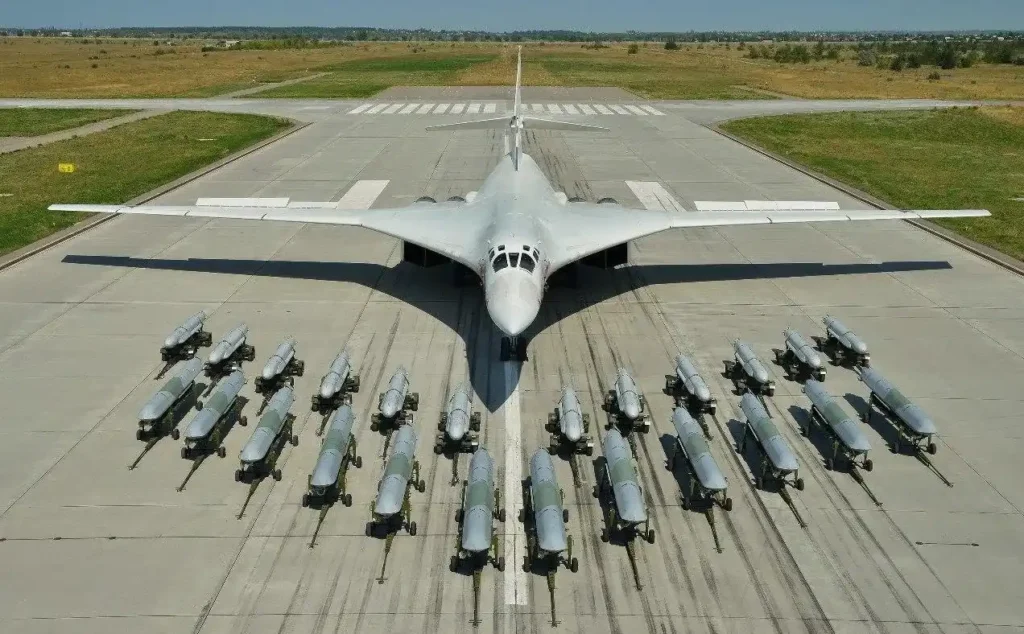
This standoff strike capability allows the Tu-160 to operate well beyond the range of most enemy air defense systems. It doesn’t need to penetrate contested airspace—it simply launches its payload from afar. During the Russian military campaigns in Syria and Ukraine, Tu-160s have demonstrated this capability by launching Kh-101s from over 1,000 kilometers away.
The Tu-160M variant significantly upgrades the bomber’s internal systems. Older models relied heavily on analog avionics, but the modernized version introduced digital navigation, satellite communication, and a glass cockpit for improved situational awareness. The avionics suite also integrates terrain-following radar, allowing the aircraft to fly at low altitudes to evade detection when needed.
Read also: Tupolev Tu-95 Bomber: Russia’s Long-Range Aviation Icon
Radar is another area where the aircraft has seen major improvements. The new Obzor-K radar system provides a long detection range and can support both navigation and targeting functions. It also works in conjunction with an electronic warfare suite designed to jam or confuse enemy radars and surface-to-air missiles. This makes the Tu-160M not just a missile truck, but a highly survivable strategic bomber.
Defensive countermeasures include radar warning receivers, electronic countermeasures (ECM), and flare dispensers. However, because the aircraft is not stealthy, its survival depends more on speed, altitude, and distance than evasion. That’s why modernization efforts have focused heavily on expanding electronic warfare capabilities and improving long-range precision strike tools.
Overall, the Tu-160 payload, paired with its missile loadout and new avionics, makes it one of the most powerful platforms for delivering strategic firepower—without ever crossing into enemy airspace.
Despite its Cold War origins, the Tupolev Tu-160 is far from outdated. Over the past decade, Russia has invested heavily in modernizing this supersonic bomber, transforming it into the Tu-160M, a next-generation version equipped with cutting-edge avionics, improved engines, and enhanced combat capabilities. This modernization effort is not just about extending the aircraft’s life—it’s about keeping the Blackjack bomber relevant in 21st-century warfare.
The most notable change is the introduction of the NK-32-02 engine, an upgraded version of the original powerplant. This engine offers better fuel efficiency and longer range, extending the Tu-160 range by over 1,000 kilometers. It also increases reliability during extended missions, a key requirement for a strategic bomber expected to operate across continents.
Internally, the Tu-160M features a completely redesigned avionics suite. Gone are the analog dials and gauges of the Soviet era. In their place are digital displays, fly-by-wire controls, and advanced mission computers. This upgrade not only improves flight safety and reduces pilot workload but also enables more precise navigation and targeting.
Another key improvement is the new electronic warfare (EW) system, which enhances the aircraft’s ability to survive in contested airspace. With modern radar jamming, signal interception, and decoy deployment capabilities, the Tu-160M is now better equipped to evade detection and missile threats. While it’s still not a stealth aircraft, these systems make it significantly harder to shoot down.
Weapon integration has also advanced. The modernized bomber can now carry the latest generation of long-range cruise missiles, such as the stealthier Kh-102, which can penetrate advanced missile defense networks. Combined with a payload capacity of up to 40 tons, the Tu-160M is now among the most heavily armed aircraft in the world.
The price tag for each newly built Tu-160M is estimated at $250–300 million USD, though exact figures vary depending on the source. Still, for Russia, it represents a cost-effective way to maintain a credible strategic deterrent while the development of the stealthier PAK-DA bomber continues.
In 2022, the first completely new Tu-160M airframe flew for the first time, marking a historic milestone. It was the first Blackjack built from scratch since Soviet times, and it symbolizes Russia’s commitment to reviving this iconic bomber for decades to come.
The Tu-160 bomber is not just a showpiece of Russian engineering—it’s an active participant in modern warfare. Over the past decade, the aircraft has proven itself in multiple real-world combat operations, firmly cementing its role as one of Russia’s primary long-range strike platforms.
The Blackjack made its combat debut in 2015, when Russia launched a military campaign in Syria. Tu-160s flew from Engels-2 Air Base deep inside Russia, covering over 5,000 kilometers to deliver precision strikes against ISIS targets. Using Kh-101 cruise missiles, the bombers destroyed command posts, weapons depots, and training camps, all without entering Syrian airspace directly. This operation showcased the bomber’s range, standoff missile capability, and strategic mobility.
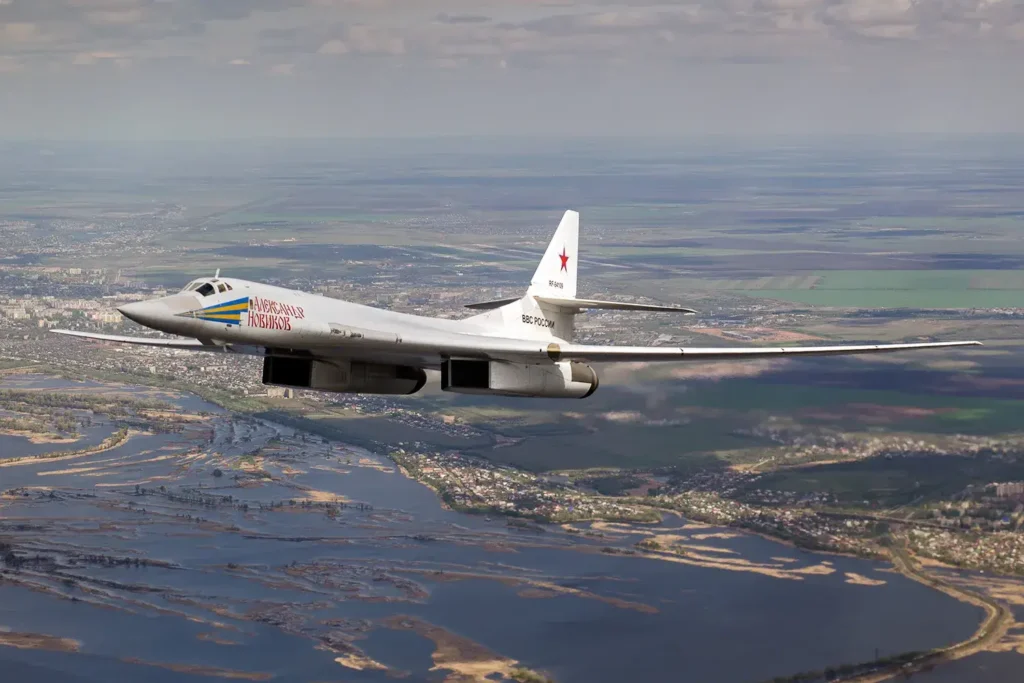
Since then, the Tu-160 has continued to play a visible role in Russia’s military doctrine. During the ongoing war in Ukraine, Tu-160s have been used in multiple missile attacks, targeting critical infrastructure such as power stations, air defense sites, and weapons storage facilities. In May 2023, Russian defense officials reported that Tu-160 bombers launched 18 Kh-101 missiles in a single nighttime strike—a clear reminder of their relevance in large-scale conflict.
Beyond its strike missions, the Tu-160 Blackjack is often used for strategic signaling. In February 2024, President Vladimir Putin personally boarded and flew aboard a Tu-160M, sending a powerful message to both domestic and international audiences. The flight was widely covered by state media and interpreted by analysts as a demonstration of Russia’s nuclear readiness and confidence in its bomber fleet.
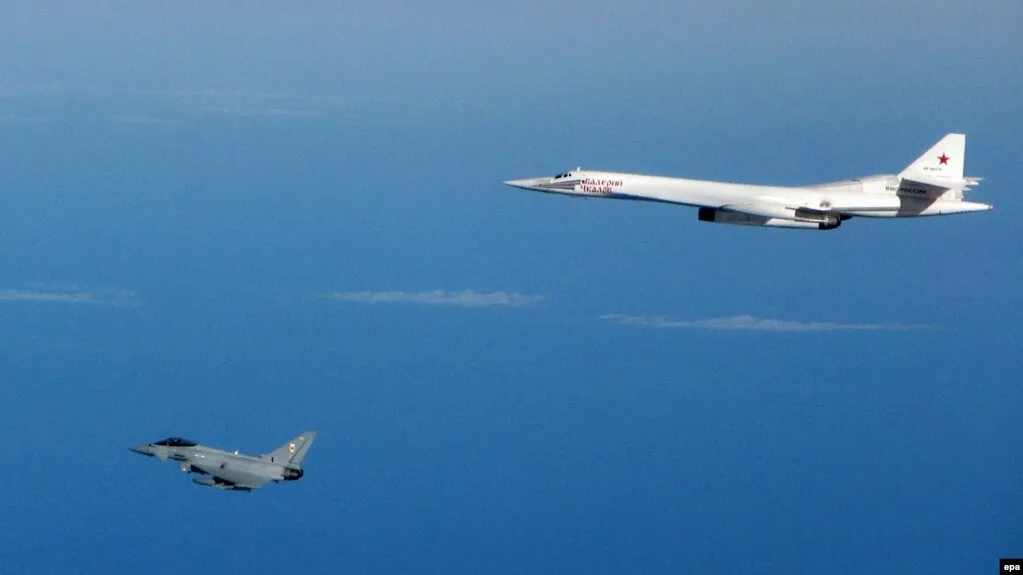
The aircraft also conducts long-range patrols across the Arctic, North Atlantic, and Pacific regions—sometimes accompanied by fighters or aerial tankers. These flights are often intercepted by NATO aircraft, but they’re not intended to be provocative attacks. Instead, they serve as a reminder of Russia’s ability to project force globally, using its Tu-160M bombers as strategic messengers.
In sum, the Tu-160 is not a relic gathering dust in hangars. It’s an operational platform used to conduct high-profile missions, launch long-range strikes, and support Russia’s strategic posture across multiple theaters. Whether flying over Syria, patrolling the Barents Sea, or striking targets in Ukraine, the Tu-160 Blackjack continues to prove its combat value.
The Tupolev Tu-160, or Blackjack bomber, is more than just a weapon system—it’s a geopolitical tool. Its very existence is designed to project strength, deter adversaries, and remind the world that Russia possesses the means to strike targets across continents. In a world of shifting alliances and nuclear brinkmanship, the Tu-160 plays a central role in Russia’s strategic deterrence doctrine.
From a global security standpoint, the Tu-160 bomber is considered a core component of Russia’s nuclear triad, alongside intercontinental ballistic missiles (ICBMs) and submarine-launched ballistic missiles (SLBMs). This gives Russia flexible options for retaliation in the event of a nuclear conflict. Its ability to launch nuclear-armed cruise missiles from thousands of kilometers away allows it to strike without exposing itself to frontline danger.
The Blackjack is also used to signal resolve during periods of political tension. When Russian bombers conduct long-range patrols near NATO airspace or in the North Atlantic, it’s rarely about tactical advantage. These flights are timed and choreographed to remind rival powers of Russia’s strategic reach. In fact, NATO fighters regularly intercept Tu-160s off the coasts of Norway, the UK, or Alaska during such missions.
The aircraft’s political symbolism was most visible in early 2024 when President Vladimir Putin personally flew aboard a Tu-160M. Coming at a time of heightened Western sanctions and military pressure over Ukraine, this move was widely interpreted as a bold signal to both domestic audiences and foreign governments: Russia’s long-range strike capability is not only operational, it’s being prioritized.
Even within Russia, the Tu-160 has become a symbol of national pride and technological capability. Its massive size, distinctive silhouette, and thunderous flybys are often featured in military parades, recruitment campaigns, and state-sponsored documentaries. The bomber represents continuity—linking the aerospace achievements of the Soviet Union with the strategic ambitions of today’s Russian Federation.
Some defense analysts argue that Russia’s renewed investment in the Tu-160M stems from delays in the stealthy PAK-DA project. While that may be partially true, the modernization of the Tu-160 also reflects a broader strategic shift. In an era of increasingly contested airspace, having a proven, long-range missile platform remains invaluable. The Blackjack is not invisible, but it doesn’t need to be—it can outrun, outlast, and outgun much of what it faces.