Follow Us:
Follow Us:

Just when many analysts had started to doubt Russia’s ability to modernize its long-range aviation fleet, the Tupolev PAK DA Stealth Bomber has begun surfacing again in official statements and scattered reports. Slated for possible introduction around 2027, with state testing potentially in 2026, this elusive flying-wing design is intended to become the backbone of Russia’s next-generation strategic bomber force.
The timing is striking. In recent months, Ukrainian long-range drone attacks have damaged or destroyed several Tu-95MS and Tu-22M3 bombers, exposing just how vulnerable Russia’s aging fleet has become. Industrial capacity is already strained by sanctions and competing military priorities, which makes the Pak Da program both a technological leap and a logistical gamble.
Instead of being unveiled in a dramatic showcase, the Pak Da Russian bomber seems to be advancing quietly, its development marked less by public fanfare than by carefully managed leaks and cautious optimism.
The story of the Tupolev PAK DA stealth bomber begins in the early 2000s, when Russian defense planners started facing an uncomfortable reality. Their long-range bomber fleet, composed mainly of Tu-95MS “Bear” turboprops and Tu-160 “Blackjack” supersonic bombers, was reliable, but aging.
These aircraft had been designed for a different era, one where speed and brute force mattered more than stealth and precision. By the mid-2000s, as the U.S. and China pushed ahead with stealth bomber projects, Russia risked falling behind in an area critical to nuclear deterrence and long-range strike capability.
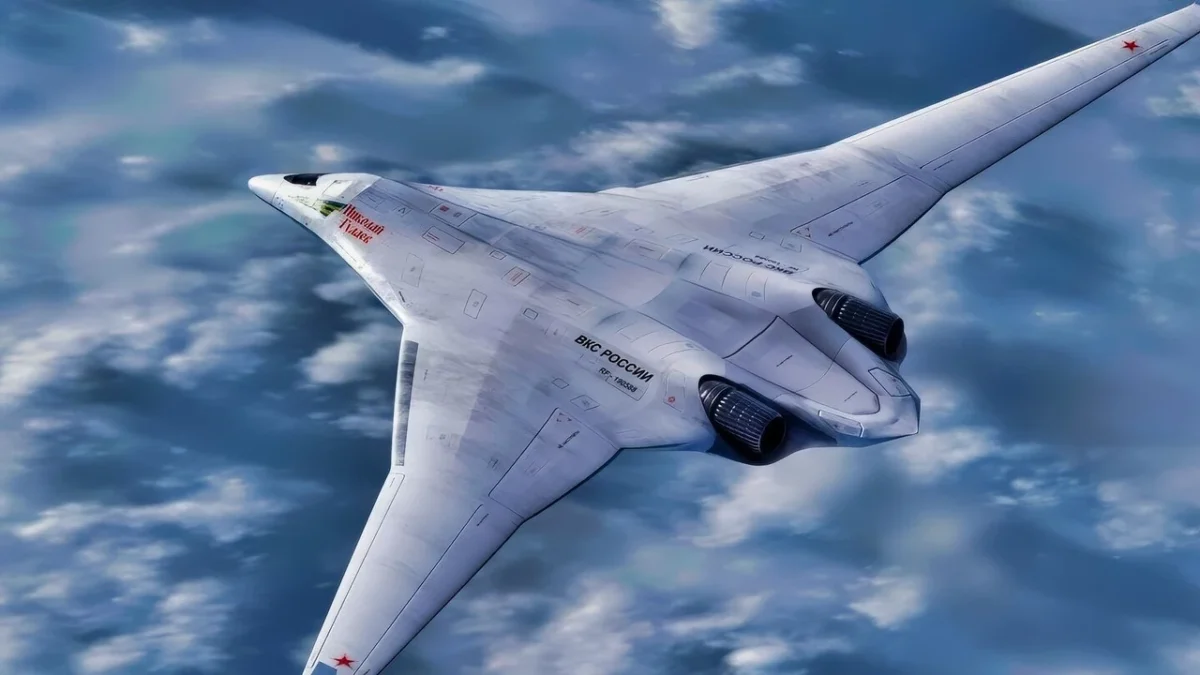
The Pak Da program, short for “Perspektivnyi Aviatsionnyi Kompleks Dal’ney Aviatsii” or “Prospective Aviation Complex for Long-Range Aviation”, was reportedly approved in 2009, with the Tupolev Design Bureau taking the lead. Tupolev had decades of experience building heavy bombers, but the challenge here was different.
Instead of upgrading older airframes for more speed, the Pak Da Russian bomber would prioritize low observability, advanced electronics, and long-endurance missions. The concept leaned toward a subsonic, flying-wing design, closer in philosophy to the U.S. B-2 Spirit than to Russia’s existing fleet.
Why does this matter? Analysts suggest that if it performs as intended, the Russian stealth bomber could strike targets at intercontinental range while remaining difficult to detect by modern radar systems. This shift from raw speed to stealth reflects how Russia sees future air warfare: survivability over supersonic dash.
The road, however, has not been smooth. Budget constraints, shifting military priorities, and the need to upgrade existing Tu-160s have slowed progress. Reports indicate that a Pak Da prototype might be ready for testing by 2026, with full deployment possibly in the late 2020s or early 2030s. Still, these dates are best seen as targets rather than guarantees, especially given the pressures on Russia’s defense industry today.
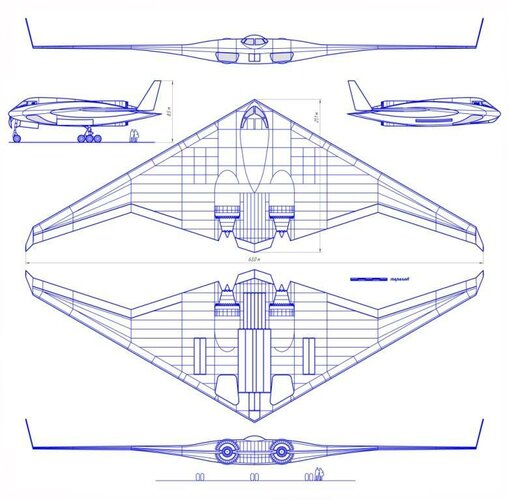
From the limited information available, the Tupolev PAK DA stealth bomber appears to represent a major departure from Russia’s earlier bomber designs. Instead of the swept-wing, engine-podded silhouettes of the Tu-95MS or the Tu-160, the Pak Da Russian bomber is believed to follow a flying-wing configuration—an approach long associated with stealth aircraft because it reduces radar cross-section by eliminating vertical tail surfaces and other radar-reflective shapes.
Stealth, in this context, is less about being “invisible” and more about being difficult to track, target, and intercept. While Russia has not released technical specifics, it is widely assumed that the Russian stealth bomber will employ radar-absorbent materials, carefully blended engine intakes, and internal weapons bays to minimize heat and radar signatures. This would be a sharp contrast to the Tu-95’s large propeller discs, practically radar beacons, and even the Tu-160’s glossy white skin, which was designed more for nuclear flash resistance than for stealth.

The airframe materials are likely to be a combination of advanced composites and radar-absorbent coatings, potentially similar to those used in the Su-57 stealth fighter but optimized for a much larger aircraft. That said, Russian industry has faced challenges in producing composite structures at the scale and quality needed for cutting-edge stealth performance, so it remains to be seen whether the Pak Da prototype will match Western counterparts in that area.
When comparing with older Russian bombers, the philosophical shift becomes clear. The Tu-95MS was a Cold War workhorse built for endurance, capable of carrying nuclear cruise missiles over intercontinental distances, but it was slow, noisy, and easily tracked by radar.
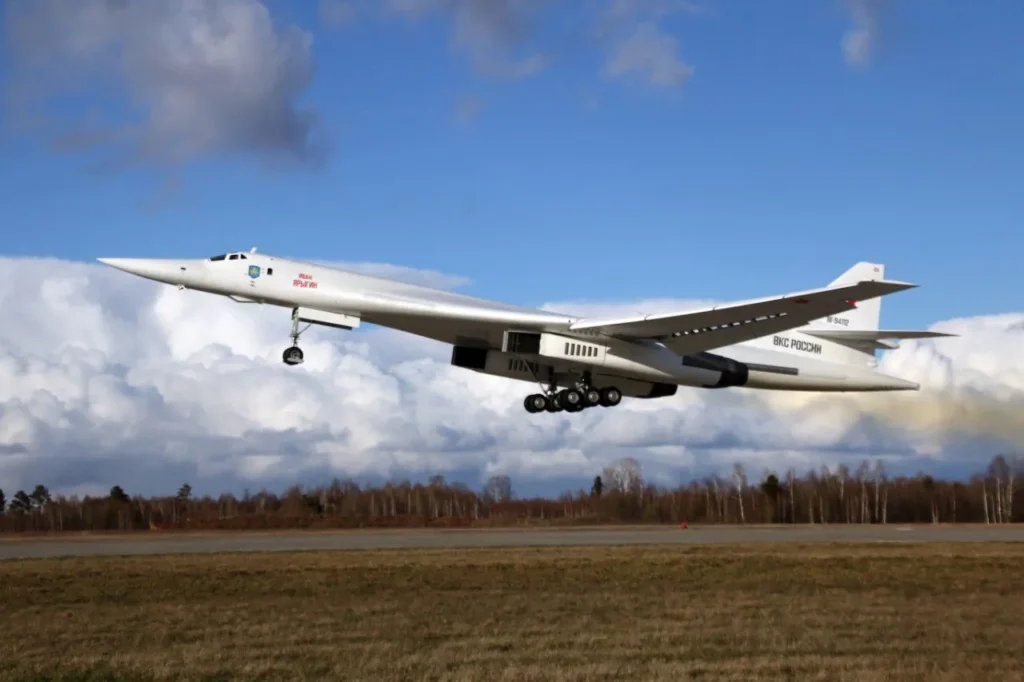
The Tu-160, often dubbed the “White Swan”, was Russia’s answer to the U.S. B-1B: a supersonic strategic bomber that relied on speed and altitude to penetrate defenses, not low observability. In contrast, the Pak Da program seems to acknowledge that modern air-defense systems, especially those integrating long-range radar and surface-to-air missiles, make speed alone less effective.
If these design goals are realized, the Pak Da stealth bomber could approach targets while staying below detection thresholds until the last possible moment, much like the U.S. B-2 Spirit. That would make it a fundamentally different strategic tool—one built not for a quick dash into enemy territory, but for a silent, patient approach that leaves adversaries guessing until the very end.
Exact figures for the Tupolev PAK DA stealth bomber remain closely guarded, but Russian defense sources and open-source intelligence offer a general picture. Reports suggest the Pak Da Russian bomber could have an unrefueled range of around 12,000 kilometers.
This is enough to strike targets across continents without leaving Russian airspace. In practical terms, that means it could potentially launch weapons at NATO positions in Europe or even North America while remaining under the protective cover of Russian air defenses. This mirrors the concept of “stand-off” bombing, where the aircraft doesn’t need to directly overfly heavily defended areas to pose a threat.
In terms of speed, the Pak Da bomber is not expected to be supersonic like the Tu-160. Instead, it will likely cruise at high subsonic speeds. While that might sound like a downgrade, it’s actually a deliberate design choice: high supersonic flight generates a larger radar signature and heat trail, both of which compromise stealth.
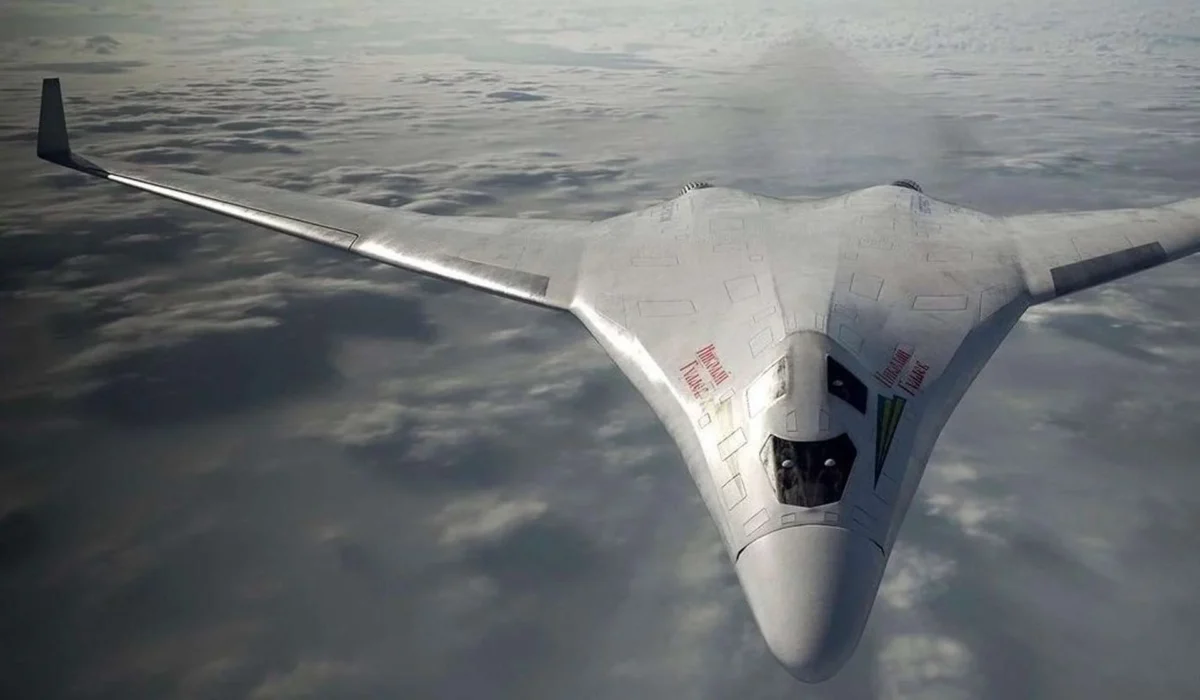
A slower, more fuel-efficient profile supports longer endurance, enabling the aircraft to loiter in safe airspace or adjust approach routes to avoid detection. Its operational ceiling might fall somewhere between 12,000 and 15,000 meters, giving it flexibility to fly above most commercial traffic while staying clear of certain radar detection bands.
Payload capacity is believed to be in the 30–40 ton range, allowing the Russian stealth bomber to carry a mix of nuclear and conventional weapons. This could include long-range nuclear cruise missiles, hypersonic glide vehicles, and precision-guided bombs stored internally to preserve its stealth profile.
The focus on internal bays, as opposed to external hardpoints, is crucial because every protrusion increases radar visibility. If confirmed, this would make the Pak Da program Russia’s first bomber fully optimized for stealth in both form and weapons carriage.
Onboard systems will likely incorporate advanced avionics for navigation, targeting, and electronic warfare. While specifics are scarce, analysts speculate that the Pak Da prototype could include an integrated sensor fusion system, pulling together radar, infrared, and satellite data into a single operational picture for the crew.
Such systems are increasingly important in modern warfare, where the ability to detect and respond before being detected can decide the outcome of a mission. If Russia can successfully integrate AI-assisted mission planning or adaptive electronic countermeasures, it could dramatically increase survivability against advanced air defenses.
If these specifications hold true, the Pak Da stealth bomber is shaping up to be less about raw speed or sheer size, and more about reach, adaptability, and survivability. It’s a shift in Russian bomber philosophy that suggests Moscow is thinking about how to fight and win in an environment where being detected could be fatal.
In Russia’s evolving military doctrine, the Tupolev PAK DA stealth bomber appears to be a tool for redefining strategic deterrence. Russian planners have long relied on a “nuclear triad” of land-based missiles, submarine-launched weapons, and strategic bombers to maintain parity with the United States and NATO. The Pak Da program fits into this framework as the air-based leg of the triad, potentially replacing or supplementing the aging Tu-95MS and Tu-160 fleets.
Its stealth profile means the Pak Da Russian bomber might be able to operate deeper into contested airspace without being easily detected, giving Moscow more credible options for both nuclear and conventional missions. In theory, this expands Russia’s ability to respond flexibly in a crisis, striking strategic targets, disabling key infrastructure, or delivering precision strikes against high-value military assets before an adversary can react.
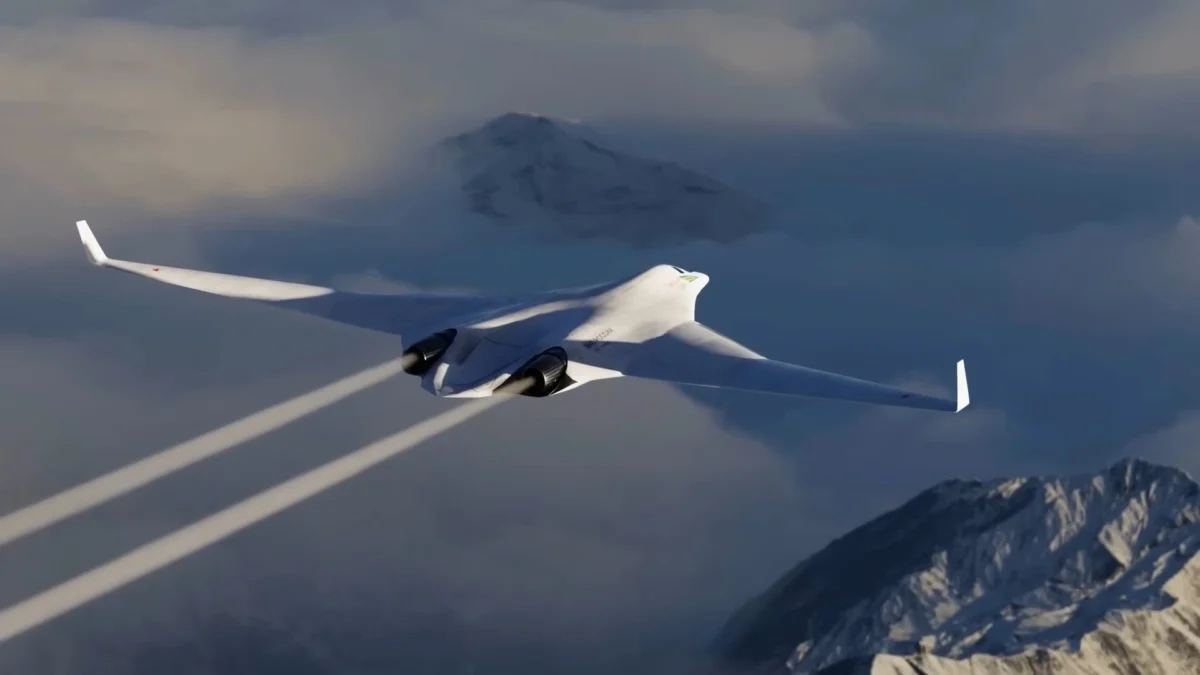
From a global perspective, the bomber could slightly alter the strategic balance, especially if it can carry nuclear cruise missiles or hypersonic weapons over intercontinental distances. For example, in a hypothetical escalation scenario, the Russian stealth bomber could be positioned far from the actual conflict zone yet still threaten vital command centers, logistics hubs, or missile defense systems on another continent. Even the perception that Russia can do this could influence how other nations calculate risk and deterrence.
In terms of Russia’s long-range strike capabilities, the Pak Da bomber may serve as a bridge between traditional heavy bombers and modern missile warfare. Unlike a submarine-launched missile, which is committed the moment it leaves the tube, a bomber can be recalled mid-flight. That flexibility could be strategically valuable in brinkmanship situations, where signaling intent without committing to an irreversible strike can help de-escalate tensions or conversely, keep adversaries guessing.
If the Pak Da prototype enters full production as planned, it would allow Russia to project strategic power with a more survivable and versatile platform. However, this also comes with uncertainties. Sanctions, economic strain, and competing defense priorities could limit production numbers or delay full operational capability. This means the bomber’s real influence on the global balance of power will likely depend on whether it arrives in the numbers and with the performance Moscow envisions.
The Tupolev PAK DA stealth bomber may one day symbolize a leap in Russia’s long-range strike capabilities, but right now, it’s still more a promise than a reality. On paper, its combination of stealth, range, and payload suggests a platform that could rival the most advanced U.S. bombers. In practice, its success will depend on whether Russia can overcome technological, economic, and industrial hurdles to produce it in meaningful numbers.
Some analysts suggest that even if the Pak Da Russian bomber achieves only partial stealth or reduced performance, it could still serve as a potent psychological and political tool. Others caution that it risks becoming an expensive prestige project, vulnerable to budget cuts or shifting military priorities. And its real power may lie not just in what it can do, but in how it shapes the calculations of adversaries and how far those adversaries are willing to test it