Follow Us:
Follow Us:

In January 2025, for the first time in over 30 years, the entire U.S. B-1B Lancer fleet was redeployed from Ellsworth Air Force Base, a logistical move prompted by runway upgrades for the incoming B‑21 Raider program.
But beyond base construction, this redeployment placed multiple long-range bombers directly into the Indo‑Pacific theater, including forward positions in Guam and Misawa, Japan, where they joined Bomber Task Force 25‑2 exercises in April and May 2025.
What’s especially intriguing is that while the B-1B bomber no longer carries nuclear weapons, its role in strategic bombing and long-range strike missions remains highly potent, especially as it’s getting upgraded to carry hypersonic missiles on newly reactivated hardpoints. This shift marks a dramatic evolution from a 1980s-era bomber being repurposed into a potential hypersonic weapons platform, even as it’s gradually phased out by the stealthy B‑21.
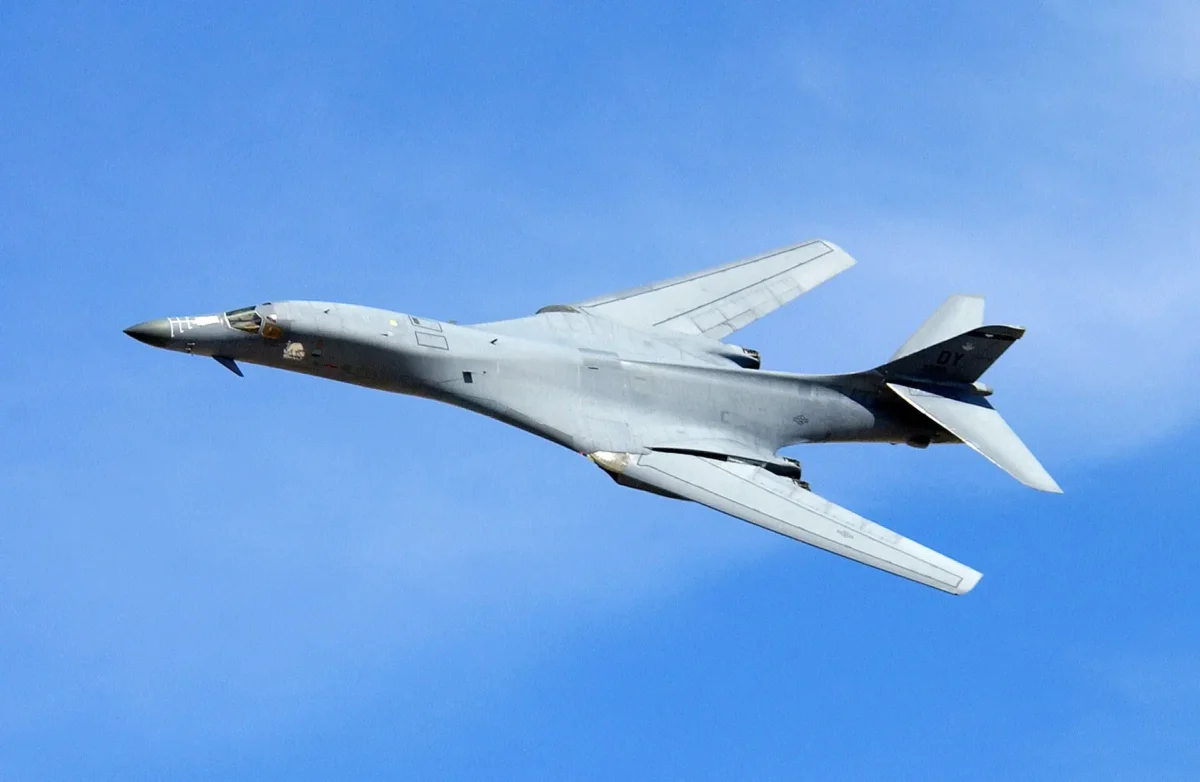
Decades past its original design life, the B-1B is still adapting to modern warfare. But can it continue to dominate long-range bombing missions in today’s fast-evolving, hypersonic-heavy environment?
This post unpacks how the B‑1B strategic bomber, despite its age, is still a key player, and possibly evolving into something even more formidable.
The origins of the B-1B Lancer trace back to the height of the Cold War, when the U.S. sought a next-generation long-range bomber capable of flying at high speed and low altitude to evade increasingly sophisticated Soviet air defenses. This ambition gave rise to the B-1A program in the late 1960s.
The design focused on supersonic speed and strategic penetration. But by the late 1970s, the project was abruptly canceled. U.S. defense planners at the time believed that advances in intercontinental ballistic missiles (ICBMs) and emerging stealth technologies might render traditional manned bombers increasingly irrelevant on the modern battlefield.

However, that assessment didn’t hold for long. By the early 1980s, concerns about the survivability of older bombers, especially in contested airspace, led to the revival of the program in a new form: the B-1B Lancer.
This upgraded version sacrificed some top-end speed for enhanced low-level penetration capabilities, a heavier payload, and reduced radar cross-section. It officially entered service with the U.S. Air Force in 1986 as a key component of the strategic bombing force.
The B-1B bomber is instantly recognizable for its sleek profile and dramatic variable-sweep wing design, which allows it to adjust wing angles mid-flight for better performance at different speeds. But beyond its appearance, it was built for performance: combining high subsonic speed, long-range endurance, and an exceptional payload capacity.
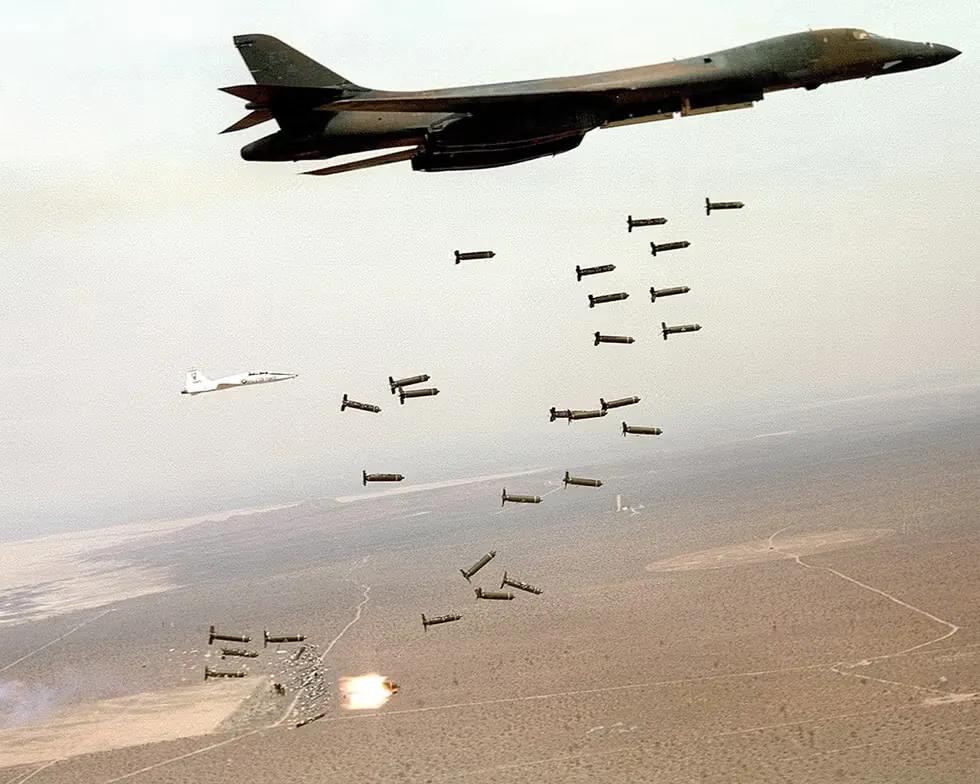
At maximum load, the B-1B Lancer can carry up to 75,000 pounds of ordnance, which is more than any other U.S. bomber, including the B-52 or B-2. Its four powerful B-1B engines allow it to cruise at high speed, and its long legs, fueled by in-air refueling, make it capable of global missions without ever needing to land.
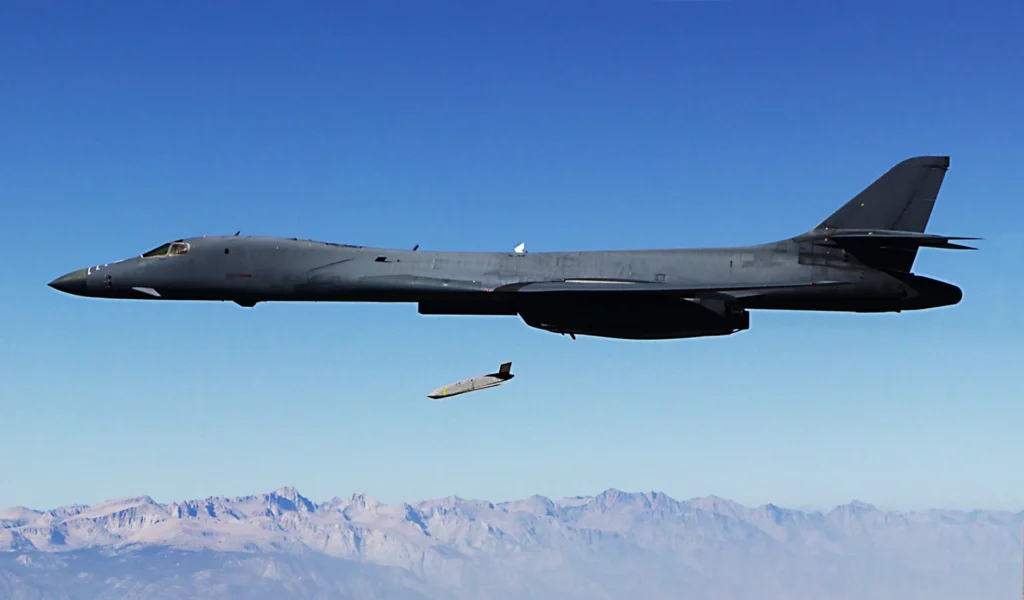
Over time, the bomber’s role has evolved. While it was initially part of the U.S. nuclear triad, the B-1B was stripped of its nuclear mission in the mid-1990s as part of arms reduction agreements.
Since then, it’s become a conventional strike workhorse, playing critical roles in conflicts from Kosovo to Afghanistan and Iraq, often praised for its responsiveness and ability to loiter in the battlespace.
Today, even as newer systems like the B-21 Raider begin to take shape, the B-1B remains in active service, not just as a legacy bomber, but as a potential hypersonic missile carrier. That shift suggests the B-1B may still have a few surprises left in its wings.
What arguably makes the B-1B Lancer such a formidable strategic bomber is the way its design blends speed, survivability, and precision, even without relying on stealth alone. It was never built to be invisible, but it was built to be fast, flexible, and difficult to stop.
One of its standout features is its variable-sweep wing design. These wings can shift their angle mid-flight, swept back for high-speed, supersonic flight, or extended outward for more stability during slower, low-altitude missions. This gives the B-1B Lancer an edge in both reach and maneuverability.
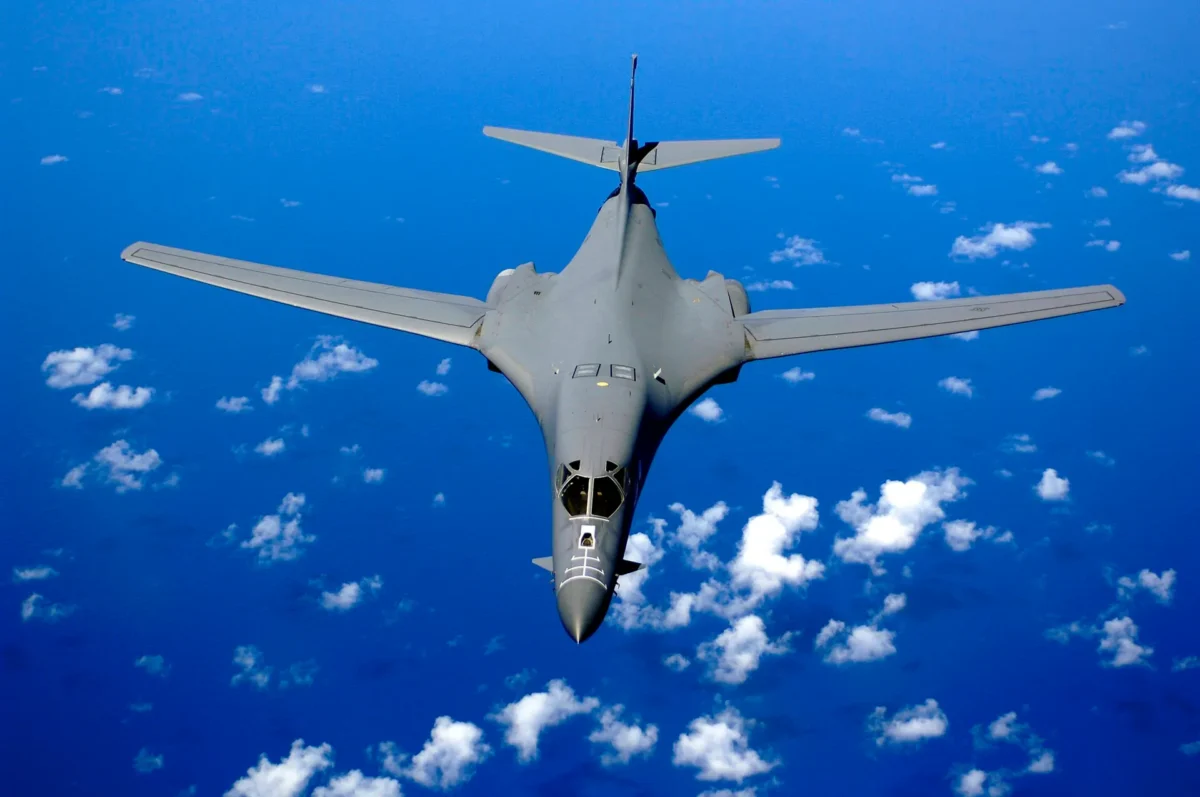
During the 2018 Syria airstrikes, for example, B-1Bs were able to rapidly approach targets, drop precision-guided munitions at low altitude, and exit quickly, all while minimizing exposure to air defenses. That kind of tactical agility is rare for an aircraft of its size.
Speed is another major factor. With a top speed of Mach 1.2 (about 1,450 km/h at altitude), the B-1B remains the fastest bomber in the U.S. inventory. This kind of speed allows the aircraft to respond to sudden threats, reposition across theaters, and overwhelm enemy defenses with less warning.
For instance, in early 2025, during Bomber Task Force 25-2, B-1Bs deployed rapidly to Guam and Misawa, Japan, flying joint missions with Indo-Pacific allies. Their speed and long legs allowed them to simulate deep-strike scenarios across a vast oceanic region.
While the B-1B doesn’t have stealth capabilities like the B-2 Spirit or upcoming B-21 Raider, it does feature a reduced radar cross-section that makes it much harder to detect than the older B-52 Stratofortress. When flying at very low altitudes, sometimes just 200 feet above ground, it can blend into radar clutter and evade tracking systems.
This Cold War-era tactic still proves useful, especially against less sophisticated air defenses. Combined with modern electronic countermeasures, the B-1B is by no means invisible, but it’s certainly difficult to engage.
Much of that survivability also comes from its advanced avionics and navigation systems, which have been continuously upgraded over the years. These systems include digital flight controls, automated terrain-following radar, and precision GPS-guided targeting systems, allowing the bomber to fly safely through complex terrain and bad weather, all while maintaining pinpoint accuracy.
The terrain-following radar, in particular, allows the aircraft to “hug the ground” at high speeds, navigating hills and valleys automatically to stay below radar coverage.
In recent upgrades, the B-1B’s avionics suite has also been enhanced to support networked warfare. This means it can share data in real-time with other aircraft, satellites, and command centers. This allows the Lancer to adapt mid-mission, respond to new threats, or re-task on the fly. In modern air combat environments, that kind of situational awareness could be the difference between a successful strike and a mission failure.
The B-1B Lancer was originally built to deliver nuclear weapons, but over time, its role shifted. Today, it’s used exclusively for conventional strike missions, and in that role, it arguably shines. Its biggest strength may lie in how versatile it is, both in the weapons it can carry and the kinds of missions it can perform.
As mentioned earlier, the B-1B bomber can carry up to 75,000 pounds of ordnance, which is more than any other U.S. bomber, including the B-52 and even the stealthy B-2 Spirit. That massive payload allows it to deliver a wide range of munitions, from precision-guided bombs and joint direct attack munitions (JDAMs) to long-range cruise missiles and anti-ship weapons (which were recently tested as part of expanded mission roles). This flexibility makes the B-1B a true workhorse in the U.S. strategic bombing fleet.
What makes it even more effective is its ability to conduct long-range missions without needing to land. Thanks to aerial refueling, the Lancer can fly thousands of kilometers to strike distant targets and return without ever touching down. And we’ve seen this capability in action many times.
In April 2018, during the U.S.-led airstrikes on Syria, B-1Bs launched 19 precision-guided missiles against suspected chemical weapons facilities. The bombers flew from Qatar, struck their targets deep inside Syria, and returned safely, without entering Syrian airspace directly, thanks to the use of stand-off weapons like JASSM cruise missiles.
More recently, in early 2025, B-1B bombers took part in Bomber Task Force missions out of Guam and Japan, flying alongside allied aircraft to demonstrate readiness and regional deterrence. Another key point is the B-1B cockpit and weapons system integration.
While the aircraft was built in the 1980s, its cockpit has received regular digital upgrades, allowing its crew to manage complex strike packages with improved situational awareness. Targeting data, threat warnings, and navigation systems are now displayed in real-time, which arguably makes the Lancer more efficient in joint operations and dynamic environments.
Since 2018, the B-1B Lancer has played a central role in the U.S. Air Force’s Bomber Task Force (BTF) deployments. B-1Bs have routinely flown long-distance sorties from the continental U.S. to forward bases in Europe, the Middle East, and the Indo-Pacific.
For instance, in 2020, B-1Bs flew to the Black Sea region and trained alongside Ukrainian fighter jets, sending a direct signal to Russia. More recently, in early 2025, B-1Bs operated out of Guam and Japan during joint drills with Australian and Japanese air forces, reflecting an increased emphasis on Indo-Pacific security and strategic deterrence against China.
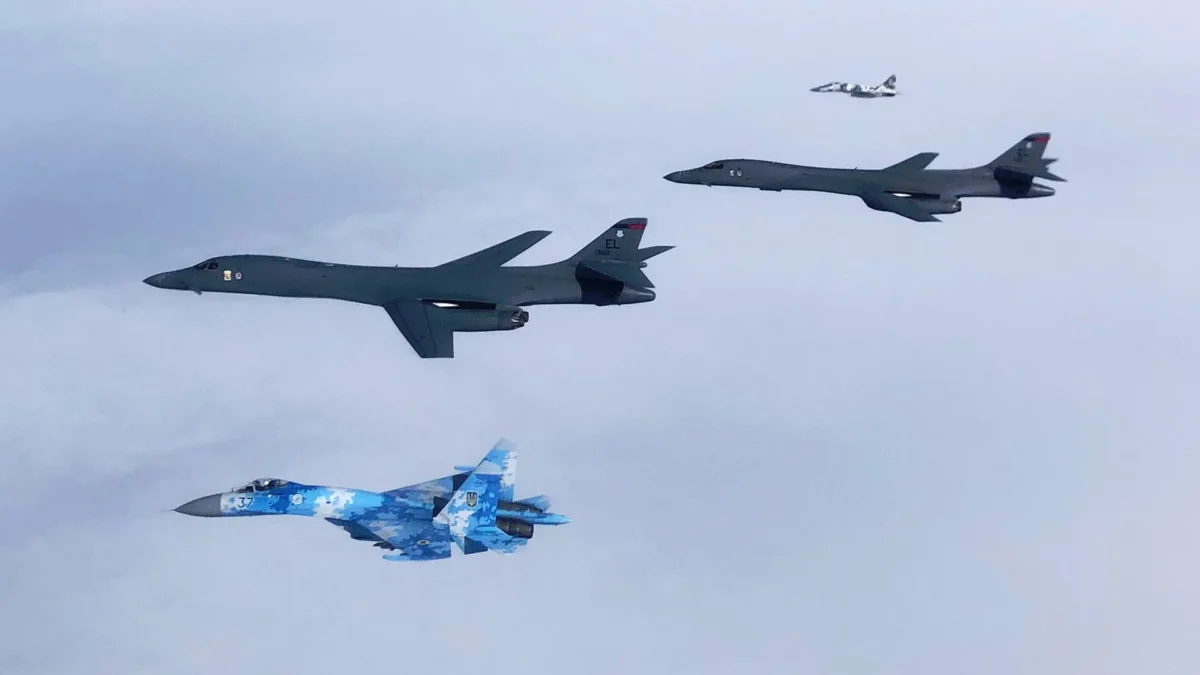
Another interesting shift in the B-1B’s mission set is its growing role in anti-ship operations, a function it was never originally designed for. In the 2020s, the U.S. began arming B-1Bs with Long Range Anti-Ship Missiles (LRASM), expanding their relevance in maritime strike missions. This change reflects evolving U.S. military priorities, especially in the context of great-power competition in the Pacific.
In a 2020 weapons test, a B-1B successfully fired an LRASM at a maritime target, proving its potential in naval warfare. Since then, Lancers have taken part in exercises like Valiant Shield and Northern Edge, where they flew alongside Navy forces and simulated attacks on warships and island defenses.
The B-1B’s adaptability also shone during the Afghanistan War (2001–2021). Throughout the war in Afghanistan, the B-1B Lancer became a go-to platform for close air support (CAS) and strategic bombing alike.
Even though it was designed for high-end nuclear missions, it proved incredibly useful in asymmetrical warfare. It often loitered for hours above combat zones, providing ground troops with on-call firepower using JDAMs and other precision-guided bombs.
Beyond Afghanistan, the B-1B also participated in Operation Odyssey Dawn (2011), striking targets in Libya as part of a multinational campaign against Muammar Gaddafi’s regime.
When comparing the B-1B Lancer to the B-52 Stratofortress and the B-2 Spirit, the B-1B strikes a unique balance between speed, payload, and versatility. While each aircraft has its own strengths, the B-1B arguably carves out its niche by doing many things very well, even if it doesn’t dominate in just one area.
The B-52, built in the 1950s, still flying today, and likely to stay in service until at least the 2050s, has a massive range and an unmatched track record of reliability. But the B-52 is also subsonic, relatively slow, and highly visible to radar. It wasn’t built for modern contested airspaces, and despite upgrades, it still relies on older airframe technology.
By contrast, the B-1B flies much faster (Mach 1.2), designed with a reduced radar cross-section and optimized for low-level flight, allowing it to exploit terrain masking and radar clutter. It’s also capable of carrying up to 75,000 pounds of ordnance (more than the B-52). This gives the B-1B a degree of survivability in contested environments that the B-52 lacks.
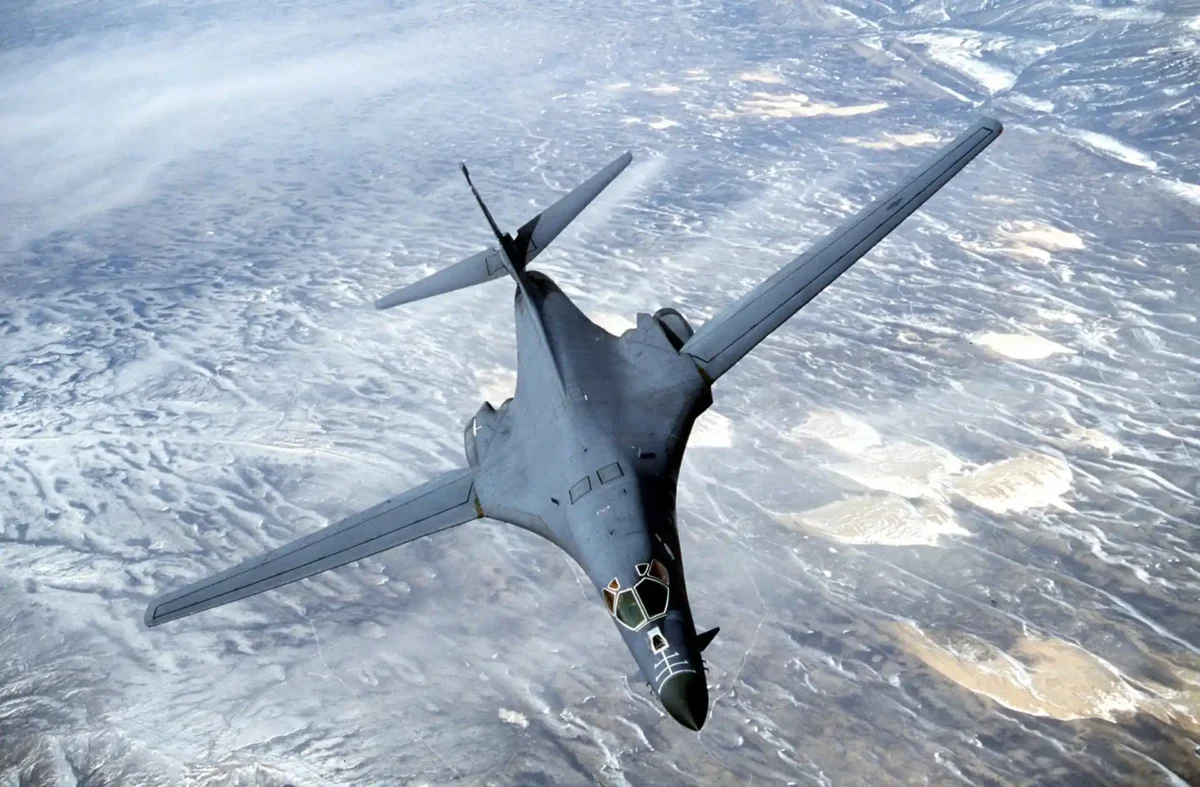
The B-2 Spirit is the only stealth bomber currently in the U.S. inventory. It’s ideal for penetrating the most heavily defended airspaces. It’s extremely survivable and precise, especially in the early hours of a high-end conflict. But that stealth comes with trade-offs.
The B-2 is incredibly expensive to maintain, limited in numbers (only 20 were built), and slower than the B-1B. While the B-2 may be better suited for stealthy first strikes, the B-1B is more flexible, able to operate in both high-intensity and lower-intensity environments, and often deployed more frequently due to its larger fleet size.
What’s also worth noting is the B-1B’s ongoing role evolution. While the B-52 is expected to carry hypersonic weapons in the future, the B-1B has already been integrated with LRASM for maritime strike and precision-guided munitions for land targets.
It also continues to take part in global Bomber Task Force deployments, something that highlights its ability to reposition quickly and strike from multiple theaters. This operational tempo arguably gives the B-1B more real-world value in day-to-day missions than the rarer, more expensive B-2.
Despite being a Cold War-era design, the B-1B Lancer remains a powerful and relevant platform in today’s evolving threat environment, largely because it continues to fill roles that neither the B-52 nor the B-2 can do as effectively on their own.
In high-intensity conflict scenarios, where speed, agility, and heavy payloads are critical, the Lancer offers unmatched responsiveness. Its ability to fly fast and low, deliver precision-guided munitions, and rapidly reposition makes it valuable for striking heavily defended targets, especially when stealth isn’t the only requirement.
In low-intensity or prolonged operations, such as counterinsurgency or regional deterrence, the B-1B’s endurance and payload capacity allow it to loiter for hours and deliver repeated strikes,
That said, the platform does face limitations, particularly in survivability against next-gen integrated air defense systems and in maintenance demands due to its aging airframe. However, ongoing upgrades, including digital cockpit improvements, expanded weapons integration, and maritime strike capability, show that the U.S. Air Force still sees the Lancer as more than just a legacy bomber.
Ultimately, the B-1B may not be the stealthiest, newest, or longest-lasting platform, but in the right mission, it’s arguably still the fastest and most flexible heavy bomber in the U.S. inventory.