Follow Us:

Follow Us:

Imagine a bomb so powerful and precise that it can destroy underground military bunkers buried beneath 200 feet of reinforced concrete without leaving a trace on the surface. This is not science fiction, it’s the terrifying reality of the GBU-57 MOP, also known as the Massive Ordnance Penetrator bomb.
Developed by Boeing under a top-tier defense contract, this massive weapon represents the most advanced and formidable non-nuclear munition in the U.S. military’s arsenal, engineered specifically to neutralize the world’s most hardened targets.
The GBU-57A/B MOP, sometimes simply called the GBU-57 bunker buster, stands apart not only for its staggering size and weight (30,000 pounds) but also for its purpose: to penetrate underground facilities that are completely impervious to ordinary bombs.
These targets often include deeply buried nuclear facilities, command centers, and missile storage complexes. Powered by GPS-guidance and inertial navigation systems, the GBU-57 MOP bombs offer exceptional accuracy, allowing the U.S. Air Force to target strategic threats without resorting to nuclear options.
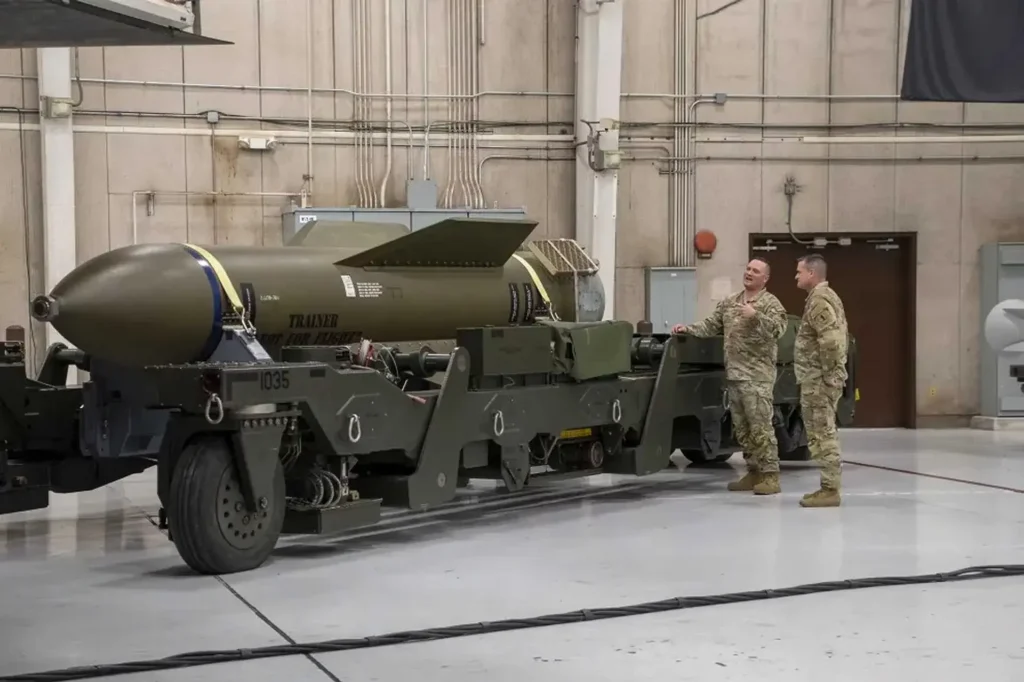
Today, the GBU-57 Massive Ordnance Penetrator bomb plays a critical role in U.S. military strategy, with its existence shaping foreign policy discussions and defense posturing. As tensions rise with countries like Iran and North Korea, the world’s attention turns to weapons like the GBU-57 bunker-buster bombs.
In this post, we’ll explore the development, technical details, deployment platforms, and strategic role of the GBU-57 MOP and why this weapon remains a cornerstone of America’s bunker-busting arsenal.
The story of the GBU-57 MOP begins in the early 2000s, during a time when the United States military was increasingly concerned about the growing trend of adversaries constructing deeply buried bunkers to protect their most valuable assets.
Iran’s underground nuclear facilities and North Korea’s missile storage sites became the prime examples of this threat, driving the Pentagon’s Defense Threat Reduction Agency (DTRA) to pursue a weapon that could strike targets previously thought to be unreachable. The result was a groundbreaking collaboration with Boeing, the GBU-57 manufacturer, which ultimately produced the world’s most capable bunker buster.

Before the GBU-57 Massive Ordnance Penetrator bomb was conceived, the U.S. relied on older bunker-busting weapons like the GBU-28 and GBU-37. While these bombs were effective against some hardened targets, intelligence reports revealed that potential enemy facilities were being built deeper, under more layers of protective concrete and geological cover than ever before.
In response, Boeing engineers were tasked with designing a bomb with unparalleled penetration depth, heavy enough to crack thick concrete shields and smart enough to detect voids and detonate at the precise moment for maximum effect.
After years of research and development, the GBU-57A/B MOP entered service in 2011, marking a revolutionary leap in aerial ordnance technology.
Read also: How Do Bunker Buster Bombs Work?
Since then, the GBU-57 MOP bombs have undergone multiple rounds of improvements, including the addition of a smart fuze system called the Lethality Enhanced Penetrator and a specialized void-sensing fuze, both designed to detect and adapt to underground structures during descent.
These enhancements allow the bomb to sense when it has reached an air pocket or tunnel before detonating, ensuring destruction of hidden enemy assets.
The weapon’s development history also reflects strategic necessity, as experts debated how the GBU-57 penetration depth could counteract fortified nuclear sites like Iran’s Fordow facility.
By the late 2010s, the U.S. had produced roughly 20 of these powerful munitions, making them rare, highly specialized tools reserved for the most sensitive military operations.
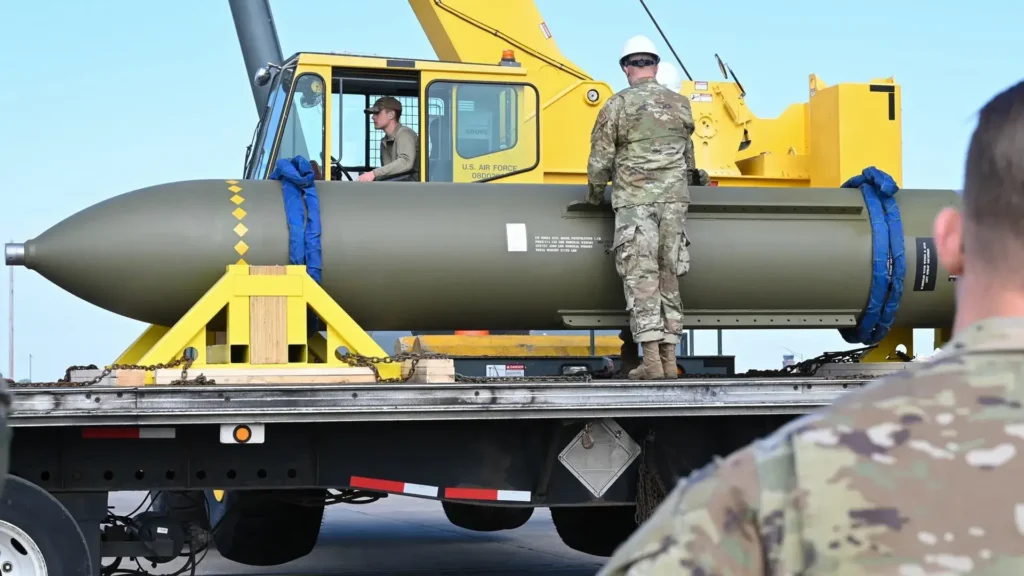
The sheer engineering behind the GBU-57 Massive Ordnance Penetrator bomb reveals why this weapon is considered unmatched in its class. With a total weight of approximately 30,000 pounds (13,600 kilograms), the GBU-57 size alone sets it apart as the largest conventional bomb in the U.S. arsenal.
Stretching over 20.5 feet in length with a diameter of 31.5 inches, this massive device was specifically designed to generate incredible kinetic energy upon impact, allowing it to pierce through layers of reinforced concrete and dense soil that would stop any other ordnance in its tracks.
But weight and size aren’t the only factors that make the GBU-57 bunker buster so devastating. Inside the bomb’s steel casing lies a 5,300-pound high-explosive warhead, optimized for deep penetration and delayed detonation.
This explosive charge is not meant to go off upon surface impact; instead, it is programmed to explode only after the bomb has tunneled deep underground, ensuring the destruction of subterranean targets such as command centers or missile storage facilities.
Read also: GBU-72 Bunker Buster: Inside the Advanced 5K Penetrator Bomb
According to military reports, the GBU-57 penetration depth allows the bomb to drive through 60 meters (about 200 feet) of earth or 18 meters (nearly 60 feet) of reinforced concrete, capabilities that no other conventional weapon can match.
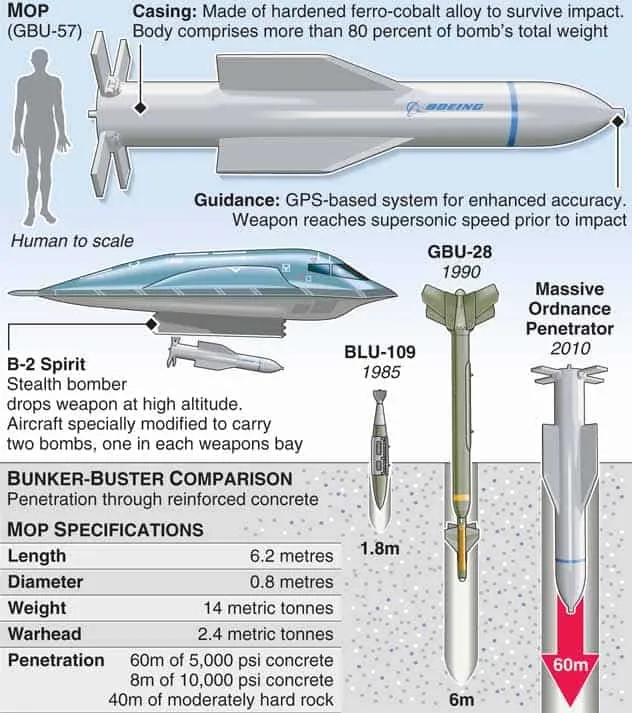
Guidance technology also plays a critical role in the MOP’s effectiveness. The bomb is equipped with a precision GPS/INS navigation system, which ensures that despite its enormous weight and speed, the bomb remains on a direct course to its target.
To fine-tune its impact, Boeing’s engineers integrated advanced grid fins and tail guidance mechanisms that allow for in-flight adjustments, essential when aiming at hardened, pinpointed bunkers.
More recent models, like the GBU-57A/B MOP, also incorporate a void-sensing smart fuze, which can detect structural cavities underground and delay detonation until the bomb reaches the most vulnerable point of the enemy’s facility. This “intelligent” feature is part of what makes the GBU-57 such a fearsome addition to the U.S. arsenal.
The combination of immense weight, precise guidance, and deep-earth penetration makes the GBU-57 MOP bombs more than just larger versions of previous bunker-busters; they represent a totally new category of warfare capability.
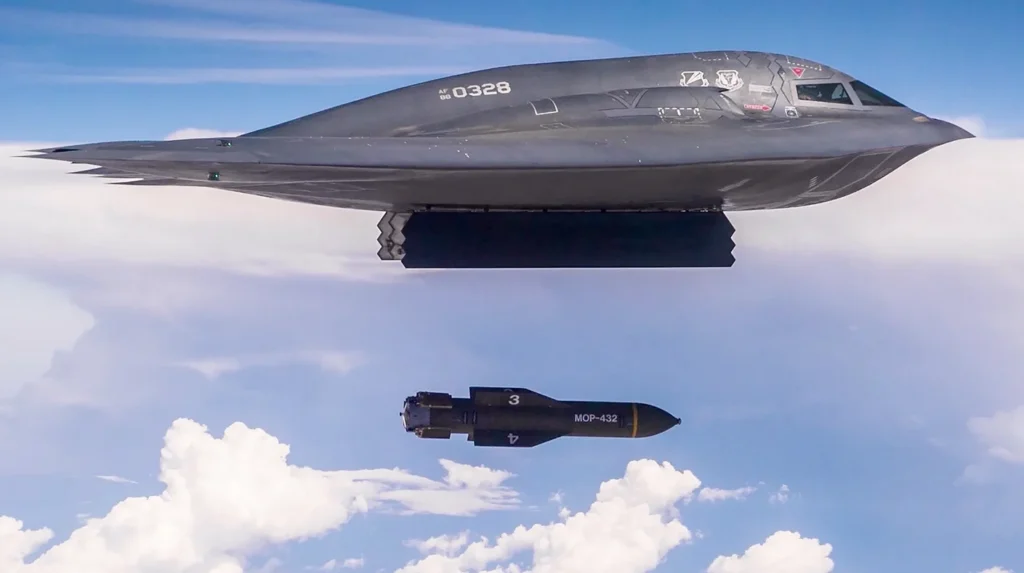
The enormous GBU-57 MOP bombs are so large and heavy that only one aircraft in the world is capable of carrying them: the B-2 Spirit stealth bomber. Known for its radar-evading capabilities and global strike range, the B-2 was the ideal choice to deploy the GBU-57 Massive Ordnance Penetrator bomb, as no other U.S. aircraft can handle the bomb’s sheer size and weight, let alone deliver it stealthily into heavily defended enemy airspace.
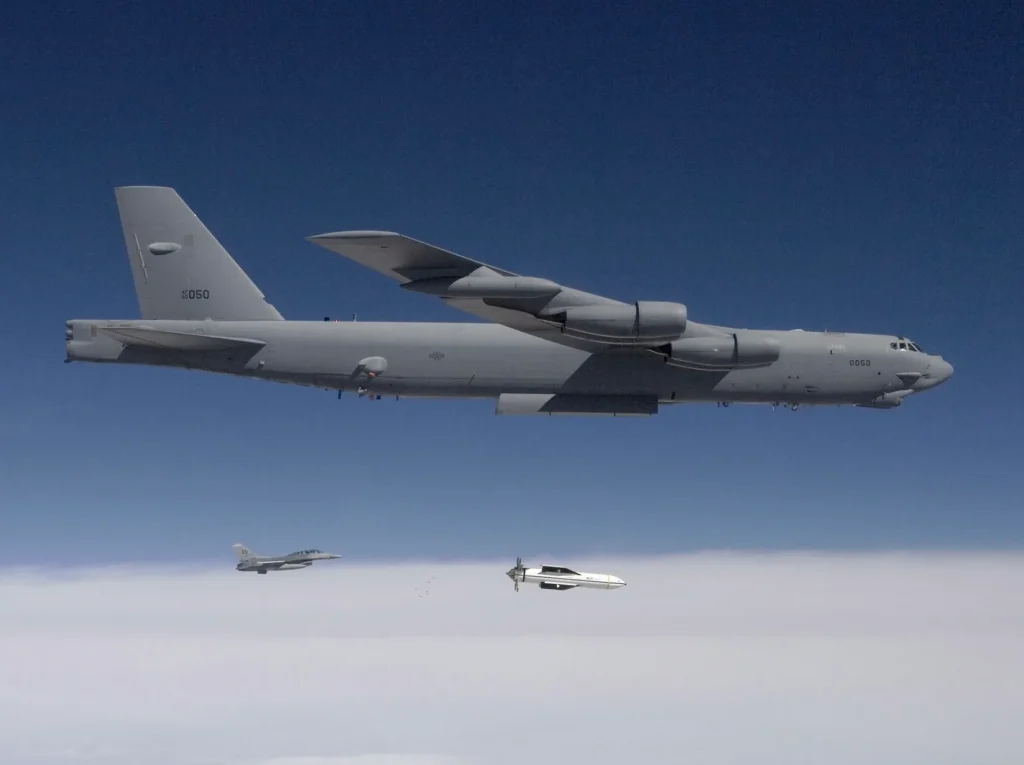
Although initial testing involved the B-52 Stratofortress, operational deployment was ruled out because of its vulnerability to modern air defenses.
The GBU-57A/B MOP requires a delivery platform that can remain undetected and reach deep into hostile territory, making the B-2’s design essential for real combat scenarios.
The bomber can carry two GBU-57 bunker-buster bombs in its internal bays, giving the U.S. military unmatched flexibility to target multiple underground facilities in a single mission.
The combination of the B-2 Spirit and GBU-57 MOP underscores how specialized this weapon system is; no other plane is certified to deliver it, and very few bombs of this type even exist due to their high cost and sensitive operational role.
This pairing ensures that the GBU-57 MOP bombs remain a highly strategic option, reserved for only the most critical and fortified targets, such as deep nuclear bunkers or hidden military command centers.
For years, the GBU-57 MOP bombs were considered a last-resort weapon, tested but never used in actual combat. That changed recently when reports emerged that the U.S. military deployed the GBU-57A/B MOP against Iran’s highly fortified Fordow nuclear facility, a deep underground site thought to be impervious to conventional attack.
This marked the first known operational use of the GBU-57 Massive Ordnance Penetrator bomb, signaling a new chapter in U.S. strategic force projection and demonstrating the bomb’s intended purpose in real-world conflict scenarios.
Read also: GBU-43/B MOAB – What to Know About the “Mother of All Bombs”
Military insiders revealed that the strike on Fordow involved B-2 Spirit stealth bombers, the only aircraft capable of delivering such heavy GBU-57. Intelligence suggested the facility’s nuclear development operations had expanded deep below ground, well beyond the reach of standard ordnance.
The precision strike reportedly achieved full penetration, with the bomb’s void-sensing fuze triggering detonation only after passing through multiple layers of reinforced concrete. This confirmed the bomb’s extraordinary penetration depth capabilities, which military planners had relied on in theoretical models but now witnessed in action.
While the full political and strategic fallout of the Fordow strike remains to be seen, the event has validated years of design, testing, and development efforts behind the GBU-57 bunker-buster bombs. Defense analysts worldwide are reassessing the balance of power, noting that no underground facility, even one as fortified as Fordow, is safe from a determined MOP assault.
The operation has also raised new interest in how the GBU-57 works, its true destructive potential, and its possible future role in conflicts involving other nations with hidden or protected nuclear infrastructure.
While the exact GBU-57 cost remains officially classified, defense experts estimate that each GBU-57 MOP bomb carries a price tag in the range of tens of millions of dollars per unit. This staggering cost is driven by several factors, including the bomb’s specialized manufacturing process, advanced guidance systems, and unique penetrating capability.
Boeing, the GBU-57 manufacturer, has invested years of research and development into producing a weapon that can reliably penetrate reinforced concrete, dense rock, and layered subterranean defenses—something no other conventional bomb can achieve.
Beyond the cost of the weapon itself, deploying the GBU-57 Massive Ordnance Penetrator bomb involves additional operational expenses. Only the B-2 Spirit stealth bomber is capable of delivering this enormous bomb, and flying a B-2 mission comes with a price tag of approximately $150,000 per flight hour.
Factoring in mission planning, maintenance, fueling, and aircrew training, the real cost of employing the GBU-57 bunker buster extends far beyond the bomb’s manufacturing price. This makes the MOP not only a technological marvel but also one of the most expensive conventional weapons ever designed for limited, high-stakes use.
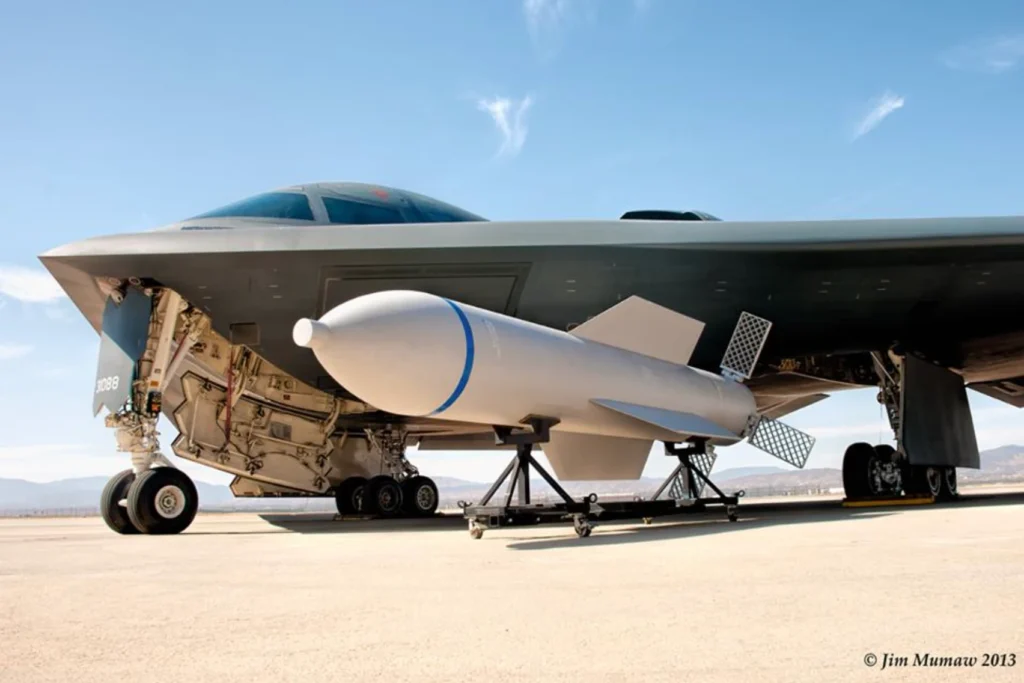
Despite its expense, the GBU-57A/B MOP is considered a cost-effective solution for neutralizing high-value, hardened targets that would otherwise require multiple strikes, or even nuclear force, to destroy.
The recent Fordow operation demonstrated that a single successful deployment could achieve what decades of diplomatic pressure and covert operations could not: direct, irreversible damage to a critical underground facility.
As such, the high GBU-57 cost is justified by its unparalleled ability to change the outcome of a potential conflict without escalating to nuclear war, offering the U.S. military and its allies an indispensable strategic tool.
Before the introduction of the GBU-57 Massive Ordnance Penetrator bomb, the U.S. arsenal included other bunker-busting weapons such as the GBU-28 and GBU-37, both of which were designed during the Gulf War era to penetrate hardened Iraqi command bunkers.
While effective for their time, these weapons are dwarfed in both scale and capability by the GBU-57 MOP bombs, which were built to address modern threats far beyond the reach of their predecessors.
The earlier bunker-busters could penetrate several meters of reinforced concrete, but they fall far short of the GBU-57 penetration depth—estimated to reach as much as 200 feet of earth or 60 feet of concrete, a threshold unmatched by any other conventional bomb.
In terms of design, the differences are equally striking. The GBU-28, for example, weighs roughly 5,000 pounds, whereas the GBU-57 size is a massive 30,000 pounds, six times heavier. This dramatic increase in weight translates directly into deeper kinetic penetration, a critical requirement for breaching the world’s most fortified underground facilities, such as Iran’s Fordow nuclear site.
Additionally, the GBU-57A/B MOP is guided by a state-of-the-art GPS/INS system, as well as a sophisticated void-sensing fuze that allows it to detect underground cavities and adjust its detonation accordingly—a feature absent from older bunker-buster designs.
The GBU-57 bunker buster also stands apart when considering strategic flexibility and impact. While smaller munitions like the GBU-28 may still be useful against less fortified targets, only the GBU-57 bombs offer the capability to reliably threaten super-hardened nuclear sites buried under mountains or reinforced with multiple concrete layers.
This unique role means the GBU-57A/B MOP is reserved for the most critical missions where no other conventional weapon could succeed. Its recent use at Iran’s Fordow facility proved this point decisively, reinforcing the reality that when it comes to defeating deeply buried targets, no other weapon comes close to the GBU-57 Massive Ordnance Penetrator bomb.
The GBU-57 MOP has proven itself as an unmatched force in modern warfare, capable of destroying fortified underground facilities that were once considered invulnerable. Its recent use against Iran’s Fordow nuclear facility highlighted its incredible penetration depth, devastating explosion capability, and strategic impact.
Unlike any other conventional weapon, the GBU-57 Massive Ordnance Penetrator bomb offers a precise, non-nuclear solution to threats hidden beneath mountains or reinforced bunkers, reshaping the military strategies of both the United States and its adversaries.
As nations like North Korea and Iran continue to invest in subterranean defenses, the GBU-57A/B MOP will remain a vital part of the U.S. arsenal. However, its high cost, dependence on the B-2 Spirit for delivery, and limited availability mean future developments in bunker-busting technology are inevitable.
Yet for now, the GBU-57 bombs stand alone as the ultimate answer to the question of how to defeat hardened underground targets, setting the standard for what is possible in modern aerial warfare.