Follow Us:
Follow Us:

Most weapons are built to destroy what you can see. The GBU-72, though? It’s built for everything you can’t.
Picture a reinforced underground bunker, layers of concrete, steel, maybe buried deep enough to shrug off conventional airstrikes. For decades, militaries treated these as near-invulnerable safe zones. That assumption doesn’t hold up anymore.
The GBU-72 Advanced 5K Penetrator, often simply called the GBU-72 bunker buster, exists for one reason: to punch through those defenses and detonate where it hurts most.
At roughly 5,000 pounds, it sits in an interesting middle ground, not as massive as the legendary “mother of all bunker busters,” but far more advanced than older penetrator bombs. And that’s where things get interesting.
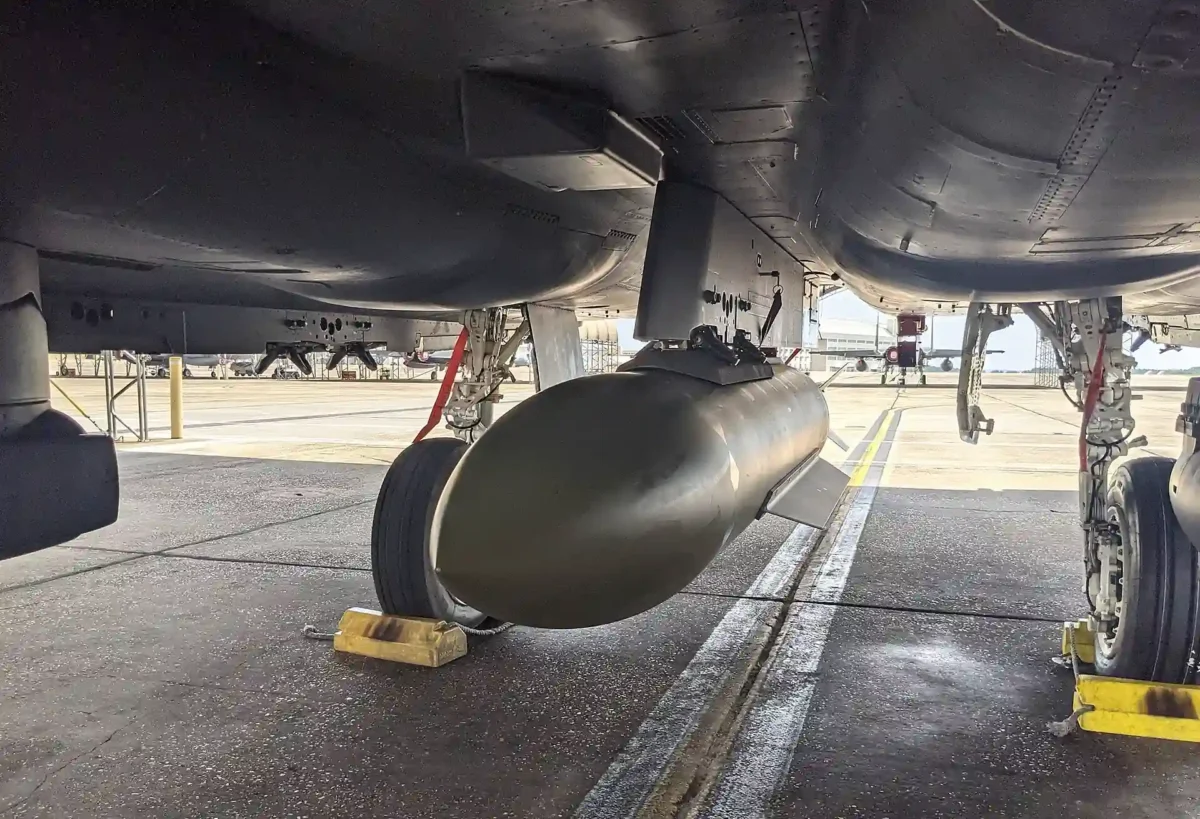
The GBU-72 A5K penetrator isn’t just about brute force; it’s about precision, physics, and timing. It doesn’t just hit a target, it arrives with intent, drilling in before exploding.
Here’s what makes it worth paying attention to: modern conflicts are increasingly defined by hidden infrastructure, underground missile silos, command centers, hardened storage facilities. The battlefield has moved below the surface. The GBU-72 is part of that shift.
In this post, you’ll get a clear, no-nonsense breakdown of what makes it different from earlier weapons, and why it’s quietly becoming one of the most strategically important air-delivered munitions in use today.
If you strip away the technical jargon, the GBU-72 bunker buster is essentially a very smart, very stubborn bomb. It doesn’t explode on impact like you might expect, instead, it insists on going through the target first. Only then does it do its real job.
Officially, the GBU-72 Advanced 5K Penetrator is a precision-guided bunker buster developed for the U.S. Air Force. “GBU” stands for Guided Bomb Unit, and the “5K” label? That’s your clue, it belongs to the 5,000-pound class of munitions. Heavy enough to carry serious kinetic energy, but still flexible enough to be deployed from multiple aircraft types.
Now here’s where it gets a bit more nuanced.
The GBU-72 A5K penetrator isn’t a completely standalone invention. It’s built on the backbone of the JDAM (Joint Direct Attack Munition) system, a guidance kit that turns “dumb” bombs into GPS-guided precision weapons. Think of it like upgrading an old hammer into a laser-guided drill. Same basic idea, wildly different results.
Unlike earlier bunker busters, which relied heavily on brute force and thick casings, the GBU-72 bunker buster leans into smarter engineering. Its design is optimized using advanced modeling, simulations that predict exactly how it will behave when smashing through layers of earth, rock, and reinforced concrete. Not guesswork. More like calculated violence.
Read also: GBU-57 MOP: The World’s Most Powerful Bunker Buster Bomb
Another detail that often gets overlooked: flexibility.
The GBU-72 bunker buster can be carried by both fighter jets and strategic bombers. That means it’s not just a niche weapon for rare missions, it’s something that can be deployed quickly, almost on demand.
In short, the GBU-72 isn’t just a bomb. It’s a response to a very specific problem: targets that thought they were untouchable.
The story behind the GBU-72 isn’t flashy. No dramatic unveiling, no headline-grabbing debut. In fact, it emerged in a fairly quiet way, which, oddly enough, says a lot about its purpose.
For years, the U.S. military relied on older bunker busters like the GBU-28. Effective? Yes. But also rooted in design logic from the late 20th century, thick steel casings, brute force, and a bit of educated guesswork when it came to penetration performance.
As underground targets became more sophisticated, deeper, harder, smarter, those older weapons started to feel… a step behind.
Enter the GBU-72 Advanced 5K Penetrator.
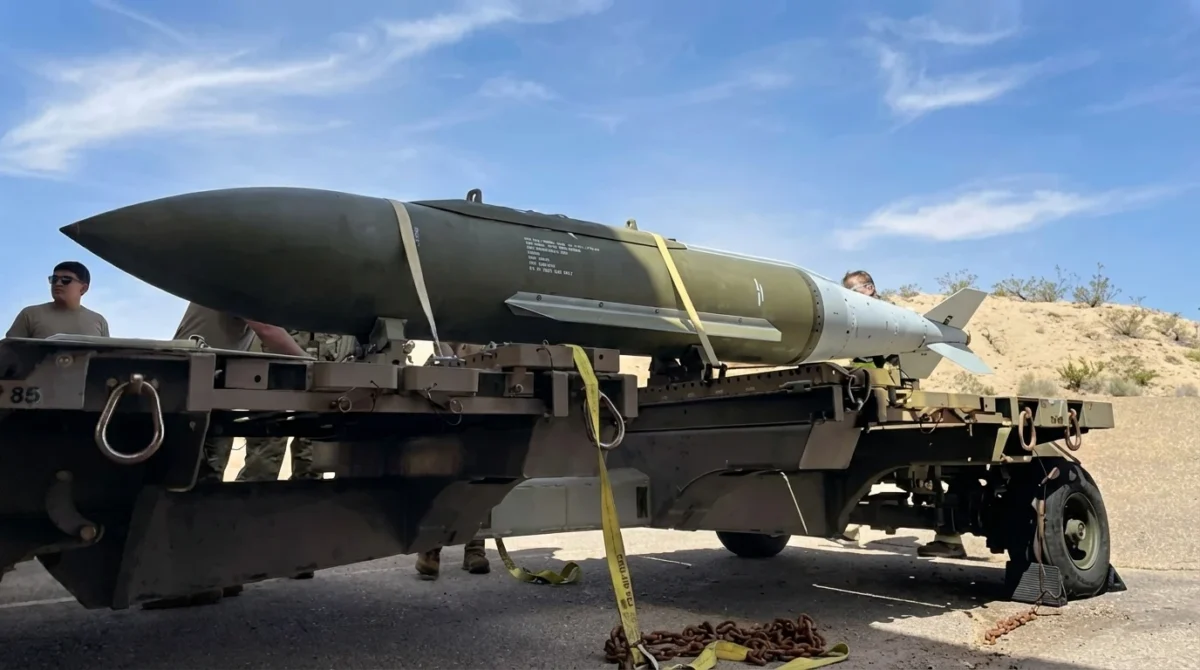
Instead of simply making a bigger bomb, engineers took a different route. They leaned heavily into computational modeling, running thousands of simulated strikes against virtual bunkers. Different soil types, concrete densities, angles of impact. It’s less “build and test” and more “predict, refine, then build.” A quieter revolution, but a meaningful one.
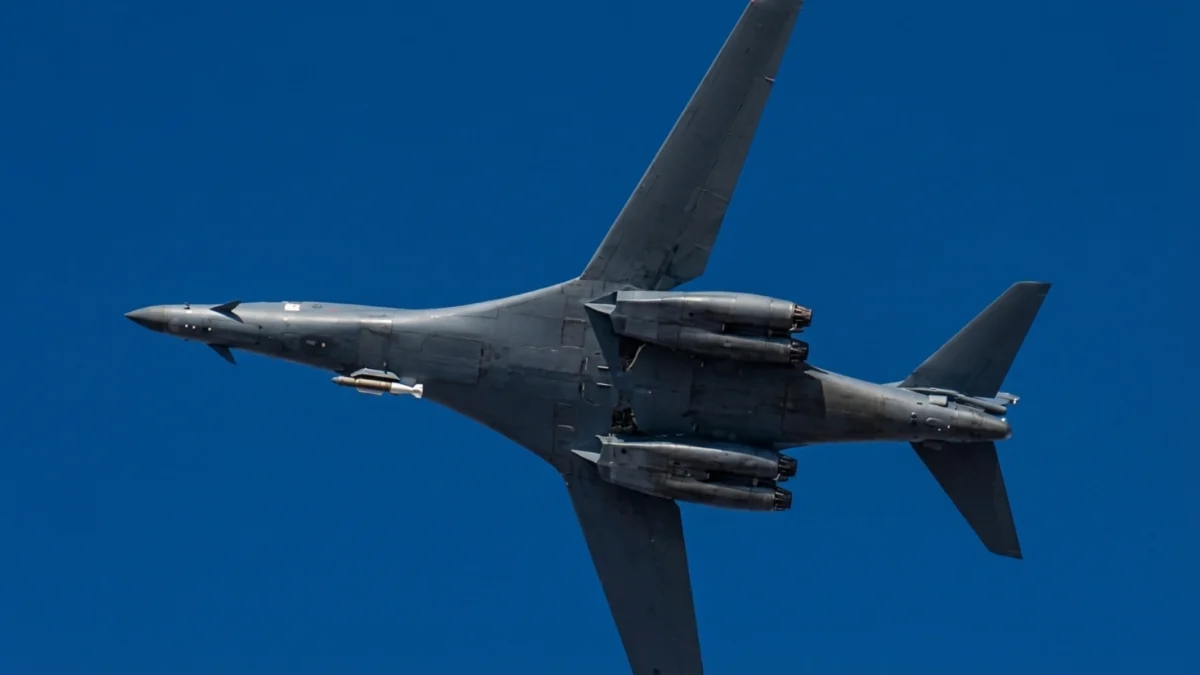
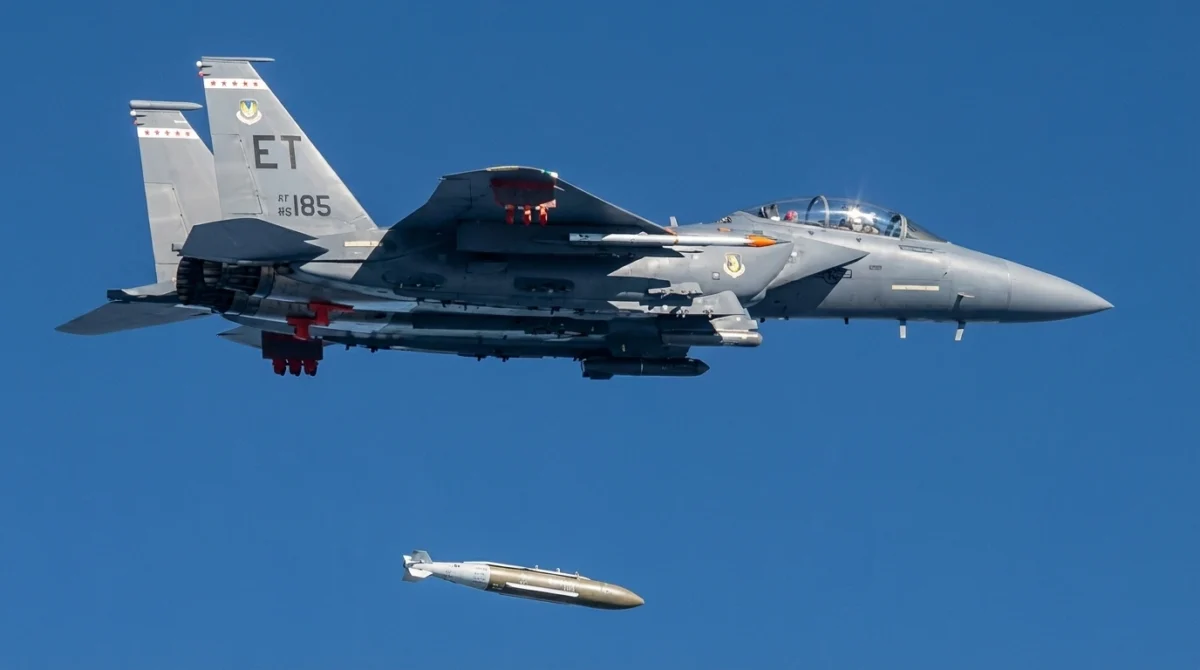
The GBU-72 bunker buster officially began surfacing around 2021, with test drops conducted at Eglin Air Force Base. Early trials involved the F-15E Strike Eagle, a platform known for precision strike missions. Later, integration expanded to heavier aircraft like the B-1B Lancer, giving the weapon broader reach.
One small but telling detail: the development timeline was relatively fast. That usually signals urgency. Not panic, but recognition that modern threats were evolving quickly, especially underground infrastructure.
So the GBU-72 bunker buster wasn’t created in isolation. It’s a response. A correction, even. Less about replacing older weapons outright, and more about filling a gap that had quietly opened up beneath the surface, literally.
Let’s get concrete for a moment, because with the GBU-72, the details really matter. This isn’t just a heavy bomb; it’s a carefully engineered system where weight, guidance, and timing all work together.
Here’s a clear breakdown of the core specs of the GBU-72 Advanced 5K Penetrator:
| Specification | Details |
| Weight | ~5,000 lb (≈ 2,268 kg) |
| Type | Precision-guided bunker buster |
| Guidance System | GPS + INS (JDAM-based) |
| Warhead Options | BLU-109 or BLU-137/B penetrator |
| Tail Kit | KMU-572 JDAM kit |
| Primary Aircraft | F-15E Strike Eagle, B-1B Lancer |
| Target Type | Hardened / deeply buried structures |
Now, numbers alone don’t tell the full story, but they hint at something important. At 5,000 pounds, the GBU-72 bunker buster carries serious momentum. And momentum, in this context, is everything.
The bomb doesn’t just fall, it accelerates, builds kinetic energy, and uses that force to drive itself deep into reinforced targets.
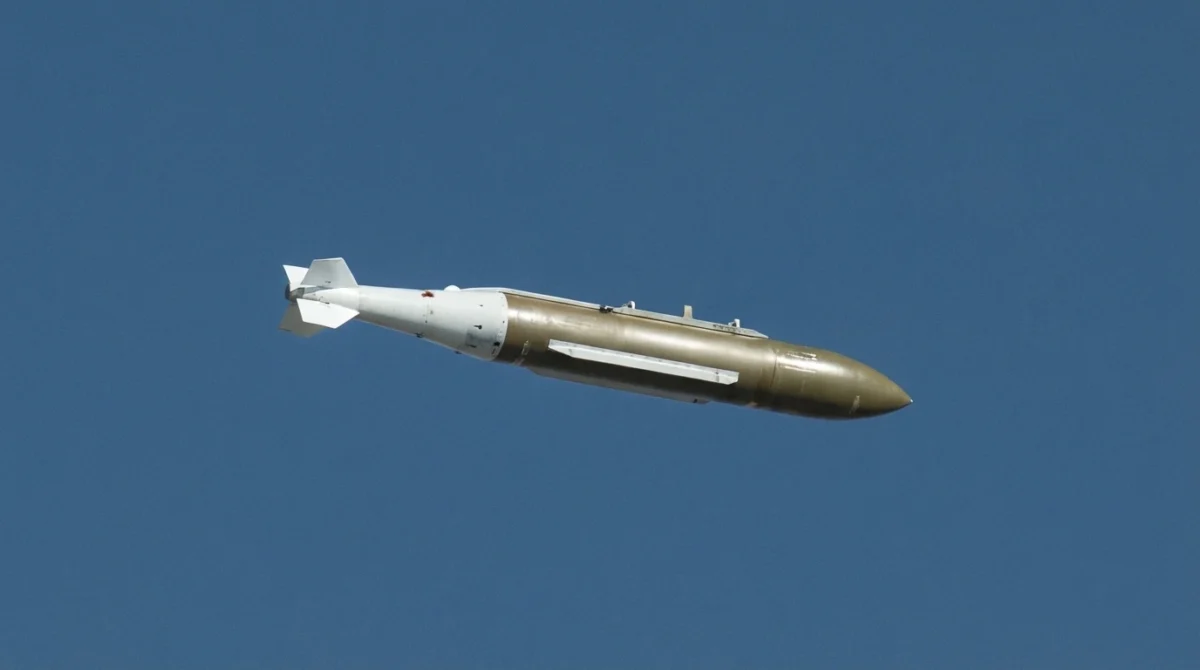
The guidance system deserves a quick pause too. By combining GPS with an inertial navigation system (INS), the GBU-72 can stay accurate even if signals are disrupted. It’s not flawless, but it’s resilient, like a driver who can keep going even when the GPS cuts out.
And then there’s the warhead.
The BLU-series penetrators are designed to stay intact under extreme stress. Imagine hitting concrete at high speed and not breaking apart, that’s the level of structural toughness we’re talking about.
Put it all together, and the GBU-72 bunker buster becomes less of a blunt instrument and more of a precision tool, heavy, yes, but also surprisingly refined.
The GBU-72 wasn’t designed to sit in storage, and it doesn’t. Its real value shows up in how and where it can be deployed. And that picture is a bit more flexible than you might expect.
Let’s start with the aircraft.
The GBU-72 bunker buster is compatible with both tactical fighters and long-range bombers. That includes platforms like the F-15E Strike Eagle, fast, precise, able to strike with little warning, and the B-1B Lancer, which can carry multiple heavy munitions over intercontinental distances. Two very different tools, same payload. That versatility matters.
Because missions involving the GBU-72 A5K penetrator tend to be… time-sensitive.
The targets are rarely visible in the traditional sense. Instead, think:
These aren’t targets you destroy by leveling a building. You have to reach inside them.
And that’s where deployment strategy gets interesting. In some scenarios, multiple GBU-72 bombs might be used in sequence, either to ensure penetration or to collapse layered underground structures. Not officially confirmed in detail, but tactically, it makes sense. One strike weakens, the next finishes.
In recent years, there have been reports, some confirmed, some less so, of bunker-busting munitions being used in regions with heavily fortified underground infrastructure.
The GBU-72 bunker buster fits squarely into that role, especially in areas where missile systems or command nodes are buried for protection.
But here’s the subtle shift: deployment isn’t just about destruction anymore. It’s about deterrence. The mere existence of a weapon like the GBU-72 forces adversaries to rethink how deep is “deep enough.”
And increasingly, the answer is… maybe not deep enough at all.
There’s a tendency to assume bigger equals better, especially with weapons. But the GBU-72 bunker buster quietly challenges that idea. Its real advantage isn’t just power… it’s how efficiently that power is used.
Let’s unpack that.
The GBU-72 bunker buster uses a GPS/INS guidance system, which means it can hit within a very tight margin of error, even in bad weather or low-visibility conditions. That alone sets it apart from older, laser-dependent systems.
But here’s the nuance: precision isn’t just about avoiding collateral damage (though that’s part of it). It’s about hitting the exact structural weak point of a hardened target. Think ventilation shafts, access points, thinner reinforced sections. A few meters can change everything.
At ~5,000 pounds, the GBU-72 A5K penetrator sits in a sweet spot. It’s heavy enough to generate serious penetration force, but not so massive that it becomes impractical.
That balance gives it something rare: repeat usability. Aircraft can carry multiple units, missions can be scaled, and planners aren’t forced into “all-or-nothing” strike decisions.
Unlike massive penetrators that require stealth bombers, the GBU-72 can be deployed from:
That opens up options. Faster response times. More launch points. Fewer logistical headaches.
It might sound strange to say about a 5,000-pound bomb, but the GBU-72 is designed to detonate underground. That means less surface-level blast spread compared to traditional munitions.
Contained destruction. Focused impact.
Put all of that together, and the GBU-72 starts to look less like a blunt-force weapon and more like a precision instrument, one built for very specific, very difficult problems.
For all its precision and engineering finesse, the GBU-72 isn’t some magic solution that erases every hardened target. It has edges, sharp ones, but also limits. And those limits matter more than people usually admit.
Let’s be blunt: the GBU-72 bunker buster is powerful, but it’s not the king of depth. That title still belongs to much larger penetrators like the 30,000-pound class weapons.
If a facility is buried extremely deep, think layers of rock, reinforced concrete, and engineered shock absorption, the GBU-72 A5K penetrator might struggle to reach the core in a single strike. It can damage, weaken, disrupt… but total destruction? Not guaranteed.
Which leads to a workaround: multiple strikes. Effective, yes, but more complex.
Here’s something less technical but just as important. To deploy the GBU-72, you need aircraft in the airspace. That sounds obvious, but in contested environments with strong air defenses, it becomes a serious constraint.
No air dominance? No clean delivery.
And unlike long-range stand-off weapons, this isn’t something you launch from hundreds of kilometers away without risk.
Oddly enough, one of the biggest challenges in understanding the GBU-72 is how little is officially confirmed. Exact penetration depth? Classified. Detailed performance metrics? Also restricted.
So analysts, and readers like you, are often working with estimates and educated guesses. That uncertainty can make it harder to evaluate real-world effectiveness.
Not all “hard targets” are equal. Soil composition, structural design, depth, all of these variables influence how well the GBU-72 performs. A bunker in soft earth behaves very differently from one embedded in dense rock.
So yes, the GBU-72 bunker buster is impressive. But it’s also situational. And in warfare, “situational” often makes all the difference
The real significance of the GBU-72 bunker buster doesn’t show up in specs or weight charts, it shows up in how it changes decision-making behind the scenes. Not immediately obvious, but once you notice it, it’s hard to unsee.
For a long time, underground facilities were treated like a near-guarantee of survival. Build deeper, reinforce harder, add layers of protection, and you could reasonably expect to ride out most conventional airstrikes. That logic held up… until weapons like the GBU-72 bunker buster entered the picture. Now, depth still helps, but it’s no longer a sure thing. And that small shift in certainty? It ripples outward.
Because when planners can’t fully trust their underground infrastructure, they start compensating. They build deeper, expensive and time-consuming. They spread assets across multiple locations, less efficient. They move things around more often, which, ironically, increases exposure.
The GBU-72 A5K penetrator doesn’t need to destroy every bunker to be effective; it just needs to make those bunkers feel less safe.
There’s also a practical side to its importance. The GBU-72 bunker buster fills a gap that used to be awkwardly wide. On one end, you had smaller precision bombs, accurate, yes, but limited against hardened targets. On the other, massive penetrators that required specialized bombers and careful mission planning.
The GBU-72 sits in between, offering meaningful penetration without the logistical constraints of larger weapons. That balance makes it usable in more scenarios, which in turn makes it more relevant.
And then there’s the broader trend, modern military infrastructure isn’t just going underground, it’s staying there. Command systems, missile storage, critical nodes… they’re increasingly buried by design.
The GBU-72 bunker buster exists as a direct response to that shift, shaping not just how wars are fought, but how they’re prepared for in the first place.