Follow Us:
Follow Us:

At first glance, it’s just a slender stretch of sea, about 33 kilometers wide at its narrowest point, tucked between Iran to the north and Oman to the south. But the Strait of Hormuz may well be one of the most geopolitically sensitive pieces of water on the planet. It may not look like much on the map, but its role in the world’s energy supply is anything but small. Depending on the estimates, nearly a fifth of the world’s oil, some say more, passes through this chokepoint daily.
In recent months, as tensions between Iran and Western powers have flared once again, this narrow maritime corridor has returned to the center of international concern.
The conflict in Gaza, Hezbollah’s posturing in Lebanon, and U.S.-Iran hostilities in the Red Sea and Persian Gulf have all helped revive fears that a single miscalculation could disrupt one of the world’s most vital shipping arteries.
Although direct military confrontation in the region has so far been avoided, there’s a growing sense among analysts that the Strait of Hormuz remains one misstep away from the crisis.
Iran, for its part, has repeatedly signaled, both through rhetoric and naval drills, that it could close or disrupt traffic through the Strait if provoked, especially in response to Western sanctions or Israeli actions.
So, why does this narrow waterway hold such disproportionate power?
To answer that, we need to look into the history, maritime law, and regional power dynamics that make the Strait of Hormuz one of the most strategically sensitive locations on Earth.
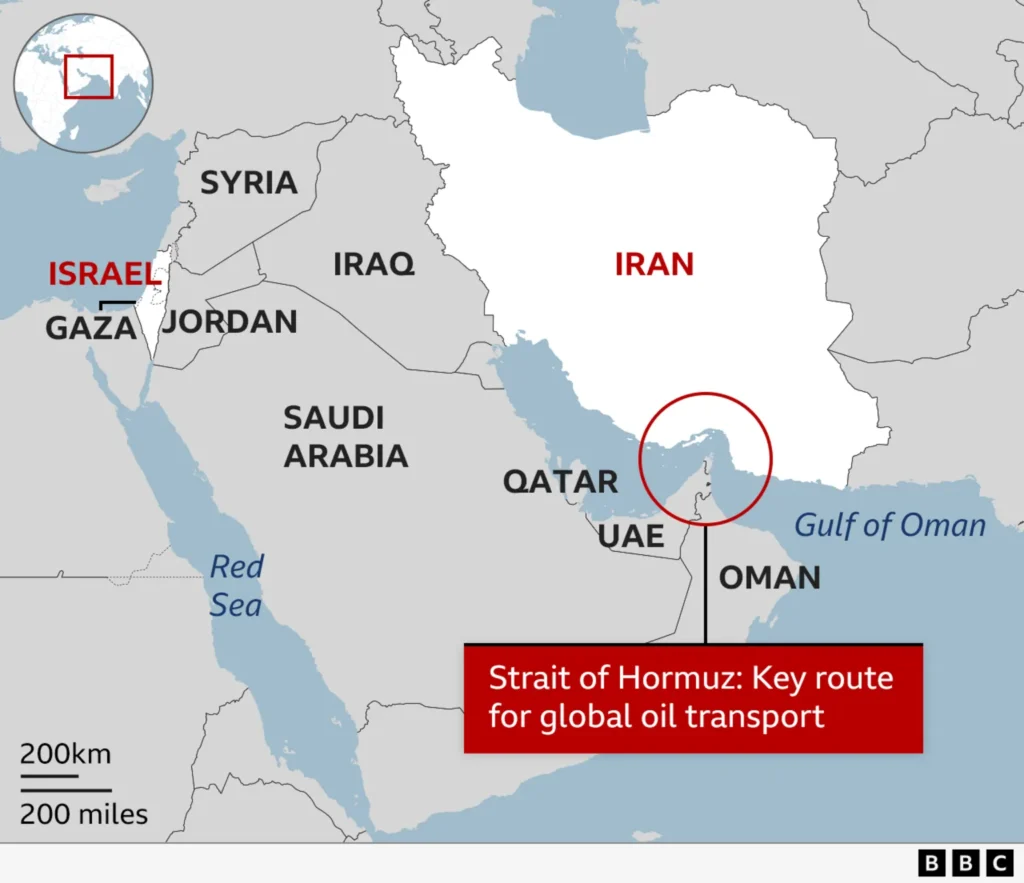
Geographically speaking, the Strait of Hormuz is a slim, curved waterway connecting the Persian Gulf to the Gulf of Oman and, by extension, the Arabian Sea. It forms the only sea passage from the Persian Gulf to the open ocean, which arguably makes it one of the most important maritime chokepoints in the world — especially for global energy exports.
The strait lies between Iran to the north and the Musandam Peninsula of Oman to the south, with both countries having territorial waters that extend into the passage.
In fact, at its narrowest point, the Strait is only about 33 kilometers (21 miles) wide, but the actual shipping lanes, due to traffic separation schemes, are much narrower.
Typically, there’s just a pair of 3-kilometer-wide channels for incoming and outgoing vessels, separated by a buffer zone. This limited space naturally creates a bottleneck.
In terms of depth, the Strait of Hormuz is deep enough, averaging around 60 meters (roughly 200 feet)—to allow the passage of the world’s largest oil tankers, including Ultra Large Crude Carriers (ULCCs). This makes it a rare combination: narrow enough to be strategically vulnerable, but still capable of handling the heaviest commercial ships on Earth.
Bordering nations like Iran and Oman technically share control of this waterway under international maritime law, but Iran’s position, controlling the entire northern coast, gives it a particularly strong hand.
Read also: How Powerful Is the IRGC? Numbers, Weapons, and Strategic Power
Some analysts argue that this geographic leverage contributes to Iran’s strategic influence in the region, especially given its ability to potentially restrict or threaten the flow of shipping during times of conflict.
So while it may not appear all that impressive on a map, the Strait of Hormuz’s location and physical characteristics give it an outsized role in shaping regional and even global dynamics.
To understand the importance of the Strait of Hormuz, it helps to zoom out from the map and look at how much of the world quite literally flows through this narrow blue artery.
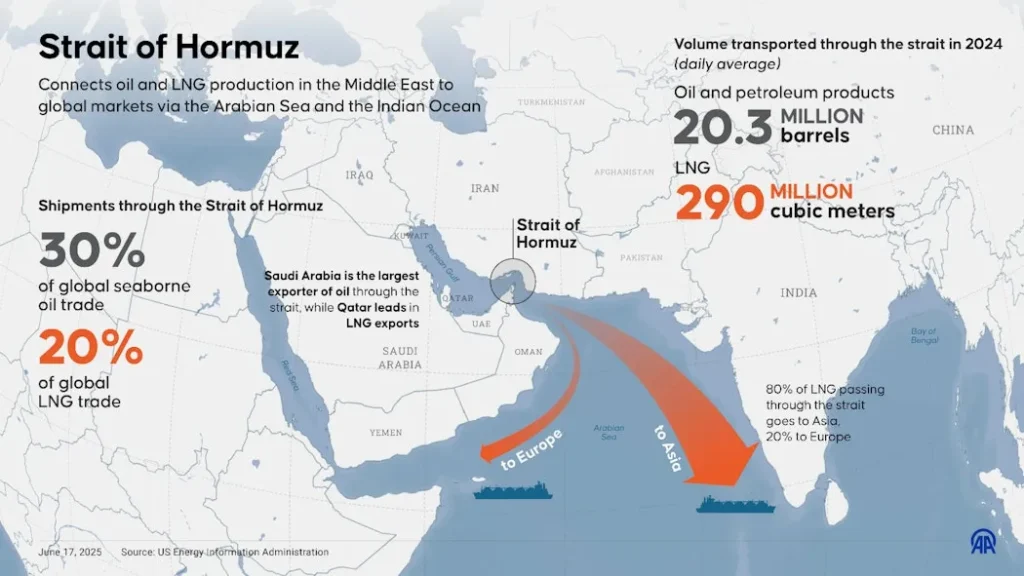
At any given moment, massive oil tankers and LNG carriers glide through its tight shipping lanes, vessels so large and heavy, they resemble floating cities. While estimates can vary depending on the year and source, it’s widely believed that nearly 20% of the world’s oil supply passes through the Strait of Hormuz, making it arguably the most vital oil chokepoint on Earth. That figure sometimes translates to around 17 million barrels of crude oil per day, though some assessments have placed it even higher during peak output periods.
And it’s not just oil. Liquefied natural gas (LNG), primarily exported from Qatar, also depends on this waterway. Qatar, one of the world’s top LNG exporters, sends about 30% of global LNG shipments through the Strait—meaning that a disruption here could ripple across energy markets from Europe to Asia.
This isn’t just theory. There have been multiple instances where even the threat of conflict in the Hormuz Strait, whether from Iranian naval maneuvers, drone incidents, or shipping interdictions, has sent global oil prices jumping. In other words, the world’s energy markets are unusually sensitive to any instability around this narrow strip of sea.
Read also: Why Is Kharg Island Important? The Strategic Oil Chokepoint
In terms of sheer volume, the daily shipping traffic in the Strait can be staggering. On average, somewhere between 70 to 90 ships transit the Strait every single day, including crude tankers, container ships, LNG carriers, and military vessels. With such dense traffic packed into such a confined space, especially with only two main shipping lanes about 3 kilometers wide each, any blockage or accident could quickly spiral into a global crisis.
Strategically, the Strait functions not just as a transport route, but as a maritime pressure point. Whoever can control or threaten traffic through Hormuz potentially holds leverage over global supply chains, a fact that has not been lost on Iran, which has occasionally hinted at closing the strait in response to Western sanctions or regional escalation.
This kind of strategic maritime importance arguably gives Iran a level of influence far beyond its domestic oil production capacity alone.
Of course, many countries, including the U.S., U.K., and other NATO partners — regularly patrol the region to ensure “freedom of navigation.” Still, maritime analysts often caution that this balance remains fragile. A single incident, a sunken ship, a miscalculated missile strike, or a blocked lane—could send shockwaves through global oil chokepoints and unsettle Middle East shipping routes.
Control over the Strait of Hormuz is not as straightforward as drawing lines on a map. It’s a complex blend of territorial claims, international law, and persistent military presence, all wrapped within the larger tensions of the Middle East’s geopolitical fault lines.
Let’s start with Iran, because geographically and politically, it plays the most assertive role in this maritime equation. Iran’s northern coastline borders the entire upper half of the Strait, and from Tehran’s perspective, that proximity gives it both sovereign rights and strategic leverage.
Read also: Israel-Iran Conflict 2025
Over the years, Iranian leaders have repeatedly asserted that, if necessary, they could block the passage of ships, especially Western oil tankers, as a form of retaliation against sanctions or military pressure.
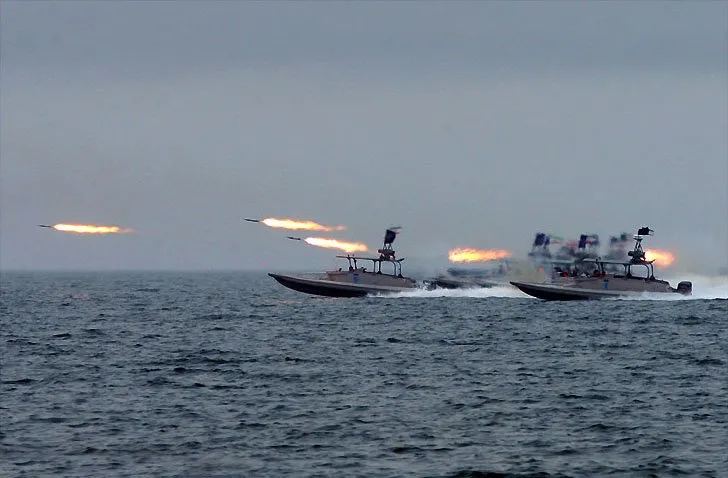
In fact, Iran has held numerous naval drills in the Strait, including missile tests and live-fire exercises, which many people interpret as signals to remind the world of its capability to disrupt global trade, if provoked.
Iran’s stance is partly rooted in the concept of territorial waters, which under international maritime law, extend 12 nautical miles from a nation’s coastline.
Since the Strait of Hormuz is only about 33 kilometers wide at its narrowest point, the territorial waters of Iran and Oman technically touch or even overlap, leaving little space for “high seas.” However, that’s where international norms kick in.
The United Nations Convention on the Law of the Sea (UNCLOS) provides a framework for dealing with such scenarios. According to these rules, even within a state’s territorial waters, there exists something called “transit passage”, meaning foreign ships, including warships and commercial vessels, are legally allowed to navigate through international straits like Hormuz without interference, as long as they proceed without threatening the coastal states.
Read also: Iran’s Nuclear Weapons Program
However, Iran signed UNCLOS but has not ratified it. That gives Tehran some room to interpret transit rights differently, especially when it feels its national security is threatened.
For instance, Iran has detained foreign oil tankers and accused them of violating local regulations, especially during periods of heightened tension with the West.
In contrast, the United States does not recognize any requirement for prior authorization to navigate through the strait, a fundamental disagreement that lies at the heart of many of the confrontations seen in recent years.
This brings us to the U.S. and its allies, who maintain a permanent naval presence in the region, particularly the U.S. Navy’s Fifth Fleet, headquartered in Bahrain. Alongside European partners and regional allies like Saudi Arabia and the UAE, the U.S. regularly conducts freedom of navigation operations (FONOPs) in and around the strait.
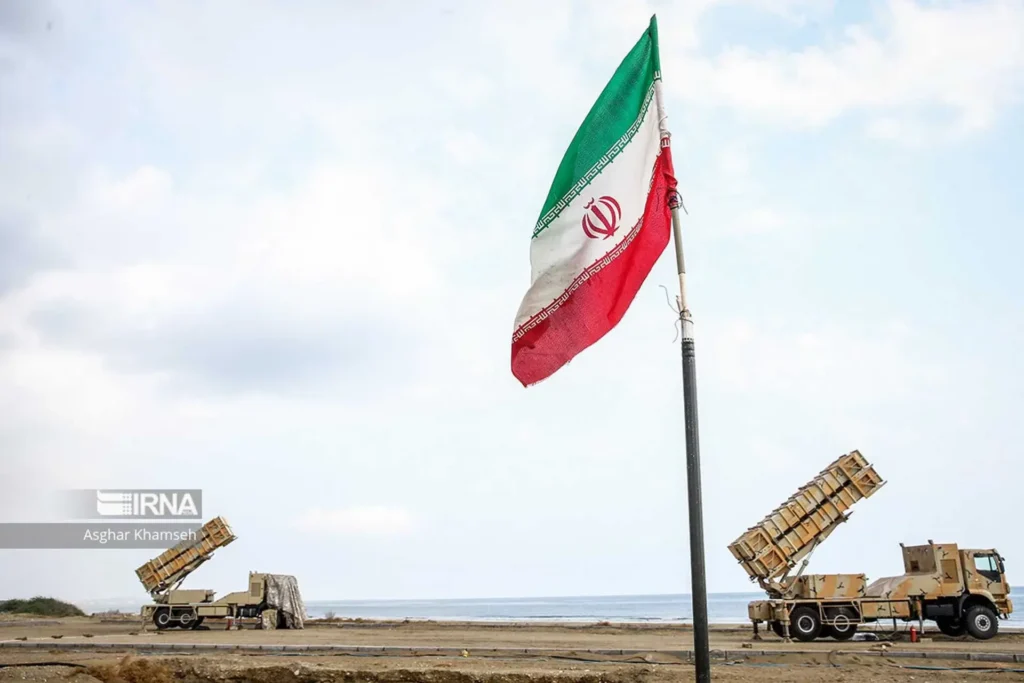
Still, the situation is delicate. While Western naval forces are vastly superior in conventional firepower, Iran relies on asymmetric tactics, such as speedboats, mines, drones, and anti-ship missiles stationed along its coastline. This dynamic creates a tense and unpredictable atmosphere, where even minor miscalculations could escalate into a broader conflict, especially if shipping routes are threatened.
So who controls the Strait of Hormuz? Technically, no one country has absolute control, but Iran’s geographic positioning and military posture give it substantial influence, especially when combined with its political willingness to challenge international norms.
Meanwhile, the U.S. and its allies act as maritime guardians, enforcing freedom of navigation through their physical presence and strategic deterrence.
If there’s one thread that quietly links gas stations in Tokyo, heating bills in Berlin, and fuel prices in Los Angeles — it might just run through the Strait of Hormuz.
Much of the world’s energy economy, particularly in Asia, Europe, and the West, remains deeply reliant on the steady flow of oil and natural gas from the Persian Gulf. Countries like Japan, South Korea, India, and China import massive amounts of their energy needs from Gulf states such as Saudi Arabia, Iraq, the UAE, and Qatar — and nearly all of that supply passes through the narrow lanes of Hormuz. Some estimates suggest that over 75% of crude oil exported from the Gulf heads toward Asian markets, making this maritime chokepoint essential to their energy security.
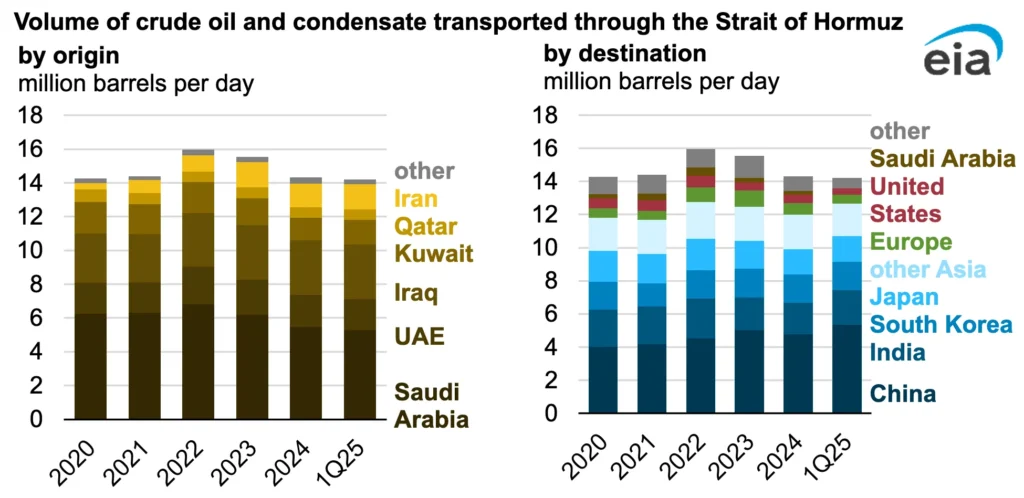
For Europe and North America, dependence may be less direct — thanks in part to diversification, domestic production, and LNG terminals — but the global oil market is interconnected. Even if Western countries don’t rely heavily on Gulf oil, a crisis in the Hormuz Strait could still send global oil prices soaring, as it often has in the past.
That’s why any conflict, blockade, or even rumor of disruption in this area tends to spark immediate turbulence in the markets. A single incident, say, a tanker seized by Iranian patrol boats, or missiles launched near the strait, can trigger speculative spikes in oil prices, sometimes by 5–10% overnight. That kind of volatility can ripple through supply chains, national economies, and even inflation rates worldwide.
Some regional players have tried to build alternate oil routes to reduce their vulnerability. For example, the UAE operates a pipeline from Abu Dhabi to Fujairah, bypassing Hormuz by delivering oil directly to the Gulf of Oman.
Saudi Arabia’s East-West pipeline, stretching to the Red Sea, provides another workaround. But these alternatives, while helpful, likely lack the capacity to fully replace the volumes that flow daily through the Strait, especially during peak demand or crisis periods.
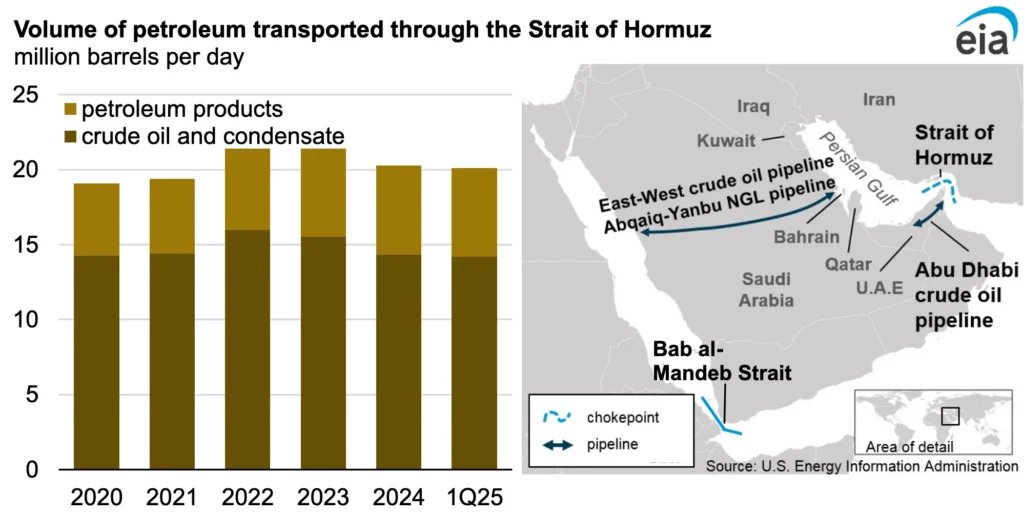
In short, there is no complete substitute for Hormuz, at least not yet. Its role in global oil chokepoints remains both critical and irreplaceable. And as long as the world remains heavily dependent on Persian Gulf energy exports, any instability in the Hormuz Strait shipping routes could become a global energy shock.
Let’s imagine that something pushes the tension over the edge. Perhaps a miscalculation during an Iranian military drill… or a direct Iranian retaliation against Israeli or U.S. assets. Suddenly, the world wakes up to headlines that the Strait of Hormuz is blocked. What happens next?
First, the immediate economic consequences would be global and swift. Oil markets, already jittery in 2025, would likely spike dramatically, perhaps even doubling within days, depending on how long the blockage lasts.
Even the threat of closure has caused oil prices to jump 5–10% in the past; a real disruption could push Brent crude well past $100 per barrel. That would ripple into fuel prices, airline costs, shipping rates, and even food prices, all tied in one way or another to global energy markets.
About 20% of the world’s oil, and roughly a third of global liquefied natural gas (LNG), typically passes through the Strait. A full blockade would choke off exports from Saudi Arabia, Iraq, Kuwait, the UAE, and especially Qatar. Countries like India, Japan, and China, which rely heavily on Persian Gulf energy exports, could face supply shortages.
Oil-consuming nations would probably tap into strategic petroleum reserves to cushion the shock, as we’ve seen in past crises. Saudi Arabia might ramp up usage of its East-West pipeline to the Red Sea, while the UAE’s Fujairah pipeline could be pushed to maximum capacity.
But it’s important to note that even combined, those alternate oil routes can’t replace the full daily trade volume of the Strait of Hormuz. They may ease pressure, but not fully prevent a global energy crunch.
And for the shipping industry, the pattern we’re already seeing in 2025, where vessels avoid Iranian waters and delay passage, would intensify. More tankers would likely reroute toward the Red Sea, Suez Canal, or other longer paths, increasing transit time and insurance premiums. That means higher costs for consumers worldwide, even if supply technically continues.
So while a full closure of the Strait of Hormuz hasn’t happened yet, and many experts argue it would be a last resort, the potential fallout is well understood: economic shockwaves, military tension, and strategic recalculations across continents.