Follow Us:
Follow Us:

Most people have never heard of Kharg Island, and yet, if it suddenly stopped working tomorrow, you’d probably feel it at the gas pump within days.
That’s the strange reality of global energy. Sometimes, the biggest pressure points aren’t sprawling oil fields or massive countries… but a single, rocky island sitting quietly in the Persian Gulf.
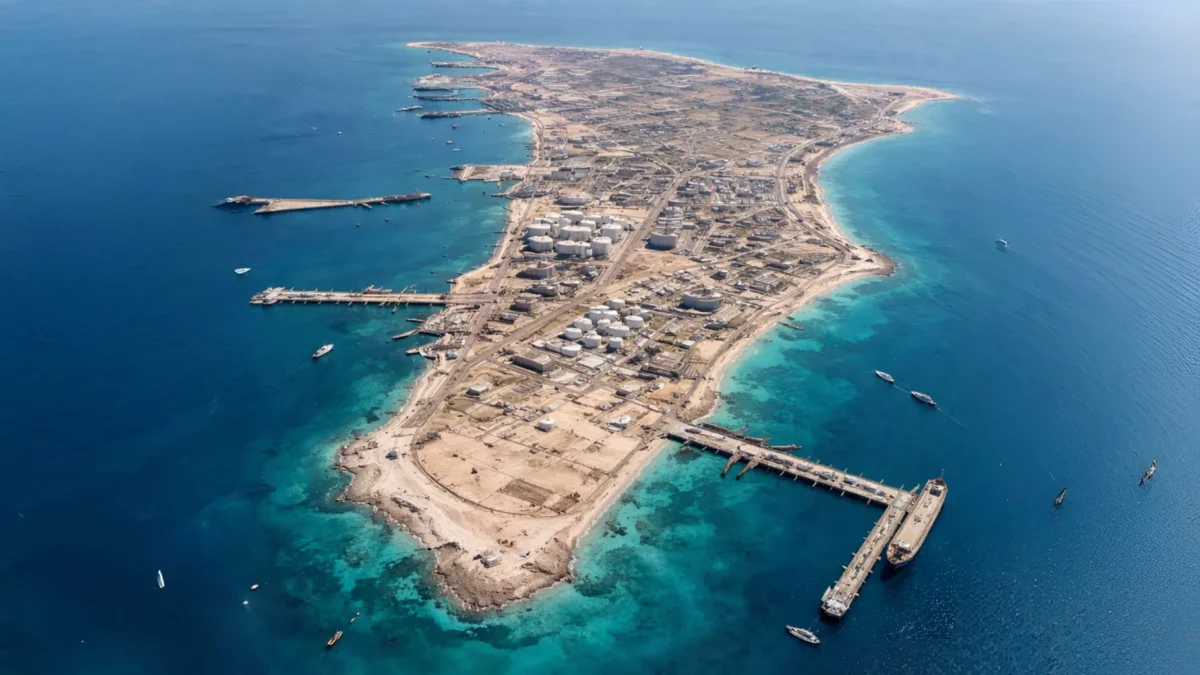
Picture this: a place barely 20 kilometers long, baked under relentless sun, surrounded by tankers the size of floating cities. Pipelines snake into it from deep inside Iran. Oil flows in. Ships carry it out. Simple, right? Not quite. What makes Kharg Island so important isn’t just what it does, it’s how much depends on it.
At times, over 80% of Iran’s oil exports pass through this one location. That’s not just a statistic, it’s a vulnerability. A bottleneck. A switch that, if flipped off, could ripple through global markets, spike oil prices, and rattle economies far beyond the Middle East.
And here’s where it gets even more interesting: unlike famous chokepoints like the Strait of Hormuz, Kharg Island isn’t just a passage, it’s infrastructure. It’s the loading dock of a major oil-producing nation. A single node where everything converges.
So the real question isn’t just where is Kharg Island?
It’s this: why does so much of the world quietly depend on it, and what happens if that changes?
At first glance, Kharg Island doesn’t look like much, just a dry, limestone outcrop in the Persian Gulf, sitting about 25 kilometers off Iran’s southwestern coast. No glittering skyline, no tourist buzz. But underneath that quiet surface, it’s one of the most intensely engineered pieces of energy infrastructure in the world.
Think of it less like an island and more like a giant offshore loading dock, purpose-built, expanded, reinforced, and guarded over decades.
Since the 1960s, Iran has transformed Kharg into its primary oil export terminal, layering it with storage tanks, jetties, pipelines, and radar systems. It’s not pretty, but it’s incredibly efficient.
Here’s a quick snapshot:
| Feature | Details |
| Location | Persian Gulf, NW of Strait of Hormuz |
| Length | ~20 km |
| Main Role | Iran’s primary oil export terminal |
| Storage Capacity | Tens of millions of barrels |
| Key Advantage | Deep-water access for supertankers |
What really sets Kharg Island apart is its deep-water coastline. Much of Iran’s shore is too shallow for massive crude carriers, but here, those ships can dock directly, load quickly, and leave without complicated offshore transfers. That one geographic quirk? It changed everything.
Another detail that often gets overlooked: Kharg isn’t isolated, it’s connected. A network of pipelines funnels crude oil from major inland fields straight to the island. In a way, it functions like the final valve in a long, pressurized system. Turn it on, and oil flows to the world. Shut it down… and everything backs up.
It’s small. It’s specialized. And it’s absolutely central to how Iran sells its oil.
If Iran’s economy had a heartbeat, it would probably echo through Kharg Island.
That might sound dramatic, but the numbers back it up. For decades, roughly 80–90% of Iran’s crude oil exports have moved through this single island. Not two ports. Not a diversified network. One place. That level of concentration is rare in global energy, and it’s exactly what makes Kharg so critical.
Oil, as you probably know, isn’t just another export for Iran. It’s the backbone of government revenue, public spending, and foreign trade.
Strip that away, and the ripple effects hit everything: infrastructure projects, subsidies, even currency stability. And because so much of that oil flows through Kharg Island, the island becomes more than infrastructure, it becomes a national lifeline.
Here’s a simple way to think about it:
| Component | Role in Iran’s Oil System |
| Inland oil fields | Produce crude oil |
| Pipelines | Transport oil to the coast |
| Kharg Island | Stores, processes, and exports oil |
| Tankers | Deliver oil to global markets |
Notice something? Everything converges at Kharg. It’s the final checkpoint before Iranian oil enters the global economy.
There’s also a strategic logic behind this setup. Concentrating exports in one location allows for tighter control, better monitoring, and more efficient loading operations. But it comes with a trade-off, risk. If Kharg slows down, Iran doesn’t have many equally capable backups ready to take over at scale.
And that’s the quiet tension humming beneath the surface: the same island that powers Iran’s economy also exposes it.
When people talk about oil chokepoints, they usually picture narrow straits packed with tankers inching past each other.
Kharg Island doesn’t fit that image, and that’s exactly why it’s so interesting. It isn’t a passage you move through. It’s the place where the flow actually begins.
Think of it like this: oil from across Iran travels hundreds of kilometers through pipelines, gathering momentum, pressure, volume… and then it all arrives at one destination. Kharg Island. That’s where it waits, gets stored in vast tank farms, and eventually gets loaded onto tankers bound for global markets. No Kharg, no export. It’s that simple, and that fragile.
What makes this setup unusual is the level of concentration. In many oil-producing countries, exports are spread across several ports to reduce risk.
Iran, for historical and geographic reasons, built the opposite system. A highly efficient, centralized hub. Efficient, yes, but also a textbook example of a single point of failure.
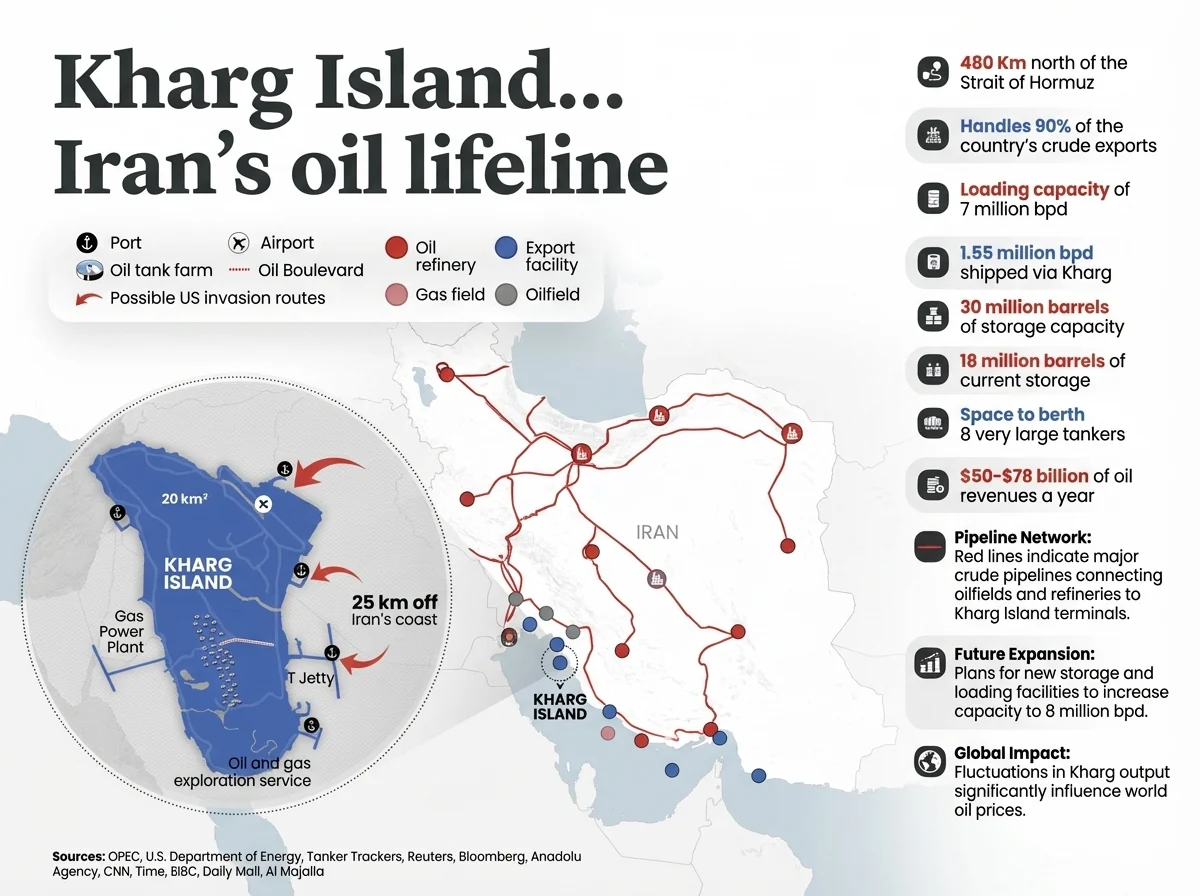
The scale only amplifies that reality. Kharg can hold tens of millions of barrels at any given time, acting like a buffer between production and shipping. It can load multiple supertankers simultaneously, which keeps exports moving quickly when everything is running smoothly. But that same efficiency creates dependency. If something disrupts operations, even briefly, the backlog builds fast.
There’s also a kind of invisible funnel at work. Pipelines from major oil fields don’t just connect to Kharg, they converge there. It’s the final stop in a tightly coordinated system. Imagine traffic from an entire country merging into one exit lane. Works beautifully… until it doesn’t.
And that’s the quiet tension surrounding Kharg Island. It doesn’t just support oil exports, it controls them.
If you were designing the perfect oil export hub from scratch, you’d probably end up with something that looks a lot like Kharg Island, even if you didn’t mean to.
Geography did most of the heavy lifting here.
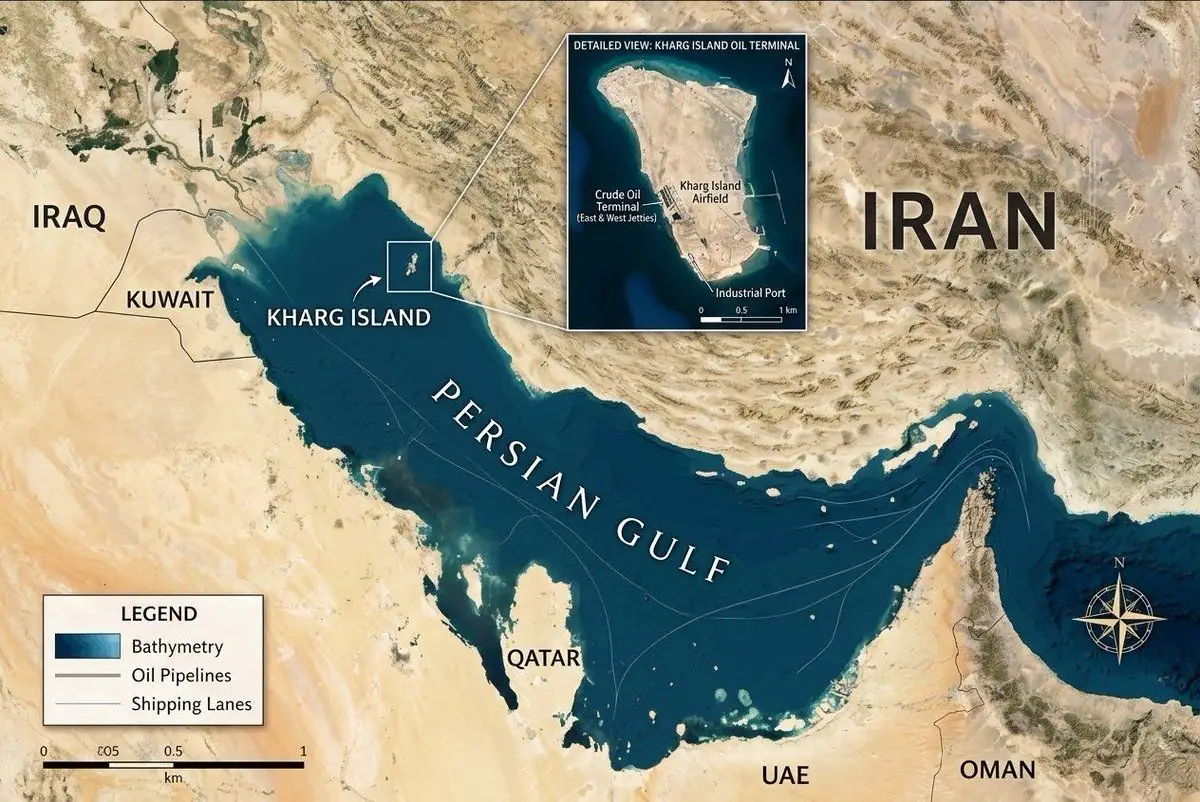
The island sits in the Persian Gulf, not too far from the Strait of Hormuz, one of the busiest oil transit routes on Earth. Close enough to plug directly into global shipping lanes, but just far enough from the mainland to allow large vessels to maneuver without coastal constraints. It’s a sweet spot, almost accidental, almost unfair.
But the real advantage hides underwater.
Much of Iran’s coastline is frustratingly shallow. That’s a problem when you’re dealing with VLCCs, Very Large Crude Carriers, that need deep water to dock safely. Building offshore loading systems elsewhere is possible, sure, but it’s expensive, slower, and riskier.
Read also: Strait of Hormuz – Why This Narrow Waterway Holds Global Power
Kharg Island, on the other hand, has naturally deep surrounding waters. Tankers can pull up, load directly, and leave without complicated workarounds.
That one feature, depth, quietly shaped decades of energy strategy.
There’s also proximity. Oil tankers leaving Kharg don’t waste time navigating long, winding coastal routes. They’re already positioned near the main arteries of global trade. From there, it’s a straight shot toward Asia, where much of Iran’s oil ends up. Faster routes mean lower costs, fewer delays, and smoother logistics overall.
So while infrastructure made Kharg powerful, geography made it possible. Take away the deep water or the strategic location, and the island becomes far less special. Keep them, and you get a place that punches far above its size in the global energy system.
You don’t concentrate that much economic value in one place without attracting attention, serious attention. Kharg Island isn’t just an oil hub; it’s a strategic asset that sits right at the intersection of energy and power politics.
From a military standpoint, it’s what analysts sometimes call a “high-value fixed target.” That’s a polite way of saying: everyone knows where it is, everyone knows what it does, and in a conflict scenario, it would be one of the first places considered. Not necessarily attacked, but certainly watched, calculated, and factored into every serious plan.
Iran understands this better than anyone.
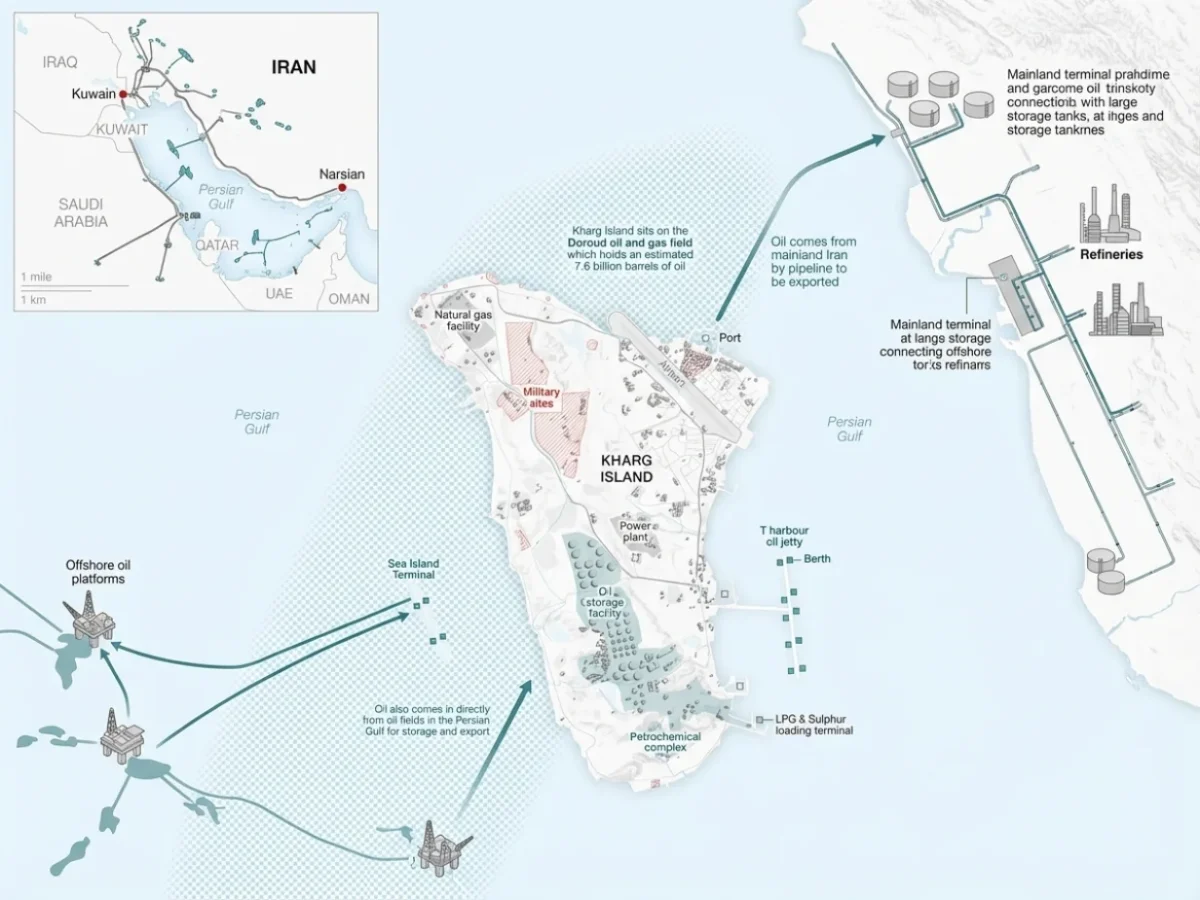
Over the years, Kharg Island has been heavily fortified. Air defenses, naval patrols, layered security, it’s not just an industrial zone, it’s a guarded one. The goal is simple: keep oil flowing, no matter the external pressure. Because once that flow stops, the consequences aren’t just economic, they’re political.
There’s also a broader strategic idea at play, sometimes referred to (informally) as the “oil leverage effect.” Control the flow of oil, and you gain influence. Not absolute control, of course, but enough to shape negotiations, signal strength, or absorb pressure during sanctions. In that sense, Kharg becomes more than infrastructure, it becomes a tool of state resilience.
History adds another layer. During the Iran-Iraq War in the 1980s, Kharg Island was repeatedly targeted, yet operations never fully collapsed. That experience shaped how Iran thinks about redundancy, defense, and endurance. The lesson? Even under attack, keeping Kharg functional, even partially, matters.
So today, Kharg Island sits in a delicate position. It powers an economy, anchors a strategy, and remains, quietly but unmistakably, one of the most important pieces on the geopolitical chessboard.
For all its strength and strategic value, Kharg Island carries a built-in flaw, one that’s hard to ignore once you see it. The same concentration that makes it efficient also makes it exposed.
Relying on a single primary export hub is a bit like keeping all your savings in one account with one password. It works, until something goes wrong. And in the case of Kharg, “something” doesn’t have to be catastrophic. Even a temporary disruption, technical failure, cyber interference, regional tension, can slow the entire system down.
The vulnerability isn’t theoretical, either. It’s been tested before.
During the Iran-Iraq War, Kharg Island was repeatedly struck in what became known as the “Tanker War” phase. Oil facilities were damaged, shipping was threatened, and yet exports never completely stopped. That resilience is often highlighted, but there’s another way to read that history: despite all the defenses, the island remained a constant target. It was, and still is, predictable.
And predictability, in strategic terms, is risky.
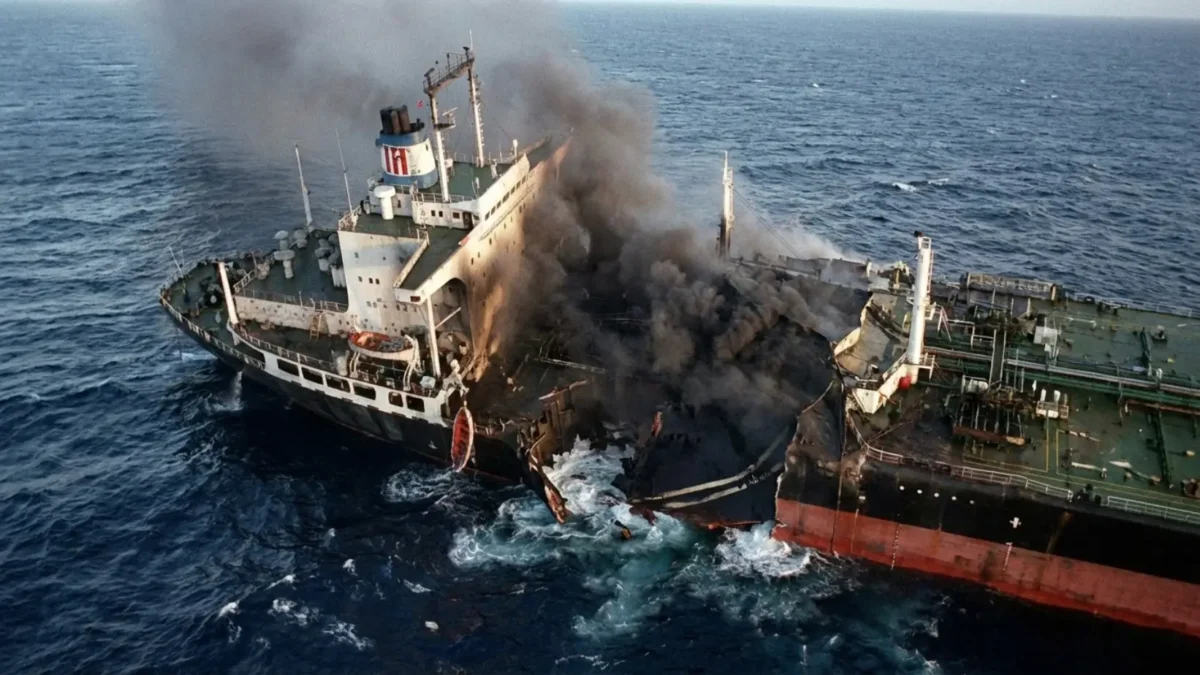
Iran has tried to reduce this dependence by developing alternative export routes, including terminals along the Gulf of Oman. On paper, that sounds like a solid backup plan. In practice, though, these alternatives don’t yet match the scale, efficiency, or infrastructure depth of Kharg Island. They help, but they don’t replace.
So the imbalance remains. One island handles the majority of exports, while the rest operate in the background, not quite ready to take over if needed.
That’s the paradox at the heart of Kharg Island: it is both Iran’s greatest strength… and its most obvious weak point.
Let’s run a quick thought experiment. No explosions, no dramatic headlines, just a sudden halt in operations at Kharg Island. Maybe a technical failure. Maybe rising tensions make tankers hesitate. What happens next?
At first, the impact would be quiet. Oil would continue flowing from Iran’s inland fields, but with nowhere to go, it would start backing up, literally. Storage tanks on the island would fill. Pipelines would slow. Production might even be forced to shut in. Within days, Iran’s export volumes could drop sharply.
And then the effects would start to spread.
For a country where oil revenue plays such a central role, even a short disruption can feel like a sudden squeeze. Not a total collapse, but definitely a shock.
Now zoom out. The global oil market doesn’t operate on comfort, it runs on balance. Remove a few million barrels per day, and that balance shifts quickly.
| Impact Area | Likely Outcome |
| Oil Prices | Rapid spike due to uncertainty |
| Supply Chains | Tightening, especially in Asia |
| Other Producers | Pressure to increase output |
| Strategic Reserves | Possible releases by major economies |
But here’s the subtle part: markets don’t just react to loss, they react to risk. Even the possibility that Kharg Island might go offline can push prices upward. Traders price in fear before reality catches up.
And there’s no perfect workaround. Iran’s alternative terminals can’t instantly absorb the lost capacity. Tankers can’t just reroute and load elsewhere at scale. The system isn’t that flexible.
So the disruption of Kharg Island wouldn’t just be a local problem. It would ripple outward, into markets, policies, and everyday costs, faster than most people expect.