Follow Us:
Follow Us:

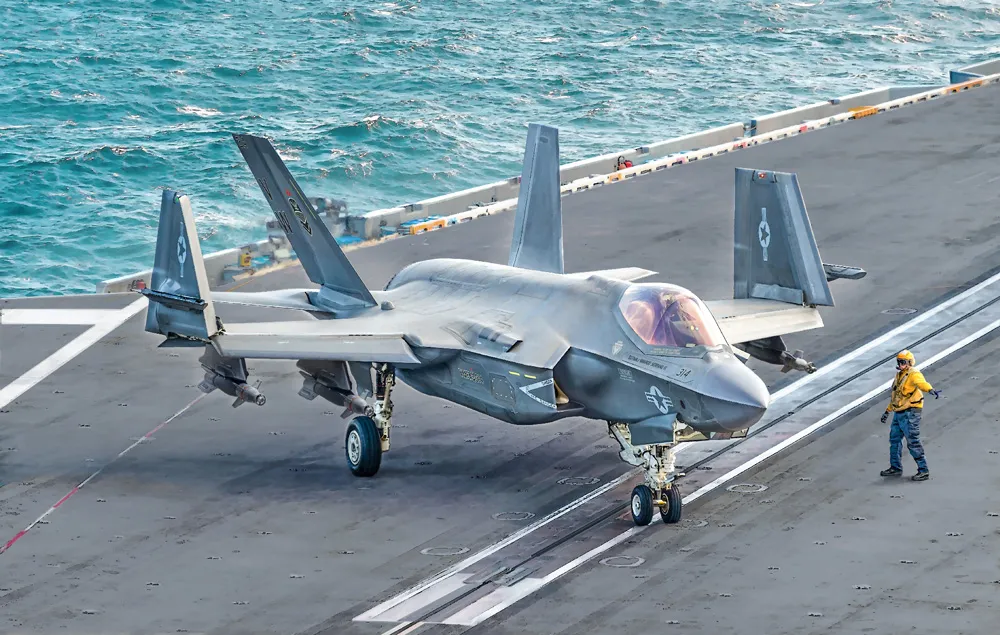
Imagine two stealth fighters taking off from opposite sides of the Pacific. One is the F-35 Lightning II, a jet that has become the backbone of Western air power and serves with more than a dozen nations.
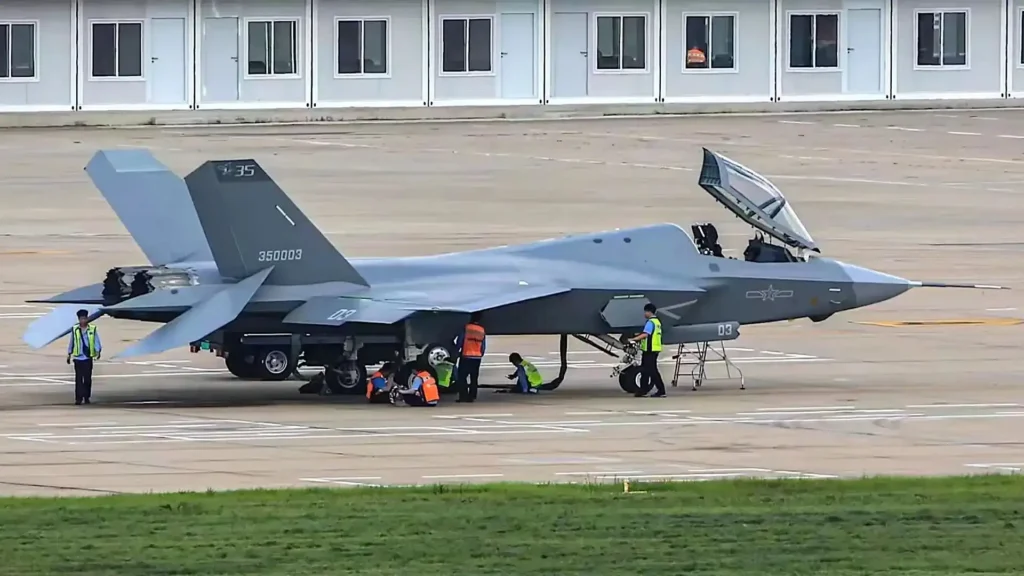
The other is China’s J-35, a newer aircraft that many analysts see as Beijing’s most serious attempt yet to challenge American dominance in the skies. That’s what makes the J-35 vs F-35 comparison so compelling.
At first glance, it’s tempting to reduce the debate to a few headline numbers, speed, range, or weapon capacity. But modern air combat doesn’t work that way anymore.
Today’s fighters are less like traditional dogfighters and more like flying command centers packed with sensors, computers, and data links. In many cases, the aircraft that spots its opponent first gains a decisive advantage before either pilot even sees the other.
The F-35 entered service years ago and has accumulated thousands of operational missions, exercises, and deployments around the world.
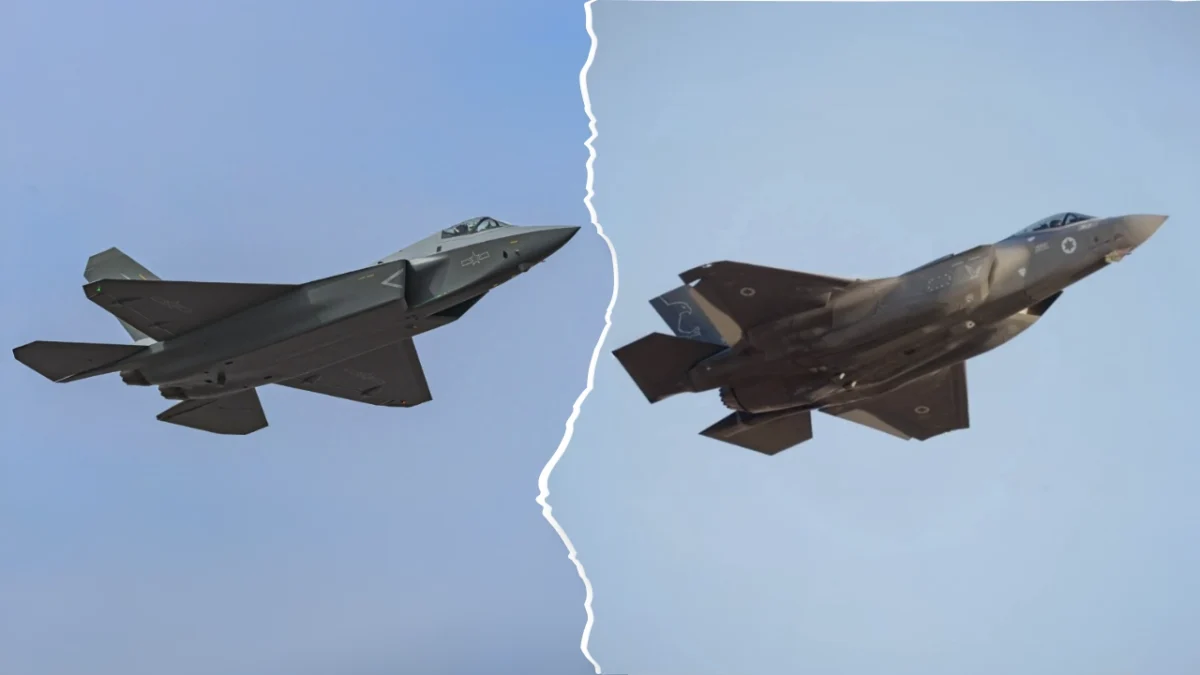
The J-35, by contrast, represents China’s next step in building a modern stealth fleet capable of operating from both land bases and aircraft carriers. While much about the aircraft remains undisclosed, its emergence has sparked intense discussion among defense experts and aviation enthusiasts alike.
Yet this isn’t simply a battle between two fighter jets. It’s also a comparison between two military ecosystems, two defense industries, and two competing visions of future warfare.
In this post, we’ll examine every major aspect of the J-35 vs F-35 matchup, including stealth technology, sensors, weapons, performance, combat readiness, and overall battlefield effectiveness..
One of the biggest mistakes people make when discussing J-35 vs F-35 is assuming the two aircraft were created under identical circumstances. They weren’t. In fact, their origins tell us a lot about why each fighter looks and operates the way it does.
The F-35 Lightning II emerged from the United States’ Joint Strike Fighter program, one of the most ambitious military aviation projects ever undertaken. Rather than building separate aircraft for the Air Force, Navy, and Marine Corps, the goal was to create a common platform that could serve multiple branches while sharing technology, logistics, and training systems.
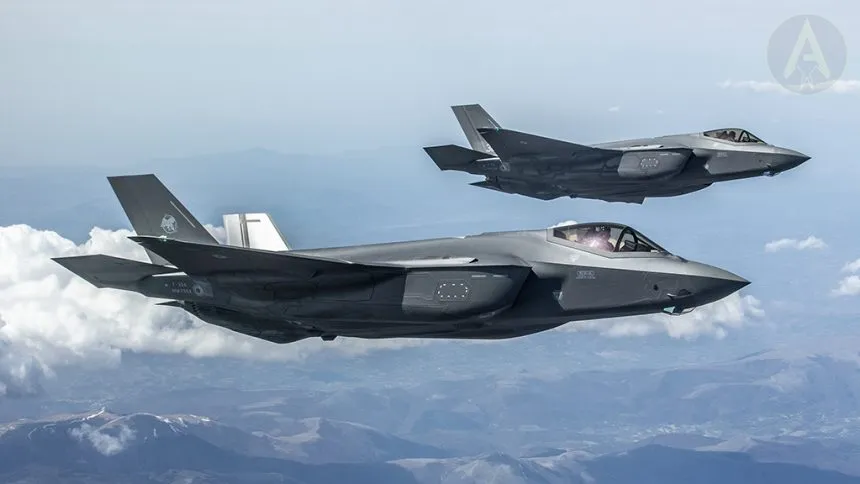
The result was three variants: the F-35A for conventional operations, the F-35B with short takeoff and vertical landing capability, and the carrier-based F-35C.
What makes the F-35 unique isn’t just its stealth profile. The aircraft was designed from the beginning to function as a battlefield information hub. Pilots often describe it as a computer that happens to fly at supersonic speed.
Read also: Sukhoi Su-57 vs F-35 Comparison: 10 Facts You Should Know
The Shenyang J-35, meanwhile, evolved from China’s FC-31 development program. While early prototypes drew international attention because of their stealthy appearance, the aircraft has gradually matured into what appears to be a dedicated fifth-generation fighter intended for both naval and land-based missions.
The jet is widely viewed as a key component of China’s effort to modernize its air force and expand the capabilities of its growing carrier fleet.
In a way, the aircraft reflect their nations’ strategic priorities. The F-35 was built to integrate allied forces across multiple continents. The J-35 appears focused on strengthening China’s regional air and maritime power projection.
That’s why the J-35 vs F-35 debate isn’t merely about aircraft performance. It’s also about how each country envisions future air warfare and the role these fighters will play in it.
If fighter aircraft were superheroes, stealth would be their invisibility cloak. And in the J-35 vs F-35 debate, stealth is arguably the most important, and most misunderstood, topic of all.
Most people think stealth simply means “hard to see on radar.” The reality is far more complicated. Modern stealth design involves hundreds of decisions, from the angle of panel edges and air intakes to engine placement, exhaust treatment, radar-absorbing materials, and even the way maintenance crews apply specialized coatings.
At first glance, the J-35 fighter jet and the F-35 Lightning II share several visual similarities. Both feature canted tail surfaces, internal weapon bays, carefully shaped fuselages, and airframe designs intended to minimize radar reflections. These characteristics suggest that reducing radar detectability was a primary design goal for both aircraft.
The difference lies in what can actually be verified.

The F-35 has spent years operating in real-world environments, participating in multinational exercises and frontline deployments. During that time, its stealth performance has been tested against numerous radar systems, electronic warfare platforms, and air-defense networks.
While exact radar cross-section figures remain classified, the aircraft’s low-observable capabilities are widely regarded as among the most advanced in service today.
Read also: F-35 Lightning II vs F-22 Raptor: Side-by-Side Capabilities
The J-35 presents a different challenge for analysts. Because China releases limited technical information, many assessments rely on imagery, engineering observations, and educated estimates. The aircraft certainly appears stealth-oriented, but public evidence regarding its actual radar signature remains scarce.
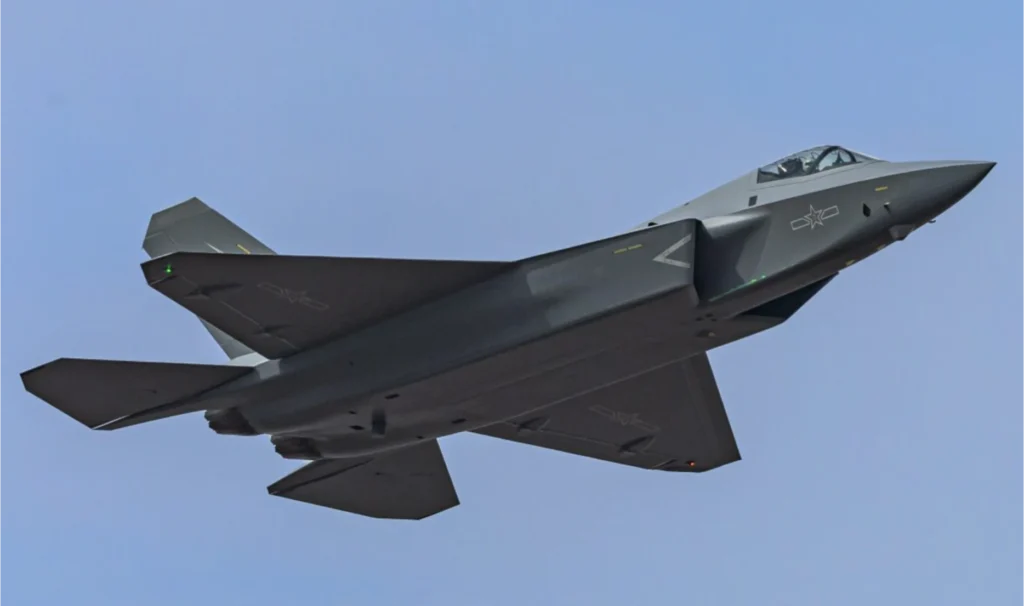
Another factor often overlooked is infrared detection. Stealth isn’t only about radar anymore. Modern sensors can search for heat signatures as well. Here, engine design, exhaust management, and thermal reduction measures become just as important as shaping.
For now, most experts give the edge to the F-35, not necessarily because the J-35 lacks advanced stealth features, but because the F-35’s capabilities have been demonstrated repeatedly, while many aspects of the J-35 remain largely unknown.
Ask a casual observer about the J-35 vs F-35 matchup and they’ll probably talk about speed or maneuverability. Ask a fighter pilot, and the conversation often shifts somewhere else entirely: sensors.
In modern aerial warfare, finding the enemy first can matter more than flying faster. That’s why avionics and sensor fusion have become the defining technologies of fifth-generation fighters.
The F-35 Lightning II was designed around this concept from day one. Its AN/APG-81 AESA radar, Distributed Aperture System (DAS), Electro-Optical Targeting System (EOTS), and electronic warfare suite continuously collect information from multiple sources. The aircraft then combines that data into a single, easy-to-understand picture for the pilot.
Think about driving through a busy city. Instead of checking six mirrors, road signs, GPS directions, and traffic alerts separately, imagine everything appearing on one screen exactly when you need it. That’s essentially what sensor fusion does for an F-35 pilot.
Many military analysts argue that this capability is the aircraft’s greatest strength. The jet doesn’t just gather information, it organizes it.
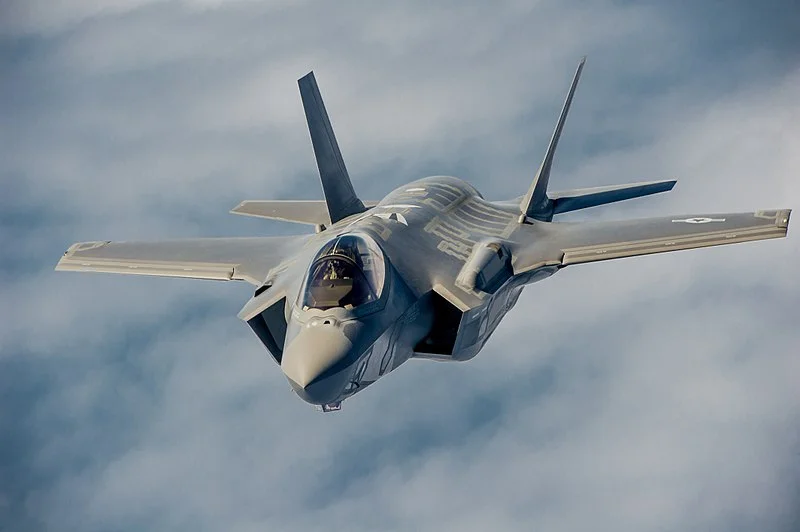
The J-35 is also believed to incorporate an advanced AESA radar and modern sensor architecture. Chinese aerospace development has accelerated dramatically over the past decade, and few experts doubt that the aircraft possesses sophisticated detection and tracking capabilities.
However, unlike the F-35, very little public information exists regarding how effectively those sensors are integrated or how mature the software ecosystem has become.
And software matters more than many people realize.
A fighter can carry world-class sensors, but if information arrives slowly, appears in separate displays, or overwhelms the pilot, much of the advantage disappears.
This is one area where the J-35 vs F-35 comparison becomes less about hardware and more about invisible code.
Based on publicly available evidence, the F-35 currently holds the advantage thanks to years of software refinement, operational feedback, and real-world testing. In the age of network-centric warfare, information can be just as lethal as missiles.
This is the section many readers jump to first. After all, when comparing the J-35 vs F-35, it’s natural to wonder which fighter is faster, more agile, or better suited for a dogfight.
The answer, surprisingly, isn’t as straightforward as many aviation enthusiasts expect.
Based on publicly available estimates, the J-35 fighter jet may reach speeds approaching Mach 1.8, while the F-35 Lightning II is generally listed at around Mach 1.6. On paper, that gives the Chinese aircraft a slight speed advantage.
But modern air combat rarely rewards the fastest aircraft alone. A fighter traveling at extreme speed can become easier to detect, consume fuel more rapidly, and limit tactical flexibility.
Acceleration and energy management often matter more than top speed figures printed in brochures.
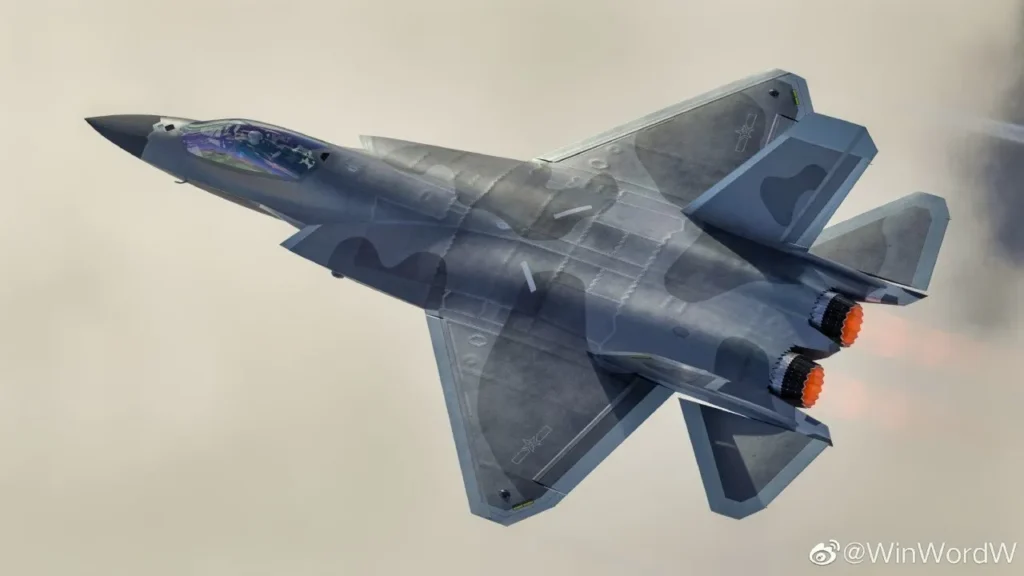
The J-35’s twin-engine configuration could provide advantages in thrust generation and high-altitude performance. Two engines also offer redundancy, a feature that naval aviators traditionally appreciate when operating far from land.
The F-35 takes a different approach. Its powerful Pratt & Whitney F135 engine produces enormous thrust while supporting a design optimized for stealth, sensor integration, and mission effectiveness rather than pure aerodynamic performance.
When it comes to maneuverability, things become even more interesting. Popular culture still imagines fighter battles as close-range turning contests, but most engagements today are expected to occur beyond visual range. That means aircraft often attempt to detect and engage opponents long before traditional dogfighting begins.
Still, maneuverability remains important. If missiles are evaded and aircraft close the distance, agility can become a decisive factor.
While the J-35’s exact handling characteristics remain largely unknown, the F-35 has consistently surprised critics during exercises, demonstrating better close-combat performance than many early observers predicted.
In the end, the J-35 vs F-35 performance debate isn’t simply about speed. It’s about which aircraft can preserve energy, maintain situational awareness, and position itself advantageously before the fight truly begins.
A stealth fighter is only as dangerous as the weapons it can bring to the fight. That’s why any serious J-35 vs F-35 comparison must look beyond the aircraft themselves and examine the missiles, bombs, and combat systems they carry.
At first glance, both fighters follow a similar philosophy. To preserve stealth, they store most weapons inside internal bays rather than hanging them beneath the wings. This reduces radar reflections and helps maintain the low-observable profile that fifth-generation aircraft depend on.
The F-35 Lightning II can carry a wide range of weapons, including AIM-120 AMRAAM air-to-air missiles, AIM-9X Sidewinders, Joint Direct Attack Munitions (JDAMs), Small Diameter Bombs, anti-ship weapons, and various precision-guided munitions.
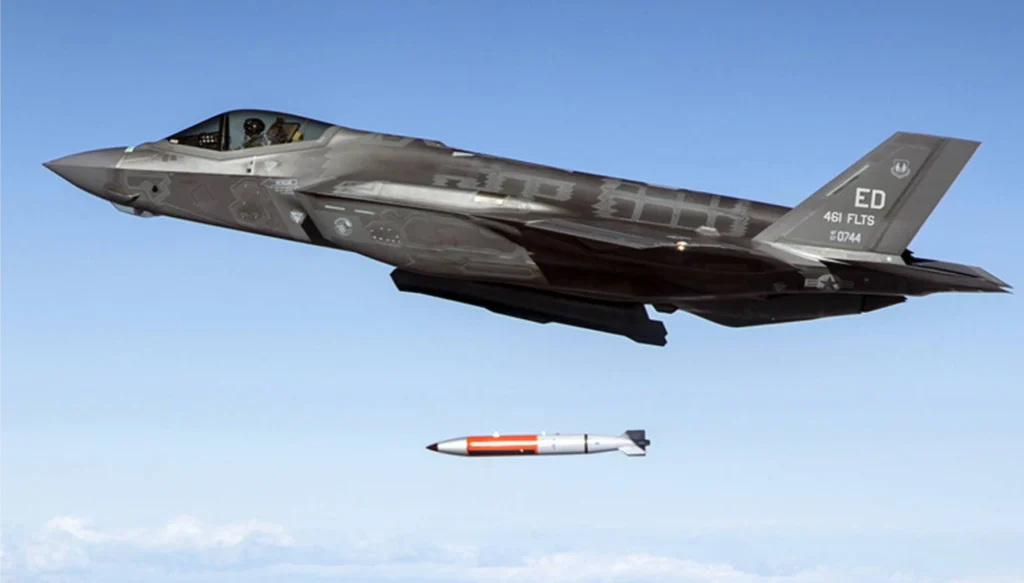
One of its biggest strengths is flexibility. Different operators can configure the aircraft for air superiority, strike missions, intelligence gathering, or close air support.
The J-35 fighter jet is expected to carry China’s latest missile inventory, including the long-range PL-15 air-to-air missile and the highly maneuverable PL-10 short-range missile.
The PL-15 has attracted significant attention among defense analysts because of its reported long engagement range, which some experts believe could challenge Western missile capabilities.
| Weapon Category | J-35 | F-35 |
| Long-Range Air-to-Air Missile | PL-15 | AIM-120D |
| Short-Range Air-to-Air Missile | PL-10 | AIM-9X |
| Precision Strike Capability | Yes | Yes |
| Internal Weapons Bays | Yes | Yes |
| Multi-Mission Loadouts | Expected | Proven |
Here’s where things get interesting. Missiles don’t operate in isolation. The effectiveness of any weapon depends heavily on the aircraft’s sensors, targeting systems, and ability to share information with other platforms.
In other words, the deadliest missile isn’t necessarily the one with the longest range, it’s the one guided by the best information. And in the J-35 vs F-35 debate, that connection between sensors and weapons may ultimately matter more than the missiles themselves.
The J-35 vs F-35 debate often centers on stealth and combat performance, but for military decision-makers, cost can be just as important as capability.
After all, a fighter jet isn’t judged solely by how well it performs in battle, it’s also judged by how affordable it is to buy, operate, and maintain over a service life that may stretch 30 years or more.
The F-35 Lightning II has become considerably cheaper than many expected during its early development years.
According to recent procurement figures, the conventional-takeoff F-35A variant costs roughly $80–90 million per aircraft, while the carrier-based F-35C typically falls closer to $95–105 million depending on production lot and configuration.
Operating costs remain significant, with estimates often ranging between $30,000 and $40,000 per flight hour, though efforts continue to reduce those figures.
The J-35 fighter jet presents a more complicated picture because China has not publicly released official pricing data. However, defense analysts generally estimate a potential unit cost of around $70–85 million per aircraft once full-scale production is achieved.
Some projections place the figure even lower if China pursues large domestic production runs. These numbers should be treated as estimates rather than confirmed costs.
| Cost Factor | J-35 (Estimated) | F-35 |
| Unit Cost | $70–85 Million | $80–105 Million |
| Operating Cost per Flight Hour | Unknown | $30,000–40,000 |
| Export Pricing | Not Established | Publicly Available |
| Lifecycle Cost Data | Limited | Extensive |
| Maintenance Transparency | Low | High |
Still, acquisition price tells only part of the story.
Imagine two airlines buying aircraft. One costs less upfront but requires more maintenance and downtime. The other costs more initially but flies more missions with greater reliability. The same principle applies to military aviation.
That’s why the real question in the J-35 vs F-35 cost comparison isn’t simply which aircraft is cheaper. It’s which aircraft delivers the greatest combat capability for every dollar spent.
At present, the F-35 offers a clearer financial picture because decades of procurement and operational data exist.
The J-35 may eventually prove to be a more affordable alternative, but the lack of public lifecycle data makes definitive conclusions difficult.
One of the most interesting aspects of the J-35 vs F-35 debate is how differently experts evaluate the matchup. Depending on who you ask, the J-35 is either a future game-changer or an aircraft that still has a long road ahead before it can rival the F-35.
Western defense analysts generally approach the comparison with caution.
Their argument is straightforward: the F-35 Lightning II has accumulated years of operational experience, thousands of trained pilots, millions of flight hours, and a mature support network. From this perspective, it would be premature to place the J-35 on equal footing until more real-world performance data becomes available.
Many analysts also emphasize that modern air combat increasingly depends on software, networking, and sensor integration rather than aerodynamic performance alone. In these areas, the F-35’s track record provides a significant advantage.
Chinese military commentators often focus on a different set of factors. They point to the country’s rapid aerospace development, advances in radar technology, improvements in missile systems, and expanding carrier aviation capabilities.
Supporters argue that the J-35 was designed with lessons learned from observing Western fifth-generation fighters and therefore may be more capable than many outside observers assume.
Interestingly, there are areas where both sides largely agree.
Most experts acknowledge that the J-35 appears to be a serious fifth-generation aircraft rather than a symbolic technology demonstrator. Likewise, few dispute that the F-35 remains the global benchmark for operational stealth fighters.
The real disagreement centers on timing.
Is the J-35 already a peer competitor, or is it a platform still evolving toward its full potential?
For now, the consensus among many aviation specialists is that the F-35 holds the advantage in demonstrated capability, while the J-35 represents one of the most credible future challengers to that position.
The next decade of deployments, exercises, and technological upgrades will likely determine whether that gap narrows, or remains substantial.