Follow Us:
Follow Us:

Picture an airplane that can land on a dusty strip barely longer than a soccer field, unload a truck, a medical team, or an entire platoon, and then lift off again like it was never there. No glamour. No hype. Just relentless capability.
That aircraft is the C-130 Hercules, and it has quietly shaped modern aviation more than almost any jet you can name.
If fighter jets are the rock stars of the runway, the C-130 Hercules is the roadie who actually makes the show happen.
For over seven decades, this Lockheed-built workhorse has been flying into places where airports are optional, weather is unfriendly, and timing really matters. Wars, earthquakes, famine zones, remote research stations, the C-130 has seen them all, often first.

What makes the story more interesting is not just how long it’s been around, but how relevant it still is. While other aircraft age out or get boxed into niche roles, the C-130 keeps reinventing itself. New engines. Digital cockpits. Specialized variants that turn the same basic airframe into a gunship, a flying hospital, or a refueling platform. Same bones. New tricks.
In this post, we’re not just rattling off specs (though we’ll get to those). We’re looking at the C-130 Hercules as a concept, a design philosophy that prizes adaptability over flash. Why militaries in more than 70 countries still rely on it. Why pilots trust it. And why, in an age obsessed with stealth and speed, this boxy four-engine turboprop still earns its keep.
Think of this as a behind-the-scenes pass to one of aviation’s most stubborn legends. The kind that doesn’t need attention to command respect.
The C-130 Hercules didn’t come from a dream of elegance or speed. It came from a problem.
In the early 1950s, the U.S. military had learned a hard lesson in Korea: big transports were useless if they couldn’t land where the fighting, or the relief effort, actually was. Long paved runways were a luxury.
What they needed was an aircraft that could haul heavy loads, fly low and slow, and operate from rough, improvised strips without falling apart.
Lockheed answered that call in 1951 with a design that looked almost stubbornly practical. A high wing to keep engines clear of debris. A boxy fuselage shaped around cargo, not passengers. A rear ramp so trucks could drive straight in. When the first C-130 flew in August 1954, it wasn’t flashy, but it worked. That mattered more.
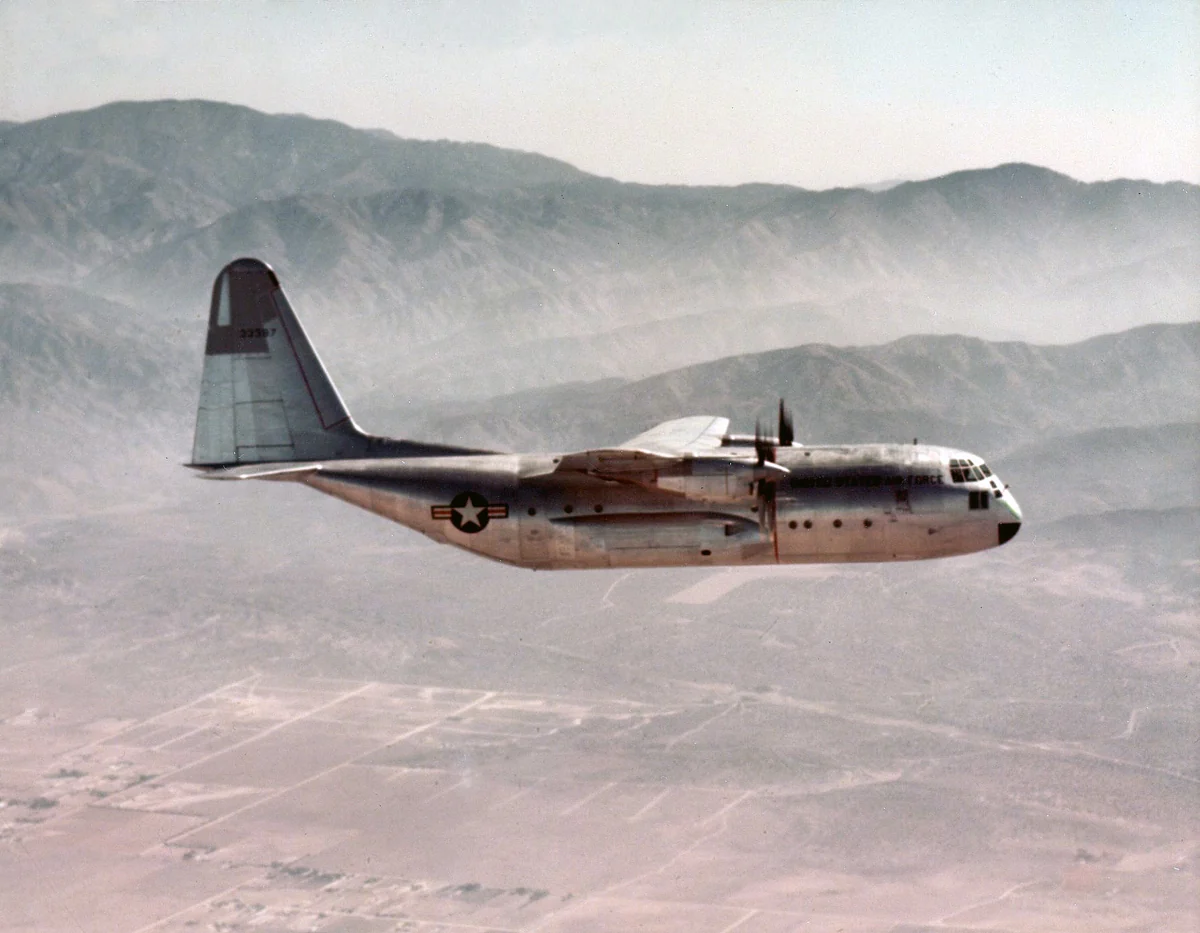
What followed was rare in aviation: the design aged gracefully. Instead of being replaced every decade, the Hercules evolved. Early models flew supplies in Vietnam, often under fire, proving the aircraft could absorb punishment and keep flying.
Read also: Airbus A400M Atlas: How This Plane Redefines Military Airlift
By the 1970s and ’80s, the C-130 had become a global standard for tactical airlift. Countries with wildly different climates and budgets all came to the same conclusion: this thing just does the job.
Here’s the quiet statistic that says everything:
More than 2,600 C-130s have been built, making it one of the most-produced military aircraft in history.
That longevity isn’t nostalgia. It’s evidence. Few aircraft designs remain operationally relevant for over 70 years without becoming museum pieces. The C-130 Hercules didn’t survive by staying the same. It survived by being endlessly adaptable, almost stubbornly so.
And that mindset, more than any single war or mission, is what cemented its place in aviation history.
Specs are usually where readers’ eyes glaze over. Rows of numbers. Abstract performance claims. But with the C-130 Hercules, the data tells a story, one about balance, restraint, and doing more with less.
At its core, the C-130 is powered by four turboprop engines, a choice that still raises eyebrows in a jet-obsessed world. Yet that decision is exactly why the aircraft thrives where others fail.
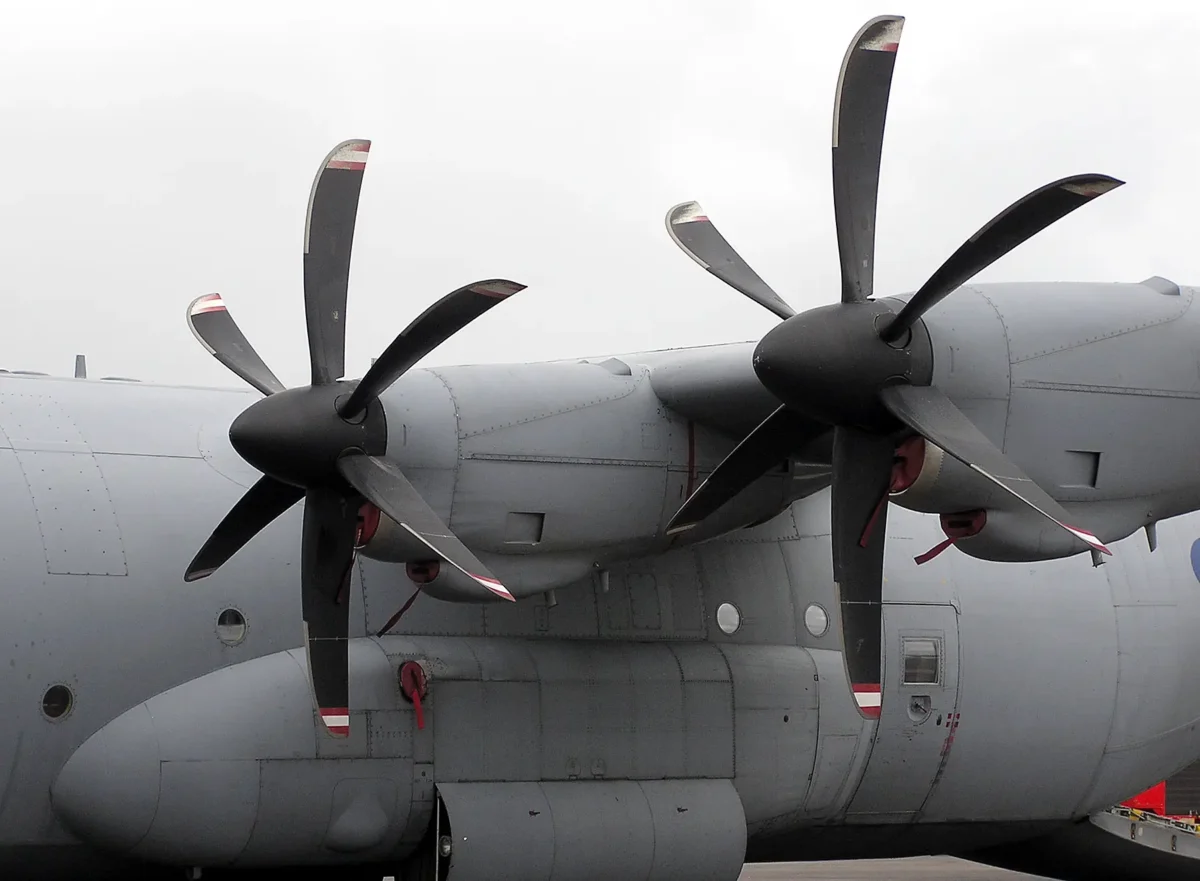
Turboprops deliver strong low-speed thrust, making short takeoffs and steep climbs possible even when the runway looks more like a dirt road with ambition.
Here’s a snapshot that puts things into perspective:
| Specification | C-130H (Typical) | C-130J Super Hercules |
| Max Payload | ~42,000 lb (19,000 kg) | ~45,000 lb (20,400 kg) |
| Cruise Speed | ~320 mph (515 km/h) | ~410 mph (660 km/h) |
| Range (with payload) | ~2,300 miles | ~3,300 miles |
| Takeoff Distance | ~3,000 ft | Under 3,000 ft |
| Crew | 5 | 3 |
That last line, crew size, is more important than it looks. The newer C-130J replaced analog dials with digital avionics, cutting workload and reducing operating costs. Fewer crew members, same mission capability. Militaries care about that. A lot.
Read also: Why the C-17 Globemaster III Is a Top Military Transport Plane
Another overlooked detail: the cargo bay. At roughly 41 feet long, 10 feet wide, and 9 feet high, it’s shaped for real-world cargo, Humvees, pallets, medical modules, even helicopters with some creative packing. No drama. Just space that makes sense.
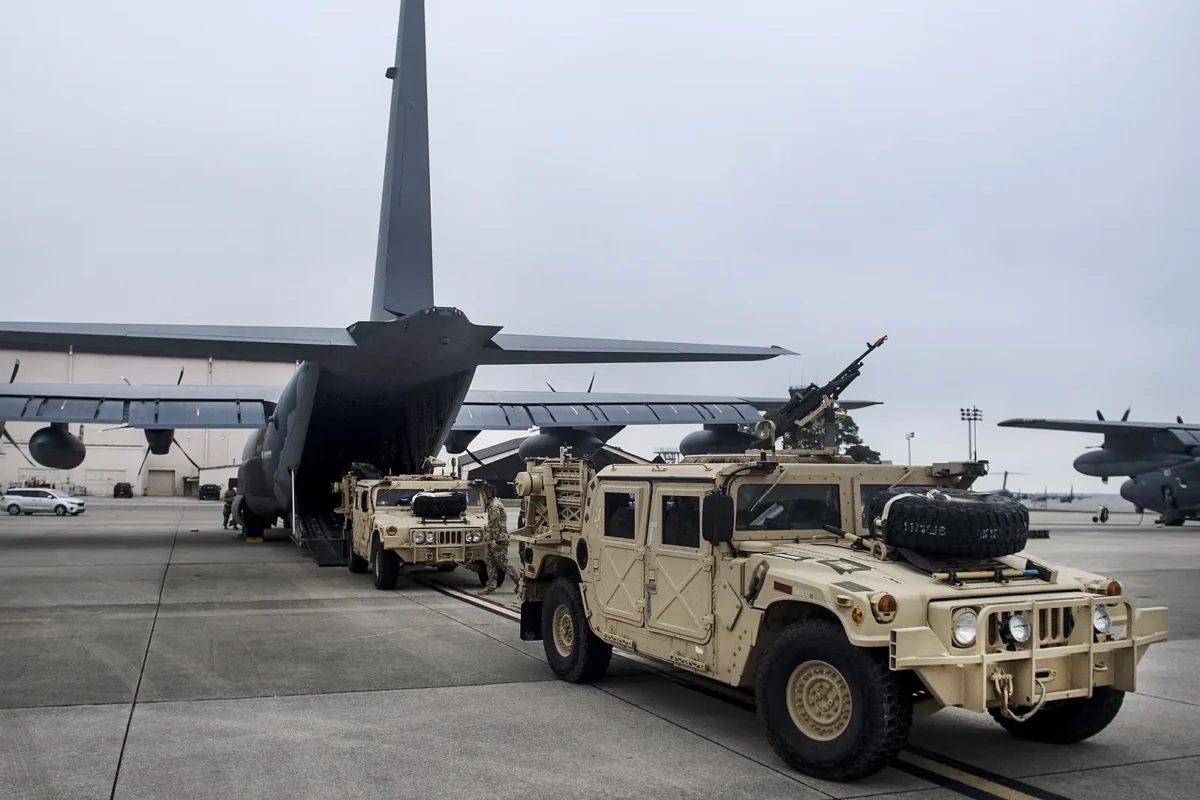
The takeaway? The C-130 Hercules isn’t built to win spec-sheet arguments. It’s built to succeed where specs stop mattering, mud, heat, altitude, chaos. And that’s exactly why it keeps flying.
Calling the C-130 Hercules a single aircraft is a bit misleading. It’s more accurate to think of it as a platform, a reliable skeleton that can be dressed for radically different jobs. Same airframe. Wildly different personalities.
The most recognizable modern version is the C-130J Super Hercules. This isn’t a minor upgrade; it’s a generational shift. New Rolls-Royce AE 2100 engines, six-blade composite propellers, and a fully digital cockpit give the J-model better fuel efficiency, longer range, and faster cruise speeds. It’s quieter, too, important when operating from civilian airports or populated areas.

But the real intrigue starts with the special-purpose variants.
The AC-130 takes the Hercules and flips the script. Instead of cargo, it carries side-firing cannons and sensors, turning a transport plane into a precision gunship. It circles targets for hours, providing close air support with unnerving accuracy. Same boxy silhouette. Entirely different vibe.
Read also: AC-130J Ghostrider: Meet the Angel of Death in the Sky
Then there’s the MC-130, built for special operations. These aircraft fly low, often at night, refuel helicopters mid-air, and insert special forces into places you won’t find on a map. They’re modified with terrain-following radar and defensive systems, making them some of the most heavily equipped Hercules variants in existence.
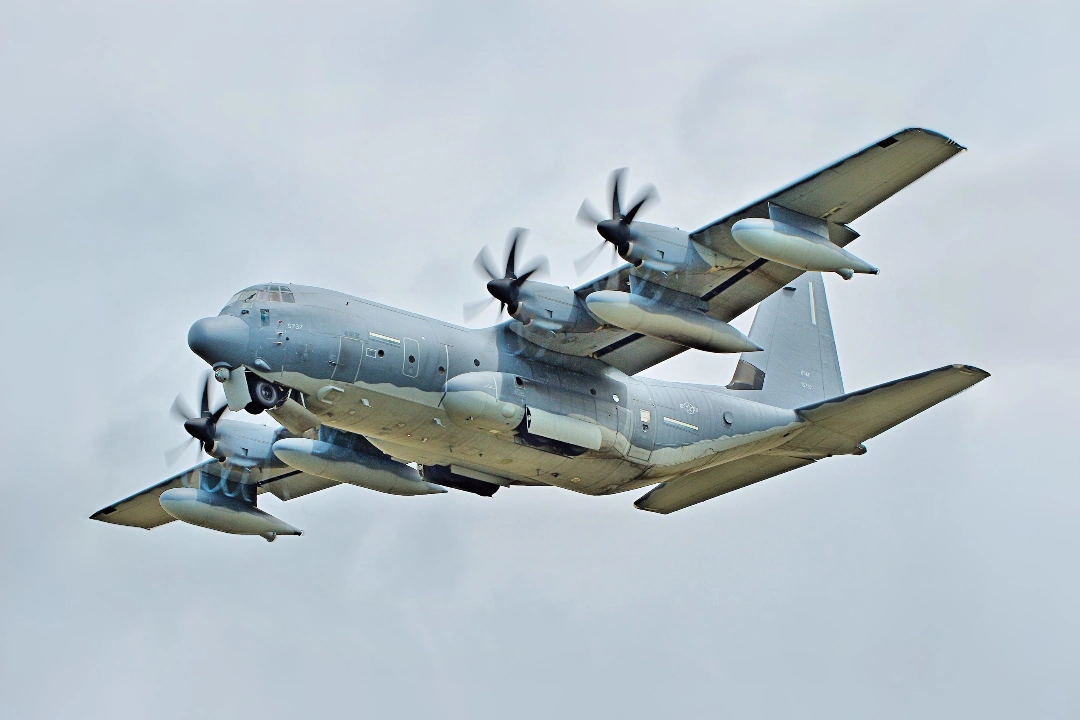
Other versions handle reconnaissance, weather research, aerial firefighting, and even Antarctic resupply missions. Few aircraft families stretch this far without snapping.
What’s fascinating is that no variant feels bolted-on or awkward. The original design anticipated change. That’s rare. Most aircraft tolerate upgrades; the C-130 invites them.
It’s why air forces don’t just buy a C-130. They buy into an ecosystem, one that evolves without losing its identity. Same name. Same reputation. Different mission, every time.
If you judge an aircraft by where it flies, the C-130 Hercules has been everywhere that matters, and plenty of places that don’t. Its mission list reads less like a brochure and more like a global incident log.
Read also: Inside Lockheed C-5 Galaxy: Size, Payload, and Capabilities
Start with the obvious: tactical airlift. Troops, vehicles, fuel, food, ammunition, the C-130 moves the unglamorous essentials that decide whether an operation succeeds or collapses. It doesn’t need pristine infrastructure. A short, damaged runway will do. Sometimes just a stretch of flattened dirt and good timing.
But the aircraft earns its reputation in moments of urgency. After major earthquakes, hurricanes, and tsunamis, C-130s are often among the first arrivals. Why? Because they can land heavy loads where runways are cracked, lights are out, and air traffic control is a distant memory.
During disaster relief operations, a single C-130 can deliver over 20 tons of aid in one sortie, water, generators, field hospitals, then turn around and evacuate civilians on the way out.
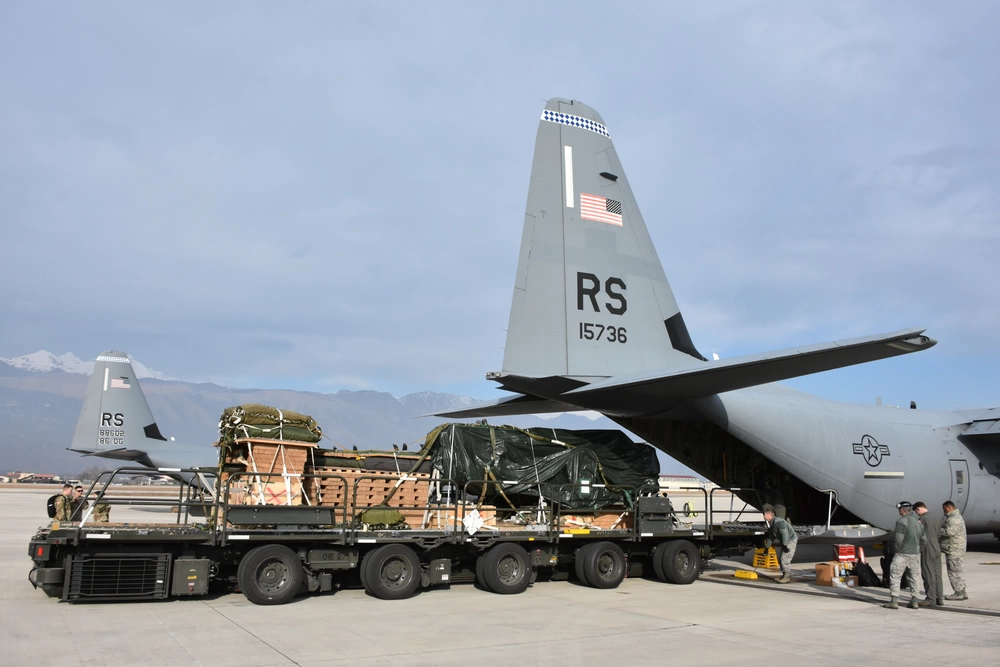
Then there are the stranger missions. Aerial firefighting, for one. Modified C-130s drop massive retardant loads over wildfires, flying low and slow through smoke that would ground most aircraft.
Other versions conduct aerial refueling, extending the reach of helicopters and fighters. Some are configured as flying ICUs, complete with life-support systems.
What ties all these roles together is flexibility under pressure. The C-130 Hercules isn’t optimized for one perfect scenario. It’s optimized for reality, where plans change, conditions degrade, and the clock never stops.
That’s why commanders keep choosing it. Not because it’s the newest. Because it’s the one they trust when things get messy.
One of the clearest indicators of the C-130 Hercules’ real value isn’t found in brochures or airshows. It’s found on a map. A very crowded one.
Today, more than 70 countries operate some version of the C-130, making it one of the most widely used military aircraft on Earth. That kind of adoption doesn’t happen by accident.
The United States Air Force remains the largest operator, using multiple C-130 variants across airlift, special operations, and combat support roles. For the U.S., the Hercules is less an aircraft and more a logistical backbone, quietly stitching together far-flung bases, allies, and crisis zones.
Zoom out, though, and the story gets richer. Nations with wildly different needs all land on the same solution. Australia uses C-130s to cover vast distances and remote terrain. Nordic countries rely on them for cold-weather operations and Arctic logistics.
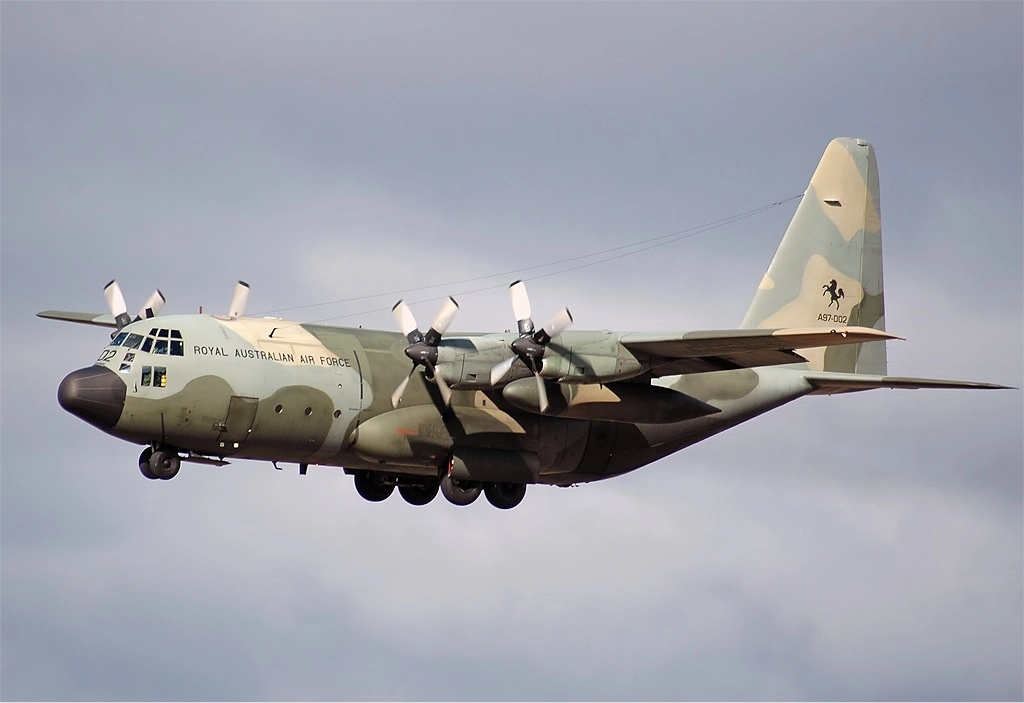
In Southeast Asia, C-130s routinely fly humanitarian missions across island chains where runways are short and weather changes its mind hourly.
Even countries with limited defense budgets choose the Hercules. Why? Because it’s forgiving. Maintenance infrastructure is well established, spare parts are globally available, and pilots trained on one variant can often transition to another without starting from scratch.
There’s also a quiet diplomatic angle here. When disasters strike, C-130s wearing different flags often land side by side, delivering aid rather than ordnance. Same aircraft. Shared mission. That familiarity builds trust in ways few platforms can.
In aviation, longevity across borders usually signals compromise. With the C-130 Hercules it signals consensus. Different countries, same conclusion: this aircraft earns its keep, everywhere it goes.
Most aircraft fade out quietly. A few linger as museum pieces.
The C-130 Hercules, though, shows no interest in either path. Despite first flying when televisions were still furniture, this aircraft continues to attract upgrades, contracts, and, most telling, confidence.
Part of that future lies in economics. A brand-new strategic airlifter costs eye-watering sums and demands pristine infrastructure. A modernized C-130 doesn’t. It offers a sweet spot: enough payload, enough range, and far fewer logistical strings attached. For many air forces, especially those balancing defense with disaster response, that trade-off makes sense.
Technology is doing its part too. Current and planned upgrades include improved fuel efficiency, advanced defensive systems, and avionics that integrate seamlessly with unmanned aircraft and networked battlefields. The Hercules isn’t being dragged into the future; it’s walking there willingly, tool by tool.
There’s also something less tangible at play, trust earned over time. Pilots know how it handles when things go sideways. Loadmasters know how much abuse the cargo bay can take. Commanders know it will be available when newer platforms are down for maintenance. That institutional confidence can’t be fast-tracked.
Here’s the irony: in an era obsessed with revolutionary designs, the C-130 survives by being evolutionary. Incremental improvements. Practical decisions. No reinvention for its own sake.
So while stealth bombers and hypersonic concepts grab headlines, the C-130 Hercules will keep doing what it’s always done, showing up early, leaving late, and quietly shaping outcomes. Not flashy. Just indispensable.